
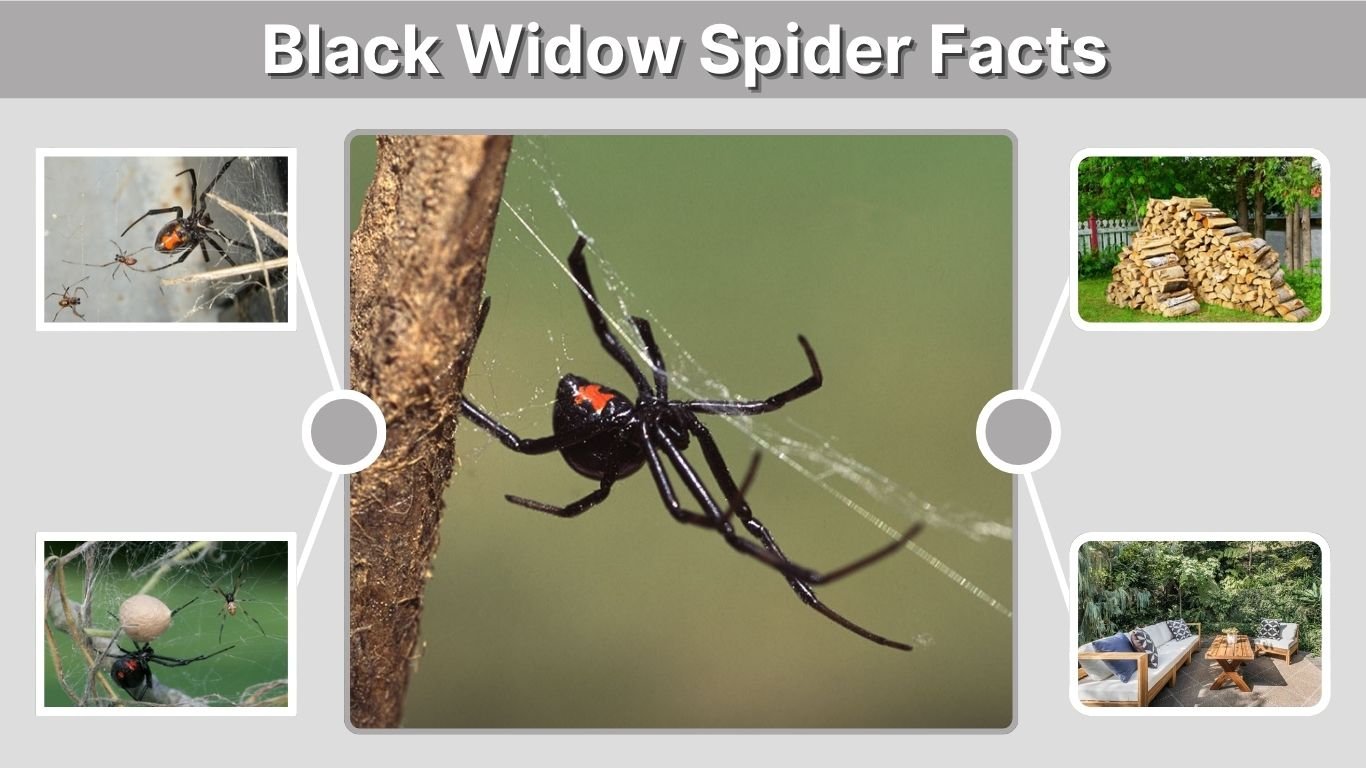
Black widow spiders are famous for their shiny black bodies, red hourglass markings, and powerful venom. But many facts about black widows are less scary than their reputation suggests. These spiders are shy, secretive hunters that usually avoid people and bite only when disturbed or trapped. Learning their appearance, habitat, web style, diet, and behavior helps you identify them safely and understand their role in nature.
What Is a Black Widow Spider?
A black widow spider is a venomous spider from the genus Latrodectus. Several species are called black widows, including the southern black widow, northern black widow, and western black widow in North America. They belong to the cobweb spider family and are known for messy, irregular webs.
The name “black widow” comes from the belief that the female often eats the male after mating. This can happen, but it is not as common in nature as many people think. The spider’s reputation is partly true, partly exaggerated, and often shaped by myths.
Black widows are not insects. Like all spiders, they are arachnids. They have eight legs, two main body parts, fangs, silk-producing spinnerets, and no wings or antennae.
Black Widow Spider Quick Facts
Here is a simple overview of the most important black widow spider facts.
| Feature | Black Widow Spider Fact |
| Scientific group | Latrodectus spiders |
| Body type | Shiny, rounded abdomen with long legs |
| Famous marking | Red or orange hourglass on many adult females |
| Web type | Irregular, sticky cobweb |
| Diet | Insects and other small arthropods |
| Venom type | Neurotoxic venom |
| Behavior | Shy, hidden, and defensive when disturbed |
| Common hiding places | Woodpiles, garages, sheds, crawl spaces, and cluttered areas |
| Most noticeable spider | Adult female |
| Risk to humans | Painful bite, but serious outcomes are uncommon with proper care |
How to Identify a Black Widow Spider
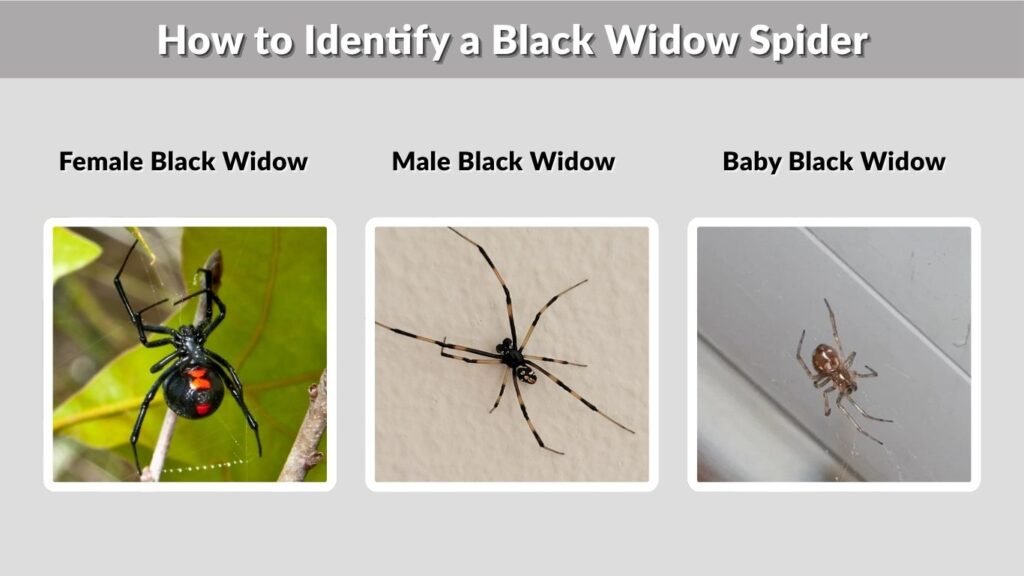
Black widow spider identification is one of the most searched parts of this topic. The adult female is the easiest to recognize, while males and young spiders can look quite different.
Female Black Widow Identification
Adult female black widows are usually shiny black with a round or bulb-shaped abdomen. The most famous feature is the red hourglass marking on the underside of the abdomen. This mark may look bright red, orange-red, broken, or shaped like two separate triangles.
Common female features include:
- Glossy black body
- Rounded abdomen
- Long, thin legs
- Red or orange hourglass mark underneath
- Irregular web near the ground or in hidden corners
The hourglass is on the underside, so it may not be visible when the spider is sitting normally. For safety, do not pick up or flip over a spider to check the mark.
Male Black Widow Identification
Male black widows are usually smaller than females and often less dark. They may have lighter markings, reddish spots, or pale stripes. Males are far less likely to be noticed because they spend more time searching for females and are not as large or dramatic in appearance.
Male black widow facts include:
- Smaller body size than females
- Longer-looking legs compared with body size
- Less obvious hourglass pattern
- Often brownish, grayish, or patterned
- Much less medically important than adult females
Baby Black Widow Spider Facts
Baby black widows, also called spiderlings, do not always look like adults. They may appear pale, tan, brown, or patterned. As they grow and molt, their color and markings change. Because young widows can be difficult to identify, it is best to avoid handling unknown spiders.
Where Do Black Widow Spiders Live?
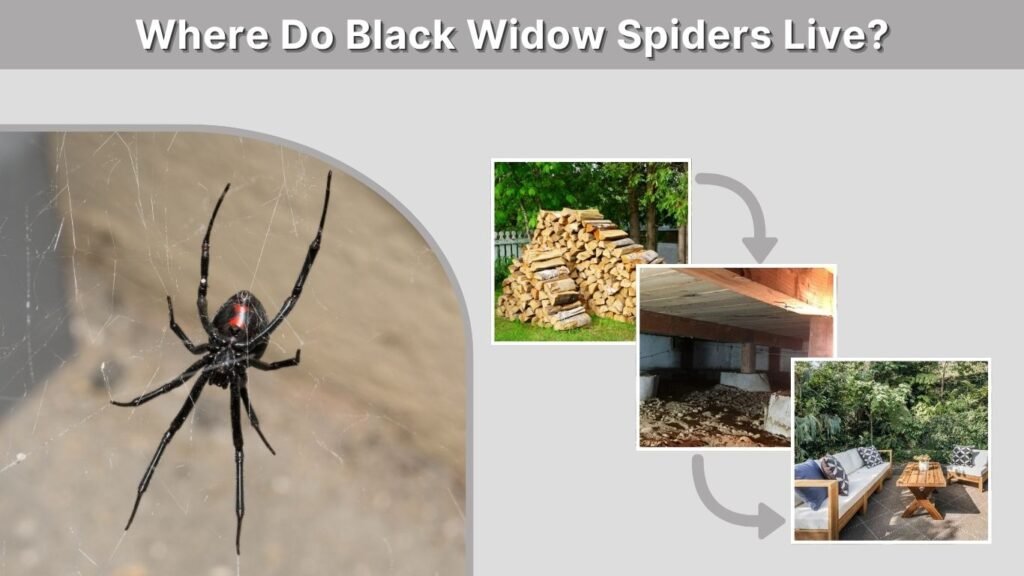
Black widow spiders live in many temperate regions. In North America, different species occupy different areas. The southern black widow is common in the southeastern United States, the western black widow is found in western regions, and the northern black widow appears in parts of the northern and eastern United States and Canada.
Black widows prefer quiet, dark, undisturbed places where insects are available. They often build webs close to the ground, especially in protected spaces.
Common black widow habitats include:
- Woodpiles and stacked lumber
- Garages and sheds
- Basements and crawl spaces
- Outdoor furniture
- Stone walls and rock piles
- Barns and storage buildings
- Meter boxes and utility areas
- Dense brush or clutter near buildings
They are not usually roaming spiders. Instead, they often stay near their web and wait for prey to become trapped.
What Do Black Widow Spiders Eat?
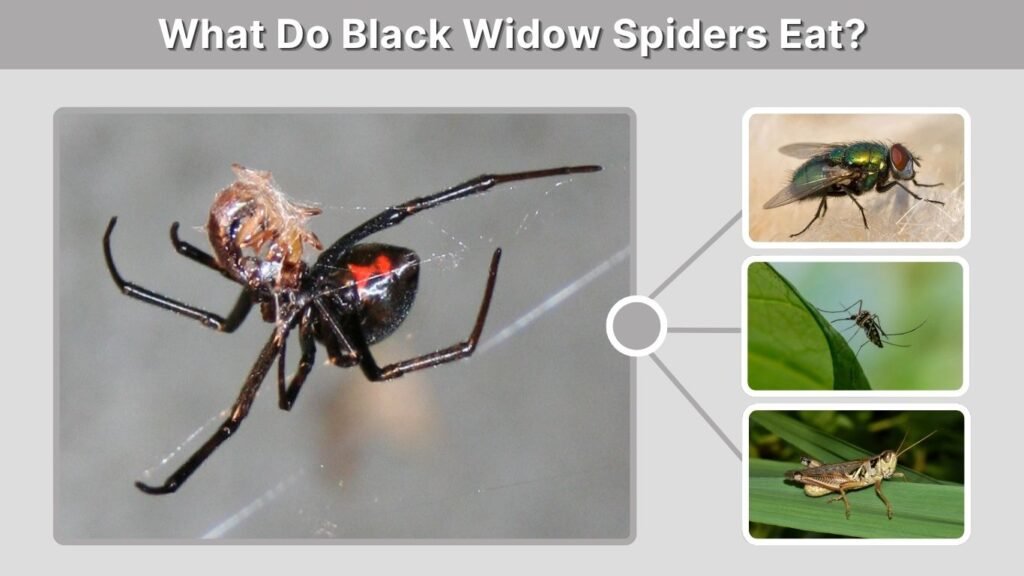
Black widows are carnivores. They mainly eat insects and other small arthropods caught in their sticky webs. Their diet can include flies, mosquitoes, beetles, grasshoppers, ants, caterpillars, and sometimes other spiders.
A black widow does not chase prey like a wolf spider. It waits in or near its web. When an insect gets stuck, the spider senses vibrations, approaches carefully, wraps the prey in silk, bites it, and feeds after digestive enzymes help break down the body.
This feeding behavior makes black widows useful predators in the ecosystem. They help control insect populations, even though people understandably do not want them in living areas.
Black Widow Spider Web Facts
A black widow web is not the neat spiral web many people imagine. It is usually messy, tangled, strong, and irregular. These cobwebs are often built in protected corners, low spaces, or hidden outdoor areas.
Important black widow web facts include:
- The web looks tangled rather than circular.
- Silk strands are strong and sticky.
- Webs are often close to the ground.
- The spider may hide in a retreat near the web.
- Egg sacs may be attached to the web.
If you find a messy web in a dark storage area, use caution before reaching inside. Wear gloves when moving firewood, boxes, outdoor tools, or stored items.
Black Widow Spider Venom Facts
Black widow venom is neurotoxic, meaning it affects the nervous system. The venom helps the spider subdue prey, but a defensive bite can also affect humans. The bite is feared because symptoms can be painful, especially muscle cramps and spasms.
However, black widows are not aggressive hunters of people. Most bites happen when a spider is pressed against skin, trapped in clothing, disturbed in a web, or accidentally handled.
Key venom facts:
- The venom is designed for prey, not humans.
- Female black widows are the main concern.
- Bites can cause pain, cramps, sweating, nausea, or muscle stiffness.
- Serious complications are more likely in young children, older adults, and people with health problems.
- Fatal bites are rare with modern medical care.
Black Widow Spider Bite Facts
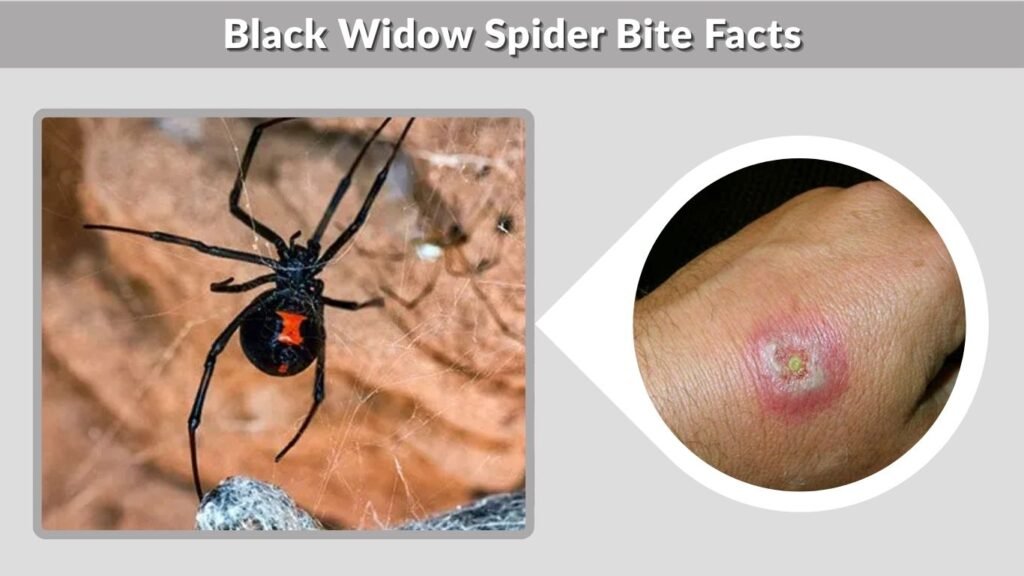
A black widow bite may feel like a pinprick at first, or it may not be noticed immediately. Symptoms can develop over minutes to hours. Some people have only local pain, while others experience more widespread muscle cramps or body symptoms.
Possible bite symptoms include:
- Pain at the bite site
- Redness or mild swelling
- Muscle cramps
- Abdominal or back pain
- Sweating
- Nausea
- Headache
- Restlessness or weakness
If someone may have been bitten by a black widow, they should contact poison control or a medical professional. Emergency care is important for children, older adults, pregnant people, or anyone with severe pain, breathing problems, spreading symptoms, or signs of an allergic reaction.
Are Black Widow Spiders Aggressive?
Black widows are usually shy and defensive, not aggressive. They do not seek out humans to bite. Their first response is often to hide, stay still, drop from the web, or avoid contact. A bite is more likely when the spider is squeezed, trapped, or protecting an egg sac.
This is why prevention matters. Most encounters happen when people place hands into dark, cluttered spaces without looking first.
To reduce risk:
- Wear gloves when moving stored items.
- Shake out shoes, gloves, and outdoor clothing.
- Keep garages and sheds less cluttered.
- Move woodpiles away from the house.
- Seal cracks around doors, windows, and foundations.
- Use a flashlight before reaching into dark spaces.
Female Black Widow Spider Facts
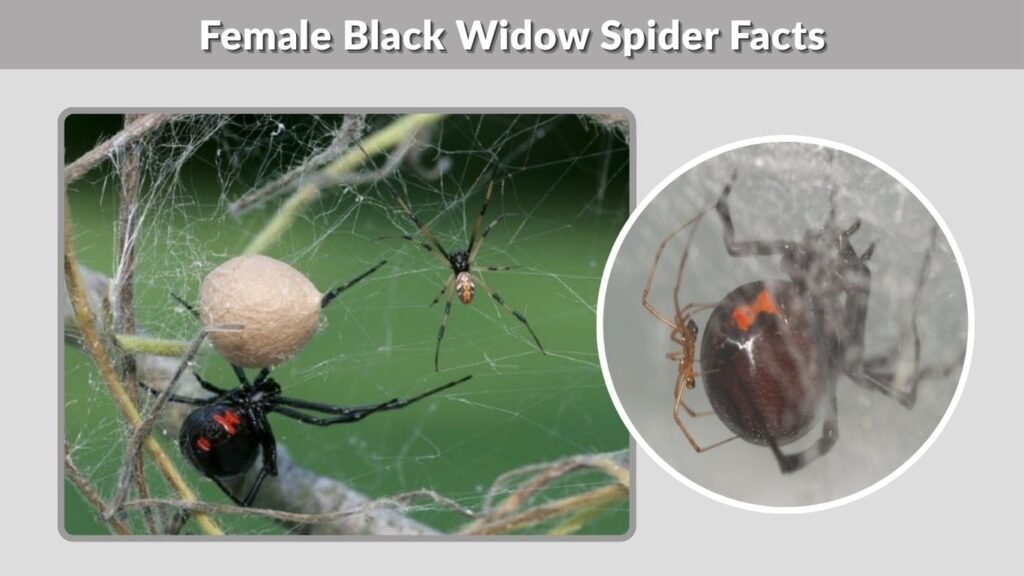
Female black widows are the spiders people usually recognize. They are larger than males and more likely to have the famous shiny black body with a red hourglass marking. Their venomous bite is also the reason black widows are considered medically important.
Female black widows build webs, capture prey, mate, and produce egg sacs. They may guard their web area, especially when eggs are present. A female can produce egg sacs containing many eggs, though only some spiderlings survive to adulthood.
Despite their reputation, females do not always eat males after mating. Sexual cannibalism can happen, but it depends on species, conditions, hunger, and whether the male escapes.
Male Black Widow Spider Facts
Male black widows live a very different life from females. They are smaller, less venomous to humans, and often focused on finding a mate. Their markings may be lighter, and they may not have the bold red hourglass associated with adult females.
Males may pluck or vibrate silk when approaching a female’s web. These signals can help reduce the chance that the female mistakes the male for prey. After mating, the male may escape, die naturally, or in some cases be eaten.
The male’s small size and less obvious markings make it harder for non-experts to identify him.
Black Widow Mating and Reproduction Facts
Black widow reproduction is one of the most interesting parts of their life cycle. After mating, the female creates one or more round, papery egg sacs. These sacs are usually attached to the web and protected in a hidden area.
Basic reproduction facts include:
- Males search for females by following chemical cues.
- Courtship may involve web vibrations.
- Females produce silk egg sacs.
- Each sac can contain many eggs.
- Spiderlings hatch and remain near the sac for a period.
- Young spiders disperse as they grow.
Many spiderlings do not survive because of predators, lack of food, weather, or cannibalism among young spiders. This is one reason spiders produce many offspring.
Southern, Northern, and Western Black Widow Facts
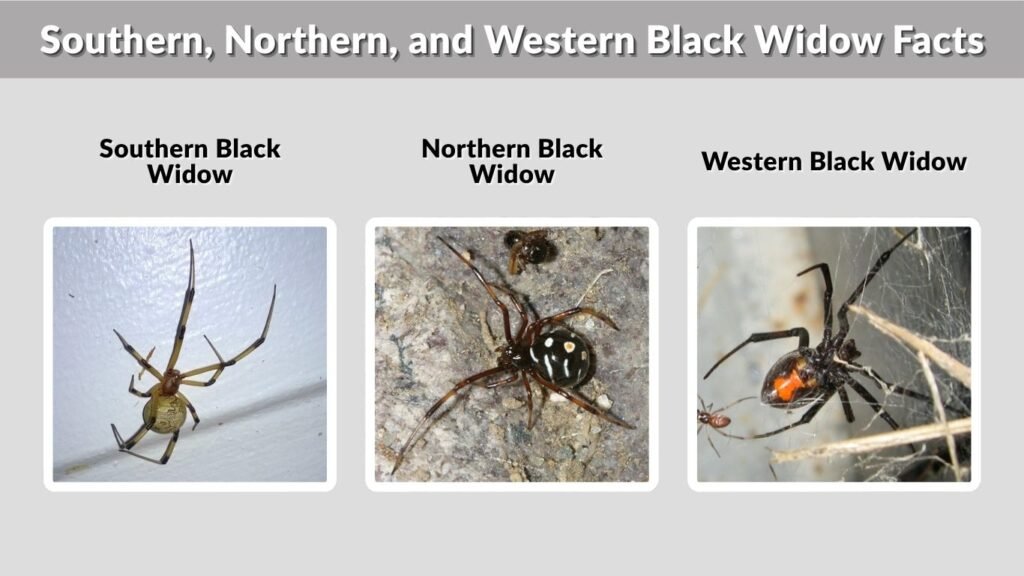
Several North American spiders are called black widows. They are similar but not identical.
Southern Black Widow
The southern black widow is often associated with warm southeastern regions. Adult females commonly have the classic glossy black body and red hourglass mark. They hide in dark, protected areas such as sheds, woodpiles, and outdoor clutter.
Northern Black Widow
The northern black widow can have a broken or divided hourglass marking rather than one perfect shape. It may be found in parts of the northern and eastern United States and Canada. Like other widows, it prefers quiet, hidden spaces.
Western Black Widow
The western black widow is common in western North America. It is often found in dry areas, garages, crawl spaces, and outdoor structures. Females usually have the familiar dark body and red underside marking.
False Black Widow Spider Facts
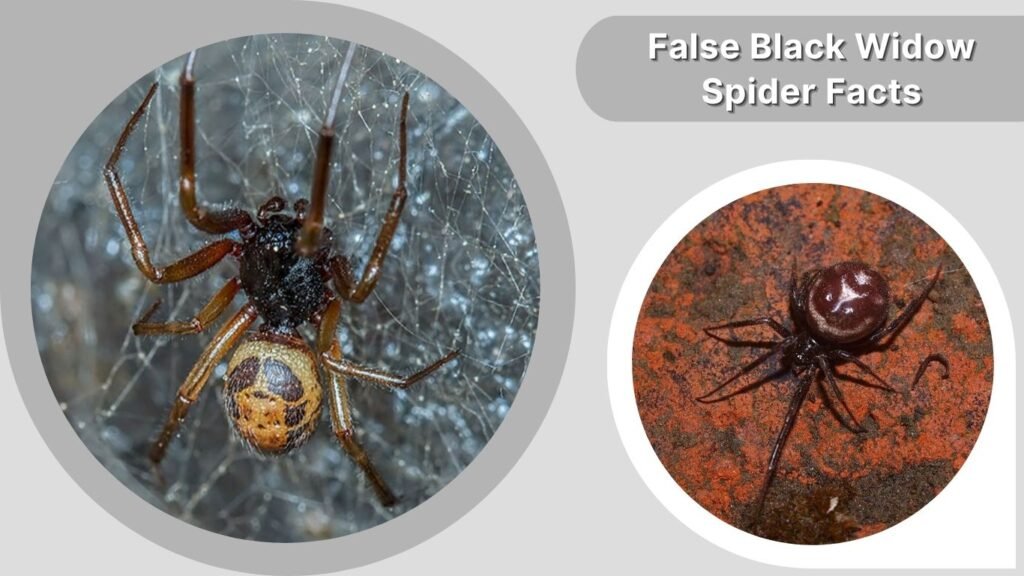
False black widows are spiders that look similar to true black widows but belong to different groups. They may have dark rounded bodies, which causes confusion. However, false widows usually do not have the same clear red hourglass marking underneath the abdomen.
Because spider identification can be tricky, avoid handling any widow-like spider. If a dark, round-bodied spider is found near a home, the safest choice is to observe from a distance, remove webs carefully with tools, or contact a pest professional if there are many spiders.
Fun Facts About Black Widow Spiders
Black widows are not just “dangerous spiders.” They have unusual traits that make them fascinating.
Fun and interesting facts include:
- Their messy webs are stronger than they look.
- The red hourglass is a warning signal.
- They often hang upside down in their webs.
- Males are much smaller than females.
- They help control insect populations.
- Their reputation is more dramatic than their usual behavior.
- The “widow” name comes from mating myths and real but inconsistent cannibalism.
- They prefer hiding over confrontation.
These facts make black widows useful subjects for school projects, nature articles, and educational guides.
Black Widow Spider Facts for Kids
Black widow spiders can sound scary, but kids can learn about them safely. The most important rule is simple: look, but do not touch. If a child sees a shiny black spider with a red mark, they should tell an adult and stay away.
Kid-friendly facts:
- Black widows are spiders, not insects.
- They have eight legs.
- Many females have a red hourglass mark.
- They catch bugs in sticky webs.
- They like dark, quiet hiding places.
- They bite only when scared or squeezed.
- Adults should move items from garages, sheds, or woodpiles.
Teaching kids not to handle spiders is more useful than teaching them to fear every spider.
How to Stay Safe Around Black Widow Spiders
Black widow safety is mostly about avoiding surprise contact. They are not likely to chase or attack people, but they may bite if accidentally pressed.
Practical safety tips include:
- Wear gloves when gardening or moving firewood.
- Check outdoor shoes before wearing them.
- Store boxes off the floor when possible.
- Reduce clutter in garages and sheds.
- Keep woodpiles away from doors and walls.
- Use tools instead of bare hands in hidden spaces.
- Teach children not to touch unknown spiders.
If black widows are common around a home, reducing clutter and sealing entry points can make the area less attractive to them.
FAQs
What is a black widow spider?
A black widow spider is a venomous spider from the Latrodectus genus. It is best known for its shiny black body and red hourglass-shaped mark on the underside of the female’s abdomen. Black widows are usually shy and prefer dark, quiet places where they can build messy webs.
Are black widow spiders dangerous?
Black widow spiders can be dangerous because their venom affects the nervous system. However, they are not aggressive and usually bite only when disturbed or trapped. Most healthy adults recover with proper medical care, but children, older adults, and people with health issues may face higher risk after a bite.
Where do black widow spiders live?
Black widow spiders often live in warm, dry, and sheltered areas. Outdoors, they may hide in woodpiles, garages, sheds, basements, crawl spaces, and under rocks or outdoor furniture. They prefer quiet places where insects are available and where their webs are unlikely to be disturbed.
What do black widow spiders eat?
Black widow spiders mainly eat insects and other small arthropods. Their diet may include flies, mosquitoes, beetles, grasshoppers, caterpillars, and even other spiders. They catch prey in sticky, irregular webs, then use venom to immobilize the insect before feeding on it.
How can you identify a black widow spider?
A female black widow is usually shiny black with a round abdomen and a red or orange hourglass mark underneath. Males are smaller, lighter, and less recognizable. Young black widows may have pale or reddish markings. Because other spiders can look similar, avoid touching any spider you cannot identify safely.
