
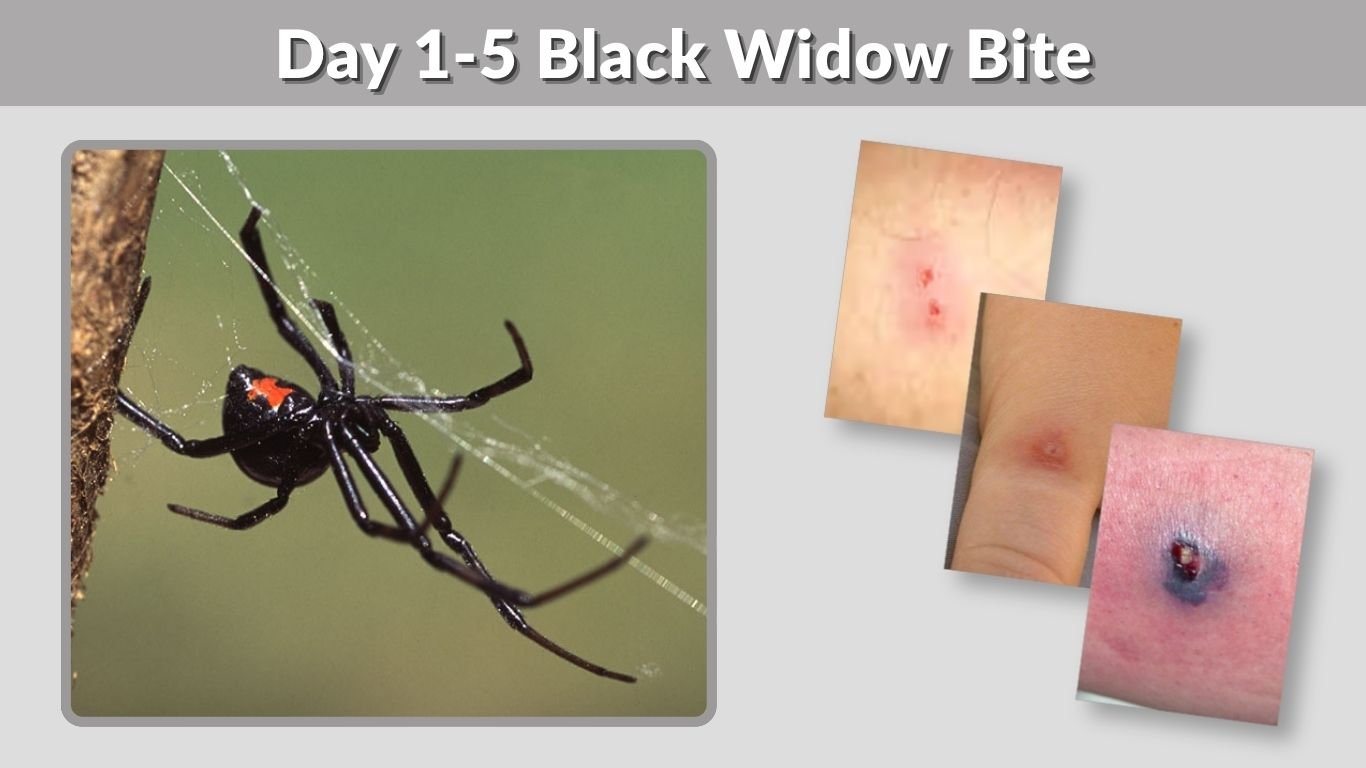
A day 1 black widow spider bite may look small at first, but symptoms can become more serious within hours. Unlike many common spider bites, a black widow bite can affect the nerves and muscles. This may cause spreading pain, muscle cramps, sweating, nausea, and abdominal discomfort. Knowing the day-by-day stages can help you recognize warning signs and decide when medical care is needed.
What Happens on Day 1 of a Black Widow Spider Bite?
The first day is usually the most important period to watch. Some people feel a sharp pinprick right away. Others may not notice the bite until pain, redness, or muscle symptoms begin. The bite area may show mild swelling, tenderness, or two tiny puncture marks, but it does not always look dramatic.
Black widow venom is a neurotoxin. That means it can affect nerve signals and muscles, not just the skin. This is why someone may have only a small red bump but still feel severe cramps, abdominal pain, back pain, sweating, or nausea.
A suspected black widow bite should be taken seriously if symptoms spread beyond the bite area. Children, older adults, pregnant people, and people with heart or immune problems should be checked sooner.
Early Stage Black Widow Spider Bite Symptoms
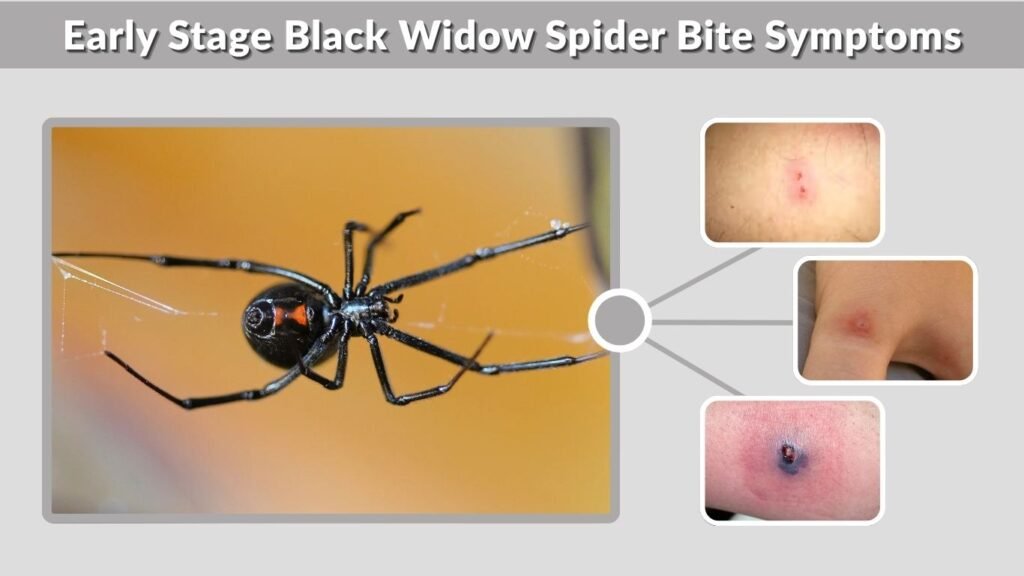
During the early stage, symptoms may be local or body-wide. Local symptoms happen around the bite. Systemic symptoms affect other parts of the body.
Common early symptoms include:
- Sharp pain or burning at the bite site
- Redness around the bite
- Mild swelling
- Tenderness or numbness
- Two small puncture marks
- Muscle aches
- Cramps near the bite
- Sweating
- Nausea
- Headache
- Restlessness
- Pain spreading to the abdomen, back, chest, or legs
The most concerning day 1 symptoms are severe muscle cramps, chest tightness, trouble breathing, repeated vomiting, fainting, or severe abdominal pain. These symptoms need urgent medical care.
Black Widow Spider Bite Day-by-Day Timeline
Every bite is different. Some people have mild symptoms that fade quickly, while others develop more intense pain and cramping. The timeline below explains what may happen after a suspected bite.
| Stage | Common Changes | What to Watch For |
|---|---|---|
| Day 1 | Sharp pain, redness, swelling, cramps, nausea, sweating | Spreading pain, severe cramps, chest or abdominal symptoms |
| Day 2 | Pain may improve or remain strong; soreness and fatigue may continue | Symptoms that worsen instead of improve |
| Day 3 | Many mild cases begin settling; muscle soreness may remain | Fever, infection signs, darkening skin, or ongoing severe pain |
| Days 4–7 | Gradual recovery in many cases | Persistent weakness, wound changes, or new symptoms |
Day 1 Black Widow Spider Bite Stages
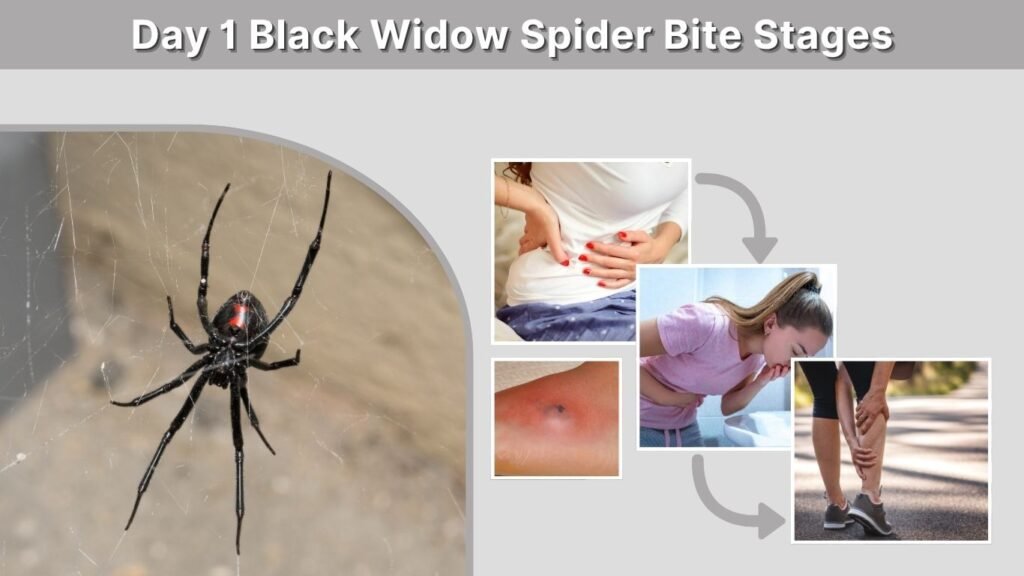
A black widow bite can change quickly during the first 24 hours. These stages are not exact for everyone, but they show a common pattern.
First Few Minutes
The bite may feel like a needle stick or sharp pinch. Some people see the spider and know they were bitten. Others only notice a small painful spot later.
The skin may look normal at first. It may also become slightly red or swollen. Two fang marks may appear, but they can be hard to see.
30 Minutes to 2 Hours
Pain may grow stronger and begin spreading. The bite area may feel sore, warm, tight, or numb. Muscle aches can begin near the bite and move to larger muscle groups.
Some people start sweating, feel nauseated, or develop a headache. Anxiety or restlessness can also happen because the pain feels unusual.
2 to 6 Hours
This is when symptoms may peak or become more obvious. Muscle cramps can affect the abdomen, back, chest, shoulders, or thighs. Abdominal cramping may be intense and can be mistaken for appendicitis or another stomach emergency.
Other symptoms may include vomiting, tremors, weakness, high blood pressure, or a fast heartbeat. A person with these symptoms should not wait to see if the bite improves on its own.
6 to 24 Hours
By the end of day 1, mild bites may begin to stabilize. More serious bites may still cause strong cramps, sweating, nausea, or widespread pain. Medical treatment may be needed to control pain and muscle spasms.
If symptoms are worsening after several hours, seek urgent care. A small-looking bite can still cause serious body-wide symptoms.
What Does a Day 1 Black Widow Bite Look Like?
People often search for black widow spider bite pictures day 1, but the appearance can be misleading. A day 1 bite may look like a small red bump, a swollen spot, or a mild insect bite. It may show two tiny puncture marks, but many people never see them.
The bite may have:
- A small red area
- Mild swelling
- Tenderness
- A pale center
- Two small fang marks
- Little visible change despite strong pain
A black widow bite usually does not cause the same type of spreading open wound often associated with brown recluse bites. If the skin becomes dark, blistered, infected, or ulcerated, a healthcare provider should evaluate it because another cause may be involved.
Day 2 Black Widow Spider Bite: What Happens Next?
On day 2, symptoms may start improving, especially in mild cases. Pain may become less sharp, and cramps may decrease. However, soreness, fatigue, and muscle tenderness can continue.
Some people still have:
- Muscle aches
- Back or abdominal soreness
- Mild nausea
- Headache
- Tiredness
- Tenderness around the bite
- Skin redness or swelling
Day 2 symptoms should generally be stable or improving. If pain becomes worse, vomiting continues, chest symptoms appear, or the person feels weak or faint, medical care is needed.
Black Widow Spider Bite Pictures Day 2: What to Expect
A day 2 bite may still look red, swollen, or irritated. It may also look surprisingly mild compared with how the person feels. This is because black widow venom affects nerves and muscles more than skin tissue.
A concerning day 2 appearance includes spreading redness, pus, warmth, red streaks, fever, or worsening swelling. These may suggest infection or another skin problem and should be checked.
Do not squeeze, cut, burn, or try to drain the bite. These actions can make the wound worse.
Black Widow Spider Bite Day 3
By day 3, many mild to moderate bites begin to settle. Muscle cramps may be much better, but soreness can remain. The bite site may still be tender or slightly red.
Possible day 3 symptoms include:
- Lingering soreness
- Fatigue
- Mild swelling
- Muscle tenderness
- Headache
- Skin irritation around the bite
However, day 3 should not bring major new symptoms. If the bite looks worse than before, the skin turns dark, or fever develops, get medical advice. If severe cramps are still present, follow up with a healthcare provider.
How Long Do Black Widow Bite Symptoms Last?
Many symptoms improve within 24 to 72 hours, especially with proper treatment. Some people may feel sore, weak, or tired for several more days. Severe bites can take longer to fully recover from.
Recovery time depends on:
- The amount of venom injected
- The person’s size and age
- The bite location
- Existing health conditions
- How quickly treatment was started
- Whether symptoms became body-wide
A black widow bite should not be ignored just because the skin mark is small.
First Aid for a Day 1 Black Widow Spider Bite
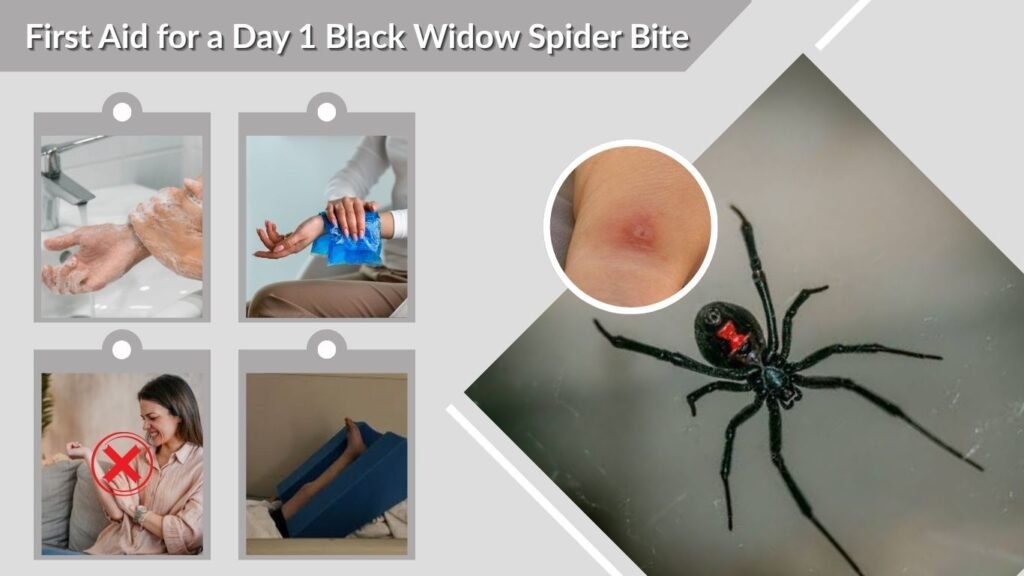
First aid can help while you arrange medical guidance. It is especially useful during the first few minutes after a suspected bite.
Use these steps:
- Wash the bite with soap and water
- Apply a cold pack wrapped in cloth
- Keep the bitten area elevated if possible
- Avoid scratching the bite
- Do not cut or squeeze the area
- Take a photo of the spider if you can do so safely
- Contact a healthcare provider or poison control for advice
For severe symptoms, do not rely on home care. Go to urgent care or an emergency department.
When to Seek Medical Care
Get medical care right away if a black widow bite is suspected and symptoms are more than mild. Black widow bites can be dangerous, especially for vulnerable people.
Seek urgent help for:
- Severe muscle cramps
- Severe abdominal pain
- Chest pain or tightness
- Trouble breathing
- Repeated vomiting
- Heavy sweating
- Fainting or severe weakness
- Fast heartbeat
- Worsening symptoms after the first few hours
- Bite in a child, older adult, or pregnant person
Doctors may use pain medicine, muscle spasm treatment, wound care, and monitoring. In severe cases, antivenom may be considered.
FAQs
What does a black widow spider bite look like on day 1?
On day 1, a black widow bite may look like a small red bump, mild swelling, or two tiny puncture marks. Sometimes it does not look serious. Symptoms such as spreading pain, cramps, sweating, nausea, or abdominal pain are often more important than appearance.
Is day 1 the worst day for a black widow bite?
Day 1 can be the most intense because symptoms may develop quickly within the first few hours. Muscle cramps, nausea, sweating, and spreading pain may peak during this period. However, some people continue to feel sore or tired on day 2 or day 3.
What happens on day 2 after a black widow spider bite?
On day 2, symptoms may begin improving in mild cases. Muscle soreness, fatigue, tenderness, or mild nausea can continue. If symptoms are worsening, pain is severe, or the bite looks infected, medical care is needed.
What should a black widow bite look like by day 3?
By day 3, the bite may still be slightly red, swollen, or tender, but many symptoms should be improving. A worsening wound, fever, pus, red streaks, dark skin, or ongoing severe cramps should be checked by a healthcare provider.
Can a black widow spider bite be mild?
Yes. Some black widow bites cause only local pain, redness, and mild swelling. Others cause severe body-wide symptoms. Because reactions vary, it is important to monitor symptoms closely and seek care if pain spreads or systemic symptoms appear.
