
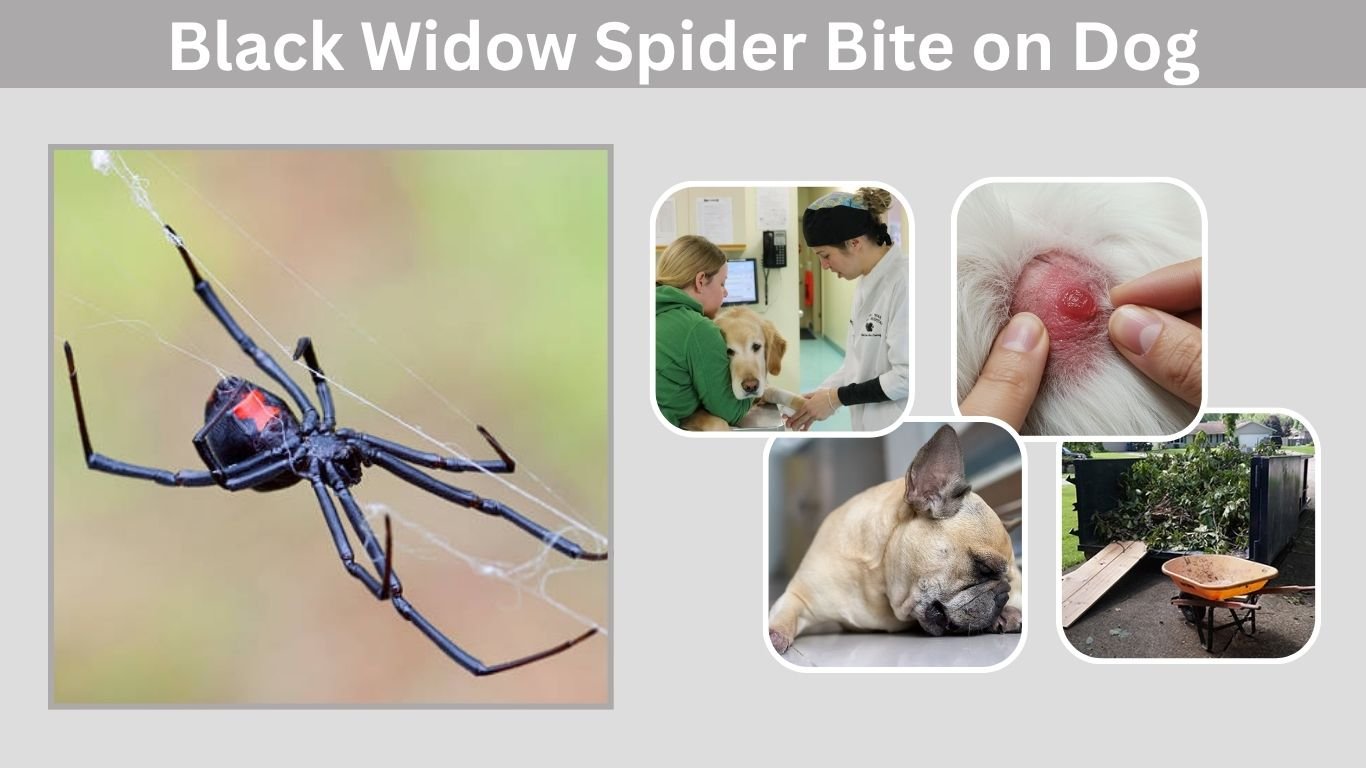
A black widow spider bite on a dog can be a serious emergency. While many spider bites only cause mild irritation, black widow venom can affect a dog’s nerves and muscles. Symptoms may include pain, muscle tremors, stiffness, drooling, vomiting, weakness, or trouble breathing. If you think your dog was bitten by a black widow spider, contact a veterinarian or emergency animal clinic right away.
Why Black Widow Spider Bites Are Dangerous for Dogs
Most spiders are not able to cause major poisoning in dogs. Black widow spiders are different because their venom contains a powerful neurotoxin. This venom affects the nervous system and can cause painful muscle spasms, stiffness, and body-wide distress.
Dogs may be bitten when they sniff, paw at, or lie near a spider hiding in a quiet area. Black widows often live in dark, undisturbed places such as garages, sheds, crawl spaces, woodpiles, outdoor furniture, storage boxes, and yard debris.
Small dogs, puppies, older dogs, and dogs with health problems may be at higher risk of severe symptoms. Even if the bite mark looks small, the internal effects can be serious.
What Does a Black Widow Spider Bite on a Dog Look Like?
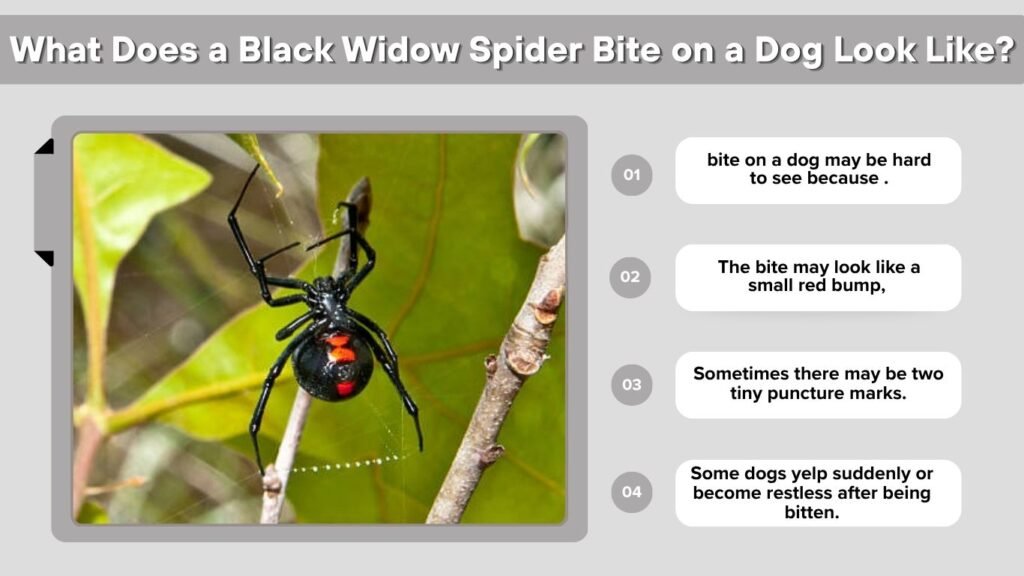
A black widow spider bite on a dog may be hard to see because fur covers the skin. The bite may look like a small red bump, raised area, mild swelling, or tender spot. Sometimes there may be two tiny puncture marks, but they are often hidden.
Your dog may notice the bite before you do. They may lick, chew, scratch, or guard the painful area. Some dogs yelp suddenly or become restless after being bitten.
A bite mark alone does not confirm a black widow bite. The bigger clue is a combination of pain, muscle stiffness, tremors, weakness, and unusual behavior after possible spider exposure.
Black Widow Spider Bite Symptoms in Dogs
Symptoms can begin soon after the bite, but they may also take several hours to fully appear. The amount of venom, the dog’s size, and the bite location can affect how severe the reaction becomes.
Common symptoms of a black widow spider bite in dogs include:
- Sudden pain or yelping
- Licking or chewing the bite area
- Redness or swelling
- Muscle tremors
- Muscle stiffness or cramping
- Weakness or trouble standing
- Restlessness or anxiety
- Drooling
- Vomiting
- Diarrhea
- Rapid breathing or panting
- Rigid or painful abdomen
- Trouble walking
- Sensitivity to touch
- Collapse in severe cases
Black widow bites can cause intense muscle pain. A dog may seem tense, hunched, or unwilling to move. Some dogs may cry when touched because their muscles are sore or cramping.
Black Widow Spider Bite Poisoning in Dogs
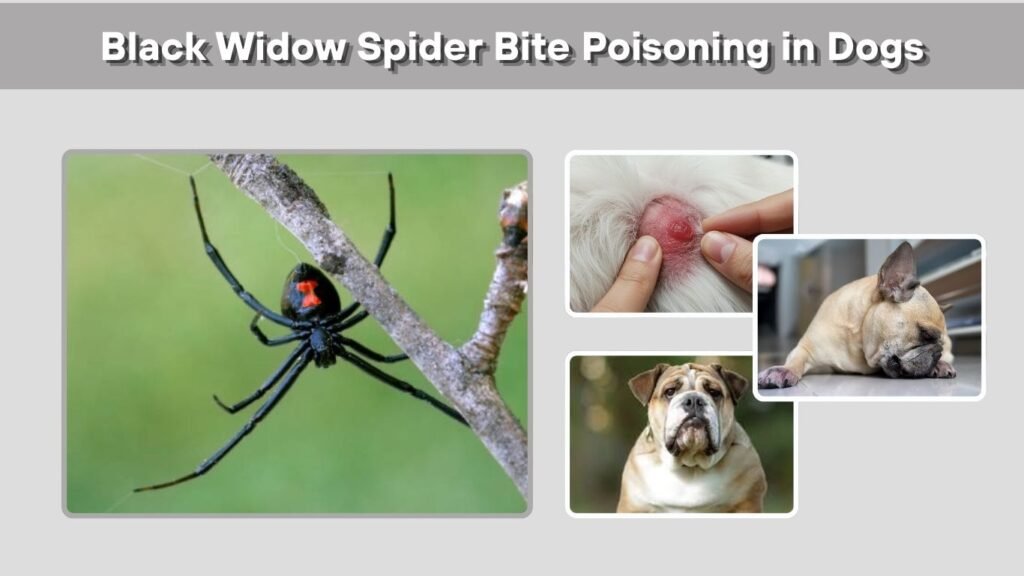
Black widow spider bite poisoning happens when venom enters the dog’s body and affects the nervous system. This is different from a simple skin reaction. The dog may not have a large wound, but the venom can still cause serious signs.
Veterinary sources describe black widow poisoning as a medical emergency because symptoms can progress. PetMD states that black widow spider poisoning in dogs is a medical emergency, and VCA notes that widow spiders are among the main spider groups responsible for medically significant bites in pets.
Signs of poisoning may include muscle rigidity, tremors, abnormal breathing, abdominal pain, vomiting, weakness, or shock. Severe cases can involve paralysis-like weakness or breathing problems. These signs need urgent veterinary care.
Black Widow Spider Bite on Dog Timeline
A black widow bite may not look serious at first. Symptoms often become clearer as the venom affects the nerves and muscles.
| Time After Bite | Possible Dog Symptoms |
|---|---|
| First few minutes | Sudden yelp, pain, licking, chewing, mild redness or swelling |
| 30 minutes to 2 hours | Restlessness, tremors, muscle pain, stiffness, panting |
| 2 to 8 hours | Vomiting, drooling, rigid abdomen, weakness, trouble walking |
| 8 to 24 hours | Symptoms may peak; severe cases may need hospitalization |
| 1 to 3 days | Improvement with treatment, but soreness or weakness may remain |
Some symptoms may appear immediately, but others can take hours to develop. Vetster notes that symptoms can begin right away but may take up to eight hours to fully appear, including pain, tremors, restlessness, abnormal breathing, abdominal rigidity, seizures, or paralysis in severe cases.
Can a Black Widow Spider Bite Kill a Dog?
Yes, a black widow spider bite can be life-threatening to a dog, especially if the dog is small, young, elderly, or already sick. However, many dogs recover when they receive prompt veterinary treatment.
The danger comes from the venom’s effect on nerves, muscles, breathing, and circulation. A dog with severe tremors, weakness, breathing trouble, collapse, or rigid muscles needs emergency care.
Do not wait to see if symptoms go away if you suspect a black widow bite. Early treatment improves the chance of recovery and may reduce pain, complications, and hospitalization time.
What to Do If a Black Widow Spider Bit Your Dog
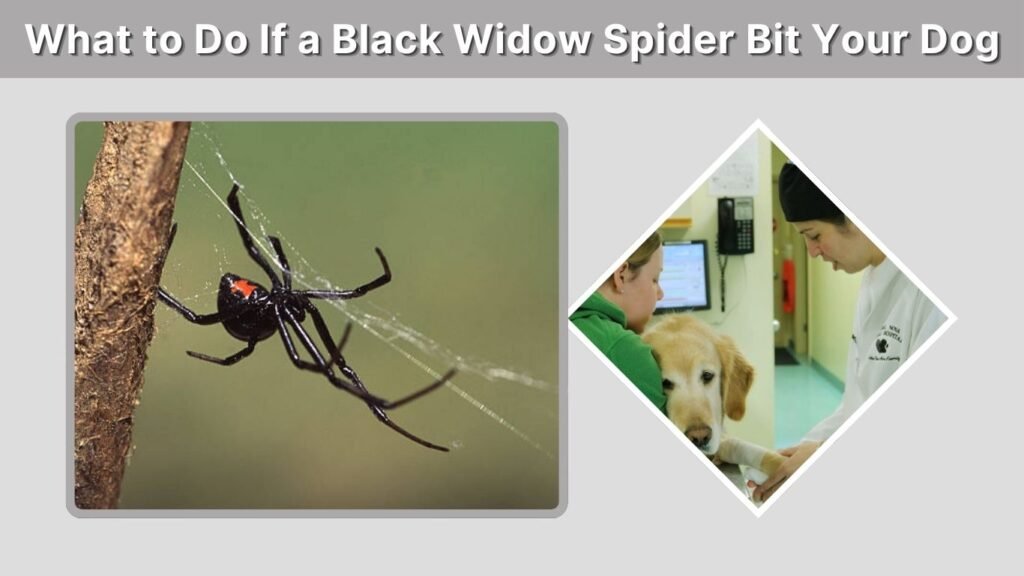
If you saw the spider bite your dog or strongly suspect it, act quickly. Stay calm, keep your dog quiet, and call a veterinarian.
Use these steps:
- Move your dog away from the spider
- Keep your dog calm and limit movement
- Look for the bite area if it is safe
- Wash the area gently with soap and water
- Apply a cool compress wrapped in cloth
- Take a photo of the spider if you can do so safely
- Call your veterinarian or emergency clinic
- Follow the vet’s instructions for transport
Do not try to squeeze, cut, burn, or drain the bite. Do not apply a tourniquet. Do not give human pain relievers such as ibuprofen, acetaminophen, aspirin, or naproxen unless your veterinarian specifically tells you to. Some human medications can be toxic to dogs.
Black Widow Spider Bite on Dog Treatment
Treatment should be handled by a veterinarian. The goal is to control pain, reduce muscle spasms, support breathing and circulation, and monitor for complications.
Veterinary treatment may include:
- Physical exam and monitoring
- Pain medication
- Muscle relaxants
- IV fluids
- Anti-nausea medication
- Oxygen support if breathing is affected
- Blood pressure and heart monitoring
- Antivenom in selected cases
- Hospitalization for severe symptoms
Antivenom may be available in some areas, but it is not always used for every case. A veterinarian will decide based on severity, timing, availability, and the dog’s condition. VCA notes that medically significant spider bites in pets include widow spiders and recluse spiders, and treatment depends on the type of bite and symptoms.
Black Widow Spider Bite Pictures on Dogs
Many people search for black widow spider bite pictures on dogs, but pictures can be misleading. A bite may look like a tiny red spot, a swollen bump, or nothing obvious at all. Because fur hides the skin, the bite mark may be difficult to find.
A dog’s behavior is often more useful than the picture. Warning signs include sudden pain, tremors, drooling, stiffness, weakness, vomiting, or difficulty walking. A small bite mark with severe symptoms can still be an emergency.
If you take a photo, photograph both the bite area and the suspected spider if safe. This may help the veterinarian, but treatment should not be delayed while looking for the spider.
Black Widow vs Brown Recluse Bite on Dogs
Black widow and brown recluse bites can both be concerning, but they often affect dogs differently.
A black widow bite mainly affects nerves and muscles. It may cause tremors, stiffness, pain, drooling, vomiting, weakness, and abnormal breathing.
A brown recluse bite is more likely to cause local skin damage. It may lead to redness, swelling, blistering, dark skin, or a wound that worsens over time.
Both types of bites should be checked by a veterinarian if symptoms are significant. If you are unsure what spider bit your dog, focus on symptoms and get veterinary guidance.
How Vets Diagnose a Black Widow Bite
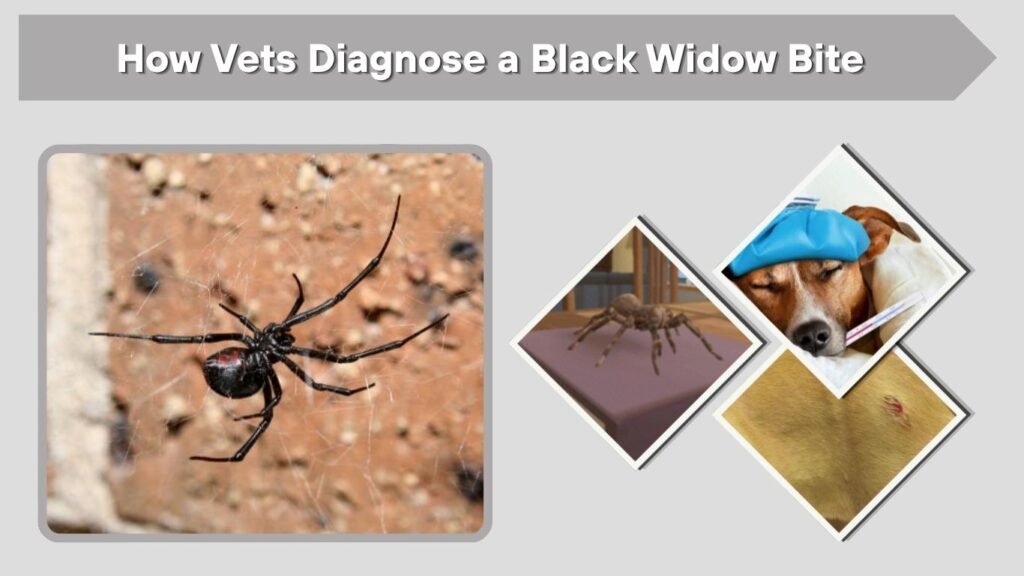
Diagnosis can be difficult unless the bite was witnessed or the spider was found. Many skin problems, insect bites, allergic reactions, and injuries can look similar.
A veterinarian may diagnose based on:
- Your dog’s symptoms
- Possible spider exposure
- Bite location
- Physical exam findings
- Muscle stiffness or pain
- Breathing and heart rate
- Blood work or other tests if needed
If you saw the spider, bring a clear photo or a safely sealed specimen. Do not handle a live spider with bare hands.
Recovery After a Black Widow Bite
With prompt care, many dogs improve within a few days. Some dogs may remain sore, tired, or weak for longer. Severe cases may require hospitalization and follow-up visits.
Recovery depends on:
- Dog size and age
- Amount of venom
- Time before treatment
- Severity of symptoms
- Existing health issues
- Whether breathing or heart function was affected
Follow your vet’s instructions carefully. Give prescribed medications as directed and keep your dog quiet during recovery.
How to Prevent Black Widow Bites on Dogs
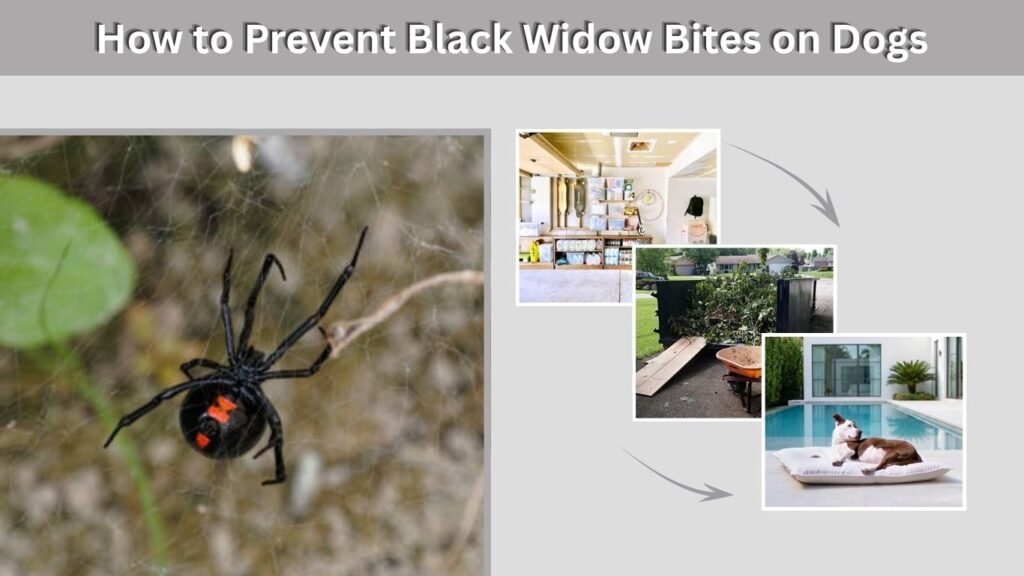
Prevention is especially important if you live in an area where black widows are common. Dogs are curious and may sniff or paw at hidden spiders.
To reduce risk:
- Clear clutter from garages, sheds, and patios
- Remove yard debris and woodpiles near the home
- Shake out outdoor dog bedding
- Keep dog houses and crates clean
- Check under outdoor furniture
- Use gloves when moving stored items
- Seal cracks and gaps around the home
- Do not let dogs dig in dark storage areas
- Contact pest control for recurring infestations
FAQs
What are the first signs of a black widow spider bite on a dog?
The first signs may include sudden yelping, licking, chewing, redness, swelling, or pain at the bite area. As venom spreads, dogs may develop tremors, stiffness, drooling, vomiting, weakness, panting, or trouble walking. Symptoms can appear quickly or over several hours.
Is a black widow spider bite fatal to dogs?
It can be life-threatening, especially for small dogs, puppies, senior dogs, or dogs with health problems. Many dogs recover with fast veterinary care. Severe symptoms such as tremors, breathing trouble, collapse, rigid muscles, or extreme weakness need emergency treatment.
What should I do if my dog got bit by a black widow spider?
Keep your dog calm, move them away from the spider, wash the bite area gently, and call a veterinarian or emergency clinic immediately. Take a photo of the spider if safe. Do not give human pain medicine or try to cut, squeeze, or drain the bite.
How do vets treat black widow spider bites in dogs?
Vets may use pain medication, muscle relaxants, IV fluids, anti-nausea medicine, oxygen support, monitoring, and sometimes antivenom. Severe cases may need hospitalization. Treatment depends on the dog’s symptoms, size, health, and how long ago the bite happened.
What does a black widow bite look like on a dog?
It may look like a small red bump, raised spot, swelling, or two tiny puncture marks. Sometimes it is hard to see because fur covers the skin. Behavior changes, muscle tremors, stiffness, vomiting, and weakness are often more important clues than the bite’s appearance.
