

Carpenter bees are familiar spring and summer visitors, often seen buzzing around decks, fences, and wooden trim. Their hovering presence and habit of drilling neat, round holes in wood make them hard to ignore. Many homeowners worry about whether these bees sting and how dangerous they might be. While carpenter bees can sting, the risk is far lower than most people think. Understanding their behavior, appearance, and nesting habits can help you avoid problems while protecting these valuable pollinators.
Identification
- Large, robust bees resembling bumblebees but with a shiny, hairless black abdomen
- Males have a pale yellow or white facial patch; females are solid black
- Capable of hovering in place and often guard wooden structures
- Round, perfectly smooth entrance holes about ½ inch wide on decks or eaves
- Loud, droning flight that may seem intimidating but is usually harmless
Do Carpenter Bees Sting?

Carpenter bees are generally calm, solitary insects, and stinging is not their first line of defense. Only female carpenter bees can sting, as they possess a functional stinger. Even then, they rarely use it unless they feel directly threatened—such as being handled, squeezed, or having their nest disturbed. In contrast, male carpenter bees cannot sting at all, though their behavior often creates the illusion of danger. Males hover aggressively near humans, pets, and intruders, but this is strictly territorial posturing.
Most sting incidents occur when a person unknowingly blocks a nesting hole or attempts to swat the bee. Carpenter bees are far less defensive compared to wasps or honeybees, and they do not attack in groups because they are not social insects. Their solitary nature significantly reduces the overall risk of being stung.
Sting Symptoms and Reactions
A carpenter bee sting typically causes localized pain, swelling, and redness, similar to other bee or wasp stings. Mild itching or tenderness may persist for several hours. Because the sting does not involve barbed apparatus like a honeybee’s, the stinger is not left behind, and females can sting more than once—though this remains uncommon.
In rare cases, individuals with allergies may experience hives, dizziness, difficulty breathing, or swelling of the lips and throat. These symptoms require immediate medical attention. For the average person, however, reactions remain mild, and home treatment with cold compresses, antihistamines, and topical creams usually provides quick relief.
Carpenter Bee Size, Range & Habitat
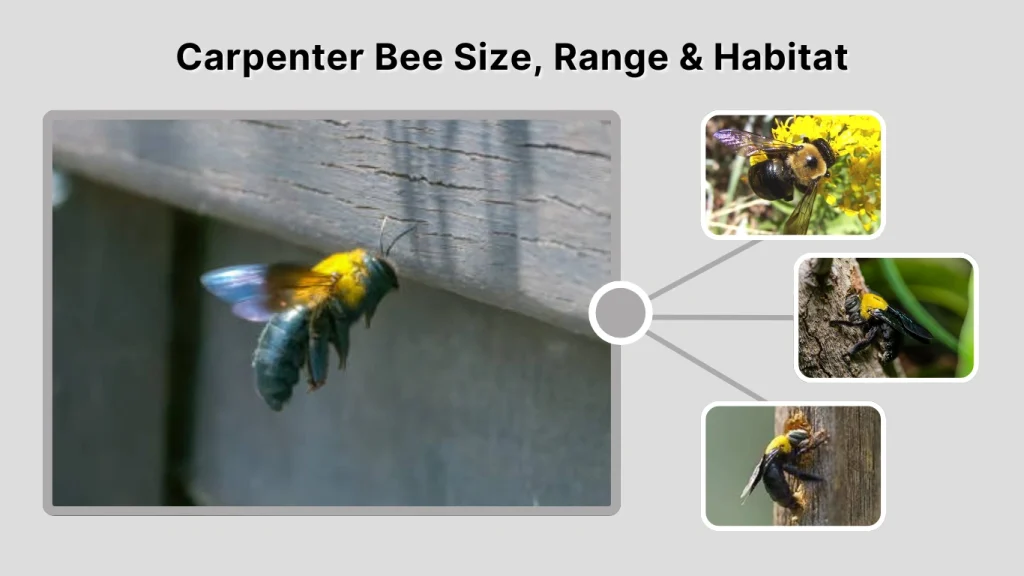
Carpenter bees vary in size but generally range from ½ to 1 inch long, with males sometimes appearing larger due to their bold flight behavior. Females tend to be heavier-bodied, built for excavating wood tunnels.
Their distribution spans much of North America, particularly in temperate and warm regions. They thrive in areas with abundant flowering plants and suitable wooden structures for nesting. Softwoods such as cedar, pine, cypress, or redwood are especially attractive because they are easier to bore into.
Carpenter bees prefer sun-exposed, unpainted wood, and they often return to the same nesting sites year after year. Deck railings, fences, eaves, pergolas, and outdoor furniture become prime targets. Though the bees themselves do not consume wood, their tunneling creates small but visible damage that can worsen over multiple generations.
Behavior & Nesting
Carpenter bees are solitary nesters, meaning each female builds her own tunnel rather than living in a colony. She excavates a perfectly smooth, round hole, then bores several inches into the wood before creating chambers for eggs and pollen. These tunnels may extend deeper each year as new generations reuse the same site.
Males hover outside nest entrances, guarding the territory. Though their behavior appears aggressive, it is entirely bluff. Their goal is to deter intruders, not attack them. Meanwhile, females focus on nest construction and provisioning. Carpenter bees spend much of their day visiting flowers, making them surprisingly beneficial pollinators despite their destructive nesting habits.
Damage to Wood
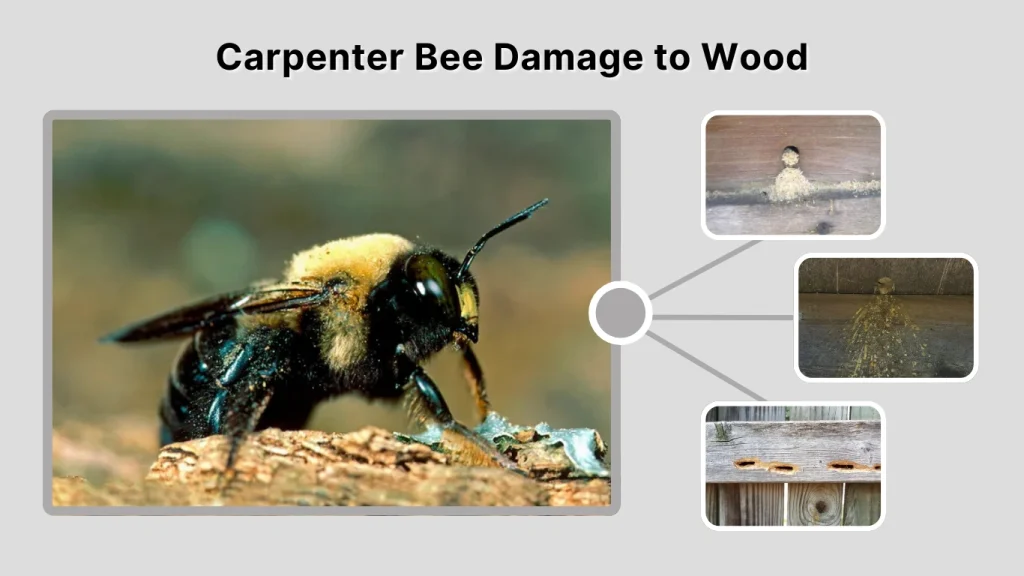
While a single tunnel seldom compromises a structure, repeated nesting over several seasons can create more noticeable deterioration. Common signs of carpenter bee damage include:
- Round holes approximately ½ inch wide
- Fine sawdust (frass) beneath wooden surfaces
- Yellowish staining from bee waste
- Increased bird activity—woodpeckers hunt bee larvae
- Multiple holes appearing along the same board
If left unmanaged, these repeated entry points may weaken trim boards, railings, or beams. Early detection and prompt repair are essential for preventing long-term structural damage.
Measuring Sting Risk
Carpenter bees pose a low sting threat compared to many stinging insects. Males, the bees most likely to approach you, cannot inflict harm. Females sting only when directly provoked or mishandled.
The highest-risk situations occur when someone:
- Seals or blocks a nesting hole while a female is inside
- Attempts to swat or grab the bee
- Handles wood containing an active nest
Despite these scenarios, carpenter bees remain far less defensive than wasps, hornets, or honeybees protecting a colony. Their solitary lifestyle reduces the likelihood of multiple stings.
Carpenter Bees vs Bumblebees (Comparison Table)
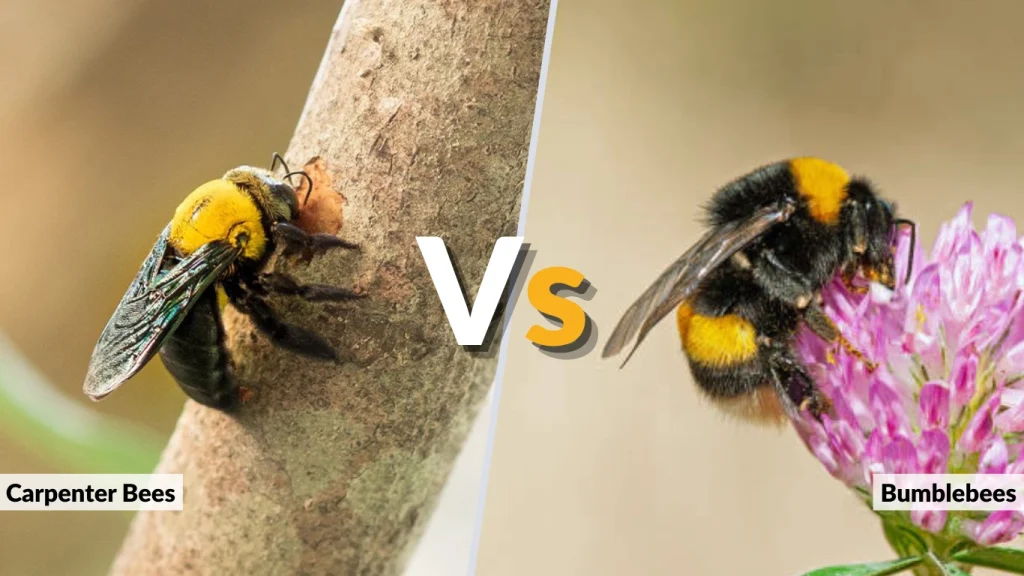
| Feature | Carpenter Bees | Bumblebees |
| Appearance | Shiny black abdomen, less hair | Hairy, rounded abdomen |
| Nesting | Tunnels in wood | Burrows in soil or cavities |
| Sting Risk | Females rarely sting; males cannot | Workers and queens can sting when threatened |
| Behavior | Solitary, territorial males | Social colonies with coordinated defense |
| Wood Damage | Yes, bore holes | None |
How to Prevent Carpenter Bee Problems
Preventing carpenter bee damage involves modifying wood surfaces and reducing nesting opportunities. Effective strategies include:
- Paint or varnish exposed wood, since bees prefer untreated lumber
- Use hardwoods for exterior construction when possible
- Seal old holes with dowels and caulk to prevent reuse
- Install carpenter bee traps during peak activity seasons
- Maintain regular inspections of decks, rails, and eaves
Being proactive helps limit tunneling and yearly reinfestation.
What to Do If Stung
If you are stung by a female carpenter bee, clean the area with soap and water, then apply a cold compress to reduce swelling. Over-the-counter antihistamines, hydrocortisone cream, or calamine lotion can help relieve itching and irritation.
Seek medical attention if severe swelling, breathing difficulty, or systemic allergic symptoms develop. Fortunately, such reactions are uncommon.
FAQs
Do carpenter bee stings hurt more than wasp stings?
Carpenter bee stings typically cause moderate pain, similar to a typical bee sting. They are generally less intense than wasp stings, which inject more venom and tend to sting repeatedly. Most discomfort from carpenter bees fades within a few hours with proper care.
Can male carpenter bees harm you?
No. Male carpenter bees cannot sting because they lack a stinger. Their aggressive behavior—hovering, charging, or buzzing loudly—is meant to defend territory, not injure intruders. They rely purely on intimidation, making them harmless despite their bold appearance.
How do I tell male and female carpenter bees apart?
Males usually have a pale yellow or white facial patch, while females are entirely black. Males also tend to be more curious and confrontational. Females, although capable of stinging, stay focused on nesting and pollination and rarely interact with people.
Will carpenter bees sting pets or children?
Carpenter bees rarely sting pets or children unless they are grabbed or directly provoked. Curious animals may trigger defensive behavior, but even then, the risk is low. Monitoring outdoor play areas and discouraging close contact with nests helps minimize encounters.
Do carpenter bees die after stinging like honeybees?
No. Carpenter bees do not have barbed stingers, so they can sting multiple times without dying. However, they seldom use this ability. Honeybees die after stinging because their barbed stinger lodges in the skin and tears away from the body.
