
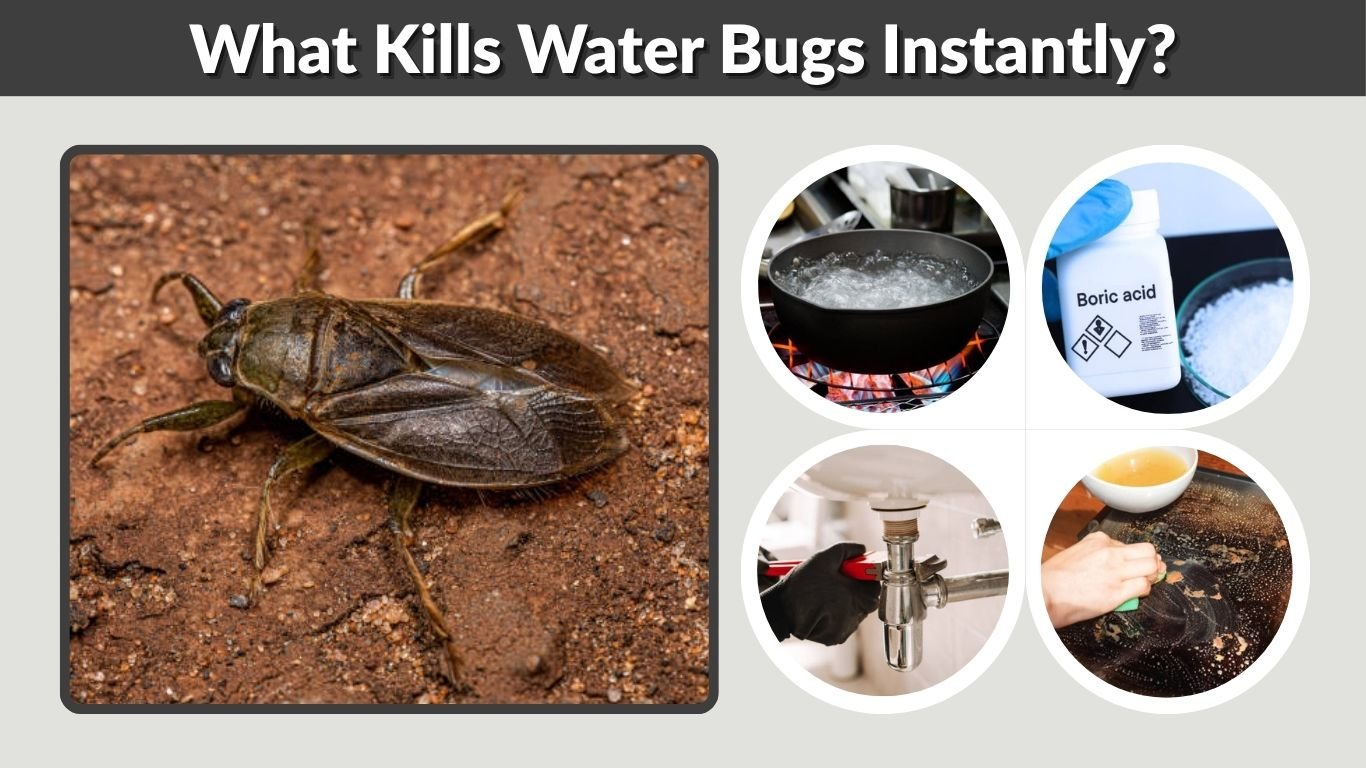
Seeing a large “water bug” crawling across the kitchen or bathroom can be alarming. The fastest way to kill one is usually a cockroach-labeled contact insecticide, applied directly according to its label. Crushing it or vacuuming it also provides immediate physical removal. However, killing the visible bug does not eliminate hidden insects or eggs. For lasting control, use bait, remove moisture, seal entry points, and keep food unavailable. Avoid dangerous remedies such as mixing bleach with other cleaners or pouring boiling water around your home.
What Is a Water Bug?
The term “water bug” can describe two different types of insects:
- Cockroaches found in damp areas: Oriental and American cockroaches are frequently called water bugs because they commonly appear near drains, basements, sewers, bathrooms, and leaking pipes.
- True aquatic water bugs: Giant water bugs, backswimmers, and water boatmen live in ponds, pools, and other bodies of water.
Oriental cockroaches are especially associated with dark, cool, damp locations and are commonly called water bugs. Correct identification is important because indoor cockroaches require a different treatment from insects swimming in a pool.
What Kills Water Bugs Instantly?
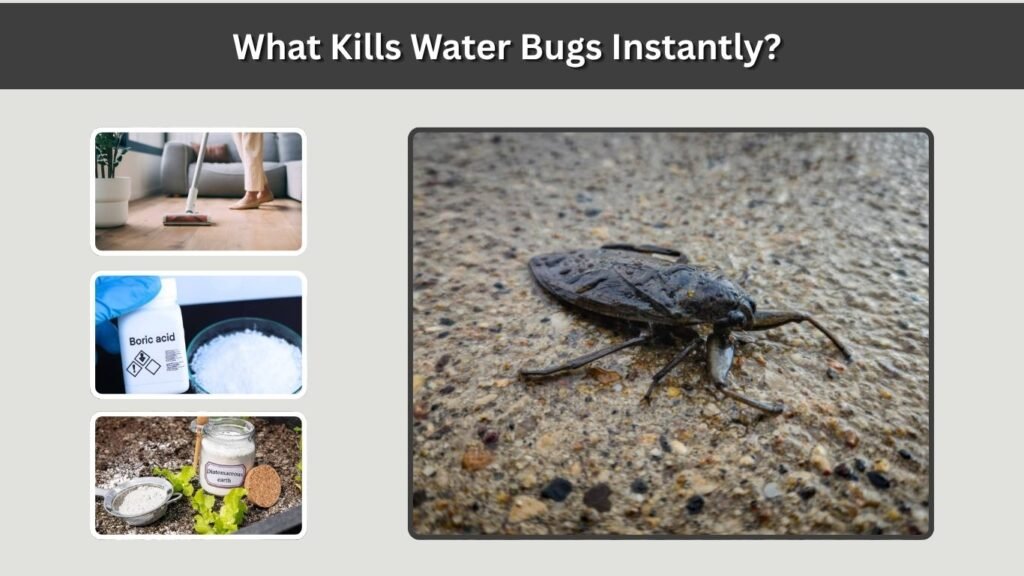
Several methods can kill or remove an exposed water bug quickly. However, their speed and effectiveness against an infestation vary.
| Treatment | Speed | Controls an infestation? |
| Cockroach contact spray | Seconds to minutes | No |
| Crushing the insect | Immediate | No |
| Vacuuming | Immediate removal | No |
| Soapy-water spray | Variable | No |
| Gel bait or bait station | Several hours or days | Yes |
| Boric acid | Several days | Yes, when applied properly |
| Diatomaceous earth | Several days | May help |
| Bleach | Only with direct exposure | Not recommended |
| Boiling water | Only with direct exposure | Not recommended |
Cockroach Contact Spray
Aerosol insecticides labeled for cockroaches are generally the fastest chemical option. Many contain pyrethrins or pyrethroids that attack the insect’s nervous system, producing rapid paralysis and death.
Spray only the individual bug or the specific cracks and crevices permitted by the label. Do not spray entire floors, walls, countertops, or rooms. The EPA recommends targeted pesticide applications rather than widespread indoor spraying.
Keep children and pets away during treatment, ventilate the room when directed, and never apply an outdoor insecticide indoors.
Crushing or Vacuuming
Crushing a water bug kills it immediately, although it can leave a stain and expose you to insect debris. Use paper towels or a disposable tool, place the remains in a sealed bag, and clean the surface afterward.
A vacuum is a cleaner option when the bug is difficult to reach. Vacuum the insect and nearby cracks, then empty the vacuum outdoors into a sealed trash bag. Penn State Extension includes vacuuming as a practical method for removing larger cockroach infestations.
Dish Soap and Water
A strong stream of soapy water may kill an exposed cockroach when its entire body is thoroughly coated. The soap can interfere with the protective surface of the insect and block normal breathing.
However, results are inconsistent. A lightly sprayed bug may recover or escape into a wall gap. Soapy water also leaves no useful residual treatment and will not affect insects hidden elsewhere. It is best considered an emergency contact method rather than a complete control plan.
What Is the Best Water Bug Killer for the House?
The best long-term treatment is normally a combination of gel bait, sanitation, moisture control, monitoring, and exclusion. University of California’s Integrated Pest Management program notes that baits generally provide better cockroach control than sprays and that pesticides alone will not solve the underlying problem.
Gel Baits and Bait Stations
Gel bait does not kill instantly, but it is more useful than contact spray for an infestation. Place many small bait dots near:
- Sink cabinets
- Plumbing openings
- Behind refrigerators
- Under appliances
- Basement walls
- Bathroom fixtures
- Known hiding places
Cockroaches consume the bait and may carry its effects back into their hiding areas. Small, well-distributed bait placements are generally more effective than a few large amounts. Baits can take days or weeks to produce full control, so do not assume the product has failed after one night.
Do not spray insecticide directly over or around bait because repellent residues may discourage cockroaches from feeding.
Boric Acid
Boric acid can kill water bugs after they walk through a light dusting and ingest it while grooming. It is not an instant killer, but it may provide lasting control in dry, protected cracks and wall voids.
Apply only a thin, barely visible layer of a pesticide product labeled for cockroach control. Thick piles can repel insects. Keep the powder away from food, children, pets, and exposed surfaces, and follow every instruction on the package. Boric acid can cause poisoning when concentrated products are swallowed or misused.
Diatomaceous Earth
Pesticide-grade diatomaceous earth damages an insect’s protective outer layer, eventually causing dehydration. It works slowly and must remain dry.
Apply it only where the label allows, such as protected cracks and crevices. Avoid creating airborne dust because inhalation can irritate the respiratory system. Do not substitute pool-filter diatomaceous earth for a registered indoor pest-control product.
Does Bleach Kill Water Bugs?
Bleach may injure or kill an insect that is completely soaked, but it is not a practical water bug treatment. It does not attract hidden cockroaches, destroy a nest, or provide dependable residual control. Excessive bleach use can also damage surfaces and expose people to irritating fumes.
Never combine bleach with ammonia, vinegar, drain cleaner, insecticide, or another household cleaning product. Dangerous gases can be produced. When bleach is used for normal cleaning, wear appropriate protection, ventilate the room, and follow the product instructions.
Does Boiling Water Kill Water Bugs?
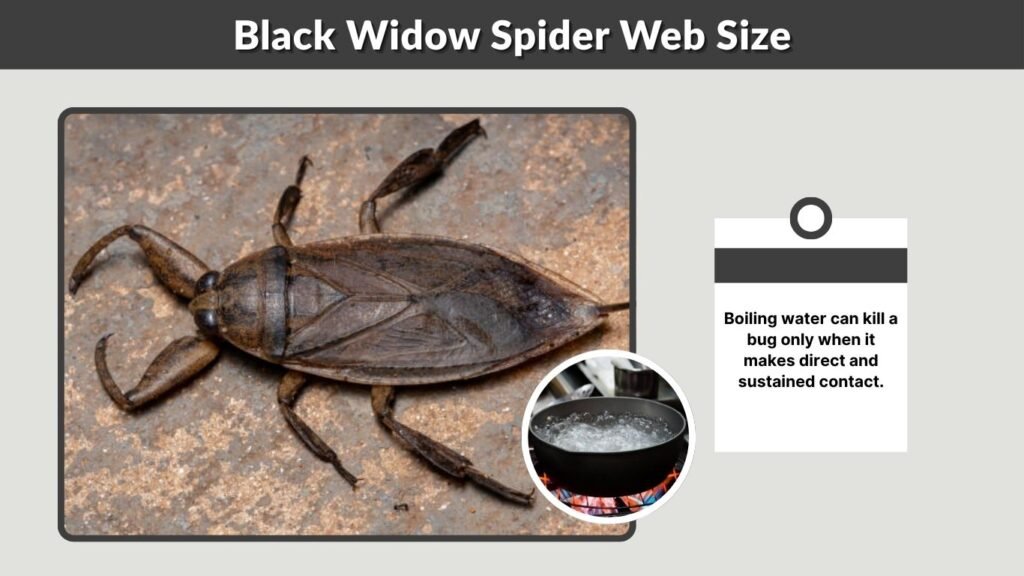
Boiling water can kill a bug only when it makes direct and sustained contact. Nevertheless, pouring boiling water into drains, wall openings, or across flooring is unsafe and unreliable.
It can cause severe burns, damage plumbing components, loosen seals, warp flooring, and push surviving cockroaches deeper into hiding. Water poured into a drain also cannot reach every insect living inside sewer lines or wall voids. Use drain covers, repair plumbing problems, and apply an appropriately labeled treatment instead.
How to Kill Water Bugs in a Pool
Pool “water bugs” are often aquatic insects rather than cockroaches. The safest immediate method is to remove them with a long-handled skimmer net.
After removal:
- Brush the pool walls and floor.
- Vacuum organic material and algae.
- Clean the filter and skimmer baskets.
- Maintain proper circulation.
- Test and balance the water according to the pool manufacturer’s directions.
- Reduce unnecessary outdoor lighting near the pool at night.
Water boatmen, backswimmers, and swimming beetles generally perform well in still water, so improved circulation and removal of algae and organic material can make the pool less attractive. This is a preventive inference based on their preferred habitat.
Never add household cockroach spray, bleach mixtures, or garden pesticide to swimming water unless the product is specifically registered and labeled for that exact use.
How to Prevent Water Bugs From Returning
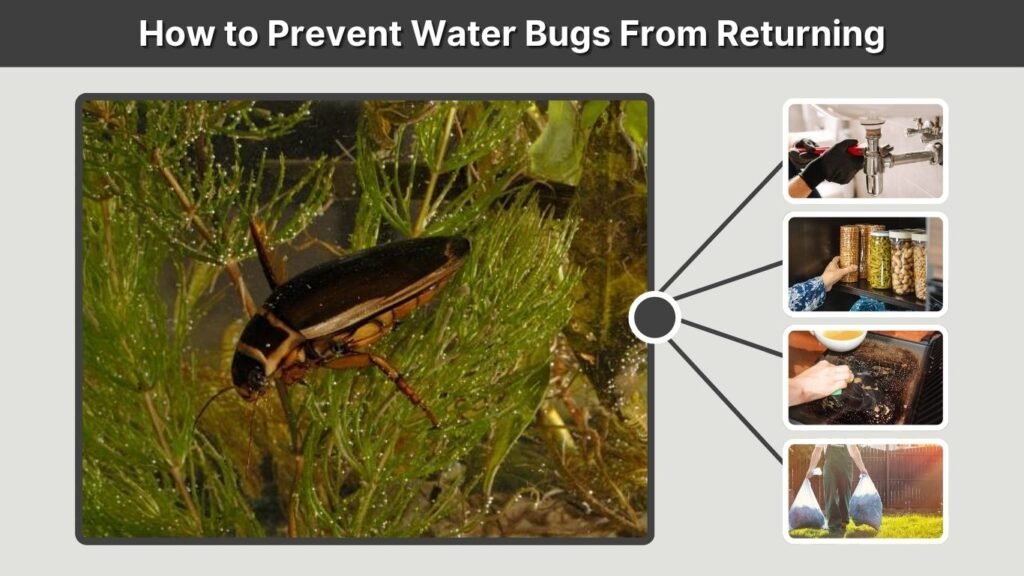
Cockroaches need food, moisture, shelter, and access. Removing these resources makes treatments more successful.
- Repair leaking faucets, pipes, toilets, and air conditioners.
- Dry sinks, tubs, and countertops before bedtime.
- Store food in tightly sealed containers.
- Do not leave pet food or water out overnight.
- Remove garbage regularly.
- Clean grease and crumbs from under appliances.
- Seal gaps around pipes, doors, windows, and baseboards.
- Install door sweeps and drain screens.
- Reduce cardboard boxes and clutter.
- Use sticky traps to locate active hiding areas.
Keeping the home clean and dry is especially important because cockroaches commonly hide in warm, dark, moist locations.
FAQs
Does a cockroach spray kill water bugs?
Yes. An aerosol specifically labeled for cockroaches can kill an exposed indoor water bug on contact. Check the label because formulas and approved uses differ. Apply it only to listed pests and approved locations, and keep people and pets away as instructed.
Does baking soda kill water bugs?
Baking soda is not considered a dependable stand-alone treatment. Homemade mixtures may fail because cockroaches must consume enough of the material. Properly labeled gel baits, sanitation, leak repair, and exclusion provide more predictable results.
Does alcohol kill water bugs?
Concentrated alcohol may kill an insect after direct saturation, but it evaporates rapidly, is flammable, and provides no lasting control. Do not spray alcohol near flames, electrical appliances, outlets, or hot surfaces. A labeled cockroach product is safer and more reliable.
Can water bugs kill humans?
Household cockroaches are not considered deadly, although their waste and body particles can contribute to allergies and asthma. True giant water bugs can deliver a painful defensive bite when handled, so remove them with a net or container rather than touching them.
When should I call a pest-control professional?
Call a licensed professional when water bugs appear repeatedly, are active during daylight, are found throughout several rooms, or continue after several weeks of baiting and sanitation. These signs can indicate a large infestation or an entry source connected to drains, sewers, or structural gaps.
