
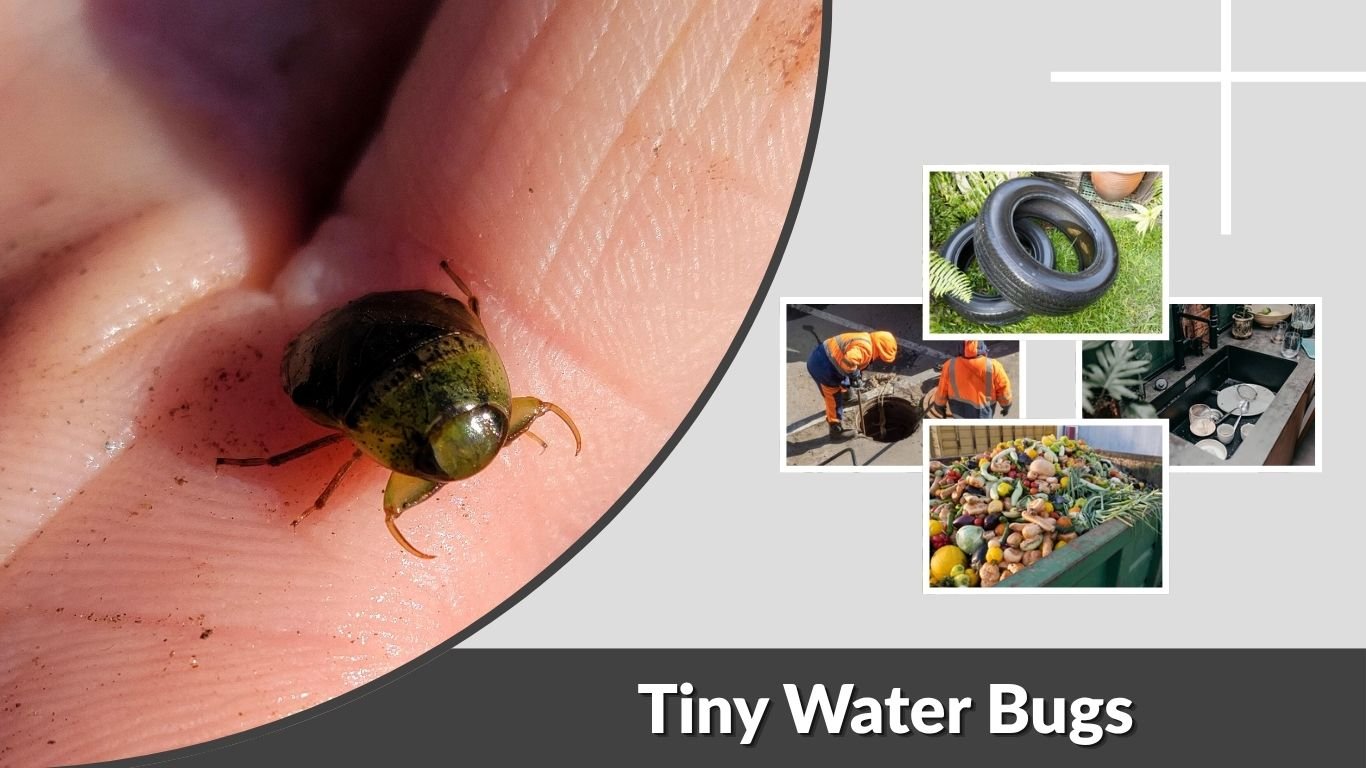
Tiny bugs found in water are not always true water bugs. Depending on their color, shape, movement, and location, they may be mosquito larvae, springtails, drain fly larvae, water mites, copepods, ostracods, or young aquatic insects. Some live naturally in ponds and aquariums, while others appear in pet bowls, sinks, bathrooms, pools, or standing water around the home. Correct identification is important because harmless pond organisms require a different response from insects found in drinking water or plumbing.
What Are Tiny Water Bugs?
The phrase “tiny water bugs” describes many small insects and other organisms associated with moisture. Some swim beneath the surface, some wriggle like worms, and others jump across the top of the water.
True giant water bugs are relatively large aquatic predators, so a nearly microscopic bug is probably another type of organism. Its location provides the best clue.
| Appearance or behavior | Possible identification |
| Wriggles near the surface | Mosquito larva |
| Tiny black speck that jumps | Springtail |
| White worm-like body | Drain fly larva |
| Red or orange moving dot | Water mite |
| Tiny oval shell-like body | Ostracod |
| Clear or white swimming speck | Copepod |
| Tadpole-like swimmer | Mosquito pupa or aquatic nymph |
| Skates on the surface | Water strider or springtail |
10 Common Tiny Bugs Found in Water
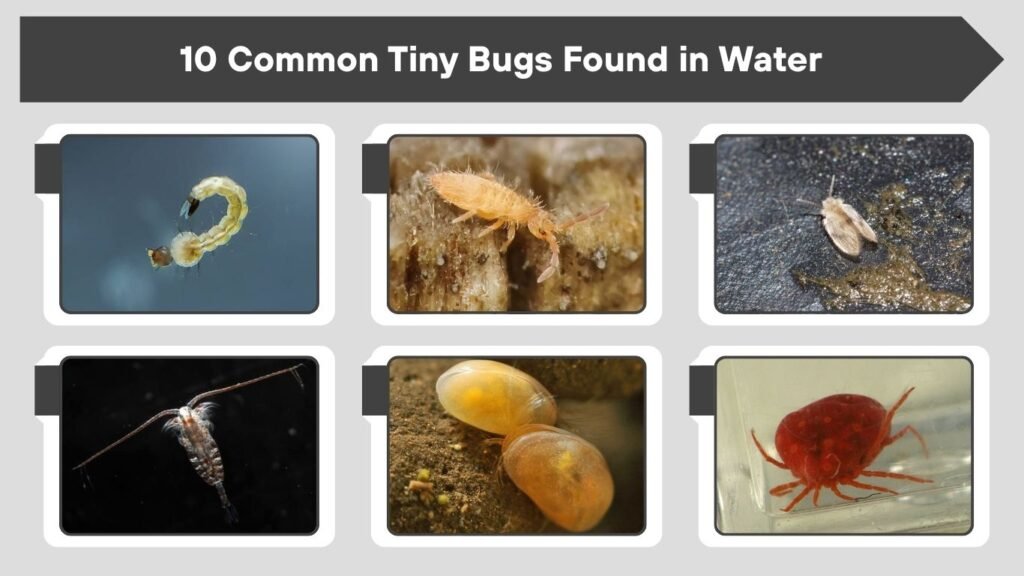
Many of these organisms are naturally aquatic, while others only gather around moisture. Their presence may indicate standing water, decaying organic matter, algae, dirty plumbing, or an uncovered container.
1. Mosquito Larvae
Mosquito larvae are small, worm-like organisms that wriggle through standing water. Most hang just below the surface and return regularly to breathe.
They commonly develop in buckets, birdbaths, blocked gutters, plant saucers, pet bowls, old tires, and neglected pools. The larvae later become comma-shaped pupae before emerging as adult mosquitoes.
Emptying and cleaning containers at least once a week prevents them from completing their development.
2. Springtails
Springtails are extremely small insects commonly found around damp soil, bathrooms, sinks, pools, and pet bowls. They may appear black, gray, brown, or white.
These insects do not truly live underwater for long periods. They gather on moist surfaces and may float because their bodies repel water. When disturbed, many springtails use a forked appendage beneath the abdomen to jump.
Their presence usually indicates excess moisture, mold, algae, or decaying organic material.
3. Drain Fly Larvae
Drain fly larvae are pale, grayish, or translucent and look like tiny worms. They develop in the slimy organic film found inside drains, overflow openings, sewage areas, and other constantly wet places.
Finding them in a sink or bathroom may mean that a nearby drain contains accumulated debris. Pouring water into the drain may not remove the breeding material. The inside of the pipe usually needs to be scrubbed with a drain brush.
4. Copepods
Copepods are tiny crustaceans that often look like clear, white, or brown specks moving through pond, aquarium, or well water. Many have teardrop-shaped bodies and swim with short, jerky movements.
They are natural parts of freshwater ecosystems and provide food for fish and aquatic insects. A few copepods in an established aquarium are generally not a problem. However, visible organisms in household drinking water should be investigated.
5. Ostracods
Ostracods, commonly called seed shrimp, are miniature crustaceans enclosed in rounded shells. They may appear white, tan, brown, or dark gray.
They crawl across aquarium surfaces or swim with slow, irregular movements. Ostracods eat algae, bacteria, and decaying organic matter. Their presence in a fish tank is often harmless, although a sudden population increase may indicate excess food or waste.
6. Water Mites
Water mites are tiny relatives of spiders. They are often bright red, orange, green, or brown and move across rocks, plants, or the bottom of ponds.
Most are found in natural freshwater rather than household plumbing. Their immature stages may live as parasites on aquatic insects, while many adults prey on small organisms. They are not the same as house dust mites and do not normally infest people.
7. Water Fleas
Water fleas, including Daphnia, are tiny transparent crustaceans that move through the water with quick hopping motions. Despite their name, they are not fleas and do not bite people or pets.
They are common in ponds, outdoor containers, and aquariums. Fish frequently eat them. Large numbers may appear when algae and other microscopic food are abundant.
8. Water Boatman Nymphs
Young water boatmen are small aquatic insects with oval bodies and oar-like rear legs. They swim below the surface in ponds, pools, and slow-moving water.
Most water boatmen feed on algae, decaying material, and tiny organisms. They may enter swimming pools after flying toward reflected light. Proper filtration and water treatment usually prevent them from becoming established.
9. Backswimmer Nymphs
Backswimmers resemble water boatmen but usually swim upside down near the surface. Young nymphs may look like tiny pale or dark tadpoles.
They are predators that feed on mosquito larvae and other small aquatic animals. Unlike many harmless water organisms, backswimmers can pierce the skin when handled, producing a painful bite. Avoid picking them up with bare hands.
10. Black Fly Larvae
Black fly larvae live in flowing water rather than stagnant containers. They attach themselves to rocks, plants, or submerged objects in streams and other moving water.
Their bodies are small and worm-like, with an enlarged rear section. They filter microscopic food from the current. They are unlikely to breed in an ordinary indoor water bowl, sink, or swimming pool.
Tiny Bugs in a Dog or Cat Water Bowl
Small bugs in a pet’s water bowl may be springtails, fungus gnats, ants, beetles, mosquito larvae, or insects that accidentally fell into the water.
Why Bugs Gather Around Pet Water
Pet bowls provide steady moisture. Food particles, saliva, algae, and nearby damp flooring can make the area even more attractive.
Outdoor bowls may collect leaves, soil, pollen, and mosquito eggs. Indoors, insects may come from houseplant soil, cracks beneath cabinets, drains, or food stored nearby.
How to Clean the Bowl
Discard the contaminated water instead of allowing the pet to continue drinking. Wash the bowl thoroughly with hot water and pet-safe dish soap, rinse it well, and refill it with fresh water.
Clean the surrounding floor and inspect beneath mats or raised feeding stations. Replace indoor water daily and outdoor water more frequently during warm weather. A pet fountain should be disassembled and cleaned according to the manufacturer’s instructions because insects and organic residue can collect inside the pump.
Tiny Water Bugs in the Bathroom, Sink, or Kitchen
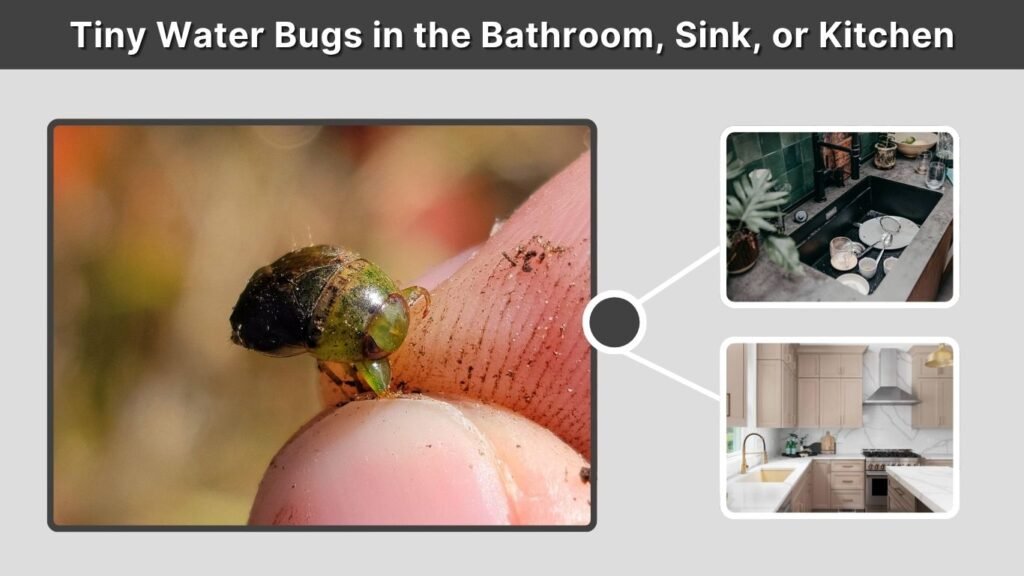
Bugs around sinks and bathrooms are usually attracted to dampness rather than the water itself. Common possibilities include springtails, drain flies, fungus gnats, cockroach nymphs, and small beetles.
Check the Drains
Cover a suspected drain overnight with clear tape, leaving a small opening for airflow. Insects caught beneath the tape may indicate that the drain is the breeding source.
Remove hair and debris, scrub the pipe walls, and clean overflow openings. An enzyme-based drain product may help remove organic buildup when used according to its label.
Never mix bleach with vinegar, ammonia, acids, or other drain-cleaning chemicals.
Reduce Moisture
Repair leaking faucets and pipes, dry the sink after use, improve ventilation, and clean beneath appliances. Springtails and similar moisture-loving insects usually decline when damp conditions are corrected.
Tiny Black Bugs in Pool Water
Small black insects on or beneath pool water may be springtails, water boatmen, backswimmers, thrips, beetles, or insects blown in from surrounding vegetation.
Why They Enter Pools
Pools reflect light and may resemble natural ponds to flying aquatic insects. Algae, leaves, poor circulation, and low sanitizer levels can make the water more suitable for small organisms.
Use a skimmer to remove insects and debris. Clean the filter, maintain proper circulation, brush pool surfaces, and keep water chemistry within the recommended range for the pool system. Trim nearby vegetation when insects repeatedly drop into the water.
Tiny Bugs in Pond or Aquarium Water
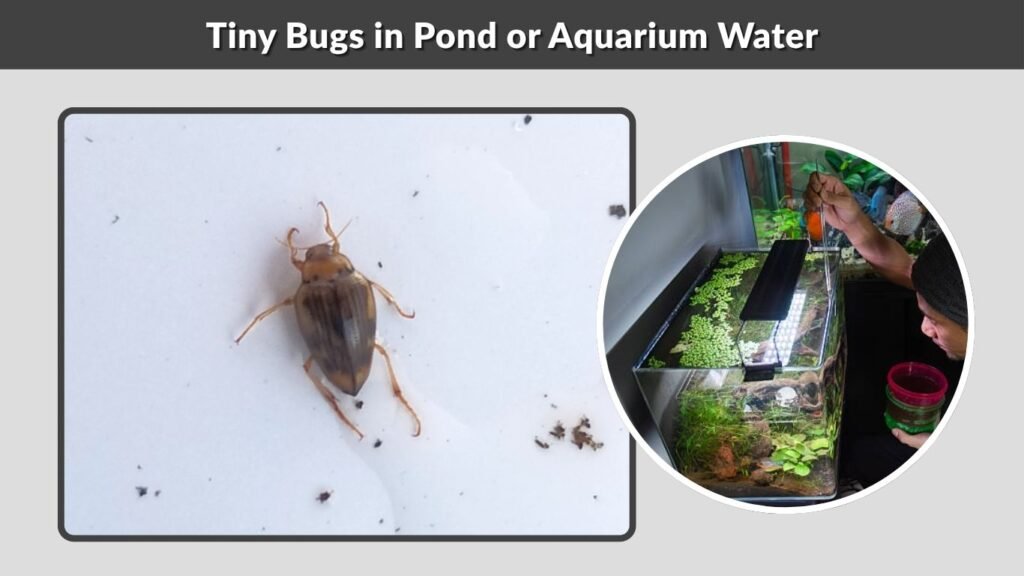
Many tiny organisms are normal in healthy aquatic environments. Copepods, ostracods, water fleas, insect larvae, and mites form part of the freshwater food web.
When Aquarium Bugs Are Harmless
A small population of copepods or seed shrimp may help consume algae and waste. Fish may also eat them. Their presence does not automatically mean the aquarium is dirty.
A population explosion, however, can indicate overfeeding or accumulated organic matter. Reduce excess food, vacuum the substrate, remove dead plant material, and maintain the filter.
Avoid using household insecticides in or around an aquarium.
Tiny Bugs in Drinking or Well Water
Visible insects or unknown organisms in drinking water should not be ignored. The source may be an uncovered container, contaminated faucet aerator, storage tank, damaged well cap, plumbing problem, or external contamination.
Do not continue drinking water that visibly contains bugs until the source has been identified. Use a safe alternative water supply, inspect the container and faucet, and arrange appropriate water testing when the organisms appear directly from a private well or household plumbing.
Cleaning the glass or bottle is sufficient only when the insect clearly fell into the water after it was poured. Repeated appearances require investigation by a qualified plumber, well contractor, water supplier, or local health authority.
How to Get Rid of Tiny Water Bugs
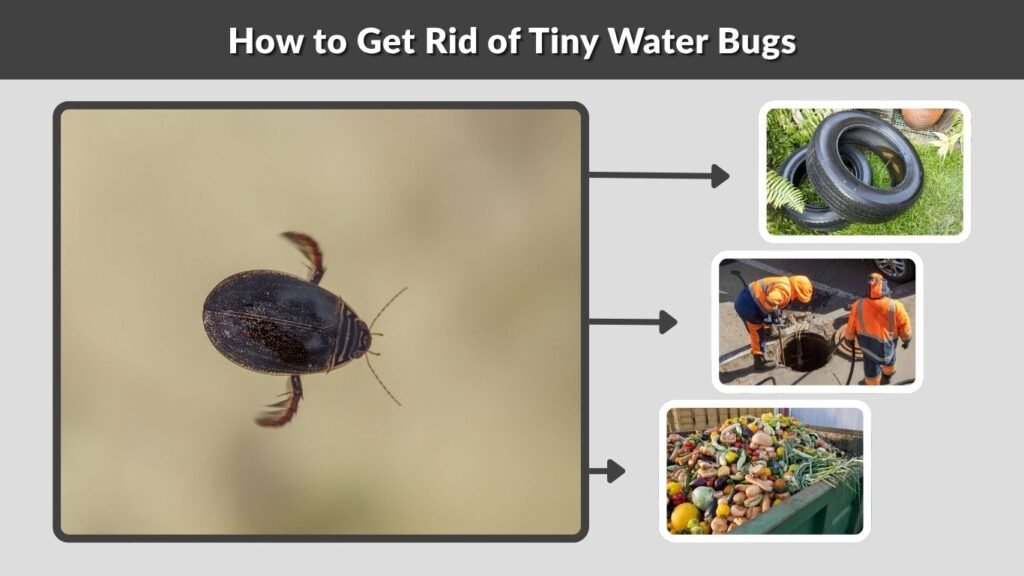
Treatment depends on where the organisms are developing. Killing visible adults will not provide lasting control when eggs or larvae remain in standing water, drains, or damp materials.
Remove Standing Water
Empty buckets, plant saucers, toys, tarps, and other containers that collect rainwater. Clean birdbaths and outdoor pet bowls regularly.
Keep gutters clear and repair areas where water remains after rain. Containers that must hold water should be covered or maintained properly.
Eliminate Organic Buildup
Clean drains, garbage disposals, fountains, filters, and water bowls. Remove algae, spoiled food, dead leaves, pet-food residue, and other materials that feed larvae or microorganisms.
Control Indoor Humidity
Use ventilation or a dehumidifier in damp rooms. Repair leaks and dry wet cabinets, flooring, and walls. Moisture reduction is especially effective against springtails and drain-associated insects.
Avoid Unnecessary Pesticides
Do not apply insecticide to pet water, drinking water, aquariums, ponds, or swimming pools unless the product is specifically approved for that use. Physical cleaning, filtration, moisture correction, and source removal are usually safer and more effective.
FAQs
What are tiny black bugs swimming in water?
They may be mosquito larvae, springtails, aquatic beetle larvae, water boatmen, or small crustaceans. Observe whether they wriggle, jump, swim upside down, or remain on the surface to narrow the identification.
Are tiny water bugs harmful?
Many pond and aquarium organisms are harmless. Backswimmers may bite, while bugs in pet or drinking water can indicate contamination or poor sanitation. Avoid consuming unidentified organisms and clean the water source.
What are tiny tadpole-looking bugs in water?
Mosquito pupae and larvae are common possibilities. Water boatmen, backswimmer nymphs, and other aquatic insect nymphs may also resemble miniature tadpoles.
Why are tiny white bugs in my plant water?
They may be springtails, soil mites, fungus gnat larvae, or small crustaceans living in constantly wet conditions. Reduce overwatering, empty standing water, and remove decaying plant material.
How can I prevent bugs in pet water bowls?
Wash bowls daily, replace the water frequently, clean the surrounding floor, and keep food residue away from the bowl. Outdoor bowls should be emptied and scrubbed often to prevent mosquitoes and algae.
