
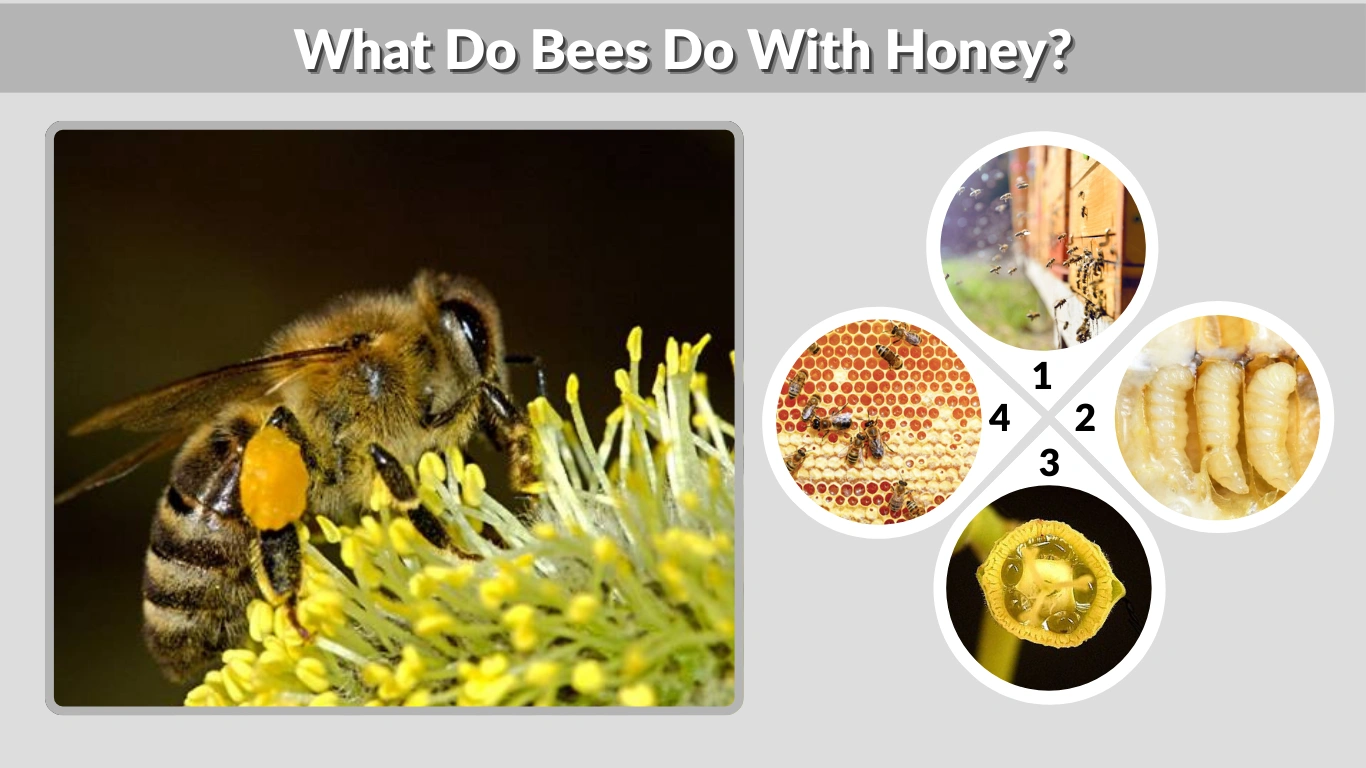
Most people associate bees with honey, but few understand why bees make honey, how they use it, and what happens to the honey stored inside a hive. Honey isn’t made for humans—it’s created by bees to fuel their colony, feed their young, survive winter, and power the daily work that keeps a hive thriving. Different types of bees use food in different ways, and honey bees alone produce the familiar golden honey we eat. This guide explains exactly what bees do with the honey they make, how they use pollen, nectar, and water, and what you should do when you encounter bee swarms or nests.
Why Bees Make Honey
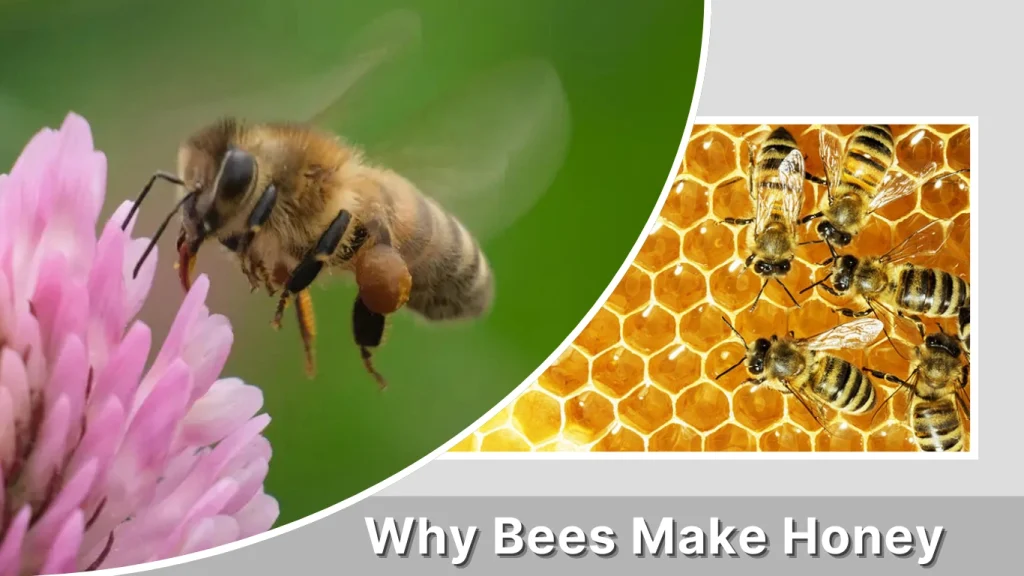
Honey is the backbone of honey bee survival. It is much more than a sweet treat—it’s a long-term food strategy shaped by evolution.
Long-Term Winter Survival
Honey is a high-energy food that honey bees use to survive winter. When temperatures drop, bees form a tight cluster inside the hive and shiver their wing muscles to generate heat. This consumes a tremendous amount of energy. Without stored honey, a colony cannot maintain the warmth needed for the queen and brood to survive until spring.
Feeding the Brood (Larvae)
Young bees cannot thrive on nectar alone. They need protein, fats, vitamins, and minerals. Worker bees mix pollen and honey to create “bee bread,” the primary food for growing larvae. Without honey, brood development stops, and the colony collapses.
Emergency Food Reserves
Even in warm months, bees face nectar shortages from storms, droughts, or sudden changes in bloom cycles. Honey acts as a safety net. Stored honey keeps the colony alive when flowers temporarily disappear. It’s the bee equivalent of a pantry full of preserved food.
What Bees Do With the Honey They Make
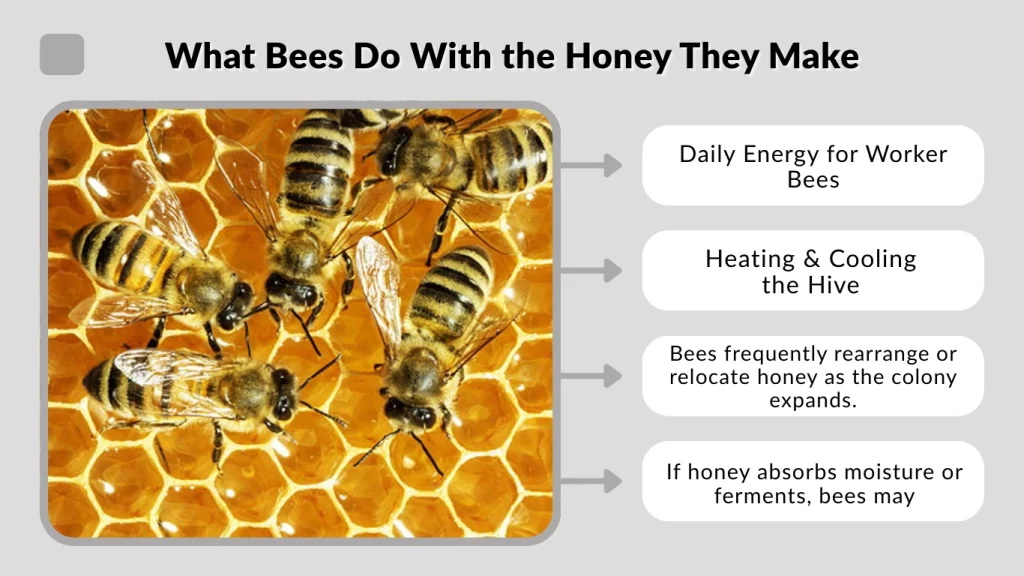
Honey bees do far more than just store honey—they rely on it every day.
Daily Energy for Worker Bees
Flight requires enormous metabolic energy. A single bee may visit 50–100 flowers per trip, and honey provides the carbohydrate boost needed for this constant work. Bees also burn honey while defending the hive, cleaning, building comb, and caring for young bees.
Heating & Cooling the Hive
Bees consume honey to warm their flight muscles, producing heat for the entire colony. In summer, they use honey-fueled energy to fan their wings, cooling the hive and regulating humidity. Honey serves as the fuel for every climate-control behavior inside the hive.
What Bees Do With Excess Honey
When bees have more honey than they immediately need, they store it in wax comb cells and seal it with a thin wax cap. This preserved honey can remain usable for decades due to its low moisture and antibacterial properties. Bees frequently rearrange or relocate honey as the colony expands.
What Bees Do With Old or Fermented Honey
If honey absorbs moisture or ferments, bees may:
- Eat it if safe
- Remove the spoiled honey
- Clean or rebuild the wax cells
Honey bees are surprisingly hygienic and will not leave bad honey in the hive for long.
What Honey Bees Do With Pollen, Nectar & Water
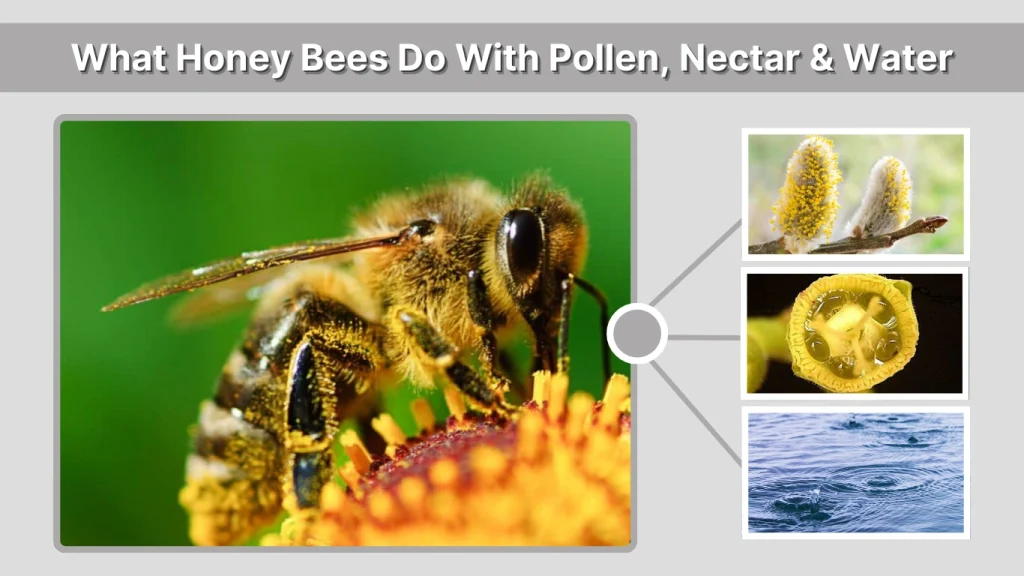
Honey bees don’t rely on honey alone. They use three main resources—pollen, nectar, and water—each serving a unique purpose.
Pollen: The Protein Source
Pollen is the main source of protein in a bee’s diet. Honey bees collect pollen on their hind legs using “pollen baskets.” Inside the hive, pollen is:
- Fed to young larvae
- Mixed with honey to create nutrient-rich bee bread
- Stored in cells for short-term use
Without pollen, larvae cannot grow, and the colony quickly weakens.
Nectar: The Raw Material for Honey
Nectar is gathered from flowers and stored temporarily in the honey stomach. Back in the hive, bees:
- Add enzymes to break down sugars
- Spread nectar into cells
- Fan their wings to evaporate moisture
- Seal the thickened substance as honey
This conversion process transforms watery nectar into long-lasting honey.
Water: A Vital Hive Resource
Bees collect water for several essential tasks, including:
- Cooling the hive through evaporation
- Diluting honey to feed larvae
- Maintaining humidity for brood development
Water carriers act almost like air-conditioning technicians inside the colony.
What Non-Honey Bees Do With Pollen & Nectar
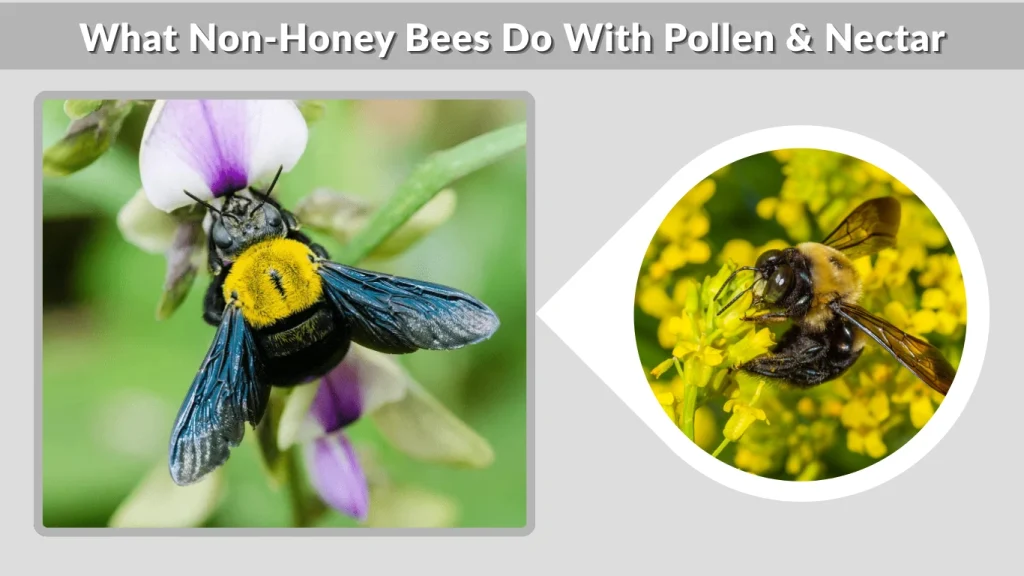
Most bees do not make honey at all. Solitary bees—like mason bees, leafcutter bees, and miner bees—use nectar and pollen differently.
These bees:
- Do not build large hives
- Do not overwinter as full colonies
- Do not need long-term stored food
Instead, solitary bees collect pollen and nectar to create a single pollen ball for each egg. They seal it in a nest chamber, and the larva consumes it as it grows. There is no honey storage, no comb building, and no honey surplus.
What Wild Bees Do With Their Honey
Wild honey bees behave similarly to managed honey bees. They use honey for:
- Overwintering
- Feeding brood
- Fueling foraging
- Surviving nectar shortages
However, wild colonies rarely create large surpluses. Their honey stores must last months without human assistance. Unlike beekeepers, wild bees never harvest honey—they consume it all for survival.
Most wild bee species do not make honey at all. They are solitary or have small seasonal colonies, so they rely on pollen and nectar directly rather than converting it into long-term honey stores.
What Bees Make Honey With (How Honey Is Made)
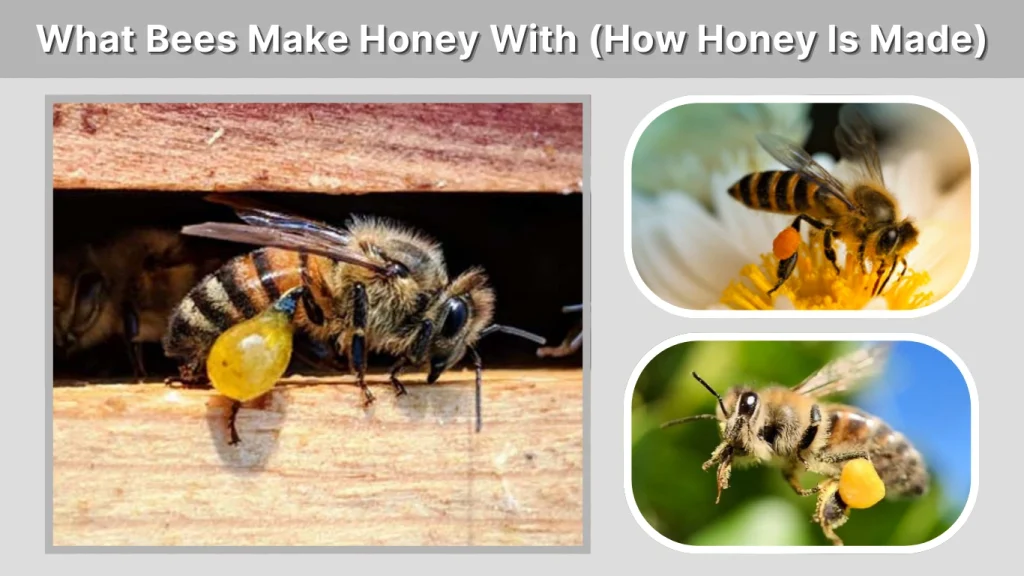
Honey production is a multi-step biological process requiring specialized anatomy.
Nectar Collection & Storage
Bees collect nectar from flowers and store it in a special organ called the honey stomach—separate from their digestive stomach.
Enzyme Transformation
Inside the honey stomach, enzymes break down complex sugars, beginning the conversion from nectar to honey.
Evaporation
Back in the hive, worker bees spread nectar across comb cells. Other bees fan their wings vigorously to evaporate moisture. Nectar must drop from ~70% water to about 18% moisture to become honey.
Capping the Honey
Once thickened, bees cap each cell with wax to preserve it. This sealed honey can last decades without spoiling.
What Honey Bees Do With Their Dead
Honey bees maintain a remarkably clean hive. They have a specific role known as the undertaker bee.
Undertaker bees:
- Locate dead bees
- Carry them out of the hive
- Drop them away from the entrance
This prevents disease, parasites, and odors from weakening the colony. Honey bees even remove dying brood if it shows signs of infection—a behavior known as hygienic behavior.
What Honey Bees Smell With (170 Odor Receptors)
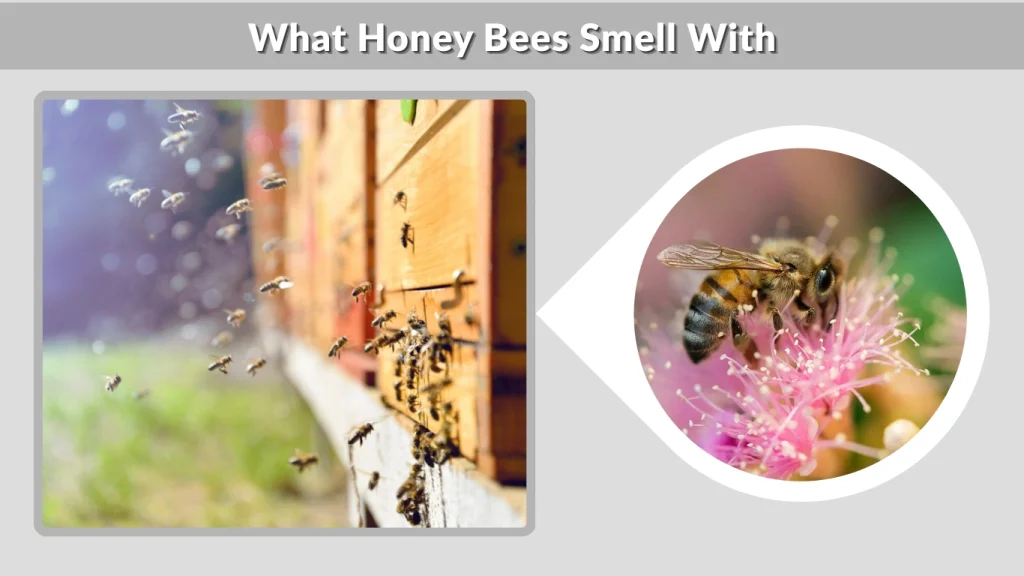
Honey bees have an extraordinary sense of smell due to 170 odor receptors on their antennae. They use scent for:
- Finding flowers
- Communicating hive pheromones
- Identifying hive mates
- Detecting danger
- Locating the queen
- Navigating between hive and foraging sites
Their smell is so sensitive they can detect a flower from meters away and even recognize chemical signatures of diseases inside the hive.
What Honey Bees Provide Us With
Honey bees give humans far more than honey.
They provide:
- Honey (food & medicine)
- Beeswax (candles, cosmetics, polish, skincare)
- Propolis (antimicrobial resin)
- Royal jelly (special queen food)
- Pollination (critical for fruits, vegetables, nuts)
Pollination is their most important contribution—supporting around one-third of global food crops.
What To Do When You Find Bees
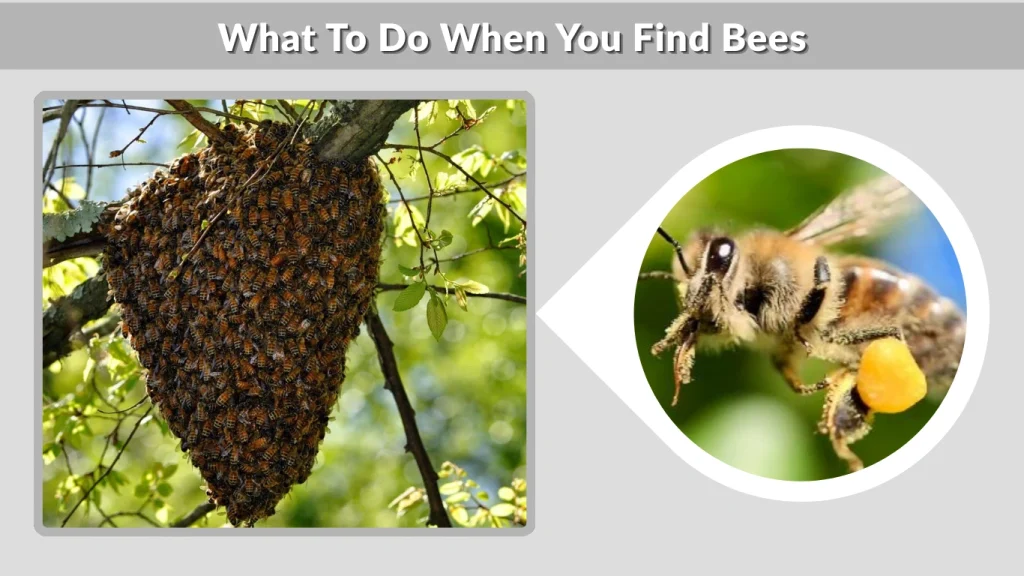
What To Do With a Swarm of Honey Bees
A swarm looks scary but is usually harmless. Bees are full of honey and temporarily homeless, making them very gentle.
Do:
- Keep distance
- Don’t spray them
- Call a beekeeper for relocation
Don’t:
- Block their path
- Disturb them or throw objects
Swarm removal is usually free.
What To Do With a Honey Bee Nest or Hive
If bees are living in a wall, tree, shed, or roof:
- Avoid sealing entrances
- Do not use pesticides
- Contact a beekeeper to relocate the colony
- Keep pets and children away
Removing bees incorrectly can cause property damage and harm the colony.
What To Do With Honey Bees in Winter
For beekeepers:
- Ensure the hive has enough honey
- Reduce entrances to keep heat in
- Add insulation around the hive
- Avoid opening the hive frequently
- Prevent moisture buildup
Bees generate their own heat but need dry, well-ventilated space.
What To Do With a Weak Hive
A weak hive has a low population, few stores, or a failing queen.
Beekeepers may:
- Feed sugar syrup
- Reduce hive space
- Replace the queen
- Combine two small colonies
- Check for mites, disease, or pests
Strengthening the hive early increases its survival chances.
What To Do With an Aggressive Honey Bee Hive
Aggression is often caused by genetics or stress.
Recommended steps:
- Replace the queen with a gentle strain
- Check for predators (skunks, wasps)
- Avoid noisy machinery near the hive
- Ensure there is enough food and space
Beekeepers rarely tolerate aggressive colonies because it poses safety risks.
What Beekeepers Do With Beeswax After Extracting Honey
Beeswax is a valuable hive byproduct used for:
- Candles
- Balms and lotions
- Wood polish
- Soap
- Waterproofing leather
- Craft projects
Beeswax has natural antibacterial and water-resistant properties.
Fun & Pop Culture Section
“What Do Bees Do With Their Honey?” Riddle
Popular riddle versions include:
“What do bees do with their honey?”
Answer: They keep it in a honeycomb because it’s too sticky for shelves!
You can adjust the humor as needed.
What You Can Do With Honey Bees in Animal Crossing
In the game, you can:
- Catch bees
- Sell them for bells
- Donate them to Blathers
- Use them for crafting and collections
This fun reference helps younger readers understand bee behavior.
Organisms Honey Bees Interact With
Honey bees exchange resources with and defend themselves against:
- Flowering plants
- Varroa mites
- Predatory wasps
- Birds
- Other bee species
- Fungi and microbes
- Humans
These interactions shape hive health and ecosystem balance.
FAQs
What do bees actually do with honey?
Bees consume honey for energy, feed larvae with it, store it for winter, and use it as emergency food during nectar shortages.
Why do bees make more honey than they need?
Bees prepare for unpredictable seasons. Large colonies require massive energy to heat the hive and raise broods, so they create surplus honey for survival.
What do honey bees use pollen for?
Pollen is rich in protein and essential for feeding larvae. Bees blend pollen and honey into a substance called bee bread.
What should I do if I see a swarm?
Keep a safe distance and call a beekeeper. Swarms are usually gentle and temporary.
Do wild bees store honey like honey bees?
Most wild bees do not store honey. Only wild honey bees create edible, long-term honey stores.
