
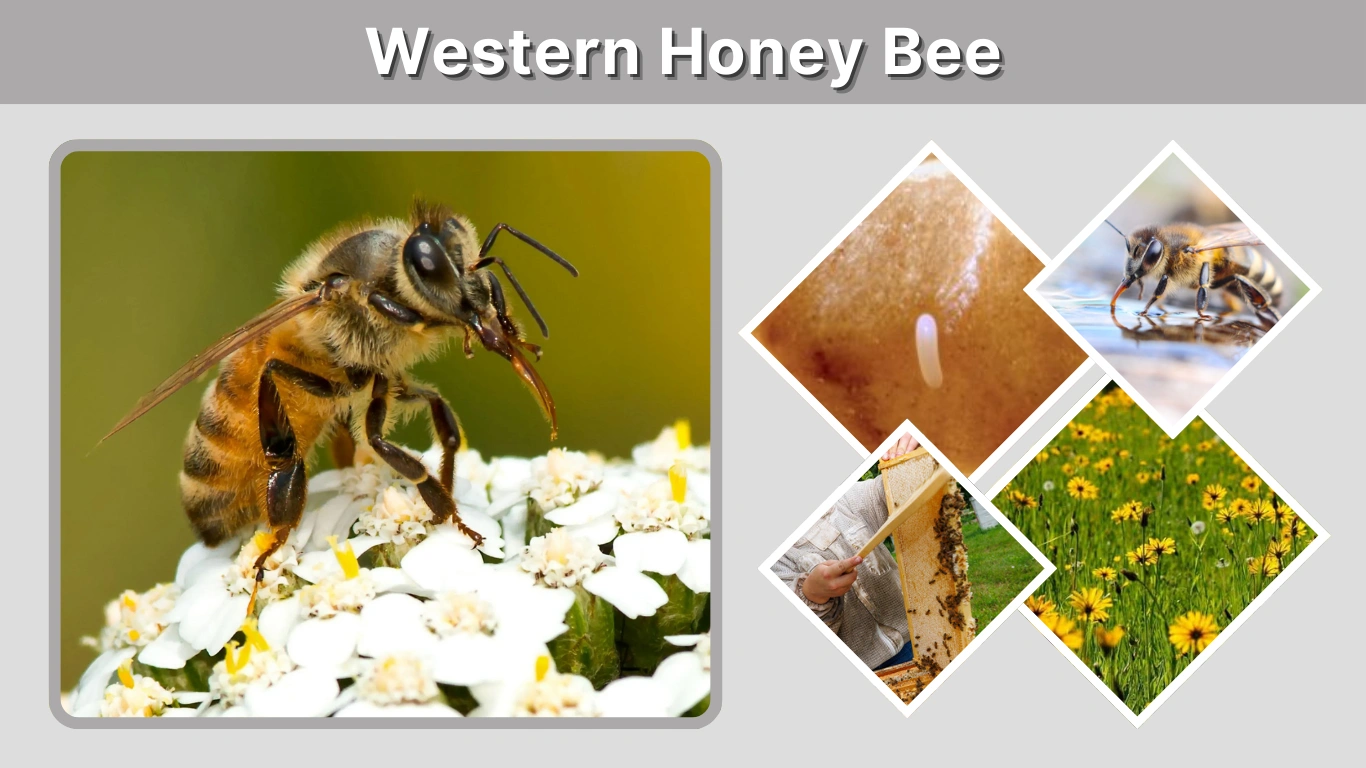
The Western honey bee, known scientifically as Apis mellifera, is one of the most widely recognized pollinators on Earth. Found across every continent except Antarctica, this species plays a critical role in global agriculture, natural ecosystems, and human culture. Known for producing honey, living in organized colonies, and supporting billions of dollars in crops annually, the Western honey bee remains both admired and studied for its complex biology and essential ecological value.
Scientific Classification & Taxonomy
Understanding the taxonomy of the Western honey bee helps clarify how it fits into the broader tree of life. Its scientific classification is as follows:
- Scientific name: Apis mellifera
- Genus: Apis
- Species: mellifera
- Family: Apidae
- Order: Hymenoptera
- Class: Insecta
More than two dozen subspecies of Apis mellifera exist, each adapted to different climates and ecological conditions. When comparing it to the Eastern honey bee (Apis cerana), scientists note differences in behavior, size, and disease resistance—yet both species share many key traits.
Physical Description & Characteristics
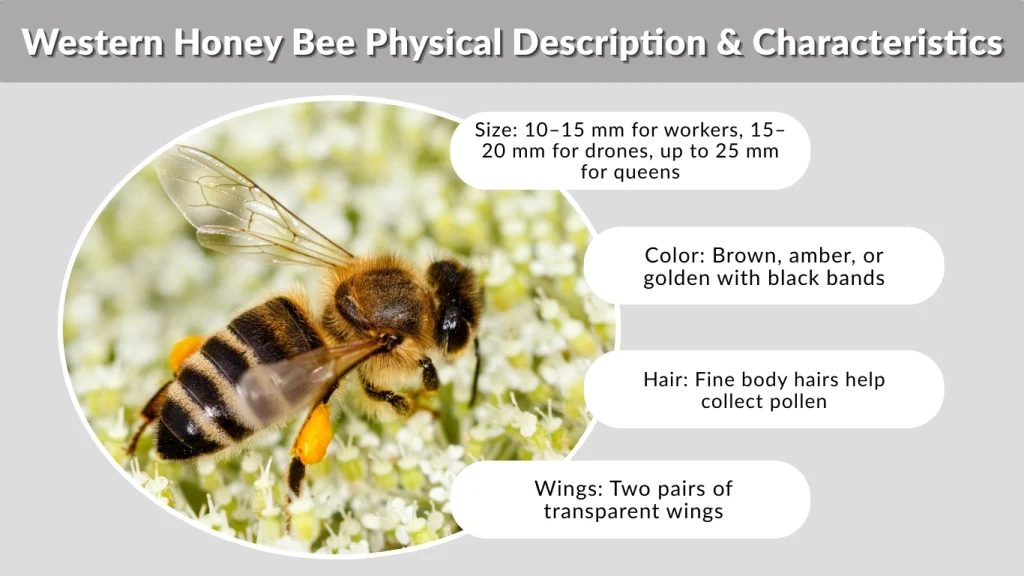
Western honey bees are medium-sized insects with distinctive golden-brown bodies and dark stripes. Their appearance varies slightly among subspecies, but most share these traits:
- Size: 10–15 mm for workers, 15–20 mm for drones, up to 25 mm for queens
- Color: Brown, amber, or golden with black bands
- Hair: Fine body hairs help collect pollen
- Wings: Two pairs of transparent wings
- Stinger: Present only in female bees (workers & queen)
Workers, Drones & Queens
- Workers: Small female bees responsible for foraging, cleaning, guarding, and hive maintenance.
- Drones: Larger males whose main biological purpose is mating with a queen. They cannot sting.
- Queen: The largest bee in the colony, the only egg-layer, and the mother of all hive members.
These differences in size and structure allow colonies to function as efficient, highly coordinated societies.
Western Honey Bee Life Cycle
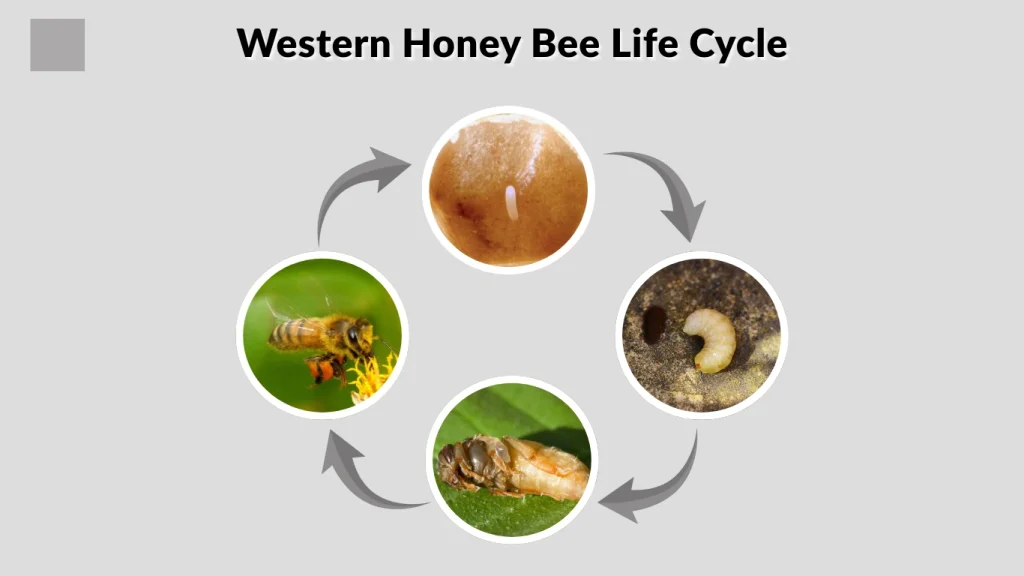
The life cycle of Apis mellifera progresses through four main stages: egg, larva, pupa, and adult. The queen lays thousands of eggs during the active season, and each egg’s destiny (worker, drone, or queen) depends on nutrition and hive conditions.
Brood Cycle
- Egg stage: 3 days
- Larval stage: 6 days of rapid feeding
- Pupal stage: 12–14 days of transformation
Workers typically emerge after about 21 days, drones after 24 days, and queens after only 16 days.
Queen Development
Queen bees are raised in special vertical cells and fed royal jelly, a nutrient-rich secretion. This diet triggers full reproductive development, allowing queens to live far longer than workers—often several years.
Swarming & Colony Growth
Swarming occurs when the hive becomes crowded or when the colony is strong enough to divide:
- The old queen leaves with thousands of workers.
- A new queen emerges and takes over the original hive.
This natural reproductive process ensures species survival.
Behavior & Social Structure

Western honey bees exhibit some of the most advanced social behavior in the insect world. Each colony consists of:
- One queen
- Hundreds to thousands of drones
- 10,000–60,000 workers
Hive Roles
Workers perform tasks based on age, including:
- Cleaning the hive
- Feeding larvae
- Producing wax
- Guarding entrances
- Foraging for nectar, pollen, propolis, and water
Communication
Bees communicate using:
- Pheromones
- Vibration signals
- The waggle dance, which maps the location of flowers based on direction and distance from the sun
Aggression & Stinging
Western honey bees are not naturally aggressive, but they defend their hive when threatened. Only workers sting, and their stinger is barbed, meaning it detaches and kills the bee after use. Queens can sting but rarely do.
Swarming Behavior
Although swarms look intimidating, bees in this state are typically non-aggressive. They are focused on finding a new home, not defending a hive.
Habitat, Range & Distribution

Originally native to Europe and parts of Africa, Western honey bees now live almost worldwide due to beekeeping and natural spread.
Preferred Habitats
- Woodlands
- Meadows
- Agricultural fields
- Urban gardens
- Man-made hives
They build nests in tree cavities, wall crevices, and beekeeping boxes. Their range includes the U.S., Australia, Europe, and regions such as Western Pennsylvania, Massachusetts, Nebraska, and New York.
Diet & Foraging Behavior
Western honey bees are generalist foragers, meaning they collect food from a wide variety of plants. This versatility contributes to their ecological and agricultural importance.
What They Eat
- Nectar: Their main carbohydrate source and the raw ingredient for honey.
- Pollen: Provides protein for growing larvae.
- Water: Regulates hive temperature and helps dilute honey.
- Propolis: A sticky plant resin used to seal and sterilize the hive.
Workers travel up to several miles from the hive, returning with food loads carried in pollen baskets on their legs or stored in their honey stomachs. Their flexible diet allows them to thrive in diverse environments.
Ecological Role & Environmental Impact

Western honey bees support ecosystems by pollinating thousands of flowering plants. Their pollination service helps maintain healthy forests, produce seeds for wild plants, and support biodiversity.
Are They Good for the Environment?
Generally, yes—but with important nuances:
- They increase crop yields.
- They support food supply stability.
- They help maintain plant diversity.
However, because they are not native to many regions, their presence can compete with native pollinators like bumble bees. Some researchers highlight that bumble bees need more conservation attention, especially in North America.
Threats, Predators & Survival Challenges
Despite their resilience, Western honey bees face numerous threats.
Common Predators
- Birds such as bee-eaters
- Bats
- Toads and frogs
- Crab spiders
- Wasps and hornets
- Bears, skunks, and raccoons targeting hives
Major Survival Challenges
- Pesticides used in agriculture
- Varroa destructor mites, a deadly parasitic pest
- Diseases such as foulbrood and nosemosis
- Habitat loss
- Poor nutrition due to monoculture crops
- Climate change affecting flower availability
Colony Collapse Disorder remains a major research focus, though its causes are believed to be a combination of multiple stressors.
Are Western Honey Bees Invasive?
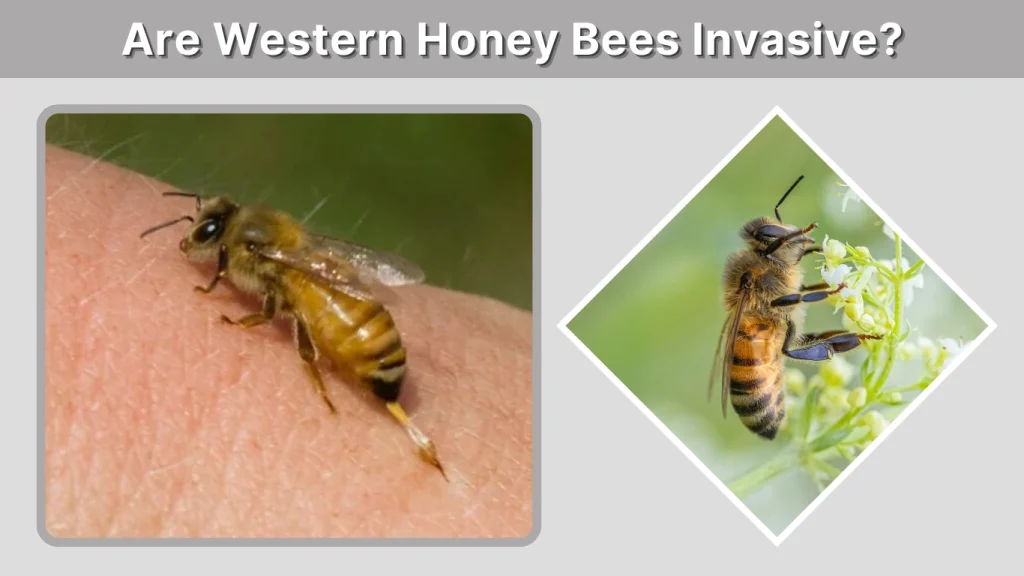
In regions where they are non-native—such as North America, Australia, and parts of Asia—the Western honey bee can behave as an invasive species, although opinions differ.
Why They May Be Considered Invasive
- Compete with native pollinators for food
- Spread diseases to wild bees
- Thrive in diverse habitats
- Dominate flowering plants due to large colony sizes
California Context
In California, Western honey bees are often labeled invasive, especially in sensitive habitats where they displace native bee species.
Reproduction & Colony Growth
Reproduction in Western honey bees occurs at both the individual level (queen laying eggs) and the colony level (swarming).
Queen Mating
- Takes flight once or a few times
- Mates with 10–20 drones
- Stores sperm for years
- Lays up to 2,000 eggs per day during peak seasons
Drones
Their sole purpose is to mate. Those that do mate die instantly, while others return to the hive until autumn, when they are often expelled.
Worker Reproduction
Workers do not normally lay eggs, but in queenless colonies, some may lay unfertilized eggs, producing only drones.
Western Honey Bee vs Other Bees
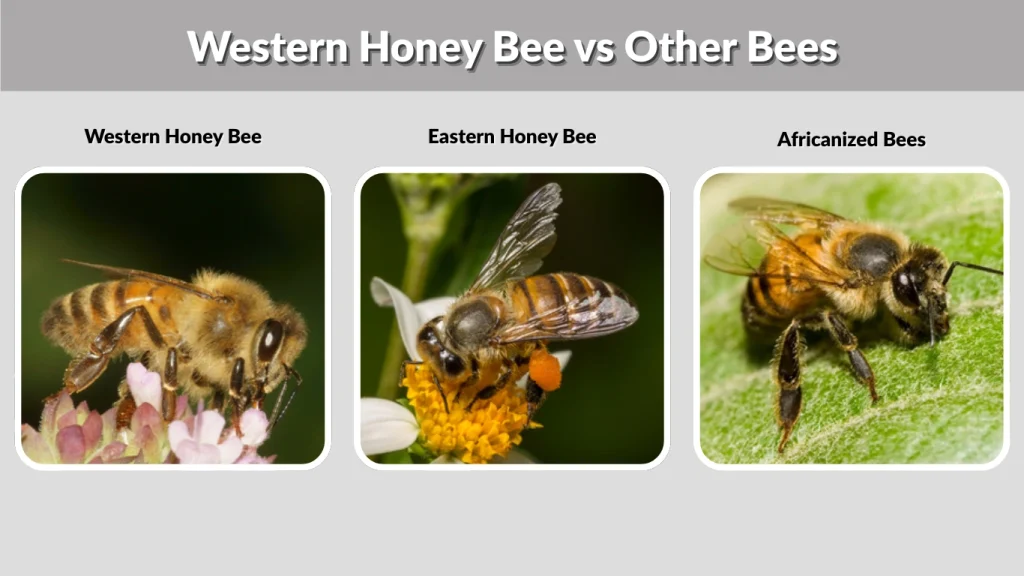
Western vs Eastern Honey Bee
- Apis cerana is smaller and more disease-resistant.
- Eastern bees produce less honey but adapt better to Asian climates.
- Western honey bees are more commercially favored.
Western vs Africanized Bees
Africanized honey bees (a hybrid of Apis mellifera subspecies) are:
- More defensive
- More likely to chase perceived threats
- Similar in size and appearance
Both species produce honey, but Africanized bees are considered riskier to manage due to aggressive behaviors.
Conservation, Endangerment & Extinction Status
Western honey bees are not endangered, but they are experiencing significant declines in many regions. They are not on extinction watch lists, yet managed colonies require increasing intervention to stay healthy.
Reasons for Concern
- High annual colony losses
- Disease spread
- Climate-related stress
- Loss of floral diversity
Despite their struggles, Western honey bees are not at risk of extinction because beekeepers manage and breed them extensively.
Human Uses & Economic Importance

Western honey bees contribute billions of dollars to agriculture. Their economic value comes from:
- Honey production
- Pollination services
- Beeswax, used in candles and cosmetics
- Propolis and royal jelly, used in supplements
- Crop yield improvement
They benefit humans but also have some disadvantages, such as spreading diseases to wild pollinators and dominating local ecosystems.
Western Honey Beekeeping & Bees for Sale
Beekeeping has grown worldwide, and Western honey bees are the most common species sold for this purpose.
Where Bees Are Sold
- Western Pennsylvania (PA)
- Western Massachusetts (MA)
- Western Australia
- Western New York (NY) (also honey bee removal services)
Packages, nucleus colonies, and queens are commonly sold to new and experienced beekeepers.
Western Honey Bee in Popular Culture
These bees appear frequently in art, news articles, nature documentaries, and educational materials. Drawings and illustrations often highlight their striped bodies and elaborate hives. Their sophisticated societies make them a favorite topic in classrooms and wildlife media.
FAQ
What is the scientific name of the Western honey bee?
The Western honey bee’s scientific name is Apis mellifera, which translates to “honey-bearing bee.” It belongs to the Apidae family and the Hymenoptera order. This species is the most commonly domesticated honey bee worldwide and plays a central role in commercial beekeeping and global pollination.
Do Western honey bees sting?
Yes—female worker bees can sting, but they only do so to defend their hive. Their stinger is barbed, so it remains in the skin and kills the bee after stinging. Drones cannot sting at all, and queens rarely sting except when fighting rival queens.
Are Western honey bees aggressive or dangerous?
Western honey bees are typically gentle and not aggressive unless threatened. They are far less defensive than Africanized honey bees. While their stings can be painful, they generally avoid conflict and focus on foraging. They become defensive only when protecting their hive or queen from perceived danger.
Where do Western honey bees naturally live?
They were originally native to Europe, Africa, and Western Asia. Today, Western honey bees live worldwide due to beekeeping. They thrive in forests, fields, grasslands, orchards, urban gardens, and man-made hives. They also nest in tree cavities, wall openings, and beekeeping equipment.
Are Western honey bees invasive or harmful to ecosystems?
In some regions—especially North America and Australia—they can behave like an invasive species. Large colonies may outcompete native bees for nectar and pollen, spread diseases, and dominate floral resources. Still, they remain essential for agriculture, and careful management helps reduce their ecological impact.
