
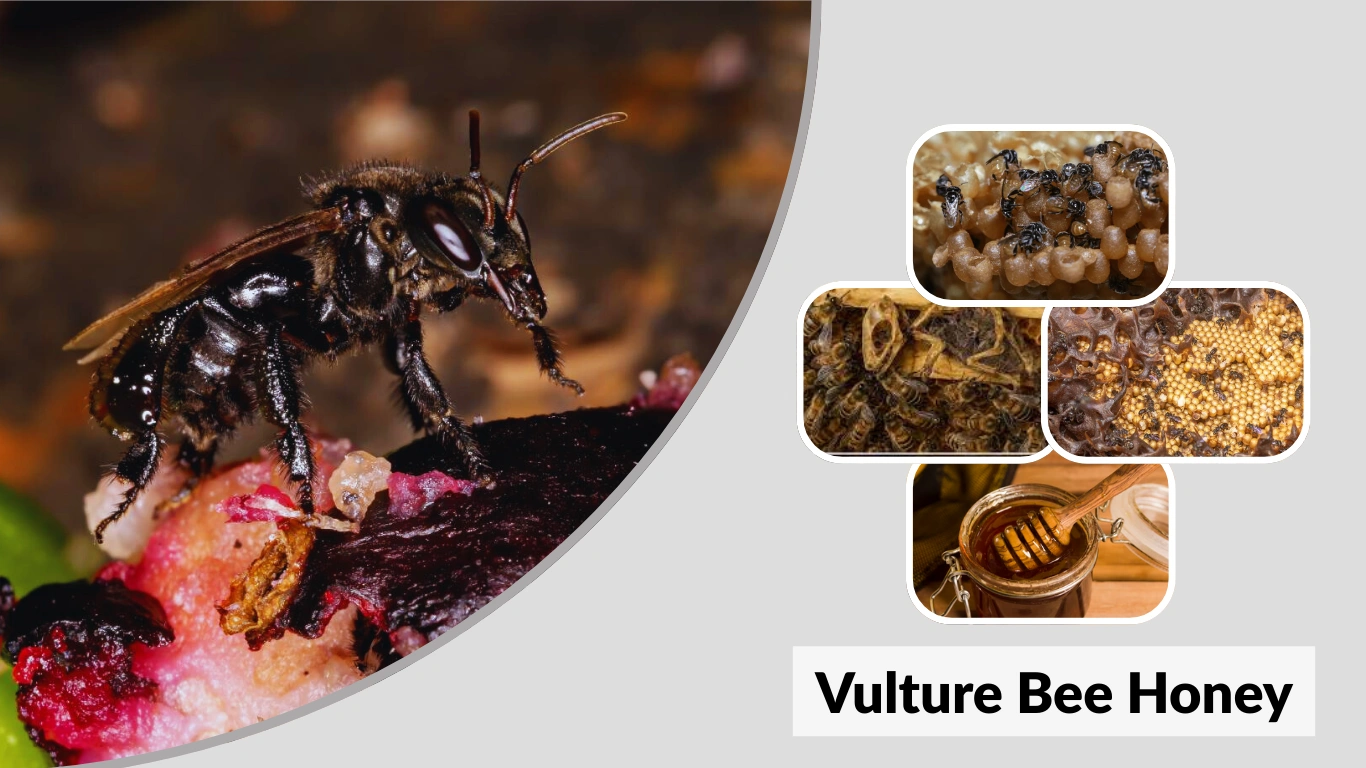
Vulture bees have captured the internet’s attention because of one strange fact—they make meat honey. For many people, the idea of honey produced from rotting flesh sounds unbelievable, even unsettling. Yet vulture bee honey is real, incredibly rare, and very different from the sweet floral honey we know. People often wonder what it tastes like, whether it’s safe to eat, and why it isn’t commercially available. In this first half of the article, we’ll explore what vulture bee honey is, how it’s produced, and why it’s so unique.
What Is Vulture Bee Honey?
Vulture bee honey refers to a honey-like substance created by a special group of stingless bees that feed on rotting meat instead of nectar. While most bees live on pollen and flower nectar, vulture bees, also known as carrion-eating or necrophagous bees, have evolved a completely different diet. Instead of collecting floral sweetness, they carve small pieces of decaying flesh from dead animals and transform it into a nutritive substance inside their hives.
These bees belong to the Trigonini tribe and live mainly in Central and South America. They are stingless bees, meaning they do not rely on stingers but use powerful mandibles for defense and meat processing. From an evolutionary perspective, their diet shift is remarkable—and it produces one of the rarest honey types in the world.
Do Vulture Bees Make Honey?
How Vulture Bees Produce Honey
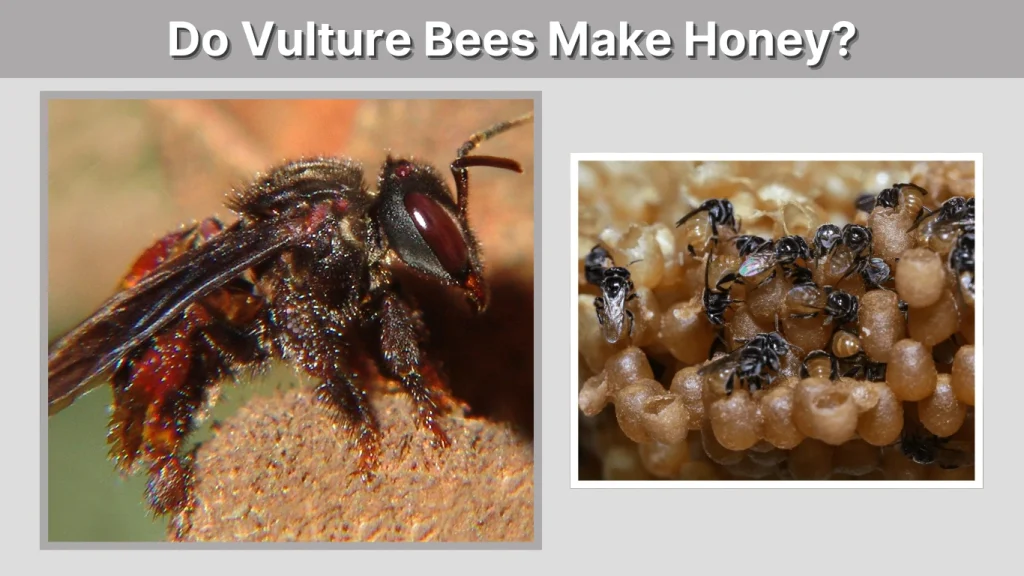
Despite their unusual diet, vulture bees do produce a honey-like substance, but the process is unlike that of traditional honey bees. Instead of starting with nectar, vulture bees start with carrion. Workers visit animal carcasses and gather small shreds of meat, storing them in special sacs. Enzymes in their bodies immediately begin breaking the meat down.
Once inside the hive, the meat is placed into small pot-shaped cells. Over time, microbial fermentation and enzymatic processing transform the decomposed flesh into a thick, tangy substance that functions similarly to honey within the colony: it’s used as food storage for the bees.
Although it is not technically “honey” by traditional standards, scientists refer to it as meat honey or vulture bee honey due to its use, storage method, and texture.
What Vulture Bee Honey Is Made Of
The composition differs greatly from floral honey. Vulture bee honey typically includes:
- Animal proteins digested and broken down by bee enzymes
- Fermentation bacteria
- Antimicrobial compounds
- High amino-acid content
- Very little natural sugars compared to flower nectar honey
Because its base material is protein-rich meat rather than plant nectar, the final product is nutritiously distinct and chemically unusual, contributing to its unique taste.
What Does Vulture Bee Honey Taste Like?
Flavor Profile
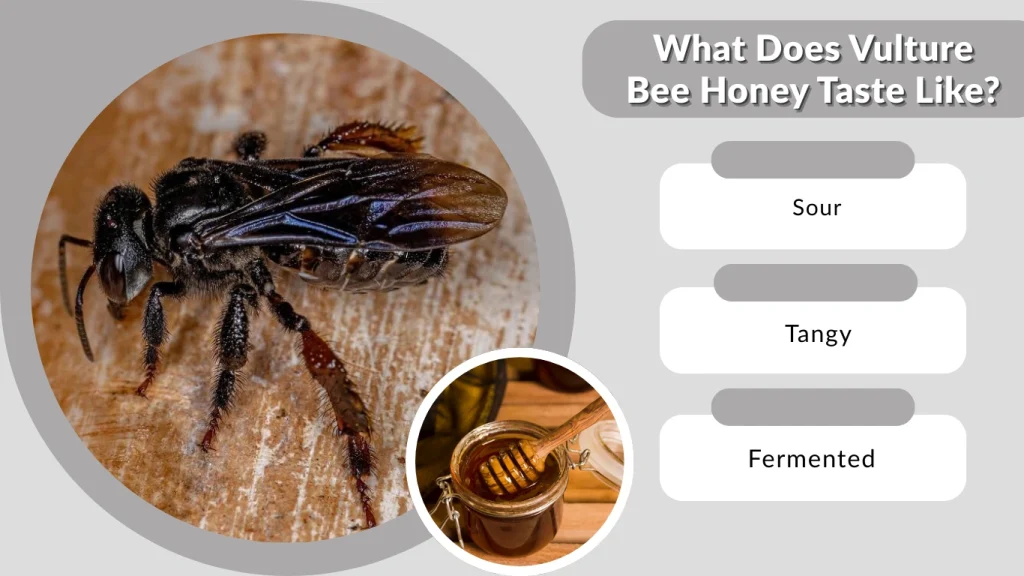
Anyone expecting sweetness will be shocked. Vulture bee honey is described by scientists as:
- Sour
- Tangy
- Fermented
- Smoky
- Slightly salty
- Strongly “umami”
Some compare it to miso paste, soy sauce, aged cheese, or even vinegar. The fermentation produces a sharp acidity, and the breakdown of meat proteins creates savory undertones. There is often a faint sweetness, but it is not dominant.
This dramatic difference in flavor explains why vulture bee honey is not a commercial product. Its taste is unfamiliar and intense for most people.
Texture & Aroma
The texture is thicker and more gelatinous than traditional honey. It may feel slightly sticky but not syrupy like floral honey. The aroma is strong and pungent due to the fermentation process—more like a pickled food than something sweet.
Color & Appearance
Vulture bee honey usually appears:
- Reddish-brown or dark amber
- Opaque rather than translucent
- Stored in small round “honey pots,” not comb cells
Its appearance can be surprising, especially for people who expect honey to be golden and clear.
Is Vulture Bee Honey Edible?
Can Humans Eat Vulture Bee Honey?
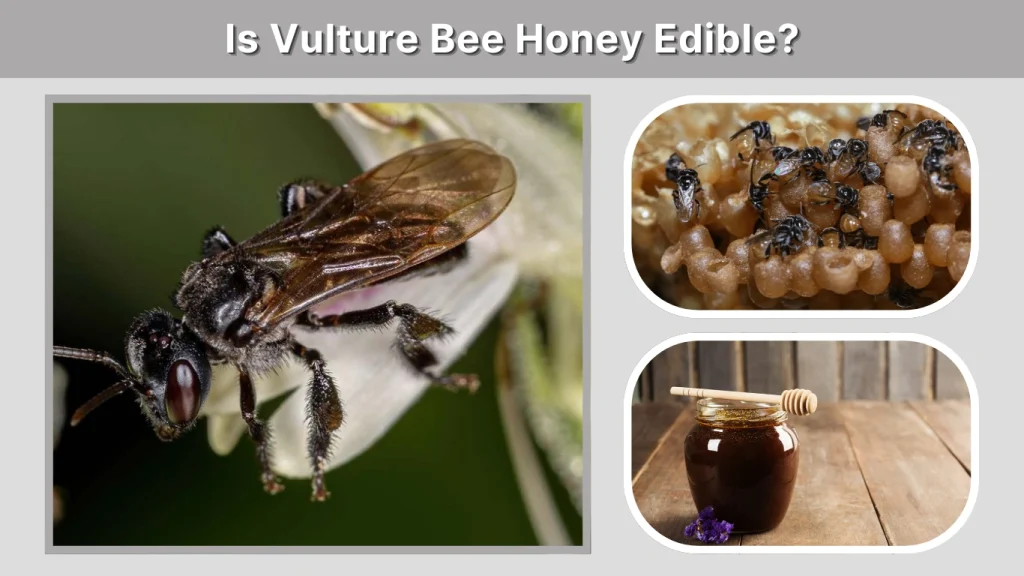
Yes—humans can eat vulture bee honey. Indigenous groups in tropical regions have consumed it traditionally, and scientists who study these bees have tasted it as well. Although it looks and tastes unconventional, there is no solid evidence that it is toxic if collected properly.
Is It Safe to Eat?
Generally, vulture bee honey is considered safe in small amounts if harvested and stored correctly. However, because it is not commercially regulated, safety depends entirely on the source. Unlike regular honey, vulture bee honey undergoes meat fermentation, meaning its microbial profile is different. This does not make it automatically dangerous, but it is unregulated and unpredictable.
Do People Enjoy It?
Reactions vary widely. Some people find the tangy, fermented flavor fascinating—almost like a delicacy. Others dislike it immediately because it defies expectations of what honey “should” taste like. Its unique profile makes it more of a scientific curiosity or cultural experience than a mass-consumption product.
Vulture Bee Honey vs Regular Honey
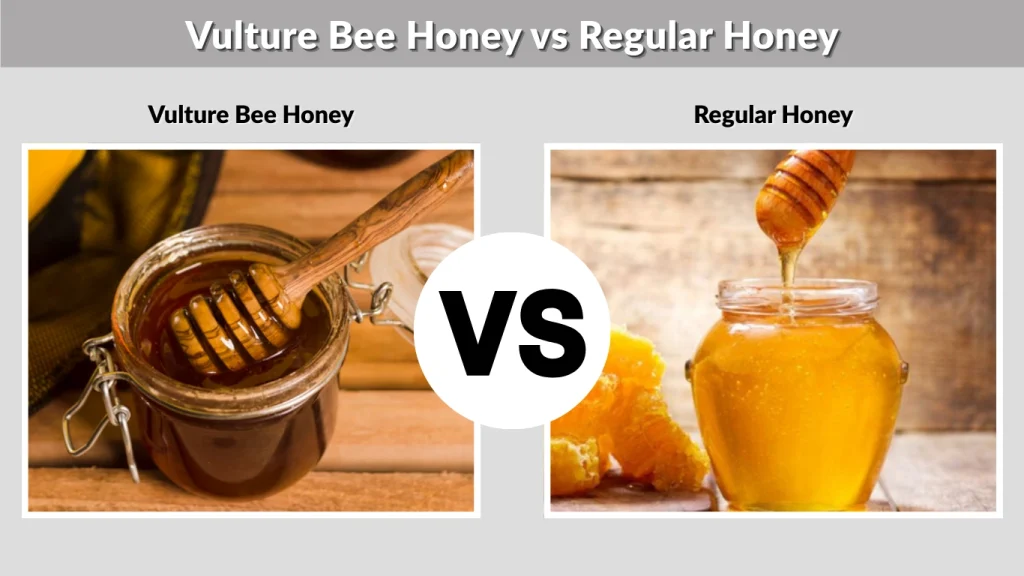
Regular honey and vulture bee honey differ in almost every aspect:
- Source: nectar vs meat
- Flavor: sweet vs fermented-umami
- Color: golden vs reddish-brown
- Texture: syrupy vs gelatinous
- Nutritional content: sugar-rich vs protein-rich
- Production: flowers vs carrion fermentation
These contrasts explain why vulture bee honey is not produced commercially—it is difficult to harvest, unfamiliar in taste, and produced in extremely small quantities.
Benefits of Vulture Bee Honey (If Any)
While traditional honey is well-known for its antioxidants and medicinal uses, vulture bee honey has far less research behind it. Despite its unusual origins, scientists have identified a few potential benefits—although none are confirmed enough for commercial or medicinal recommendations.
Claimed Benefits
Some early studies and anecdotal accounts suggest:
- Higher protein content because it originates from digested meat
- Possible probiotic qualities due to fermentation microbes
- Enzymes that may have antibacterial properties similar to regular honey
These potential benefits exist largely because of the honey’s microbial diversity and the enzymatic processes used by the bees.
Scientific Reality
However, it’s important to understand that these claims are not well-studied. Vulture bee honey hasn’t undergone rigorous medical analysis, and any health benefits remain speculative. Unlike floral honey, which has been consumed and analyzed for thousands of years, vulture bee honey remains a scientific curiosity, not a health food.
Much of the internet hype around “meat honey cures” or miracle effects is based on misunderstanding, exaggeration, or meme culture—not reliable evidence.
Cultural Myths, Memes & Internet Curiosity
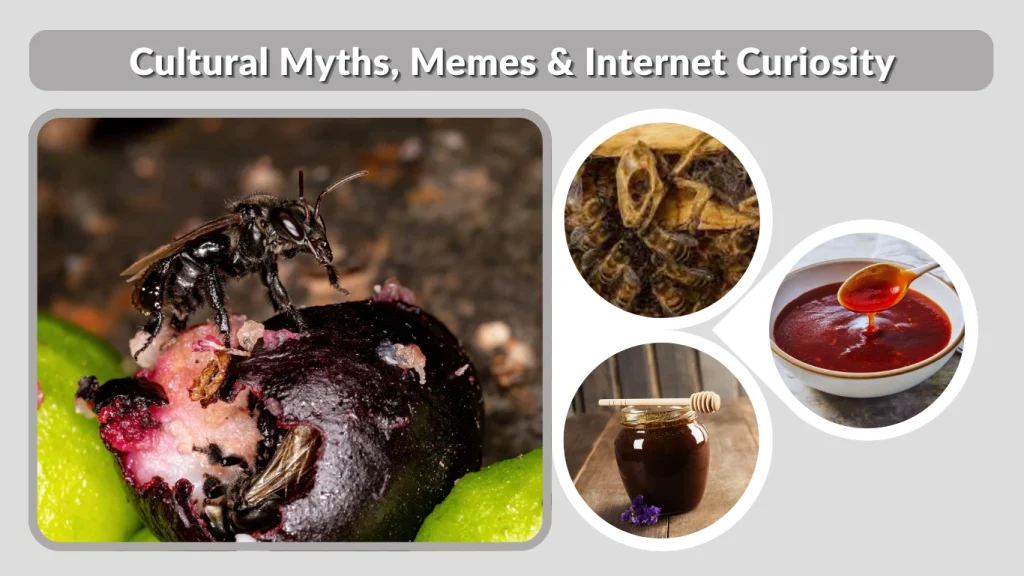
Vulture bee honey rose to fame not because of widespread consumption, but because the idea of “meat honey” shocked and fascinated online audiences. This sparked memes, sensational headlines, and confusion about whether the honey was even real.
The “Meat Honey” Meme
Social media platforms like Reddit, TikTok, and Instagram helped spread viral posts describing vulture bee honey as:
- “Honey made from rotting corpses”
- “Meat honey that tastes like soy sauce”
- “The strangest food on Earth”
These exaggerated descriptions caught attention and quickly turned the phenomenon into a meme. People weren’t necessarily eating it—they were reacting to the idea of it.
Snopes & Misinterpretations
Fact-checking sites like Snopes have addressed misconceptions about vulture bee honey, clarifying:
- Yes, vulture bees exist.
- Yes, they produce a honey-like substance.
- No, it is not commercially sold.
- No, it is not linked to biblical or historical stories.
One popular misinterpretation involves the biblical tale of Samson finding honey in a lion carcass. Some internet discussions incorrectly claimed that this was vulture bee honey. However, the story predates scientific descriptions of vulture bees and is unrelated.
Why People Are Fascinated
Human curiosity often centers on things that feel taboo, strange, or hard to imagine. The idea of “honey made from meat” blends science, disgust, fascination, and rarity—making it irresistible to social media and meme culture.
Availability, Buying, and Pricing
Of all questions asked about vulture bee honey, the most common is: Can I buy it?
Can You Buy Vulture Bee Honey?
In almost all cases, the answer is no. Vulture bee honey is not sold commercially anywhere in the world. Reasons include:
- Extremely small production
- No large-scale beekeeping of vulture bees
- Strict safety regulations
- Conservation and ethical concerns
- Lack of market demand due to taste and rarity
Where to Buy (In Theory)
If someone truly wanted to taste vulture bee honey, the only realistic paths would be:
- A scientific research lab studying stingless bees
- Indigenous communities in tropical forests who harvest stingless bee honey for traditional use
These sources are not public markets and do not sell through online platforms.
Vulture Bee Honey Price
If vulture bee honey were sold, experts estimate the cost would be extremely high, potentially hundreds or thousands of dollars per gram. The rarity, labor intensity, and legal regulations surrounding stingless bees make commercial production impossible.
It is more of a biological oddity than a food commodity.
How Vulture Bee Hives Work
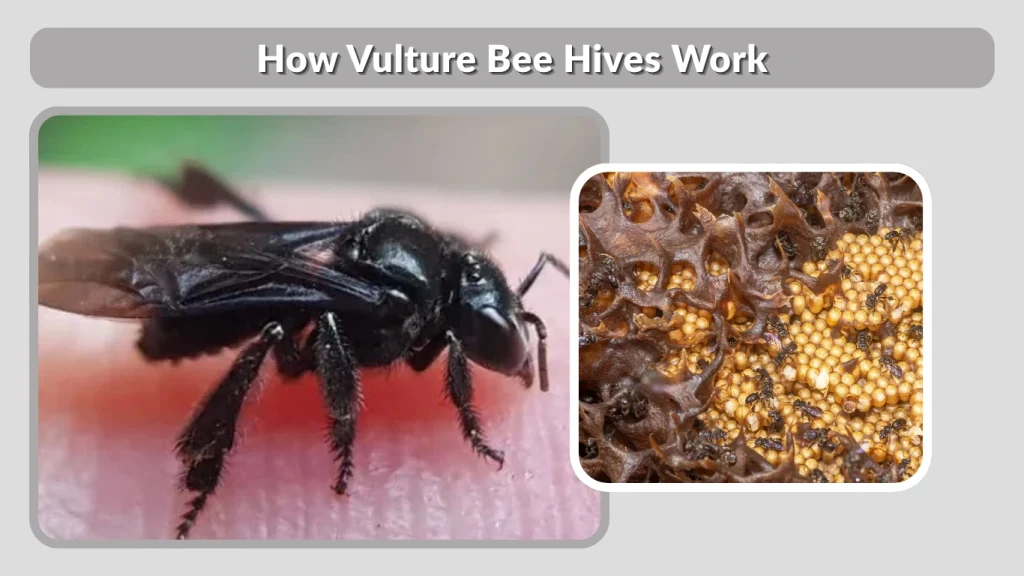
Understanding their honey also means understanding how vulture bees live and build their colonies.
Structure of the Hive
Unlike the familiar hexagonal combs of honeybees, vulture bees live in nests made of:
- Small, rounded “pots”
- Organic, resin-like material
- Separate chambers for meat storage and honey-like substances
Their hive structure supports their unique diet and fermentation process.
Worker Roles in Meat Collection
Vulture bee workers behave very differently from nectar-gathering bees:
- Specialized bees leave the hive to locate animal carcasses
- They gather tiny chunks of meat using their mandibles
- Enzymes begin breaking it down during transport
- Meat is stored and fermented inside designated cells
This cooperative process is what transforms decay into a usable food source for the colony
Eating Vulture Bee Honey — What to Expect
First Taste Experience
Most people who try it describe the experience as surprising and intense:
- Sharp sourness hits first
- Fermented flavor similar to soy sauce or miso
- Slight sweetness underneath
- A long-lasting savory aftertaste
This is why many call it “the strangest honey you’ll ever taste”—because it barely resembles honey at all.
Who Eats It Today?
Only a few groups consume vulture bee honey:
- Scientists researching stingless bees
- Indigenous communities with traditional harvesting practices
- Rare food enthusiasts who encounter it in field studies
It remains one of the least accessible and most unusual honeys in the world.
FAQs
Can you eat vulture bee honey?
Yes, humans can eat vulture bee honey in small amounts. It is not known to be toxic, but it is extremely rare and not commercially regulated.
What does meat honey taste like?
It tastes tangy, fermented, smoky, and slightly sweet—closer to soy sauce or aged cheese than traditional honey.
Is vulture bee honey poisonous?
There is no evidence that it is poisonous, but its microbial content varies because it is not produced from nectar and is not commercially sanitized.
Why can’t you buy it?
It is produced in tiny quantities, not farmed on a large scale, and faces safety and conservation restrictions.
Are vulture bees meat-eaters?
Yes. Vulture bees evolved to consume rotting meat instead of nectar, though they still make honey-like food for their colony.
