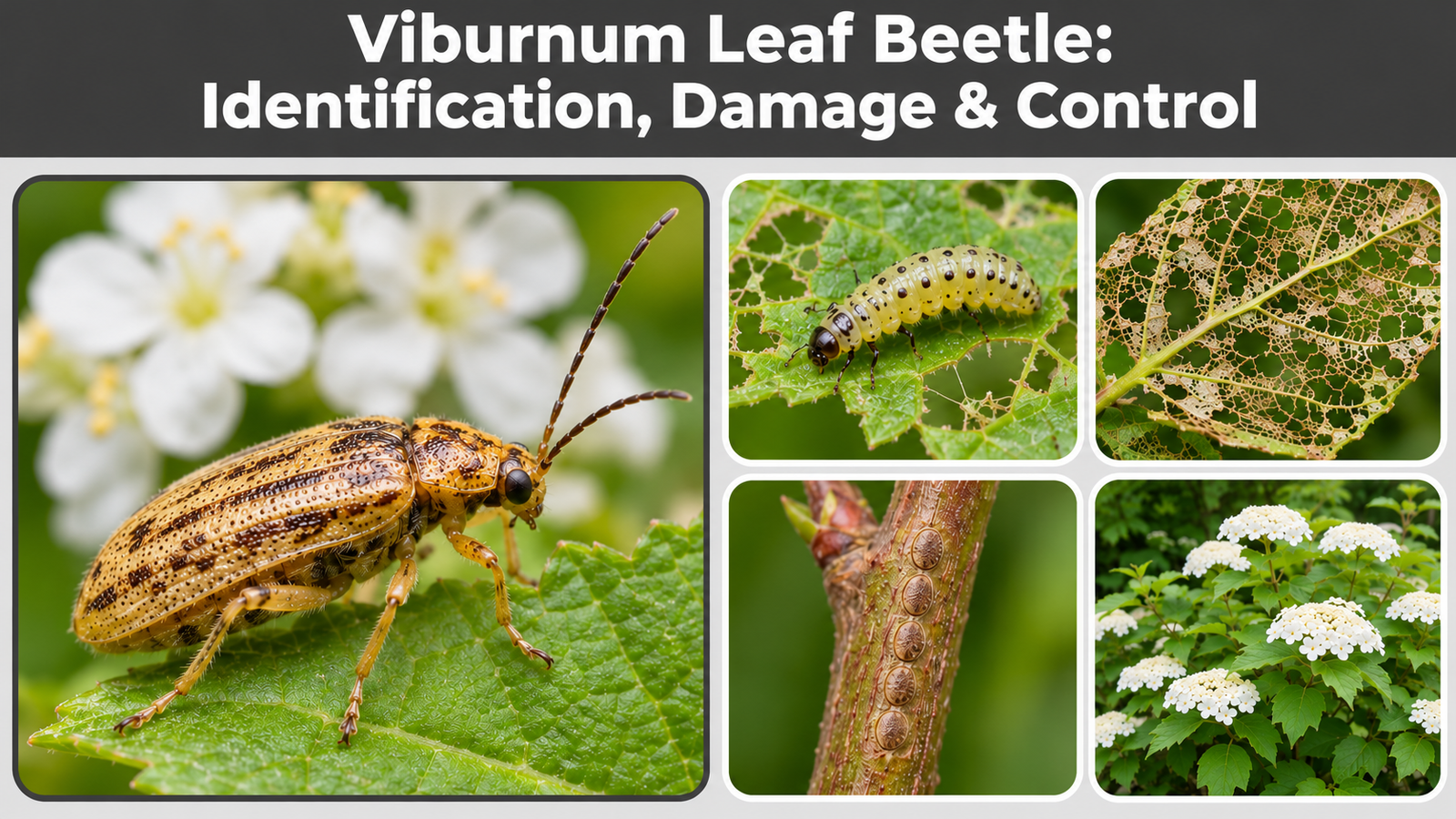
The viburnum leaf beetle (Pyrrhalta viburni) is a destructive garden pest that feeds on viburnum shrubs, causing holes, skeletonized leaves, and sometimes severe defoliation. Both adult beetles and larvae damage plants, making infestations particularly concerning for gardeners and landscapers. Originally native to Europe and Asia, this beetle has spread into parts of North America. Early identification and proper treatment can help protect susceptible shrubs. This guide explains viburnum leaf beetle identification, life cycle, damage, natural control methods, and effective prevention strategies.
What Is a Viburnum Leaf Beetle?
The viburnum leaf beetle is a small, leaf-feeding insect belonging to the family Chrysomelidae. Its scientific name is Pyrrhalta viburni, and it primarily attacks plants in the genus Viburnum.
Unlike many generalist garden pests, this beetle specializes in viburnum shrubs. Heavy infestations can strip foliage during the growing season, reducing plant growth and potentially killing shrubs after repeated severe attacks.
Viburnum Leaf Beetle Facts
| Feature | Description |
|---|---|
| Scientific name | Pyrrhalta viburni |
| Family | Chrysomelidae |
| Adult size | Approximately 4.5–6.5 mm |
| Adult color | Yellowish-brown to brown |
| Primary food | Viburnum leaves |
| Native range | Europe and Asia |
| Life cycle | Egg, larva, pupa, adult |
| Generations | Usually one annually |
How to Identify Viburnum Leaf Beetles
Viburnum leaf beetles can be identified by examining their body shape, coloration, larvae, and characteristic feeding damage. Adults and larvae look different, but both can be found on affected viburnum plants during the growing season.
Adult Viburnum Leaf Beetle Identification
Adult beetles are small, elongated insects with yellowish-brown bodies and darker markings.
Important characteristics include:
- Size: Approximately 4.5–6.5 mm long.
- Color: Yellowish-brown with darker wing-cover markings.
- Body shape: Narrow, elongated, and slightly flattened.
- Antennae: Slender and segmented.
- Wings: Hardened wing covers with fine hairs.
- Location: Usually found on viburnum leaves during summer.
Viburnum Leaf Beetle Larvae Identification
Viburnum leaf beetle larvae are small, soft-bodied, and usually yellowish-green to pale brown.
Their bodies develop dark spots or markings as they mature.
Larvae often feed together on leaf undersides, removing soft tissue and leaving behind veins.
Because larvae can cause extensive damage during spring, identifying them early is essential.
Where Do Viburnum Leaf Beetles Live?
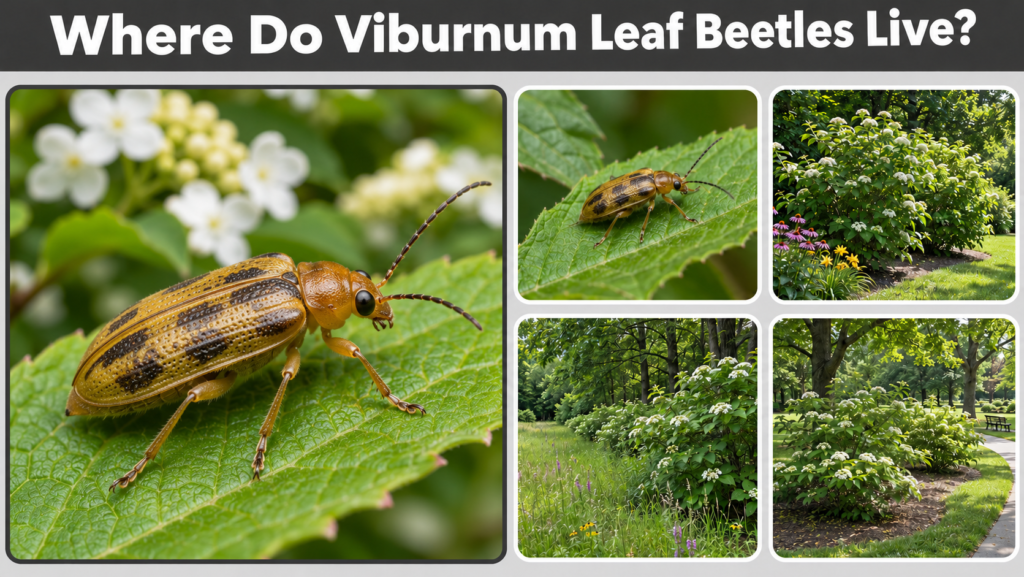
Viburnum leaf beetles are native to Europe and Asia but have established populations in parts of North America, including areas of Canada and the United States.
They are particularly associated with temperate regions where susceptible viburnum shrubs grow.
Common habitats include:
- Residential gardens: Ornamental viburnum shrubs provide suitable feeding sites.
- Public parks: Landscaped areas containing viburnum plants.
- Woodlands: Natural habitats supporting native viburnum species.
- Hedgerows: Dense shrub plantings along property boundaries.
- Nurseries: Commercial locations growing ornamental viburnums.
Their presence depends primarily on host plant availability and suitable climatic conditions.
What Do Viburnum Leaf Beetles Eat?
Viburnum leaf beetles feed almost exclusively on plants belonging to the genus Viburnum. Both adults and larvae consume leaves, although their feeding patterns differ.
Larvae generally cause the most noticeable early-season damage, while adults continue feeding during summer.
Viburnum Plants Most Susceptible to Damage
Certain viburnum species are particularly vulnerable:
- Arrowwood viburnum (Viburnum dentatum).
- European cranberrybush viburnum (Viburnum opulus).
- American cranberrybush viburnum (Viburnum opulus var. americanum).
- Rafinesque viburnum (Viburnum rafinesqueanum).
Other viburnum species show greater resistance and may experience considerably less damage.
What Does Viburnum Leaf Beetle Damage Look Like?
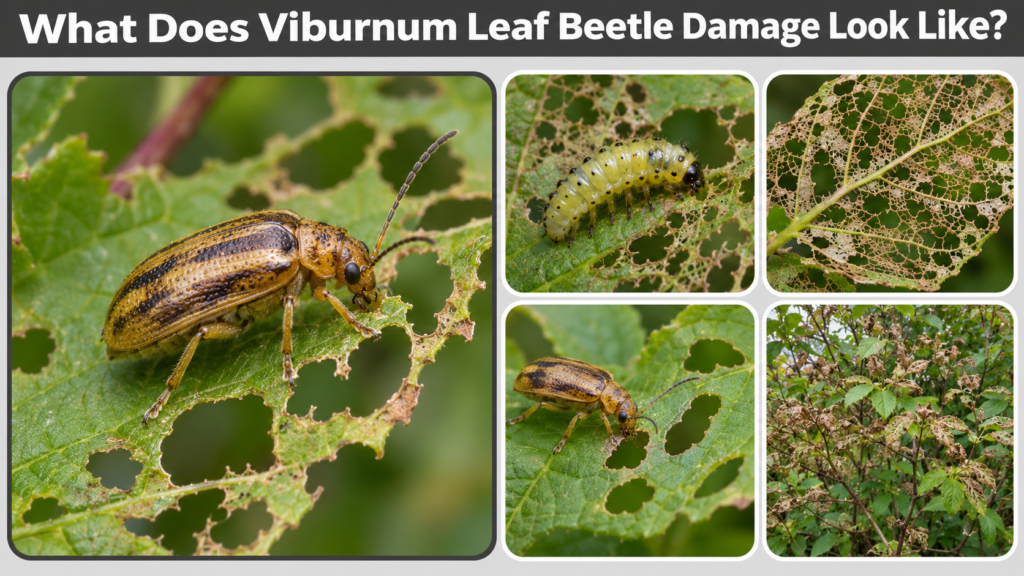
Viburnum leaf beetle damage typically begins with small feeding marks on developing leaves during spring. As larvae grow, they consume larger portions of leaf tissue, leaving skeletonized foliage.
Adult beetles later create irregular holes, sometimes causing additional defoliation.
Signs of Viburnum Leaf Beetle Infestation
Common symptoms include:
- Skeletonized leaves: Larvae consume tissue between major leaf veins.
- Irregular holes: Adult beetles chew openings through foliage.
- Brown leaves: Severely damaged foliage may dry out and turn brown.
- Defoliation: Heavy feeding can remove most leaves from affected branches.
- Egg-laying scars: Small capped pits appear in rows on young twigs.
Severe infestations can leave shrubs nearly leafless before the growing season ends.
Can Viburnum Leaf Beetles Kill Shrubs?
Yes, repeated severe infestations can eventually kill susceptible viburnum shrubs.
Losing foliage reduces photosynthesis and weakens the plant’s ability to produce and store energy.
A healthy shrub may recover after one defoliation event, but repeated annual damage can cause branch dieback and plant death.
Viburnum Leaf Beetle Life Cycle
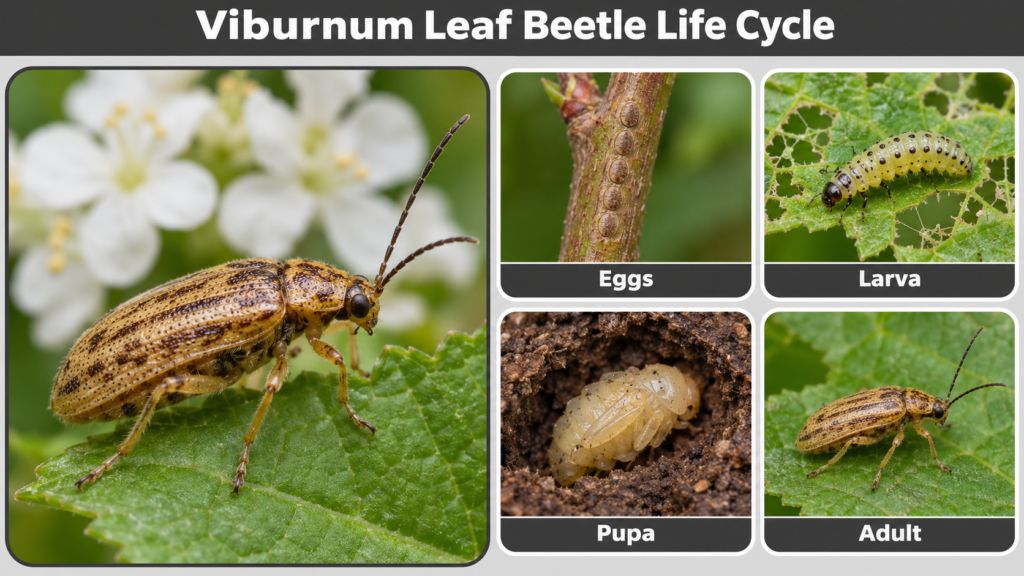
Viburnum leaf beetles undergo complete metamorphosis, passing through four developmental stages. They generally produce one generation annually, with eggs overwintering inside small cavities in viburnum twigs.
| Life Stage | Description |
|---|---|
| Egg | Eggs overwinter inside capped cavities in young twigs. |
| Larva | Larvae hatch in spring and feed on developing leaves. |
| Pupa | Mature larvae enter the soil and pupate. |
| Adult | Adults emerge in summer, feed, mate, and lay eggs. |
Eggs and Larval Development
Females lay eggs in small cavities they chew into young viburnum stems.
The cavities are covered with protective material, creating recognizable bumps along twigs.
Eggs remain inside the stems through winter.
During spring, larvae hatch and immediately begin consuming emerging viburnum foliage.
Adult Beetle Activity
Adult beetles generally emerge during early to midsummer, depending on regional temperatures.
They continue feeding on viburnum leaves before mating and depositing eggs.
Females place eggs in new growth, allowing the next generation to overwinter successfully.
How to Get Rid of Viburnum Leaf Beetles Naturally
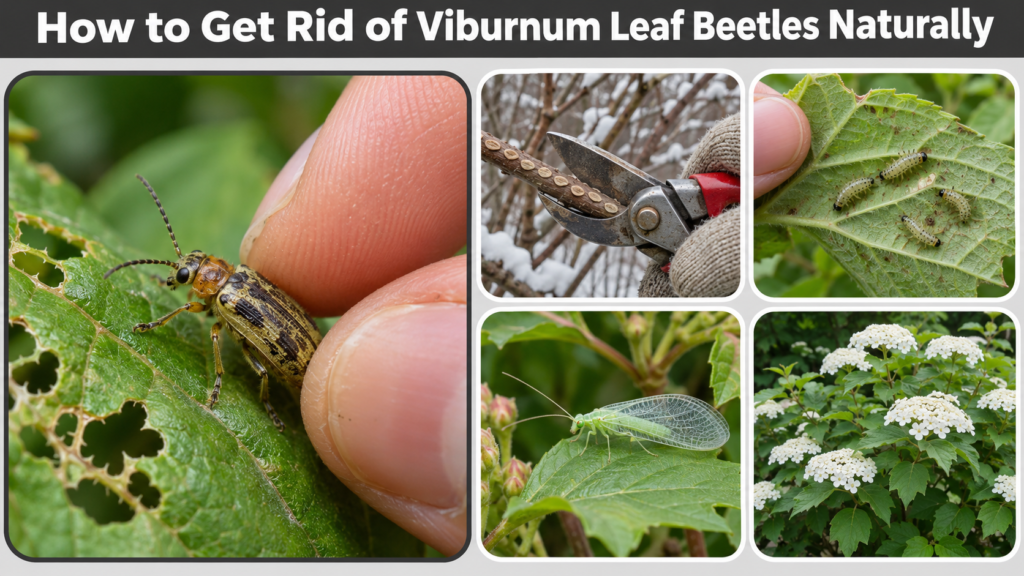
Natural management focuses on removing overwintering eggs, controlling young larvae, and maintaining healthy shrubs. Combining several approaches is generally more effective than relying on a single treatment.
1. Prune Infested Twigs
During late fall or winter, inspect viburnum stems for rows of small capped egg cavities.
Prune and dispose of infested twig sections before spring hatching.
This can significantly reduce the number of larvae emerging the following season.
2. Remove Larvae Manually
Inspect leaf undersides during spring.
For small shrubs, remove visible larvae by hand or prune heavily infested foliage.
Early intervention is particularly useful because young larvae are easier to manage.
3. Encourage Natural Predators
Lady beetles, lacewings, and certain predatory bugs may feed on viburnum leaf beetle eggs or larvae.
Avoid unnecessary broad-spectrum insecticides that can harm these beneficial insects.
4. Maintain Healthy Shrubs
Provide appropriate irrigation during dry periods and maintain suitable soil conditions.
Healthy plants may better tolerate occasional feeding, although proper care alone cannot prevent severe infestations.
Chemical Control for Viburnum Leaf Beetles
Chemical treatment may be necessary when infestations threaten valuable shrubs and nonchemical approaches are insufficient.
Treatments targeting young larvae in spring are generally more effective than waiting until extensive defoliation occurs.
Some registered products containing insecticidal ingredients such as spinosad may be suitable, depending on local regulations and label directions.
Avoid unnecessary applications during flowering, and carefully follow all product instructions to protect pollinators and other beneficial insects.
How to Prevent Viburnum Leaf Beetle Infestations

Preventing infestations requires seasonal monitoring and selecting less susceptible viburnum varieties whenever possible.
Regular inspection is particularly important in regions where viburnum leaf beetles are established.
Helpful prevention practices include:
- Inspect winter twigs: Look for distinctive egg-laying scars.
- Prune affected branches: Remove egg-infested twigs before spring.
- Monitor spring foliage: Check emerging leaves for larvae.
- Choose resistant varieties: Consider Koreanspice, Judd, or doublefile viburnums where appropriate.
- Avoid plant stress: Maintain suitable watering and growing conditions.
Selecting less susceptible viburnum species is one of the most effective long-term management strategies.
FAQs
1. Are Viburnum Leaf Beetles Harmful to Humans?
Viburnum leaf beetles are not considered dangerous to humans. They do not sting and are not known to transmit human diseases. Their primary concern is the damage they cause to ornamental shrubs. Both adults and larvae feed on viburnum foliage rather than people.
2. When Should You Spray for Viburnum Leaf Beetles?
If pesticide treatment is necessary, spring is generally the most effective time because young larvae are actively feeding. Treatment timing varies by region and seasonal temperatures. Inspect emerging viburnum foliage regularly, confirm larval activity, and use only products registered for the intended plants and pests.
3. Do Viburnum Leaf Beetles Fly?
Yes, adult viburnum leaf beetles can fly. Their functional wings allow them to move between shrubs and establish new infestations. Larvae cannot fly and remain on host foliage until they mature and move into the soil for pupation.
4. What Eats Viburnum Leaf Beetles?
Several beneficial insects prey on viburnum leaf beetles, including lady beetles, lacewing larvae, and predatory bugs. These natural enemies may help reduce beetle populations, although they do not always prevent significant damage. Protecting beneficial insects is an important part of integrated pest management.
5. How Do You Kill Viburnum Leaf Beetle Eggs?
The most reliable nonchemical approach is to prune and dispose of twigs containing overwintering eggs before spring. Egg-laying sites appear as rows of capped cavities on young stems. Removing these twigs interrupts the beetle’s life cycle and helps reduce future infestations.