
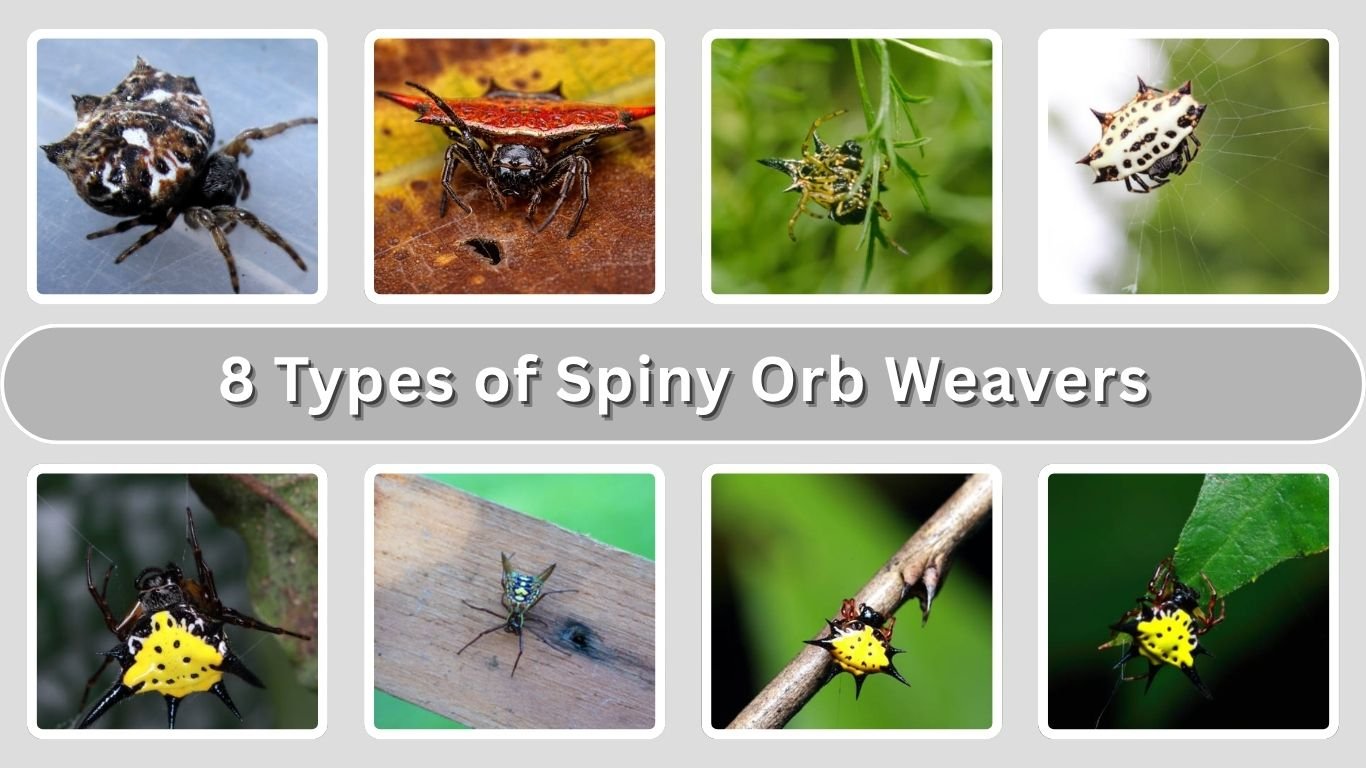
Spiny orb-weaver spiders are among the most visually striking spiders in the world, known for their hard, brightly colored bodies and distinctive spines. These unique features not only make them easy to identify but also help protect them from predators. Found mostly in warm and tropical regions, they play an important role in controlling insect populations. In this guide, you’ll discover eight different types of spiny orb-weavers, each with its own unique appearance and characteristics.
1. Gasteracantha cancriformis
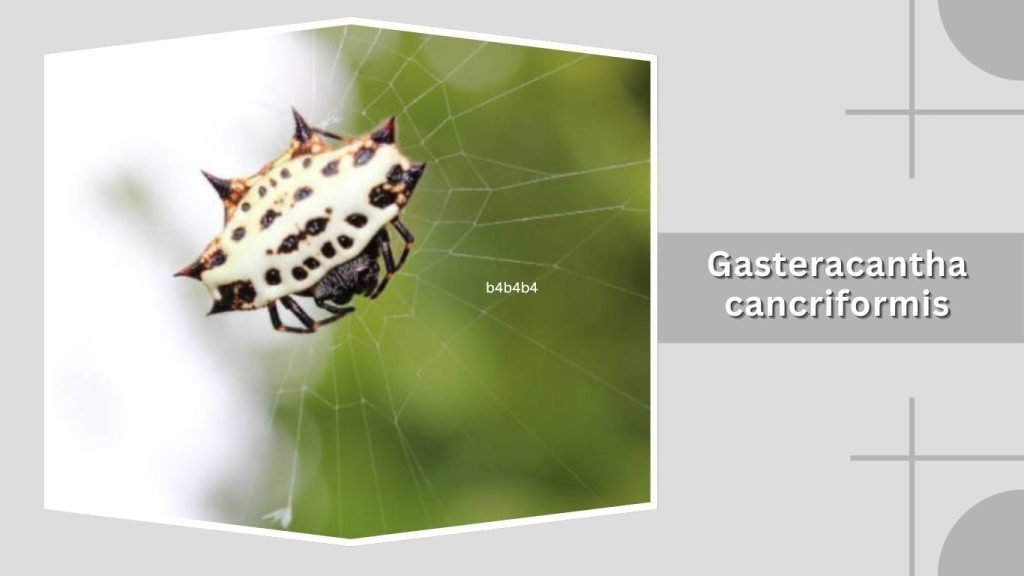
A brightly colored and easily recognizable spiny orb-weaver, Gasteracantha cancriformis is known for its hard, shell-like abdomen and prominent spines. It is commonly found in warm regions and plays an important role in controlling insect populations.
Identification
- Distinctive crab-like, flattened abdomen
- Usually white, yellow, or orange with black spots
- Six prominent spines around the edges of the abdomen
- Females are much larger and more colorful than males
- Body appears hard and glossy due to a thick outer covering
Habitat
This species is typically found in tropical and subtropical regions, including parts of the Americas. It prefers gardens, forests, and areas with shrubs or small trees where it can build its orb-shaped web. The spider usually positions its web in open spaces between branches, allowing it to effectively trap flying insects. It thrives in warm climates and is often seen during the daytime resting in the center of its web.
Behavior
Gasteracantha cancriformis is a non-aggressive spider that relies on its web rather than active hunting. It spins a classic circular orb web, which is rebuilt regularly to maintain effectiveness. When prey becomes trapped, the spider quickly immobilizes it using silk before feeding. Its bright colors and spiny body serve as a defense mechanism, deterring predators by making it appear difficult to eat.
Importance
This spider is beneficial to ecosystems and human environments alike. By feeding on flying insects such as mosquitoes and flies, it helps naturally control pest populations. Despite its intimidating appearance, it poses little to no threat to humans, as its venom is harmless. Its presence is often considered a sign of a healthy garden or natural habitat.
2. Gasteracantha arcuata
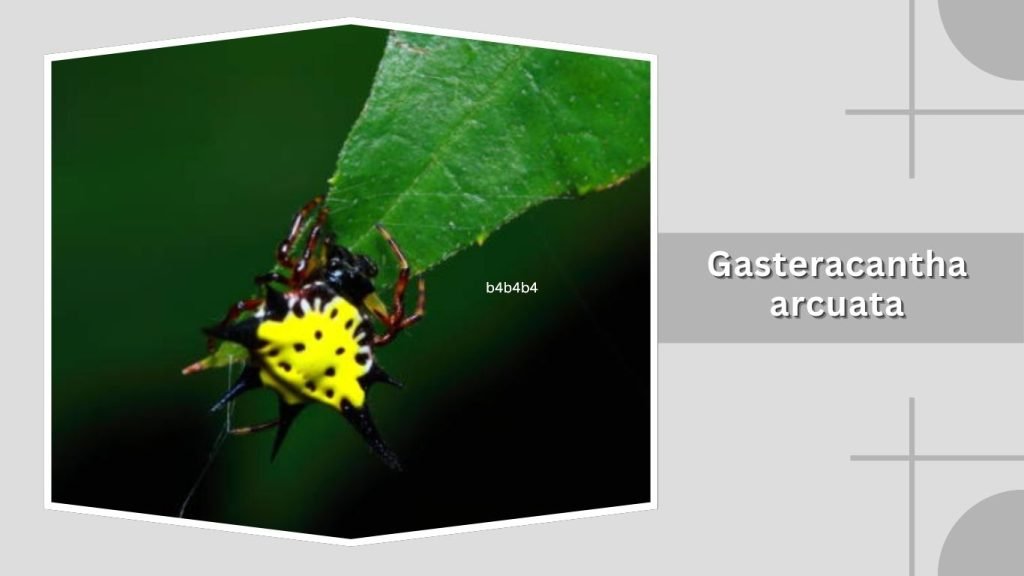
Gasteracantha arcuata is another striking spiny orb-weaver known for its elongated spines and vibrant coloration. It is commonly found in parts of Asia and is admired for its unique body shape and web-building skills.
Identification
- Hard, flattened abdomen with bright coloration
- Typically yellow or orange with black markings
- Six long, curved spines extending outward
- Females are larger and more noticeable than males
- Glossy, shield-like body structure
Habitat
This species is mostly found in tropical and subtropical regions of South and Southeast Asia. It prefers forest edges, gardens, and areas with dense vegetation. The spider builds its orb web between tree branches or shrubs, usually in places with good airflow to catch flying insects. It is commonly seen in rural and semi-urban environments where greenery is abundant.
Behavior
Gasteracantha arcuata is a web-building spider that depends on its strong orb web to capture prey. It remains at the center of the web during the day, waiting for insects to become trapped. Once prey is caught, the spider quickly wraps it in silk before feeding. Its bright colors and sharp spines act as a defense mechanism against predators, making it less likely to be attacked.
Importance
This spider plays a valuable role in maintaining ecological balance by reducing insect populations, including harmful pests. It is harmless to humans and rarely bites unless provoked. Its presence indicates a healthy environment, and it contributes to natural pest control in gardens and agricultural areas.
3. Gasteracantha kuhli
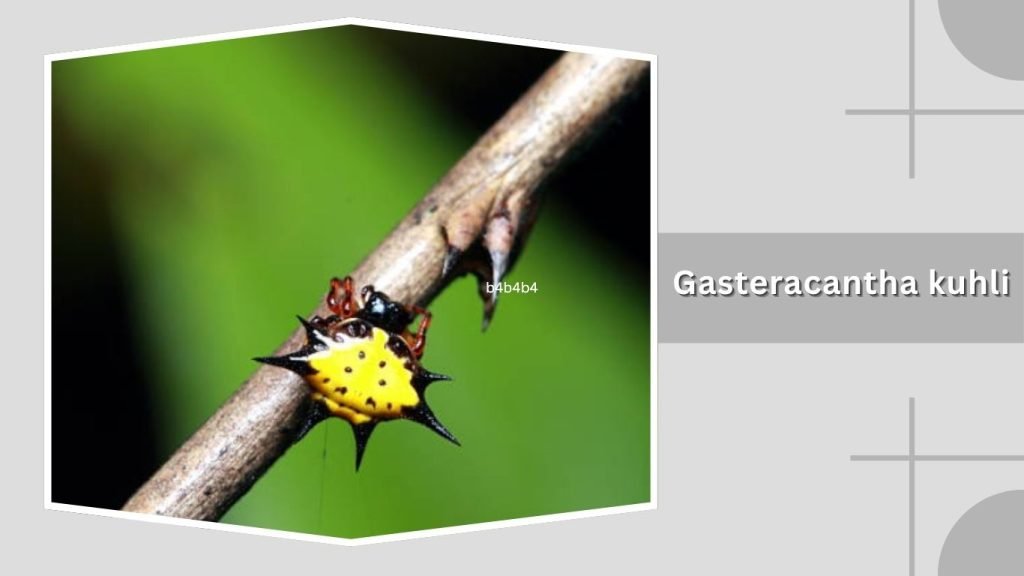
Gasteracantha kuhli is a visually striking spiny orb-weaver known for its bold colors and symmetrical spine arrangement. It is widely distributed across parts of Asia and is often seen in natural vegetation where it builds its characteristic orb web.
Identification
- Broad, flattened abdomen with a hard, shell-like surface
- Bright coloration, often yellow, orange, or red with black spots
- Six well-developed spines, typically shorter but thicker than some related species
- Distinct symmetrical pattern on the dorsal side
- Females are significantly larger and more colorful than males
Habitat
This species is commonly found in tropical forests, gardens, and areas with dense plant growth. It prefers warm, humid environments where insect activity is high. Gasteracantha kuhli constructs its orb web between branches, shrubs, or tall grasses, usually at moderate heights above the ground. It is frequently observed in both natural forests and human-influenced habitats like parks and agricultural fields.
Behavior
Like other orb-weavers, Gasteracantha kuhli relies on its web to catch prey rather than actively hunting. It stays at the center of the web, remaining still until vibrations signal trapped insects. The spider then quickly immobilizes its prey using silk wrapping. Its bright coloration and spiny body serve as a warning to predators, reducing the likelihood of attack. It is generally calm and non-aggressive.
Importance
Gasteracantha kuhli contributes significantly to controlling insect populations, especially flying pests. This makes it beneficial in agricultural and garden environments. It poses no real danger to humans, as its venom is mild and rarely used defensively. Its presence is often a good indicator of a balanced and healthy ecosystem, supporting biodiversity and natural pest regulation.
4. Micrathena gracilis
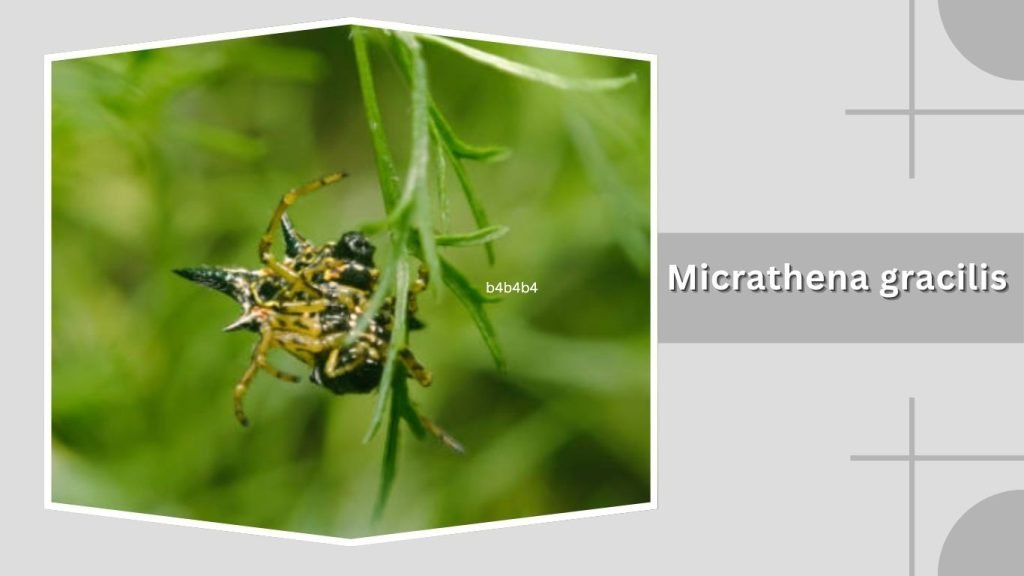
Micrathena gracilis, commonly known as the Spined Micrathena, is a distinctive orb-weaver recognized for its long, sharp spines and slender body. It is widely found in North and Central America and is often seen in wooded areas.
Identification
- Elongated, narrow abdomen with a yellow and black pattern
- Two pairs of long, pointed spines projecting sideways
- Body appears more stretched compared to other spiny orb-weavers
- Females are larger and more prominent than males
- Legs are relatively long and thin
Habitat
This species prefers forests, woodland edges, and shaded garden areas. It builds its orb-shaped web in low vegetation, usually a few feet above the ground. The web is often placed along walking paths or between shrubs where flying insects are common. Micrathena gracilis thrives in humid, shaded environments and is frequently found in areas with dense plant cover.
Behavior
Micrathena gracilis is active during the daytime and typically rests in the center of its web. It depends entirely on its web to capture prey, which includes small flying insects like flies and mosquitoes. When prey gets trapped, the spider quickly wraps it in silk before feeding. Its sharp spines help deter predators, making it less vulnerable despite its small size.
Importance
This spider is highly beneficial for natural pest control, as it feeds on many insects that can be harmful to humans and plants. It is non-aggressive and rarely interacts with humans. Even if disturbed, it is unlikely to bite. Its presence supports ecological balance and indicates a healthy environment, especially in forested and garden ecosystems.
5. Micrathena sagittata
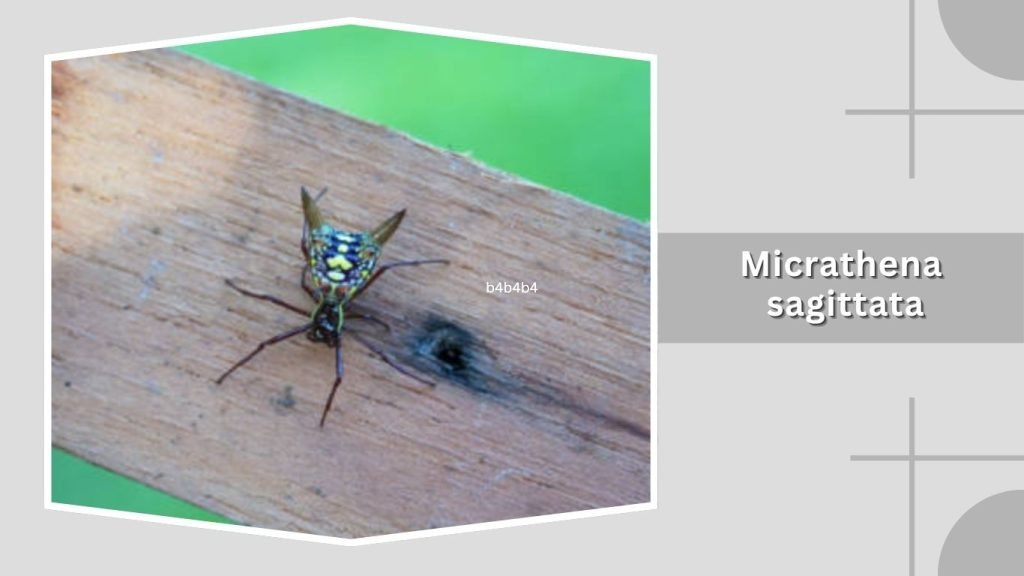
Micrathena sagittata, often called the Arrow-shaped Micrathena, is a small but striking spiny orb-weaver known for its unique triangular body and sharp lateral spines. It is commonly found in North America, especially in wooded habitats.
Identification
- Distinct arrowhead or triangular-shaped abdomen
- Bright yellow and black coloration
- Prominent lateral spines that extend outward like points of an arrow
- Compact body compared to other spiny orb-weavers
- Females are larger and more vividly colored than males
Habitat
This species prefers forests, woodland edges, and dense shrubbery. It builds its orb web in shaded areas, often between low branches or under tree canopies. The web is usually positioned a few feet above the ground, making it effective for catching small flying insects. Micrathena sagittata thrives in moist, shaded environments where insect activity is high.
Behavior
Micrathena sagittata is a daytime web-builder that remains at the center of its web, waiting for prey. It relies on vibrations to detect trapped insects and quickly responds by wrapping them in silk. Its unusual body shape and spines help protect it from predators. The spider is generally calm and does not exhibit aggressive behavior toward humans.
Importance
This spider plays an important role in controlling populations of small flying insects, including pests. It is harmless to humans and rarely bites. By contributing to natural pest regulation, Micrathena sagittata supports ecological balance. Its presence is often a sign of a healthy woodland or garden ecosystem.
6. Micrathena mitrata
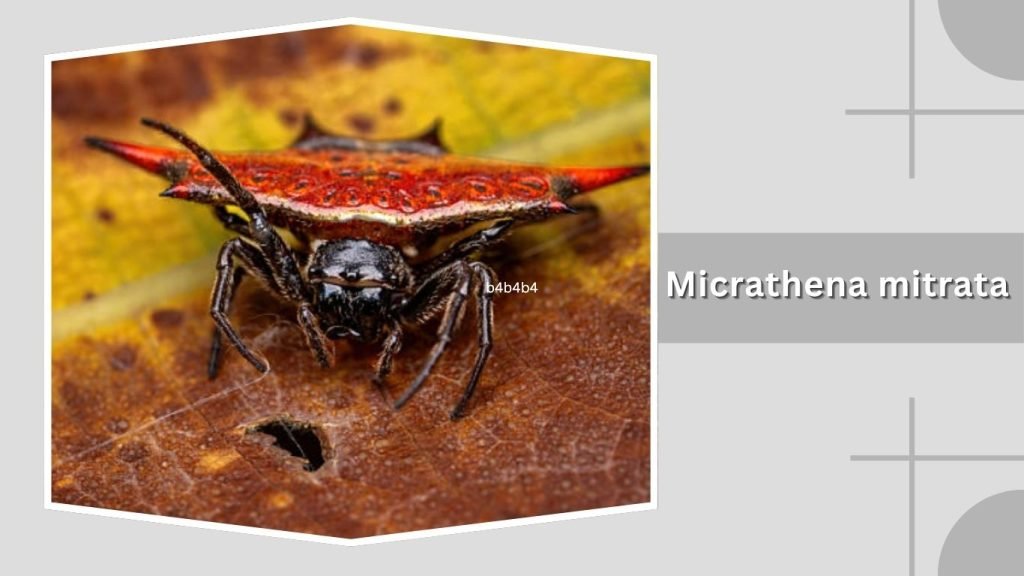
Micrathena mitrata, commonly known as the White Micrathena, is a small but eye-catching spiny orb-weaver recognized for its contrasting black-and-white coloration and modest spine structure. It is widely distributed in parts of North and Central America.
Identification
- Rounded, somewhat triangular abdomen
- Distinct black-and-white coloration pattern
- Shorter, less pronounced spines compared to other Micrathena species
- Smooth, glossy body surface
- Females are larger and more visible than males
Habitat
This species is typically found in forests, wooded edges, and garden areas with sufficient shade. It builds its orb web in low vegetation, often a few feet above the ground. The web is usually placed in sheltered locations among shrubs or tree branches, where flying insects frequently pass. Micrathena mitrata prefers humid and moderately shaded environments.
Behavior
Micrathena mitrata is active during the day and spends most of its time at the center of its web. It relies entirely on its web to catch prey, responding quickly when vibrations indicate a trapped insect. The spider wraps its prey in silk before feeding. Its coloration may serve as camouflage or a warning signal to potential predators.
Importance
This spider contributes to natural pest control by feeding on small flying insects such as gnats and flies. It is harmless to humans and rarely bites. Its presence is beneficial in both natural and garden ecosystems, helping maintain balance by reducing insect populations without the need for chemical control methods.
7. Macracantha arcuata
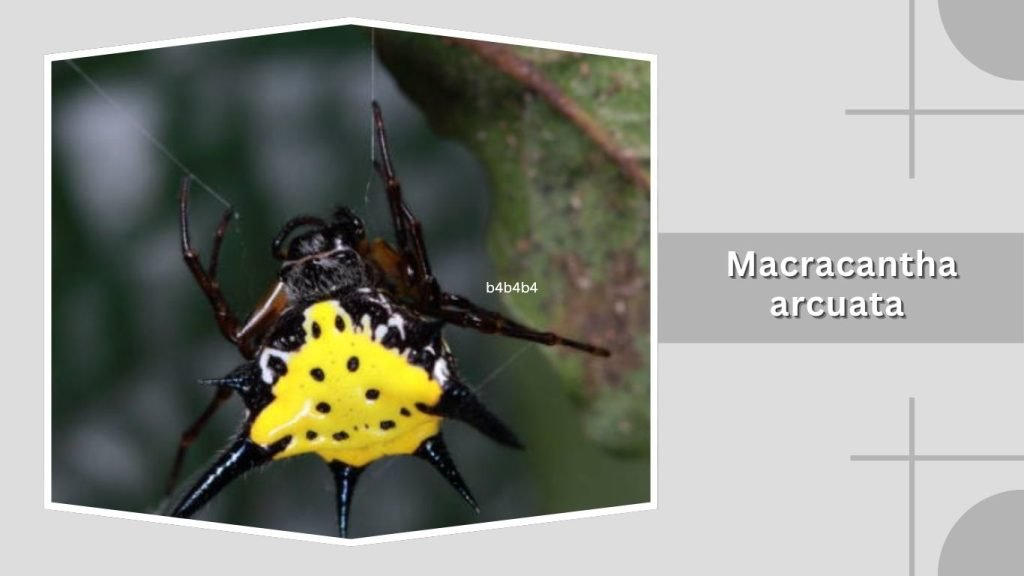
Macracantha arcuata is one of the most dramatic-looking spiny orb-weavers, famous for its extremely long, curved spines and striking coloration. It is commonly found in Southeast Asia and is easily recognized due to its unique shape.
Identification
- Bright yellow or orange abdomen with black markings
- Two very long, curved lateral spines extending outward
- Smaller front and rear spines compared to side ones
- Hard, flattened, and glossy body
- Females are much larger and more visually prominent than males
Habitat
This species is typically found in tropical forests, plantations, and garden areas across Southeast Asia. It prefers areas with dense vegetation where it can anchor its orb web between tree branches or shrubs. The web is usually built at moderate heights, allowing it to effectively capture flying insects. Warm, humid climates are ideal for its survival.
Behavior
Macracantha arcuata is a classic orb-weaver that remains at the center of its web during the day. It relies on vibrations to detect prey and quickly immobilizes insects using silk. Its long, curved spines serve as a strong defense mechanism, making it difficult for predators to attack. The spider is non-aggressive and avoids human interaction.
Importance
This spider plays a significant role in controlling insect populations, especially flying pests. It is harmless to humans and rarely bites. Its presence benefits agricultural and garden ecosystems by naturally reducing harmful insects. Additionally, its unique appearance makes it an interesting species for observation and study in biodiversity research.
8. Thelacantha brevispina
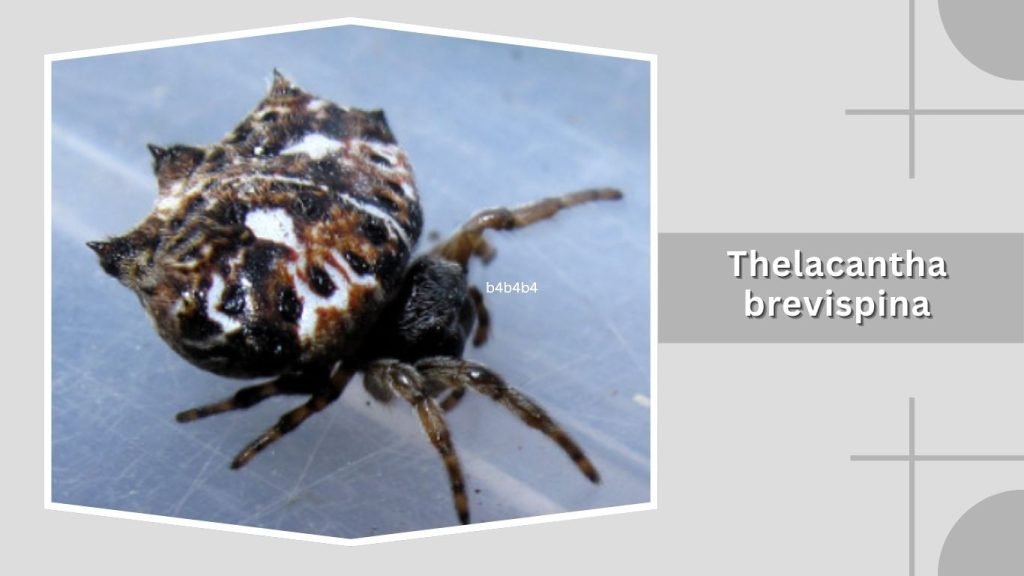
Thelacantha brevispina is a lesser-known but fascinating spiny orb-weaver, recognized for its compact body and short spines. It is mainly found in parts of Asia and is adapted to blend into its surroundings while maintaining the typical orb-weaver characteristics.
Identification
- Small, flattened abdomen with a hard outer surface
- Short, stubby spines compared to other spiny orb-weavers
- Coloration varies from pale yellow to brown with darker markings
- Less pronounced patterns, aiding in camouflage
- Females are larger and more noticeable than males
Habitat
This species is commonly found in tropical and subtropical regions, especially in forest edges, shrubs, and garden vegetation. It builds its orb web in low toوسطة vegetation, often close to the ground or between small branches. Thelacantha brevispina prefers quiet, undisturbed environments with sufficient insect activity and moderate humidity.
Behavior
Thelacantha brevispina is a web-building spider that depends on its orb web for capturing prey. It usually stays at the center of the web, waiting for vibrations that signal trapped insects. Once detected, it quickly wraps the prey in silk before feeding. Its shorter spines and dull coloration help it avoid predators by blending into its environment.
Importance
This spider contributes to natural pest control by feeding on small flying insects. It is harmless to humans and rarely comes into contact with people. Its role in maintaining ecological balance makes it beneficial in both natural habitats and garden ecosystems. Despite being less visually striking, it remains an important part of biodiversity.
FAQs
What are spiny orb-weaver spiders?
Spiny orb-weaver spiders are a group of orb-weaving spiders known for their hard, flattened abdomens and prominent spines. They build circular webs to catch flying insects and are commonly found in warm regions around the world.
Are spiny orb-weavers dangerous to humans?
No, spiny orb-weavers are not dangerous to humans. They are generally non-aggressive and rarely bite. Even if a bite occurs, their venom is mild and typically causes little to no harm.
Where are spiny orb-weavers commonly found?
They are usually found in tropical and subtropical regions, including forests, gardens, and shrublands. These spiders prefer areas with plenty of vegetation where they can build their orb-shaped webs.
What do spiny orb-weaver spiders eat?
Spiny orb-weavers primarily feed on small flying insects such as flies, mosquitoes, and moths. They rely on their webs to trap prey, which they then wrap in silk before consuming.
Why do spiny orb-weavers have spines?
Their spines serve as a defense mechanism against predators. The sharp, protruding spines make them harder to eat and can also help them appear larger or more threatening, reducing the risk of attack.
