
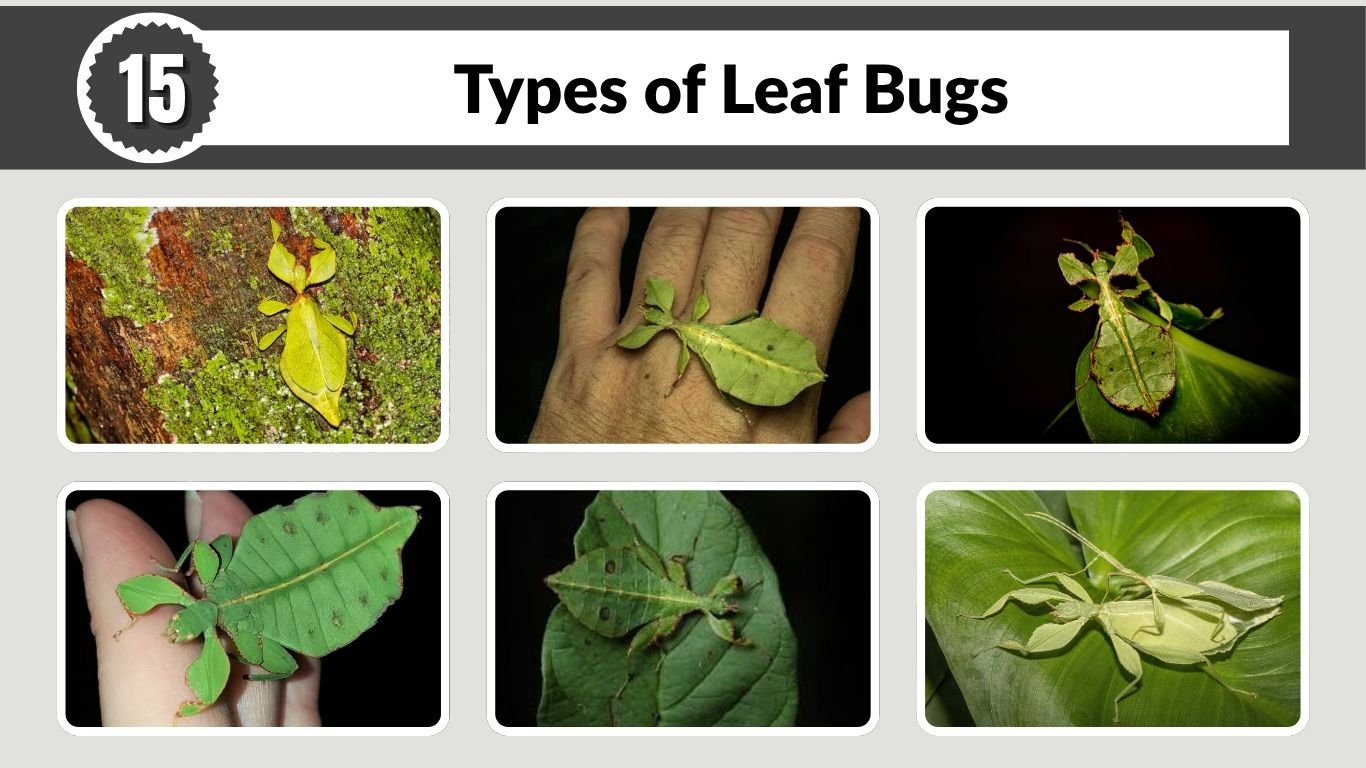
Leaf bugs, commonly called leaf insects or walking leaves, are remarkable insects known for their extraordinary camouflage. Their flattened bodies, leaf-like legs, realistic veins, and brown markings allow them to resemble living or damaged foliage. Most species inhabit the warm tropical forests of Asia, Australia, and surrounding Pacific islands. This guide explores 15 types of leaf insects, including their identification features, habitats, diets, behaviors, and life cycles.
1. Giant Malaysian Leaf Insect
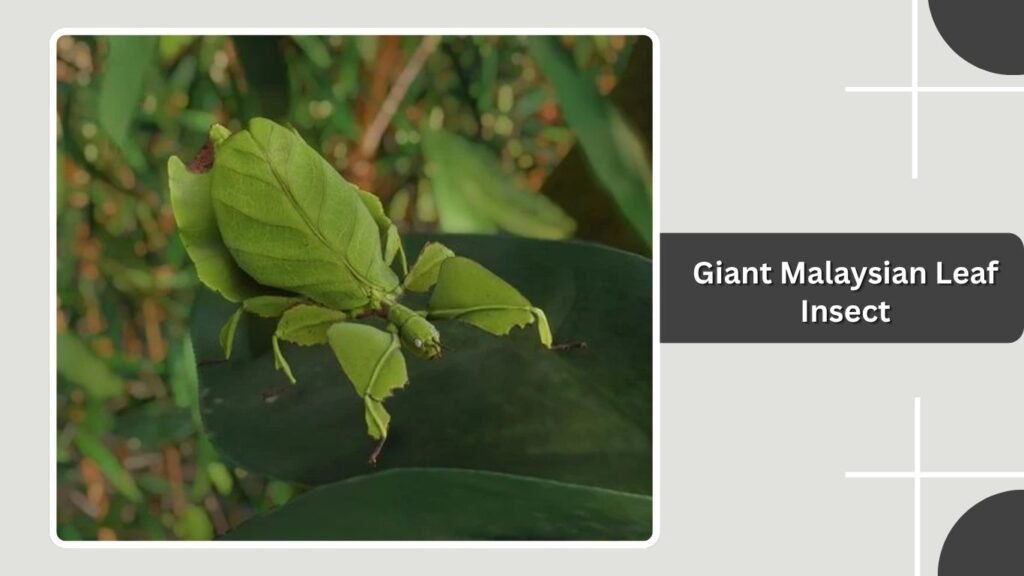
The Giant Malaysian leaf insect (Pulchriphyllium giganteum) is one of the world’s largest and most impressive leaf-mimicking insects. Native to tropical Southeast Asia, it closely resembles a broad green leaf, allowing it to remain hidden from birds and other predators.
Identification
- Females can grow approximately 4–5 inches long.
- The body is broad, flat, and usually bright green.
- Brown markings resemble damaged or aging leaf tissue.
- Females have short wings and cannot fly effectively.
- Males are smaller, slimmer, and capable of flight.
- Their legs have flattened, leaf-like extensions.
Habitat and Distribution
Giant Malaysian leaf insects inhabit warm, humid rainforests in Malaysia and nearby parts of Southeast Asia. They spend most of their lives among tree and shrub foliage. Their remarkable camouflage makes them extremely difficult to notice in their natural habitat.
Diet and Feeding
This species is herbivorous and feeds mainly on fresh leaves. In captivity, it commonly eats bramble, blackberry, raspberry, rose, oak, and guava leaves. It usually feeds during the evening or nighttime when environmental conditions are cooler.
Behavior and Life Cycle
When threatened, the insect may gently rock its body to imitate a leaf moving in the wind. Females lay individual eggs that fall to the forest floor. The eggs can take several months to hatch, after which the young nymphs climb vegetation and begin feeding.
2. Indian Leaf Insect
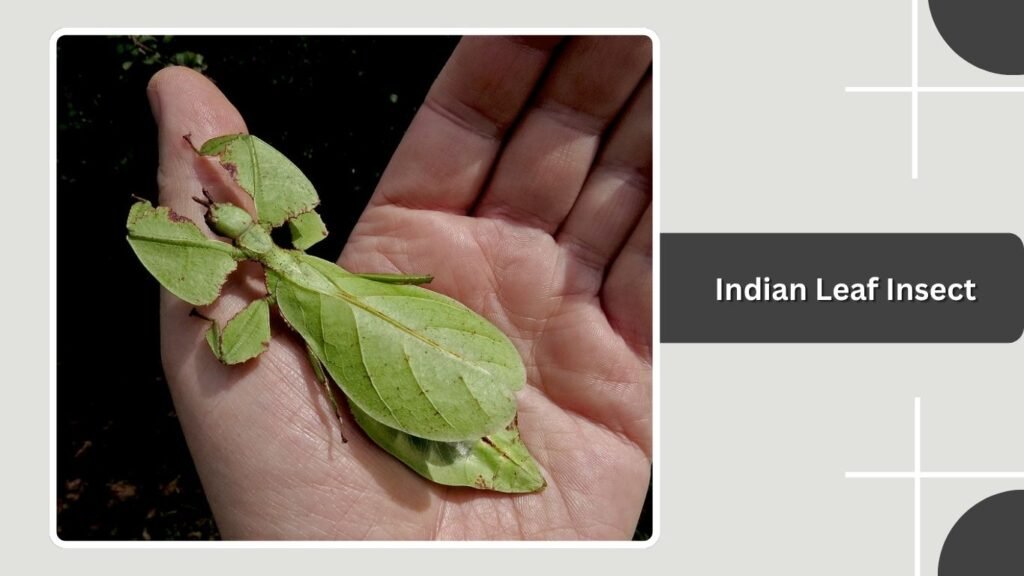
The Indian leaf insect (Phyllium bioculatum) is a remarkable tropical insect known for its leaf-like body, flattened legs, and natural green coloring. It uses camouflage to avoid predators and remains nearly invisible while resting among dense foliage.
Identification
- Females usually grow about 3–4 inches long.
- The body is broad, flat, and leaf-shaped.
- Color varies from green to yellowish or brown.
- Dark spots resemble damaged areas on a leaf.
- Females are larger and wider than males.
- Males have long wings and can fly.
Habitat and Distribution
Indian leaf insects occur in India, Sri Lanka, Bangladesh, southern China, and parts of Southeast Asia. They prefer warm, humid forests with abundant vegetation. Most individuals remain in shrubs and trees where their appearance blends naturally with fresh or aging leaves.
Diet and Feeding
These herbivorous insects consume the leaves of various plants. Common food sources include guava, mango, rose, bramble, raspberry, and oak. They generally feed at night and remain still during daylight hours to reduce their risk of being detected.
Behavior and Life Cycle
Indian leaf insects often rock gently when walking, imitating foliage moving in the breeze. Females drop their eggs onto the ground rather than attaching them to plants. After hatching, the active nymphs climb nearby vegetation and gradually develop their characteristic leaf-like appearance.
3. Philippine Leaf Insect
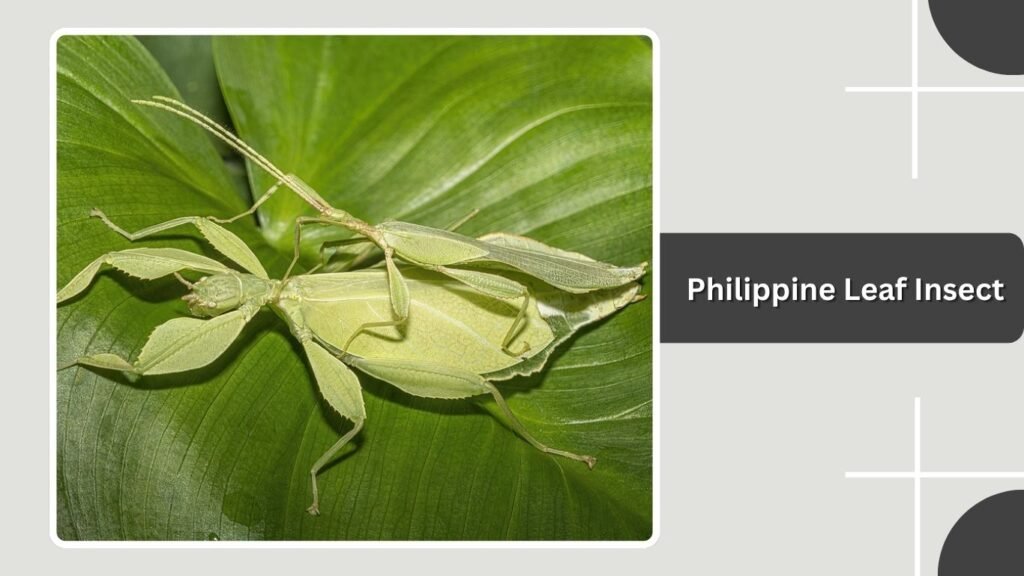
The Philippine leaf insect (Phyllium philippinicum) is a beautifully camouflaged species native to the Philippines. Its body closely resembles a living leaf, complete with vein-like patterns, flattened edges, and occasional brown markings that imitate natural leaf damage.
Identification
- Adult females reach approximately 3–4 inches.
- Females have wide, rounded, leaf-shaped bodies.
- Their coloration is commonly bright or light green.
- Males are smaller, narrower, and usually brownish-green.
- Leaf-like extensions appear on the legs.
- Adult males have functional wings and can fly.
Habitat and Distribution
This species inhabits tropical forests throughout parts of the Philippines. It lives among bushes, small trees, and other leafy vegetation. Warm temperatures and high humidity support healthy growth, successful molting, and normal egg development.
Diet and Feeding
Philippine leaf insects feed entirely on plant material. They consume bramble, blackberry, raspberry, rose, oak, and guava leaves. Fresh, pesticide-free foliage is essential when they are kept in captivity. Most feeding activity occurs after sunset.
Behavior and Life Cycle
The insect depends on stillness and camouflage rather than speed or aggression. When disturbed, it may sway like a windblown leaf or remain motionless. Females can reproduce without mating through parthenogenesis. Eggs fall to the ground and may require several months before hatching.
4. Java Leaf Insect
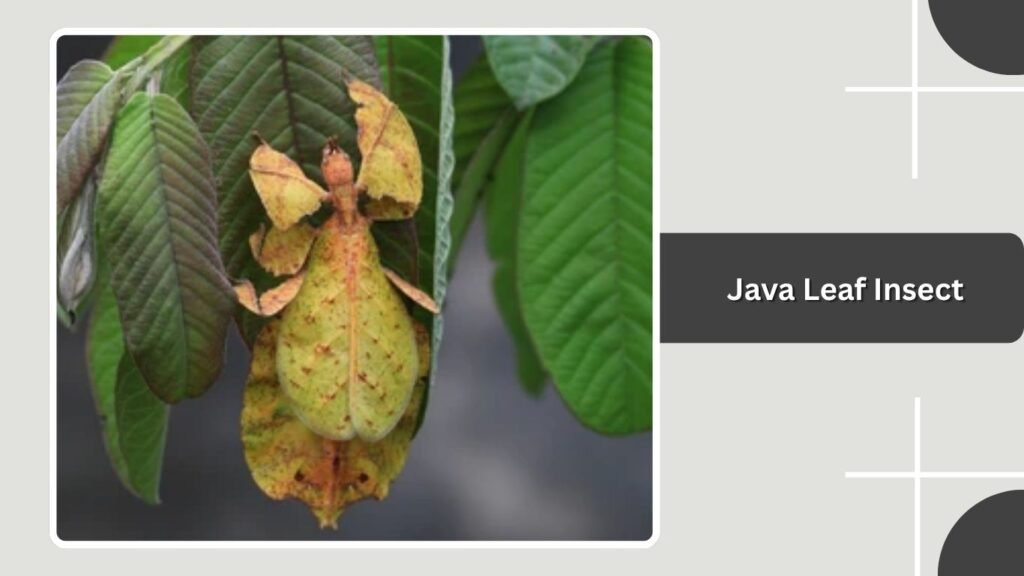
The Java leaf insect (Phyllium jacobsoni) is a fascinating leaf-mimicking insect found on the Indonesian island of Java. Its green, flattened body allows it to disappear among foliage, making it difficult for both predators and human observers to locate.
Identification
- Females are broad and strongly leaf-shaped.
- Adult females can reach around 3–4 inches.
- The body is usually green with visible vein patterns.
- Males are smaller and more slender.
- Flattened leg sections resemble small leaf pieces.
- Brown edges may imitate dry or damaged foliage.
Habitat and Distribution
Java leaf insects live in warm, humid forests on Java, Indonesia. They usually remain in the upper parts of shrubs and trees where foliage is plentiful. Their preferred environment provides stable warmth, moisture, and protection from direct sunlight.
Diet and Feeding
This species feeds on fresh leaves and other soft plant material. Bramble, raspberry, blackberry, rose, guava, and oak may be accepted in captivity. The insects usually begin feeding in the evening and may leave curved bite marks along leaf edges.
Behavior and Life Cycle
Java leaf insects are calm, slow-moving, and primarily nocturnal. Their gentle rocking movements help them resemble leaves moving in a breeze. Females lay eggs that drop onto the forest floor. Nymphs emerge after an extended incubation period and molt several times before reaching adulthood.
5. Gray’s Leaf Insect
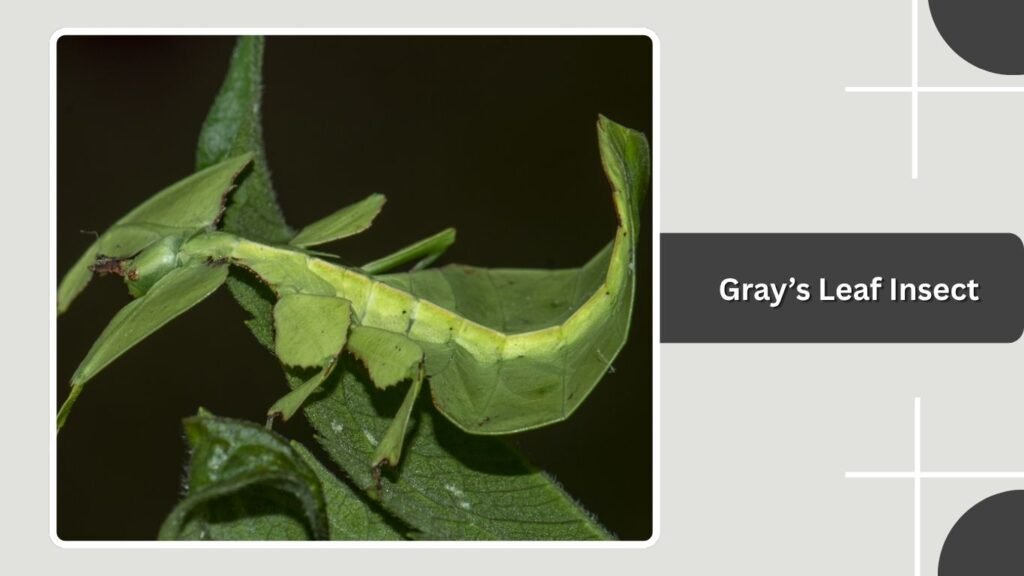
Gray’s leaf insect (Phyllium siccifolium) is among the earliest scientifically described leaf insects. Despite its name, it is normally green, yellowish, or brown rather than gray. Its flattened body and leaf-like veins provide excellent camouflage in tropical vegetation.
Identification
- Females have wide, oval, leaf-shaped bodies.
- Adults may reach approximately 3–4 inches long.
- Body colors include green, yellow, and brown.
- The abdomen displays prominent vein-like markings.
- Males are slimmer and have longer antennae.
- Flattened legs improve the leaf-like appearance.
Habitat and Distribution
Gray’s leaf insect is associated with tropical areas of Southeast Asia, particularly Indonesia. It inhabits humid forests, woodland edges, and vegetation-rich environments. It remains among leaves during the day and becomes more active after darkness falls.
Diet and Feeding
This herbivorous insect eats the leaves of suitable trees and shrubs. Its diet may include guava, bramble, raspberry, rose, and oak. Young nymphs require tender leaf edges, while adults can consume tougher, more mature foliage.
Behavior and Life Cycle
Gray’s leaf insects are harmless and rely almost completely on camouflage for protection. They may freeze or sway when they sense movement nearby. Females release eggs that fall beneath their host plants. After hatching, the fast-moving nymphs climb into vegetation and develop through repeated molts.
6. Chinese Leaf Insect
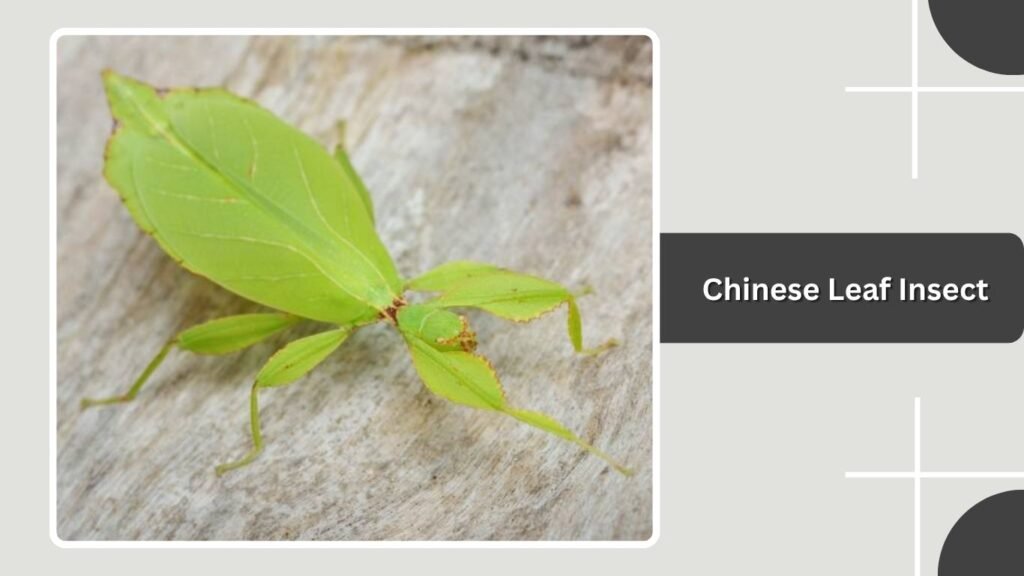
The Chinese leaf insect (Pulchriphyllium sinense) is a well-camouflaged species native to southern China. Its flattened body, green coloration, and leaf-like markings help it remain almost invisible while resting on plants.
Identification
- Females have broad, oval abdomens.
- The body is commonly green or yellowish-green.
- Leaf-like extensions occur on the legs.
- Vein patterns cover the wings and abdomen.
- Males are smaller and more slender.
- Adult males have longer antennae and functional wings.
Habitat and Distribution
Chinese leaf insects inhabit warm forests and vegetation-rich areas of southern China. They spend most of their lives in shrubs and trees. Their natural habitat provides the warmth, moisture, and fresh foliage needed for feeding and development.
Diet and Feeding
This species is herbivorous and consumes fresh leaves. In captivity, suitable foods may include bramble, raspberry, blackberry, rose, oak, and guava. Feeding mainly occurs during the evening and nighttime.
Behavior and Life Cycle
Chinese leaf insects are slow-moving and harmless. They often remain motionless or gently sway to resemble foliage moving in the wind. Females lay hard, seed-like eggs that fall to the ground. Nymphs climb vegetation after hatching and develop through several molts.
7. Australian Leaf Insect
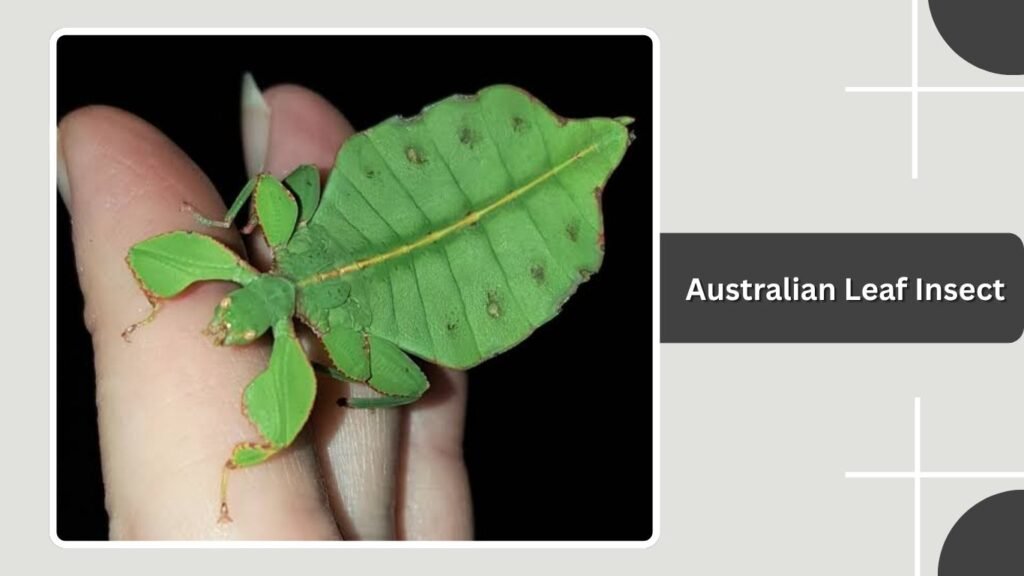
The Australian leaf insect, commonly called Monteith’s leaf insect (Walaphyllium monteithi), is native to northeastern Australia. Its realistic leaf-shaped body makes it one of the most impressive camouflage specialists found in Australian rainforests.
Identification
- Females have broad, flattened bodies.
- Their color ranges from bright green to yellowish-green.
- Brown patches may resemble damaged leaf tissue.
- Males are smaller and considerably narrower.
- Flattened legs create a leafy outline.
- Adult males have long wings and can fly.
Habitat and Distribution
This leaf insect occurs in the tropical rainforests of northern Queensland. It lives among shrubs, tree branches, and dense foliage. Warm temperatures and high humidity are important for normal activity, molting, and egg development.
Diet and Feeding
Australian leaf insects eat foliage from several native and cultivated plants. Rose, bramble, guava, eucalyptus, and other suitable leaves may be consumed. They usually rest during the day and begin feeding after sunset.
Behavior and Life Cycle
The species may sway from side to side when walking, helping it look like a leaf moving in a breeze. Females drop their eggs onto the forest floor. Newly hatched nymphs are active and often brownish before becoming greener after feeding and growing.
8. Bornean Leaf Insect
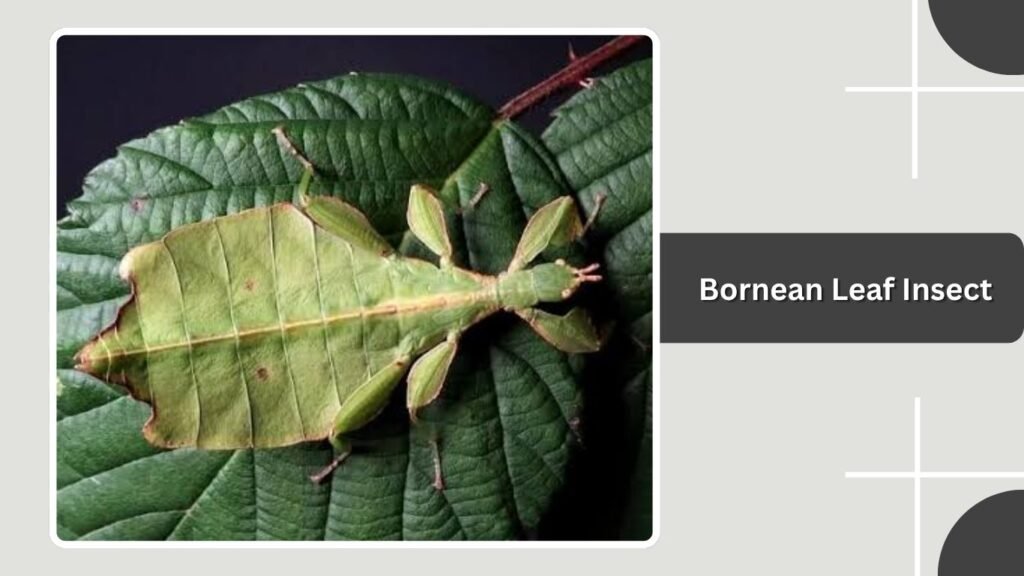
The Bornean leaf insect (Phyllium brossardi) is a remarkable species from northern Borneo. It has a broad, flattened body and detailed leaf-like patterns that provide excellent protection within the island’s dense tropical forests.
Identification
- Females are larger and broader than males.
- The body is generally green and leaf-shaped.
- Wings display vein-like patterns.
- Irregular brown markings resemble leaf damage.
- Males have long antennae and narrow bodies.
- Leaf-like lobes appear along the legs.
Habitat and Distribution
This species is associated with the tropical forests of northern Borneo. It spends most of its time on leafy trees and shrubs, where its appearance blends with surrounding vegetation. The warm, humid rainforest supports its development throughout the year.
Diet and Feeding
Bornean leaf insects consume fresh foliage and do not hunt other animals. Their exact diet in nature can include several local rainforest plants. Captive leaf insects are often offered bramble, guava, rose, raspberry, or oak, depending on what they accept.
Behavior and Life Cycle
Bornean leaf insects rely on camouflage rather than defensive aggression. They may freeze when disturbed or rock gently like foliage in the wind. Females lay seed-like eggs that drop beneath host plants. Nymphs hatch later and climb upward to locate fresh leaves.
9. Sri Lankan Leaf Insect
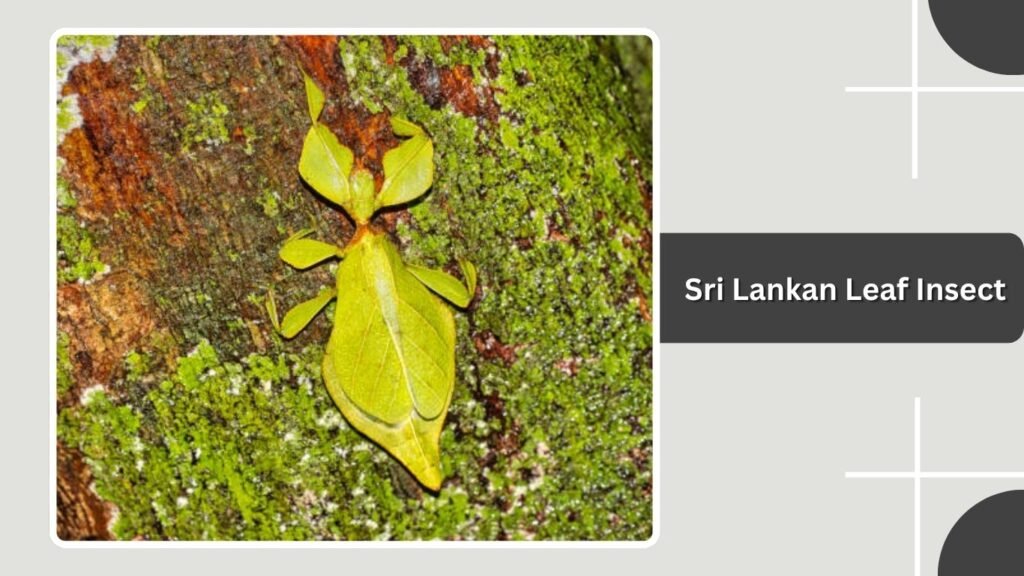
The Sri Lankan leaf insect (Pulchriphyllium agathyrsus) is a tropical species known from Sri Lanka. Its body resembles a broad leaf with visible veins, uneven edges, and natural color variations that make it difficult to detect among foliage.
Identification
- Females possess broad, rounded abdomens.
- The body may be green, yellowish, or brown.
- Wings resemble the surface of a leaf.
- Brown patches imitate dry or damaged areas.
- Males are narrower and more mobile.
- Flattened leg lobes strengthen its camouflage.
Habitat and Distribution
Sri Lankan leaf insects inhabit humid forests and heavily vegetated environments across Sri Lanka. They generally remain in trees or shrubs where they can feed and hide. Shade, warmth, and moisture are important parts of their preferred habitat.
Diet and Feeding
These insects feed entirely on leaves. In the wild, they consume suitable local vegetation, while captive individuals may accept guava, bramble, rose, raspberry, or oak. Feeding activity is normally greatest during the night.
Behavior and Life Cycle
The Sri Lankan leaf insect is quiet, slow-moving, and harmless to humans. Its main defense is remaining still among leaves. Females release eggs onto the ground, where they incubate for several months. Young nymphs climb plants and molt repeatedly before becoming adults.
10. Sumatran Leaf Insect
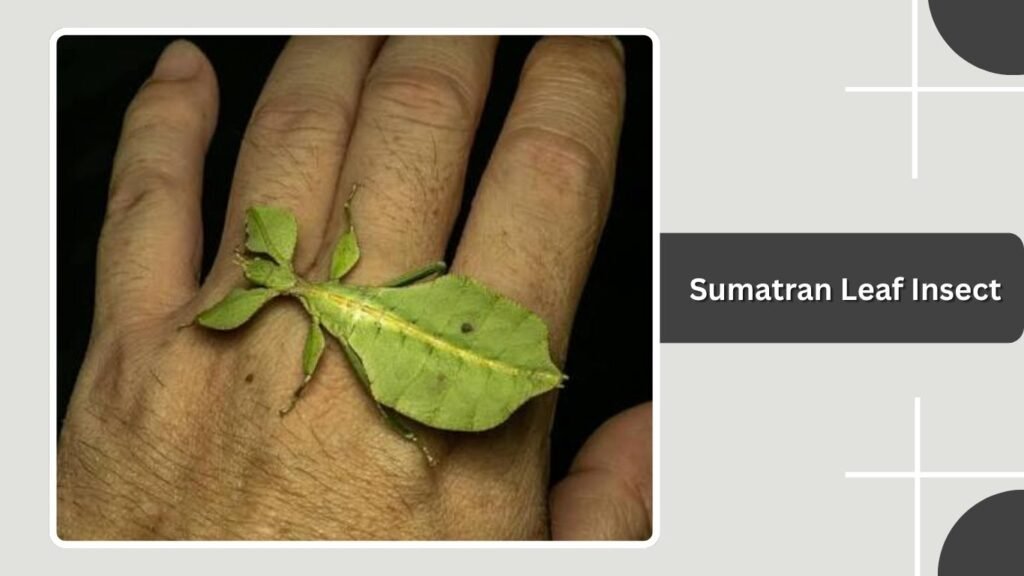
The Sumatran leaf insect (Phyllium nisus) is a leaf-mimicking species native to Sumatra, Indonesia. Its unusual shape, flattened body, and green coloration allow it to blend effectively with the dense foliage of tropical forests.
Identification
- Females have wide, leaf-shaped bodies.
- Males are smaller and more slender.
- The body is generally green or yellowish-green.
- Wings contain realistic leaf-vein patterns.
- Flattened legs resemble pieces of foliage.
- Some individuals have brown edges or spots.
Habitat and Distribution
This species occurs in the tropical forests of Sumatra. It lives above the ground among shrubs, young trees, and leafy branches. The rainforest’s high humidity and stable warmth provide suitable conditions for feeding, molting, and reproduction.
Diet and Feeding
Sumatran leaf insects are herbivores that eat fresh plant foliage. They usually feed at night, creating curved bite marks along leaf edges. Suitable captive foods may include bramble, blackberry, raspberry, rose, oak, and guava.
Behavior and Life Cycle
These insects avoid predators through camouflage and limited movement. When walking, they may rock gently to imitate a windblown leaf. Females lay individual eggs that fall into leaf litter. The nymphs hatch after a lengthy incubation period and climb vegetation to find food.
11. Seychelles Leaf Insect
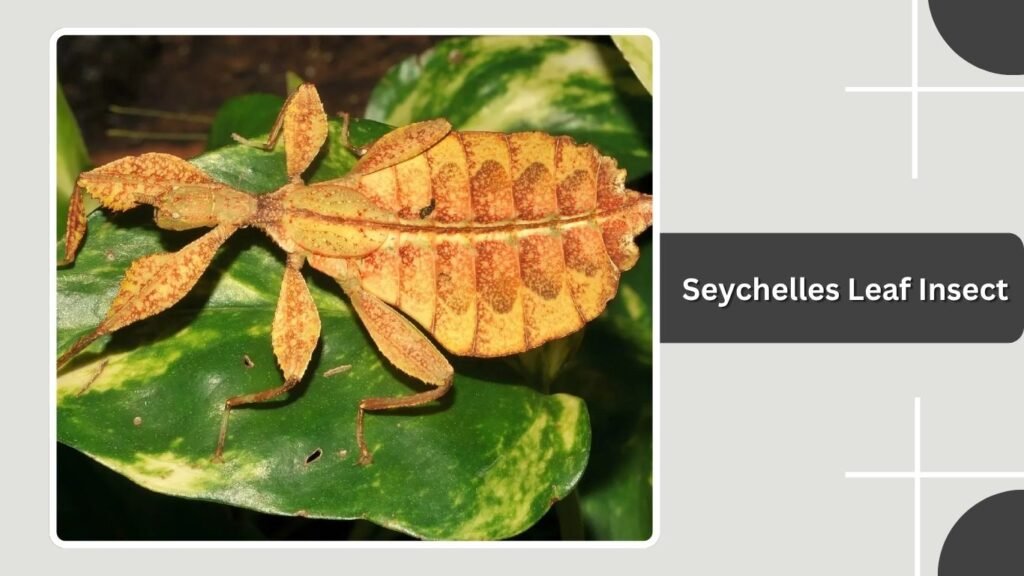
The Seychelles leaf insect is a regional name used for Pulchriphyllium bioculatum, a species also called Gray’s leaf insect. Populations occur on several islands in the Seychelles, where these insects blend remarkably well with broad green foliage.
Identification
- Females have broad, flattened abdomens.
- Their bodies may be green, yellow, or brownish.
- Two distinctive spots can appear on the abdomen.
- Wings display realistic leaf-vein patterns.
- Males are smaller and more slender.
- Leaf-like lobes occur on the legs.
Habitat and Distribution
In the Seychelles, these leaf insects occur on islands including Mahé, Praslin, and La Digue. They inhabit gardens, woodland, forest edges, and areas containing suitable host plants. They remain among foliage where their body shape provides effective camouflage.
Diet and Feeding
Seychelles leaf insects are herbivorous and feed on fresh leaves. Guava is a suitable food plant, while bramble, rose, raspberry, and oak may be accepted in captivity. They usually feed during the evening or at night.
Behavior and Life Cycle
These harmless insects remain motionless when they sense danger. They may also rock gently to imitate foliage moving in the breeze. Females drop seed-like eggs onto the ground. The nymphs hatch after several months and climb nearby plants to begin feeding.
12. Peleng Leaf Insect
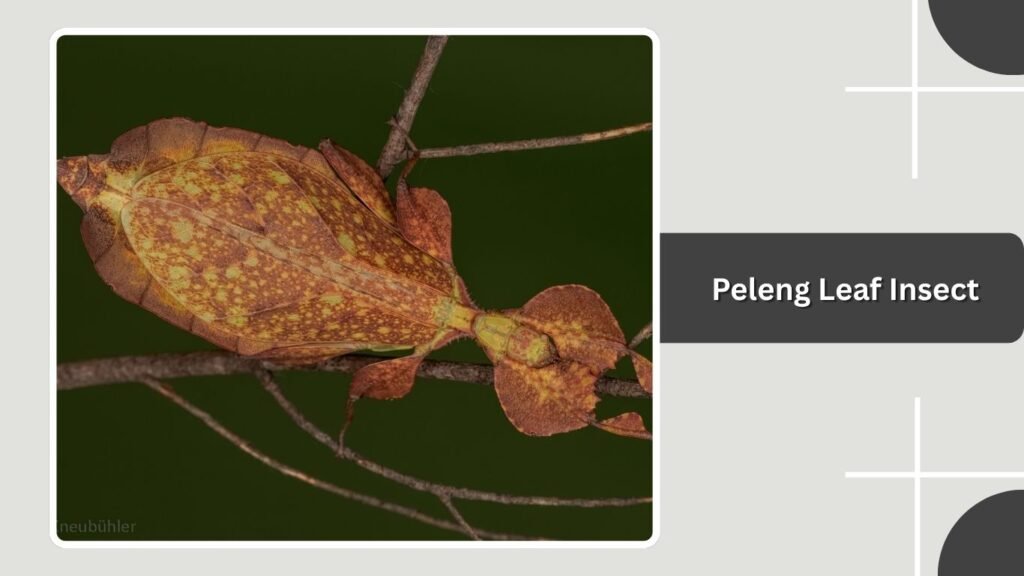
The Peleng leaf insect (Phyllium letiranti) is a distinctive species native to Peleng Island in Indonesia. It was recognized as a separate species because of its unique physical characteristics and geographic isolation from related leaf insects.
Identification
- Females have broad, leaf-shaped bodies.
- Their coloration is usually bright or medium green.
- The abdomen has a wide, irregular outline.
- Males are narrow and equipped for flight.
- Wings contain prominent vein-like markings.
- Flattened legs resemble smaller leaves.
Habitat and Distribution
This species is known from Peleng Island, part of Indonesia’s Banggai Islands. It inhabits warm, humid tropical forests and remains among dense vegetation. Its limited known distribution makes the protection of its natural forest habitat especially important.
Diet and Feeding
Peleng leaf insects eat foliage from tropical trees and shrubs. Guava, mango, bramble, rose, and related plants may provide suitable food. They are most active at night, when they move slowly through vegetation and feed along leaf edges.
Behavior and Life Cycle
Camouflage is the species’ primary defense. When disturbed, individuals may remain completely still, sway like a leaf, or drop into vegetation. Females lay eggs that fall into the leaf litter. After hatching, nymphs climb upward and molt repeatedly as they grow.
13. Biak Leaf Insect
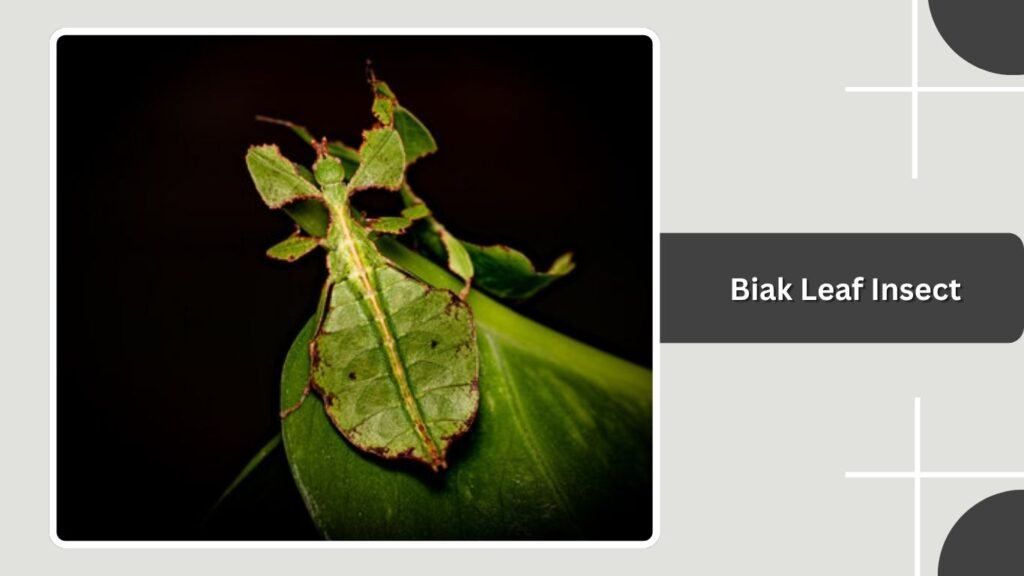
The Biak leaf insect (Nanophyllium daphne) is a small leaf insect discovered on Biak Island, Indonesia. It was the first member of the leaf insect family formally recorded from the island and is notable for its compact size and excellent camouflage.
Identification
- It is smaller than many other leaf insects.
- Females have broad, leaf-like abdomens.
- The body is generally green or yellowish-green.
- Males are narrow and capable of flight.
- Legs possess flattened, foliage-like sections.
- Wings display fine vein patterns.
Habitat and Distribution
This species is known from Biak Island, located near the northern coast of New Guinea. It inhabits humid tropical vegetation where thick foliage provides food and shelter. However, its complete distribution and population size remain poorly understood.
Diet and Feeding
The precise wild host plants of the Biak leaf insect are not well documented. Like related species, it feeds on fresh foliage rather than other insects. Suitable tropical leaves likely provide both nutrition and moisture.
Behavior and Life Cycle
Biak leaf insects depend on camouflage to avoid birds, reptiles, and other predators. They remain still during daylight and become more active after dark. Females lay small eggs that drop beneath host plants. The young nymphs undergo multiple molts before reaching adulthood.
14. Fiji Leaf Insect
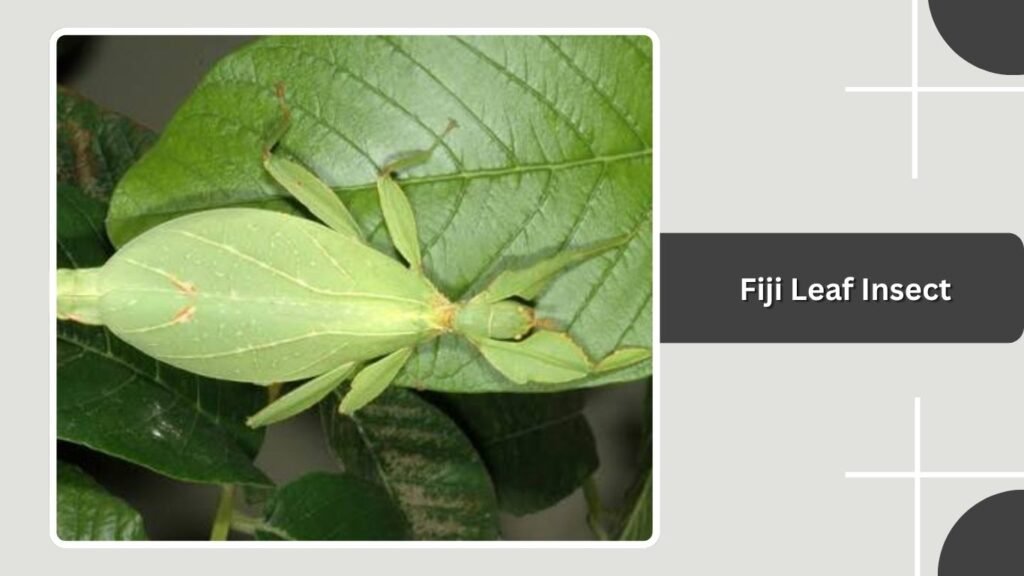
The Fiji leaf insect (Chitoniscus lobiventris) is a small, broad-bodied leaf insect native to the Fiji Islands. Its flattened body, green coloration, and irregular abdominal edges help it resemble a living or partially damaged leaf.
Identification
- The body is relatively small and broad.
- Females possess strongly developed abdominal lobes.
- Coloration is commonly green or yellowish-green.
- The abdomen narrows toward its tip.
- Males are smaller and more slender.
- Legs and wings have leaf-like structures.
Habitat and Distribution
Fiji leaf insects inhabit tropical forests and vegetation-rich environments across parts of Fiji. They live among shrubs and trees where warm temperatures and high humidity support feeding, molting, reproduction, and egg development.
Diet and Feeding
These insects consume fresh leaves from suitable tropical plants. Their wild diet may vary according to the vegetation available on individual islands. Captive leaf insects may accept guava, bramble, rose, and other pesticide-free foliage.
Behavior and Life Cycle
Fiji leaf insects are slow, peaceful, and almost entirely dependent on camouflage. They often remain still during daylight and feed after sunset. Females release eggs that fall into leaf litter. Nymphs hatch later, climb plants, and develop their leafy appearance through successive molts.
15. New Guinea Leaf Insect
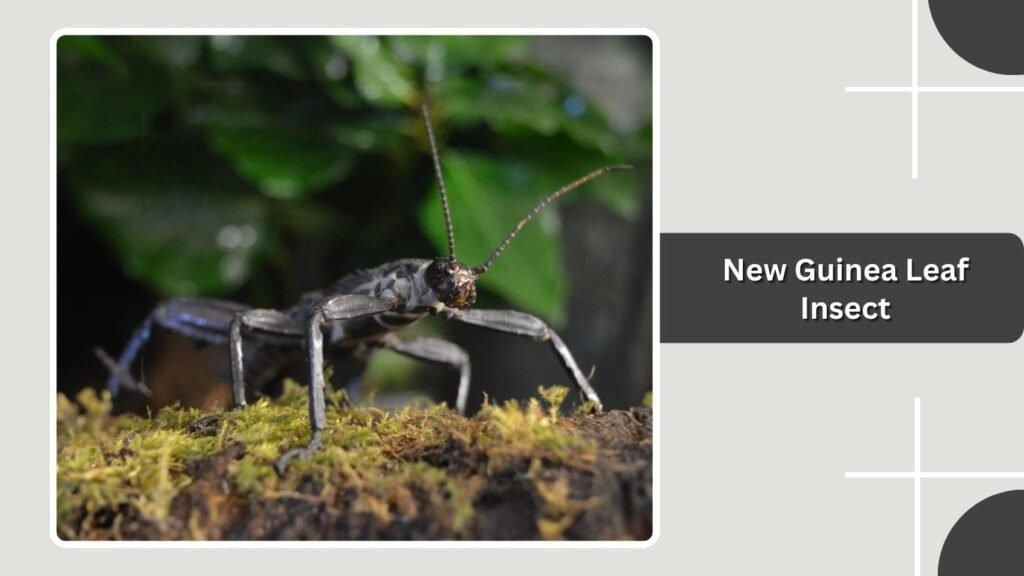
The New Guinea leaf insect (Comptaphyllium caudatum) is a beautifully camouflaged species found in Papua New Guinea. Its body combines a flattened leaf-like shape with textured markings that help it disappear among tropical foliage.
Identification
- Females have flattened, leaf-shaped bodies.
- The abdomen becomes narrower near its tip.
- Their color is usually green or yellowish-green.
- The head and thorax have textured surfaces.
- Males are slimmer and have functional wings.
- Leaf-like lobes occur on the legs.
Habitat and Distribution
This species has been recorded in several parts of Papua New Guinea, including the Eastern Highlands, Morobe, and Gulf provinces. It inhabits warm, humid forests with abundant broad-leaved vegetation and shaded resting places.
Diet and Feeding
New Guinea leaf insects are plant eaters that consume fresh foliage. Their exact natural host plants are not fully documented. Like other walking leaves, they feed slowly along leaf margins, usually during the evening and nighttime.
Behavior and Life Cycle
These insects remain still or sway gently when approached, creating the appearance of leaves moving in the wind. Females lay individual eggs that fall onto the forest floor. After incubation, the nymphs emerge, climb vegetation, and pass through several molts before becoming mature adults.
FAQs
1. Are leaf bugs and leaf insects the same?
The insects described in this article are more accurately called leaf insects or walking leaves. They belong to the family Phylliidae. The term “leaf bug” can also refer to unrelated true bugs, so “leaf insect” is the clearer name for these remarkable leaf-mimicking insects.
2. What do leaf insects eat?
Leaf insects are herbivores that consume fresh foliage. Depending on the species, they may eat guava, bramble, blackberry, raspberry, rose, oak, eucalyptus, or mango leaves. Captive insects should receive fresh, pesticide-free leaves that are appropriate for their particular species.
3. Can leaf insects fly?
Adult males of many leaf insect species have functional wings and can fly while searching for females. Adult females are usually larger and heavier, with shorter or less functional hindwings. Most females cannot fly effectively and instead move slowly between nearby leaves and branches.
4. Are leaf insects dangerous to humans?
Leaf insects are harmless to humans. They do not possess venom, stingers, or dangerous defensive chemicals. They also do not bite people under normal conditions. Their main defense against predators is exceptional camouflage, supported by stillness and gentle leaf-like swaying movements.
5. How long do leaf insects live?
A leaf insect’s lifespan varies by species, sex, temperature, and care conditions. Most live for approximately one year from hatching, although some females may survive longer. Their development includes an egg stage, several nymphal molts, adulthood, mating, and egg-laying.
