
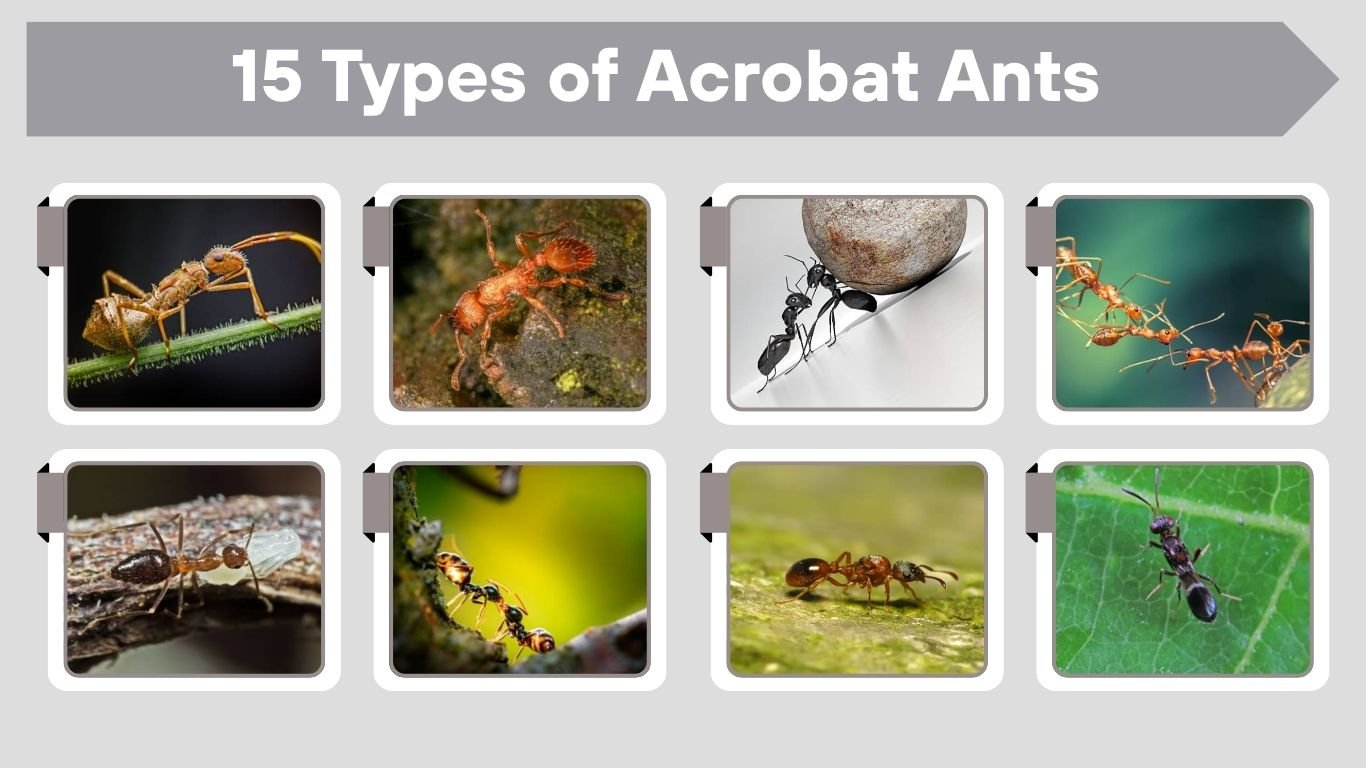
Acrobat ants are small ants known for their unique defensive behavior of raising their heart-shaped abdomen above their body when threatened. These ants belong to the Crematogaster genus and are commonly found in forests, gardens, wooden structures, and residential areas. While many acrobat ant species look similar, they differ in color, habitat, nesting habits, and behavior. Some species prefer tropical forests, while others are more common around homes and damaged wood. Identifying the correct acrobat ant species can help with proper prevention and pest control. This guide highlights 15 different types of acrobat ants along with their key identification features and habitats.
1. Crematogaster scutellaris
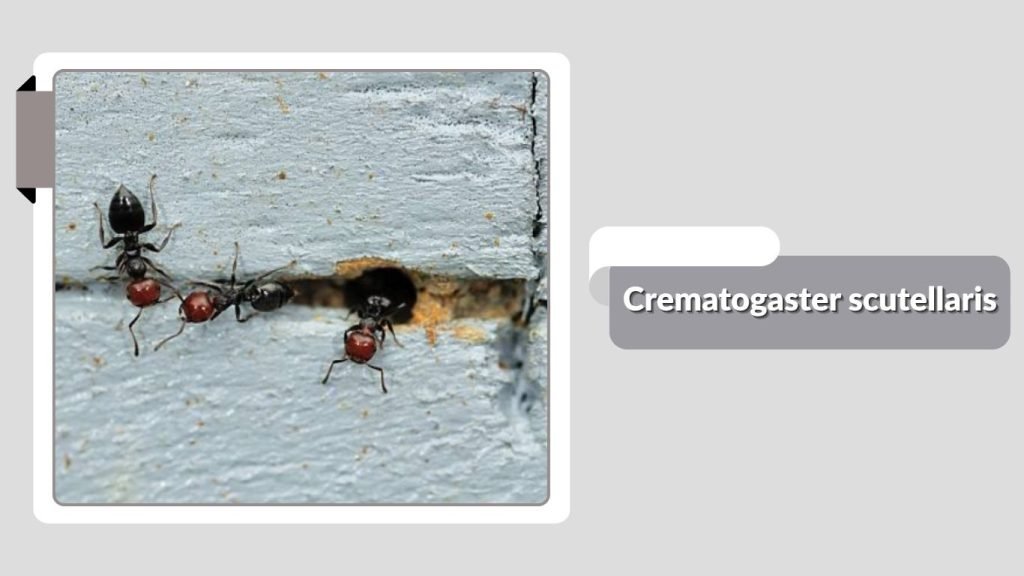
Crematogaster scutellaris is one of the most recognized acrobat ant species found in parts of Europe and surrounding regions. This species is known for its heart-shaped abdomen and unique defensive posture, where it raises its abdomen above its body when threatened. These ants commonly nest in wood, trees, and wooden structures and are often attracted to sweet foods and honeydew.
Characteristics
- Small ant species with a slender body
- Black body with a reddish or orange head
- Distinct heart-shaped abdomen
- Raises abdomen in a defensive position
- Strong attraction to sugary substances and honeydew
Habitat
Crematogaster scutellaris commonly nests in dead wood, tree bark, wooden beams, and decaying branches. They prefer warm and dry environments and are frequently found in forests, gardens, orchards, and wooden buildings. Indoor infestations may occur when colonies spread into damaged wood structures.
Behavior
These ants are highly active foragers and travel in organized trails while searching for food. They feed on nectar, insects, and honeydew produced by aphids. When disturbed, workers quickly raise their abdomen and may bite to defend the colony from threats.
Prevention
Removing decaying wood and repairing moisture-damaged structures can help prevent infestations. Trees and branches touching buildings should be trimmed regularly. Keeping sugary foods sealed and sealing entry points around windows and walls also helps reduce indoor ant activity.
2. Crematogaster ashmeadi
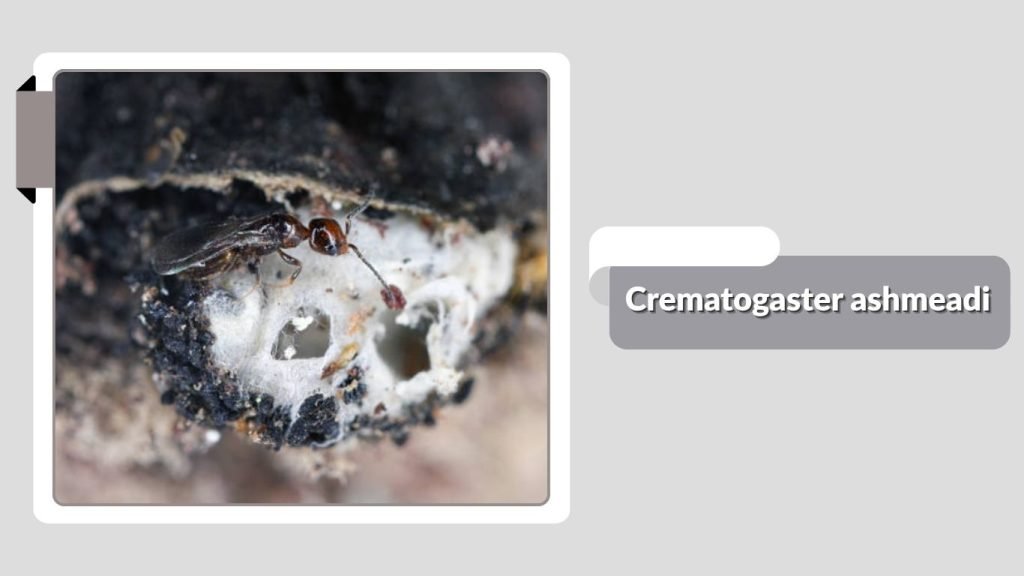
Crematogaster ashmeadi is a common acrobat ant species found in warm and coastal regions. These ants are known for their fast movement, tree-nesting habits, and defensive behavior. They often forage for sweet foods and honeydew and may enter homes while searching for food or moisture.
Characteristics
- Small ants with a shiny dark-colored body
- Heart-shaped abdomen typical of acrobat ants
- Long legs and active movement
- Raises abdomen when threatened
- Attracted to sugary foods and plant honeydew
Habitat
Crematogaster ashmeadi usually nests in hollow twigs, dead branches, tree cavities, and wooden structures. They are commonly found in forests, gardens, and residential landscapes with plenty of trees and shrubs. Indoor nesting may occur in damp or damaged wood.
Behavior
These ants are aggressive defenders and quickly react when their colony is disturbed. They forage in trails across trees and walls while searching for food. Colonies often protect aphids and other sap-feeding insects to collect honeydew as a food source.
Prevention
Removing dead branches and moisture-damaged wood can reduce nesting opportunities. Sealing cracks and gaps around buildings helps prevent indoor entry. Proper food storage and regular cleaning also help discourage foraging ants.
3. Crematogaster lineolata
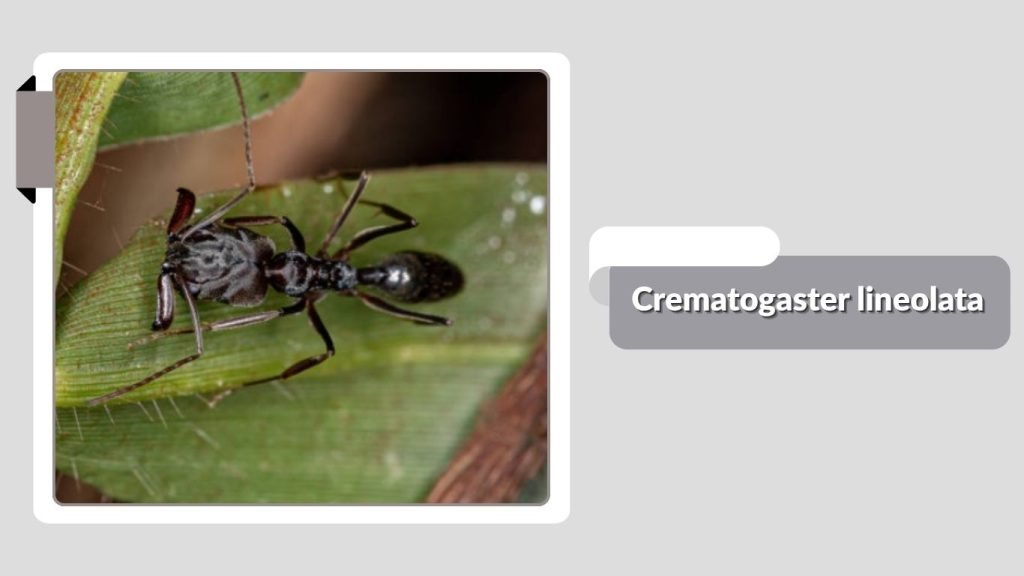
Crematogaster lineolata is a widespread acrobat ant species commonly found in wooded and suburban areas. It is recognized for its defensive posture and preference for nesting in rotting wood and tree cavities. These ants may occasionally invade homes while searching for sweet foods and water.
Characteristics
- Small reddish-brown to dark brown ants
- Distinct heart-shaped abdomen
- Thin body with long antennae
- Raises abdomen above the thorax when alarmed
- Feeds on sweets, insects, and honeydew
Habitat
Crematogaster lineolata commonly nests in dead trees, logs, stumps, and decaying wooden structures. Outdoor colonies are often located beneath bark or inside hollow branches. Indoors, they may establish nests in wall voids or damp wood areas.
Behavior
These ants are active climbers and frequently forage on trees and vegetation. They communicate using scent trails and aggressively protect their nests. Workers may bite when threatened and release defensive chemicals to deter predators.
Prevention
Repairing damaged wood and reducing excess moisture can help prevent infestations. Outdoor debris such as logs and wood piles should be removed from near buildings. Sealing entry points and cleaning food spills quickly also helps limit indoor ant activity.
4. Crematogaster cerasi

Crematogaster cerasi is a North American acrobat ant species commonly found in forests, gardens, and residential areas. These ants are recognized for their defensive behavior and ability to nest in trees, wooden structures, and decaying wood. They are attracted to sweet substances and often forage around plants and homes.
Characteristics
- Small ants with reddish-brown to black coloring
- Heart-shaped abdomen typical of acrobat ants
- Slim body with long antennae
- Raises abdomen when threatened
- Feeds on sugary foods and honeydew
Habitat
Crematogaster cerasi commonly nests in dead branches, hollow trees, stumps, and wooden fences. They prefer moist wood and are often found in wooded landscapes and suburban yards. Indoor infestations may occur in damaged wooden structures or wall voids.
Behavior
These ants actively forage on trees and shrubs while collecting nectar and honeydew. They are protective of their colonies and quickly react when disturbed. Workers may bite and release defensive chemicals to protect the nest from predators or threats.
Prevention
Removing rotting wood and trimming tree branches near buildings can help reduce nesting sites. Moisture-damaged structures should be repaired quickly. Sealing entry points and keeping food storage areas clean also helps prevent indoor invasions.
5. Crematogaster laeviuscula
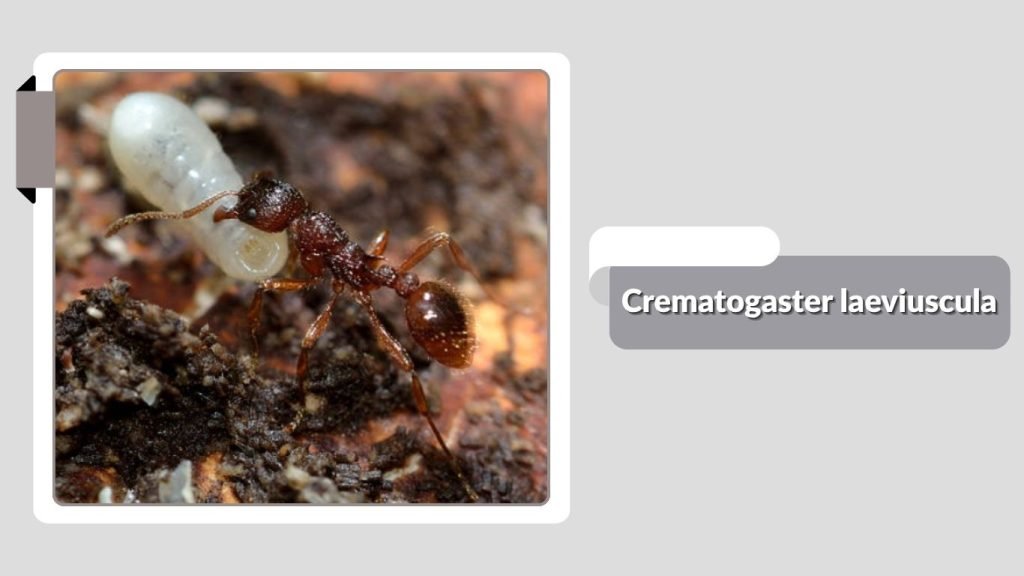
Crematogaster laeviuscula is a small acrobat ant species often found in wooded habitats and residential landscapes. These ants are known for their climbing ability and their habit of nesting in trees, logs, and wooden debris. They primarily feed on sweet substances and small insects.
Characteristics
- Small dark brown to black ants
- Distinct heart-shaped abdomen
- Fast-moving workers with long legs
- Defensive posture with raised abdomen
- Attracted to nectar, honeydew, and sweets
Habitat
Crematogaster laeviuscula usually nests in dead wood, under bark, inside logs, and in tree cavities. Outdoor colonies are commonly found in forests, parks, and gardens. Indoors, they may enter through cracks and settle in damp wooden areas.
Behavior
These ants are active foragers and often travel along tree trunks and branches in search of food. Colonies may spread across multiple nesting sites connected by worker trails. They aggressively defend their nests and communicate using chemical scent signals.
Prevention
Keeping wood piles away from buildings can help reduce nesting opportunities. Leaking pipes and moisture problems should be fixed promptly to avoid damp wood conditions. Sealing cracks around windows, doors, and foundations also helps prevent indoor infestations.
6. Crematogaster minutissima

Crematogaster minutissima is a tiny acrobat ant species commonly found in warm wooded environments. These ants are known for their small size, climbing ability, and defensive posture. They usually feed on sweet substances and insects and may occasionally appear indoors while searching for food.
Characteristics
- Very small ants with dark brown coloration
- Heart-shaped abdomen raised when threatened
- Slender body with long antennae
- Fast-moving and active foragers
- Attracted to sugary foods and honeydew
Habitat
Crematogaster minutissima commonly nests in dead wood, tree bark, hollow twigs, and wooden debris. They prefer outdoor environments such as forests, gardens, and wooded residential areas. Indoor nesting may occur in damp or damaged wood structures.
Behavior
These ants are active climbers and frequently forage on trees and plants. Workers communicate through scent trails while searching for food sources. When disturbed, they quickly raise their abdomen and may bite to defend the colony.
Prevention
Removing rotting wood and trimming vegetation near buildings can help reduce nesting sites. Food should be stored in sealed containers, and sugary spills should be cleaned immediately. Sealing cracks and reducing moisture indoors also helps prevent infestations.
7. Crematogaster pilosa
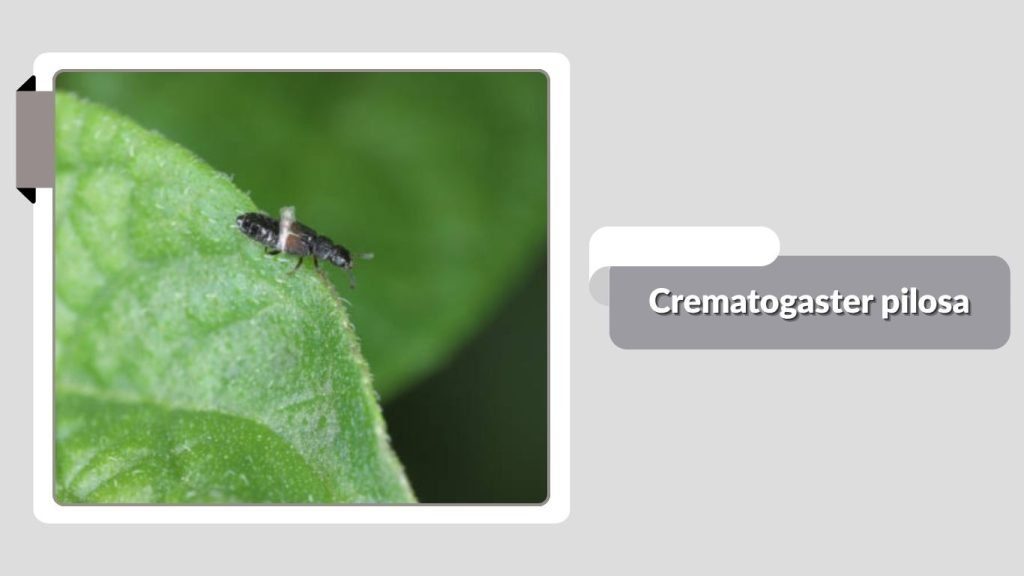
Crematogaster pilosa is an acrobat ant species recognized for its hairy body appearance and strong defensive behavior. These ants are commonly found in wooded habitats where they nest in dead wood, branches, and tree cavities. They feed on sweet materials, insects, and plant-based food sources.
Characteristics
- Small ants with visible body hairs
- Dark brown to black body color
- Distinct heart-shaped abdomen
- Raises abdomen when alarmed
- Feeds on honeydew, nectar, and insects
Habitat
Crematogaster pilosa usually nests in hollow trees, dead branches, stumps, and wooden debris. Outdoor colonies are common in forests, parks, and gardens with abundant vegetation. They may occasionally enter buildings through gaps and cracks while searching for food.
Behavior
These ants actively forage across trees and shrubs in organized trails. Colonies are highly defensive and react quickly when disturbed. Workers use chemical signals to communicate and coordinate food gathering and colony protection.
Prevention
Keeping outdoor wood piles away from buildings can help limit nesting opportunities. Damaged wood and moisture issues should be repaired promptly. Sealing openings around doors, windows, and foundations also helps reduce indoor ant activity.
8. Crematogaster coarctata
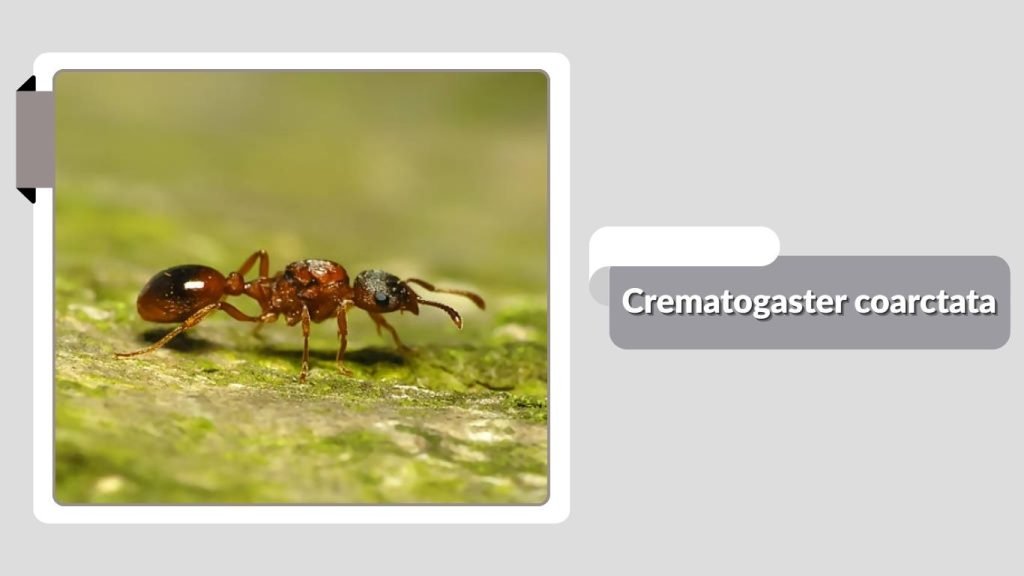
Crematogaster coarctata is a lesser-known acrobat ant species commonly found in wooded and tropical environments. Like other acrobat ants, it is recognized for its raised abdomen posture and preference for nesting in wood and tree cavities. These ants mainly feed on sweet substances and small insects.
Characteristics
- Small ants with a dark brown body
- Distinct heart-shaped abdomen
- Raises abdomen when threatened
- Slim body with long legs and antennae
- Attracted to nectar, honeydew, and sugary foods
Habitat
Crematogaster coarctata commonly nests in dead trees, wooden debris, hollow branches, and under bark. Outdoor colonies are often found in forests, gardens, and shrub-covered areas. Indoor infestations may occur when ants move into damp or damaged wooden structures.
Behavior
These ants are active climbers and forage along trees, walls, and vegetation in search of food. Colonies may occupy several connected nesting sites. Workers defend the colony aggressively and communicate using scent trails to locate food and organize movement.
Prevention
Removing rotting wood and trimming vegetation near buildings can help reduce nesting areas. Cracks and openings around the home should be sealed properly. Proper food storage and regular cleaning also help discourage indoor foraging activity.
9. Crematogaster peringueyi
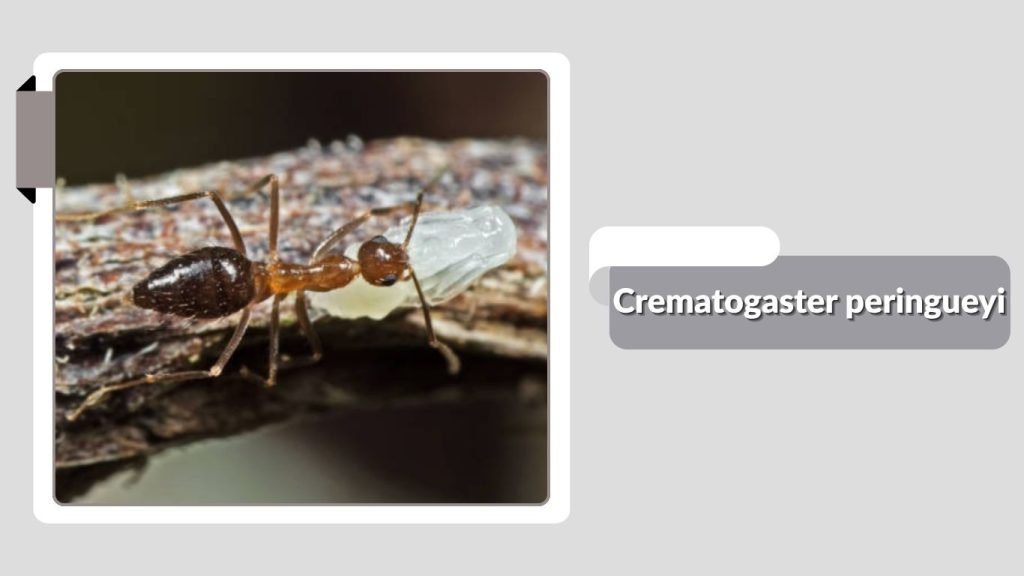
Crematogaster peringueyi is an acrobat ant species commonly associated with warm climates and wooded habitats. These ants are known for their defensive behavior, climbing ability, and preference for sweet food sources. They usually nest outdoors but may enter homes while searching for food or moisture.
Characteristics
- Small ants with a dark reddish-brown body
- Heart-shaped abdomen typical of acrobat ants
- Quick-moving workers with long antennae
- Defensive posture with raised abdomen
- Feeds on sweets, insects, and honeydew
Habitat
Crematogaster peringueyi usually nests in tree cavities, dead branches, logs, and wooden debris. They are commonly found in forests, gardens, and areas with dense vegetation. Colonies may also settle in wooden fences, outdoor structures, or damp indoor wood.
Behavior
These ants actively forage on plants and trees while collecting nectar and honeydew. Workers protect aphids and other sap-feeding insects for food production. When threatened, the ants quickly defend their nests by biting and releasing defensive chemicals.
Prevention
Keeping outdoor wood and debris away from buildings can help reduce nesting opportunities. Moisture-damaged wood should be repaired quickly to discourage indoor colonies. Sealing entry points and cleaning sugary spills also helps prevent infestations.
10. Crematogaster sordidula

Crematogaster sordidula is a small acrobat ant species commonly found in wooded habitats and warm outdoor environments. These ants are recognized for their defensive posture and their ability to nest in wood, bark, and tree cavities. They mainly feed on sweet substances and small insects found around vegetation.
Characteristics
- Small ants with dark brown to black coloring
- Distinct heart-shaped abdomen
- Raises abdomen above the body when threatened
- Active climbers with long antennae
- Attracted to honeydew, nectar, and sugary foods
Habitat
Crematogaster sordidula commonly nests in dead wood, hollow branches, tree bark, and wooden debris. They are often found in forests, gardens, and shrub-covered landscapes. Indoor nesting may occur in damp wood or hidden structural gaps around buildings.
Behavior
These ants are active foragers and travel in organized trails across trees and vegetation. Colonies may spread across multiple nearby nesting locations. Workers aggressively defend the colony and communicate using chemical scent trails while searching for food.
Prevention
Removing decaying wood and trimming plants away from buildings can help reduce nesting areas. Cracks and gaps around walls and windows should be sealed properly. Proper food storage and moisture control also help prevent indoor infestations.
11. Crematogaster navajoa
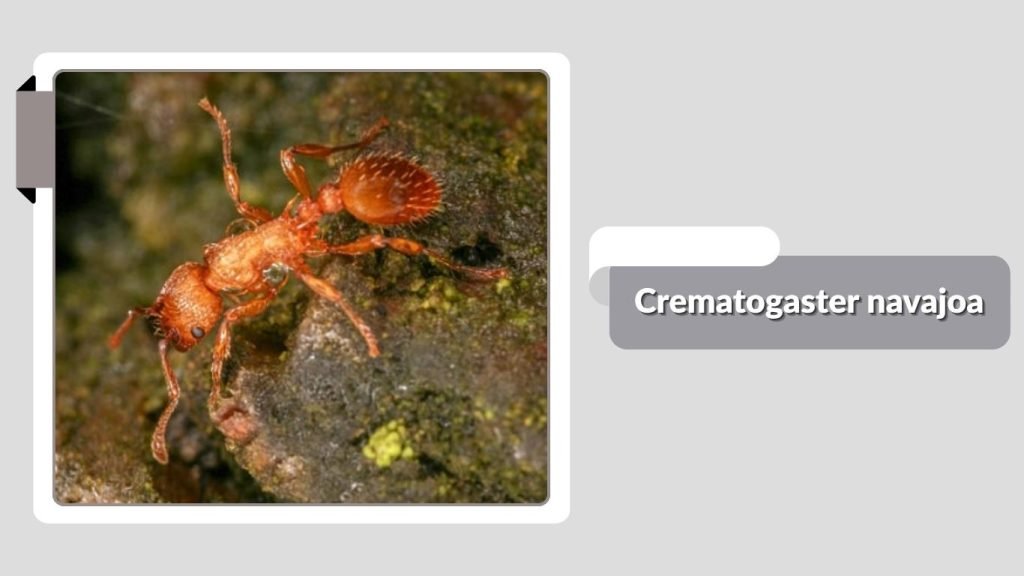
Crematogaster navajoa is an acrobat ant species commonly found in dry and wooded regions. These ants are known for their fast movement, defensive behavior, and preference for nesting in wood and natural cavities. They often feed on sugary materials and plant-related food sources.
Characteristics
- Small reddish-brown to dark brown ants
- Heart-shaped abdomen typical of acrobat ants
- Raises abdomen when disturbed
- Fast-moving workers with slender bodies
- Feeds on sweets, insects, and honeydew
Habitat
Crematogaster navajoa usually nests in dead branches, logs, wooden debris, and beneath bark. Colonies are commonly found in forests, dry shrublands, and residential areas with trees and wooden structures. They may occasionally move indoors through small openings.
Behavior
These ants actively forage on plants, fences, and tree trunks while searching for food. Workers protect aphids and other sap-feeding insects to collect honeydew. Colonies react quickly to threats and defend nesting sites aggressively when disturbed.
Prevention
Keeping outdoor wood piles away from homes can help reduce nesting opportunities. Damaged wooden structures should be repaired promptly to avoid infestations. Sealing cracks and cleaning food spills quickly also helps discourage indoor ant activity.
12. Crematogaster torosa
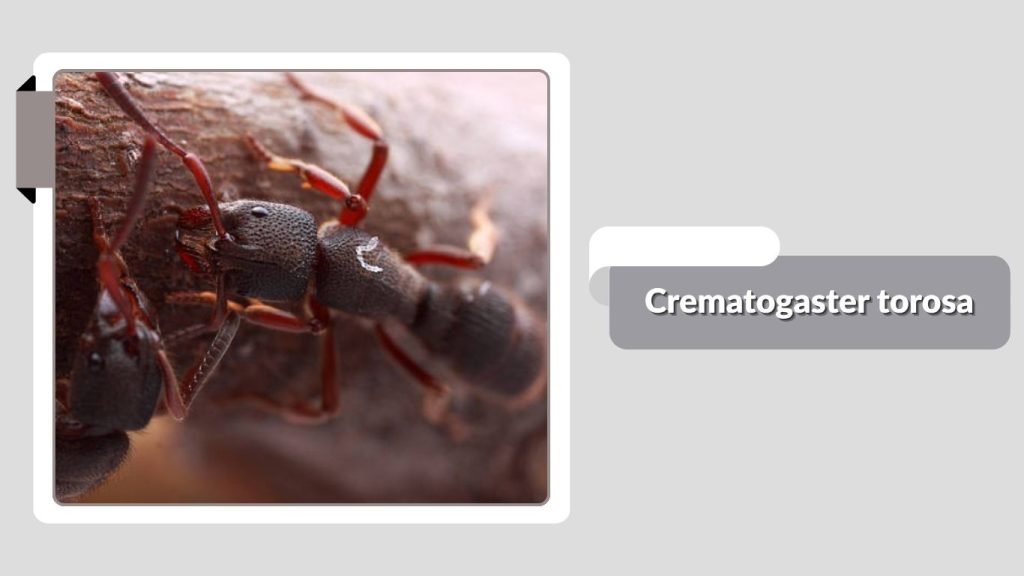
Crematogaster torosa is an acrobat ant species commonly found in wooded and natural environments. These ants are recognized for their raised abdomen posture and their habit of nesting in dead wood and tree cavities. They are active foragers that mainly feed on sweet substances and small insects.
Characteristics
- Small ants with dark brown to black coloration
- Distinct heart-shaped abdomen
- Raises abdomen when threatened
- Slender body with long antennae
- Attracted to nectar, honeydew, and sugary foods
Habitat
Crematogaster torosa usually nests in rotting logs, hollow branches, stumps, and beneath tree bark. Colonies are commonly found in forests, gardens, and wooded residential areas. They may also enter buildings if moisture-damaged wood is available for nesting.
Behavior
These ants actively forage on trees and shrubs while searching for food. Workers communicate through scent trails and aggressively protect the colony from threats. They often maintain relationships with aphids and other sap-feeding insects to collect honeydew.
Prevention
Removing dead wood and trimming vegetation near structures can reduce nesting opportunities. Moisture problems and damaged wood should be repaired promptly. Sealing cracks and storing food properly also helps prevent indoor invasions.
13. Crematogaster punctulata
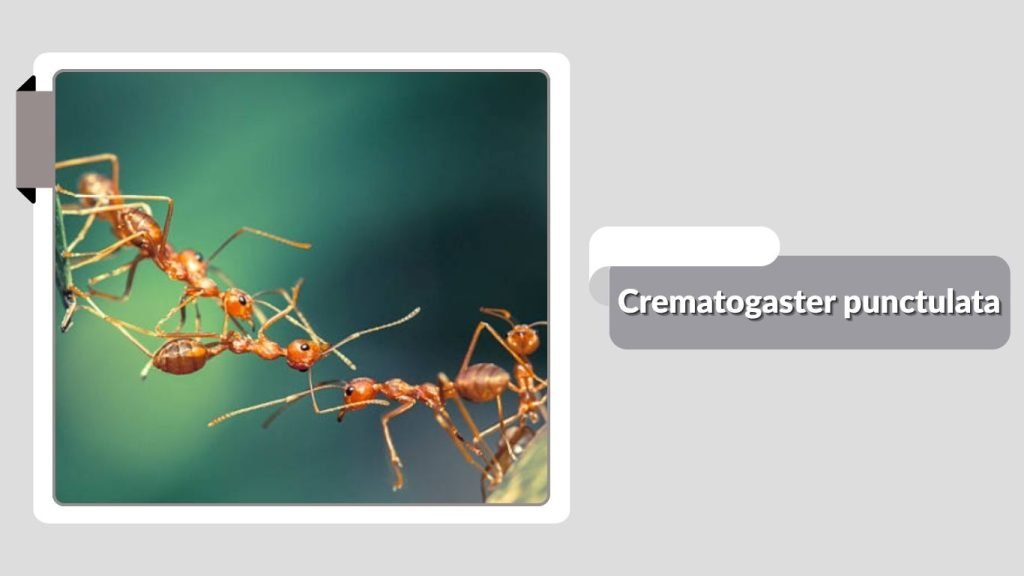
Crematogaster punctulata is a small acrobat ant species known for its active foraging behavior and tree-nesting habits. These ants are commonly found in wooded and tropical environments where they feed on sugary substances, nectar, and small insects.
Characteristics
- Small dark-colored ants with slender bodies
- Heart-shaped abdomen typical of acrobat ants
- Raises abdomen during defensive behavior
- Fast-moving workers with long legs
- Strong attraction to sweets and honeydew
Habitat
Crematogaster punctulata commonly nests in hollow trees, branches, logs, and wooden debris. Outdoor colonies are often located in forests, parks, and gardens with dense vegetation. Indoor infestations may occur in damp wooden structures or wall voids.
Behavior
These ants forage actively across trees and plants while following scent trails to food sources. Colonies can spread into several connected nesting sites. Workers defend the colony aggressively and may bite when their nest is disturbed.
Prevention
Keeping outdoor wood debris away from buildings helps reduce nesting areas. Moisture-damaged wood should be repaired quickly to discourage colonies. Sealing gaps around doors, windows, and foundations also helps prevent ants from entering homes.
14. Crematogaster clara
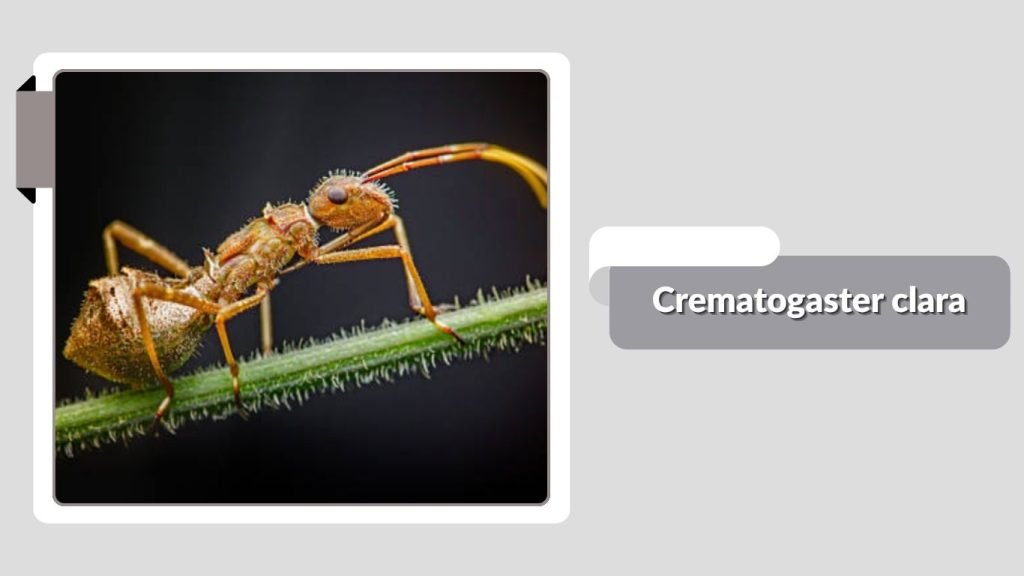
Crematogaster clara is an acrobat ant species commonly found in wooded and natural environments. These ants are recognized for their defensive posture and their preference for nesting in trees, branches, and wooden materials. They mainly feed on sweet substances and insects found around vegetation.
Characteristics
- Small ants with a dark brown body
- Distinct heart-shaped abdomen
- Raises abdomen when alarmed or threatened
- Long antennae and active movement
- Attracted to nectar, honeydew, and sugary foods
Habitat
Crematogaster clara commonly nests in hollow twigs, tree bark, logs, and decaying wood. Outdoor colonies are usually found in forests, parks, and gardens with abundant vegetation. Indoor nesting may occur in damp wooden structures or hidden wall spaces.
Behavior
These ants are active climbers and forage on trees and shrubs in search of food. Workers communicate through chemical scent trails and aggressively defend their nesting areas. Colonies often protect aphids and other sap-feeding insects to collect honeydew.
Prevention
Removing rotting wood and trimming tree branches near buildings can reduce nesting sites. Moisture-damaged wood should be repaired quickly. Sealing cracks and storing sweet foods properly also helps prevent indoor ant infestations.
15. Crematogaster modiglianii
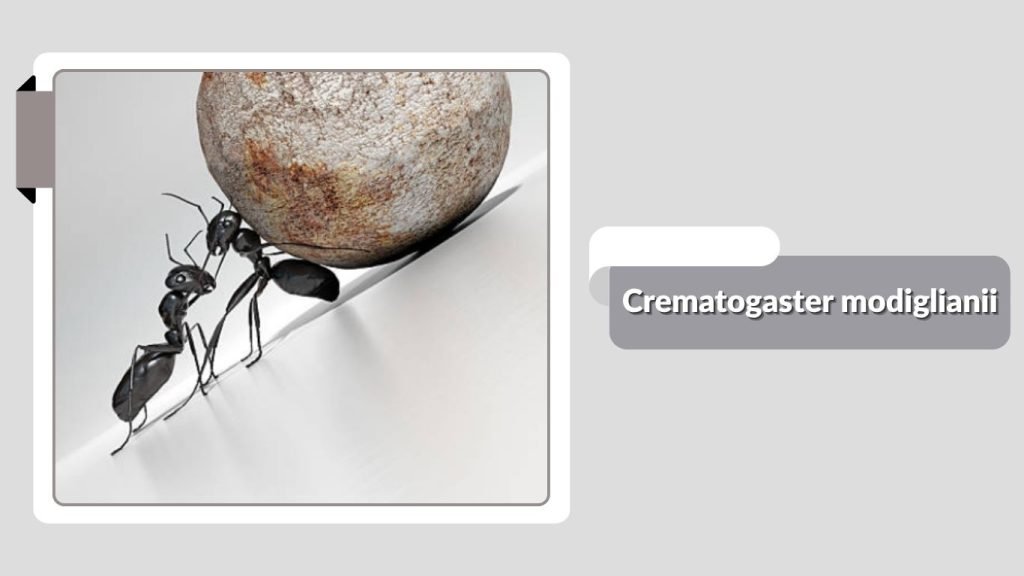
Crematogaster modiglianii is a unique acrobat ant species known for its glossy appearance and unusual relationship with other insects. These ants are commonly found in tropical forest habitats where they live in trees and feed on sugary substances and insects.
Characteristics
- Small ants with a shiny dark-colored body
- Distinct heart-shaped abdomen
- Smooth and glossy body surface
- Raises abdomen in a defensive posture
- Feeds on sweets, nectar, and insects
Habitat
Crematogaster modiglianii usually nests in tree cavities, hollow branches, and forest vegetation. Colonies are mainly found in tropical wooded environments with high humidity and dense plant growth. They are rarely found indoors but may appear near structures surrounded by heavy vegetation.
Behavior
These ants are active foragers and often travel along tree branches while searching for food. Colonies maintain strong defensive behavior and quickly react to disturbances. They also interact with sap-feeding insects to obtain honeydew as a food source.
Prevention
Keeping trees and shrubs trimmed away from buildings can reduce ant activity near homes. Removing decaying wood and controlling moisture around structures also helps discourage nesting. Sealing entry points and maintaining clean food areas can further prevent infestations.
FAQs
What are acrobat ants?
Acrobat ants are ants from the Crematogaster genus known for their heart-shaped abdomen and defensive posture. When threatened, they raise their abdomen above their body, which gives them the name “acrobat ants.”
Why are acrobat ants called acrobat ants?
They are called acrobat ants because they lift their abdomen over their head when disturbed or threatened. This unusual movement looks similar to an acrobatic pose and helps them defend themselves from predators.
Where do acrobat ants usually live?
Acrobat ants commonly live in dead wood, hollow trees, branches, stumps, and damp wooden structures. Some species also nest inside walls, roofs, or moisture-damaged areas of buildings.
Are acrobat ants harmful?
Acrobat ants are not usually dangerous, but they can bite when disturbed. Some species may also release defensive chemicals with an unpleasant smell. Large infestations can become a nuisance indoors, especially in damaged wood structures.
What do acrobat ants eat?
Acrobat ants mainly feed on sweet substances such as nectar and honeydew produced by aphids. They also eat insects, sugary foods, and other small organic materials found around their environment.
How can you prevent acrobat ants?
Preventing acrobat ants involves removing rotting wood, fixing moisture problems, and sealing cracks around buildings. Keeping food sealed, cleaning spills quickly, and trimming vegetation away from structures can also help reduce infestations.
