
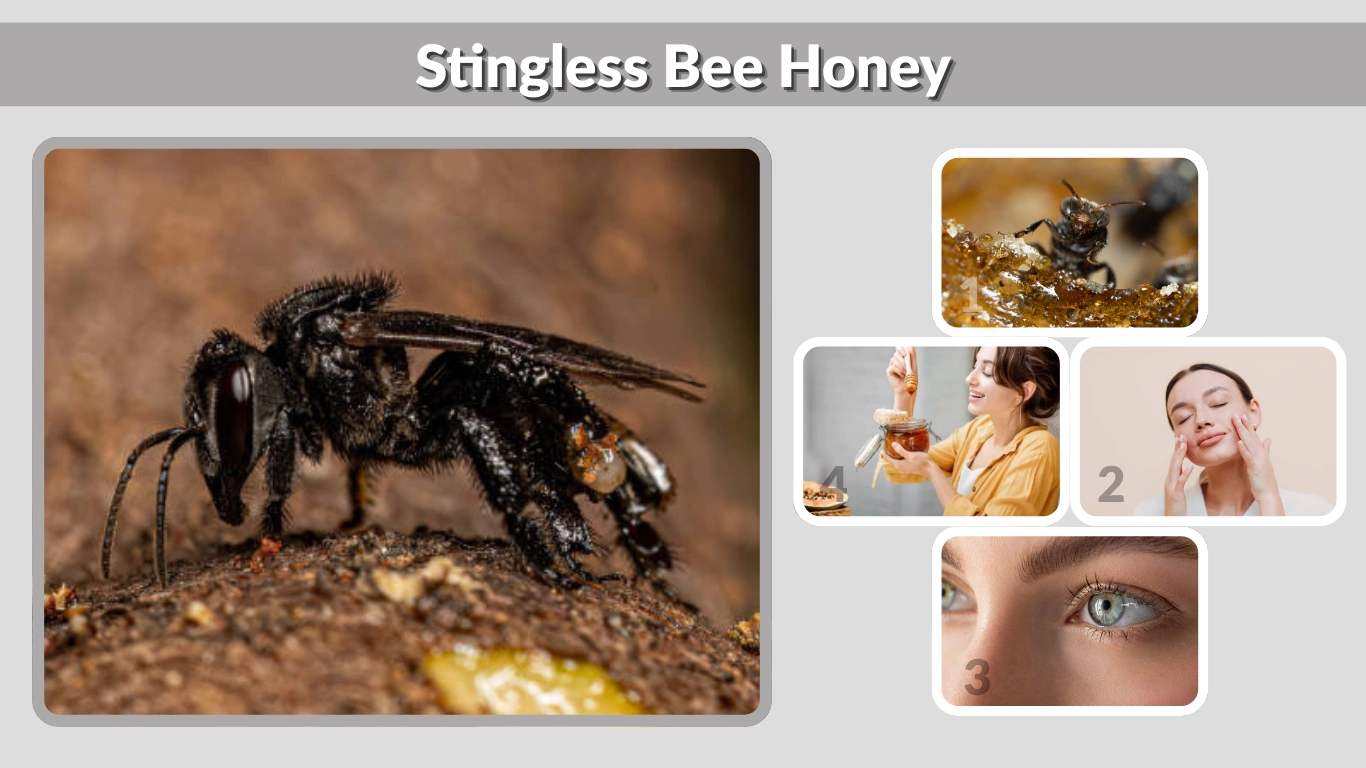
Stingless bee honey has gained global attention for its unique flavor, potent medicinal qualities, and long-standing use in indigenous healing traditions. Produced by stingless bees (Meliponini), this honey is notably different from the honey made by regular honey bees—more acidic, more antioxidant-rich, and far rarer. From eye drop remedies to skin treatments, stingless bee honey is now sought after in countries like Malaysia, Australia, Honduras, and the Philippines. This guide explores what makes this honey unique, its health benefits, and how it compares to regular and Manuka honey.
What Is Stingless Bee Honey?
Stingless Honey Bee Species
Stingless bees belong to the Meliponini tribe, a diverse group of tropical bees found in Asia, Australia, Africa, and South America. Common genera include Tetragonula, Trigona, and Melipona. Although these bees cannot sting, they defend their colonies by biting. Their hives are smaller than honey bee hives, but they produce a medicinal honey unmatched in taste and composition.
How Stingless Bees Make Honey
Unlike honey bees, which build hexagonal wax combs, stingless bees store their honey in tiny resin pots, giving the product the nickname “pot honey.” Their honey undergoes a natural fermentation process due to its high moisture content and interaction with resin. Because stingless bees produce far less honey—often just 1–2 liters a year—this honey is much more expensive and prized.
What Does Stingless Bee Honey Taste Like?
Flavor Profile
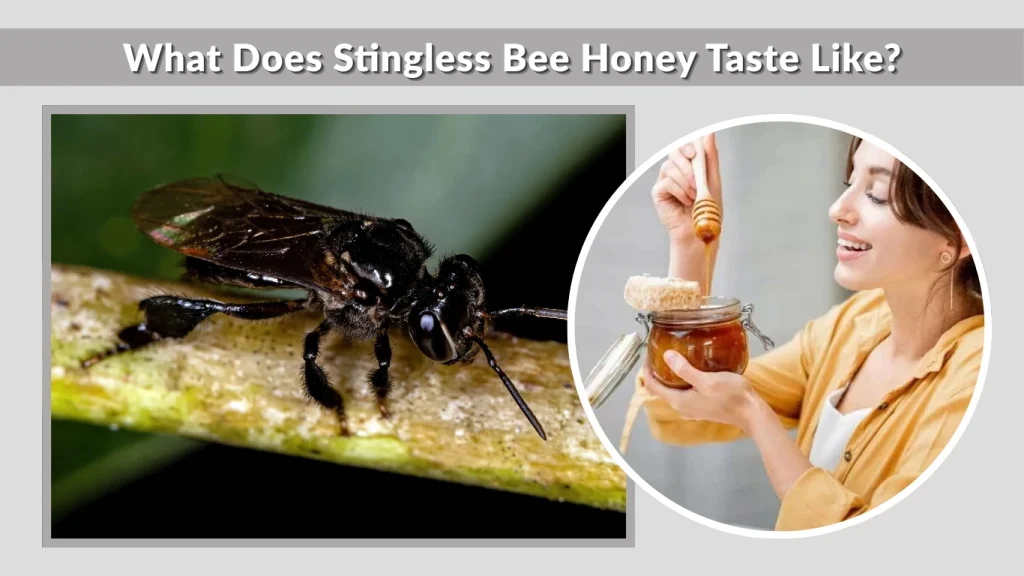
Stingless bee honey is known for its tangy, sweet-sour taste with subtle fermented, fruity, and floral notes. It has a much thinner, runnier consistency than regular honey and is often described as refreshing rather than syrupy. The combination of acidity and sweetness makes it appealing to those who prefer a lighter, more complex honey.
Factors That Influence Taste
The unique flavor varies depending on:
- The nectar source of local flowers
- Regional flora diversity
- Length of natural fermentation
- Resin types used in pot construction
Because of this, Malaysian stingless honey tastes different from Honduran or Australian varieties.
Stingless Bee Honey Composition
Nutritional Highlights
Stingless bee honey is rich in:
- Antioxidants such as phenolic compounds
- Natural organic acids (gluconic, lactic)
- Vitamins and minerals
- Probiotic-like beneficial microbes
- Anti-inflammatory compounds
Its high acidity and antioxidant concentration contribute to its long-standing medicinal reputation.
Why It Differs From Regular Honey
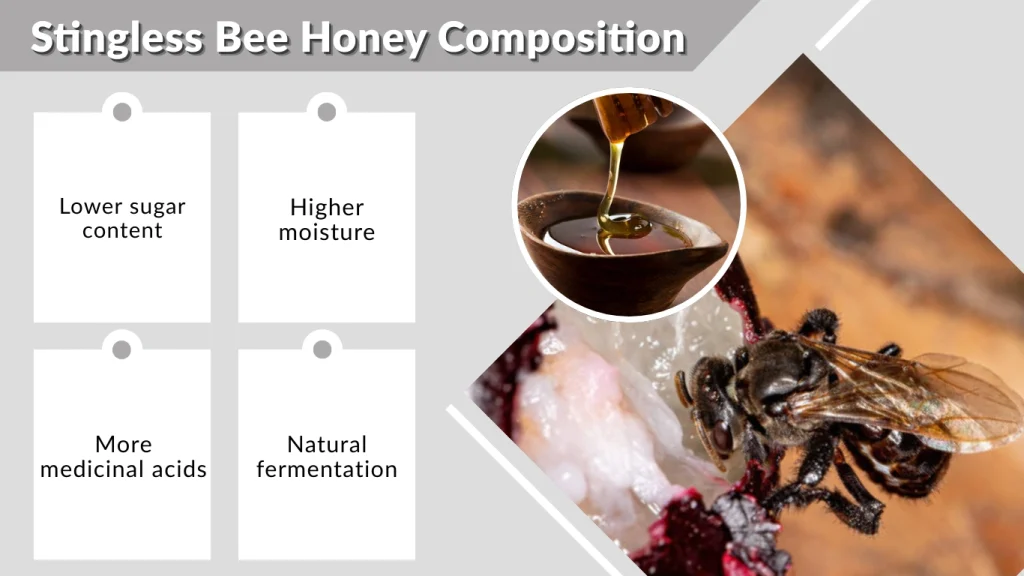
Compared to normal honey, stingless bee honey has:
- Lower sugar content
- Higher moisture
- More medicinal acids
- Natural fermentation
- Stronger antimicrobial effects
These traits make it more suited for therapeutic use than everyday sweetening.
Health Benefits of Stingless Bee Honey
Immune & Antibacterial Benefits
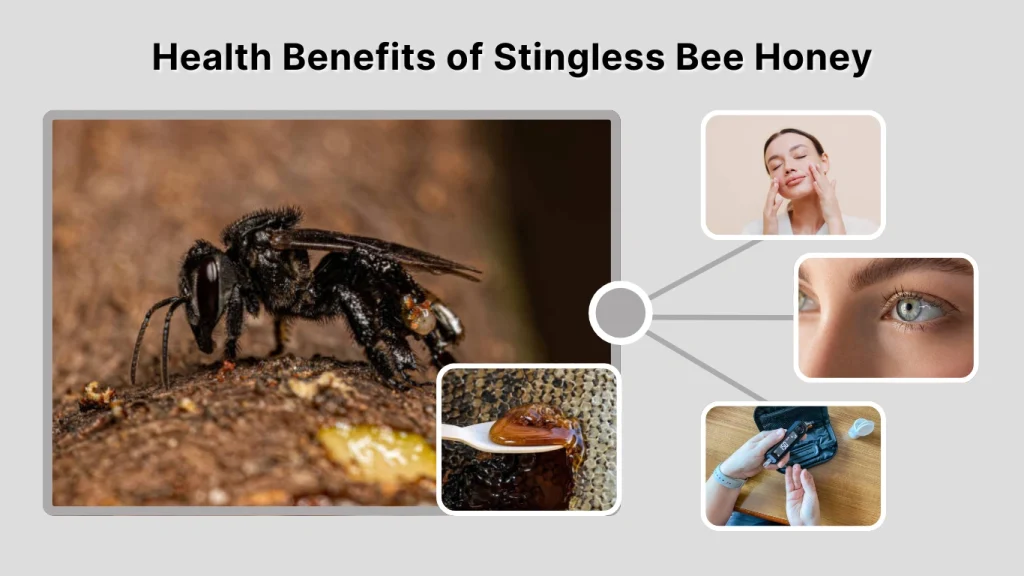
This honey is highly antimicrobial due to its acidity and bioactive compounds. It may help fight bacterial, viral, and fungal infections naturally. Regular consumption can support immunity, making it popular in traditional medicine across Asia and Latin America.
Benefits for Skin
Stingless bee honey helps with acne, inflammation, and uneven skin tone. Its antibacterial properties reduce breakouts, while its moisture-preserving ability hydrates and nourishes the skin. It is also used in wound care for its strong healing and tissue-repair abilities.
Benefits for Eyes (Traditional Use)
Indigenous communities use diluted stingless bee honey as natural eye drops to soothe irritation, reduce redness, and clean mild infections. While users claim benefits, the acidity may sting, and medical supervision is strongly recommended to avoid contamination or injury.
Benefits for Diabetics
Because it has a lower glycemic index than regular honey, stingless bee honey is sometimes used by diabetics in moderation. Its antioxidants may help reduce oxidative stress, though it must still be consumed carefully to avoid blood sugar spikes.
Benefits for Men
Stingless bee honey is often promoted for boosting stamina, energy, and overall vitality. Traditional cultures attribute libido-enhancing properties to this honey. While scientific evidence is limited, its nutrient density and antioxidants may support general male wellness.
Stingless Bee Honey Eye Drops
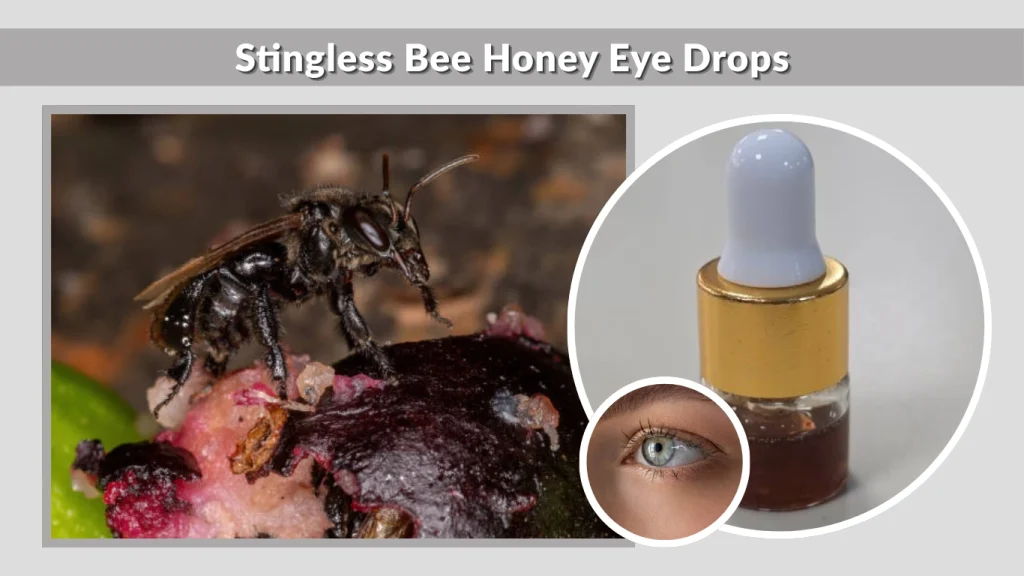
Benefits
Users of stingless bee honey eye drops report relief from dryness, irritation, mild infections, and environmental discomfort. The honey’s antimicrobial and anti-inflammatory qualities make it a popular traditional remedy.
Safety & Side Effects
Because stingless bee honey is acidic, unprocessed honey may cause burning or discomfort in the eyes. Only sterile, medical-grade, lab-tested products should be used. Homemade mixtures or non-sterile honey can cause infection or damage.
Eye Drop Reviews & Common Questions
Many positive reviews highlight reduced redness and improved clarity, though results vary. Eye doctors caution that while some benefits are possible, honey is not a replacement for medical treatment.
How to Consume Stingless Bee Honey
Best Ways to Take It
Stingless bee honey can be consumed in several effective and enjoyable ways:
- Direct consumption: A teaspoon on its own for maximum absorption.
- Mixed with warm water: Enhances digestion and helps preserve enzymes.
- Added to juices or smoothies: For added flavor and nutrients.
- Topical application: Applied to skin for acne, inflammation, or minor wounds.
Because stingless bee honey is medicinal, it’s typically used in small amounts rather than as a cooking sweetener.
Suggested Daily Dosage
A common recommended dose is 1–2 teaspoons per day. Avoid heating it above 40°C, as high temperatures can destroy enzymes and beneficial compounds. For eye-related uses, only sterile, professionally prepared eye-drop formulations should be used—not raw honey.
Stingless Bee Honey Uses
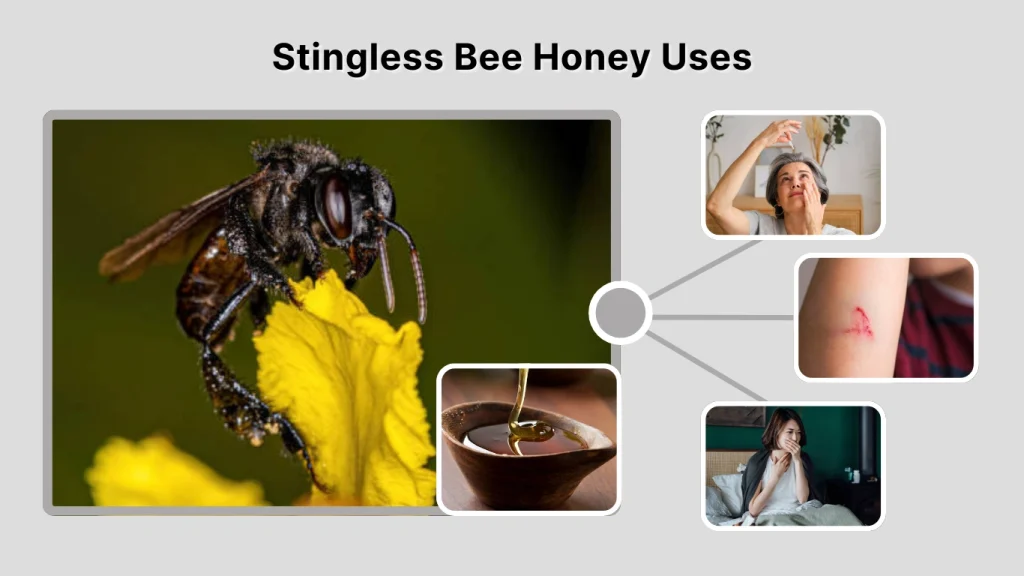
Traditional Uses
Indigenous communities from Malaysia, Borneo, Australia, and Latin America have used stingless bee honey for centuries. Traditional uses include:
- Treating eye irritation
- Healing minor wounds and cuts
- Supporting digestion
- Enhancing energy during illness
- Relieving cough and sore throat
Its strong antimicrobial nature made it a valuable natural medicine long before modern science studied it.
Modern Uses
Today, stingless bee honey appears in:
- Cosmetic products: Face masks, cleansers, serums
- Health supplements: Immunity blends, digestive tonics
- Medical research: Potential antimicrobial and anti-inflammatory applications
- Functional foods: Added to juices, chocolates, and herbal drinks
Modern consumers value it for both wellness and beauty applications.
Stingless Bee Honey Around the World
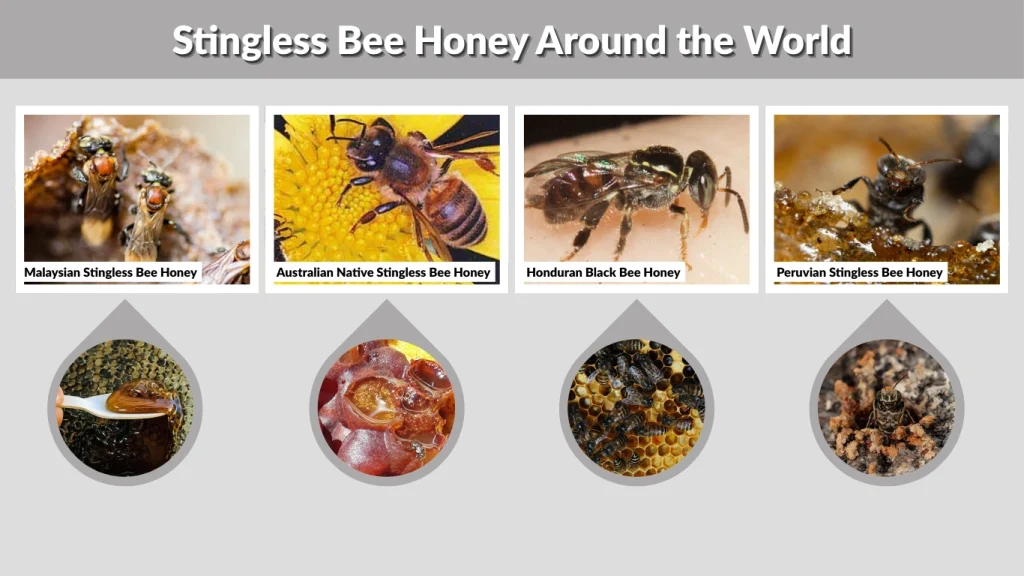
Malaysian Stingless Bee Honey
Malaysia is one of the largest producers. Trigona species thrive in tropical climates and yield honey with a strong tangy taste. Malaysian stingless bee honey is known for high antioxidant levels and is commonly used in herbal tonics.
Australian Native Stingless Bee Honey
Australia’s native stingless bees—such as Tetragonula carbonaria and Tetragonula hockingsi—produce “sugarbag honey,” prized for its fruity acidity. Production is extremely low, which makes it one of the most expensive honeys in the world.
Honduran Black Bee Honey
Honduras produces a darker form of honey from black stingless bees. Often marketed as “raw Honduran stingless black bee honey,” it is thicker, more medicinal, and commonly used in eye-drop remedies. It is popular in herbal and traditional medicine communities.
Mayan & Peruvian Stingless Bee Honey
Central and South American cultures have used stingless bee honey for thousands of years. The Mayans kept Melipona beecheii, considered sacred, and used the honey for digestion, childbirth recovery, and ritual healing. Peruvian varieties also feature intense acidity and strong medicinal potency.
Stingless Bee Honey vs Regular Honey (Comparison Table)
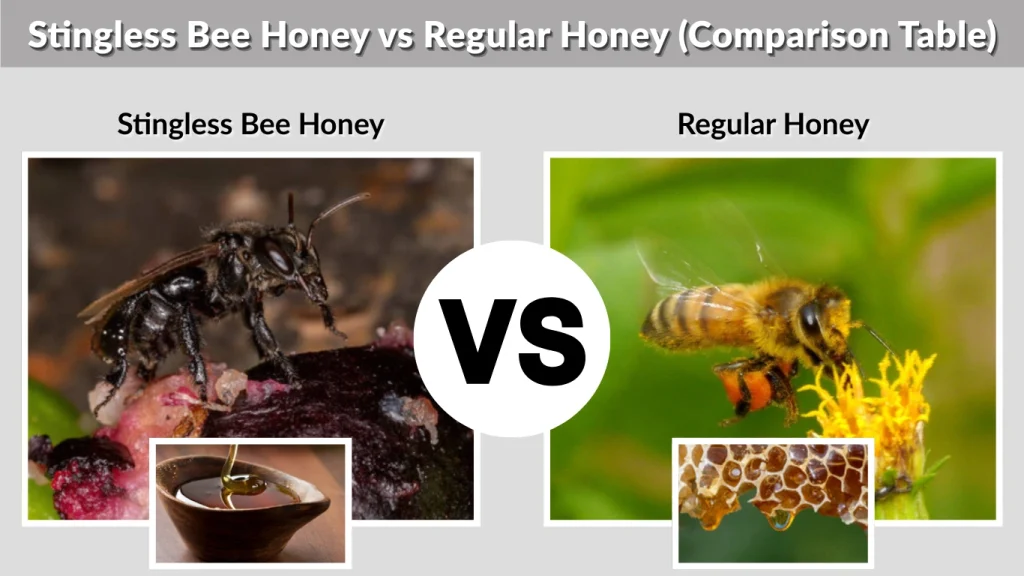
| Feature | Stingless Bee Honey | Regular Honey |
| Consistency | Thin, runny | Thick, viscous |
| Taste | Sour-sweet, tangy | Sweet, mild |
| Acidity | High | Moderate |
| Antioxidants | Very high | Medium |
| Production | Very low yield | Higher yield |
| Price | Higher | More affordable |
| Storage | Fermented, less crystallization | Can crystallize |
Stingless bee honey is considered more medicinal, while regular honey is more commonly used for sweetening and everyday consumption.
Stingless Bee Honey vs Manuka Honey
Medicinal Potency
Manuka honey is known for its UMF (Unique Manuka Factor) rating, which measures antibacterial strength. Stingless bee honey, although not rated the same way, often contains equal or higher levels of organic acids and antioxidants, giving it strong medicinal abilities of its own.
Best Uses of Each Honey
- Stingless bee honey: Eye drops (sterile forms), wound healing, skincare, immunity support.
- Manuka honey: Wound dressing, antibacterial therapy, throat care, digestive health.
Price & Availability
Both honeys are premium products, but stingless bee honey tends to be even more expensive due to scarce production and specialized harvesting.
Stingless Bee vs Honey Bee (Species Comparison)
Identification Differences (List)
- Stingless bees are small, black, and lack a functional stinger
- Honey bees are larger, striped, and can sting
- Stingless bees build resin “pots”
- Honey bees build wax combs
- Stingless bees produce less honey but with higher medicinal value
Honey Production Comparison
Honey bees produce far more honey—often 30–50 liters per year—while stingless bees may produce 1–2 liters. However, stingless bee honey is richer in organic compounds and acidity, giving it a stronger medicinal profile.
Buying Stingless Bee Honey
Where to Buy It
You can find genuine stingless bee honey from:
- Local meliponiculture farms
- Reputable online sellers
- Amazon and specialty health shops
- Organic and indigenous product stores
Authenticity Checklist
To ensure the honey is real:
- Look for a sour-sweet aroma
- Check for a thin, runny consistency
- Taste for mild fermented notes
- Avoid overly sugary or thick textures
Price Overview
Prices vary widely. Malaysian and Philippine stingless honeys are moderately priced, while Australian and Honduran black bee honeys can be very expensive due to extremely low yield and high medicinal demand.
Side Effects & Precautions
Who Should Avoid It
- Infants under 1 year
- Individuals with bee product allergies
- People with sensitive eyes (avoid raw honey for eye use)
Safe Storage Tips
Stingless bee honey should be kept in a cool, dark place and sealed tightly. Because it does not crystallize easily, it stores well, but moisture exposure can alter fermentation.
FAQs
What is stingless bee honey?
Stingless bee honey is a medicinal honey produced by Meliponini bees. It is more acidic, antioxidant-rich, and rare compared to regular honey, and is traditionally used for skin, digestive, and eye-related remedies.
Is stingless bee honey good for you?
Yes. It contains antioxidants, organic acids, and natural antimicrobials that support immunity, digestion, and skin healing. It is widely valued in traditional medicine across Asia and Latin America.
Can diabetics take stingless bee honey?
Yes, but in moderation. It has a lower glycemic index than regular honey and contains compounds that help reduce oxidative stress. However, diabetics should monitor blood sugar and consult their doctor.
Is stingless bee honey safe for eyes?
Only sterile, lab-prepared stingless bee honey eye drops should be used. Raw honey is unsafe for eyes due to contamination risk and acidic burning. Always consult an eye specialist beforehand.
Where can I buy real stingless bee honey?
Authentic stingless bee honey can be purchased from licensed meliponiculture farms, reputable online stores, and specialty natural product sellers. Always check product origin and authenticity.
