
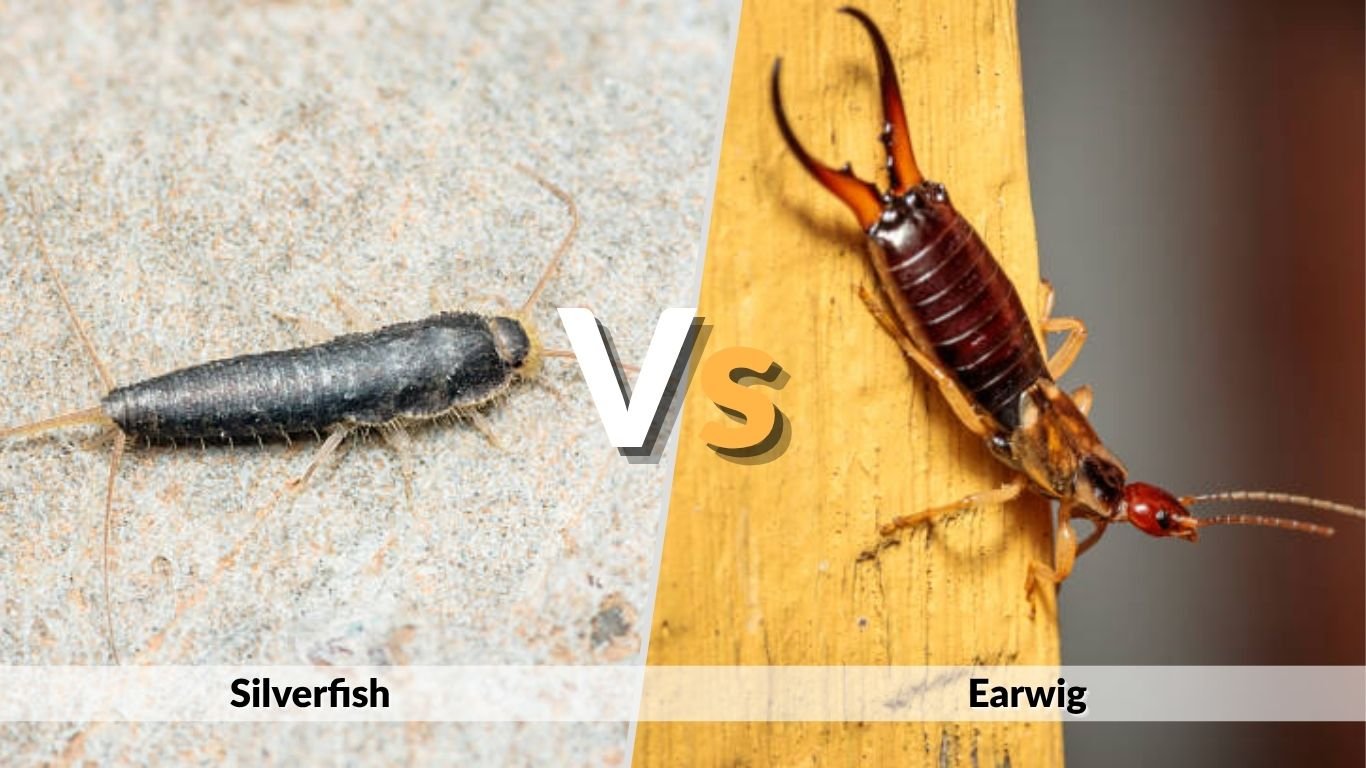
Silverfish and earwigs are two common household pests that often appear in damp, dark places. At first glance, both may look strange or alarming, but they are very different insects. Silverfish are fast, silver-gray insects that damage paper, glue, and fabrics, while earwigs are brown insects with pincers at the end of the body. This guide explains silverfish vs earwig differences, bite risks, signs, and the best ways to control them.
Silverfish vs Earwig: Quick Comparison
Silverfish and earwigs may both hide in bathrooms, basements, kitchens, and laundry rooms, but their body shape and behavior make them easy to separate once you know what to look for.
| Feature | Silverfish | Earwig |
| Body shape | Teardrop-shaped, flat body | Long, narrow body |
| Color | Silver, gray, or metallic | Brown, reddish-brown, or dark brown |
| Tail end | Three long bristles | Pincer-like forceps |
| Wings | Wingless | Some species have wings |
| Movement | Very fast, fish-like movement | Crawls quickly but less smooth |
| Main damage | Paper, books, glue, fabrics | Plants, seedlings, soft fruits |
| Bite risk | Very unlikely to bite | Can pinch, but not dangerous |
What Does a Silverfish Look Like?
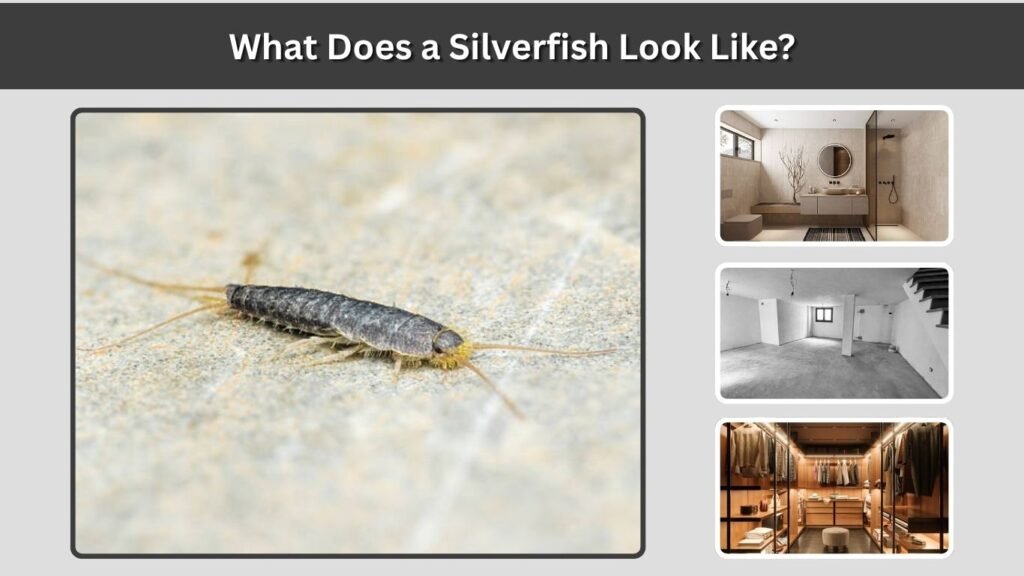
Silverfish are small, wingless insects with a shiny, metallic body. Their name comes from their silver color and fish-like movement.
Silverfish Identification
Common silverfish features include:
- Silver-gray or bluish-gray body
- Flat, teardrop-shaped form
- Long antennae
- Three thin bristles at the back
- Usually about ½ to ¾ inch long
- Fast, wiggling movement
Silverfish are usually seen at night because they avoid light. They often run quickly across bathroom floors, under sinks, near bookshelves, or inside storage boxes.
Where Silverfish Hide
Silverfish prefer warm, humid, and dark areas. Common hiding places include:
- Bathrooms
- Basements
- Attics
- Laundry rooms
- Kitchen cabinets
- Bookcases
- Closets
- Cardboard boxes
They are especially common where there is moisture and a food source such as paper, glue, wallpaper paste, fabric, or crumbs.
What Does an Earwig Look Like?
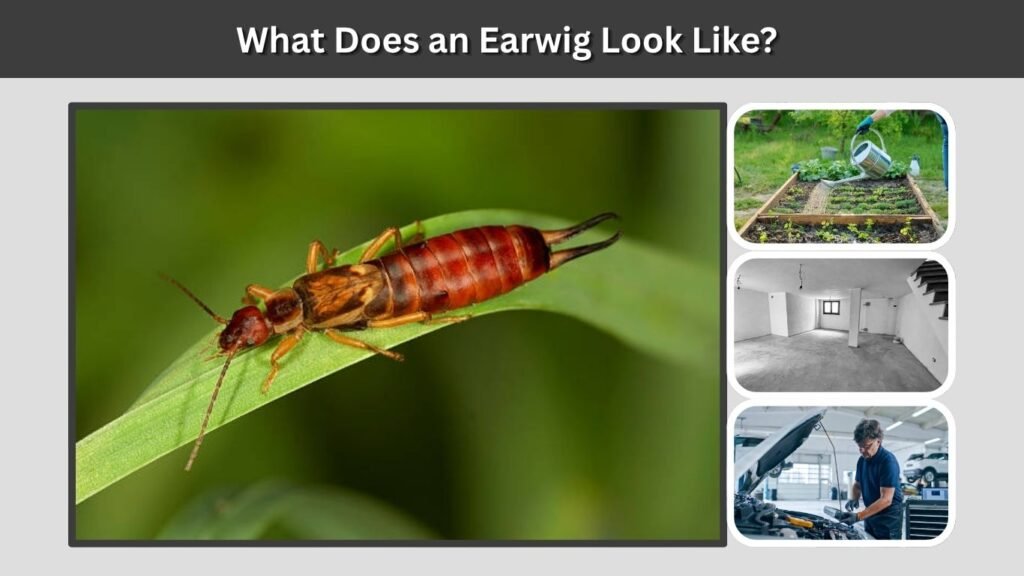
Earwigs are longer and darker than silverfish. Their most obvious feature is the pair of pincers at the end of the abdomen.
Earwig Identification
Common earwig features include:
- Brown or reddish-brown body
- Long, narrow shape
- Pair of pincers on the rear end
- Long antennae
- Six legs
- Usually about ¼ to 1 inch long
- Some species have folded wings
Earwigs may look scary because of their pincers, but they are not aggressive toward people. The pincers are mainly used for defense, mating, and catching small prey.
Where Earwigs Hide
Earwigs like moist, dark spaces both indoors and outdoors. You may find them in:
- Mulch
- Garden beds
- Under stones
- Under logs
- Flowerpots
- Bathroom corners
- Basements
- Door thresholds
- Garage areas
They often enter homes during dry weather, heavy rain, or when outdoor conditions become unfavorable.
Silverfish vs Earwig: Main Differences
The easiest way to tell them apart is to look at the back end of the body. Silverfish have three thin tail-like bristles, while earwigs have curved or straight pincers.
| Difference | Silverfish | Earwig |
| Back end | Three bristles | Pincers |
| Texture | Shiny, scaly-looking body | Harder, darker body |
| Movement | Smooth and wiggly | Crawling insect movement |
| Indoor damage | Books, paper, wallpaper, clothing | Usually minor indoors |
| Outdoor damage | Rarely a garden pest | Can damage plants |
| Moisture need | High humidity | Moist soil and hiding spots |
Silverfish are more of an indoor nuisance pest, especially around paper goods and stored items. Earwigs are more common outdoors and may become indoor invaders when they search for shelter.
Silverfish vs Earwig Bite: Are They Dangerous?
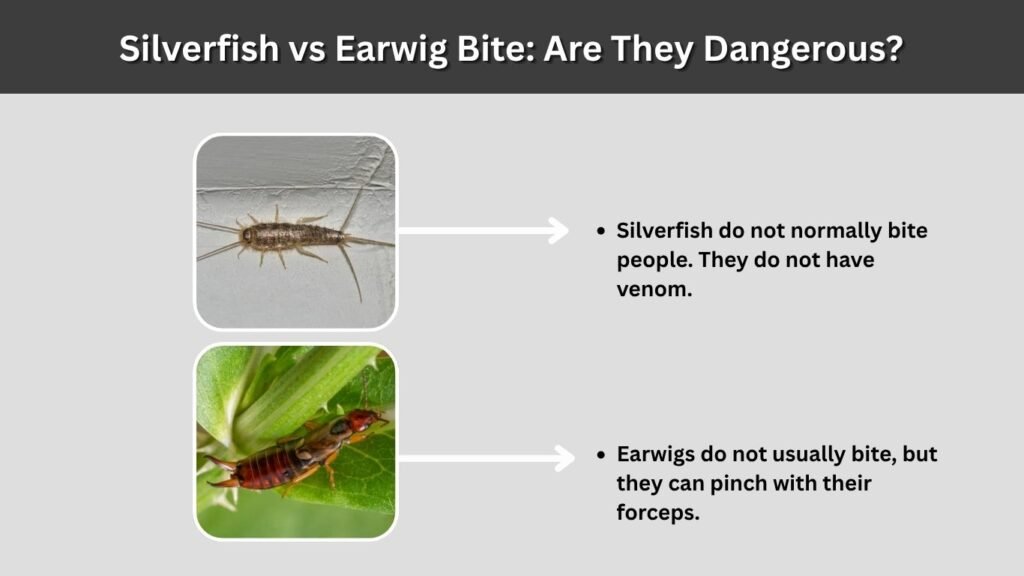
Many people search for “earwig vs silverfish bite” because both insects look unpleasant. The good news is that neither is considered dangerous to humans.
Do Silverfish Bite?
Silverfish do not normally bite people. They do not have venom, and they are not known for spreading disease. Their main problem is property damage, especially to paper, books, wallpaper, photos, cardboard, and some fabrics.
Silverfish may leave behind:
- Tiny holes in paper or fabric
- Yellowish stains
- Small black droppings
- Shed skins
- Damage around book bindings or wallpaper
Do Earwigs Bite or Pinch?
Earwigs do not usually bite, but they can pinch with their forceps if handled or trapped against the skin. An earwig pinch may feel uncomfortable, but it is not venomous and usually causes little more than mild redness.
Earwigs are not known to crawl into ears to lay eggs. That is a common myth. They prefer damp hiding places, not human ears.
Damage: Silverfish vs Earwig
Silverfish and earwigs cause different types of problems. Silverfish are more likely to damage household items, while earwigs may damage garden plants.
| Problem | Silverfish | Earwig |
| Book damage | Common | Rare |
| Paper damage | Common | Rare |
| Clothing damage | Possible | Rare |
| Wallpaper damage | Possible | Rare |
| Garden damage | Rare | Possible |
| Food contamination | Possible in pantries | Possible but less common |
| Structural damage | No | No |
Silverfish damage is often slow but frustrating. They may chew irregular holes in books, stored papers, old photos, wallpaper, and natural fabrics. Earwig damage is more noticeable in gardens, where they may feed on leaves, flowers, seedlings, and soft fruits.
Why Are Silverfish or Earwigs in Your House?

Both pests are usually attracted by moisture, shelter, and food. Seeing one or two does not always mean you have a major infestation, but repeated sightings should be checked.
Common Reasons Silverfish Enter Homes
Silverfish may appear indoors because of:
- High humidity
- Leaky pipes
- Damp bathrooms
- Old cardboard storage
- Cluttered closets
- Paper or book storage
- Cracks and gaps near walls
Common Reasons Earwigs Enter Homes
Earwigs may enter because of:
- Wet mulch near the foundation
- Outdoor lights attracting insects
- Cracks around doors or windows
- Heavy rain
- Dry outdoor conditions
- Potted plants brought indoors
- Damp basements or garages
How to Get Rid of Silverfish and Earwigs
The best control method depends on which pest you have. However, moisture control helps with both.
Silverfish Control Tips
To reduce silverfish indoors:
- Lower humidity with a dehumidifier
- Fix leaking pipes and faucets
- Store papers and books in sealed bins
- Remove cardboard clutter
- Vacuum cracks, corners, and baseboards
- Seal gaps around walls and cabinets
- Use sticky traps near activity areas
For heavy infestations, professional pest control may be needed, especially if silverfish are spreading through walls, attics, or multiple rooms.
Earwig Control Tips
To reduce earwigs:
- Move mulch away from the foundation
- Remove leaf litter, logs, and damp debris
- Seal gaps under doors and windows
- Repair damaged screens
- Reduce outdoor moisture near walls
- Shake out potted plants before bringing them inside
- Use sticky traps in basements or garages
Earwigs often come from outdoor hiding places, so outdoor cleanup is very important.
Silverfish Bug vs Earwig: Which One Is Worse?
Silverfish are usually worse for indoor property damage. They can damage paper, books, wallpaper, and stored fabrics over time. Earwigs are usually worse for gardens because they may chew leaves, flowers, and young plants.
For homeowners, silverfish are more concerning if you have books, paper files, stored documents, wallpaper, or old boxes. Earwigs are more concerning if you see them in large numbers around doors, basements, patios, or garden beds.
FAQs
Are silverfish and earwigs the same insect?
No. Silverfish and earwigs are completely different insects. Silverfish have a silver, teardrop-shaped body with three tail bristles, while earwigs have a brown body with pincers at the rear.
How can I tell if I have silverfish or earwigs?
Look at the back of the insect. If it has three thin bristles, it is likely a silverfish. If it has pincers, it is likely an earwig.
Do silverfish or earwigs bite humans?
Silverfish rarely, if ever, bite humans. Earwigs can pinch with their pincers if handled, but they are not venomous and are not considered dangerous.
Why do I keep seeing silverfish and earwigs in my bathroom?
Bathrooms provide moisture, darkness, and hiding places. Silverfish like humid indoor areas, while earwigs may enter bathrooms through gaps, drains, windows, or nearby damp areas.
Should I call pest control for silverfish or earwigs?
Call pest control if you see them often, find damage, or cannot reduce them with moisture control and cleaning. A professional can identify the pest, find hiding areas, and apply targeted treatment.
