
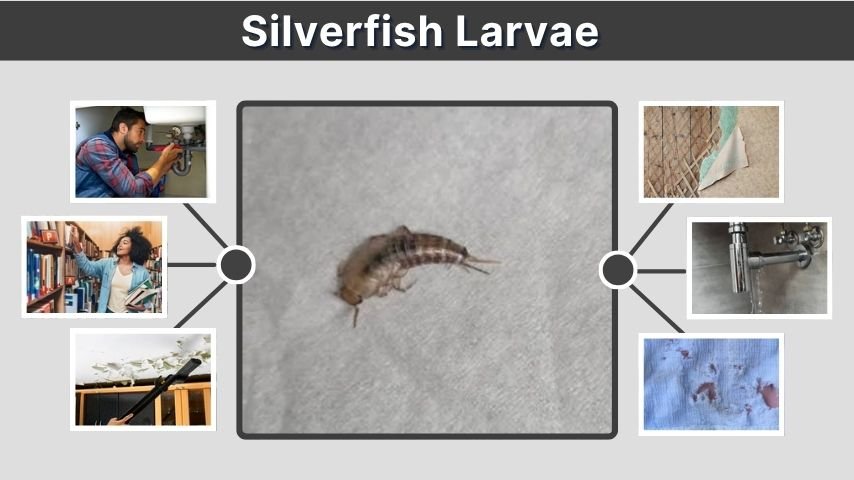
Silverfish larvae are often searched by homeowners who find tiny silver, gray, or pale bugs crawling on walls, beds, bathrooms, or storage boxes. Technically, silverfish do not have a true larval stage like moths, beetles, or flies. Their young are called nymphs, and they look like smaller versions of adult silverfish. This guide explains what people mean by silverfish larvae, how to identify them, where they hide, and how to remove them from your home.
What Are Silverfish Larvae?
When people say “silverfish larvae,” they usually mean baby silverfish or silverfish nymphs. Silverfish do not go through complete metamorphosis like butterflies, moths, or beetles. Instead, they hatch from eggs as tiny, soft-bodied young that already look similar to adults.
Young silverfish are usually pale white, gray, or light silver. As they grow and molt, they become darker and more metallic-looking. They also develop the long antennae and three tail-like bristles that make silverfish easy to recognize.
| Stage | What It Looks Like | Notes |
| Egg | Tiny, oval, whitish eggs | Hidden in cracks and damp areas |
| Nymph | Small, pale baby silverfish | Often called “silverfish larvae” |
| Adult | Silver-gray, teardrop-shaped body | Fast-moving and wingless |
The important point is simple: if you see tiny bugs that look like miniature silverfish, they are probably silverfish nymphs, not true larvae.
What Do Silverfish Larvae Look Like?
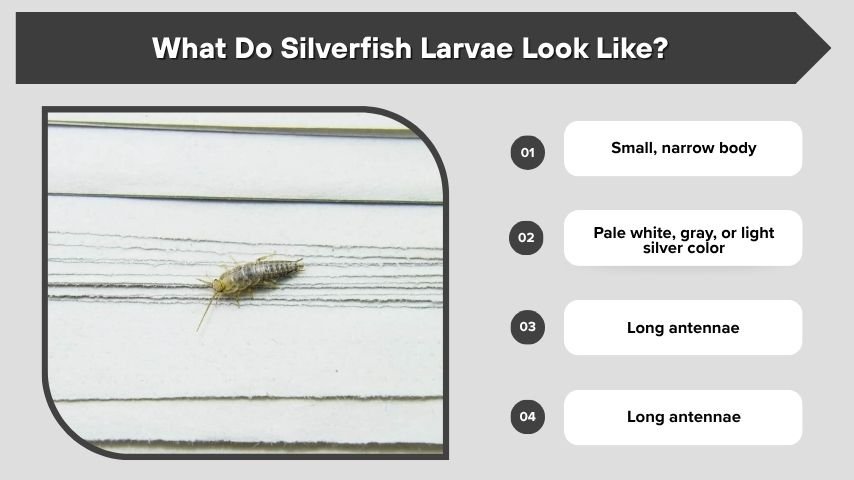
Silverfish nymphs look similar to adult silverfish, but they are smaller and lighter in color. They have long antennae, a narrow body, and three thin bristles at the back. Their movement is quick and wiggly, almost like a tiny fish swimming across the floor.
Key Identification Features
You can identify baby silverfish by looking for these signs:
- Small, narrow body
- Pale white, gray, or light silver color
- Long antennae
- 3 tail-like bristles at the rear
- No wings
- Fast, wiggling movement
- Often found in damp, dark places
Adult silverfish are usually more silver or metallic. Younger silverfish may look almost white or translucent after molting. This can make people think they have found a different type of insect.
Silverfish Eggs and Larvae
Silverfish eggs are very small and usually hidden in cracks, crevices, wall gaps, baseboards, bathrooms, laundry rooms, attics, or storage areas. Most people do not notice the eggs. They usually notice the young silverfish after they hatch and begin moving around.
Silverfish prefer quiet, humid places where they can find food. Their eggs and young are often found near paper, cardboard, glue, books, fabric, wallpaper, cereal, flour, or crumbs.
Where Eggs and Nymphs May Hide
Silverfish eggs and baby silverfish may be found in:
- Bathroom cracks
- Basement corners
- Laundry rooms
- Attics
- Closets
- Cardboard boxes
- Bookshelves
- Behind wallpaper
- Under sinks
- Wall gaps and baseboards
If you see baby silverfish in several rooms, it may mean the infestation has been active for a while.
Silverfish Larvae in the House
Finding silverfish larvae in the house usually means your home has moisture, darkness, and food sources. Silverfish like humid spaces and can survive on many common household materials.
They may feed on starches, sugars, glue, paper, cardboard, book bindings, wallpaper paste, dead insects, and fabric fibers. They are often found in rooms where items sit undisturbed for a long time.
Silverfish are not usually a sign of a dirty home. Even clean homes can have silverfish if there is high humidity, water leaks, or stored paper clutter.
Silverfish Larvae on Wall
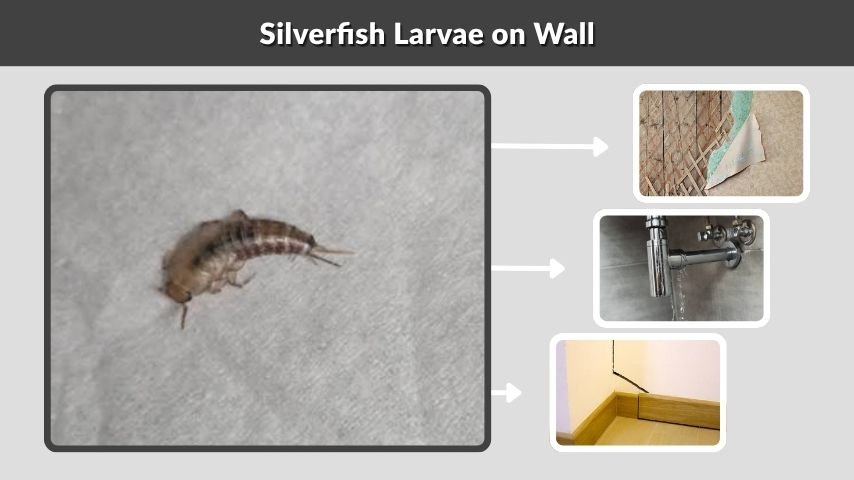
Silverfish larvae on walls are common in bathrooms, kitchens, basements, and laundry rooms. They can climb rough surfaces and may appear at night when the room is quiet. You may see them moving quickly when you turn on the light.
Seeing silverfish on walls can mean they are hiding behind baseboards, wallpaper, trim, cabinets, or wall gaps. If they appear near a bathroom or kitchen, check for plumbing leaks or moisture buildup.
What to Check Near Walls
If you see silverfish larvae on a wall, inspect nearby areas for:
- Peeling wallpaper
- Damp drywall
- Leaky pipes
- Moldy corners
- Gaps around trim
- Cardboard storage
- Old books or paper piles
- Cracks near baseboards
Removing moisture is one of the best ways to reduce silverfish activity.
Silverfish Larvae in Bed
Finding silverfish larvae in bed can be disturbing, but it does not always mean they are living in the mattress. Silverfish may crawl onto beds while searching for food, moisture, or hiding places. They may also be attracted to paper, books, cardboard, or clothing stored near the bed.
Silverfish do not feed on blood like bed bugs. They are not parasites. However, they may feed on fabric, dead skin flakes, crumbs, or starch-based materials.
If you see silverfish in bed, wash bedding, vacuum the mattress area, check under the bed, and remove cardboard boxes or paper clutter from the room.
Do Silverfish Larvae Bite?
Silverfish larvae do not usually bite people. Baby silverfish and adult silverfish are not known for biting humans. They do not sting and do not feed on blood.
The bigger concern is damage to household items. Silverfish may chew or scrape materials that contain starch, glue, or natural fibers. Over time, they can damage books, wallpaper, stored documents, photos, clothing, and cardboard.
If you have skin irritation in bed, do not assume silverfish are the cause. Other pests like bed bugs, fleas, mites, or mosquitoes may be responsible.
Do Silverfish Larvae Eat Clothes?
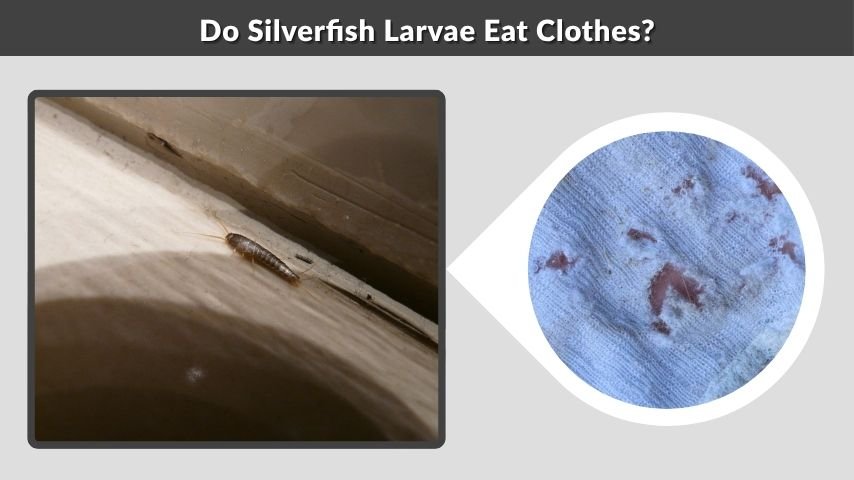
Silverfish larvae can damage clothes, especially if the fabric contains starch, sweat, food stains, or natural fibers. They are more likely to target cotton, linen, silk, rayon, and stored clothing that is not used often.
They do not eat clothing the same way clothes moth larvae do, but they can scrape or chew small areas. Damage may look like tiny holes, yellow stains, or rough surface marks.
How to Protect Clothes
To protect clothes from silverfish:
- Wash clothes before storing
- Store seasonal clothing in sealed bins
- Avoid cardboard storage boxes
- Keep closets dry
- Vacuum closet floors and corners
- Remove old paper and fabric clutter
- Use dehumidifiers in damp rooms
If you find heavy fabric damage, also check for clothes moth larvae or carpet beetle larvae.
Bugs That Look Like Silverfish Larvae
Several household bugs can be mistaken for silverfish larvae. The most common lookalikes are carpet beetle larvae, clothes moth larvae, firebrats, and small centipedes.
| Pest | Appearance | Main Difference |
| Silverfish nymph | Pale, narrow, with 3 tail bristles | Looks like a tiny adult silverfish |
| Carpet beetle larva | Brown, hairy, oval or carrot-shaped | Fuzzy body, no silver shine |
| Clothes moth larva | Cream-colored worm-like larva | Often found in fabric or cases |
| Firebrat | Similar to silverfish, mottled gray-brown | Likes warmer areas |
| House centipede | Many long legs | Much leggier and faster |
The easiest clue is the tail. Silverfish nymphs have three long bristles at the back. Carpet beetle larvae are usually hairy. Moth larvae look more like small caterpillars or worms.
Carpet Beetle Larvae vs Silverfish
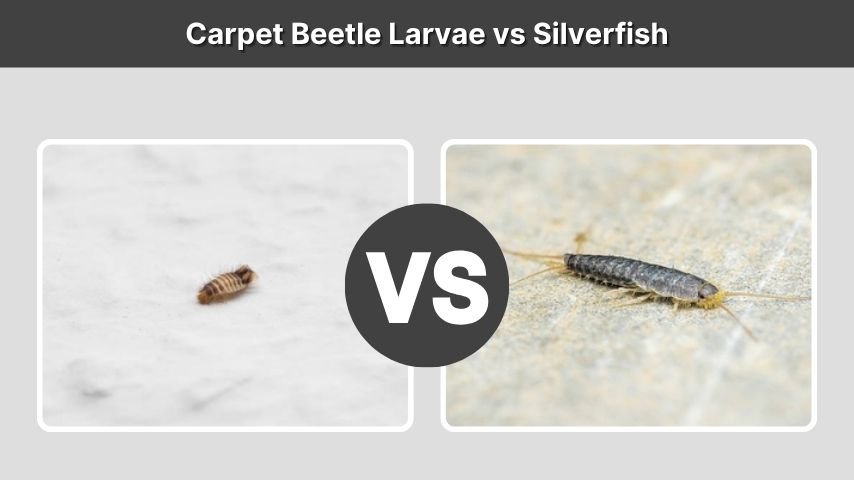
Carpet beetle larvae and silverfish are often confused because both can appear near fabric, closets, storage boxes, and bedrooms. However, they look very different when viewed closely.
Carpet beetle larvae are usually brown, tan, or striped and covered with tiny hairs. They may look like small fuzzy worms. Silverfish nymphs are smoother, flatter, and have long antennae and tail bristles.
Carpet beetle larvae are often more serious for fabric damage because they feed on wool, feathers, fur, silk, and other animal-based materials. Silverfish are more attracted to starch, glue, paper, and some plant-based fabrics.
Moth Larvae Bugs That Look Like Silverfish
Clothes moth larvae may also be mistaken for silverfish larvae, especially when found near clothing or closets. Moth larvae are not fast-moving silver bugs. They are small, pale, worm-like larvae that may live in silken cases or webbing.
If you see crawling silver-gray bugs, they are more likely silverfish. If you find small cream-colored worms, webbing, cases, or holes in wool clothing, clothes moth larvae may be the problem.
Signs of Moth Larvae
Look for these signs if you suspect moth larvae:
- Small cream-colored larvae
- Webbing on fabric
- Silken cases
- Holes in wool or cashmere
- Larvae hidden in folds of clothing
- Adult moths flying near closets
Silverfish control and moth control are different, so correct identification matters.
Silverfish Larvae Stage and Molting
Silverfish grow slowly compared with many insects. After hatching, young silverfish molt many times as they mature. Molting means they shed their outer skin so the body can grow.
You may find tiny shed skins near silverfish hiding places. These skins can look like dry, pale shells. Seeing shed skins, baby silverfish, and adult silverfish together can indicate an active infestation.
Silverfish may continue molting even after reaching adulthood. This is one reason infestations can persist if moisture and food sources remain available.
How to Remove Silverfish Larvae
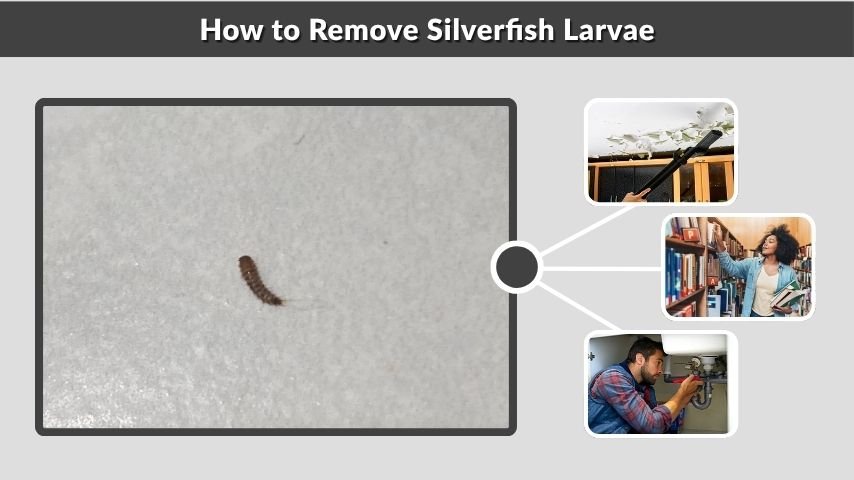
Removing silverfish larvae requires reducing moisture, cleaning hiding places, and removing food sources. Killing a few visible bugs is not enough if eggs and hiding areas remain.
Step-by-Step Removal Tips
Follow these steps to control baby silverfish:
- Vacuum cracks, corners, closets, and baseboards.
- Throw away unnecessary cardboard and paper clutter.
- Store books, papers, and clothes in sealed plastic bins.
- Fix leaks under sinks, tubs, and laundry areas.
- Use a dehumidifier in damp rooms.
- Seal cracks around baseboards and walls.
- Keep dry foods in airtight containers.
- Use sticky traps to monitor activity.
For heavy infestations, professional pest control may be needed. This is especially true if silverfish are appearing in many rooms or damaging valuable items.
How to Prevent Silverfish Larvae
Prevention is mostly about making your home less attractive to silverfish. They need moisture, hiding places, and food. If you reduce those three things, the population usually drops.
Keep humidity low, especially in bathrooms, basements, and laundry rooms. Improve ventilation, repair leaks, and avoid storing paper or fabric in damp areas. Use sealed containers instead of cardboard boxes for long-term storage.
Also clean behind furniture, under shelves, and inside closets. Silverfish like quiet places where dust, paper fibers, and crumbs collect.
FAQs
Do silverfish have larvae?
No, silverfish do not have true larvae. They hatch as nymphs, which look like tiny versions of adult silverfish. Many people still use the term “silverfish larvae” when talking about baby silverfish.
What do silverfish larvae look like?
Silverfish larvae, or nymphs, are small, pale, narrow bugs with long antennae and three tail-like bristles. They may look white, gray, or light silver before becoming darker as they grow.
Are silverfish larvae harmful?
Silverfish larvae are not usually harmful to people. They do not normally bite or sting. However, they can damage paper, books, wallpaper, cardboard, and some fabrics over time.
Why are silverfish larvae in my bed?
Silverfish larvae may enter beds while searching for food, moisture, or hiding places. They may be attracted to crumbs, fabric, paper, books, or clutter near the bed. They are not blood-feeding pests like bed bugs.
How do I get rid of silverfish larvae?
Vacuum hiding areas, reduce humidity, fix leaks, remove cardboard clutter, store paper and clothing in sealed containers, and use sticky traps. For large infestations, contact a pest control professional.
