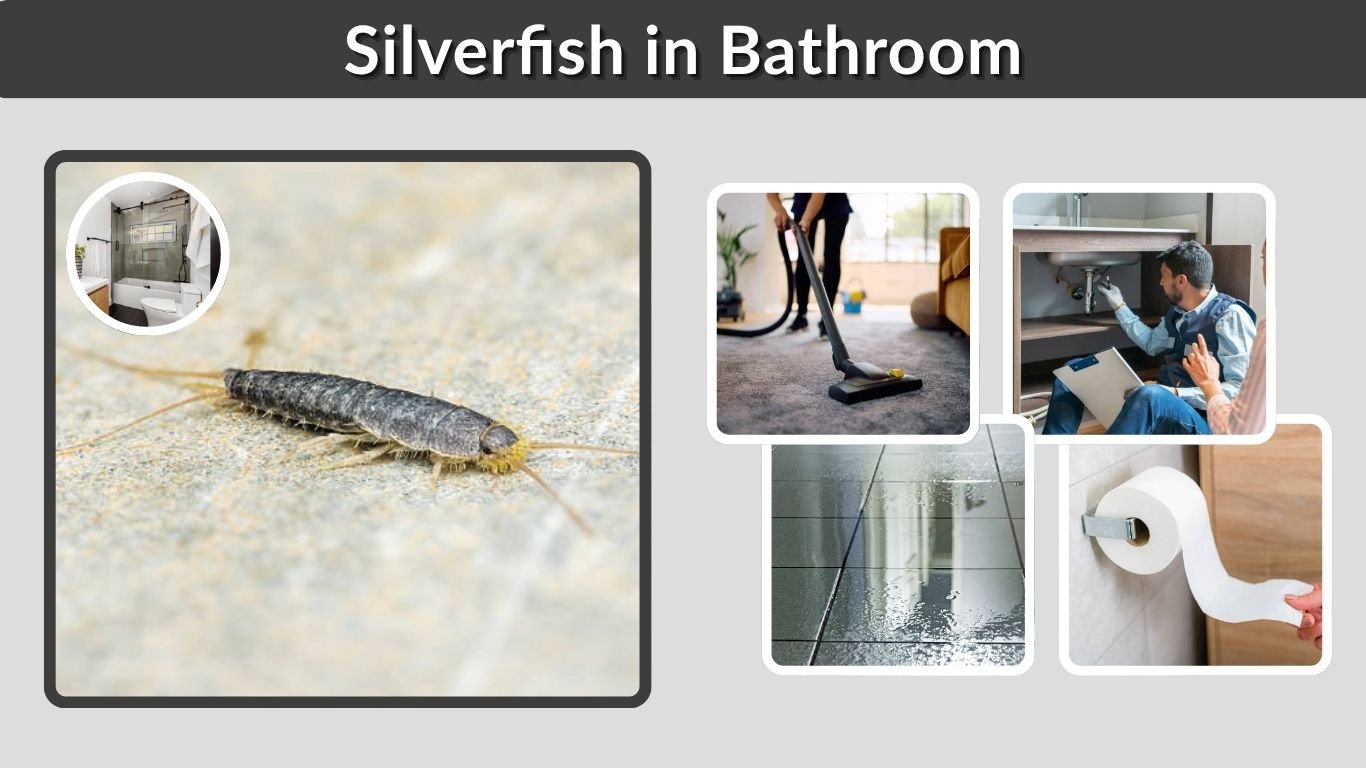
Silverfish in the bathroom are common because these insects love moisture, darkness, warmth, and hidden cracks. If you find a silverfish on the bathroom floor, in the sink, near the drain, or along the wall at night, it usually means your bathroom has the damp conditions they prefer. One silverfish does not always mean a serious infestation, but repeated sightings can be a sign that they are hiding nearby. The best way to get rid of bathroom silverfish is to reduce moisture, remove food sources, seal hiding spots, and use traps or targeted treatment.
What Are Silverfish in the Bathroom?
Silverfish are small, wingless insects with flat bodies, long antennae, and three tail-like bristles at the back. They move quickly and often appear silver, gray, brownish, or dark depending on age and lighting. In bathrooms, they are usually seen at night because they avoid light and hide during the day.
Silverfish do not bite people, do not sting, and are not known for spreading serious diseases. However, they can damage paper, cardboard, wallpaper, books, fabrics, and stored items if they spread beyond the bathroom.
What Do Bathroom Silverfish Look Like?
Bathroom silverfish usually have a narrow, carrot-shaped body that is wider near the head and thinner toward the tail. Their bodies are covered with tiny scales, giving them a shiny or metallic look. Baby silverfish are smaller and lighter in color, while older ones may look darker or gray.
Common features include:
- Silver, gray, brown, or blackish body
- Long antennae
- Three tail-like bristles
- Fast movement
- Flat body
- No wings
- Usually found at night
Are Silverfish Common in Bathrooms?
Yes, silverfish are common in bathrooms because bathrooms provide moisture and hiding places. They may live under sinks, behind baseboards, inside wall cracks, near drains, under bath mats, behind toilets, or around leaky pipes.
Is It Normal to Have Silverfish in Your Bathroom?
Finding one silverfish in a bathroom can be normal, especially in humid homes. But if you keep finding silverfish in the bathroom, see them in multiple rooms, or notice damage to paper or fabric, you may have a growing infestation.
Why Are There Silverfish in My Bathroom?
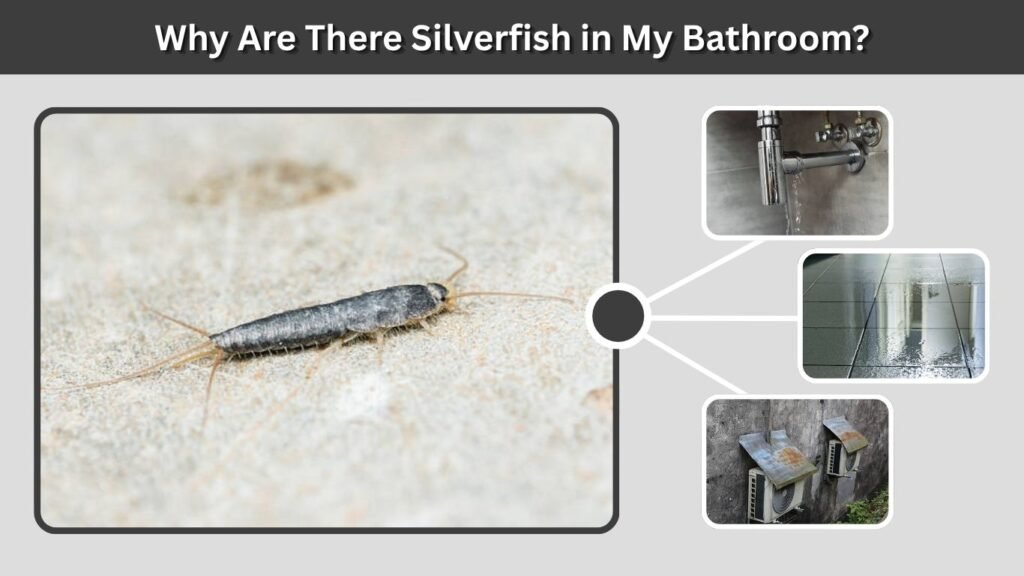
Silverfish appear in bathrooms mainly because of humidity. They need moisture to survive and prefer dark, hidden areas. Bathrooms often have water, warmth, cracks, hair, dust, paper products, and mold, all of which can support silverfish activity.
What Attracts Silverfish to Bathrooms?
Silverfish are attracted by moisture and food sources. Even a clean bathroom can attract them if it stays damp or has hidden organic debris.
Common attractants include:
- High humidity
- Leaky pipes
- Damp bath mats
- Wet floors
- Condensation
- Poor ventilation
- Mold or mildew
- Hair and dead skin
- Dust
- Toilet paper
- Cardboard packaging
- Wallpaper glue
- Cracks around baseboards
- Gaps near plumbing
Why Do Silverfish Like Bathrooms?
Bathrooms give silverfish three things they need: water, shelter, and food. They can hide in tiny cracks during the day and come out at night to search for food. They may feed on hair, dandruff, soap residue, mold, paper, glue, and organic debris.
Where Do Silverfish Come From in Bathrooms?
Silverfish may enter the bathroom from wall voids, pipe openings, baseboard gaps, drains, nearby closets, basements, attics, or other damp areas. In apartments, they may move between units through plumbing gaps or shared walls.
They do not usually “come from” the drain itself, but they may be seen near sinks, tubs, and drains because these places are moist.
Silverfish in Bathroom at Night
Silverfish are nocturnal, so you are more likely to see them at night. If you turn on the bathroom light and see a silverfish run across the floor, it was probably searching for food or moisture.
Why Do I Keep Seeing Silverfish at Night?
Repeated nighttime sightings usually mean they have hiding places close by. They may be living behind baseboards, under cabinets, behind wall tiles, inside cracks, near pipe gaps, or under stored items.
If you see silverfish every night or several times a week, inspect the bathroom carefully for moisture problems and hiding spots.
One Silverfish in Bathroom: Should You Worry?
One silverfish does not always mean an infestation. It may be a single insect that wandered in from another area. However, one silverfish can be a warning sign if your bathroom is humid or cluttered.
You should take action if:
- You see more than one silverfish.
- You keep finding them at night.
- You see baby silverfish.
- You find them in other rooms.
- You notice damage to paper, wallpaper, or stored items.
- Your bathroom has leaks or high humidity.
Are Silverfish in the Bathroom Dangerous?
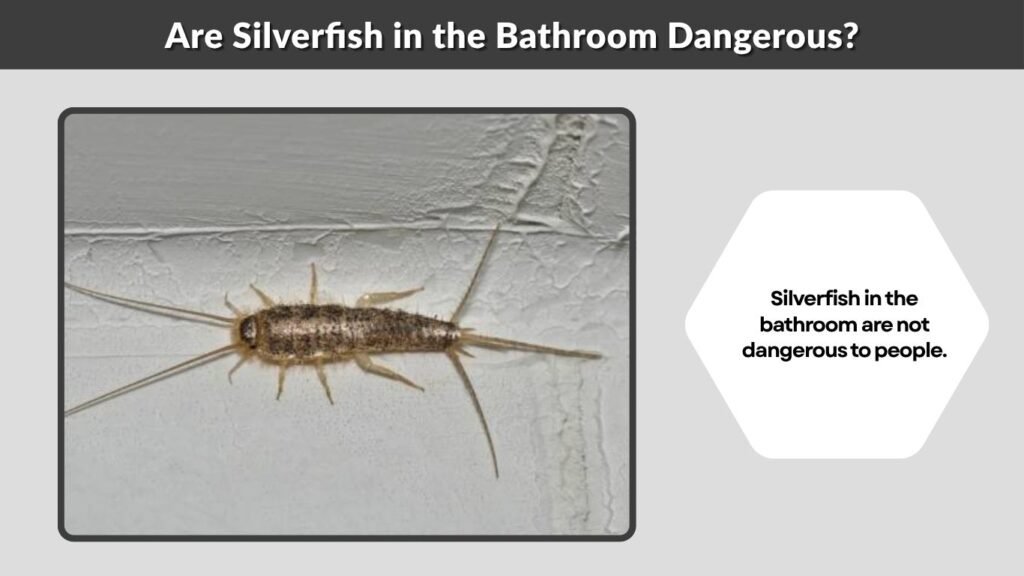
Silverfish in the bathroom are not dangerous to people. They do not bite, sting, or inject venom. They are more of a nuisance pest than a health threat.
Do Bathroom Silverfish Bite?
No, silverfish do not bite humans. They have chewing mouthparts, but they are used for scraping food sources like paper, glue, starch, and organic debris. They are not blood-feeding insects.
Are Silverfish Harmful to Pets?
Silverfish are not considered poisonous to cats or dogs. If a pet eats one, it is usually not a serious problem. However, eating many insects may cause mild stomach upset. Be careful with insecticides or powders in bathrooms where pets walk or drink water.
Can Silverfish Damage Bathroom Items?
Yes, silverfish can damage bathroom items if they find paper, cardboard, or glue-based materials. They may feed on toilet paper, cardboard boxes, wallpaper, booklets, labels, and stored fabrics.
What Do Silverfish Eat in the Bathroom?
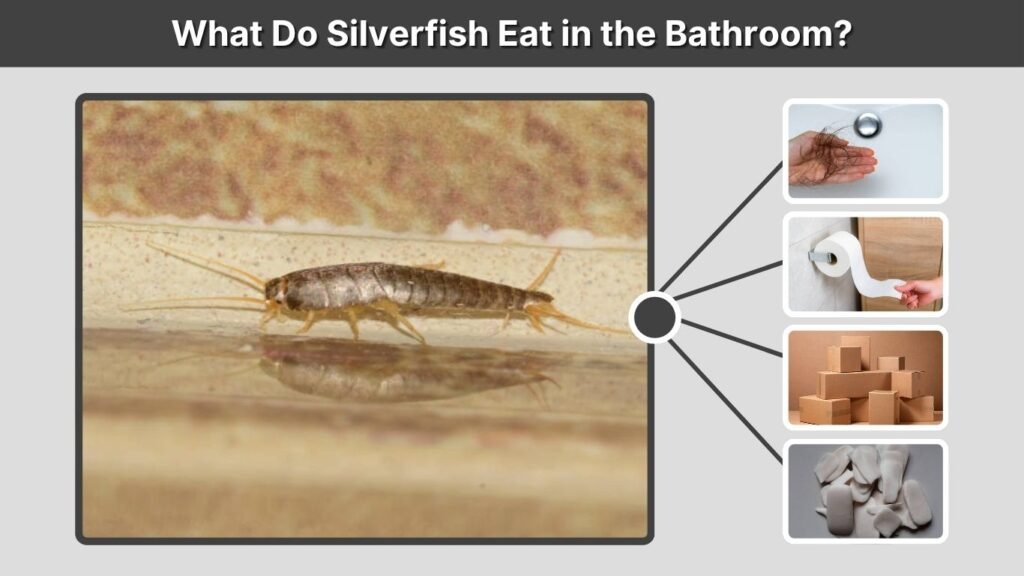
Silverfish feed on starches, sugars, cellulose, protein, and organic matter. In a bathroom, their food sources may be small but enough to support them.
Bathroom silverfish may eat:
- Hair
- Dandruff
- Dead skin flakes
- Mold
- Mildew
- Dust
- Paper
- Toilet paper
- Cardboard packaging
- Soap residue
- Wallpaper paste
- Glue
- Dead insects
- Fabric fibers
Do Silverfish Live in Drains?
Silverfish may appear near drains, but they are not true drain insects like drain flies. They prefer hidden cracks, wall gaps, damp floors, and moist storage areas. If you see silverfish in the sink or tub, they may have fallen in and become trapped because smooth surfaces are hard for them to climb.
Signs of Silverfish in Bathroom
Silverfish hide well, so live insects are not the only sign. You may also notice damage or evidence in damp corners and storage areas.
Common Signs
Look for these signs around your bathroom:
- Live silverfish on the floor
- Tiny silverfish near baseboards
- Shed skins
- Pepper-like droppings
- Yellowish stains
- Damage to toilet paper or cardboard
- Scraped wallpaper
- Silverfish in sink or bathtub
- Activity behind the toilet
- Insects under bath mats
- Silverfish near leaky pipes
Baby Silverfish in Bathroom
Baby silverfish in the bathroom can be a stronger sign of an active breeding population. Young silverfish are smaller and may look pale, white, gray, or light silver. If you see both adults and babies, inspect for hidden moisture and cracks.
How to Get Rid of Silverfish in Bathroom
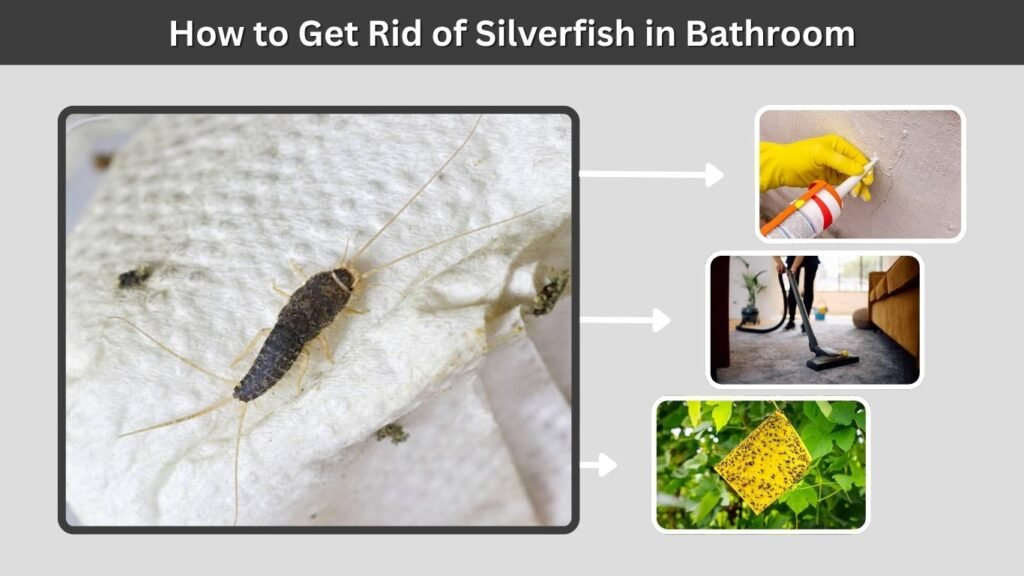
Getting rid of silverfish in the bathroom requires more than killing the ones you see. You need to make the bathroom less comfortable for them.
Step 1: Dry the Bathroom
Moisture control is the most important step. Silverfish thrive in damp spaces, so drying the bathroom can reduce their survival.
Do this:
- Use the exhaust fan during and after showers.
- Open a window when possible.
- Wipe wet floors and counters.
- Hang towels so they dry quickly.
- Remove damp bath mats.
- Fix dripping faucets.
- Repair leaking pipes.
- Use a dehumidifier if humidity is high.
Step 2: Remove Food Sources
Silverfish can live on small amounts of organic matter. Cleaning reduces what they can eat.
Clean these areas:
- Under the sink
- Behind the toilet
- Bathroom corners
- Baseboards
- Under bath mats
- Around drains
- Inside cabinets
- Behind storage baskets
- Around toilet paper storage
Remove cardboard boxes from the bathroom and store paper products in sealed plastic bins if silverfish are common.
Step 3: Seal Cracks and Gaps
Silverfish hide in narrow spaces during the day. Sealing gaps reduces shelter and movement.
Seal:
- Baseboard cracks
- Gaps around pipes
- Cracks near tiles
- Cabinet gaps
- Wall holes
- Spaces around plumbing
- Loose wallpaper edges
Use caulk around plumbing openings and bathroom edges where insects may hide.
Step 4: Use Sticky Traps
Sticky traps help you find where silverfish are most active. Place them near walls, under the sink, beside the toilet, behind storage items, and near baseboards. Check them every few days.
Traps are especially helpful if you are not sure where the silverfish are coming from.
Step 5: Vacuum Regularly
Vacuuming removes eggs, shed skins, food crumbs, dust, and insects. Use a crevice tool along bathroom edges, baseboards, cabinet corners, and under storage items.
After vacuuming, empty the vacuum outside or seal the contents in a trash bag.
How to Get Rid of Silverfish in Bathroom Naturally
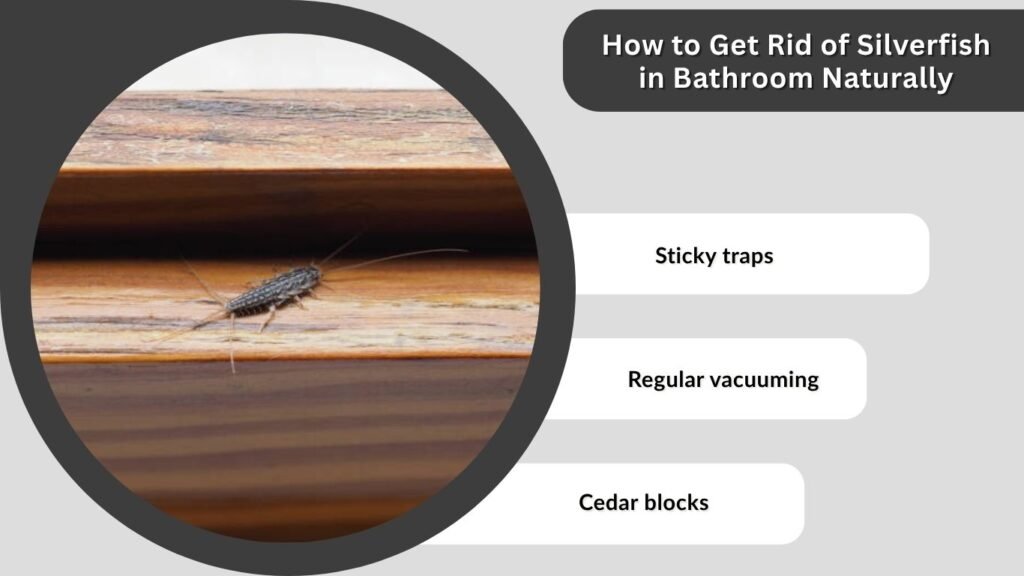
Natural methods can help with mild problems, especially when combined with moisture control.
Natural Remedies
Useful natural options include:
- Sticky traps
- Dehumidifier
- Regular vacuuming
- Cedar blocks
- Bay leaves
- Diatomaceous earth in dry cracks
- Sealed storage bins
- Better ventilation
- Removing cardboard
- Fixing leaks
Diatomaceous earth should only be used in dry cracks and hidden areas. Avoid spreading powders where children, pets, or bare feet may contact them.
Does Bleach Kill Silverfish in Bathroom?
Bleach may kill a silverfish on direct contact, but it is not a complete treatment. It does not solve the moisture, hiding place, or food source problem. Bleach can also be unsafe if mixed with other cleaners. Use it only for cleaning surfaces as directed on the label, not as a main pest control method.
What Kills Silverfish in Bathroom?
Silverfish can be killed by direct contact sprays, dusts, traps, or professional pest control treatments. However, killing visible silverfish will not stop the problem unless the bathroom is dried and sealed.
Best Way to Kill Silverfish Safely
The safest approach is:
- Reduce humidity first.
- Clean and vacuum.
- Use sticky traps.
- Seal gaps.
- Use targeted pest products only where needed.
- Follow label directions carefully.
- Keep products away from children and pets.
If silverfish are coming from bathroom walls, pipe gaps, or a nearby apartment unit, professional treatment may be more effective.
Silverfish in Apartment Bathroom
Silverfish in an apartment bathroom can be harder to control because insects may move between units or shared plumbing spaces. You should still dry and clean your bathroom, but you may also need building-level help.
What to Do in an Apartment
Take these steps:
- Report leaks to maintenance.
- Seal visible gaps around pipes.
- Keep the bathroom dry.
- Avoid cardboard storage.
- Use sticky traps to monitor.
- Tell management if sightings continue.
- Ask if neighboring units have the same issue.
If multiple apartments have silverfish, treatment may need to cover shared walls, plumbing chases, laundry areas, and storage rooms.
Silverfish in Hotel Bathroom
Finding a silverfish in a hotel bathroom does not always mean the room is dirty. It may mean the building has moisture, plumbing gaps, or hidden insect activity. However, if you see multiple silverfish or signs of infestation, report it to hotel staff and request another room.
How to Prevent Silverfish in Bathroom
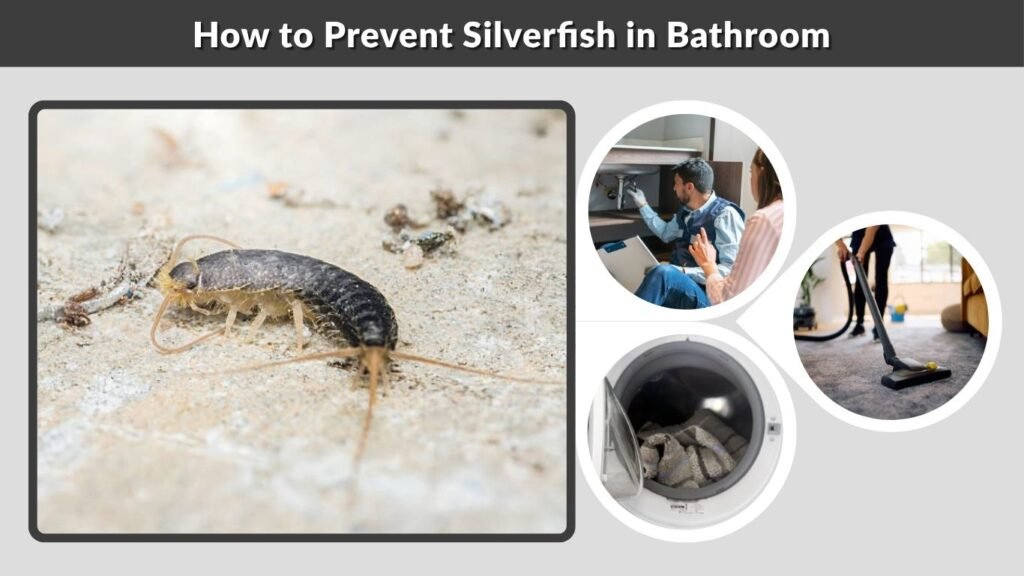
Prevention is mostly about keeping the bathroom dry, clean, and sealed. Silverfish are less likely to stay where they cannot find moisture or shelter.
Prevention Checklist
Use this checklist regularly:
- Run the exhaust fan after showers.
- Fix leaks quickly.
- Dry wet floors.
- Wash bath mats often.
- Remove bathroom clutter.
- Store toilet paper in sealed containers.
- Avoid cardboard storage.
- Vacuum baseboards.
- Seal gaps around pipes.
- Keep cabinets dry.
- Check under sinks for leaks.
- Improve airflow.
FAQs
Why are there silverfish in my bathroom?
Silverfish are in your bathroom because it provides moisture, darkness, warmth, and food sources such as hair, dust, mold, paper, glue, and dead skin. Leaks and poor ventilation make the problem worse.
How do I get rid of silverfish in the bathroom?
Dry the bathroom, fix leaks, clean dust and hair, remove cardboard, seal cracks, use sticky traps, and store paper products in sealed containers. For heavy infestations, use targeted treatment or call a pest professional.
Is it normal to have silverfish in your bathroom?
One silverfish can be normal in a humid bathroom. However, repeated sightings, baby silverfish, or silverfish in multiple rooms may mean there is an infestation.
Are silverfish in the bathroom dangerous?
Silverfish are not dangerous to humans. They do not bite or sting, but they can damage paper, cardboard, wallpaper, clothing, and stored items.
Does bleach kill silverfish in the bathroom?
Bleach may kill silverfish on direct contact, but it is not a reliable infestation treatment. Moisture control, cleaning, sealing cracks, and traps are more effective for long-term control.