
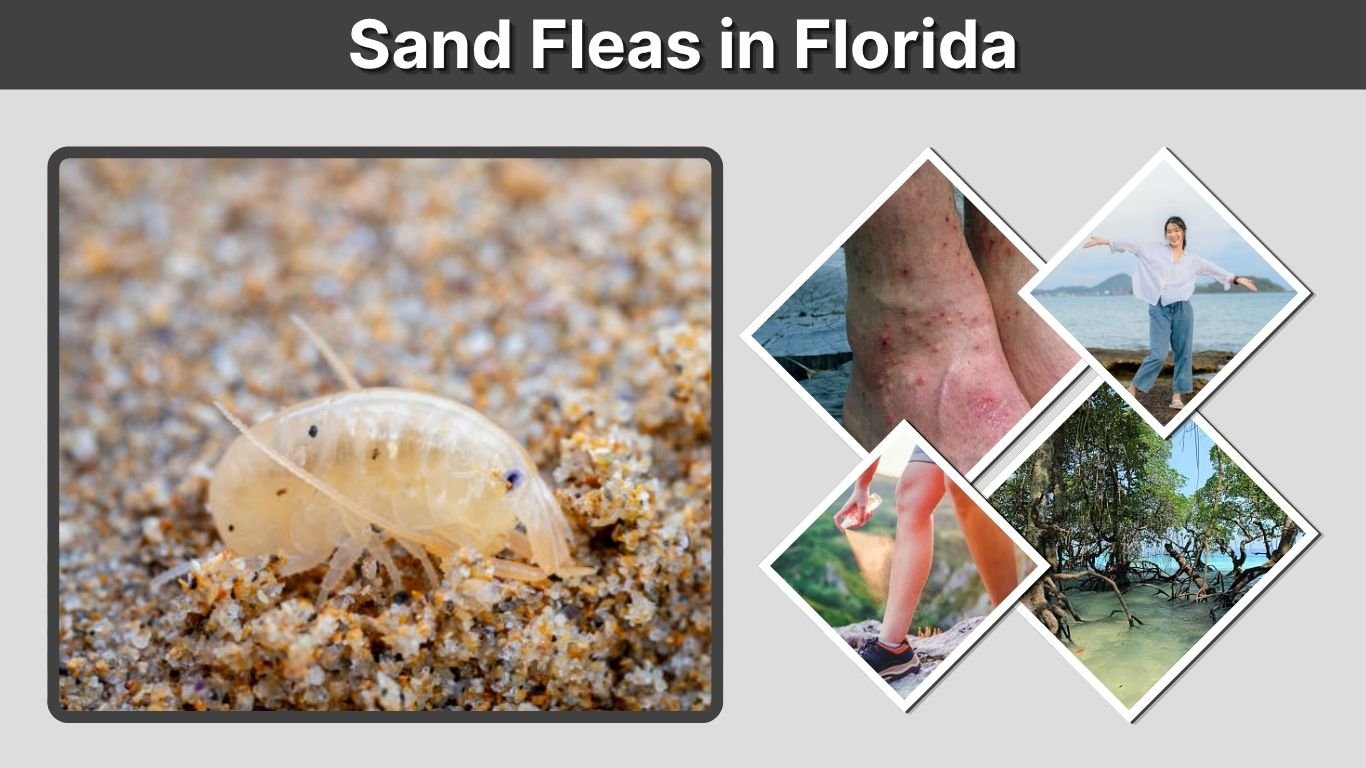
Sand fleas in Florida can mean two very different creatures. Anglers usually mean mole crabs, small crustaceans that burrow in the surf and make excellent bait for pompano and other fish. Beachgoers describing painful “sand flea bites,” however, are often talking about tiny biting midges called no-see-ums. Knowing the difference helps you understand where Florida sand fleas occur, whether they bite, when they are most active, how to avoid bites, and how anglers catch mole crabs along Florida beaches.
What Are Sand Fleas in Florida?
The term Florida sand flea can be confusing because it is commonly applied to unrelated animals. Florida Fish and Wildlife calls mole crabs “sand fleas” or “sand crabs,” while tiny coastal biting midges are also popularly called sand flies, sand gnats, or sometimes sand fleas. Mole crabs do not bite beachgoers, but female biting midges do.
Florida Mole Crab or Fishing Sand Flea
The sand flea anglers collect is usually a mole crab. It is a small, oval crustacean with a light brownish-gray body, short triangular tail, paddle-like appendages, and feathery antennae.
Key identification features include:
- Oval, hard-shelled body
- Usually gray, tan, or sandy brown
- Can reach about 2 inches long
- Five pairs of appendages
- Short triangular digging tail
- Feathery antennae
- Burrows backward into wet sand
- Lives directly in the beach swash zone
These animals filter plankton and organic material from seawater and are naturally adapted to constantly shifting surf sand.
Biting “Sand Fleas” or No-See-Ums
When someone complains about sand flea bites in Florida, mole crabs are usually not responsible. One likely culprit is the biting midge, commonly called a no-see-um, sand fly, or sand gnat.
These insects can be around 1 mm long, making them extremely difficult to notice. Female biting midges take blood meals and can leave irritating red bite sites. Florida has numerous Culicoides species, including coastal species associated with marshes, mangroves, and other wet environments.
Where Are Sand Fleas Found in Florida?
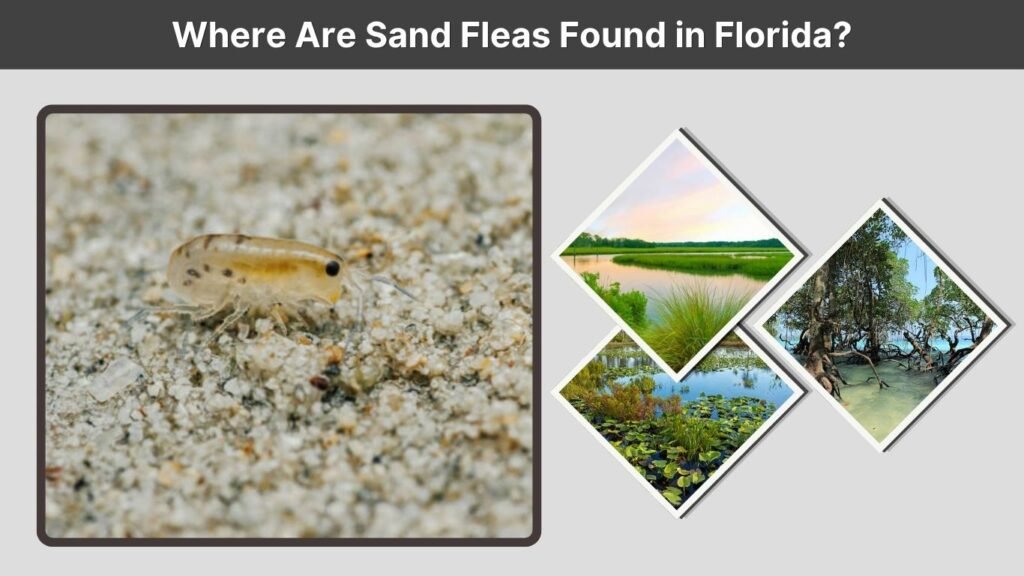
Florida’s extensive coastline provides excellent habitat for both mole crabs and biting midges, although they occupy very different environments. Mole crabs stay closely associated with sandy surf beaches, while biting midges often develop around moist organic material, salt marshes, mangroves, swamps, tree holes, and similar habitats before adults disperse into surrounding areas.
Sand Fleas on Florida Beaches
Mole crabs occur in the swash region of the intertidal zone, where waves repeatedly move up and down sandy beaches.
They continuously reposition themselves as the tide changes. When a wave retreats, they rapidly burrow tail-first into the wet sand and extend their antennae into moving water to capture food.
This means anglers looking for sand fleas should concentrate close to the active waterline rather than digging randomly in dry beach sand.
South Florida and the Florida Keys
South Florida can support biting midges, particularly around mangroves, marshes, and other suitable wet environments. However, the mix of species differs across the state.
UF/IFAS reports that Florida has roughly 50 Culicoides species, with overall diversity greatest in northern Florida, while several important coastal species use marshes, swamps, and mangroves as larval habitat.
When Is Sand Flea Season in Florida?
There is no single Florida sand flea season covering everything called a sand flea. Mole crab abundance changes with beach conditions, water temperature, waves, and local populations. Biting midges have a clearer seasonal pattern, although Florida’s warm climate means some activity can occur throughout the year.
Florida Biting Sand Flea Season
No-see-ums can bite during much of the year in Florida, but UF/IFAS reports that their greatest adult activity generally occurs during June, July, and August.
Many species are most active around sunrise and sunset, although activity varies by species and conditions. Coastal species can sometimes bite during daylight as well.
Mole Crab Season
Fishing sand fleas do not follow one simple statewide calendar. Their availability can change substantially from one beach to another.
Anglers are better served by checking the surf itself. If mole crabs are present, small disturbances in retreating water and groups of shorebirds feeding near the swash line can help reveal productive stretches of beach.
Do Florida Sand Fleas Bite?
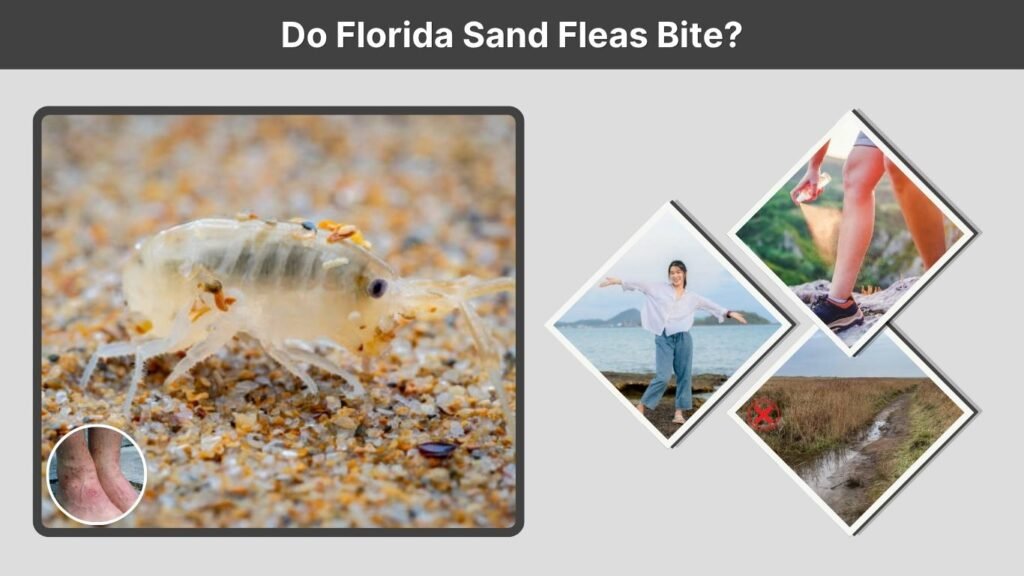
Mole crabs do not bite people. They lack the aggressive biting behavior associated with beach insect complaints and spend their time burrowing and filter-feeding. Therefore, handling a mole crab while fishing should not produce the itchy skin reaction commonly described as a sand flea bite.
What Do Florida Sand Flea Bites Look Like?
If the culprit is a biting midge, reactions commonly include a stinging or burning sensation followed by a defined red area around the bite.
Some people experience only short-lived discomfort, while sensitive individuals may remain itchy for two or three days. Bite appearance alone cannot reliably identify the exact insect because mosquitoes, fleas, and other biting insects can produce similar skin reactions.
How to Avoid Biting Sand Fleas in Florida
To reduce exposure to no-see-ums:
- Wear long sleeves and long pants in heavily affected areas.
- Use a repellent labeled for biting flies or midges.
- Be particularly cautious around sunrise and sunset.
- Avoid lingering beside marshes and mangroves when midges are abundant.
- Use fine screening where no-see-ums regularly enter buildings.
- Take advantage of breezy areas because biting activity often decreases with increased air movement.
UF/IFAS notes that no-see-ums are especially active around sunrise and sunset and that protective clothing and appropriately labeled repellents can help reduce bites.
How to Catch Sand Fleas in Florida
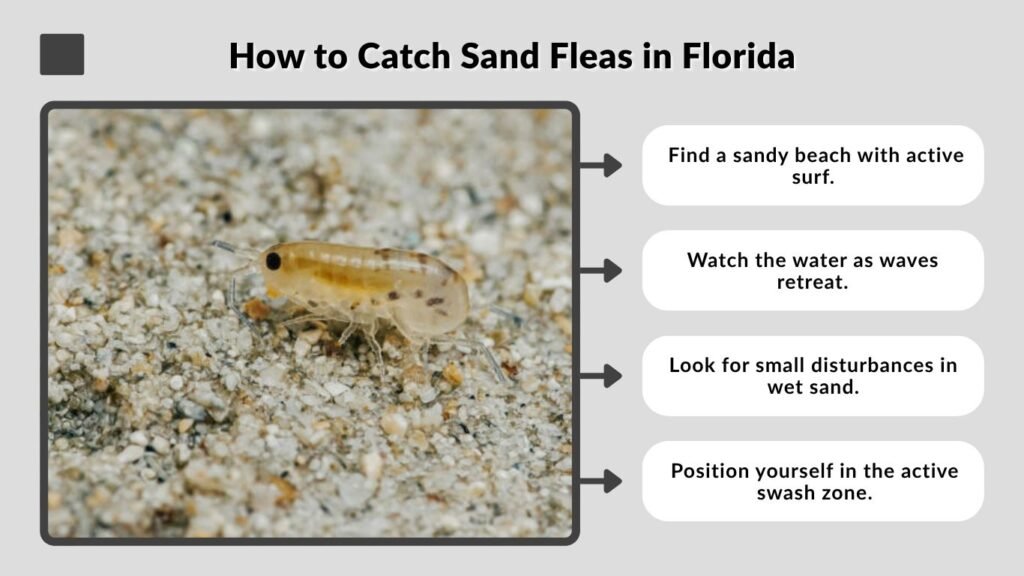
Catching mole crabs is popular among Florida surf anglers because they provide fresh natural bait without requiring a trip to a bait shop. A sand flea rake makes collection easier, although experienced anglers can also find them by hand.
Catching Florida Sand Fleas for Bait
A simple method is:
- Find a sandy beach with active surf.
- Watch the water as waves retreat.
- Look for small disturbances in wet sand.
- Position yourself in the active swash zone.
- Pull a sand flea rake through the upper wet sand.
- Lift the rake and rinse away loose sand.
- Check the basket for mole crabs.
- Keep only the amount of bait you expect to use.
Florida FWC currently lists recreational harvest of mole crabs as unregulated, but checking current rules for the specific beach, park, or protected area before collecting is still sensible.
What Fish Eat Sand Fleas in Florida?
Sand fleas are particularly well known as bait for Florida pompano. They can also attract several other surf and structure-oriented fish.
Common targets include pompano, sheepshead, black drum, whiting, and other crustacean-feeding coastal species.
FWC specifically recommends live sand fleas for catching pompano and other fish in Florida’s surf zone and describes hooking them with a circle hook.
Are Florida Sand Fleas Edible?
Mole crabs are crustaceans rather than insects, so they are biologically related to other crabs and shrimp. People sometimes discuss eating them, but their much more common use in Florida is as fishing bait.
Before harvesting any coastal animal for food, check current regulations and make sure the collection area is appropriate and clean. Never assume that an animal collected from polluted or closed waters is suitable for consumption.
Why Do Florida Beaches Sometimes Have Huge Numbers?
Mole crabs may occur together where surf conditions provide suitable sand, food, and wave movement. Since they track the shifting swash zone, concentrations can appear and disappear along a beach as tides and waves change.
Biting midges can also become extremely abundant in Florida’s coastal environments. UF/IFAS reports that certain coastal species can reach very high densities around marshes, swamps, and mangroves, sometimes making outdoor activity uncomfortable.
FAQs
Florida visitors often use “sand flea” for both beach crustaceans and biting insects, creating confusion about bites, fishing bait, seasons, and where these animals occur. The first step is always determining which type of sand flea you are dealing with.
1. Are There Sand Fleas in Florida?
Yes. Florida beaches have mole crabs commonly called sand fleas, and Florida also has biting midges or no-see-ums that people sometimes call sand fleas.
2. Do Florida Sand Fleas Bite?
Mole crabs do not bite humans. Biting midges, however, do take blood meals and may cause red, itchy or burning bite reactions.
3. When Is Sand Flea Season in Florida?
Biting midges can occur year-round, but UF/IFAS reports their greatest adult activity during June, July, and August. Mole crab availability varies more with local surf and beach conditions.
4. Where Can I Find Fishing Sand Fleas in Florida?
Look directly in the wet swash zone of sandy beaches where waves wash up and retreat. Mole crabs burrow beneath this moving layer of sand.
5. What Fish Can I Catch With Florida Sand Fleas?
Sand fleas are excellent natural bait for Florida pompano and can also be used for sheepshead, black drum, whiting, and other surf-feeding fish. FWC specifically lists live sand fleas as useful surf-zone bait.
