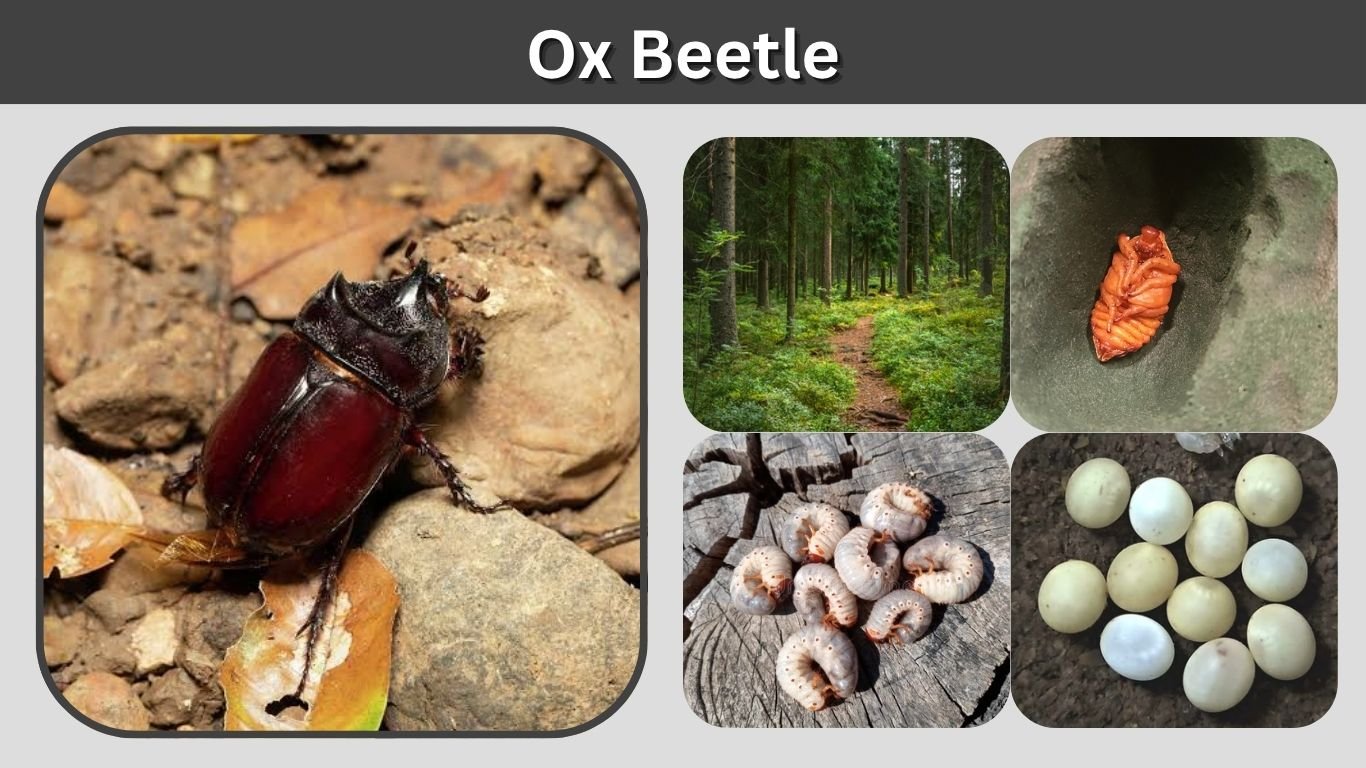
The ox beetle is a large, powerful-looking insect known for its glossy dark body and impressive horns. Belonging to the rhinoceros beetle group, ox beetles are found across parts of North, Central, and South America. Although their appearance can seem intimidating, these insects are generally harmless to humans. Their larvae develop in decomposing organic material, while adults are often active at night. This guide explores ox beetle identification, diet, habitat, lifespan, male and female differences, and the popular black ox beetle featured in Grounded.
Ox Beetle Facts
Ox beetles belong to the genus Strategus, within the scarab beetle family Scarabaeidae. One of the best-known species is Strategus aloeus, commonly called the aloeus ox beetle.
These beetles are recognized for their strong bodies, digging abilities, and prominent male horns.
Quick Facts About Ox Beetles
- Scientific name: Strategus aloeus (commonly discussed species)
- Family: Scarabaeidae
- Subfamily: Dynastinae
- Adult size: Approximately 31–61 mm for S. aloeus
- Color: Dark brown, reddish-brown, or nearly black
- Habitat: Woodlands, gardens, soil, and decomposing vegetation
- Diet: Decaying vegetation as larvae; adult feeding varies
- Activity: Mostly nocturnal
- Distribution: Southern United States through tropical America
- Defense: Strong outer skeleton and powerful digging legs
Ox beetles are relatives of other rhinoceros beetles, sharing similar body structures and developmental characteristics.
How to Identify an Ox Beetle
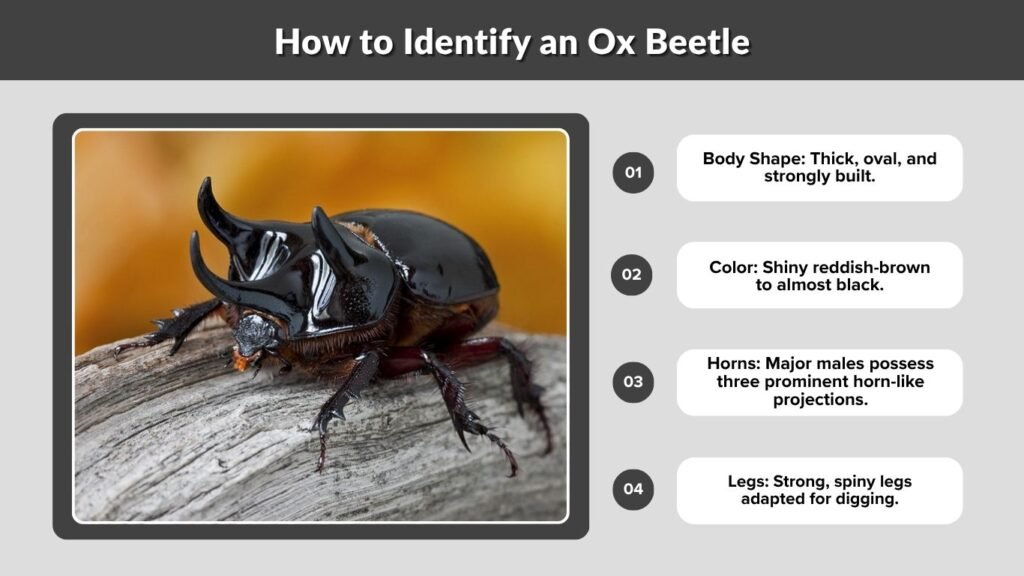
Ox beetles have broad, heavy bodies covered by a hardened exoskeleton. Their smooth wing covers reflect light, giving them a polished appearance.
Large males possess distinctive horns that make them especially recognizable.
Physical Identification Features
- Body Shape: Thick, oval, and strongly built.
- Color: Shiny reddish-brown to almost black.
- Horns: Major males possess three prominent horn-like projections.
- Legs: Strong, spiny legs adapted for digging.
- Wing Covers: Smooth, protective structures covering the flight wings.
- Antennae: Short antennae ending in club-shaped segments.
A black ox beetle in real life is usually a dark-colored ox beetle rather than a separate species known universally by that name.
Male vs. Female Ox Beetle
Male and female ox beetles can look significantly different.
Major male Strategus aloeus beetles possess three impressive horns, including two projecting from the pronotum and one extending forward. Smaller males develop shorter horns.
Female ox beetles lack the large fighting horns. Their heads are smoother, sometimes featuring a small projection useful during digging.
Both sexes have strong legs and glossy protective wing covers.
Types of Ox Beetles
The genus Strategus contains several species distributed across the Americas. Although they share similar physical characteristics, their appearance and geographic ranges differ.
Aloeus Ox Beetle
The aloeus ox beetle (Strategus aloeus) is one of the most recognizable species. It occurs across the southern United States, Mexico, Central America, and parts of South America.
Large males display three pronounced horns, while females have rounded bodies and much smaller projections.
Smooth Ox Beetle
The smooth ox beetle (Strategus antaeus) is another North American species. It is known for its relatively smooth wing covers and sturdy appearance.
This species occurs primarily in the eastern United States, including parts of the southeastern coastal region.
Where Do Ox Beetles Live?
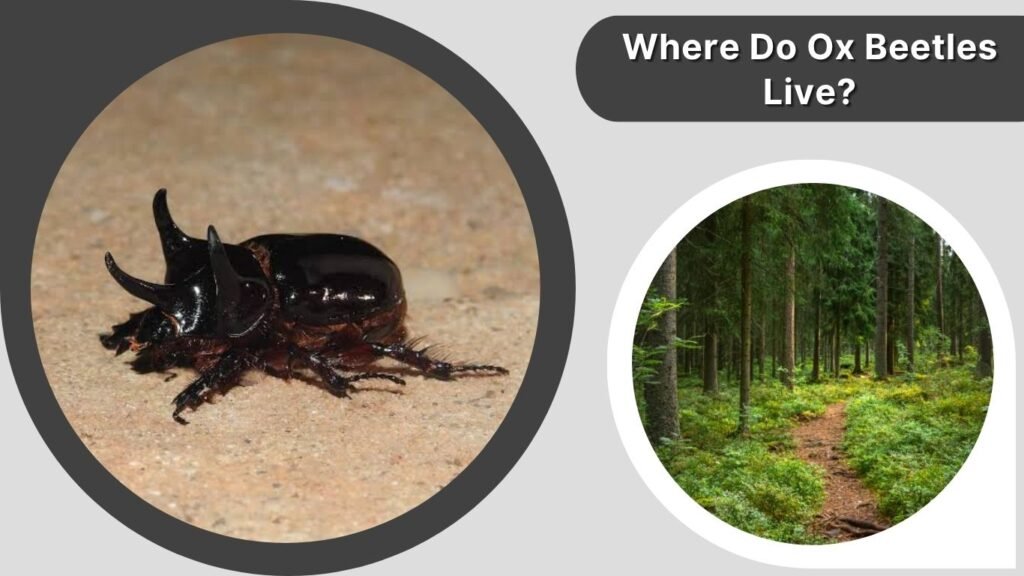
Ox beetles inhabit warm environments containing suitable food and breeding material.
They are associated with woodlands, decomposing vegetation, and soil rich in organic matter. Adults frequently emerge after dark and may be attracted to outdoor lighting.
Ox Beetles in Texas, Florida, and Arizona
Ox beetles occur in several southern American states.
Texas supports populations of Strategus aloeus, which may appear around gardens, woodland habitats, and lights during warmer months.
Florida also has records of ox beetles, including different Strategus species.
Arizona supports S. aloeus and other members of the genus. Their presence depends on habitat conditions and the availability of breeding materials.
What Do Ox Beetles Eat?
Ox beetle feeding habits vary between developmental stages and species.
Larvae generally consume decomposing vegetation, while some adult ox beetles feed on living plant material.
Ox Beetle Larvae Diet
Ox beetle grubs develop in decomposing wood, rotting vegetation, and organic debris.
Their feeding helps break down plant material. However, not all ox beetles have identical feeding habits, and certain species or populations may be associated with plant-root damage.
What Do Adult Ox Beetles Eat?
Adult feeding depends on the species and environment.
Strategus aloeus adults can feed on palm tissues. In commercial palm-growing areas, they may tunnel into the bases of young palms and cause damage.
Consequently, ox beetles should not automatically be classified as harmless to every type of plant.
Ox Beetle Life Cycle and Lifespan
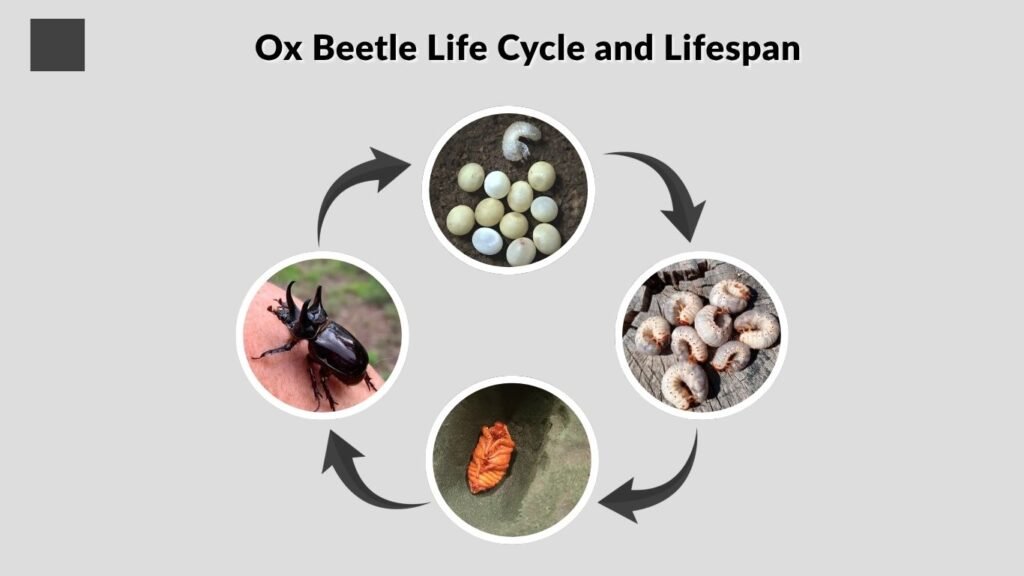
Ox beetles undergo complete metamorphosis, passing through egg, larva, pupa, and adult stages.
Development occurs largely out of sight within soil or decomposing organic matter.
Four Stages of the Ox Beetle Life Cycle
- Egg Stage: Female ox beetles deposit eggs in suitable organic material where developing larvae can find food.
- Larval Stage: The eggs hatch into pale, C-shaped grubs with brown heads. These larvae feed and grow through several molts.
- Pupal Stage: Mature larvae form protective chambers before transforming into adult beetles.
- Adult Stage: Fully developed beetles emerge, search for mates, and reproduce.
How Long Do Ox Beetles Live?
The lifespan of an ox beetle varies with species, temperature, nutrition, and environmental conditions.
Larval development may take several months or longer. Adult life is generally much shorter than the entire developmental period.
A single reliable lifespan estimate cannot be applied to every Strategus species.
Black Ox Beetle in Grounded: Locations and Weaknesses
The black ox beetle is a powerful insect enemy in the survival game Grounded. Its design is inspired by real rhinoceros beetles, particularly the heavily horned ox beetle.
Unlike real ox beetles, the game’s creature is highly aggressive toward players.
Where to Find Black Ox Beetles in Grounded
Black ox beetles spawn mainly in the Upper Yard, particularly around:
- Upper Grasslands: Areas near the tire, garden lamp, and northern ladder.
- Shed Surroundings: Western trenches and surrounding terrain.
- Undershed: Several beetles occur near the entrance.
- Wheelbarrow: Multiple spawn points surround this landmark.
- Moldorc Highlands: Beetles appear near rocky areas and the castle.
Their normal respawn time is approximately three in-game days, although some locations have shorter timers.
How to Beat Black Ox Beetles in Grounded
Black ox beetles are weak to Salty and Busting damage.
A Salt Morning Star is an effective weapon because it combines useful damage with stun potential.
Players should dodge thrown rocks, block headbutts, and avoid standing directly in front of charging beetles.
Defeating them provides materials such as Black Ox Parts, Black Ox Horns, and Tough Gunk. These resources help craft equipment, including the Black Ox Hammer and Black Ox Armor.
Are Ox Beetles Dangerous?
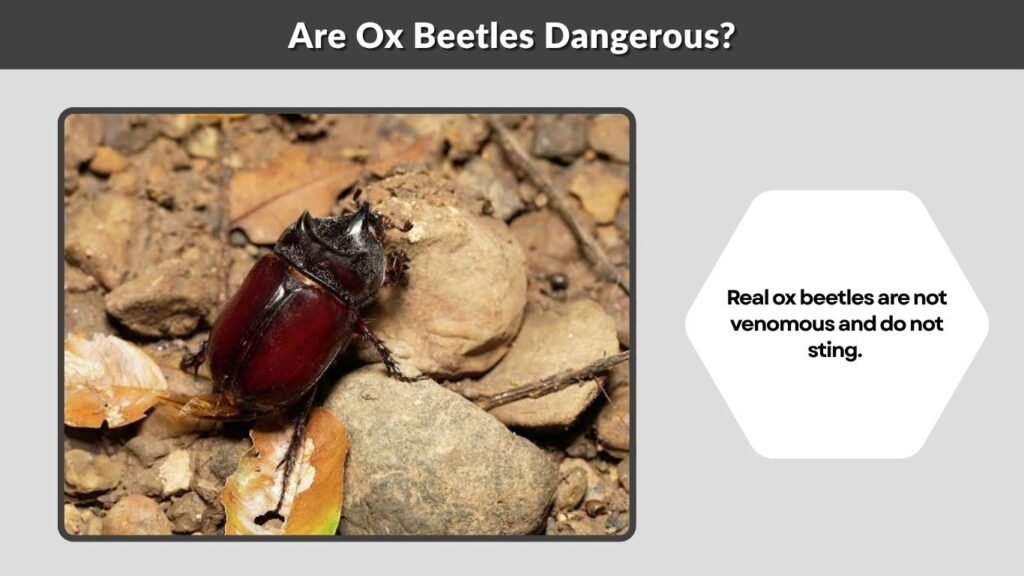
Real ox beetles are not venomous and do not sting. They generally avoid people rather than attacking them.
However, their strong legs and mouthparts mean rough handling could cause a minor pinch or scratch.
They are best observed without unnecessary handling. Some species can also damage young palms, making identification important when beetles appear around cultivated plants.
FAQs
1. Can Ox Beetles Fly?
Yes, ox beetles can fly despite their large, heavy bodies. They possess functional flight wings protected beneath hardened wing covers. Adults usually fly during nighttime and may approach artificial lights, particularly in warm weather when beetle activity increases.
2. Do Ox Beetles Bite Humans?
Ox beetles do not normally bite humans and are not considered dangerous. Although they possess functional mouthparts, biting is not their primary defensive behavior. Rough handling could cause minor discomfort, so observing them without disturbing them is generally preferable.
3. What Do Ox Beetle Larvae Look Like?
Ox beetle larvae are large, creamy-white grubs with curved bodies, brown heads, and three pairs of small legs. They usually develop within soil or decomposing organic material, feeding and growing before transforming into pupae and eventually becoming adults.
4. Are Ox Beetles and Rhinoceros Beetles the Same?
Ox beetles are members of the rhinoceros beetle subfamily Dynastinae. However, not all rhinoceros beetles are ox beetles. The name ox beetle generally refers to species within the genus Strategus, while rhinoceros beetles include numerous other genera.
5. How Do Ox Beetles Communicate?
Ox beetles likely use chemical signals and physical contact during reproduction and interactions. Like many scarab beetles, they can detect environmental odors through their antennae. However, specific communication mechanisms in individual Strategus species have not been thoroughly documented.