
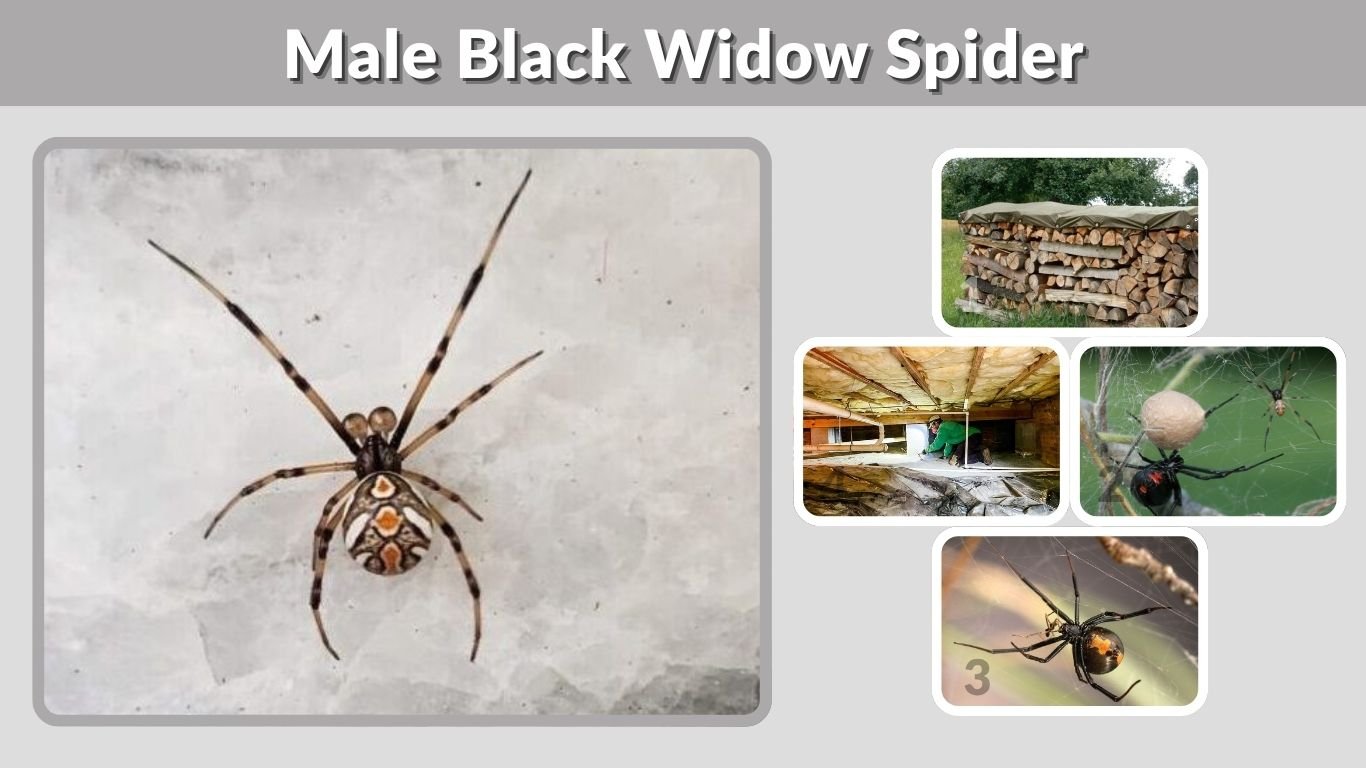
A male black widow spider looks very different from the dangerous-looking female most people recognize. Instead of a shiny black body with a bold red hourglass, the male is usually smaller, lighter, and marked with pale, reddish, or white patterns. This guide explains how to identify a male black widow spider, how it compares with a female, and whether it is dangerous to people.
What Is a Male Black Widow Spider?
A male black widow spider is the smaller male of the widow spider group, known scientifically as Latrodectus. These spiders belong to the comb-footed spider family and are related to southern, northern, and western black widows. While the female gets most of the attention because of her glossy black body and medically important bite, the male is often overlooked.
Male black widows are not simply smaller versions of females. Their color, body shape, markings, behavior, and risk level are different. Many people see one and do not realize it is a black widow at all.
Why Male Black Widows Are Hard to Recognize
Male black widows are harder to identify because they do not always have the classic black widow appearance. A mature female is usually dark, round-bodied, and shiny. A male may look brown, tan, grayish, or patterned.
This creates confusion with:
- young black widow spiders
- false widow spiders
- common house spiders
- cobweb spiders
- immature female black widows
Because of this, the best way to identify a male black widow is to look at several clues together: size, body shape, markings, web location, and nearby females.
What Does a Male Black Widow Spider Look Like?
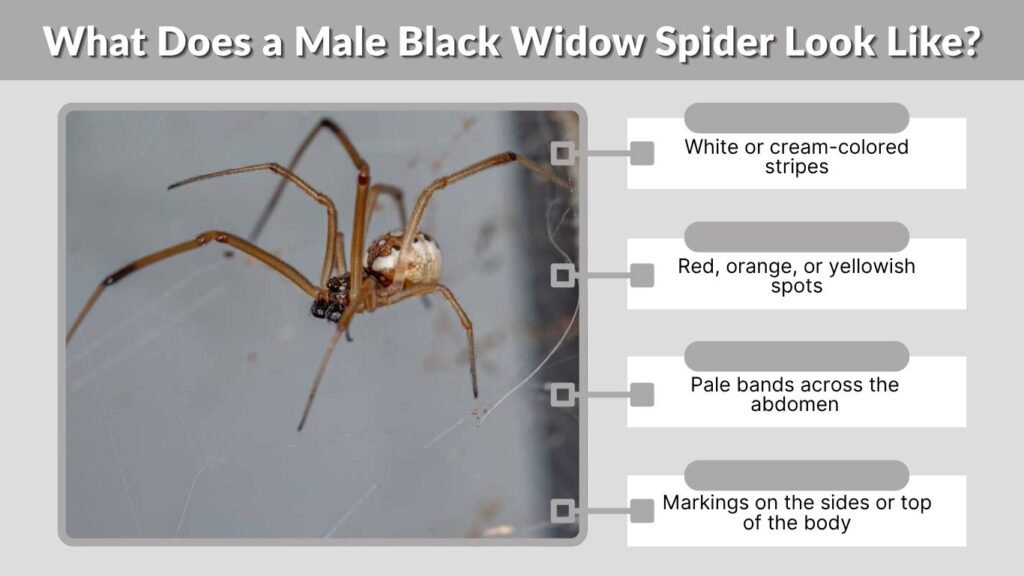
A male black widow spider is usually small, slim, and lightly colored compared with the female. Instead of a large round abdomen, the male often has a narrower body and longer-looking legs. His abdomen may show white, yellowish, orange, or reddish markings.
Most male black widows are not solid black. Some have a brown or grayish body with pale striping or small spots. Others may show red or orange marks on the top or sides of the abdomen rather than the underside.
Common Male Black Widow Spider Markings
Male black widow spider markings are one of the most searched features because they are not as simple as the female’s hourglass. Depending on species and age, a male may have:
- white or cream-colored stripes
- red, orange, or yellowish spots
- pale bands across the abdomen
- markings on the sides or top of the body
- a thinner, less rounded abdomen
Some males may have a small hourglass-like marking, but it is usually less bold than the female’s. In many cases, the markings are broken, faded, or mixed with lighter body colors.
Male Black Widow Spider Size
Male black widows are much smaller than adult females. Their body is often only a few millimeters long, while females are noticeably larger and heavier-bodied. When legs are included, the female still appears much more robust.
This size difference is one of the easiest ways to separate males from females. If the spider is very small, slim, and patterned, it may be a male or an immature black widow rather than an adult female.
Male vs Female Black Widow Spider
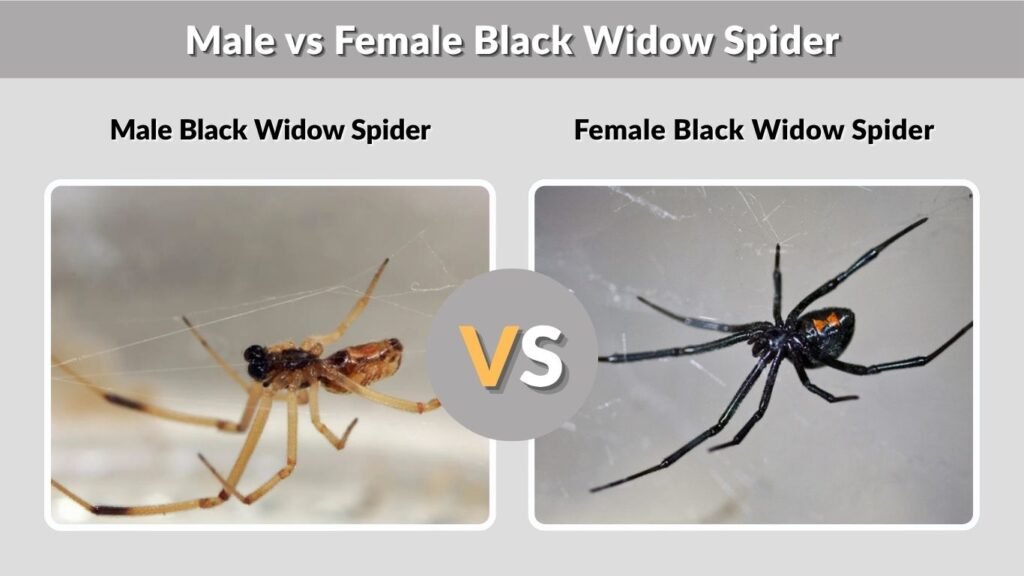
The difference between male and female black widow spiders is dramatic. This is called sexual dimorphism, which means males and females of the same species look very different.
| Feature | Male Black Widow Spider | Female Black Widow Spider |
| Size | Much smaller and slimmer | Larger with a round abdomen |
| Color | Brown, tan, grayish, or patterned | Usually glossy black |
| Markings | White, red, orange, or pale stripes/spots | Red hourglass or red marks |
| Bite risk | Very low for humans | Medically important bite risk |
| Body shape | Narrower abdomen, longer-looking legs | Round abdomen, heavier body |
| Behavior | Searches for females to mate | Stays near web and egg sacs |
Female Black Widows Are Easier to Identify
Female black widows are the spiders most people picture when they hear “black widow.” They are usually shiny black with a rounded abdomen and red hourglass marking on the underside. Some females may also have red spots or broken red markings.
The female’s appearance is more consistent than the male’s, which makes her easier to identify. However, not every widow spider has a perfect hourglass, so caution is still important.
Male Black Widows Often Look Like Juveniles
Male black widow spiders can look similar to immature females. Young black widows may also have lighter colors, stripes, and red or orange markings. As female black widows mature, they usually become darker and more rounded.
This is why people searching for “male black widow spider pictures” often see images that look very different from one another. Some pictures show adult males, while others may show immature females.
Are Male Black Widow Spiders Poisonous?
Male black widow spiders are venomous in the biological sense because they belong to a venomous spider group. However, they are not considered nearly as dangerous to humans as adult females.
The word “poisonous” is often used in search, but “venomous” is more accurate. A poisonous animal causes harm when touched or eaten, while a venomous animal injects venom through a bite or sting.
Can a Male Black Widow Bite You?
A male black widow spider can technically bite, but bites from males are considered rare and usually not medically significant. Male black widows are much smaller than females, and their fangs are not as capable of piercing human skin.
Most serious black widow bites come from adult females, especially when a female is disturbed near her web or egg sac. If someone is bitten and develops severe symptoms, it is safer to treat the situation seriously and contact a medical professional.
Male Black Widow Spider Bite Symptoms
Because male bites are uncommon and usually mild, symptoms may be limited if a bite happens at all. Possible minor symptoms could include:
- slight redness
- mild swelling
- local irritation
- brief pain or itching
More serious symptoms such as muscle cramps, sweating, nausea, abdominal pain, or spreading pain are more associated with female black widow bites. Anyone with strong symptoms after a suspected spider bite should seek medical care.
Where Do Male Black Widow Spiders Live?
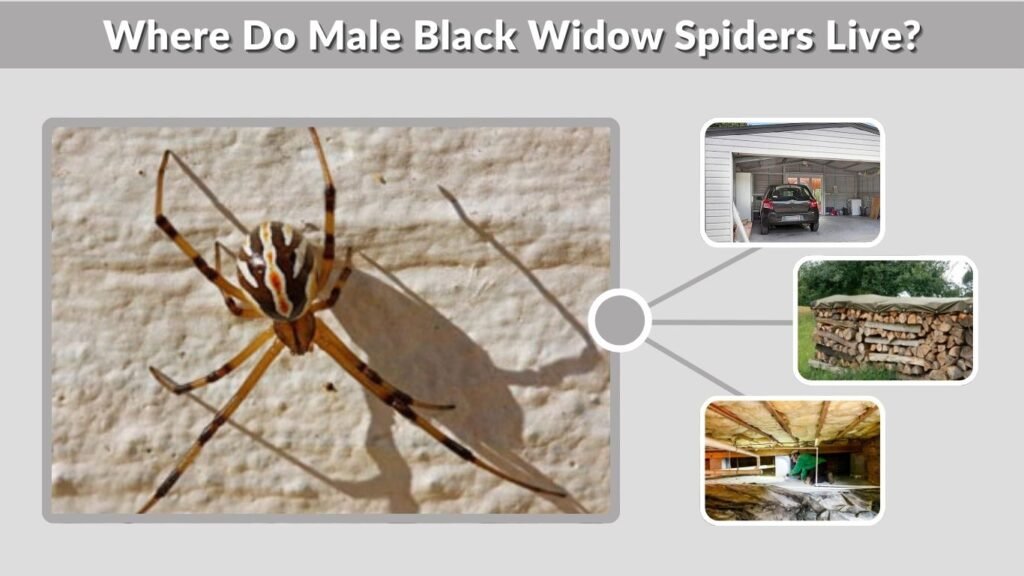
Male black widows live in the same general environments as female black widows. They are usually found in quiet, sheltered areas where insects are available and webs can remain undisturbed.
Common hiding places include:
- garages and sheds
- woodpiles
- crawl spaces
- outdoor furniture
- cluttered storage areas
- under rocks or boards
- corners of fences or structures
Male black widows may wander more than females because adult males search for mates. This means a male may occasionally appear away from a permanent web.
Male Black Widow Spider Web
A male black widow may use silk, but he does not build the same kind of large, strong web associated with adult females. Female black widow webs are irregular, messy-looking cobwebs often placed close to the ground in protected spaces.
If you find a small patterned spider near a tangled web, especially near a larger glossy black spider, it may be a male black widow. The presence of a female nearby is a strong identification clue.
Southern, Northern, and Western Male Black Widow Spiders
Several black widow species live in North America. The male’s appearance can vary depending on species, age, and region. This is why searches like “southern black widow spider male,” “western black widow spider male,” and “northern black widow spider male” all appear in keyword data.
Male Southern Black Widow Spider
The southern black widow is one of the best-known species. Females are usually glossy black with a red hourglass. Males are smaller and lighter, often with pale or reddish markings.
Male Northern Black Widow Spider
Northern black widows may have markings that look slightly different from southern black widows. Females can have a broken hourglass pattern, and males are again smaller and more patterned.
Male Western Black Widow Spider
Western black widows are common in western parts of North America. Males tend to be small and may show pale striping or reddish markings. They can be mistaken for other cobweb spiders if seen alone.
Do Female Black Widows Eat the Male?
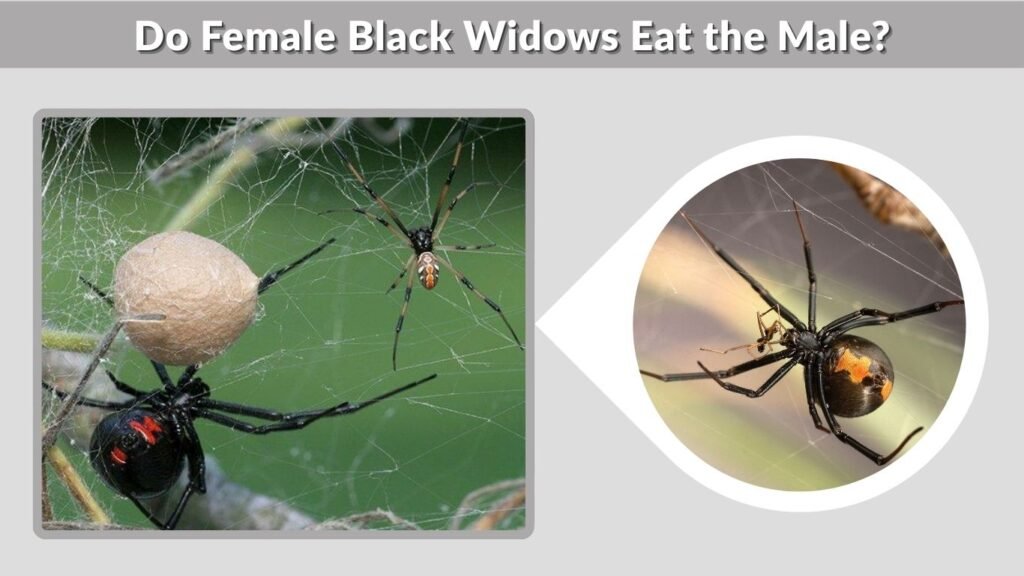
The idea that a female black widow always eats the male after mating is one of the most famous spider myths. It can happen, but it does not happen every time. The name “black widow” comes from this behavior, but in nature it is more complicated.
Male black widows often approach females carefully. They may vibrate the web, cut silk, or use mating behaviors that reduce the chance of being attacked. In some cases, the male escapes after mating. In other cases, the female may eat him.
Why This Myth Is So Popular
People are fascinated by black widow mating because it sounds dramatic. Searches like “black widow spider eating male,” “female black widow spider eating male,” and “does black widow spider eat male after mating” show that readers want a clear answer.
The best answer is simple: sometimes, but not always. Mating behavior depends on species, hunger, timing, and conditions.
How to Identify a Male Black Widow Spider Safely
If you think you found a male black widow spider, do not pick it up. Even though males are much less risky than females, handling spiders is not necessary for identification.
Use these safe identification steps:
- Look at the spider from a distance.
- Check for a small, slim body.
- Look for pale, red, orange, or white markings.
- Notice whether it is near a messy cobweb.
- Check if a larger black female is nearby.
- Take a clear photo if possible.
- Contact a pest professional or local extension office for confirmation.
A photo of the top and underside of the spider can help with identification, but do not try to flip or hold the spider.
Male Black Widow Spider vs False Widow Spider
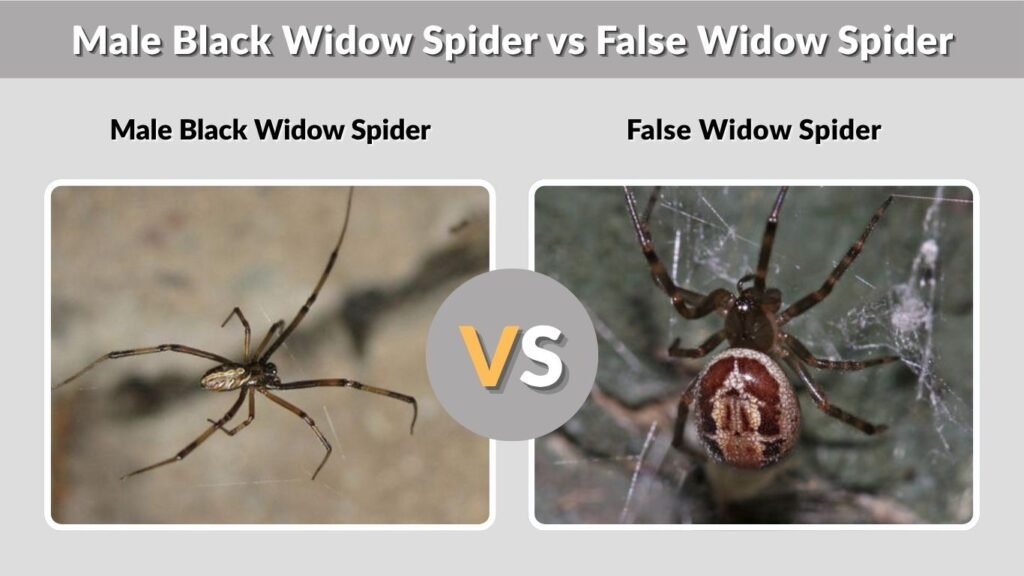
Male black widows can be confused with false widow spiders. False widows belong to a related group and may have round bodies, darker colors, and web-building habits. However, they are not the same as true black widows.
False widows usually lack the classic black widow hourglass. Their markings may look cream, tan, or marbled. Because both groups can vary in appearance, photos are helpful for identification.
When to Be Cautious
You should be cautious when a spider has:
- a shiny black body
- a red hourglass or red underside marking
- a messy web in a dark corner
- a round abdomen
- an egg sac nearby
These clues are more consistent with a female black widow, which is the spider of greater medical concern.
Are Male Black Widow Spiders Dangerous in the Home?
Male black widow spiders are not usually a major danger in homes. The bigger concern is whether males indicate that female black widows may also be nearby. If you see a male, it may mean there is a suitable black widow habitat around your home.
Dark, cluttered, undisturbed places attract widow spiders. Reducing these spaces can lower the chance of encounters.
How to Reduce Black Widow Spiders Around the House
To make your home less attractive to black widows:
- remove clutter from garages and sheds
- wear gloves when moving firewood or stored items
- seal cracks around doors and foundations
- shake out shoes, gloves, and outdoor clothing
- move woodpiles away from the house
- vacuum corners and storage areas carefully
- reduce insects that spiders feed on
If you find several black widows or egg sacs, consider calling a pest control professional.
What to Do If You Find a Male Black Widow Spider
If you find what looks like a male black widow, stay calm. It is not usually a reason to panic. The male itself is unlikely to cause serious harm, but the sighting may be a clue to inspect the area carefully.
Avoid touching the spider directly. If it is indoors, you can use a jar-and-card method only if you are comfortable and sure you can do it safely. Otherwise, contact a professional.
When to Seek Help
Seek pest or medical help if:
- you find adult female black widows
- you see egg sacs
- spiders are appearing inside living spaces
- someone has been bitten
- bite symptoms spread or become severe
- children, older adults, or pets may be exposed
It is better to be cautious with suspected black widows, especially when identification is uncertain.
FAQs
What is a male black widow spider called?
A male black widow spider is simply called a male black widow. It is the adult male of a widow spider species in the genus Latrodectus. It does not have a separate common name, although people often describe it by species, such as male southern, northern, or western black widow.
What does a male black widow spider look like?
A male black widow spider is small, slim, and often lighter than the female. It may be brown, tan, grayish, or patterned with white, red, orange, or pale markings. Unlike the female, it usually does not have a large shiny black body with a bold red hourglass.
Is the male black widow spider poisonous?
Male black widows are venomous, but they are not considered as dangerous to humans as adult females. Their small size and limited biting ability make serious bites unlikely. Most medically important black widow bites are linked to adult females, especially females guarding egg sacs.
How big is a male black widow spider?
A male black widow spider is much smaller than a female. The body may be only a few millimeters long, and it looks slimmer with longer-looking legs. Females are larger, rounder, and much easier to notice because of their glossy black bodies and red markings.
Do black widow spiders eat the male after mating?
Female black widows sometimes eat the male after mating, but it does not happen every time. The behavior depends on the species and situation. Some males escape after mating, while others may be eaten. The famous “widow” name comes from this dramatic behavior.
