
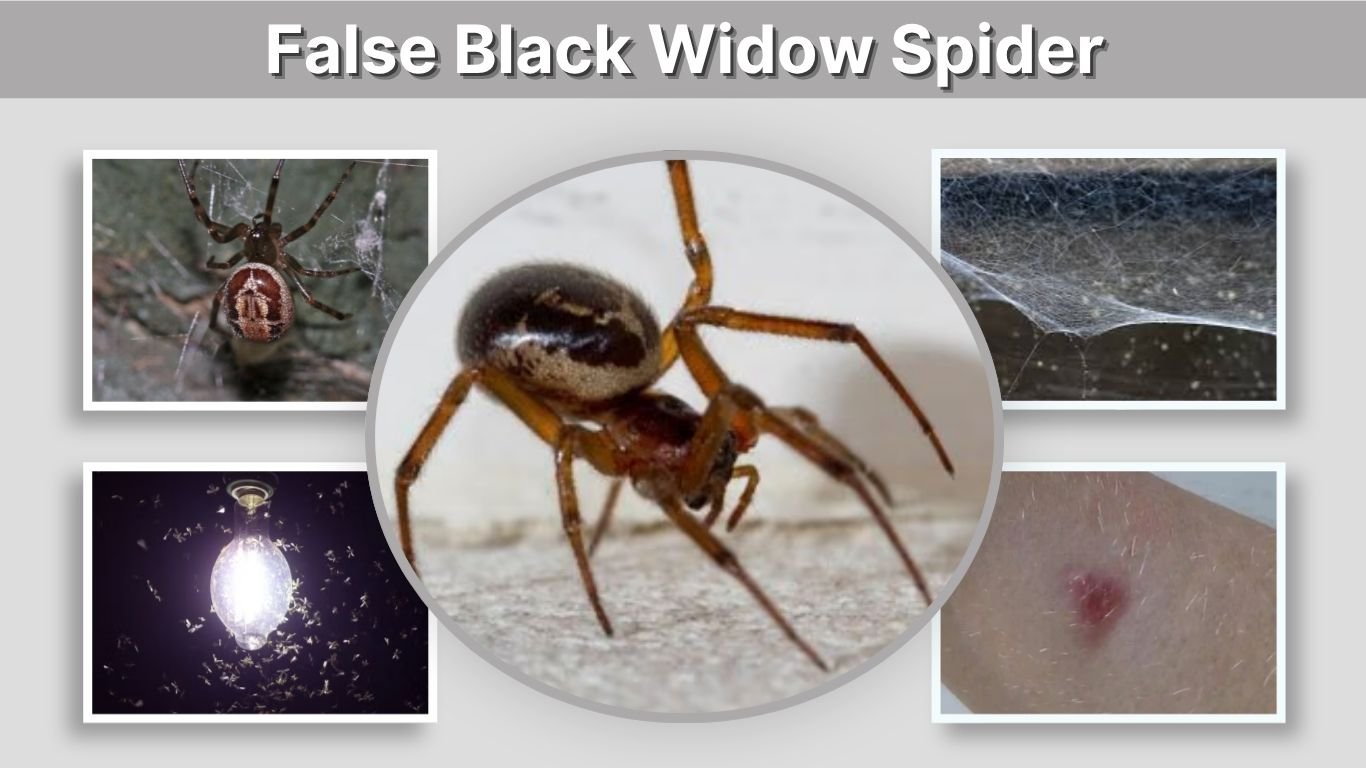
The false black widow spider is often mistaken for the more dangerous black widow because of its dark, rounded body and messy cobweb. However, false widows are different spiders and are usually far less dangerous to people. This guide explains how to identify a false black widow spider, what its bite may look like, where it lives, and how it compares with a true black widow.
What Is a False Black Widow Spider?
A false black widow spider is a common name used for several spiders in the genus Steatoda. These spiders are called “false widows” because they can look similar to true widow spiders, including black widows. They may have dark bodies, rounded abdomens, and irregular webs in corners, sheds, garages, and outdoor structures.
The term “false black widow spider” is often used for Steatoda grossa, but people also use it for other false widow species, including the noble false widow spider. These spiders are found in many parts of the world and are especially well known in the UK, Ireland, parts of Europe, North America, and other regions.
False black widow spiders are venomous, but that does not mean they are highly dangerous. Their venom can cause pain and irritation, but they are not considered as medically serious as true black widows.
What Does a False Black Widow Spider Look Like?
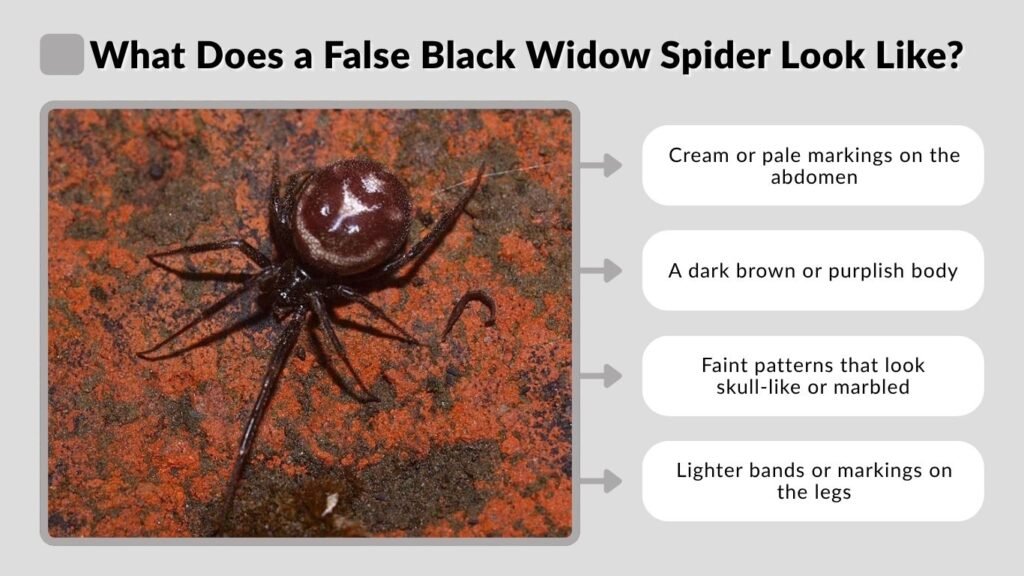
A false black widow spider usually has a dark brown, purplish-brown, or almost black body. Its abdomen is rounded and shiny, which is why many people confuse it with a black widow. However, it usually does not have the bright red hourglass marking found on a true black widow.
False widow markings can vary. Some have pale, cream, tan, or grayish patterns on the abdomen. Others may look plain and dark. The body can appear glossy under light, and the legs are usually medium to dark brown.
Common False Black Widow Spider Markings
False black widow spider markings are not always obvious. Depending on the species, age, and lighting, you may notice:
- cream or pale markings on the abdomen
- a dark brown or purplish body
- a shiny rounded abdomen
- faint patterns that look skull-like or marbled
- lighter bands or markings on the legs
- no red hourglass underneath
The lack of a clear red hourglass is one of the biggest clues that the spider may be a false widow rather than a true black widow.
False Black Widow Spider Size
A false black widow spider is usually small to medium-sized. The body is often around the size of a small pea, though females are larger than males. With legs included, the spider may look more noticeable, especially when sitting in a web.
Female false widows usually have a larger, rounder abdomen. Male false widows are smaller and slimmer, with longer-looking legs. Juvenile false widow spiders may be lighter in color and harder to identify.
How Big Is a False Black Widow Spider?
Most false widow spiders are not huge. They may look larger because of their long legs and rounded abdomen, but the actual body is fairly small. In homes, people often notice them because they stay in webs near windows, corners, sheds, garages, or outdoor walls.
If you see a dark spider with a round body and tangled web, size alone is not enough for identification. Look at the markings, body shape, web type, and location.
False Widow Spider vs Black Widow
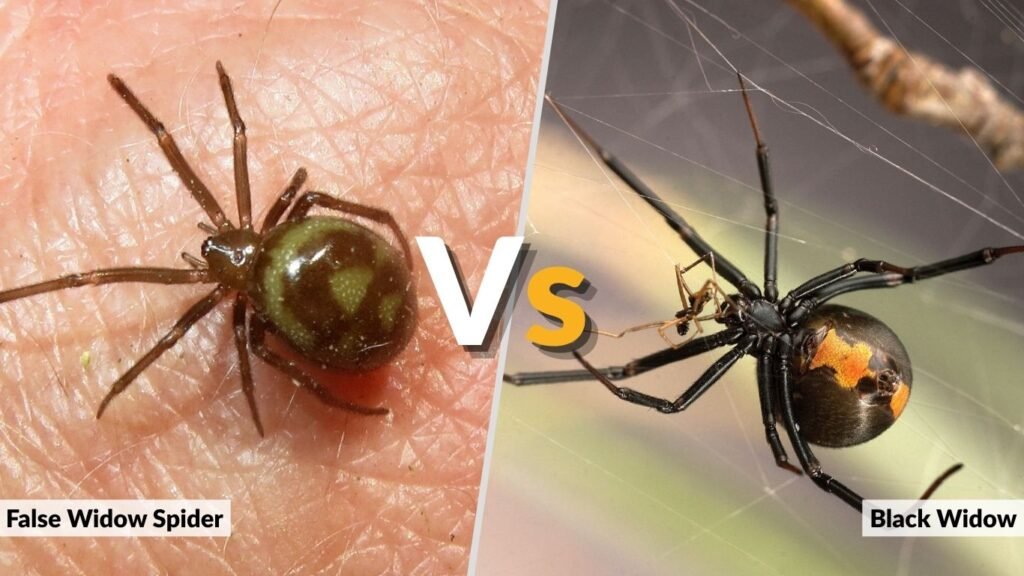
The difference between a false widow spider and a black widow is important because true black widows are more medically significant. False widows can bite, but their bites are usually much less severe.
| Feature | False Black Widow Spider | True Black Widow Spider |
| Genus | Steatoda | Latrodectus |
| Body color | Brown, purplish, or dark glossy | Usually shiny black |
| Main marking | Pale or faint abdominal pattern | Red hourglass or red markings |
| Bite risk | Usually mild to moderate | Can be medically serious |
| Web | Messy cobweb | Messy, strong cobweb |
| Common confusion | Often mistaken for black widow | Often feared because of venom |
Main Visual Difference
The most useful visual difference is the underside marking. A true black widow often has a red hourglass or red mark on the underside of the abdomen. A false widow usually does not have this clear red hourglass.
False widows may have pale markings on the top of the abdomen instead. Some markings can look like a skull, shield, or marbled pattern, especially in noble false widow spiders.
Which One Is More Dangerous?
The true black widow is more dangerous. A black widow bite can cause stronger symptoms, including intense pain, muscle cramps, sweating, nausea, and other systemic effects. A false widow bite can still hurt, but it is usually less severe.
That said, any bite can become worse if the person has an allergic reaction or if the wound becomes infected. If symptoms spread, worsen, or feel severe, medical advice is important.
False Black Widow Spider Bite
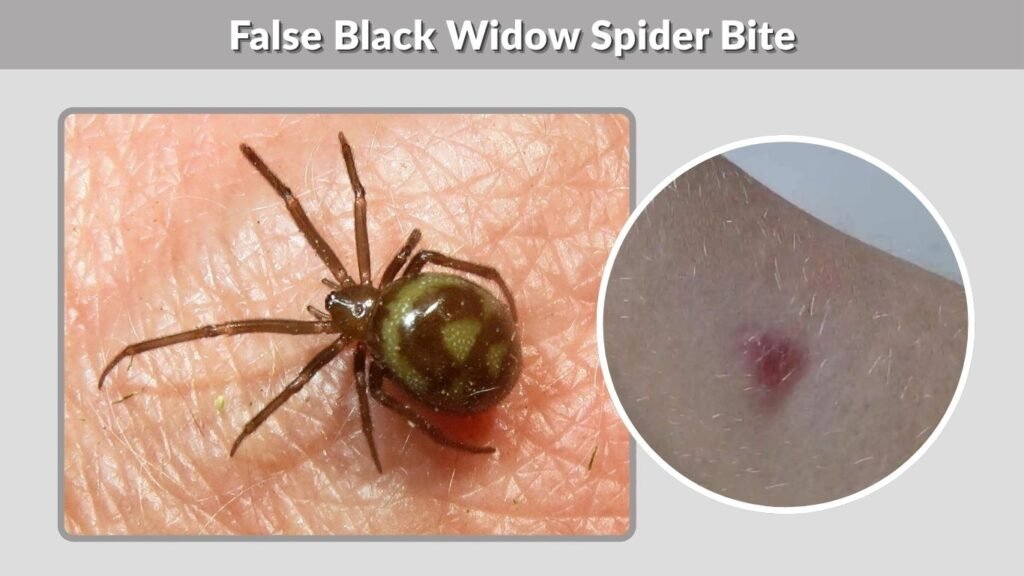
A false black widow spider bite may cause local pain, redness, swelling, and irritation. Some people describe the bite as similar to a bee sting. In less common cases, symptoms may include blistering, headache, nausea, tiredness, or discomfort that lasts for a day or more.
False widow spiders do not usually bite unless they are trapped against the skin or disturbed. Most bites happen by accident, such as when someone puts on clothing, handles stored items, cleans a shed, or presses against a webbed area.
False Black Widow Spider Bite Symptoms
Possible false widow spider bite symptoms include:
- sharp or stinging pain
- redness around the bite
- swelling
- itching or irritation
- warmth around the area
- mild blistering
- headache or tiredness
- mild nausea in some cases
Most symptoms are local and improve with basic care. However, symptoms can vary depending on the person, the bite location, and whether the bite becomes infected.
What Does a False Black Widow Spider Bite Look Like?
A false black widow spider bite may look like a small red bump at first. It can become swollen, tender, or itchy. Sometimes, the area may form a small blister or irritated patch.
However, many skin problems are wrongly blamed on spider bites. Pimples, infected hair follicles, allergic reactions, insect bites, and skin infections can look similar. Unless the spider is seen biting, identification is often uncertain.
False Black Widow Spider Bite Treatment
For a mild suspected bite, basic first aid may help:
- wash the area with soap and water
- apply a cold compress
- avoid scratching the bite
- keep the area clean
- use over-the-counter pain relief if appropriate
- watch for spreading redness or worsening pain
Seek medical help if pain becomes severe, swelling spreads, the bite looks infected, or symptoms include fever, dizziness, breathing trouble, or a strong allergic reaction.
Is a False Black Widow Spider Dangerous?
A false black widow spider can be unpleasant if it bites, but it is not usually considered highly dangerous. It does not seek out people and is not aggressive. Most false widow spiders prefer to hide in webs and avoid disturbance.
The danger is greater for people who are sensitive to bites, have allergies, or develop secondary infection from scratching or poor wound care. Children, older adults, and people with health concerns should be more cautious.
Can a False Black Widow Spider Kill You?
False widow spider bites are not generally considered deadly. Reports of severe reactions often involve infection, allergic response, or uncertain spider identification. A bite should still be taken seriously if symptoms worsen, but panic is usually unnecessary.
If someone has severe symptoms after any suspected spider bite, they should contact a medical professional or emergency service.
False Black Widow Spider Web
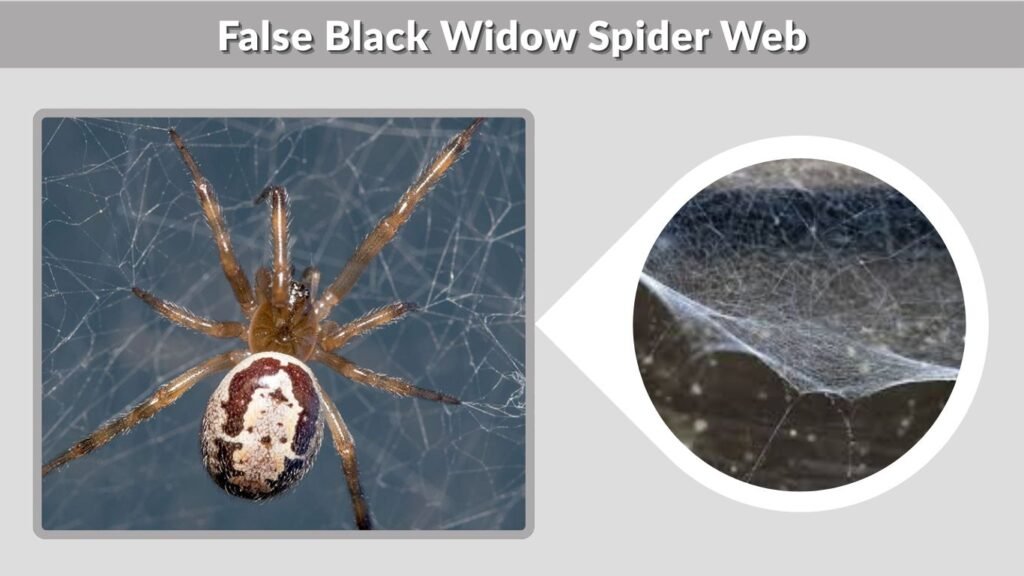
A false black widow spider web is usually messy, tangled, and irregular. It may look like a loose cobweb rather than a neat circular web. These spiders often build webs in protected areas where insects are likely to get trapped.
Common web locations include:
- window frames
- sheds
- garages
- fences
- outdoor furniture
- under ledges
- cluttered storage areas
- corners of rooms
- wall cracks and gaps
The web can help with identification because false widows belong to the cobweb spider family. If the spider is in a messy corner web and has a dark rounded body, it may be a false widow.
False Black Widow Spider Eggs and Egg Sac
False widow spider egg sacs are usually small, pale, round, and silk-covered. They may be found near the female’s web. A female may guard the egg sac, so it is best not to touch it directly.
If you find multiple egg sacs in a shed, garage, or home, it may indicate a growing spider population. Removing clutter and vacuuming carefully can help reduce hiding places.
Baby False Black Widow Spiders
Baby false widow spiders, or spiderlings, are tiny and may look lighter than adults. They can disperse from the egg sac and spread into nearby hiding places. Because they are so small, they are difficult to identify without magnification.
Juvenile spiders are often confused with other household spiders, so it is better to identify the adult female if possible.
Male and Female False Black Widow Spiders
Female false black widow spiders are usually larger and rounder than males. They are the ones most often noticed in webs. Males are smaller, slimmer, and may wander more while searching for females.
Female False Black Widow Spider
The female has a rounded abdomen and is usually darker. She spends more time in her web and may be found near egg sacs. If a bite happens, it is more likely to come from a female than a male.
Male False Black Widow Spider
The male false black widow spider is smaller and less robust. He may have longer-looking legs and a slimmer body. People often find males indoors when they wander during mating season.
False Black Widow Spider in the UK
The false black widow spider is especially well known in the UK, where the noble false widow often appears in news stories. It is found in homes, gardens, sheds, garages, schools, and other buildings.
In the UK, false widow spiders may be seen indoors year-round, but people often notice them more in cooler months when spiders are more visible inside buildings. Most encounters do not lead to bites.
False Black Widow Spider in Ireland
False widow spiders are also found in Ireland. Similar to the UK, they may appear around homes and outdoor structures. Public concern is often higher than the actual risk, but people should still avoid handling unknown spiders.
False Black Widow Spider in Australia and New Zealand
False widow spiders may also be discussed in Australia and New Zealand because of confusion with other venomous spiders. In these regions, spider identification can be more complicated because there are several native and introduced species that may look similar.
False Black Widow Spider in the United States
False black widow spiders are found in parts of the United States, including states such as California, Oregon, Washington, Ohio, Texas, Florida, and others. Search interest often includes location-based phrases because people want to know whether the spider is present in their area.
False Black Widow Spider in California
California has several spiders that may be confused with false widows or true black widows. Because black widows are also found in California, careful identification is important.
False Black Widow Spider in Oregon and Washington
False widows can be found in the Pacific Northwest. They may live in homes, garages, and outdoor structures. People often notice them in cluttered or sheltered spaces.
False Black Widow Spider in Ohio and Other States
False widow spiders may appear in homes and buildings in several states. However, many dark household spiders are misidentified, so clear photos and expert confirmation are helpful.
False Black Widow Spider in the House
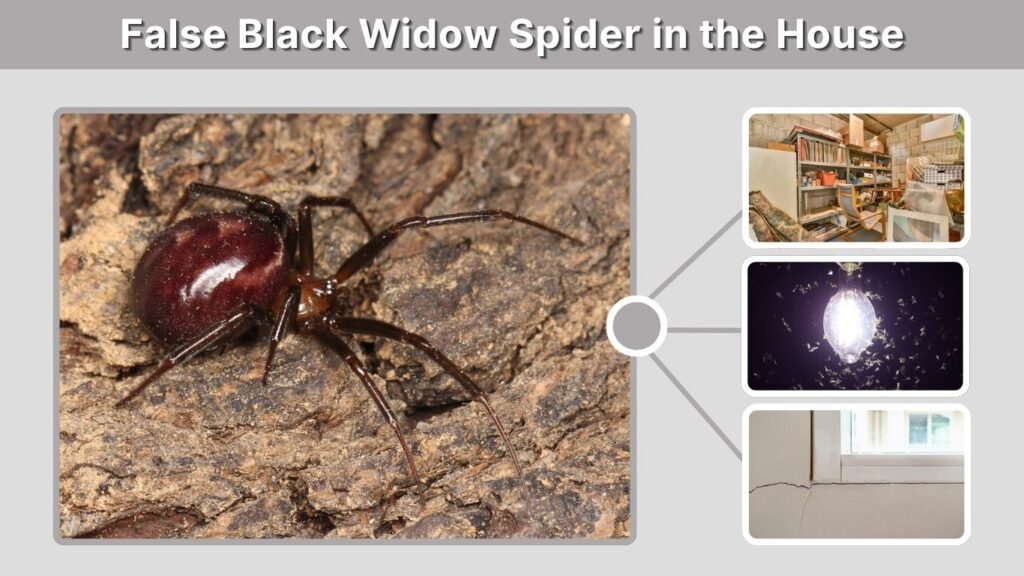
Finding a false black widow spider in the house does not always mean there is an infestation. One spider may have wandered inside or found a suitable corner. However, multiple spiders, webs, and egg sacs may suggest a larger problem.
What Attracts False Widow Spiders?
False widows are attracted to quiet places with shelter and insects. They may live where flies, ants, small beetles, or other prey are available.
Common attractants include:
- cluttered storage
- gaps around windows
- outdoor lights that attract insects
- sheds and garages
- undisturbed corners
- piles of boxes or firewood
How to Prevent False Widow Spiders
To reduce false widow spiders around your home:
- seal cracks and gaps
- clear clutter in garages and sheds
- vacuum webs and egg sacs carefully
- wear gloves when moving stored items
- reduce insect activity around lights
- shake out shoes and gloves before use
- keep firewood away from the house
- check outdoor furniture before sitting
If you are uncomfortable dealing with spiders or find many of them, contact a pest control professional.
False Black Widow Spider Look-Alikes
Many spiders can look like false widows. Common look-alikes include true black widows, common house spiders, cupboard spiders, brown cobweb spiders, and other Steatoda species.
Because spider markings vary, online photos can be confusing. Lighting, age, sex, and camera angle can all change how the spider appears.
How to Identify One More Safely
To identify a suspected false black widow spider, look for:
- rounded glossy abdomen
- dark brown or purplish color
- pale markings instead of a red hourglass
- messy cobweb
- location in a protected corner
- small to medium body size
Do not handle the spider. Take a clear photo from a safe distance and compare it with trusted identification resources.
FAQs
What is a false black widow spider?
A false black widow spider is a spider from the genus Steatoda. It gets its name because it can resemble a true black widow. It usually has a dark, rounded body and messy web, but it lacks the clear red hourglass marking of a true black widow.
Is a false black widow spider poisonous?
A false black widow spider is venomous, not poisonous. It can inject venom through a bite, but its bite is usually much less severe than a true black widow bite. Most bites cause local pain, redness, swelling, or irritation rather than serious illness.
What does a false black widow spider bite look like?
A false black widow spider bite may look like a small red, swollen, or tender bump. Some bites may blister or become irritated. However, many skin problems are mistaken for spider bites, so it is hard to confirm unless the spider was seen biting.
How do you identify a false black widow spider?
Look for a dark brown or purplish glossy body, rounded abdomen, pale or cream markings, and a messy cobweb. Unlike a true black widow, a false widow usually does not have a bright red hourglass on the underside of the abdomen.
What is the difference between a black widow and a false widow?
A black widow belongs to the genus Latrodectus, while a false widow belongs to Steatoda. Black widows are usually more dangerous and often have a red hourglass marking. False widows are usually brownish or dark with pale markings and less severe bites.
