
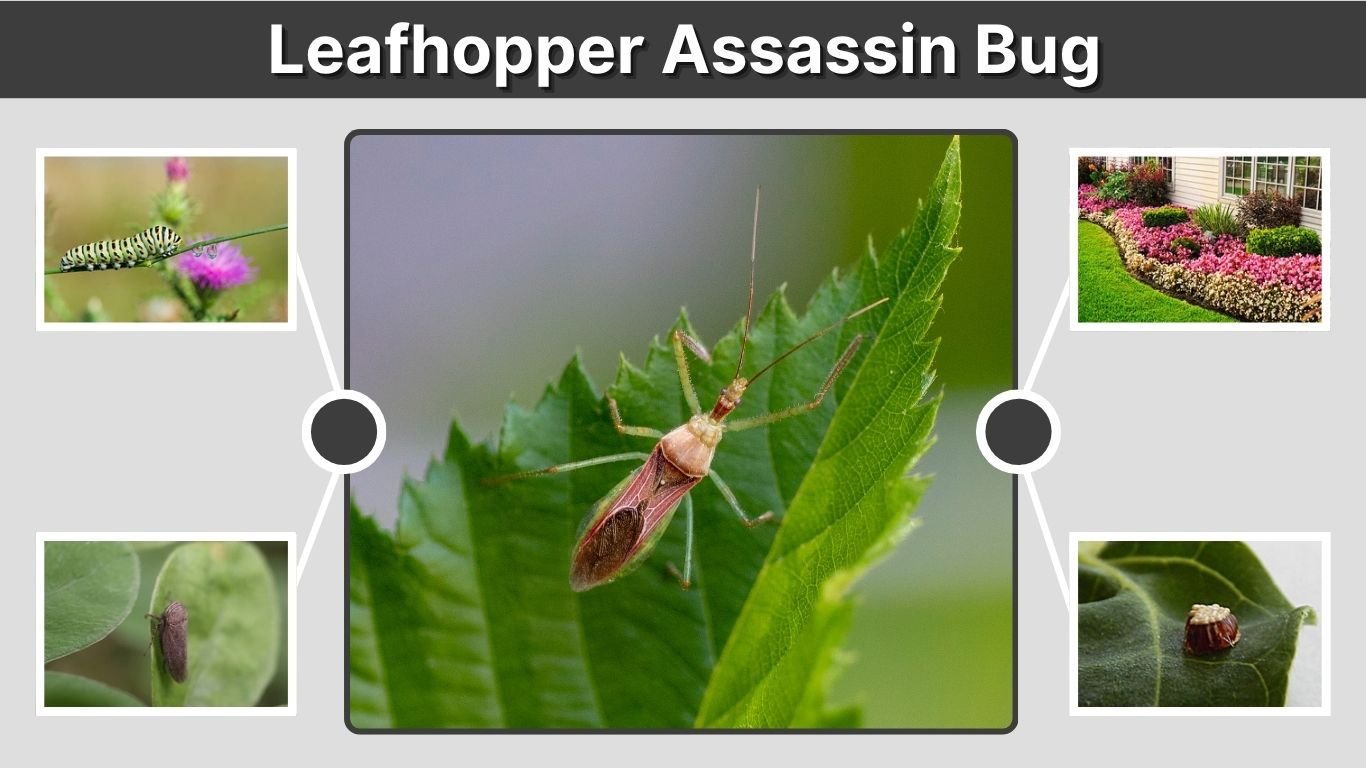
The leafhopper assassin bug is a slender predatory insect commonly found hunting on flowers, shrubs, trees and crop plants. Rather than damaging vegetation, it captures leafhoppers, aphids, caterpillars and other insects with sticky front legs and a sharp, piercing beak. Its scientific name is Zelus renardii. Although it is generally helpful in gardens, adults and nymphs can deliver a painful defensive bite when handled or trapped against the skin.
What Is a Leafhopper Assassin Bug?
The leafhopper assassin bug belongs to the assassin bug family Reduviidae and the genus Zelus. It is a true bug, meaning it has piercing-and-sucking mouthparts rather than chewing jaws.
Its common name refers to leafhoppers being among its prey. However, it is not limited to eating leafhoppers and will attack many insects it can overpower. Zelus renardii is a general predator rather than a plant-feeding pest.
| Feature | Description |
| Scientific name | Zelus renardii |
| Family | Reduviidae |
| Typical size | About ½ inch, or roughly 12 mm |
| Color | Brown, reddish, tan or yellowish green |
| Diet | Leafhoppers, aphids, caterpillars and other insects |
| Habitat | Gardens, crops, trees, shrubs and flowering plants |
| Life stages | Egg, five nymph stages and adult |
| Garden role | Generalist insect predator |
| Human risk | Painful defensive bite |
Leafhopper Assassin Bug Identification
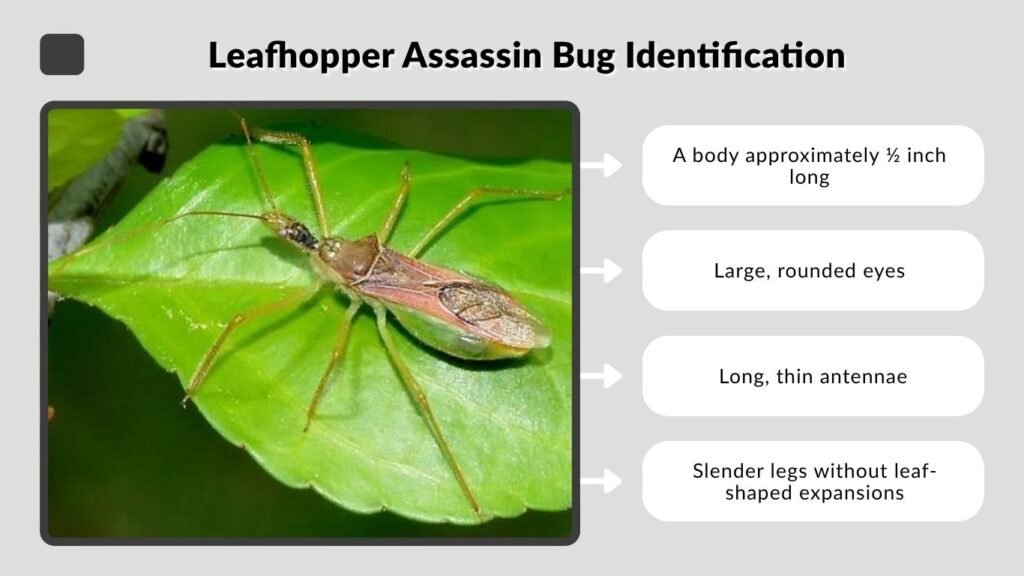
This insect has a narrow body, long legs and an elongated head. Its appearance can vary, so body shape is often more useful for identification than color alone.
Adult Identification
An adult leafhopper assassin bug usually has:
- A body approximately ½ inch long
- A narrow head with a neck-like section behind it
- Large, rounded eyes
- Long, thin antennae
- Slender legs without leaf-shaped expansions
- Brown, reddish brown, tan or greenish coloring
- Wings folded flat across the abdomen
- A strong, curved beak carried beneath the body
The front legs are coated with a sticky secretion used to catch and hold prey. Unlike some spined assassin bugs, the front legs of Zelus renardii do not have prominent grasping spines.
Leafhopper Assassin Bug Size
Adults are commonly around 12 mm, or slightly under ½ inch, in body length. Their long legs and antennae may make them look larger.
The species is relatively slim compared with broad, shield-shaped stink bugs. Its abdomen is nearly parallel-sided rather than dramatically widened toward the rear.
Color Variations
Leafhopper assassin bugs may appear:
- Reddish brown
- Yellowish brown
- Tan
- Gray-brown
- Yellow-green
- Greenish with red or brown markings
Young nymphs are often more brightly colored than adults. They may display orange, red, yellow or green areas along with patterned legs and antennae.
Leafhopper Assassin Bug Nymph
A nymph is an immature, wingless stage. It resembles a smaller, narrower adult but has no fully developed wings. Older nymphs develop visible wing pads that partially cover the upper abdomen.
Nymphs commonly have:
- Long, pale or patterned legs
- A narrow orange, green or yellowish body
- Dark abdominal markings
- Long antennae
- A pointed head
- A curved piercing beak
- No functional wings
Young Zelus nymphs can be mistaken for leaf-footed bug nymphs. However, leaf-footed bug nymphs typically have darker antennae and legs, while Zelus nymphs generally have paler limbs. Older leaf-footed bugs also develop flattened, leaf-like expansions on their hind legs.
Both young and older nymphs are active predators. Their sticky front legs are especially useful for catching tiny flies and other small prey.
Leafhopper Assassin Bug Eggs
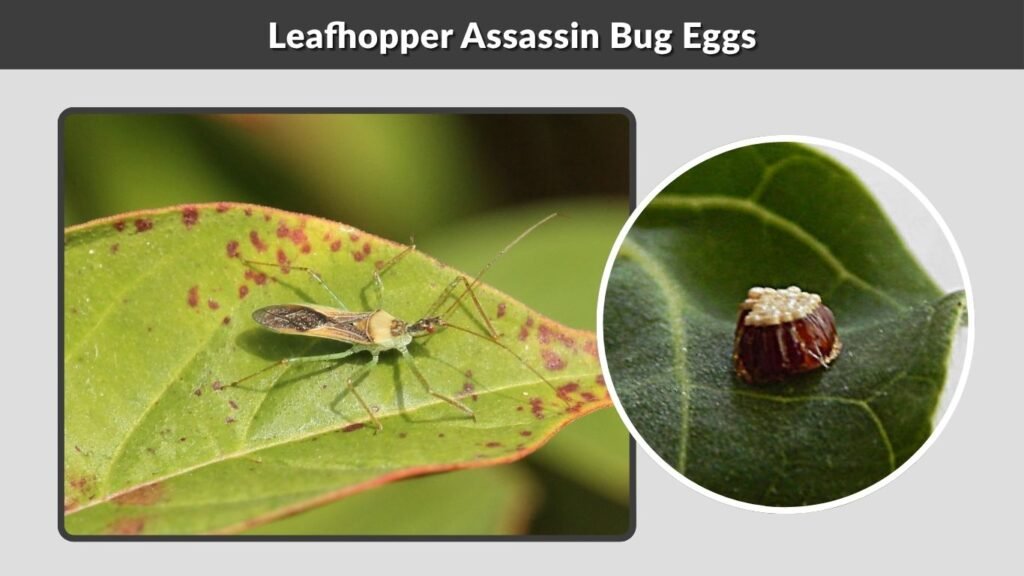
Females lay groups of cylindrical or oblong eggs attached firmly to plant surfaces. The eggs are generally dark brown with pale or white caps and are held together by a sticky material.
Egg masses may be found on:
- Leaves
- Twigs
- Fruit surfaces
- Plant stems
- Garden structures near vegetation
The tightly grouped eggs can resemble a miniature cluster of upright barrels or bottles. Newly hatched nymphs may remain near the empty egg case temporarily before dispersing to hunt.
Leafhopper Assassin Bug Habitat and Distribution
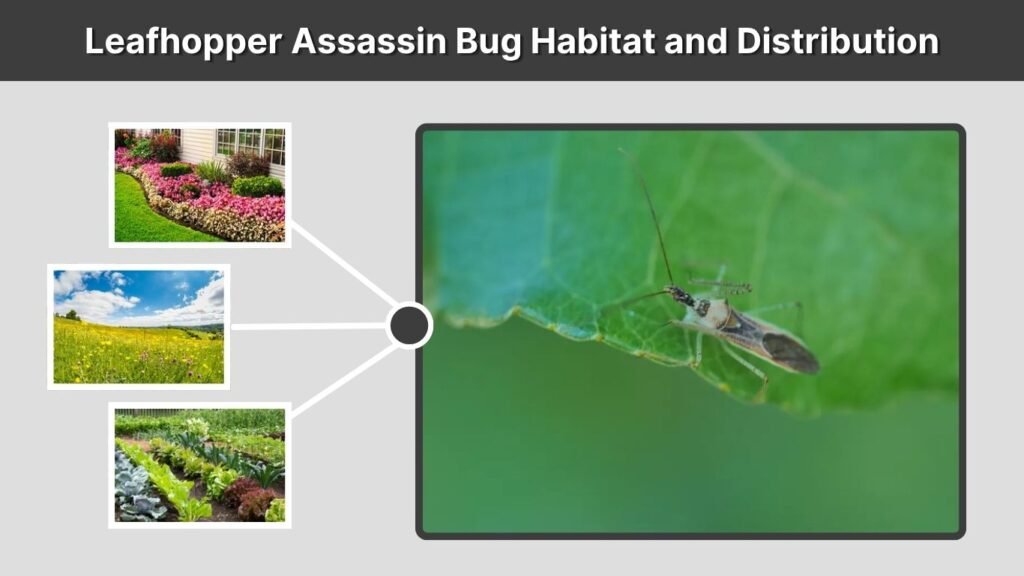
Leafhopper assassin bugs live mainly on vegetation where insect prey is abundant. They may be found on cultivated and wild plants, including trees, flowers, vegetables and agricultural crops.
Common Habitats
Look for them in:
- Flower gardens
- Vegetable gardens
- Orchards
- Cotton fields
- Shrubs and hedges
- Meadows
- Woodland edges
- Trees infested with aphids or caterpillars
They may stalk prey across leaves or wait motionless near flowers where visiting insects are likely to appear. Observations in California have recorded them on plants such as nectarine trees, cosmos, passionflower vines and sage.
Leafhopper Assassin Bug in California
Zelus renardii is common throughout California and occurs widely across the Western Hemisphere. It has been documented in gardens, arboretums, wetlands and other planted or natural areas throughout Southern California.
Its variable coloring may help it blend into dry vegetation, green leaves and flower stems.
Leafhopper Assassin Bug in the House
One found inside is generally an accidental visitor. It does not normally infest stored food, furniture, clothing or wooden structures.
Adults may enter through an open door, damaged screen or gap around a window. Some Zelus assassin bugs also seek sheltered places during cooler weather. Cover the insect with a container, slide paper underneath and release it outdoors without touching it.
What Do Leafhopper Assassin Bugs Eat?
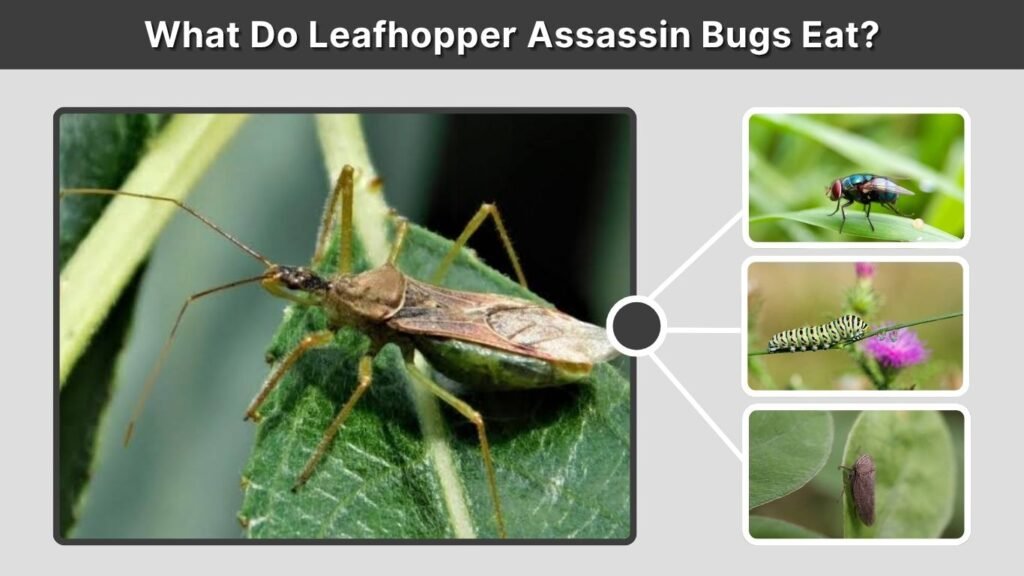
Leafhopper assassin bugs feed on small and medium-sized insects and other invertebrates. Their prey may include:
- Leafhoppers
- Aphids
- Small flies
- Caterpillars
- Insect eggs
- Beetle larvae
- Fleahoppers
- Plant bugs
- Boll weevils
- Other true bugs
They may also capture beneficial insects such as bees, lacewings and lady beetles. Therefore, they are useful predators but do not distinguish between garden pests and desirable insects.
How They Catch Their Prey
The leafhopper assassin bug coats its front legs with a glue-like material produced by specialized glands. When another insect touches the sticky surface, the assassin bug grips it and inserts its rostrum.
Saliva injected through the beak immobilizes the prey and begins breaking down its tissues. The predator then draws out the liquefied contents.
Leafhopper Assassin Bug Life Cycle
The species undergoes incomplete metamorphosis, so there is no caterpillar or pupal stage.
- Egg: Females deposit grouped eggs on plants.
- Nymph: The young hatch as small, wingless predators.
- Five instars: Nymphs molt five times while growing larger.
- Adult: The final molt produces a fully winged insect.
Development from nymph to adult may take about two months under suitable conditions. Assassin bugs commonly produce one or two generations annually, although temperature and location influence their timing.
Do Leafhopper Assassin Bugs Bite Humans?
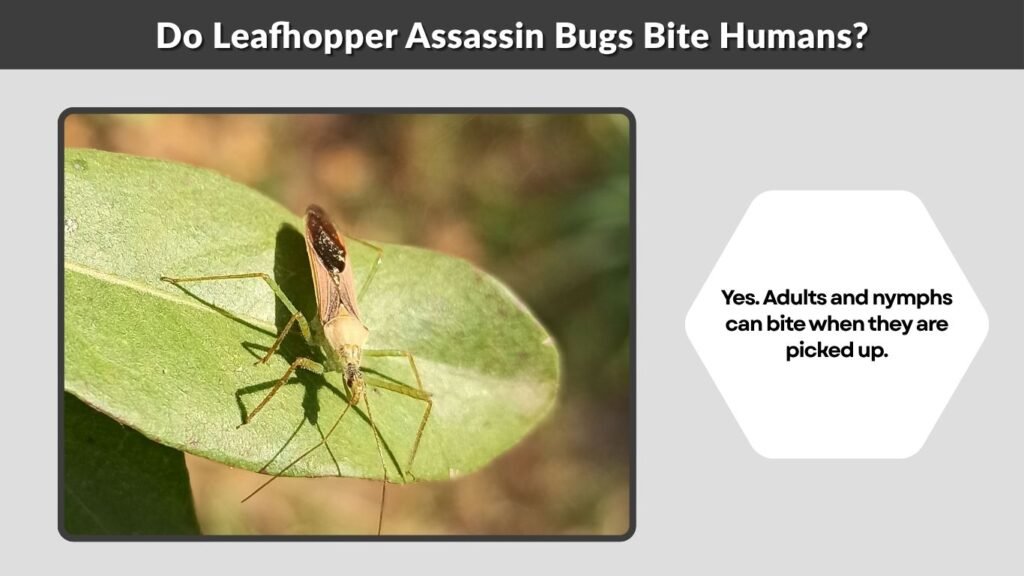
Yes. Adults and nymphs can bite when they are picked up, squeezed or trapped between clothing and skin. They do not normally pursue humans and do not feed on human blood.
A bite may cause:
- Immediate sharp or burning pain
- A small puncture mark
- Local redness
- Swelling
- Tenderness
- Itching or temporary numbness
The pain from some assassin bug bites may equal or exceed that of a bee or wasp sting. Reactions vary, and the skin mark alone usually cannot confirm which insect caused it.
Leafhopper Assassin Bug Bite Treatment
Wash the area thoroughly with soap and water. Apply a cold compress wrapped in cloth for short intervals to help reduce pain and swelling. Avoid scratching, cutting or squeezing the wound.
Seek urgent medical help for breathing difficulty, facial or throat swelling, faintness or widespread hives. Contact a healthcare professional when pain or redness continues worsening, pus develops or other signs of infection appear.
Does It Carry Chagas Disease?
The leafhopper assassin bug is not a blood-feeding kissing bug and is not considered a vector of Chagas disease. Zelus renardii hunts insects during the day, while kissing bugs belonging to the blood-feeding subfamily Triatominae.
Chagas disease transmission is linked to infected triatomine droppings entering broken skin, the eyes or the mouth. Ordinary predatory Zelus assassin bugs are not involved in this transmission cycle.
Is the Leafhopper Assassin Bug Good or Bad?
It is generally helpful because it consumes aphids, leafhoppers, caterpillars and other plant pests. It does not normally eat or damage plants.
However, it is an opportunistic predator and may also catch pollinators and other beneficial insects. A few individuals in a garden rarely require control. Avoid handling them, but allow them to remain outdoors unless they are threatening protected caterpillars or other insects you are intentionally raising.
FAQs
Are leafhopper assassin bugs dangerous?
They are not aggressive toward humans, but they can deliver a painful defensive bite. Avoid picking them up or pressing them against the skin. Most encounters do not result in injury.
Are leafhopper assassin bugs poisonous?
They are not poisonous to touch and have no stinger. Their beak introduces saliva during a defensive bite, which can cause pain, redness and localized swelling.
Can leafhopper assassin bug nymphs bite?
Yes. Nymphs have fully functional piercing mouthparts and can bite when handled. Their lack of wings does not prevent them from defending themselves.
Do leafhopper assassin bugs fly?
Adults have wings and can fly, although they often remain on vegetation and move by walking. Nymphs cannot fly because their wings are not yet developed.
Should I remove a leafhopper assassin bug?
Outdoor removal is usually unnecessary because it hunts plant pests. For one found inside, use a cup and paper to move it outdoors without touching it directly.
