
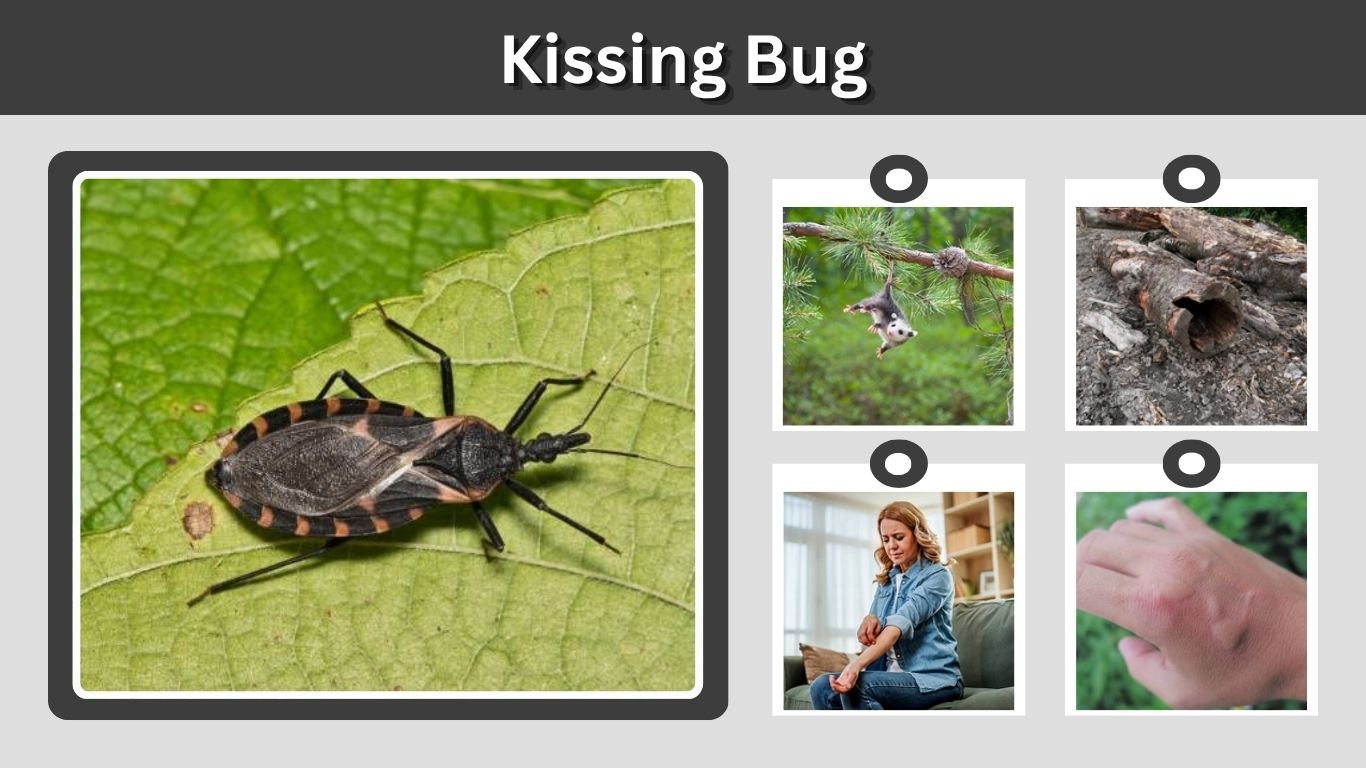
Kissing bugs are blood-feeding insects recognized by their narrow heads, long legs, dark bodies, and colored markings along the abdomen. They usually live outdoors near wild or domestic animals, but adults may enter homes through gaps around doors, windows, and screens. Correct identification is important because kissing bugs can carry the parasite associated with Chagas disease. However, several harmless or less medically significant insects closely resemble them. This guide explains kissing bug size, color, habitat, diet, life cycle, bite risks, and the visual features needed for accurate identification.
What Is a Kissing Bug?
A kissing bug is a member of the triatomine group within the assassin bug family. Other names include triatomine bug, conenose bug, and bloodsucking conenose. The name “kissing bug” comes from its tendency to bite exposed skin, sometimes around a sleeping person’s mouth or face.
Unlike predatory assassin bugs that eat insects, kissing bugs feed on the blood of mammals, birds, reptiles, and occasionally humans. They are primarily active from dusk through the night.
Kissing Bug Identification
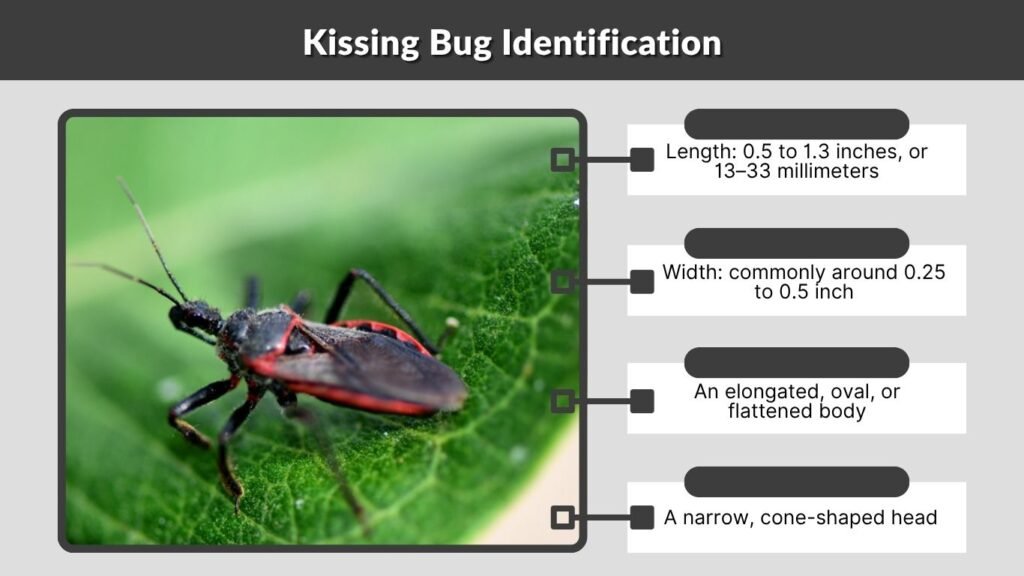
Kissing bug appearance varies among species, so color alone is not enough for identification. Look at the insect’s size, head, legs, abdomen, wings, and markings together.
Kissing Bug Size
Adult kissing bugs are relatively large compared with bed bugs and many other household insects. Most adults measure approximately:
- Length: 0.5 to 1.3 inches, or 13–33 millimeters
- Width: commonly around 0.25 to 0.5 inch
- Nymphs: smaller than adults, depending on their developmental stage
Some species, such as Triatoma protracta, may be only 0.5–0.9 inch long. Larger species, including Triatoma recurva, can reach approximately 1–1.3 inches. An adult may appear similar in length to or slightly longer than a U.S. penny.
What Color Is a Kissing Bug?
Most kissing bugs in the United States are primarily:
- Black
- Dark brown
- Reddish brown
Red, orange, pale yellow, or cream-colored markings commonly appear along the exposed edges of the abdomen. These markings may form separate spots, narrow bars, or continuous bands. The wings are usually dark brown or black and lie flat across the back.
The exact pattern depends on the species. For example, Triatoma rubida may have a pale abdominal margin, while Triatoma gerstaeckeri has yellow markings along its abdominal segments.
Body Shape and Head
A true kissing bug generally has:
- An elongated, oval, or flattened body
- A narrow, cone-shaped head
- Prominent eyes on the sides of the head
- Long, thin antennae
- Six relatively slender legs
- A pointed, folded mouthpart beneath the head
- Wings covering most of an adult’s back
The head is narrower than the thorax and extends forward noticeably. The abdomen may become wide and swollen after the insect consumes a blood meal.
Kissing Bug Pictures: What to Look For
When examining kissing bug pictures, first locate the long head between the eyes and the tip of the thorax. Next, look for contrasting colored markings around the abdomen’s outer edge.
Adult Kissing Bug
Adults have fully developed wings that overlap across the back. Their heads are long and narrow, while the legs and antennae appear thin. Adults can fly and are sometimes attracted to outdoor lights after dark.
Baby Kissing Bug or Nymph
A kissing bug nymph resembles a smaller, wingless adult. It has the same narrow head and blood-feeding mouthpart but lacks complete wings. Its abdomen may look rounded, segmented, and swollen after feeding.
Kissing bugs pass through five nymphal stages. Each stage requires a blood meal before the bug can develop further.
Kissing Bug Eggs
The eggs are small, oval or barrel-shaped, and usually pale when first laid. They may become pinkish, tan, or darker as they develop. Females generally lay eggs in protected areas such as rodent nests, animal shelters, cracks, or accumulated debris.
Kissing Bug vs. Look-Alike Bugs
Several insects are regularly mistaken for kissing bugs.
| Look-alike | Main difference |
| Wheel bug | Has a raised, gear-shaped structure on its back |
| Leaf-footed bug | Often has widened, leaf-shaped sections on its hind legs |
| Western conifer seed bug | Usually has wide hind legs and a pale zigzag line across its wings |
| Boxelder bug | Smaller, with thin red lines rather than abdominal side bands |
| Milkweed bug | Usually brighter orange and black with a shorter, less cone-shaped head |
| Masked hunter | Dark colored but lacks the typical colored abdominal border |
Spikes on the back or broad, flattened hind legs strongly suggest that the insect is not a kissing bug.
Where Do Kissing Bugs Live?
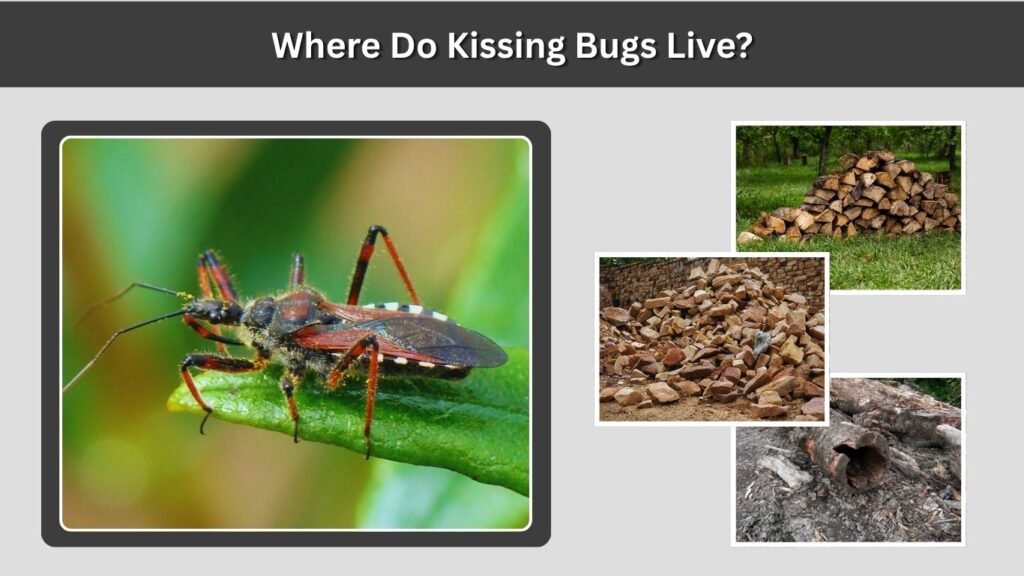
Kissing bugs are most strongly associated with warm regions of the Americas. In the United States, naturally occurring species are concentrated mainly in southern and southwestern areas, although individual species have been reported across numerous states.
Outdoor Habitat
Natural kissing bug habitats include:
- Pack rat and other rodent nests
- Burrows and wildlife dens
- Rock piles
- Woodpiles
- Hollow trees
- Brush and debris piles
- Chicken coops
- Outdoor dog kennels
- Animal bedding
These locations provide darkness, shelter, and access to animals that supply blood meals.
Kissing Bugs in the House
Adult bugs may fly toward porch lights and enter through damaged screens, open doors, crawlspaces, vents, or cracks around windows. During daylight, they may hide behind furniture, inside closets, beneath mattresses, around curtains, or in other dark areas.
Finding one adult indoors does not always indicate that the insects are breeding inside the house. It may have flown in from an outdoor nest or animal shelter.
What Do Kissing Bugs Eat?
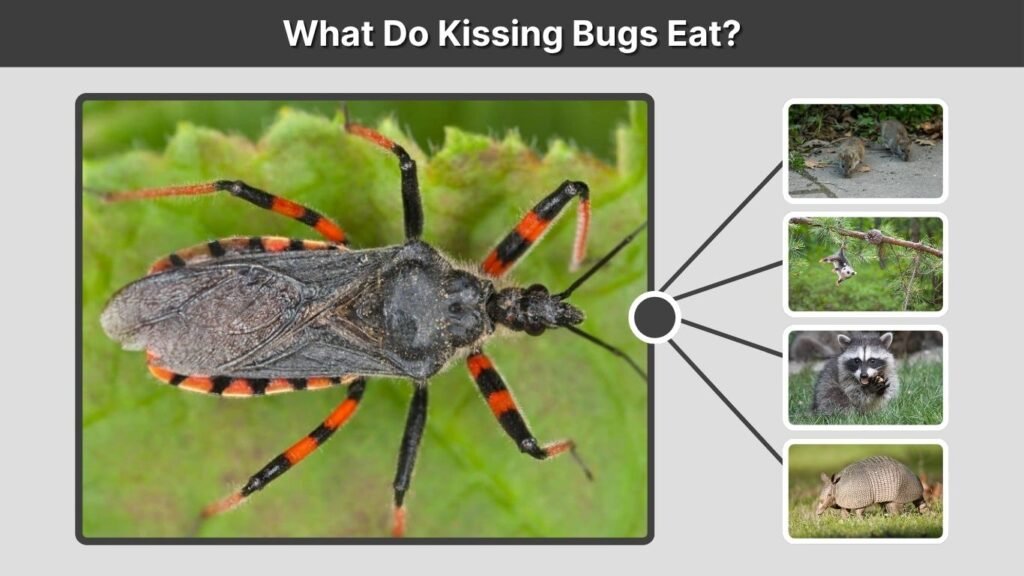
Kissing bugs feed exclusively on blood during every active life stage. Their hosts can include:
- Rodents
- Opossums
- Raccoons
- Armadillos
- Dogs
- Cats
- Birds
- Reptiles
- Humans
They normally feed at night, using heat, skin odors, and carbon dioxide from breathing to locate a host. A feeding session may last approximately 10–30 minutes. The bug’s saliva helps it feed with limited disturbance, so a sleeping person may not immediately notice the bite.
Do Kissing Bugs Bite?
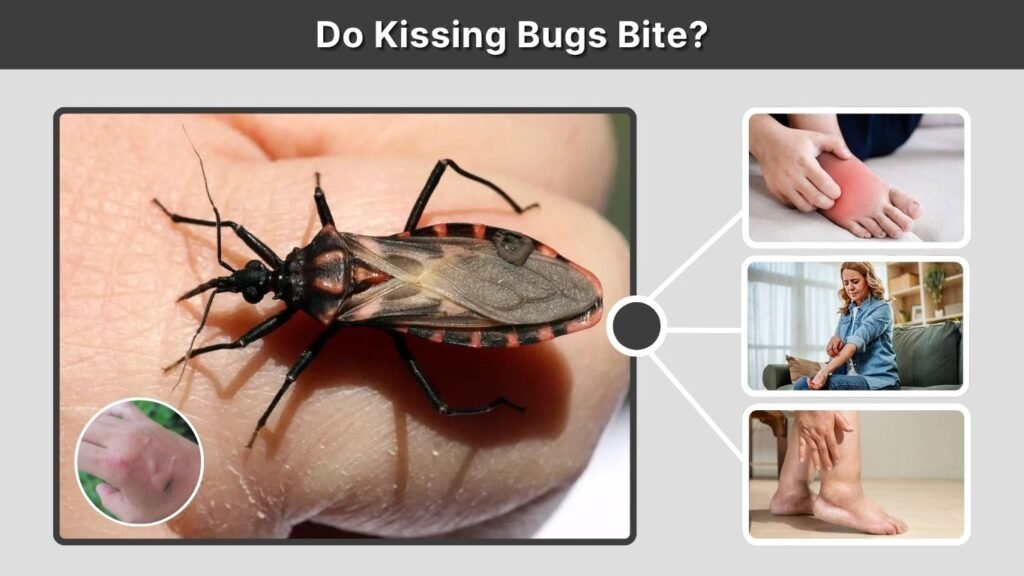
Yes. The bite itself is often initially painless but may later produce redness, itching, tenderness, swelling, or a raised welt. A bite cannot be reliably diagnosed from the skin reaction alone because mosquito, flea, and bed bug bites may look similar.
Some people can develop a serious allergic reaction, particularly after repeated exposure. Difficulty breathing, facial or throat swelling, faintness, a rapid heartbeat, or a sudden widespread rash requires emergency medical attention.
Do All Kissing Bugs Carry Chagas Disease?
No. A kissing bug must be infected with the parasite Trypanosoma cruzi to present a Chagas disease transmission risk.
The parasite is generally not injected through the bite. An infected bug may leave feces near the feeding site. Infection can occur when contaminated material is scratched into broken skin or rubbed into the eyes or mouth. Finding a kissing bug therefore does not automatically mean that a person has contracted Chagas disease.
What to Do If You Find a Kissing Bug
Do not pick up or crush a suspected kissing bug with bare hands. Use gloves, forceps, or an inverted plastic bag to place it inside a sealed container. Record where and when it was found and photograph the insect from above.
Contact a local public-health department, university extension office, or qualified insect-identification service. A medical professional should be consulted when a suspected bite causes significant symptoms or when there is concern about possible exposure.
FAQs
Can kissing bugs fly?
Adult kissing bugs have developed wings and can fly, particularly around dusk or after dark. Nymphs do not have functional wings and must crawl to reach shelter or a host.
Are kissing bugs the same as bed bugs?
No. Both insects feed on blood, but kissing bugs are much larger and have long, cone-shaped heads. Bed bugs are small, broadly oval, wingless, and commonly establish indoor infestations in mattresses and furniture.
Why are kissing bugs found near beds?
A bug that enters a home may follow body heat, odors, and exhaled carbon dioxide toward a sleeping person. After feeding, it may hide among curtains, bedding, furniture, or other dark locations near the bed.
Are kissing bugs active during the day?
They are mainly nocturnal. During daylight hours, kissing bugs generally remain hidden in nests, cracks, animal shelters, furniture, closets, or other protected locations.
Should you kill a kissing bug?
Avoid crushing it with bare hands. Safely collect it with gloves or a plastic bag and seal it in a container so an expert can identify it. This also prevents possible contact with contaminated fecal material.
