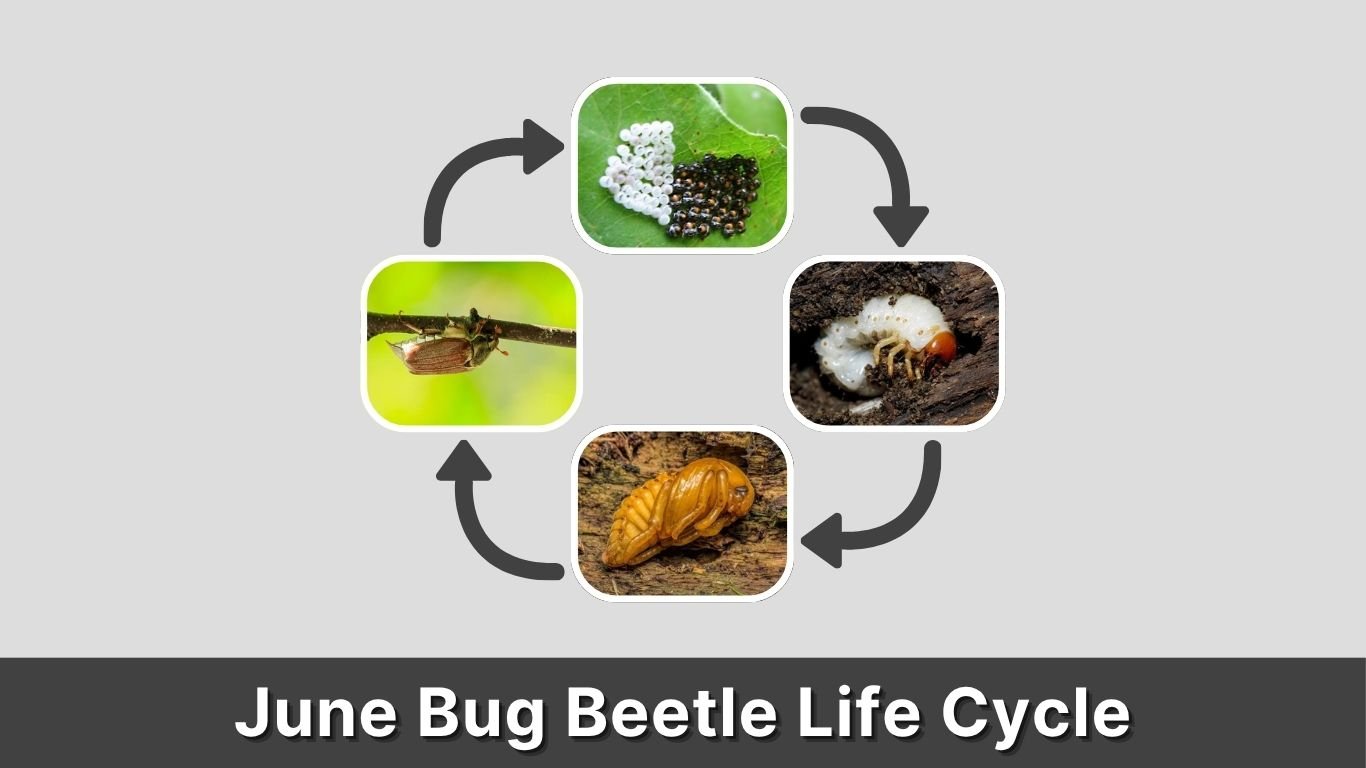
The June bug beetle life cycle is a fascinating process involving four developmental stages: egg, larva, pupa, and adult. These familiar summer insects spend much of their lives underground before emerging as flying beetles during warmer months. Depending on the species, June beetles may complete their development in one year or take several years to reach adulthood. Green June beetles, brown June beetles, and ten-lined June beetles have different developmental timelines and feeding habits. Understanding their life cycle, lifespan, reproduction, and seasonal activity helps explain their behavior and potential impact on gardens and lawns.
What Is the June Bug Beetle Life Cycle?
June beetles are scarab beetles belonging to the family Scarabaeidae. The name June bug describes several related species that commonly emerge during late spring and summer.
Like other beetles, June bugs undergo complete metamorphosis, meaning their immature stages look entirely different from adults.
Their development includes four distinct stages. Although adult beetles are visible for a relatively short period, most June beetles spend the majority of their lives underground as larvae.
Four Stages of the June Beetle Life Cycle
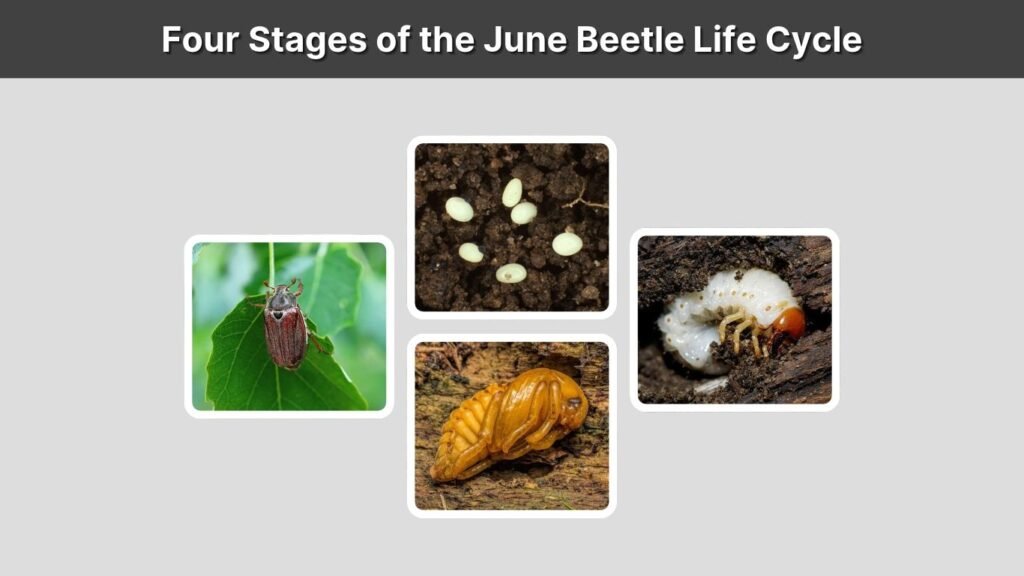
The June beetle life cycle begins when an adult female deposits eggs in suitable soil. The eggs hatch into white grubs that feed and grow underground. After completing larval development, the beetles enter a pupal stage before emerging as adults. The duration of each stage varies significantly among species.
1. Egg Stage
Female June beetles typically lay their eggs underground during late spring or summer after mating.
The eggs are small, oval or rounded, and initially whitish. Females generally select soil containing adequate moisture and suitable food sources for developing larvae.
Important characteristics include:
- Eggs are deposited beneath the soil surface.
- Females may lay several dozen eggs during reproduction.
- Eggs commonly hatch within approximately 10–30 days, depending on the species.
- Warm temperatures and suitable soil moisture support development.
- Newly hatched larvae immediately begin feeding underground.
2. Larval Stage (White Grub)
The larval stage is usually the longest part of the June beetle life cycle.
June beetle larvae are commonly called white grubs because of their creamy bodies and curved appearance. They have brown heads, three pairs of legs, and soft abdomens.
Many species feed on plant roots, while green June beetle grubs primarily consume decaying organic matter.
As they grow, larvae pass through three developmental stages called instars.
Some species remain underground for several years before becoming mature enough to pupate.
3. Pupal Stage
Once a June beetle larva finishes growing, it creates a chamber in the soil and enters the pupal stage.
During pupation, the insect undergoes major internal changes. Its larval body gradually transforms into the recognizable adult beetle structure.
Legs, wings, antennae, and other adult features become fully developed.
Pupation generally lasts several weeks, although timing varies with temperature and species. In some brown June beetles, newly developed adults remain underground through winter before emerging.
4. Adult Beetle Stage
Adult June beetles emerge from the soil when seasonal conditions become favorable.
They possess hardened wing covers, six legs, and chewing mouthparts. Depending on the species, adults may be brown, reddish-brown, metallic green, or striped.
Their primary activities include feeding, mating, and laying eggs.
Most adult June beetles live for several weeks, although lifespan varies. After mating, females deposit eggs underground, beginning another generation.
Green June Beetle Life Cycle
The green June beetle (Cotinis nitida) is a large scarab beetle known for its metallic green appearance and active summer flight. Unlike many brown June beetles, it typically completes one generation each year. Its larvae develop primarily in soil containing decomposing organic matter rather than feeding extensively on healthy grass roots.
Development Timeline
Green June beetles follow a predictable seasonal pattern:
- Summer: Adult beetles emerge, mate, and lay eggs in moist soil.
- Late summer: Eggs hatch into grubs that feed on decaying organic matter.
- Autumn and winter: Developing larvae remain underground and overwinter as grubs.
- Spring: Mature larvae resume activity and prepare for pupation.
- Late spring to summer: Pupation occurs, followed by adult emergence.
Green June beetle eggs generally hatch in approximately 10–15 days. Adults commonly emerge during June and July, although climate influences their seasonal activity.
Brown June Beetle Life Cycle
Brown June beetles, also called May beetles, include numerous species in the genus Phyllophaga. These insects are usually reddish-brown and commonly fly around outdoor lights during warm evenings.
Unlike green June beetles, many brown June beetles require approximately two to three years to complete their development, depending on species and climate.
How Brown June Beetles Develop
Female beetles deposit eggs in the soil during warmer months.
After hatching, the larvae begin feeding on grass roots and other underground plant material.
The grubs grow slowly, passing through three instars while surviving seasonal temperature changes.
In many three-year species, larvae pupate during late summer or autumn of their final developmental year. The newly formed adults remain underground until the following spring.
Their extended larval development explains why brown June beetle grubs can cause persistent lawn damage.
Ten-Lined June Beetle Life Cycle
The ten-lined June beetle (Polyphylla decemlineata) is a large western North American species recognized by pale longitudinal stripes and fan-shaped antennae.
Its development is considerably slower than that of the green June beetle.
How Long Does Its Life Cycle Take?
Ten-lined June beetles may require approximately two to four years to complete development, depending on local conditions.
Females lay eggs in soil near suitable host plants. The larvae feed on underground roots, including those of trees and shrubs.
During cold weather, grubs move deeper into the soil to avoid freezing temperatures.
They return toward the surface as conditions warm and eventually pupate in underground chambers.
Adults usually emerge during summer, particularly from late June through September in suitable regions.
How Long Do June Beetles Live?

The complete June beetle lifespan depends heavily on the species and environmental conditions. Some species complete their development within a year, while others spend several years underground before reaching adulthood.
The adult stage is generally much shorter than the immature stages.
| June Beetle Type | Approximate Life Cycle |
| Green June Beetle | 1 year |
| Brown May/June Beetle | Commonly 2–3 years |
| Ten-Lined June Beetle | Approximately 2–4 years |
These timelines describe development from one generation to the next, not simply the lifespan of a flying adult.
When Do June Beetles Emerge?
June beetle emergence usually occurs during late spring or summer, although the exact timing varies among species and geographic regions.
Many brown June beetles become active during May and June, while green June beetles are particularly noticeable during June, July, and August.
Adult emergence is influenced by soil temperature, moisture, and seasonal conditions.
Why Are June Bugs Active at Night?
Many brown June beetles are nocturnal and fly primarily after sunset.
Artificial lights often attract these insects, explaining why they gather near porches, windows, and streetlights.
However, green June beetles are commonly active during daylight hours.
These differences in daily activity reflect the behavior of individual species rather than a universal June beetle characteristic.
June Beetle Grub Life Cycle and Lawn Damage
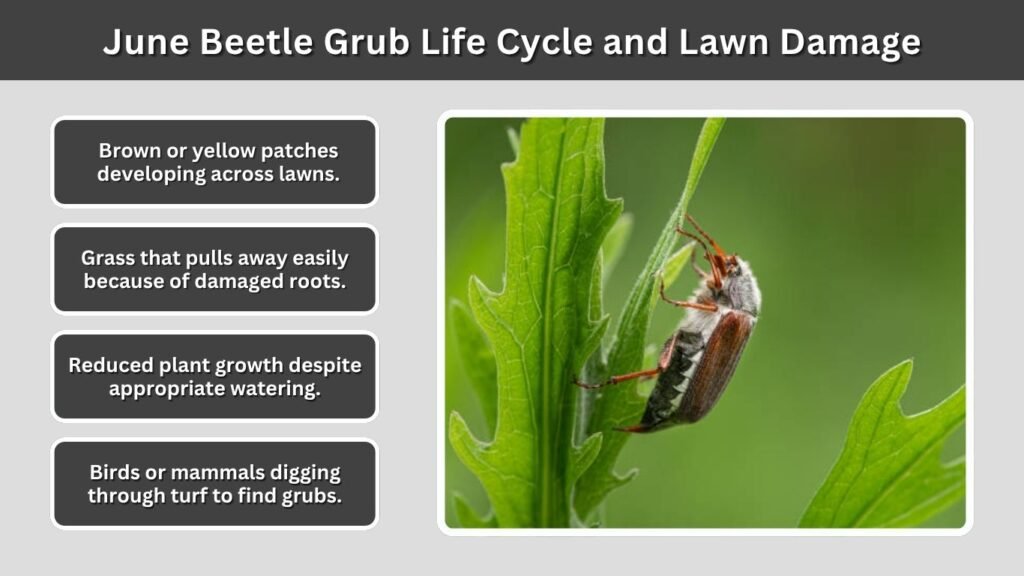
The grub stage has the greatest impact on lawns and gardens for many June beetle species. Root-feeding larvae remain concealed beneath the soil and may gradually weaken grass or other plants. However, the type and severity of damage depend on the species and the number of larvae present.
Signs of June Beetle Grub Activity
Common signs of potentially damaging grubs include:
- Brown or yellow patches developing across lawns.
- Grass that pulls away easily because of damaged roots.
- Reduced plant growth despite appropriate watering.
- Birds or mammals digging through turf to find grubs.
- Cream-colored, C-shaped larvae discovered beneath the soil.
Green June beetle grubs primarily feed on decomposing material, although their tunneling activities can disrupt turf. Brown June beetle and ten-lined June beetle larvae are more likely to damage living plant roots.
How to Control June Beetles During Their Life Cycle
Managing June beetles effectively requires understanding their underground development. Because adults are often visible only briefly, controlling them does not necessarily address established grub populations. Prevention and treatment should focus on identifying the species, evaluating plant damage, and using appropriate management practices.
Effective June Beetle Management Tips
- Inspect affected soil: Check beneath damaged turf or near struggling plant roots for white grubs.
- Identify the species: Different June beetles have different feeding habits and control requirements.
- Maintain healthy lawns: Proper mowing, watering, and soil management can improve grass tolerance to grub activity.
- Avoid unnecessary insecticides: Occasional adult sightings do not automatically indicate a harmful infestation.
- Monitor seasonal development: Control measures targeting susceptible young larvae must be timed according to the species and local conditions.
For serious infestations, a local agricultural extension service can help identify appropriate control options.
FAQs
1. How Long Is the June Bug Beetle Life Cycle?
The June bug beetle life cycle varies among species. Green June beetles generally complete development in one year, while many brown June beetles require two to three years. Ten-lined June beetles may take approximately two to four years.
2. How Long Do June Beetles Stay Underground?
Most June beetles spend the majority of their lives underground as developing grubs. Green June beetles remain there for much of one year, while some brown and ten-lined species develop underground for several years before emerging as adults.
3. What Do June Beetle Grubs Eat?
June beetle grubs have different diets depending on the species. Many brown June beetle larvae consume living grass roots and other plant roots. Green June beetle larvae primarily feed on decomposing organic matter, including decaying vegetation in soil.
4. Do June Beetles Come Back Every Year?
Yes, June beetles can appear annually even when individual species require several years to mature. Overlapping generations develop underground simultaneously, allowing adults to emerge during successive seasons. Population numbers may fluctuate depending on climate and local environmental conditions.
5. When Do June Beetles Lay Eggs?
Female June beetles generally lay eggs during late spring or summer after mating. The exact timing depends on the species and location. Eggs are deposited underground, where they hatch into white grubs that begin their developmental cycle.