
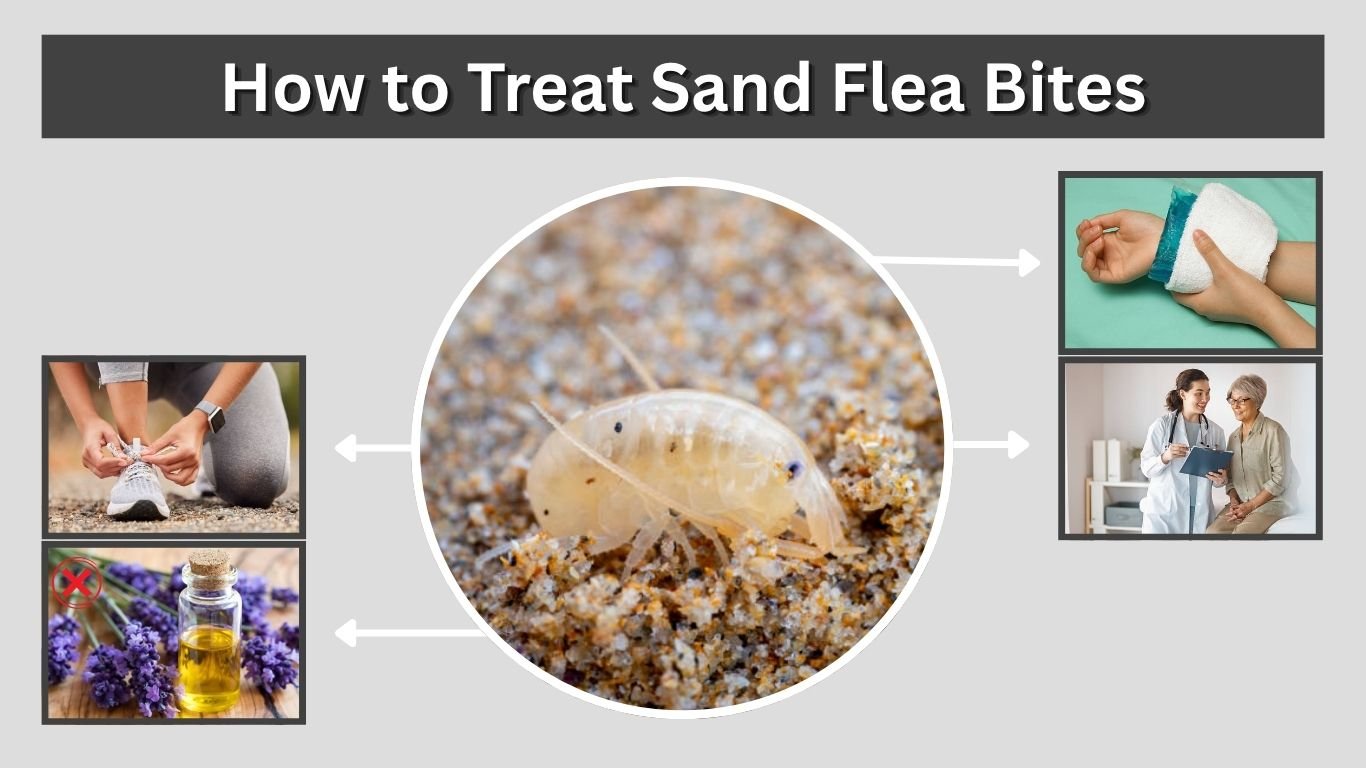
How to treat sand flea bites depends on the type of insect involved and how strongly your skin reacts. Most ordinary bites can be managed at home by cleaning the skin, reducing itching, applying a cold compress, and avoiding scratching. However, the term “sand flea” can describe several different biting organisms, and some tropical chigoe fleas can actually embed in the skin. Knowing how to treat mild bites, recognize infection, protect dogs, and prevent additional exposure can help the skin heal more comfortably.
How to Treat Sand Flea Bites on Humans
Most uncomplicated sand flea bites cause itching, redness, mild swelling, or small raised bumps. Treatment mainly focuses on calming inflammation and preventing secondary infection. The bites commonly improve gradually without special medical treatment, but scratching can damage the skin and prolong discomfort. Persistent or unusual lesions deserve closer attention because not every beach-related bite is caused by the same organism.
Basic Treatment Steps
For mild sand flea bites:
- Wash the affected skin with soap and water.
- Pat the area dry rather than rubbing it.
- Apply a cold compress for 10–15 minutes.
- Avoid scratching the bites.
- Keep fingernails short and clean.
- Consider an appropriate anti-itch product.
- Monitor the bites for increasing redness or swelling.
A cool compress can be repeated periodically when itching or swelling becomes uncomfortable.
Managing Itching
Itching can be one of the most bothersome symptoms. Over-the-counter hydrocortisone cream or an oral antihistamine may help some people when medically appropriate.
Before using medication, follow the product directions and consider asking a pharmacist or healthcare professional if you are pregnant, treating a child, taking other medications, or have a medical condition that could affect which products are suitable.
How to Treat an Itchy Sand Flea Bite
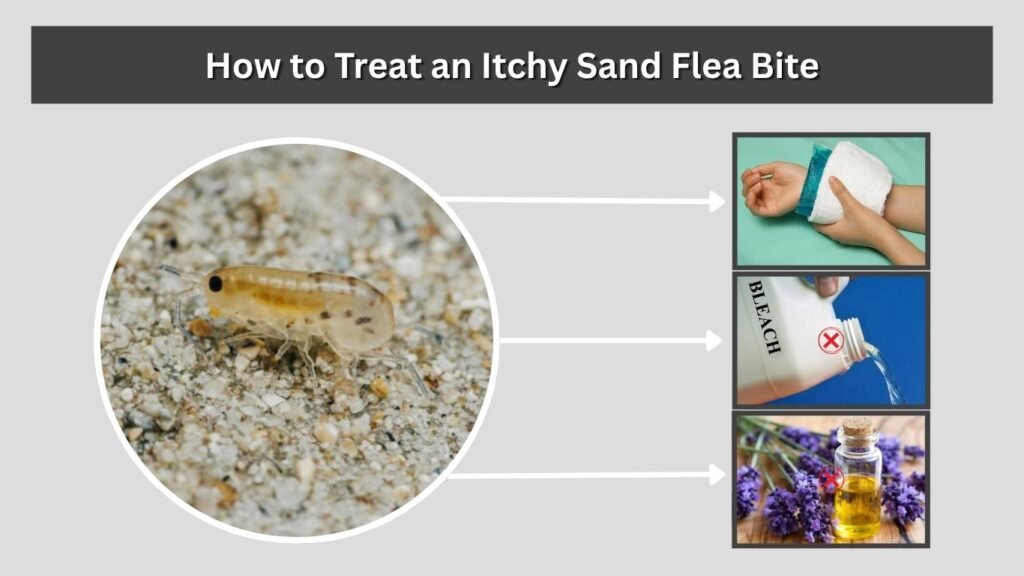
An itchy bite can become more irritated when repeatedly scratched. Even though scratching may provide temporary relief, it damages the skin barrier and can increase redness, swelling, and the possibility of infection. Keeping the area cool and protecting it from scratching is therefore often more useful than repeatedly applying different home remedies.
Cooling the Skin
Place a clean, cool, damp cloth over the bites or use a wrapped cold pack for short periods.
Cold temperatures can temporarily reduce itching and swelling. Do not place ice directly against bare skin for prolonged periods, because excessive cold can injure the skin.
Avoid Harsh Home Remedies
Applying bleach, concentrated alcohol, gasoline, strong essential oils, or other irritating chemicals to flea bites can damage already inflamed skin.
A simple approach involving gentle washing, cooling, and appropriate anti-itch treatment is generally safer. If symptoms remain severe despite basic care, a healthcare professional can recommend additional treatment.
How to Treat Infected Sand Flea Bites
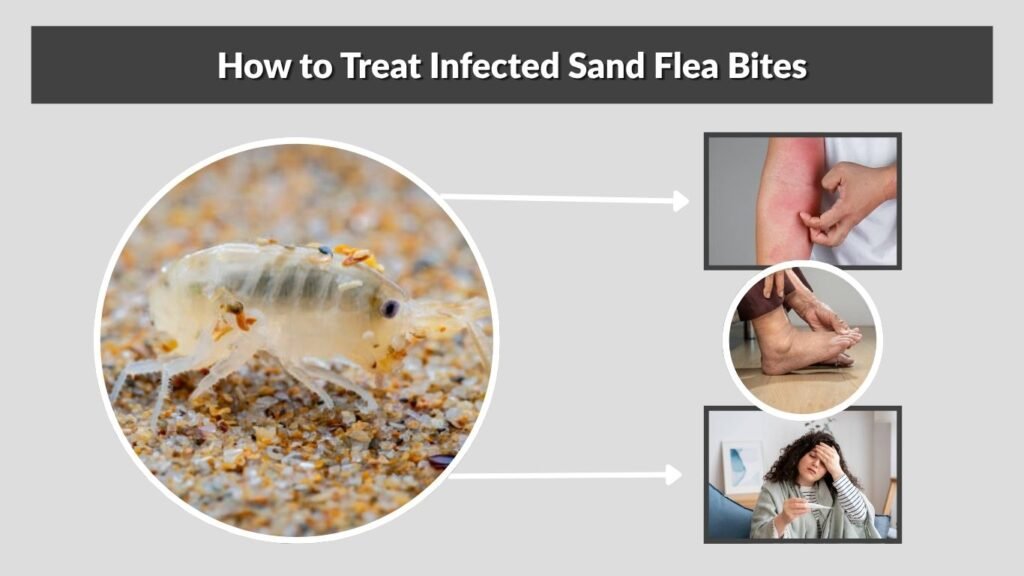
Scratching creates tiny breaks in the skin through which bacteria can enter. An ordinary itchy bite may then develop into a secondary skin infection. Infection is different from normal temporary redness around a fresh insect bite and may require professional treatment.
Possible Signs of Infection
Watch for:
- Increasing pain instead of gradual improvement
- Expanding redness
- Significant warmth around the bite
- Pus or cloudy drainage
- Increasing swelling
- Tender skin
- Red streaks spreading from the area
- Fever or feeling generally unwell
Do not squeeze or repeatedly pick at an infected-looking lesion.
When Medical Treatment Is Needed
Contact a healthcare professional if a bite appears infected or symptoms are progressively worsening.
Treatment depends on the severity and type of infection. A clinician may need to examine the skin before deciding whether prescription treatment is necessary. Seek prompt medical attention when fever, rapidly spreading redness, severe pain, or significant swelling develops.
Are All Sand Flea Bites the Same?
“Sand flea” is a common name rather than one precise identification. It may refer to biting insects around sandy coastal areas, tiny crustaceans sometimes found on beaches, or true parasitic fleas. This distinction matters because most ordinary bites are temporary, while the chigoe flea can produce a very different condition called tungiasis.
Ordinary Sand Flea Bites
Typical bites occur when an insect feeds and then leaves the skin. The resulting itching and bumps are caused largely by the body’s inflammatory reaction.
These bites generally require symptom relief rather than removal of anything from inside the skin.
Chigoe Fleas and Tungiasis
The female chigoe flea can penetrate the skin, most often around the feet and toes, and remain embedded while developing. This condition is known as tungiasis.
The lesion may gradually enlarge and develop a central dark point. It should not be treated by digging into the skin at home, because improper removal can lead to injury and infection. Professional medical evaluation is the safer approach.
How Long Does Treatment Take to Work?
Relief from a cool compress may occur quickly, while the skin itself can take several days to fully settle. Mild bites commonly improve progressively, although residual itching or discoloration may remain longer in people with sensitive skin or after repeated scratching.
Normal Healing
The first few days are often the most uncomfortable because itching and inflammation may be strongest during this period.
Afterward, uncomplicated bites should gradually become less itchy and less noticeable. Healing can take longer when numerous bites occur together or when the skin has been damaged by scratching.
When Healing Is Taking Too Long
A bite that remains unchanged, becomes larger, becomes increasingly painful, or continues producing discharge should not simply be assumed to be a normal sand flea reaction.
Persistent lesions after travel to tropical areas also deserve medical evaluation, particularly when they involve the feet or contain a noticeable central opening or dark spot.
How to Treat Sand Flea Bites on Dogs
Dogs can develop itchy skin after exposure to fleas or other biting pests around sandy environments. Because several parasites can cause similar scratching and skin irritation, identifying the actual cause is important before treatment. Human creams and medications should not automatically be used on pets because some products that are safe for people may be unsuitable for animals.
Signs to Watch for in Dogs
Possible signs include:
- Frequent scratching
- Biting or chewing the skin
- Red bumps
- Hair loss from repeated scratching
- Scabs
- Irritated paws or lower legs
- Visible fleas or flea dirt
Persistent itching can also result from allergies, mites, infections, or other parasites.
Proper Treatment for Dogs
A veterinarian can determine whether fleas or another skin problem is responsible and recommend an appropriate flea-control product.
Wash pet bedding and clean areas where the dog rests if a flea infestation is suspected. Avoid applying human anti-itch creams, essential oils, or insecticides directly to a dog unless a veterinarian confirms that the product and dose are safe.
How to Avoid Future Sand Flea Bites
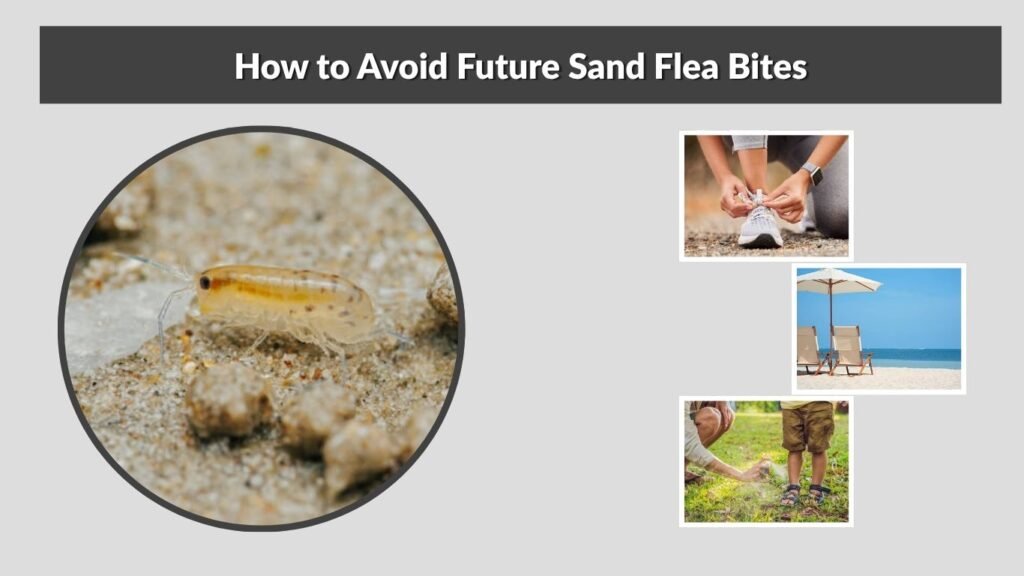
Preventing additional bites gives irritated skin time to recover. Beach environments, dunes, damp vegetation, and areas where animals rest can contain numerous biting insects, so prevention often requires reducing exposed skin and limiting contact with heavily infested locations.
Prevention Tips
To lower your risk:
- Wear shoes in sandy areas.
- Cover ankles and lower legs when practical.
- Use an appropriate insect repellent.
- Avoid sitting directly on damp sand.
- Use a beach chair or thick blanket.
- Avoid known heavily infested areas.
- Wash exposed skin after leaving the beach.
- Wash clothing after significant exposure.
- Keep pets on an appropriate flea-prevention program.
These measures may not eliminate every bite, but they can substantially reduce repeated exposure.
When Should You Seek Medical Help?
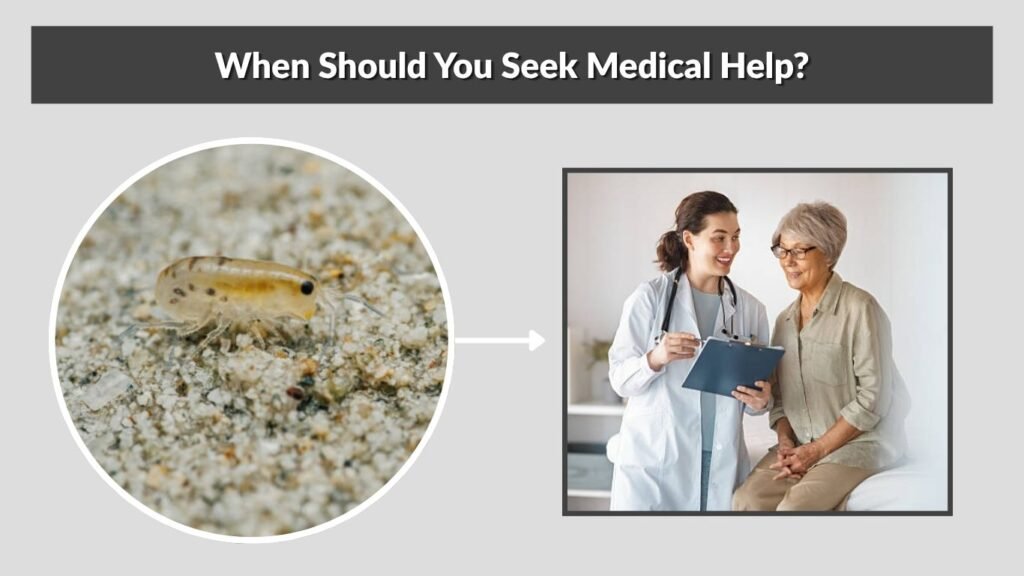
Most sand flea bites are minor and can be cared for at home. Medical attention becomes more important when the reaction is severe, infected, persistent, or associated with a possible embedded parasite. A previous history of serious reactions to insect bites also warrants extra caution.
Warning Signs
Seek medical care if you notice:
- Severe or rapidly increasing swelling
- Spreading redness
- Pus or drainage
- Fever
- Significant pain
- Persistent lesions that do not heal
- A suspected embedded chigoe flea
- Extensive skin reactions
Seek emergency help for breathing difficulty, swelling of the tongue or throat, fainting, or another severe allergic reaction.
FAQs
What is the fastest way to treat sand flea bites?
Wash the area gently, apply a cool compress, and avoid scratching. An appropriate anti-itch cream or antihistamine may help some people. Most ordinary bites improve naturally over several days. Treatment mainly reduces discomfort while the body’s inflammatory reaction gradually settles.
What can I put on sand flea bites to stop itching?
A cool compress can provide temporary relief. Over-the-counter hydrocortisone cream may also help mild itching when used according to directions. Some people benefit from an oral antihistamine. Ask a pharmacist or healthcare professional if you are unsure which treatment is appropriate for your age or medical circumstances.
How do you treat infected sand flea bites?
Keep the skin clean and avoid squeezing or scratching the affected area. Increasing pain, spreading redness, warmth, pus, or fever can indicate infection and should be evaluated by a healthcare professional. Some infections may require prescription treatment rather than additional home remedies.
Should you pop or squeeze a sand flea bite?
No. Popping, squeezing, cutting, or digging into an ordinary bite can damage the skin and increase infection risk. If you suspect a chigoe flea has embedded itself in your skin, particularly after tropical travel, seek medical evaluation rather than attempting to remove it yourself.
How long does it take sand flea bites to heal?
Many uncomplicated bites begin improving within a few days, although itching or visible marks can sometimes persist for one to two weeks. Healing may take longer after heavy scratching or infection. Persistent, enlarging, or unusually painful lesions should be evaluated rather than treated indefinitely as ordinary bites.
