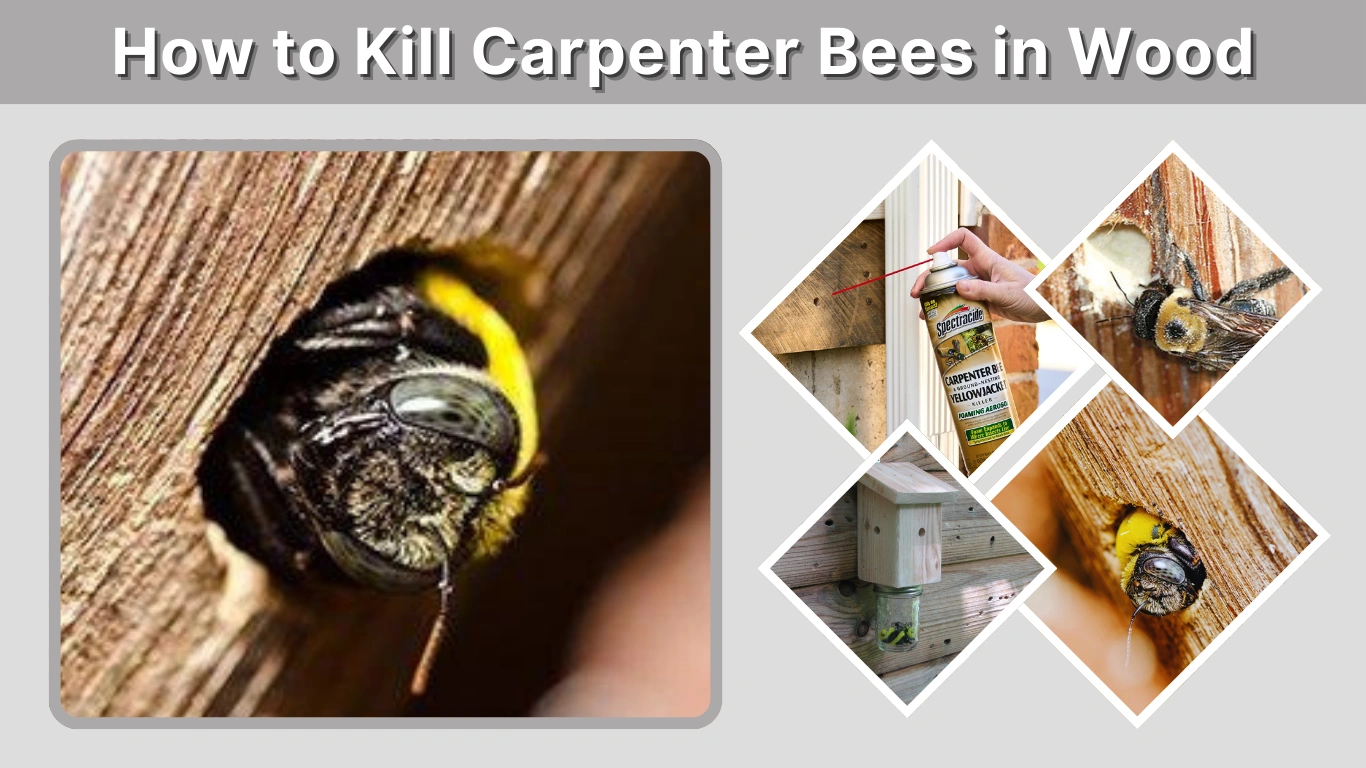
Carpenter bees can damage wooden structures, return yearly to expand their tunnels, and create expensive repairs if left untreated. Whether you want to kill them quickly, use natural remedies, remove them humanely, or prevent them from drilling in the first place, this guide covers all major methods. Each section explains the pros, cons, and best practices so you can choose a solution that matches your comfort level and protects your home long-term.
Identification: How to Recognize Carpenter Bees
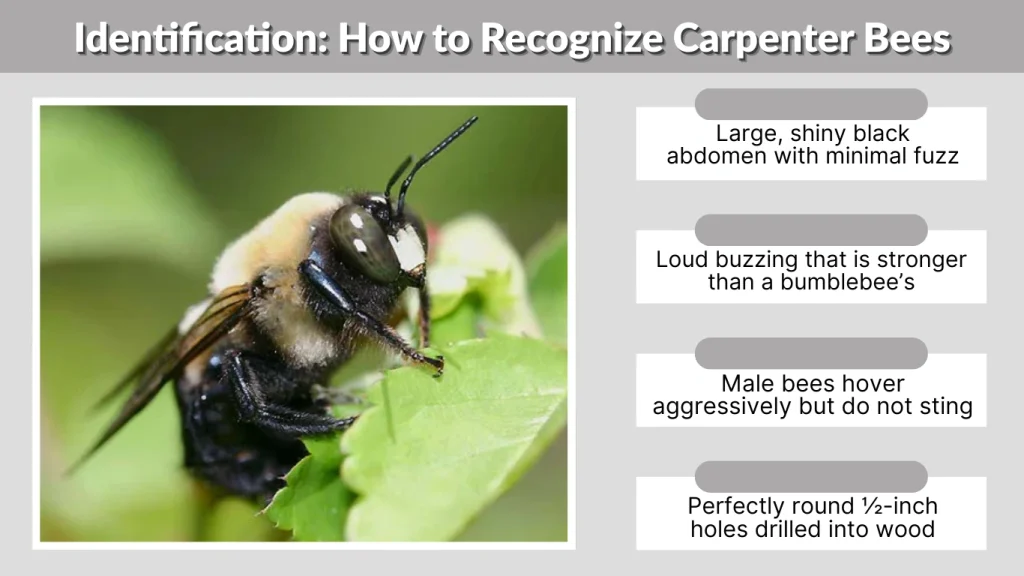
- Large, shiny black abdomen with minimal fuzz
- Loud buzzing that is stronger than a bumblebee’s
- Male bees hover aggressively but do not sting
- Perfectly round ½-inch holes drilled into wood
- Sawdust-like frass or debris beneath holes
- Tunnels that run several inches horizontally into wood
Carpenter Bee Size, Range & Habitat
Carpenter bees vary in size depending on species, typically ranging from 12 to 25 millimeters. Males often have a yellow or white facial patch, while females are solid black. Their body shape resembles bumblebees, but the abdomen is noticeably shiny, a key identification feature.
They are distributed throughout North America and thrive in warm, temperate regions. Carpenter bees commonly nest in structures with exposed, weathered, or untreated wood. Deck railings, fascia boards, eaves, barns, fences, and wooden siding are particularly at risk. Because they return each year to reuse and expand their tunnels, infestations become more severe over time.
Behavior & Damage Patterns
Carpenter bees drill into wood to create nests called galleries. The female bee chews perfectly round openings and tunnels inward before turning 90 degrees to extend the gallery horizontally. Over multiple seasons, these galleries grow longer and deeper, weakening wood from within.
Male carpenter bees often hover aggressively around the nest site to protect it, but they cannot sting. Females can sting but typically only do so when handled. In late spring and early summer, carpenter bees lay eggs inside the tunnels, packing pollen balls for the larvae to consume once hatched. Older, reused galleries may contain dozens of brood chambers.
Repeated activity in the same area leads to structural damage, especially in decks, beams, support posts, and roof eaves. Woodpeckers may also attack active galleries to feed on the larvae, causing additional exterior damage.
How to Kill Carpenter Bees (Fast, Natural & DIY)
Fast-Acting Kill Methods
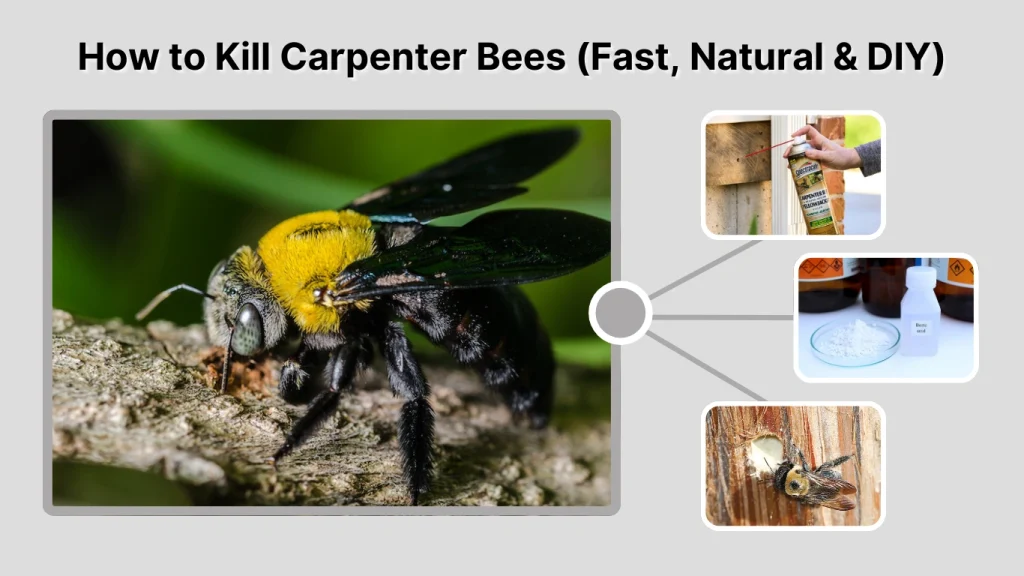
Fast-kill methods work best when the bees are inside their tunnels at dusk or early evening. Pyrethroid-based sprays are one of the most effective solutions; when sprayed directly into the entrance hole or onto a bee, they deliver immediate knockdown. For deeper galleries, foam insecticides work even better because they expand to fill the tunnel completely.
These treatments are ideal for homeowners who need quick results, especially when bees have infested high-traffic areas like porches or entryways. Applying the foam or spray at the right time ensures that the female bees—responsible for drilling and laying eggs—are inside the nest, maximizing effectiveness. For large, multi-year infestations or bees nesting inside walls, a professional exterminator offers the most reliable and fastest results.
Natural Kill Options
Some homeowners prefer natural, less-toxic methods for killing carpenter bees. Boric acid dust is one of the most effective natural options because it sticks to the bees’ bodies as they crawl through their tunnels. When ingested or contacted, it dehydrates and kills both adults and larvae.
Diatomaceous earth works similarly but must remain dry to be effective. Vinegar mixed with dish soap has a limited kill effect when sprayed directly onto bees but works better as a deterrent than an extermination method. Citrus oil can weaken bees when sprayed in high concentrations, though it is best used for repelling rather than killing.
Killing Carpenter Bee Larvae & Eggs
To eliminate larvae and eggs, the best time to treat tunnels is late spring when the female has finished laying. Applying boric acid dust deeply into holes ensures the powder reaches all chambers. After application, it’s important to wait 24–48 hours before sealing the holes so that any remaining adults return and make contact with the dust.
Sealing too early traps surviving bees inside, which may lead them to burrow new escape tunnels—or, worse, move deeper into your walls or siding. Once the waiting period ends, plugging the holes with wood putty, wooden dowels, or exterior caulking prevents re-entry and stops the cycle.
Killing Carpenter Bees in Specific Locations
In Wood Surfaces
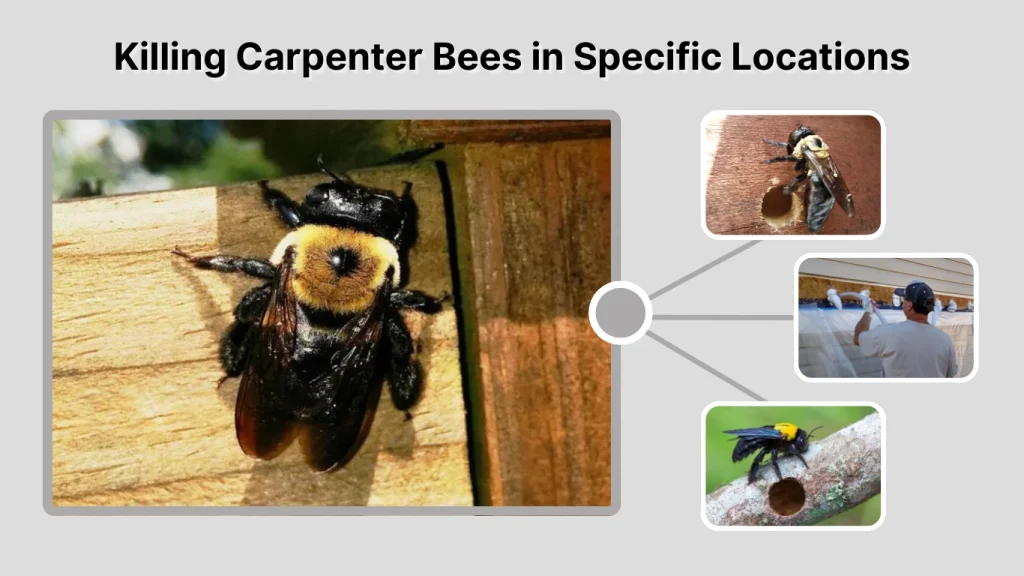
When carpenter bees are boring into visible wooden structures—such as decks, porches, beams, railings, or shed walls—the easiest solution is to treat and plug the holes. Use a duster to apply boric acid or a foam insecticide deep inside each gallery. Treat the holes at dusk when bees are inside. After 24–48 hours, seal the holes using wood filler or wooden dowels. Finally, repaint or stain the surface to reduce future activity.
In Walls or Behind Siding
Infestations behind siding or inside wall cavities are more complicated. Foam insecticides are the best choice because they expand into hidden voids. If entry holes are not reachable, you may need to drill a small access point to inject the foam. Because these infestations may involve structural risks or electrical wiring, some homeowners choose to hire a professional exterminator. After treatment, patch the access holes and repaint to disguise the repair.
In Trees & Tree Holes
Carpenter bees occasionally nest in dead tree branches or hollowed-out trunks. If the tree is not structurally important, dust the tunnels with boric acid or use a no-kill repellent to encourage the bees to relocate. Avoid sealing holes in living trees immediately; instead, wait until the bees exit naturally or use a humane method to encourage them to vacate before sealing.
Under Decks & Roof Eaves
Carpenter bees often target high, protected areas like roof eaves, joists, and the underside of decks. Use a ladder to access entry holes safely. Apply dust or foam at dusk, then seal the holes after the waiting period. Installing metal flashing or PVC trim in these vulnerable areas adds long-term protection.
In the Ground
Carpenter bees do not nest in soil. If you see bees emerging from the ground, you’re likely dealing with miner bees or bumblebees. Always confirm the species before applying kill methods.
How to Kill Carpenter Bees with Popular Products
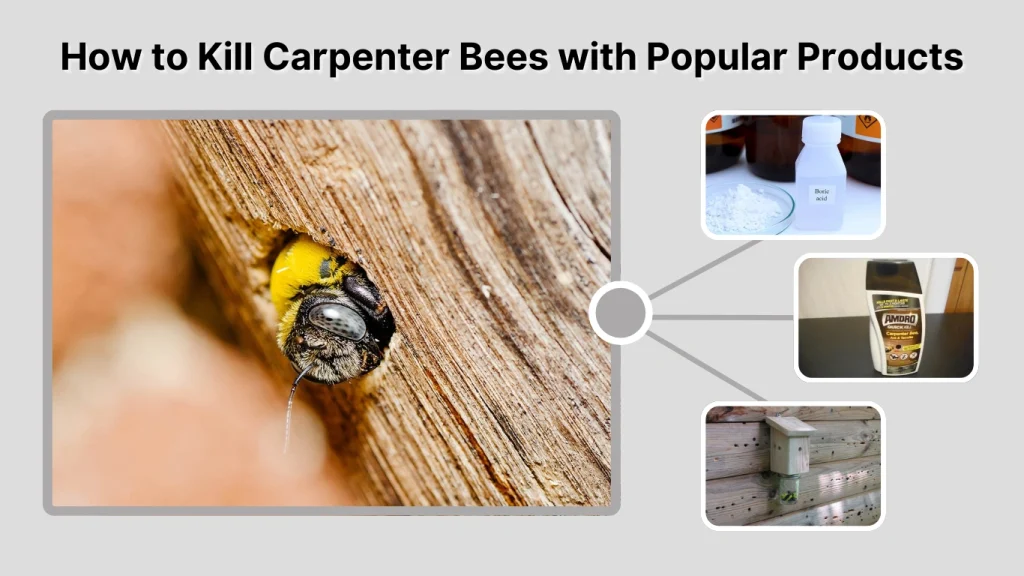
Boric Acid
Boric acid dust is excellent for killing adults, larvae, and eggs. Use a bulb duster to blow the powder deep into tunnels. Because the powder clings to the bees, they spread it throughout the gallery. Re-apply yearly to maintain protection if the area is prone to infestation.
Amdro Carpenter Bee Killer – How to Use
Amdro’s foam formulation is easy to apply and highly effective. Shake the can thoroughly, insert the straw, and fill any visible tunnel until it overflows. The foam expands inside the galleries, killing bees quickly. Wait 24 hours before sealing. Wear gloves and eye protection during application.
Home Depot & Lowe’s Options
Most home improvement stores sell products specifically designed for carpenter bee control, including:
- Pyrethroid sprays
- Gallery-injecting foams
- Dusters with boric acid
- Wooden traps
- Replacement fascia trim and flashing
These products work best when used together—treat, kill, then prevent.
Traps & Lures – How to Catch and Kill Carpenter Bees
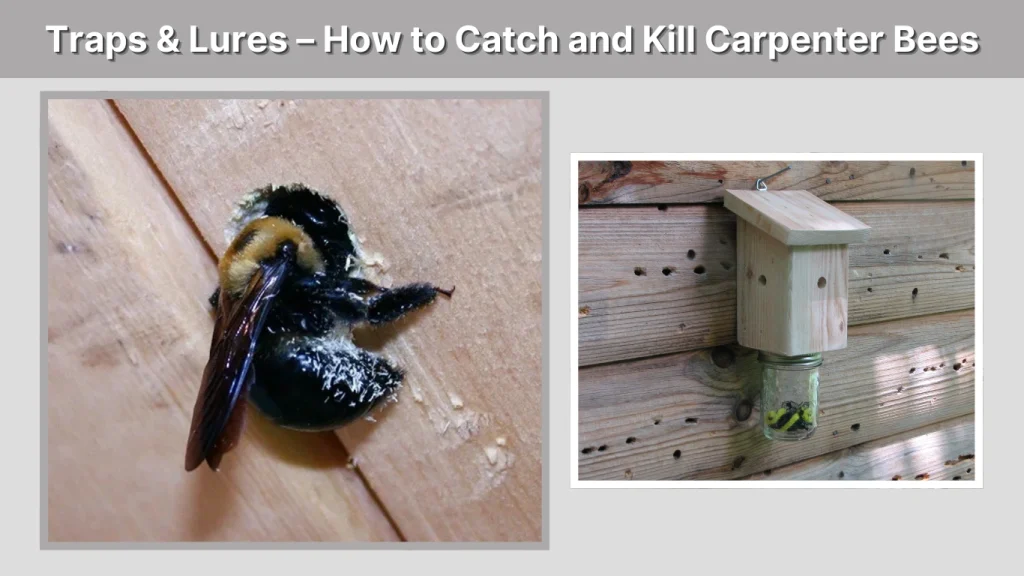
Types of Traps
- Wooden block traps with angled chambers
- Clear catch jars attached to trap boxes
- Vertical bottle traps
- DIY soda bottle or glass jar traps
These traps attract carpenter bees seeking nests, pulling them into a chamber where they cannot escape.
How Traps Work
Traps use a simple light deception mechanism. Bees enter through a small hole, expecting an exit inside, but the chamber funnels downward into a clear jar. Bees instinctively fly toward light but cannot reach the small escape holes, eventually leading to their capture. For best results, place traps near high-activity areas such as eaves or decks in early spring.
How to Get Rid of Carpenter Bees WITHOUT Killing Them
Gentle Removal Methods
If you prefer humane removal, several strategies can encourage bees to leave without harm. Loud noises, vibrations, or a portable speaker placed near tunnels can disrupt their environment and prompt them to relocate. Smoke—used carefully—can also drive bees from their galleries. Always approach these methods at dusk to reduce the chance of stings.
Once the bees exit, immediately seal the holes with putty or dowels to prevent them from returning. This no-kill strategy works best early in the season before eggs are laid.
Natural Repellents
- Almond oil (the most effective known repellent)
- Citrus oil sprays
- Peppermint or clove essential oil
- Garlic-infused sprays
- Vinegar-based repellent mixtures
Apply these around active holes or vulnerable wood. Reapply after rain or heavy sun exposure.
Carpenter Bee Prevention & Long-Term Control
After removing or killing carpenter bees, prevention is essential to protect your home from future infestations.
Long-Term Wood Protection
Painting or staining exposed wood makes it less attractive to carpenter bees. Bees prefer weathered or untreated surfaces, so maintaining a fresh coat of paint is one of the most effective deterrents. Consider replacing softwoods—like pine or cedar—with hardwood or composite materials, which are harder to drill into.
Installing aluminum or PVC trim over vulnerable areas like fascia boards or eaves also adds a long-term barrier. Conduct annual inspections in early spring and seal any new or old openings before bees begin nesting.
Redirecting Bees to Safe Locations
Some homeowners prefer to give carpenter bees an alternative nest site rather than eliminating them. Bee houses made from drilled wooden blocks can attract bees away from structures. Place the bee house about 20–30 feet from your home and maintain it yearly by cleaning old tunnels.
Comparison Table – Kill vs. No-Kill Methods
| Method Type | Effectiveness | Safety | Best For | Notes |
| Sprays | High | Moderate | Quick kill | Works instantly |
| Dusts | Very high | Moderate | Nest elimination | Best at night |
| Traps | Medium | High | Outdoor control | Slower method |
| Oils (No-kill) | Medium | Very high | Prevention | Almond oil best |
| Noise/Vibration | Low–Medium | High | Humane removal | Works early season |
| Sealing Wood | High | High | Long-term control | Must treat first |
FAQs
How long does powder take to kill carpenter bees?
Most dusts, including boric acid, kill within 12–48 hours depending on humidity and tunnel depth. Always wait at least a full day before sealing the hole.
Can vinegar kill carpenter bees?
Vinegar can irritate or repel carpenter bees but rarely kills them unless sprayed directly and repeatedly. It is more effective as a natural deterrent.
Does WD-40 kill carpenter bees?
Yes, WD-40 kills bees on contact by coating their breathing pores. However, it’s not environmentally friendly and may damage wood finishes.
What kills carpenter bees naturally?
Boric acid, diatomaceous earth, high-concentration citrus oil, and sometimes soapy vinegar mixtures can kill or weaken carpenter bees.
How can I deter carpenter bees without killing them?
Use almond oil, citrus sprays, reflective materials, fresh paint, and tunnel sealing. These nonlethal methods encourage bees to relocate safely.