
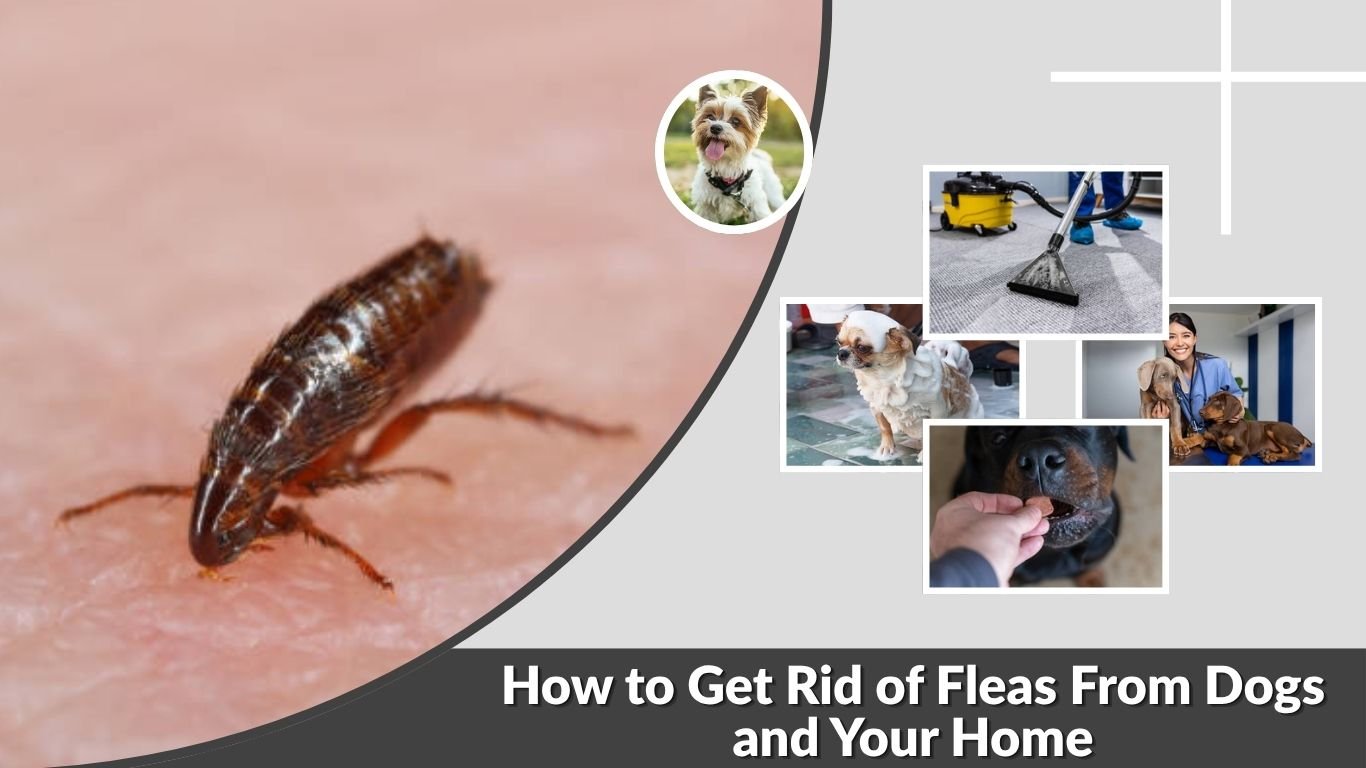
To get rid of fleas from a dog completely, you must treat both the animal and its surroundings. Flea combs and baths can remove visible fleas, but eggs, larvae, and pupae may remain in bedding, carpets, furniture, kennels, and floor cracks. Use a flea treatment suitable for your dog’s age, weight, and health, then clean the areas where the dog spends time. Established household infestations can take several weeks to eliminate because new adult fleas continue emerging from protected cocoons.
How to Get Fleas Off a Dog
Begin by checking the dog’s coat and choosing an appropriate treatment. Pay particular attention to the neck, abdomen, inner legs, lower back, and base of the tail.
Use a Flea Comb
Run a fine-toothed flea comb slowly through the coat. After every few passes, place any collected fleas into a container of hot, soapy water.
A flea comb immediately removes some adult fleas, flea dirt, and loose eggs. It is especially useful for puppies that are too young for certain medications, but combing alone will not provide long-term protection.
Use an Approved Flea Treatment
Dog flea treatments are available as oral tablets, chews, shampoos, sprays, collars, powders, and topical liquids. The best option depends on the dog’s:
- Age and weight
- Current health
- Pregnancy or nursing status
- Existing medications
- History of seizures or sensitivity
- Exposure to ticks and other parasites
Consult a veterinarian when selecting a product, particularly for young, elderly, sick, underweight, pregnant, nursing, or medicated dogs. Always use the exact dose intended for the dog’s species and weight range.
Bathe the Dog Safely
Bathing with a shampoo formulated for dogs can remove flea dirt and kill or wash away many visible adult fleas. Wet the coat thoroughly, follow the label’s contact-time instructions, and rinse completely.
Flea shampoos may provide limited residual protection, so a longer-lasting preventive may still be needed. Do not use household cleaners, carpet insecticides, or products intended for another animal directly on the dog.
Choosing a Flea Treatment
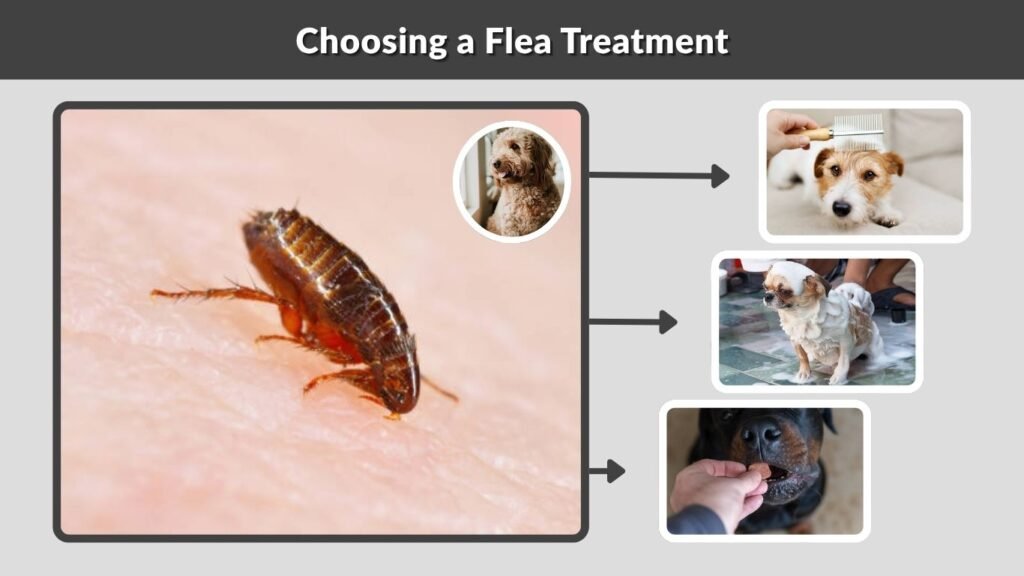
Different treatments vary in how quickly they work and how long they protect the dog.
| Treatment | Main Purpose | Lasting Protection |
| Flea comb | Physically removes visible fleas | No |
| Dog flea shampoo | Kills or removes fleas during bathing | Usually limited |
| Fast-acting oral treatment | Rapidly kills adult fleas | Often short term |
| Monthly oral treatment | Treats and prevents infestations | Usually about one month |
| Topical treatment | Kills fleas after application | Varies by product |
| Flea collar | Ongoing control or repellency | Varies by product |
Follow the Product Label
Read the label every time you apply or administer a flea product because directions and warnings may change. Do not increase the dose, repeat it earlier than directed, or combine several treatments unless a veterinarian advises you to do so.
Never use a product labeled only for dogs on a cat. Certain ingredients or concentrations that are acceptable for dogs can be dangerous to cats. Keep animals separated until topical products are dry so they cannot lick the treatment from each other.
Consider the Dog’s Medical History
Some commonly used isoxazoline flea and tick medications have been associated with neurologic reactions, including tremors, poor coordination, and seizures. Most dogs use these products safely, but owners should review the dog’s medical history with a veterinarian before choosing one.
How to Remove Flea Dirt and Eggs
Flea dirt appears as small black or reddish-brown particles in the coat. Flea eggs are much smaller, smooth, oval, and pale.
Removing Flea Dirt
Comb or bathe the dog to remove flea dirt. Cleaning the coat may make the dog more comfortable, but flea dirt will return when living adult fleas continue feeding.
Scratching, scabs, hair loss, and inflamed skin may indicate flea allergy dermatitis or a secondary infection. Flea bites can cause intense irritation in sensitive dogs, even when only a few fleas are present.
Removing Flea Eggs
Flea eggs do not remain firmly attached to dog hair. They fall into bedding, carpets, furniture, kennels, and other places where the dog rests.
Bathing and combing may remove some eggs from the coat, but household cleaning is essential. Treating only the dog allows immature fleas in the environment to continue developing.
How to Get Rid of Fleas From the House
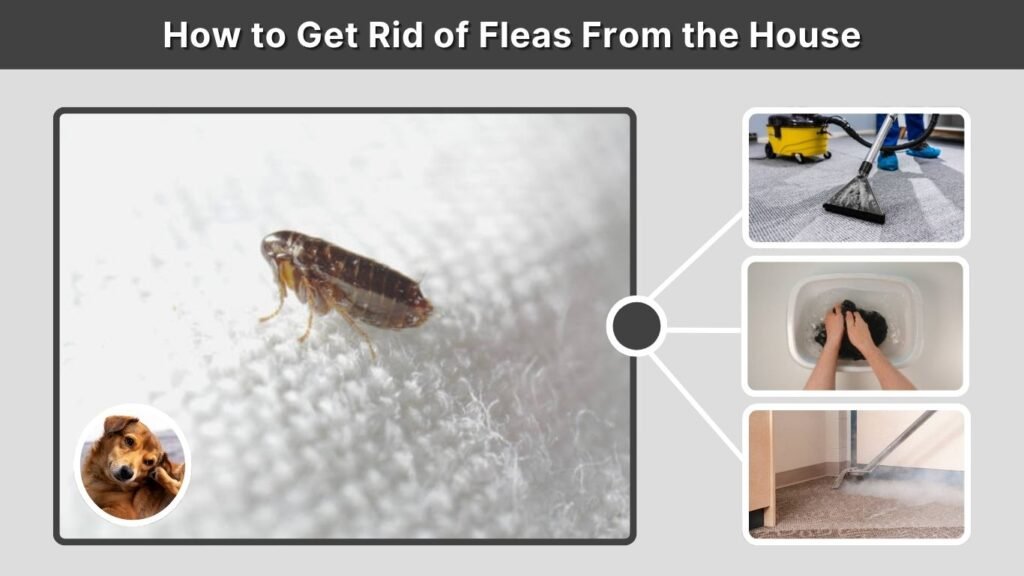
Most of the developing flea population is found away from the dog. Concentrate on sleeping areas, carpets, soft furniture, cracks, baseboards, and spaces beneath beds and sofas.
Vacuum Every Day
Vacuuming is one of the best initial methods for reducing an indoor flea infestation. Clean:
- Carpets and rugs
- Upholstered furniture
- Floor cracks and crevices
- Areas along baseboards
- Spaces beneath furniture
- Closets used by pets
- Pet sleeping and resting areas
Empty the vacuum container outdoors after use. Continue vacuuming regularly while fleas remain active because adults may keep emerging from pupal cocoons.
Wash Dog Bedding
Wash pet beds, blankets, removable furniture covers, fabric carriers, and washable toys in hot, soapy water, using settings safe for the material.
Repeat the process every two to three weeks during control efforts. Heavily infested bedding that cannot be cleaned thoroughly may need to be replaced.
Steam-Clean Carpets
Hot steam and soap can kill fleas at multiple life stages. Pay special attention to carpets, rugs, and upholstery where the dog sleeps.
Allow surfaces to dry fully before pets or children use them. Professional treatment may be necessary when fleas remain after repeated cleaning and proper pet treatment.
How to Get Rid of Fleas From a Dog Bed
Remove the bed cover and wash it according to its care instructions. Vacuum seams, folds, the surrounding floor, and the space beneath the bed.
For a nonwashable bed, vacuum it thoroughly and use only treatments specifically labeled for that material and location. Never apply a household environmental pesticide directly to the dog.
How to Get Rid of Fleas From a Kennel
Take bedding, toys, and washable materials out of the kennel. Wash them and vacuum or clean the kennel floor, cracks, corners, and shaded resting spaces.
Outdoor flea treatment should focus on shaded, moist areas where dogs rest, including dog houses, garages, spaces under porches, and areas beneath shrubs. Treating an entire sunny yard is generally less useful than targeting these protected locations.
Should Every Pet Be Treated?
Every dog and cat in an infested household may need species-appropriate flea protection. An untreated pet can continue feeding fleas and introducing eggs into the home.
Use a separate product selected for each animal’s species, age, weight, and health. Do not divide one large-dog dose among smaller animals unless the product label and veterinarian specifically permit it.
Do Natural Home Remedies Work?
Flea combing, bathing, vacuuming, and washing bedding are useful nonchemical control methods. However, vinegar, baking soda, essential oils, and similar homemade treatments do not reliably eliminate the complete flea life cycle.
Do not apply concentrated essential oils, household pesticides, or unapproved mixtures to a dog. Products formulated for carpets, furniture, or yards must not be used on an animal unless their label specifically allows it.
How Long Does Flea Control Take?
Visible fleas on the dog may begin dying soon after an effective treatment, but eliminating an established household infestation commonly takes approximately six weeks to three months.
New fleas may continue appearing as pupae already present in carpets, furniture, and bedding develop and emerge. Consistent treatment does not necessarily mean the product has failed; continue the preventive and environmental cleaning according to professional and label directions.
When to Contact a Veterinarian
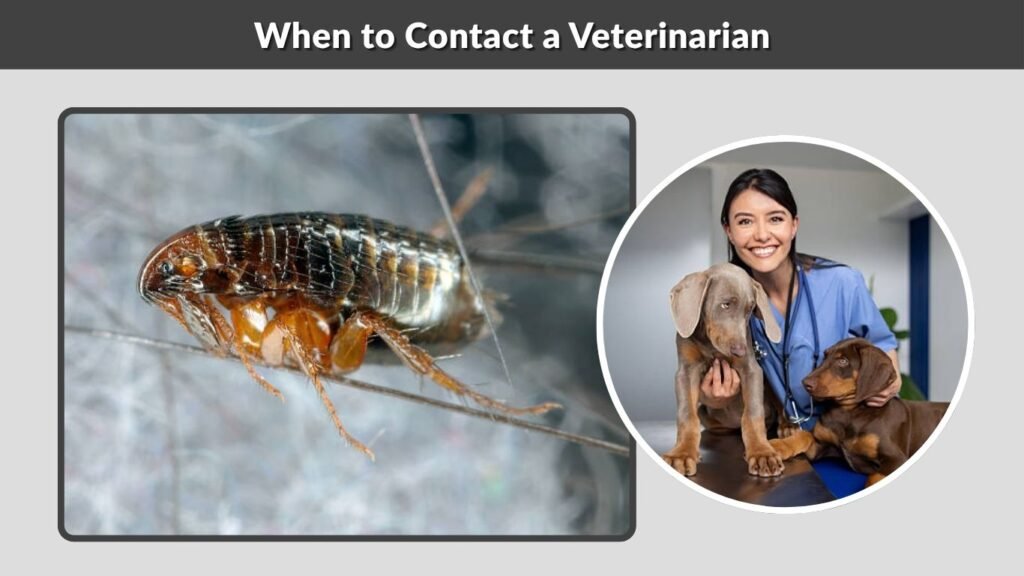
Contact a veterinarian when the dog has severe itching, open wounds, widespread scabs, hair loss, pale gums, weakness, or signs of infection. Heavy flea infestations can contribute to anemia, particularly in puppies and vulnerable dogs.
Seek immediate advice if the dog develops redness, vomiting, diarrhea, excessive salivation, trembling, depression, poor coordination, or seizures after flea treatment. For a suspected reaction to a topical product, EPA guidance advises consulting a veterinarian immediately; depending on the product, washing with mild soap and plenty of water may be recommended.
FAQs
What is the fastest way to get fleas off a dog?
Use a properly selected fast-acting flea treatment and comb the coat to remove visible adults. Product suitability depends on the dog’s age, weight, health, and medication history, so consult a veterinarian before combining or changing treatments.
Can bathing completely eliminate dog fleas?
Bathing may kill or remove many adult fleas, flea dirt, and loose eggs, but it does not eliminate immature fleas in bedding, carpets, and furniture. A lasting preventive and environmental cleaning are usually required.
How do I get rid of fleas from my dog naturally?
Use a flea comb, bathe the dog with a mild dog-formulated shampoo, wash bedding, and vacuum resting areas. Natural methods can reduce fleas, but they may not provide the lasting control needed for a significant infestation.
Can dog fleas live on humans?
Dog and cat fleas may bite people, but they generally prefer animal hosts and do not normally remain permanently on humans. Eliminating them requires treating the pets and cleaning the household environment.
Why does my dog still have fleas after treatment?
The fleas may be newly emerged adults from pupae in carpets, bedding, or furniture. Incorrect application, an unsuitable dose, missed treatment dates, untreated pets, or resistance concerns should also be discussed with a veterinarian.
