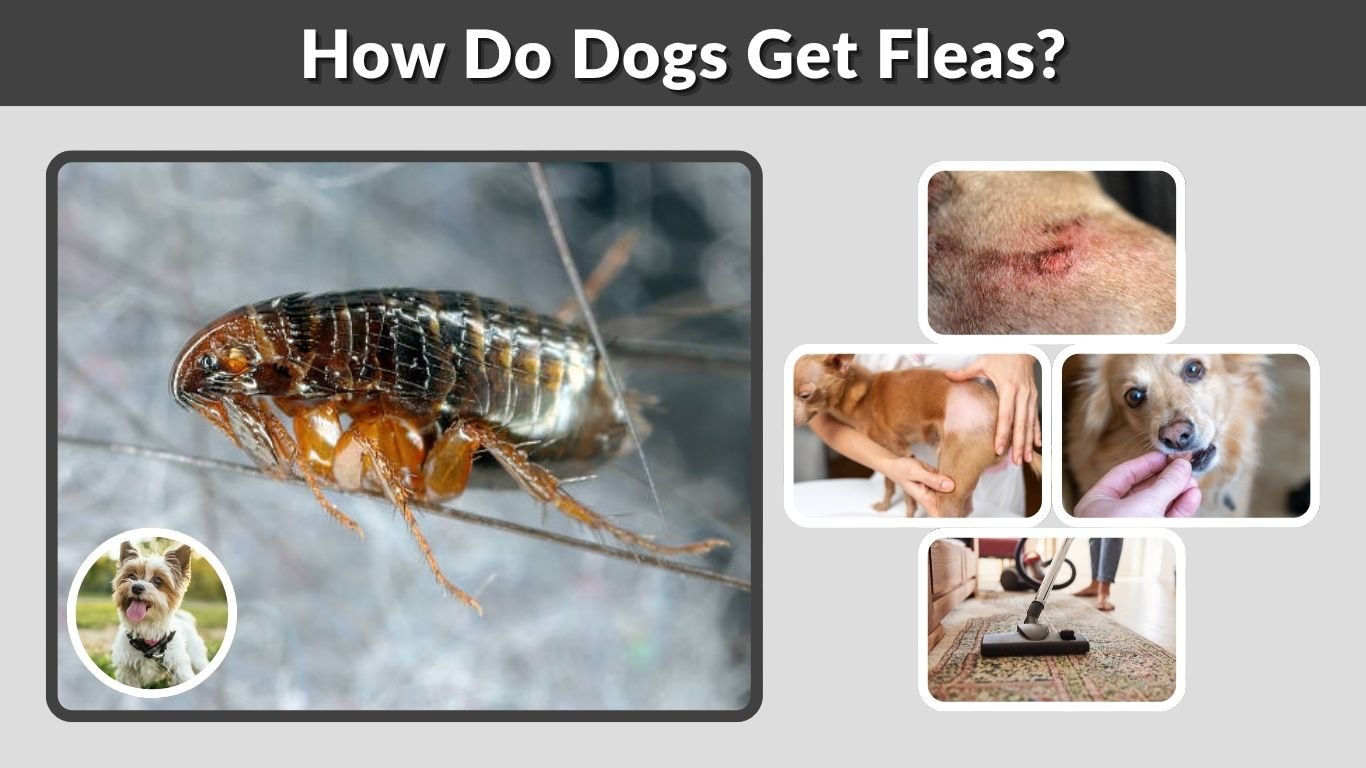
Dogs get fleas when adult fleas jump onto them from an infested environment. Common sources include carpets, pet bedding, yards, kennels, veterinary waiting areas, grooming facilities, and places visited by flea-carrying animals. Dogs do not need direct contact with another dog to become infested. Newly emerged fleas can remain in the environment until a suitable animal passes nearby.
How Do Fleas Get on Dogs?
Fleas are small, wingless insects that move by jumping. Adult fleas feed on blood and usually remain on a host once they begin feeding. However, eggs laid in the dog’s coat fall into the environment, where they develop into larvae, pupae, and eventually new adult fleas.
From an Infested Environment
The most common way a dog gets fleas is by entering an area where immature fleas have been developing. When adult fleas emerge from their protective cocoons, they jump onto passing dogs or other animals.
Common exposure areas include:
- Carpets and upholstered furniture
- Pet beds and blankets
- Kennels and dog houses
- Shaded areas of the yard
- Under porches and decks
- Boarding and grooming facilities
- Homes with untreated pets
- Places visited by wildlife or stray animals
Outdoor flea development is most likely in shaded, moist places where flea-infested animals regularly rest. Sunny, exposed areas are generally less suitable for flea larvae.
From Other Animals
Dogs may encounter fleas carried by other dogs, cats, stray animals, or wildlife. An infested animal can deposit flea eggs wherever it sleeps or spends time, creating an environmental source that later affects other pets.
Rodents, raccoons, opossums, and other mammals may introduce fleas into yards, garages, crawl spaces, or areas beneath homes. The dog can then pick up newly emerged fleas without touching the original animal.
From Boarding or Grooming Facilities
A dog may encounter fleas in any shared area visited by multiple animals. A well-maintained facility may have strong parasite-control procedures, but exposure remains possible when another animal arrives with fleas or when prevention on the dog has lapsed.
Checking your dog after boarding, grooming, daycare, or travel may help you notice adult fleas, flea dirt, or increased scratching early.
How Do Indoor Dogs Get Fleas?
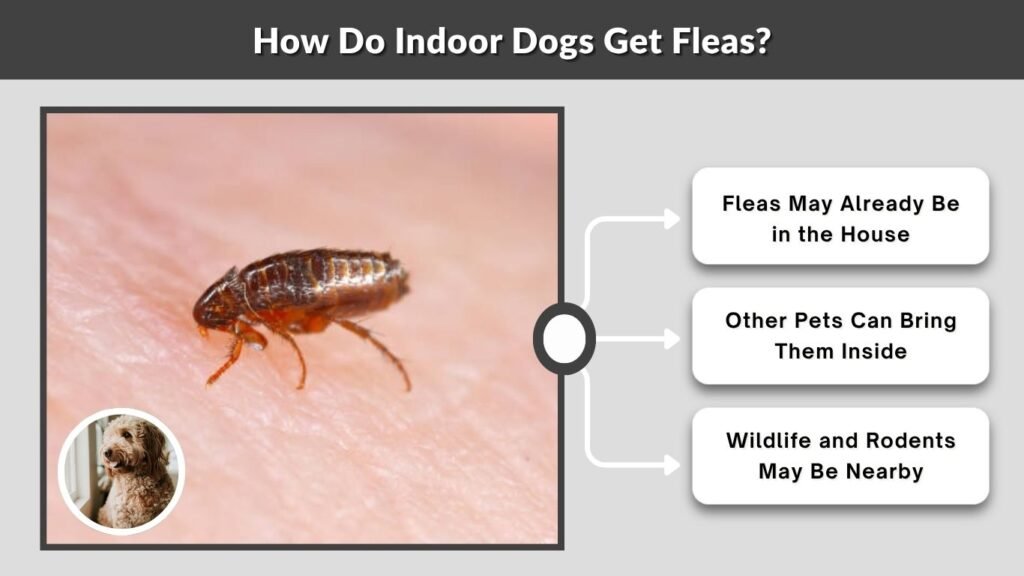
Indoor dogs can get fleas even when they rarely or never spend significant time outside. Fleas may already be developing in the home, or another animal may introduce them.
Fleas May Already Be in the House
A previous pet or visiting animal may have deposited flea eggs in carpets, bedding, or furniture. Eggs, larvae, and pupae develop away from the dog, and pupae are protected inside cocoons. New adults may therefore appear after the original animal is gone or after treatment begins.
Other Pets Can Bring Them Inside
A cat or another dog that goes outdoors can bring adult fleas into the home. Flea eggs then fall from the animal and collect in indoor resting areas.
Every dog and cat in an affected household generally needs suitable flea protection. Treating only the visibly infested dog can allow the flea population to continue.
Wildlife and Rodents May Be Nearby
Mice or other animals living in garages, crawl spaces, attics, or beneath porches may support fleas. The dog does not have to meet them directly. Fleas emerging near doorways, resting areas, or indoor spaces can find the dog later.
How Do Dogs Get Fleas in Winter?
Cold outdoor temperatures may reduce flea activity, but winter does not guarantee protection. Fleas can survive and reproduce inside a warm home throughout the year, regardless of the outdoor climate.
Indoor heating, carpets, bedding, furniture, and access to pets provide suitable conditions for development. This is why parasite-control experts commonly recommend year-round flea prevention rather than stopping treatment after summer.
Signs That a Dog Has Fleas
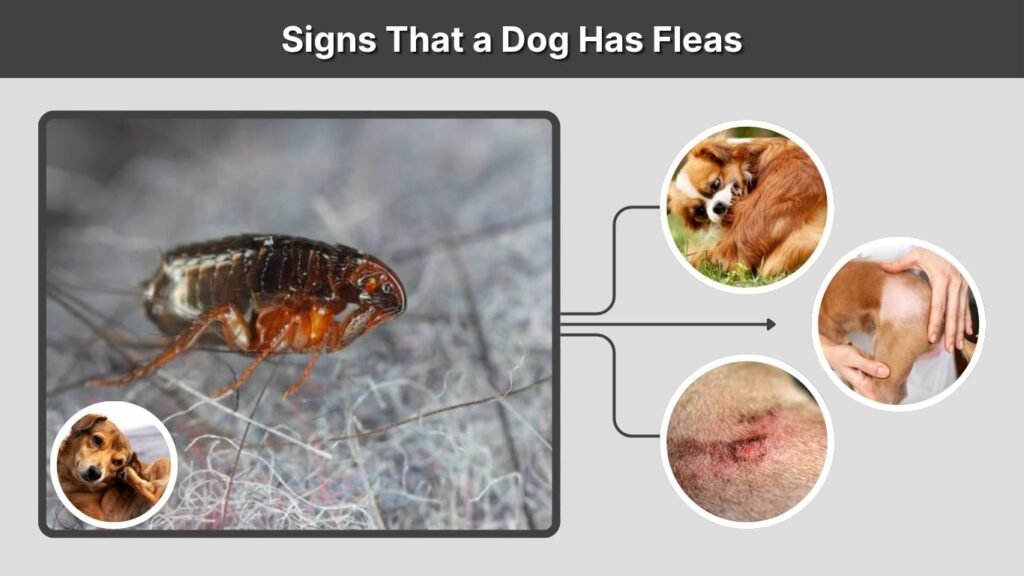
Some dogs have many fleas without immediately showing severe symptoms, while dogs with flea allergy may react strongly to only a few bites.
Common Symptoms
Signs of a flea infestation may include:
- Frequent scratching or chewing
- Restlessness
- Hair loss
- Red or inflamed skin
- Scabs around the lower back
- Irritation near the tail base
- Pale gums in a severely affected dog
- Small dark particles in the coat
Flea bites can cause flea allergy dermatitis, and persistent scratching may contribute to hair loss and secondary skin problems. Heavy infestations can cause anemia, especially in puppies or medically vulnerable dogs.
What Does Flea Dirt Look Like?
Flea dirt looks like small black or reddish-brown specks in the coat. It consists largely of digested blood excreted by adult fleas.
Place the suspected particles on a damp white paper towel. Flea dirt may dissolve and create a reddish-brown stain. Concentrate your inspection around the tail base, lower back, belly, groin, and neck.
How to Check With a Flea Comb
Run a fine-toothed flea comb slowly through the dog’s coat. Examine the comb after every few passes and place collected fleas in soapy water.
Finding no fleas during one inspection does not completely exclude an infestation. Dogs may remove fleas while grooming, and fleas can be difficult to find in thick or dark coats.
How Do You Get Rid of Fleas on a Dog?
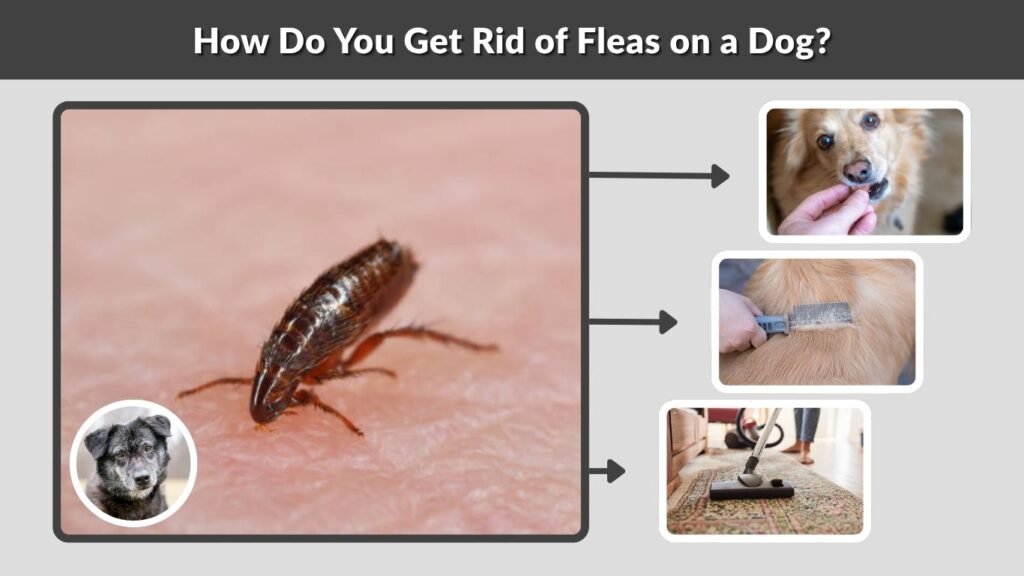
Successful control requires treating the dog, addressing every other pet, and removing developing fleas from the home. Treating the dog alone may not work because the egg, larval, and pupal stages are mainly found in the environment.
Use a Veterinary Flea Treatment
Flea treatments are available as oral tablets, chews, spot-on liquids, collars, sprays, and shampoos. The appropriate product depends on the dog’s age, weight, health, lifestyle, and other medications.
Choose a product labeled for dogs of the correct weight and age. Follow every direction exactly, and never increase the dose or apply treatment more frequently than instructed. Veterinary guidance is particularly important for puppies and dogs that are elderly, pregnant, nursing, sick, medicated, or have a seizure history.
Some isoxazoline flea and tick medications have been associated with neurologic reactions, including tremors, poor coordination, and seizures in some animals. Most dogs use these products safely, but the dog’s medical history should be discussed with a veterinarian.
Remove Fleas and Flea Dirt
A flea comb can immediately remove some adult fleas, eggs, and debris. Bathing with a dog-formulated shampoo may also wash away fleas and flea dirt, although many shampoos provide little long-term protection.
Do not apply household pesticides, concentrated essential oils, or products labeled only for carpets and furniture directly to the dog. Never use a product intended only for cats or another animal species.
Treat the Home
Vacuum carpets, rugs, sofas, floor edges, and areas under furniture. Focus on locations where the dog sleeps or rests. The EPA recommends frequent vacuuming as an important initial step for removing flea eggs, larvae, and adults.
Wash pet bedding and washable covers in hot, soapy water using settings that are safe for the fabric. Continue cleaning while the infestation is active because adults may continue emerging from protected pupal cocoons.
Can Dogs Get Tapeworms From Fleas?
Dogs can acquire the tapeworm Dipylidium caninum by swallowing an infected flea, usually while grooming or chewing itchy skin. The immature tapeworm then develops inside the dog’s intestine.
Tapeworm segments may resemble moving grains of rice around the dog’s anus, in fresh stool, or on bedding. A veterinarian can provide appropriate deworming treatment, but flea control is also necessary to prevent reinfection.
How to Stop Your Dog From Getting Fleas
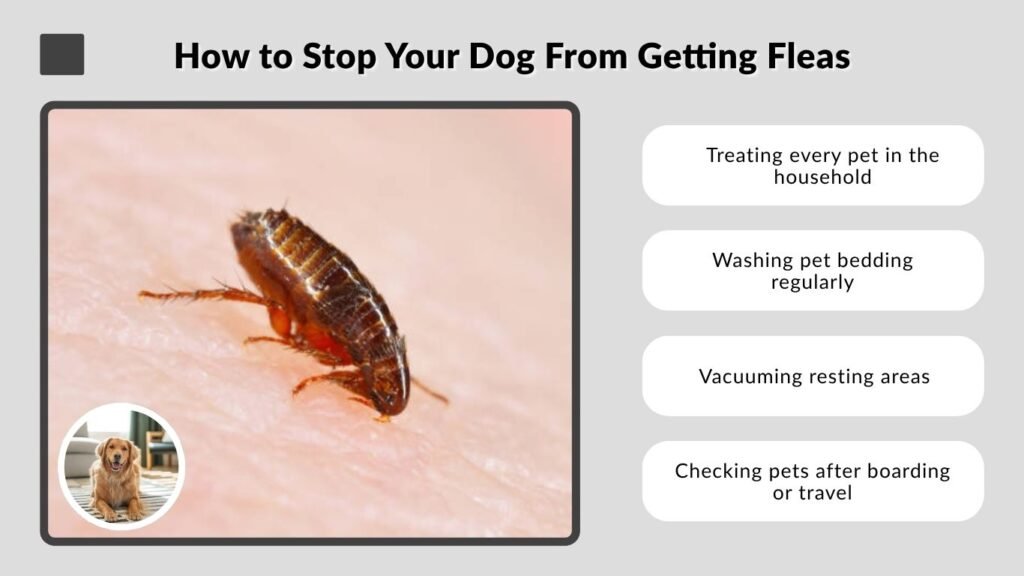
Use a veterinarian-recommended flea preventive consistently throughout the year. Missing or delaying doses can create an opportunity for adult fleas to feed and lay eggs.
Additional prevention includes:
- Treating every pet in the household
- Washing pet bedding regularly
- Vacuuming resting areas
- Checking pets after boarding or travel
- Limiting access to wildlife resting areas
- Controlling rodents around the home
- Keeping shaded outdoor resting areas clean
- Following the product’s exact schedule
Parasite-control guidance recommends comprehensive programs that eliminate fleas on pets, reduce the environmental population, and prevent reinfestation.
FAQs
Can a clean dog get fleas?
Yes. Fleas are not necessarily a sign that a dog or home is dirty. A clean dog can pick up an adult flea from an infested yard, carpet, kennel, pet bed, or shared animal area.
How did my dog get fleas without meeting another dog?
The dog probably encountered newly emerged fleas in the environment. Flea eggs deposited earlier by another animal may develop in carpets, bedding, yards, garages, or shared spaces before adults jump onto the dog.
How quickly can fleas spread through a home?
Once adult fleas begin feeding and producing eggs, eggs fall into the surrounding environment. Under ordinary household conditions, the full flea life cycle commonly takes several weeks, allowing an untreated infestation to expand.
Do fleas eventually leave a dog on their own?
Adult fleas usually remain on a suitable host to feed and reproduce. Waiting for them to disappear allows more eggs to enter the environment. Appropriate treatment and household cleaning are needed.
When should a dog see a veterinarian?
Contact a veterinarian when the dog is a young puppy, has pale gums, severe itching, open wounds, hair loss, weakness, or signs of infection. Seek prompt advice if vomiting, excessive drooling, trembling, poor coordination, or seizures occur after a flea product is used.