
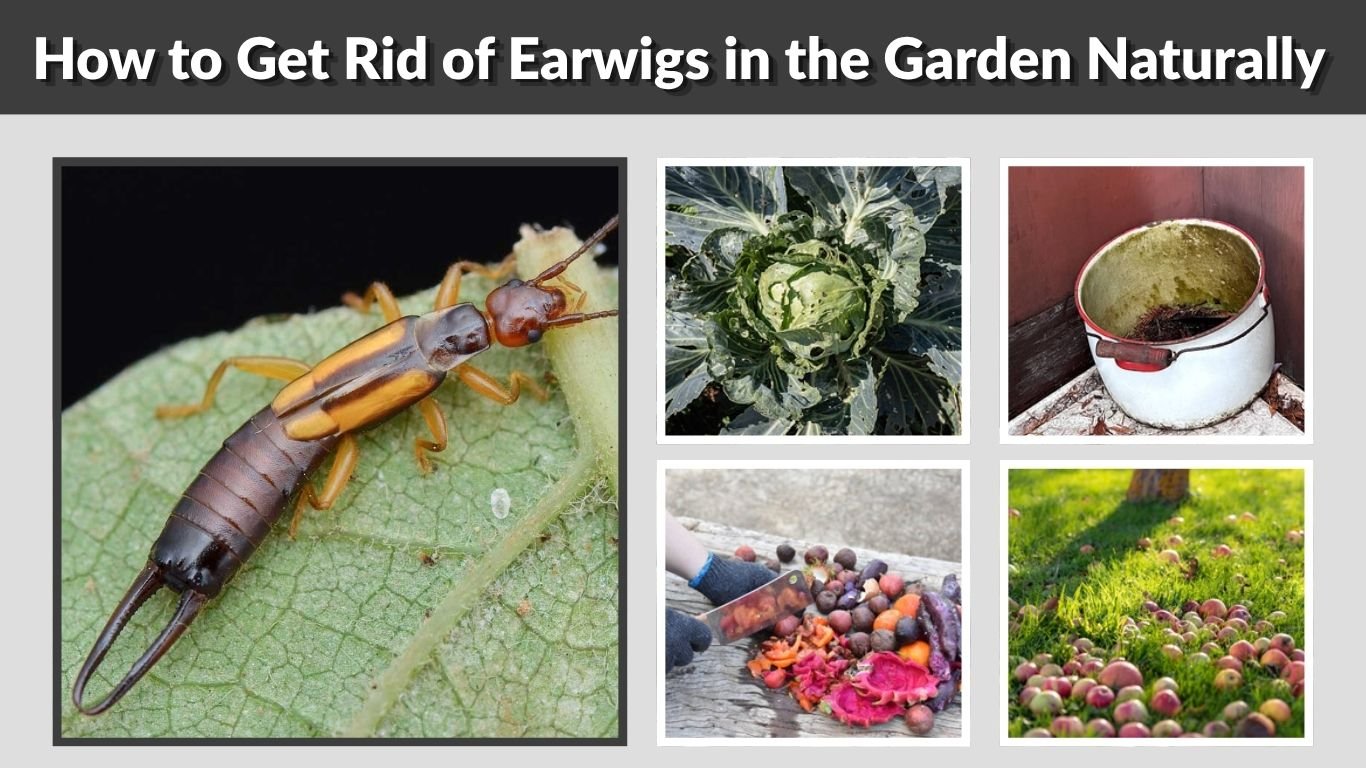
Earwigs in the garden can be both helpful and harmful. They eat pests such as aphids and mites, but they may also chew seedlings, flowers, soft fruits, and tender leaves. If you are seeing plant damage at night or finding earwigs under mulch and pots, you can reduce them without harsh chemicals. The best approach is to trap them, remove hiding places, manage moisture, and protect vulnerable plants.
Why Are Earwigs in Your Garden?
Earwigs like dark, damp, protected spaces. Gardens give them many hiding places, especially where mulch, leaf litter, stones, boards, flowerpots, and dense plants hold moisture. They usually hide during the day and feed at night. UC IPM recommends reducing hiding places and using traps as key nonchemical controls for earwigs.
| Garden Condition | Why Earwigs Like It |
| Thick mulch | Cool, damp daytime shelter |
| Leaf litter | Hiding place and food source |
| Overwatered beds | Moist soil attracts earwigs |
| Pots and saucers | Dark spaces underneath |
| Dense ground cover | Protection from sun and predators |
| Soft fruits and seedlings | Easy food at night |
Earwigs often become a problem when their numbers rise near vegetables, flowers, herbs, strawberries, dahlias, lettuce, corn, or young seedlings.
Are Earwigs Bad for the Garden?
Earwigs are not always bad. In some gardens, they help by eating aphids and other small pests. The Royal Horticultural Society advises gardeners to tolerate earwigs in many cases because they are part of the natural garden balance and can help reduce aphids on fruit trees and shrubs.
However, they become a problem when they damage soft plant growth. If you see ragged holes in leaves, chewed flower petals, damaged seedlings, or bites in soft fruit, earwigs may be involved.
Signs of Earwig Damage in the Garden
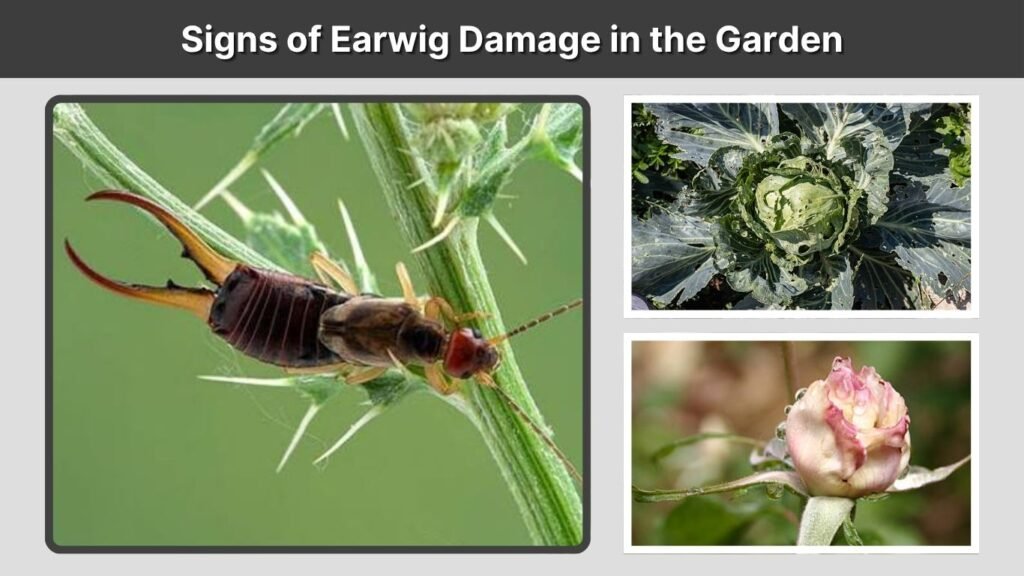
Earwig damage can look like slug, caterpillar, or beetle damage. The best way to confirm earwigs is to check plants after dark with a flashlight.
Common Signs
- Ragged holes in leaves
- Chewed flower petals
- Damaged seedlings
- Bites in strawberries or soft fruit
- Earwigs hiding under pots or mulch
- Damage appearing overnight
- Earwigs found in rolled leaves or plant crowns
If you are unsure, set a trap near the damaged plant overnight. If the trap catches earwigs, they are likely part of the problem.
How to Get Rid of Earwigs in the Garden Fast
The fastest way to reduce earwigs is trapping. Traps work well because earwigs naturally search for dark, narrow hiding places during the day.
Use Rolled Newspaper or Cardboard Traps
Roll damp newspaper or corrugated cardboard into a tube and place it near damaged plants in the evening. In the morning, collect the trap and shake the earwigs into soapy water.
UC IPM recommends rolled newspaper, bamboo tubes, or short hose pieces as earwig traps placed near plants before dark, then emptied in the morning.
Use Oil Traps
Oil traps are one of the best ways to catch many earwigs quickly. Sink a shallow can, tuna tin, or small container into the soil so the rim is level with the ground. Add vegetable oil or fish oil. Some gardeners add a drop of bacon grease or fish oil to make the trap more attractive.
UMass Extension recommends low-sided cans with about ½ inch of oil placed level with the soil to trap earwigs in vegetable gardens.
Use Hose or Bamboo Traps
Place short pieces of old garden hose, bamboo cane, or rolled cardboard around damaged plants. Earwigs crawl inside to hide during the day. Empty the traps every morning into soapy water.
| Trap Type | Best Use | How Often to Empty |
| Rolled newspaper | Quick natural trapping | Every morning |
| Cardboard tube | Around vegetables and flowers | Daily |
| Oil trap | Heavy earwig activity | Daily or every 2 days |
| Hose trap | Reusable garden trap | Every morning |
| Bamboo cane | Flower beds and raised beds | Daily |
How to Get Rid of Earwigs in the Garden Naturally
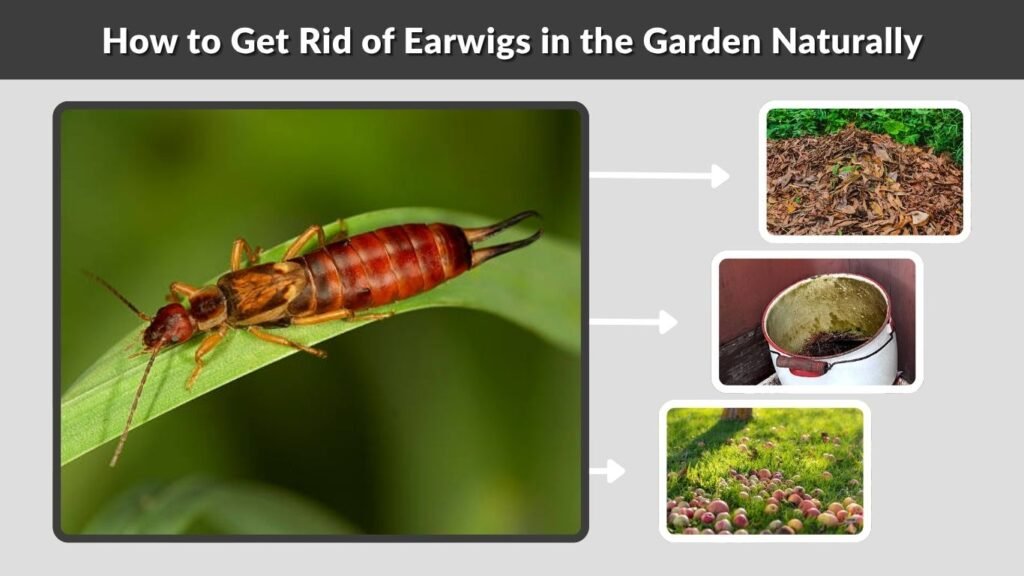
Natural earwig control works best when you combine trapping with habitat changes. Killing a few earwigs will not solve the problem if your garden still has many damp hiding places.
Remove Hiding Places
Clean up areas where earwigs hide during the day. Focus on:
- Wet leaf piles
- Old boards
- Unused pots
- Thick weeds
- Fallen fruit
- Dense mulch against stems
- Garden debris near seedlings
- Damp cardboard or wood pieces
You do not need to remove all mulch from the garden, but keep mulch thinner around plants that are being attacked.
Water in the Morning
Earwigs prefer moist areas, so avoid watering late in the evening. Morning watering gives the soil surface time to dry before night. This makes the bed less attractive when earwigs become active.
Protect Young Seedlings
Seedlings are more vulnerable than mature plants. Use collars, cloches, or fine mesh covers until plants are stronger. You can also start seedlings in trays and transplant them after they develop tougher leaves.
Encourage Natural Predators
Birds, frogs, ground beetles, spiders, and some beneficial insects may help reduce earwig numbers. A balanced garden with diverse plants often has fewer severe pest outbreaks.
How to Get Rid of Earwigs in the Vegetable Garden
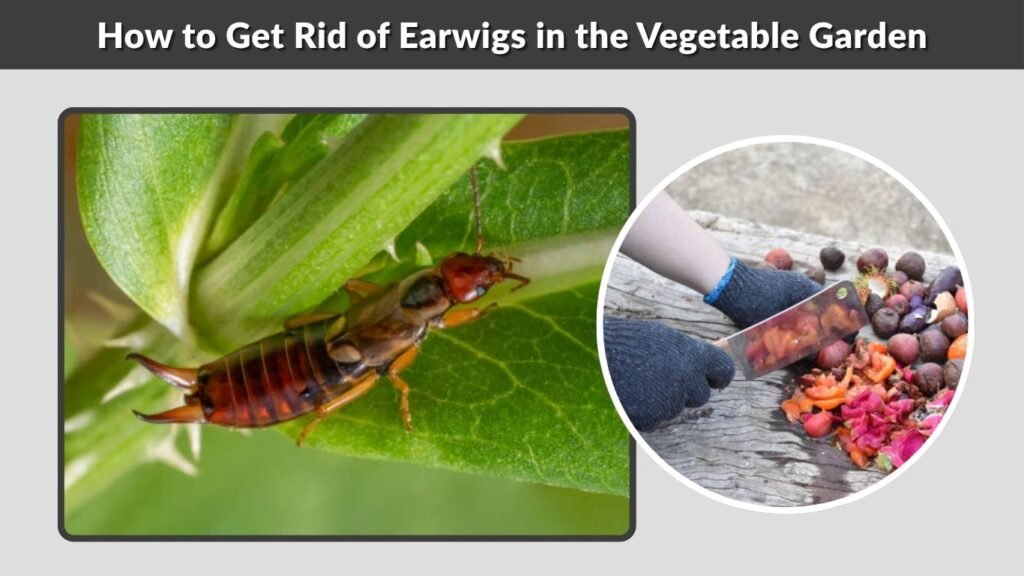
In vegetable gardens, avoid broad insecticides unless absolutely necessary because they can harm beneficial insects and pollinators. South Dakota State University Extension notes that many synthetic garden pesticides are broad-spectrum and may kill beneficial insects as well as pests, so bait trapping is a least-toxic option.
For vegetable beds, use these steps:
- Inspect damaged plants at night.
- Place oil traps near the worst damage.
- Add rolled cardboard traps between rows.
- Remove wet debris and fallen produce.
- Reduce thick mulch near seedlings.
- Water in the morning instead of evening.
- Repeat trapping daily for one to two weeks.
Earwigs are often most damaging to lettuce, young beans, basil, strawberries, sweet corn silk, flowers, and soft fruit. If damage is only minor, you may choose to control them only around the most vulnerable plants.
Do Coffee Grounds Get Rid of Earwigs?
Some people search for how to get rid of earwigs in the garden with coffee. Coffee grounds may slightly change the texture or smell of soil, but they are not a reliable earwig control method. They can be added to compost in moderation, but they should not replace proven methods like oil traps, cardboard traps, moisture control, and debris removal.
If you want a natural method that actually catches earwigs, use oil traps or rolled newspaper traps instead.
Should You Use Diatomaceous Earth for Earwigs?
Diatomaceous earth may help in dry areas, but it loses effectiveness when wet. Since earwigs prefer damp garden spaces, DE often works poorly after rain, irrigation, or heavy dew.
Use it carefully and avoid applying it on flowers where bees and other pollinators visit. For most gardens, trapping and habitat management are safer and more practical.
How to Prevent Earwigs from Coming Back
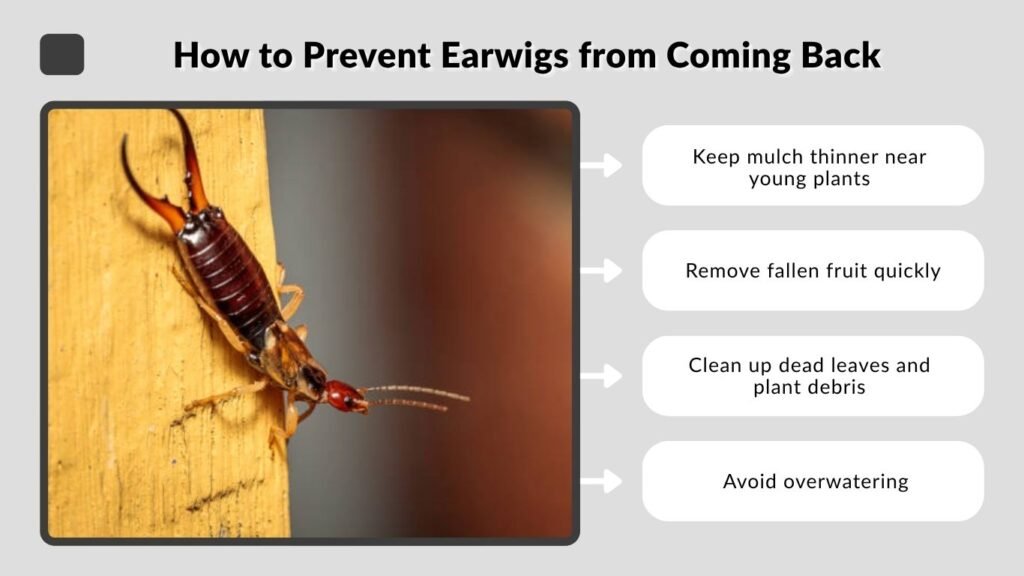
Prevention is about making the garden less comfortable for large earwig populations.
Prevention Tips
- Keep mulch thinner near young plants
- Remove fallen fruit quickly
- Clean up dead leaves and plant debris
- Avoid overwatering
- Space plants for better airflow
- Lift pots and check underneath often
- Store boards, tools, and trays off the ground
- Use traps early in the season before numbers rise
If earwigs are moving from the garden into the house, also clear mulch and damp debris near the foundation, seal cracks, and reduce outdoor moisture close to doors and windows.
When Should You Use Chemical Control?
Chemical control should be the last option in a home garden. Earwigs can be beneficial predators, and many sprays may harm pollinators or other helpful insects. If you choose a garden pesticide or bait, use one labeled for earwigs and for the specific crop or garden area. Always follow the label directions.
For most home gardens, daily trapping, moisture control, and removing hiding places are enough to bring earwig numbers down to a tolerable level.
FAQs
What is the fastest way to get rid of earwigs in the garden?
The fastest method is daily trapping. Use oil traps, rolled newspaper, cardboard tubes, bamboo, or short hose pieces near damaged plants. Empty traps every morning until numbers drop.
How do I get rid of earwigs in the garden naturally?
Use rolled newspaper traps, oil traps, remove damp hiding places, water in the morning, thin heavy mulch, and protect seedlings with covers or collars.
Are earwigs harmful to vegetable gardens?
Earwigs can damage seedlings, flowers, soft fruits, lettuce, herbs, and tender leaves. However, they can also eat aphids and other pests, so small numbers are often beneficial.
Do coffee grounds keep earwigs away?
Coffee grounds are not a reliable earwig control method. Traps, moisture control, and garden cleanup work better.
Why do I have so many earwigs in my garden?
You likely have damp hiding places, thick mulch, leaf litter, overwatered soil, fallen fruit, or dense plant growth. Reducing shelter and trapping daily can lower their numbers.
