
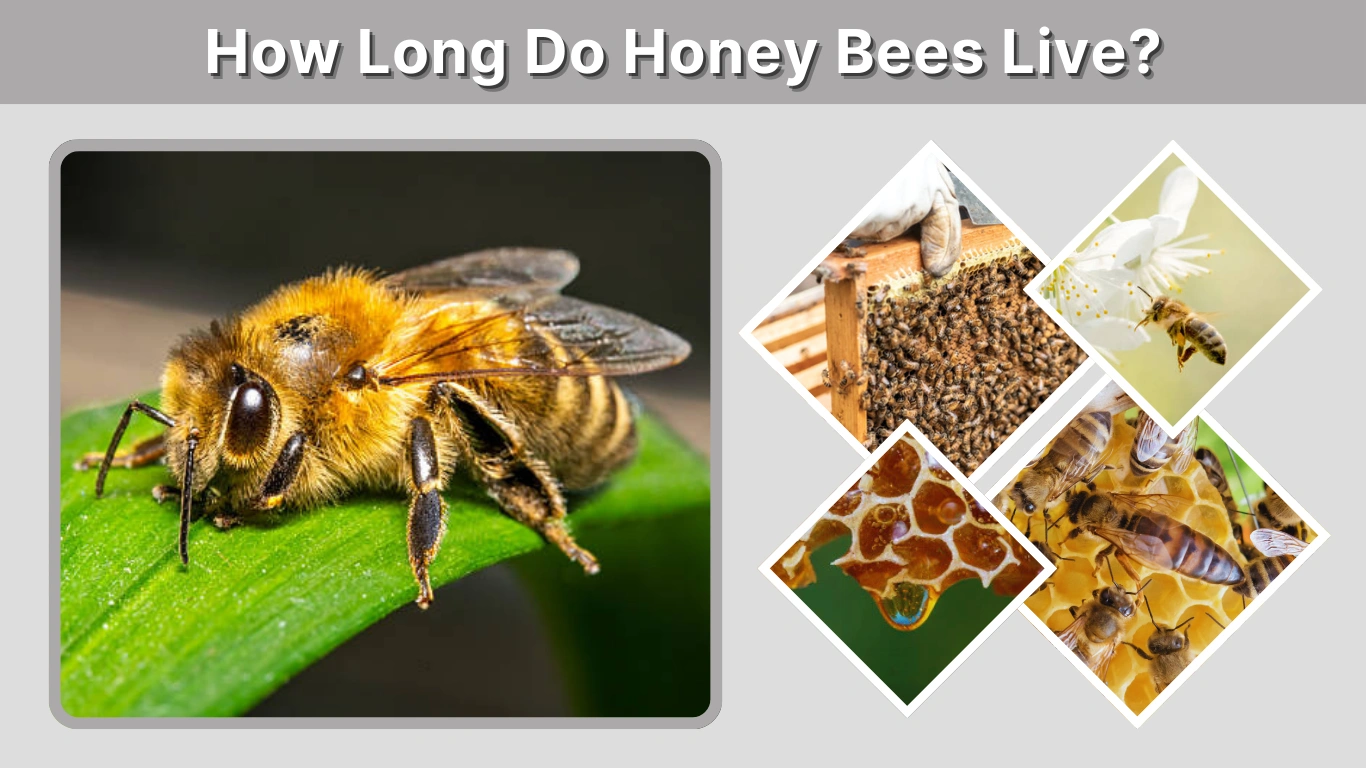
Honey bees live surprisingly different lifespans depending on their caste—workers, drones, or queens—and the environment in which they live. Factors such as season, climate, workload, species, and colony health all play major roles in determining how long a bee survives. Many people wonder how long honey bees live after stinging, how long winter bees survive, and why queens outlive all other members of the colony. This guide explains every major factor influencing honey bee lifespan.
What Determines a Honey Bee’s Lifespan?
Biological Factors
The honey bee caste system determines the foundation of lifespan differences. Queens live the longest, often several years, because they are fed nutrient-rich royal jelly from birth and perform limited physical labor. Worker bees, by contrast, expend tremendous energy foraging and maintaining the hive. Drones live the shortest lives, with the sole purpose of mating.
Environmental Conditions
Honey bee longevity changes drastically depending on climate, season, and environmental pressures. Harsh winters, extreme heat, pesticide exposure, poor nutrition, and parasitic threats like varroa mites can shorten a bee’s life. Conversely, stable temperatures, abundant flowers, and well-managed hives help extend the lifespan of all castes.
Species & Genetic Differences
Not all honey bees live the same length of time. Italian honey bees tend to live slightly longer under managed conditions, while Africanized honey bees may have shorter worker lifespans due to higher colony turnover and more intense foraging. European and American honey bees fall somewhere in the middle, with regional climate strongly influencing survival.
How Long Do Worker Honey Bees Live?
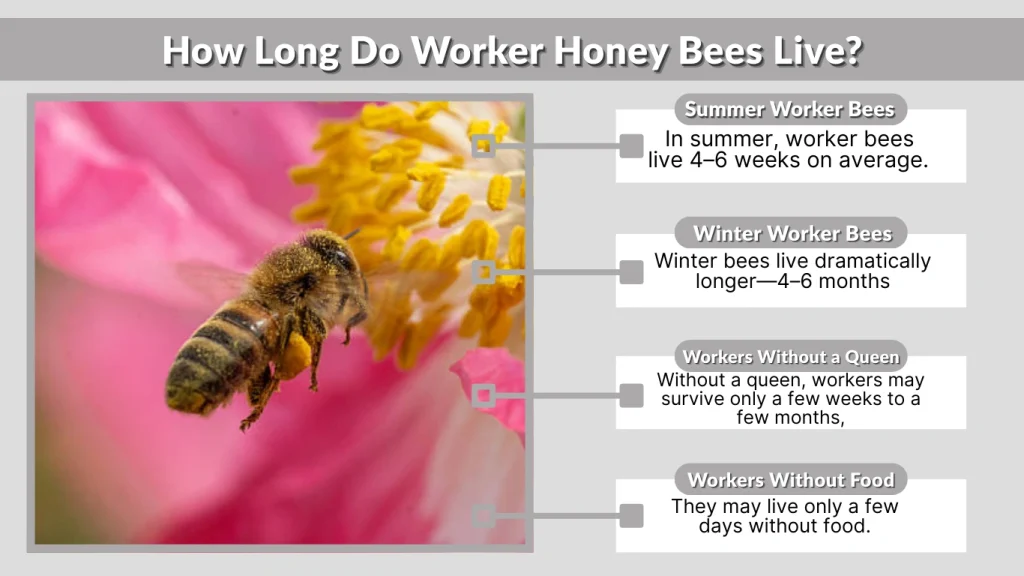
Worker honey bees make up the majority of the colony and perform every essential task: cleaning cells, feeding larvae, building comb, guarding the entrance, and foraging for nectar and pollen. Their lifespan varies widely depending on the season.
Summer Worker Bees (High Activity)
In summer, worker bees live 4–6 weeks on average. Their first half of life is spent performing hive duties, and the second half is spent foraging—an extremely demanding task. Constant flying, wing wear, and exposure to weather and predators lead to rapid aging. Summer bees essentially work themselves to death.
Winter Worker Bees (Long-Lived “Fat Bees”)
Winter bees live dramatically longer—4–6 months—because they perform less strenuous work. These “fat bees” develop larger internal fat bodies and store more nutrients, allowing them to maintain hive warmth and protect the queen during cold months. Because there is no foraging in winter, they experience far less stress and energy loss.
Workers Without a Queen
When a colony loses its queen, worker bees may begin laying unfertilized eggs, triggering rapid population decline. Without a queen, workers may survive only a few weeks to a few months, depending on season and food availability. The colony will eventually collapse unless a queen is replaced or raised.
Workers Without Food
Worker honey bees cannot survive long without access to nectar or stored honey. In warm conditions, they may live only a few days without food. During nectar dearths, colonies rely on stored honey and bee bread; starvation is one of the most common causes of sudden colony collapse in unmanaged hives.
How Long Do Queen Honey Bees Live?
Average Queen Lifespan
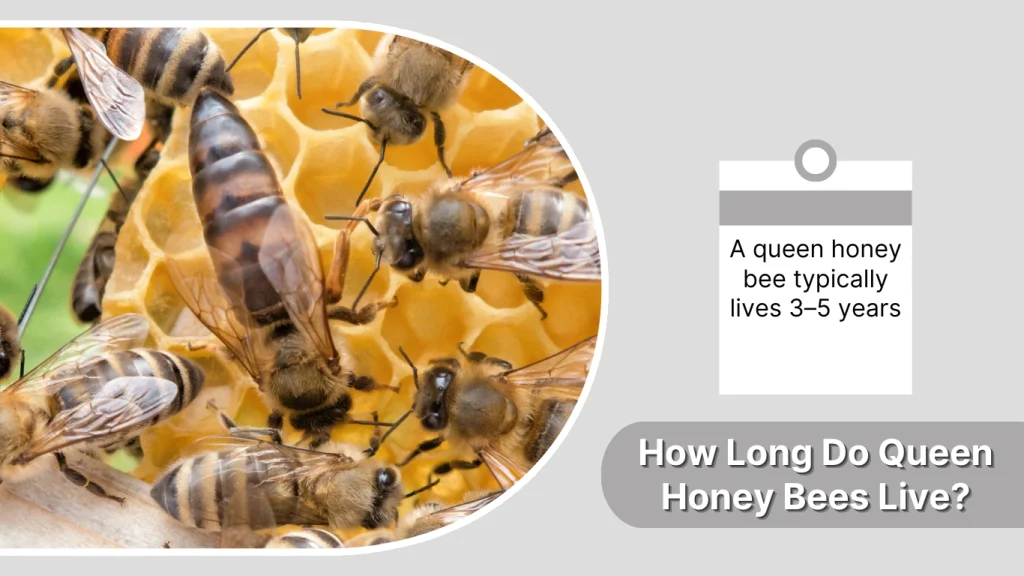
A queen honey bee typically lives 3–5 years, making her the longest-lived member of the colony. However, commercial beekeepers often replace queens every 1–2 years to maintain high productivity, since egg-laying ability declines with age.
Factors Affecting Queen Longevity
A queen’s lifespan depends on:
- Quality of mating (number of drones she mates with)
- Nutrition provided by nurse bees
- Parasite and disease exposure
- Colony stress, swarming, or overcrowding
- Genetic background (Italian, European, Africanized, etc.)
Queens that mate well and experience low levels of stress often remain productive for several years.
Queen Supersedure & Replacement
When a queen’s pheromone levels decline or her egg-laying weakens, worker bees may initiate supersedure, creating new queen cells to replace her. A failing queen may live for months after supersedure begins, but her functional lifespan effectively ends once the new queen emerges and takes over.
How Long Do Drone Honey Bees Live?
Drone Lifespan Under Normal Conditions
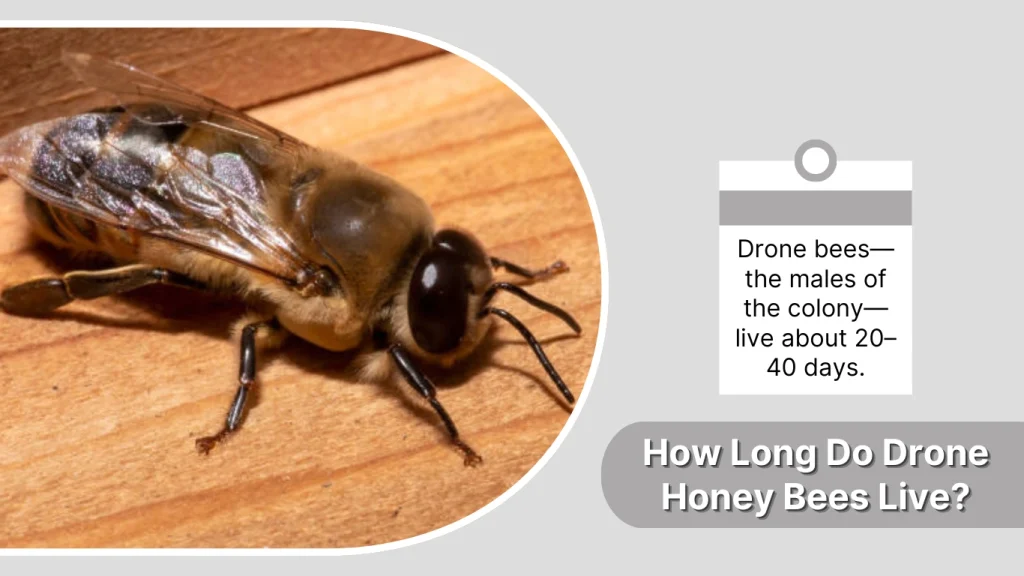
Drone bees—the males of the colony—live about 20–40 days. Their only purpose is to mate with a virgin queen. They do not forage, defend the hive, or participate in maintenance tasks.
After Mating
Once a drone mates with a queen, he dies immediately. Mating causes the drone’s reproductive organs to rupture, making death instantaneous. Only a small percentage of drones ever get the chance to mate.
In Winter
Before winter, drones are expelled from the hive since they consume food but do not contribute to survival. As a result, no drones survive winter in cold climates. They reappear in spring when colonies begin raising new males.
How Long Do Honey Bees Live After Stinging?
Why Workers Die After Stinging
Only worker honey bees die after stinging. Their stingers are barbed and designed to lodge into the skin of mammals. When the bee flies away, part of her abdomen, muscles, and digestive tract tear away with the stinger. This traumatic injury is fatal and prevents the bee from surviving more than a short time afterward.
Time to Death
The time a honey bee lives after stinging varies from minutes to a few hours, depending on how deeply the stinger embeds and how quickly the bee is injured. In most cases, death is nearly immediate because the bee is fatally damaged. This behavior is a defensive sacrifice to protect the colony from large predators.
Wild vs Captive Honey Bee Longevity
Lifespan in the Wild
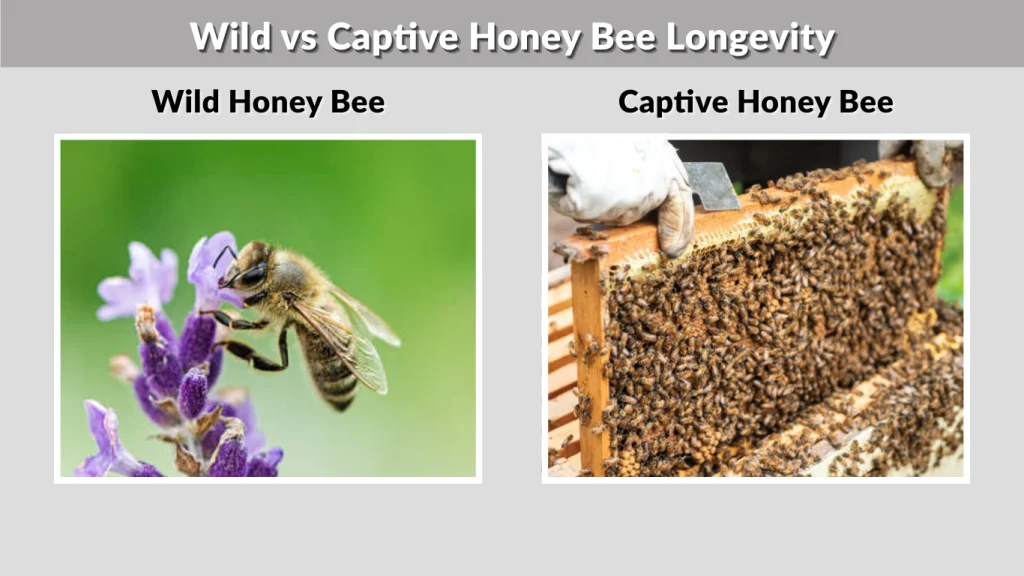
Wild honey bees face harsher survival conditions than managed bees. Predators, weather extremes, irregular food sources, and unmanaged diseases shorten lifespans. Worker bees in wild colonies may live slightly shorter lives due to higher foraging stress and exposure to parasites like Varroa mites. Queens also face risks such as failing mating flights or predation during swarming.
Lifespan in Managed Hives
In captivity (managed hives), honey bees often live longer because beekeepers can supplement food, treat for parasites, and maintain hive conditions. Queens are protected, workers access stable food sources, and drones have less environmental stress. However, even in captivity, lifespan differences between castes remain consistent.
Regional Lifespan Differences
European & Italian Honey Bees
European honey bees (Apis mellifera) and Italian honey bees are popular in managed hives for their gentle nature. Their lifespans are fairly stable: workers live around typical seasonal averages, and queens commonly reach 3–5 years. Italian bees may live slightly longer in warm regions due to steady nectar flow.
Africanized Honey Bees
Africanized honey bees have shorter worker lifespans because of extremely high activity levels and frequent swarming. These bees are more defensive, relocate nests more often, and consume energy at a faster rate. Queens generally live shorter lives as well due to increased colony turnover.
American & Australian Honey Bees
Lifespan in North America and Australia varies with climate and resource availability. In southern climates, year-round foraging may shorten worker lifespans. In cooler climates, winter bees live longer due to reduced activity. Beekeeping practices also influence longevity, with supplemental feeding extending survival during nectar shortages.
Lifespan in Different Seasons
How Long Bees Live in Summer
Summer bees are heavily overworked. They forage daily, regulate hive temperature, and feed larvae. All this stress causes them to burn out in 4–6 weeks. The hotter the climate and the heavier the nectar flow, the shorter their lifespan tends to be.
How Long Bees Live in Winter
Winter worker bees are built for longevity. These bees live 4–6 months, storing extra nutrients and helping maintain hive warmth through clustering behavior. Their slower metabolism significantly preserves their energy reserves. Without winter bees, colonies would not survive seasonal cold.
How Long Do Honey Bees Live Without a Hive?
Stray Workers
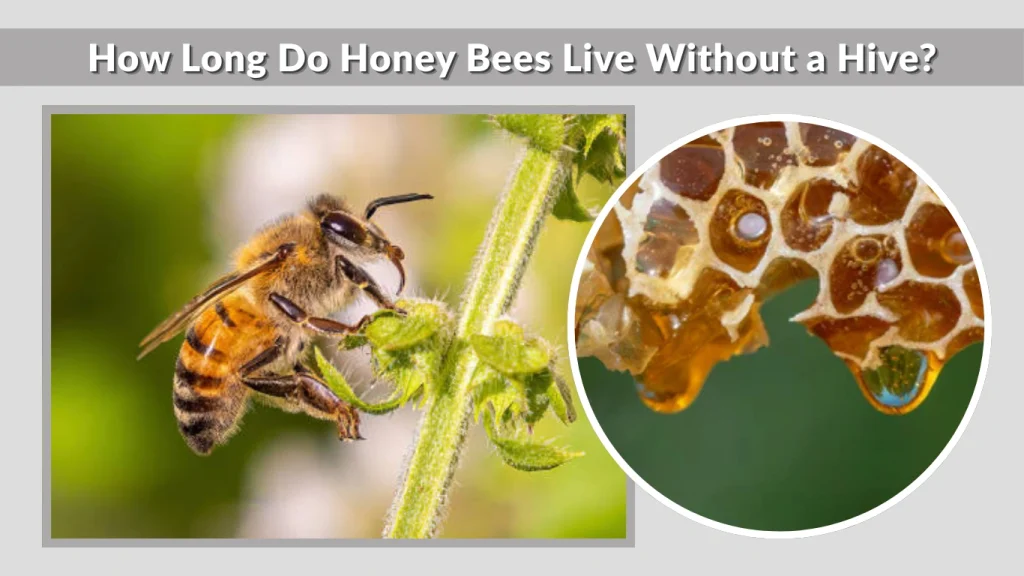
A lone worker honey bee separated from the hive typically survives a few hours to a couple of days, depending on temperature and food availability. Workers rely heavily on the social structure of the colony. Without hive resources, they quickly run out of energy.
Swarming Bees
During swarming, bees temporarily cluster on branches or structures. Because the queen is protected and workers conserve energy, swarming clusters can survive a few days until they locate a suitable new nest. Scouts search for a cavity, and once chosen, the entire group relocates.
Lifespan Comparison Table
A summary of major lifespan differences:
| Bee Type | Lifespan | Notes |
| Summer Worker | 4–6 weeks | Heavy foraging workload |
| Winter Worker | 4–6 months | “Fat bees,” lower activity |
| Queen Bee | 3–5 years | Longest-lived caste |
| Drone (no mating) | 20–40 days | Expelled before winter |
| Drone (after mating) | Immediate death | Dies instantly after reproduction |
| Worker after sting | Minutes–hours | Dies from abdominal injury |
Environmental & Biological Threats That Reduce Lifespan
Parasites and Diseases
Varroa mites, tracheal mites, Nosema fungi, and viral infections significantly shorten bee lifespans. Varroa in particular weakens bees by feeding on their fat bodies and transmitting viruses that shorten their ability to forage and survive.
Food Quality & Pesticides
Poor nutrition—especially lack of diverse pollen—reduces bee health and shortens lifespan. Pesticide exposure disrupts navigation, reduces immunity, and can kill bees outright. Even sub-lethal levels weaken bees’ longevity over time.
FAQs
How long do honey bees live on average?
Honey bees live anywhere from a few weeks to several years depending on caste. Worker bees in summer live 4–6 weeks, winter workers live 4–6 months, drones live 20–40 days, and queens live 3–5 years, making them the longest-lasting members of the colony.
How long does a queen honey bee live?
A queen honey bee typically lives 3–5 years. She is fed rich royal jelly, performs minimal physical labor, and is protected by thousands of workers. Her lifespan depends on successful mating, nutrition, genetics, and colony health.
How long do drone honey bees live?
Drone bees usually live 20–40 days unless they mate with a queen, in which case they die immediately. Drones are expelled from the hive before winter because they consume resources but do not contribute to colony survival.
Do honey bees die after stinging?
Worker bees die after stinging mammals because their barbed stinger tears away part of their abdomen. The fatal injury causes the bee to die within minutes or hours. Queens and drones do not sting in defensive situations.
Why do winter bees live so long?
Winter bees develop larger fat stores, thicker physiology, and slower metabolism. Because they do not forage or experience heavy physical stress, they live 4–6 months—much longer than summer bees. Their primary job is to keep the queen and colony alive through winter.
