Bees are essential pollinators, but their lifespans vary dramatically depending on species, role in the colony, and environmental conditions. From honey bees that live for weeks or months to queen bees that may live for years, every type of bee has a unique life cycle. Whether you’re curious about honey bees, bumble bees, carpenter bees, or solitary species like mason bees and leafcutter bees, this guide breaks down exactly how long each one lives—and why.
Why Bee Lifespans Vary
The lifespan of a bee depends heavily on its species and its job. Social bees like honey bees and bumble bees live in colonies where workers have short but intense lives, males have brief reproductive windows, and queens are designed for longevity. Solitary bees, by contrast, live entirely alone, so their life cycles are shorter but highly efficient.
Several factors affect how long bees live:
- Climate and season
- Access to food
- Exposure to predators and pesticides
- Genetics and species differences
- Whether they live in a colony or alone
With these factors in mind, let’s look at exactly how long the major types of bees live.
How Long Do Honey Bees Live?
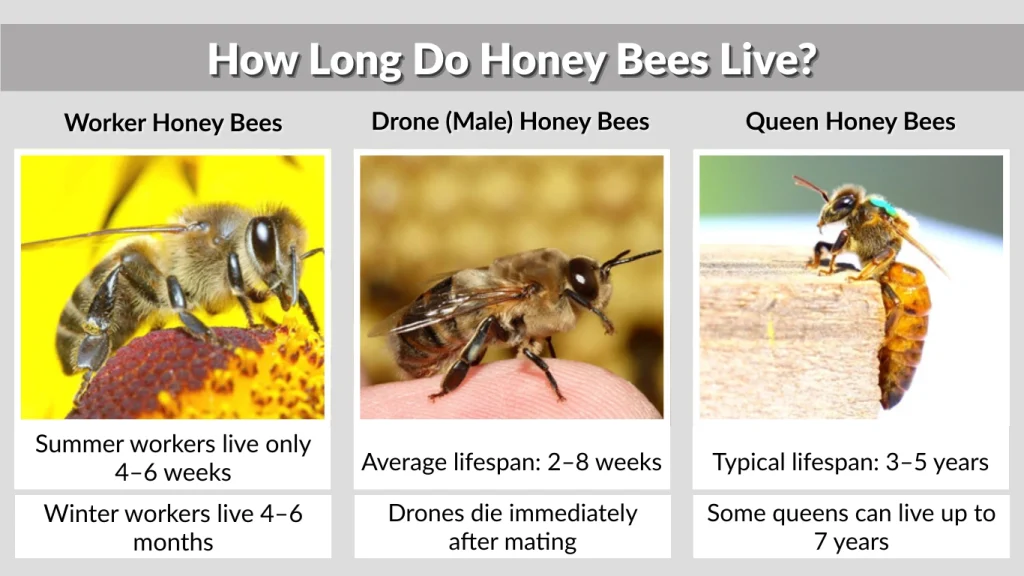
Honey bees are among the most studied insects on earth. Their lifespan is closely tied to their job within the colony.
Worker Honey Bees
Worker bees have the shortest life of all honey bees.
- Summer workers live only 4–6 weeks
They work nonstop: cleaning cells, feeding brood, guarding the hive, and foraging for nectar. This intense workload wears out their wings and bodies quickly. - Winter workers live 4–6 months
During winter, honey bees cluster inside the hive to stay warm. Because they are not foraging daily, they live much longer than summer workers.
Workers born late in the year are physiologically different—larger fat stores, stronger immune systems, and bodies designed for survival.
Drone (Male) Honey Bees
Drones have one job only: to mate with a virgin queen.
- Average lifespan: 2–8 weeks
- Drones die immediately after mating because their reproductive organs detach.
- If they do not mate, they remain in the hive until late summer when workers push them out to conserve winter resources.
A drone outside the hive will live only a few hours to a day without food.
Queen Honey Bees
Queens are the longest-lived bees in the colony.
- Typical lifespan: 3–5 years
- Some queens can live up to 7 years with proper hive conditions
- Queens lay thousands of eggs per day at their peak
- They rarely leave the hive except for their mating flight
The colony’s health is strongly tied to the queen’s lifespan and productivity.
How Long Do Bumble Bees Live?
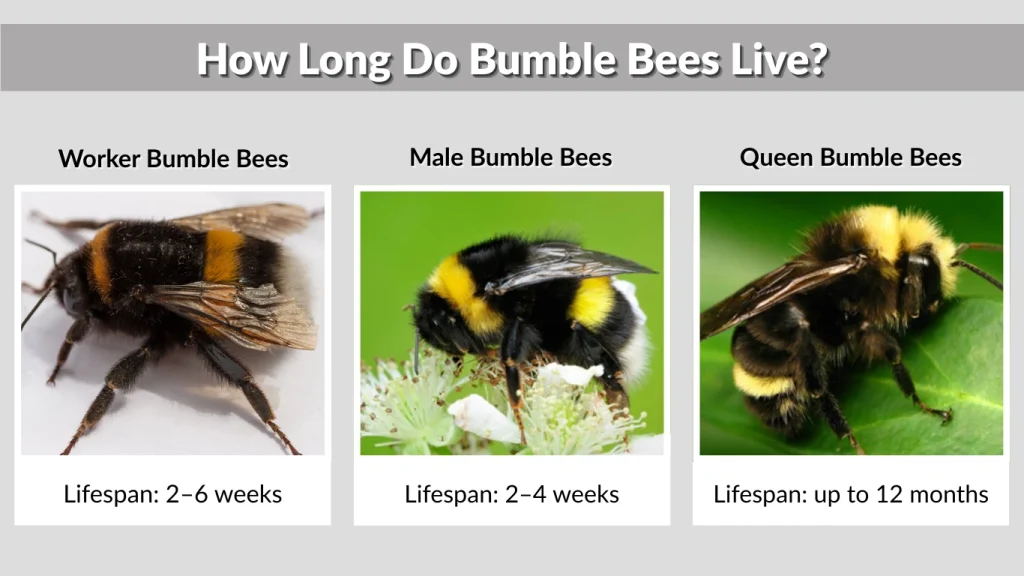
Bumble bees are social but live in smaller colonies than honey bees, and their lifespan is strongly seasonal.
Worker Bumble Bees
- Lifespan: 2–6 weeks
Workers gather pollen, feed larvae, and defend the nest. Their high-energy lifestyle shortens their life, especially during peak summer foraging.
Male Bumble Bees (Drones)
- Lifespan: 2–4 weeks
Males leave the nest soon after emerging and spend their lives searching for queens to mate with.
Queen Bumble Bees
Queens are the only bumble bees that survive winter.
- Lifespan: up to 12 months
- They emerge in spring, build a nest, produce workers, and lay eggs
- In autumn, they mate and then hibernate underground through the winter
Bumble bee colonies completely die out each fall except for new queens.
How Long Do Carpenter Bees Live?
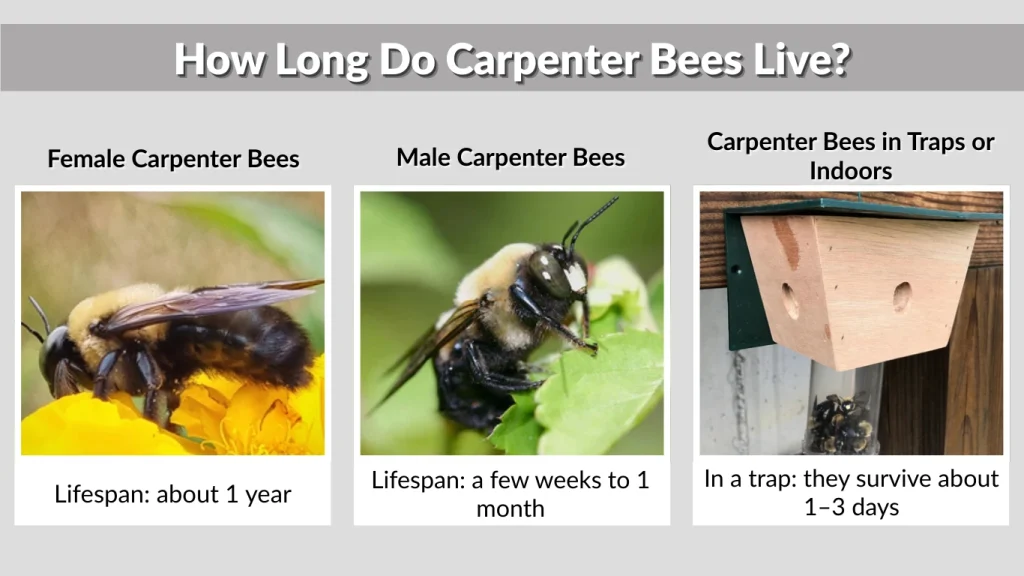
Carpenter bees are large, solitary bees that tunnel into wood to create nests.
Female Carpenter Bees
- Lifespan: about 1 year
Females build and provision nests, lay eggs, and may reuse old tunnels for multiple seasons. Their long lifespan makes them one of the longest-living solitary bees.
Male Carpenter Bees
- Lifespan: a few weeks to 1 month
Males hover near nest entrances, appearing aggressive, but they cannot sting.
They live only long enough to mate.
Carpenter Bees in Traps or Indoors
If carpenter bees become trapped:
- In a trap: they survive about 1–3 days
- Indoors without food: usually less than 24–48 hours
How Long Do Solitary Bees Live?
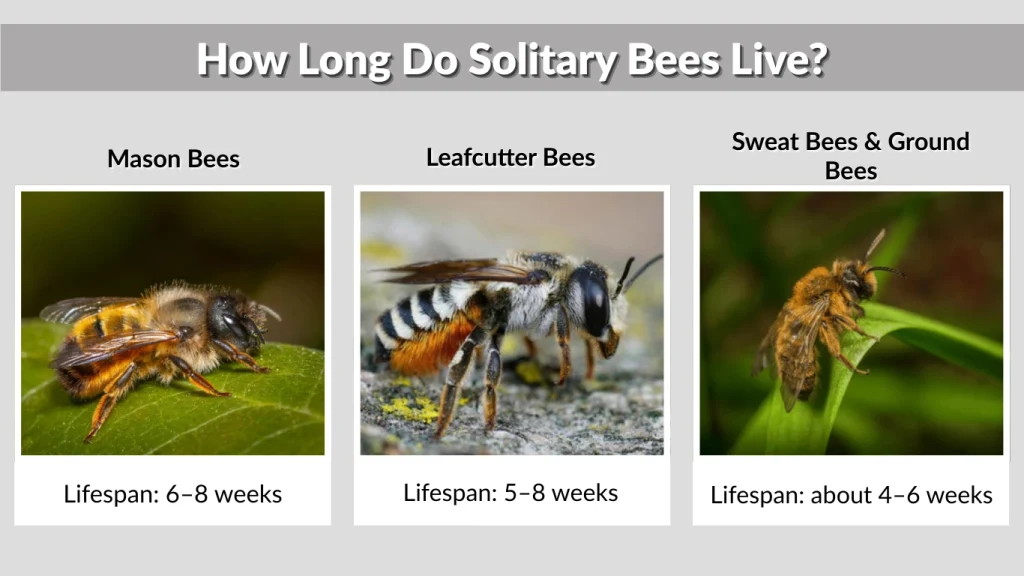
Most bee species on earth are solitary, meaning each female builds her own nest without workers or queens.
Mason Bees
- Lifespan: 6–8 weeks
Early-spring pollinators that lay eggs in mud-sealed tubes.
Leafcutter Bees
- Lifespan: 5–8 weeks
Active in summer, known for cutting round pieces of leaves.
Sweat Bees & Ground Bees
- Lifespan: about 4–6 weeks
Common garden visitors that nest underground or in soil banks.
Blue Banded Bees
- Lifespan: 6–8 weeks
Popular in Australia and known for their buzz-pollination skills.
How Long Do Native Bees Live?
Native bees vary widely depending on species and region. In places like the UK, Australia, and North America, native solitary bees tend to follow similar patterns:
- Most live 4–8 weeks as adults
- Many overwinter as larvae or cocoons
- Lifespan depends heavily on temperature and rainfall
- Some tropical species live slightly longer due to stable climates
Native bees are incredibly efficient pollinators despite their brief adult lives.
How Long Do Bees Live Without Food or Water?
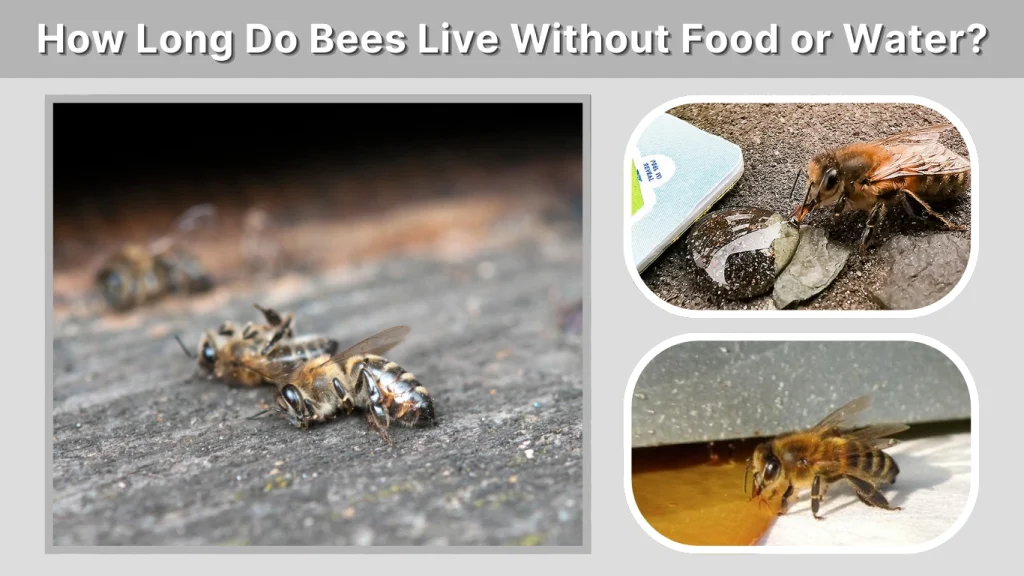
Food scarcity rapidly reduces a bee’s lifespan because bees burn tremendous energy during flight.
Starvation Timeline
- Most bees can survive a few hours to 24 hours without food
- Flying bees burn energy faster, dying sooner
- Cool weather may extend survival slightly
Dehydration Timeline
Bees need moisture from nectar or water:
- Without water, most bees survive less than a day
- Hot weather can reduce this to only a few hours
Bees Trapped Indoors
When bees fly against windows repeatedly:
- They often survive 1–2 days indoors
- Lack of nectar access shortens lifespan
- Providing a sugar-water drop can revive a weak bee
How Long Do Bees Live After Stinging?
Honey Bees
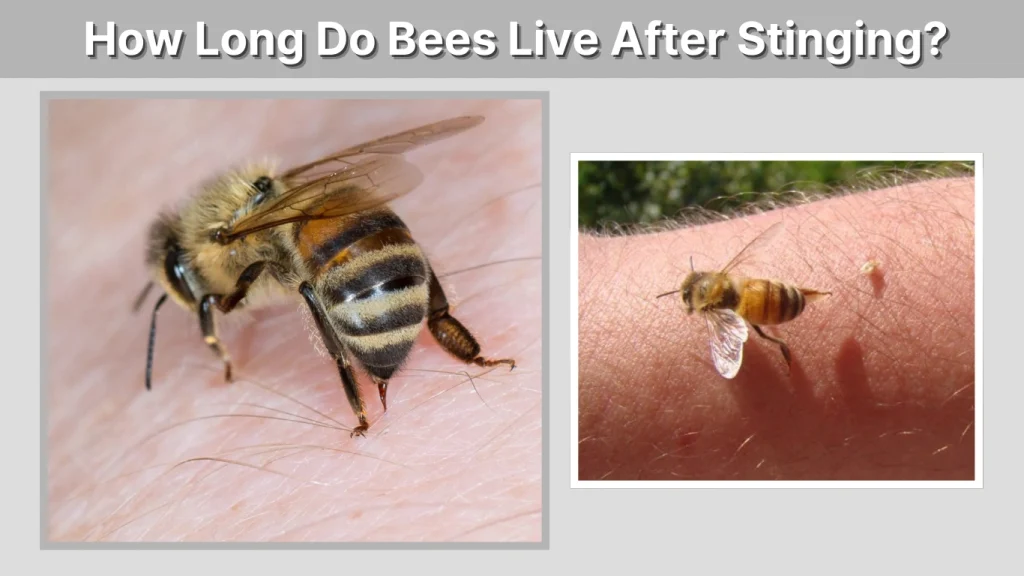
Honey bees are the only bees that typically die after stinging mammals, including humans.
Why?
- Their stinger has barbed hooks
- When they pull away, the stinger gets stuck
- The bee’s abdomen tears, causing rapid death
But honey bees do not die after stinging other insects because their stinger does not embed the same way.
Bumble Bees, Carpenter Bees & Solitary Bees
These bees have smooth stingers:
- They can sting multiple times
- They do not die after stinging
- They rarely sting unless provoked
How Long Do Bees Live Inside Hives vs the Wild?
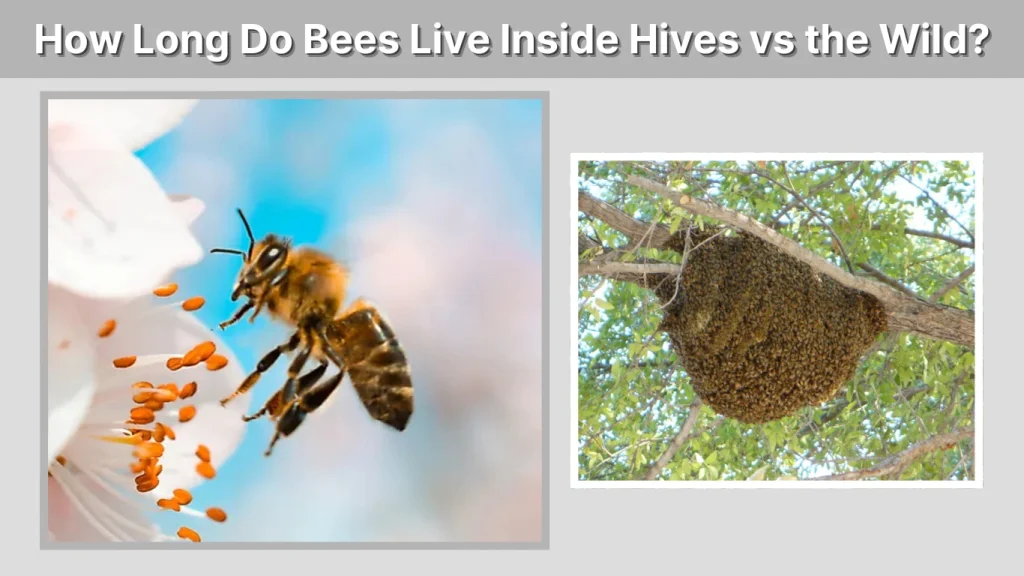
Inside a Hive
Bees living in colonies tend to live longer due to:
- Temperature control
- Constant food supply
- Protection from predators
- Collective defense against threats
Winter honey bees especially benefit from hive conditions, surviving up to 6 months.
In the Wild
Bees in the wild face:
- Predators (birds, spiders, wasps)
- Parasites and mites
- Food shortages
- Weather extremes
As a result, wild bees typically live shorter lives than bees in managed hives.
How Long Do Bees Live in Winter?
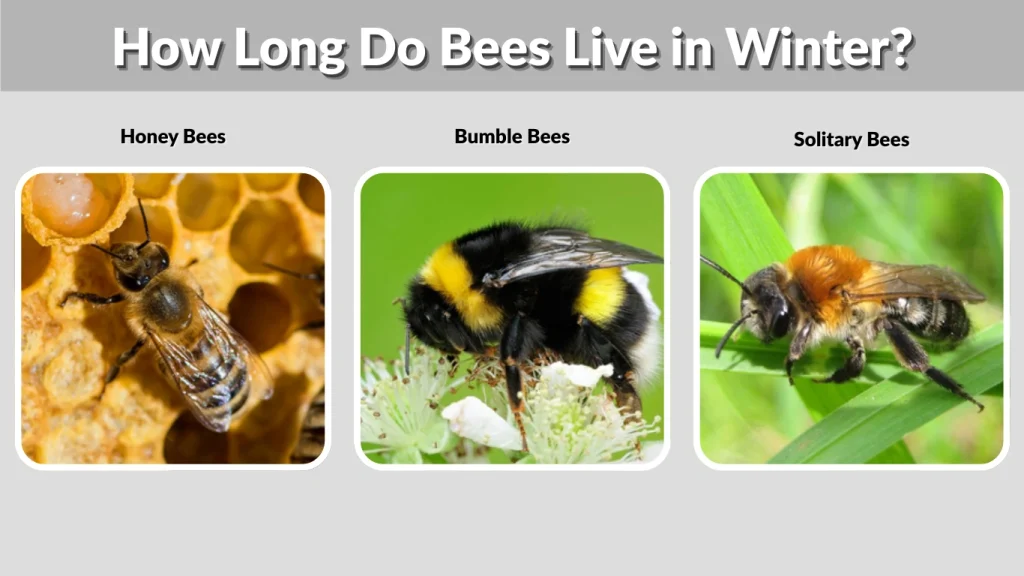
Winter brings major changes to bee lifespan:
Honey Bees
- Winter bees live 4–6 months
- The colony clusters to stay warm
- Very little foraging activity
- Queen continues laying small numbers of eggs
Bumble Bees
- Entire colony dies in fall
- Only mated queens survive winter
- Queens hibernate underground until spring
Solitary Bees
- Overwinter as cocoons, larvae, or pupae
- The adult stage appears in spring or summer
Winter drastically increases lifespan because bees remain inactive and conserve energy.
How Long Do Bees Live Without a Queen?
A queenless colony collapses quickly.
Honey Bees Without a Queen
- Workers live their normal 4–6 weeks
- They cannot produce fertile female offspring
- Colony often dies within 1–2 months
- Workers may attempt to raise an emergency queen, but success is limited
Bumble Bees
- No queen = colony ends
- Workers and males die off naturally
- New queens have already left for winter
Solitary Bees
No queens exist—each female is the “queen” of her nest.
Factors That Affect Bee Lifespan
Seasonal Conditions
- Cold climates slow activity and extend lifespan
- Hot climates shorten it
- Peak summer foragers die fastest
Environmental Threats
- Pesticides shorten worker lifespans
- Habitat loss reduces food availability
- Parasites (Varroa mites) severely reduce honey bee longevity
Genetics & Species Variation
- Social bees evolve long-lived queens
- Solitary bees evolve short but efficient lifecycles
- Predator-rich environments shorten lifespan
Comparison Table: Bee Lifespans
| Bee Type | Worker Lifespan | Male Lifespan | Queen Lifespan | Notes |
| Honey Bees | 4–6 weeks | 2–8 weeks | 3–5 years | Winter bees live longer |
| Bumble Bees | 2–6 weeks | 2–4 weeks | Up to 1 year | Colony dies in fall |
| Carpenter Bees | ~1 year | 2–4 weeks | N/A | Solitary species |
| Mason Bees | 6–8 weeks | 6–8 weeks | N/A | Overwinter as cocoons |
| Leafcutter Bees | 5–8 weeks | 5–8 weeks | N/A | Summer pollinators |
| Sweat Bees | 4–6 weeks | 4–6 weeks | N/A | Ground nesting |
| Ground Bees | 4–6 weeks | Varies | N/A | Solitary burrowers |
Unusual Questions About Bee Lifespan
How long do bees live in movies?
In the Bee Movie, bees live human-like lifespans—this is fictional. Real bees live only weeks to months, depending on role.
How long do bees live in Minecraft?
Minecraft bees live 10–60 minutes of real-time activity, unless harmed or trapped.
How long do bees live in a house?
Without access to nectar, indoor bees survive 1–2 days at most.
FAQs
Which bees live the longest?
Queen honey bees—up to 5 years or more.
Which bees live the shortest?
Worker bees during summer—only 4–6 weeks.
Do bees live longer in winter?
Yes, especially honey bee and carpenter bee species.
Why do some bees only live a few weeks?
Intense foraging wears their bodies out quickly.
How long do bees live without food?
Most survive less than 24 hours without nectar or sugar.