
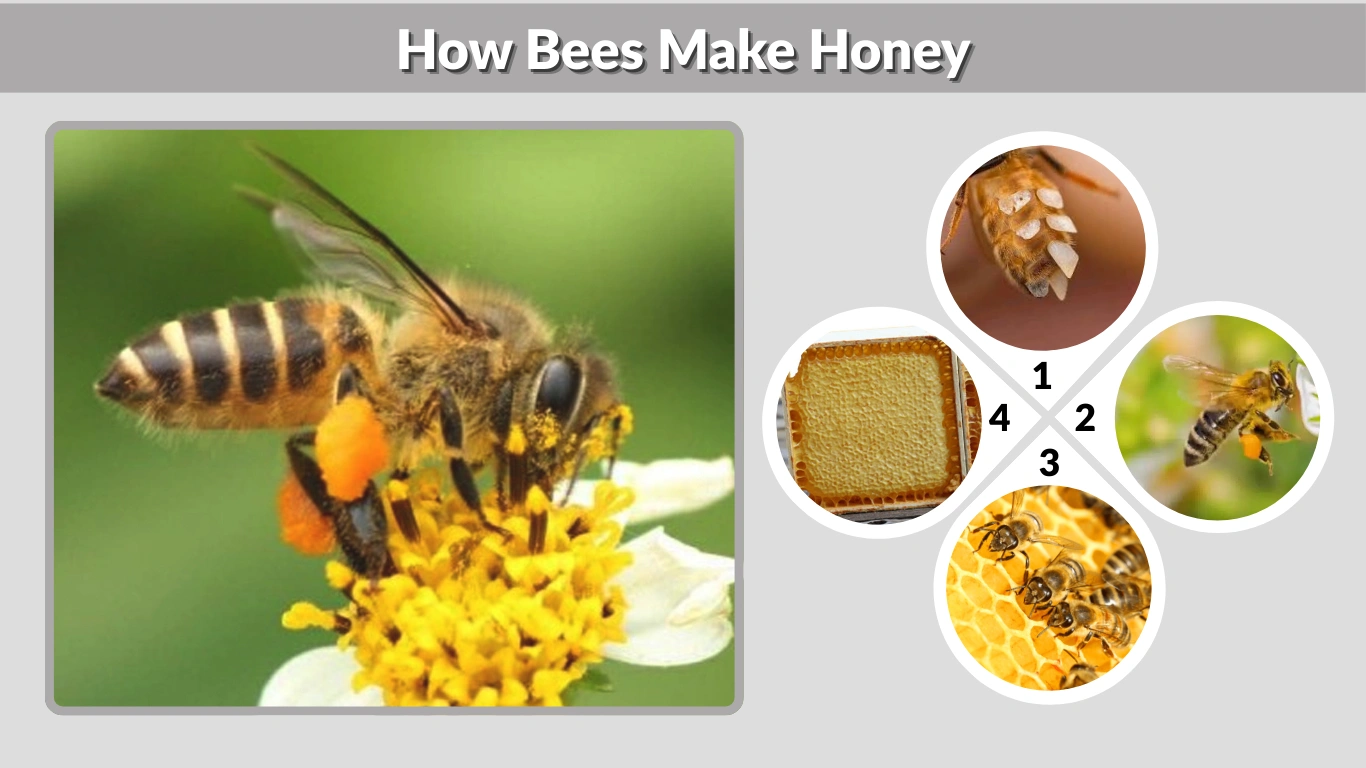
Bees produce honey through a remarkable natural process involving flower nectar collection, enzymatic transformation, moisture reduction, and long-term storage inside wax cells. This natural system ensures bees have a stable food supply during cold or nectar-scarce seasons. Understanding how bees make honey reveals just how complex and well-organized a bee colony truly is.
What Honey Actually Is
Honey is a thick, sugary substance created from flower nectar and modified by bees. It contains fructose, glucose, trace minerals, antioxidants, and water. Because honey never spoils, it’s the perfect long-term energy source for the hive. Bees rely on it for survival in winter, when flowers are nonexistent and nectar cannot be collected.
The Complete Honey-Making Process
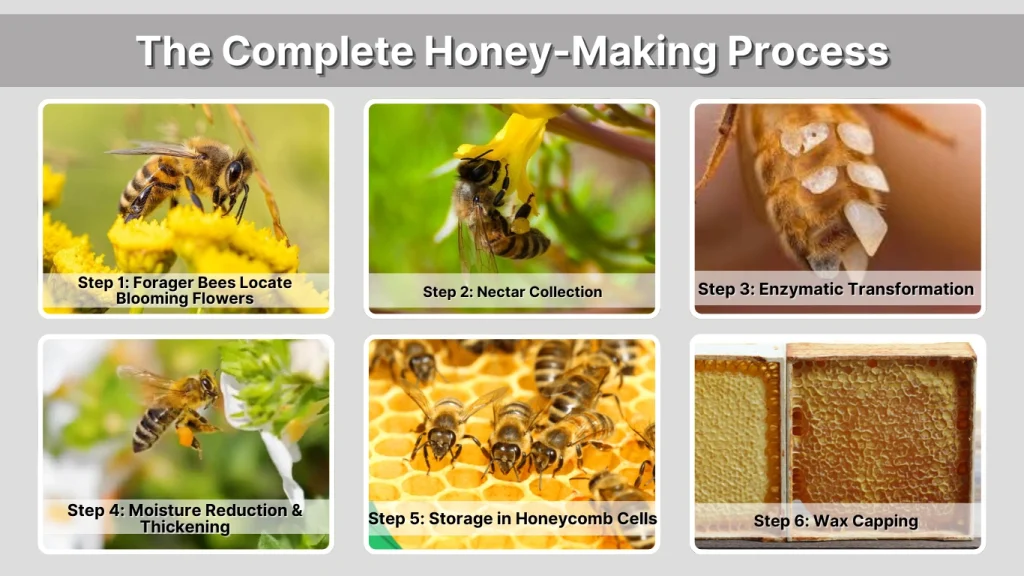
Step 1: Forager Bees Locate Blooming Flowers
Bees leave the hive and search for flowers rich in nectar. They use their compound eyes to detect color and ultraviolet patterns and rely on scent to trace nectar sources. Once a worker bee finds a good flower patch, she returns to the hive and performs the waggle dance, a special movement pattern that communicates the exact location to other bees.
Step 2: Nectar Collection
Using their long, straw-like tongue called a proboscis, bees suck nectar from flowers. This nectar is stored in a special organ called the honey stomach, separate from their digestive stomach. While inside this honey stomach, the nectar mixes with enzymes that begin breaking down complex sugars. A single trip may involve visiting hundreds of flowers.
Step 3: Enzymatic Transformation
Once back at the hive, the forager bee passes the nectar to a house bee through mouth-to-mouth transfer. This process is repeated multiple times among different bees. Each exchange adds more enzymes—especially invertase—which break sucrose into simpler sugars like glucose and fructose. This transformation helps prevent fermentation and gives honey its long storage life.
Step 4: Moisture Reduction & Thickening
The nectar at this stage is still too watery. To reduce moisture, bees fan their wings rapidly, circulating warm air around the hive. This evaporation thickens the nectar into honey. Ripe honey contains around 17–18% water, making it stable and resistant to spoilage.
Step 5: Storage in Honeycomb Cells
Bees deposit the thickened honey into hexagonal wax cells they create from their own body wax. The hexagon shape is incredibly efficient, fitting together without gaps and storing the maximum amount of honey with minimal wax. Bees carefully distribute the nectar to ensure airflow reaches each cell, aiding further evaporation.
Step 6: Wax Capping
When the honey reaches the right thickness, bees seal each honeycomb cell with a thin layer of wax. This process is known as capping. The wax acts like a natural lid, keeping moisture out and preserving the honey for months or even years. Capped honey is fully matured and ready to serve as the colony’s long-term food reserve.
Why Bees Make Honey
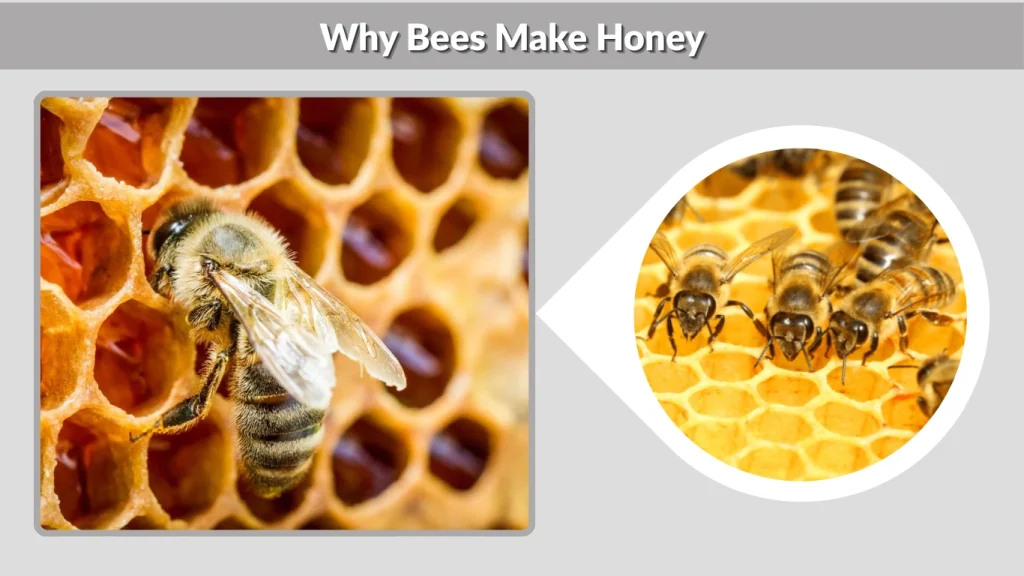
Honey is essential for the survival of a bee colony. During spring and summer, flowers are abundant, allowing bees to collect nectar continuously. But in colder months, when flowers disappear, honey becomes their primary food source. Its high-energy sugars help bees maintain body heat and perform essential tasks inside the hive.
Honey also supports the growth of larvae. Nurse bees feed young bees a mixture of honey and pollen, giving them the protein and carbohydrates needed for development. Producing honey is also an evolutionary advantage—colonies that store more food have better chances of surviving harsh winters and unpredictable weather changes.
The process is highly efficient. Each bee performs a specific role: foragers gather nectar, house bees convert it, and wax-producing bees create storage cells. This division of labor ensures that enough honey is always available for the entire colony.
Factors Affecting Honey Production
Environmental Factors
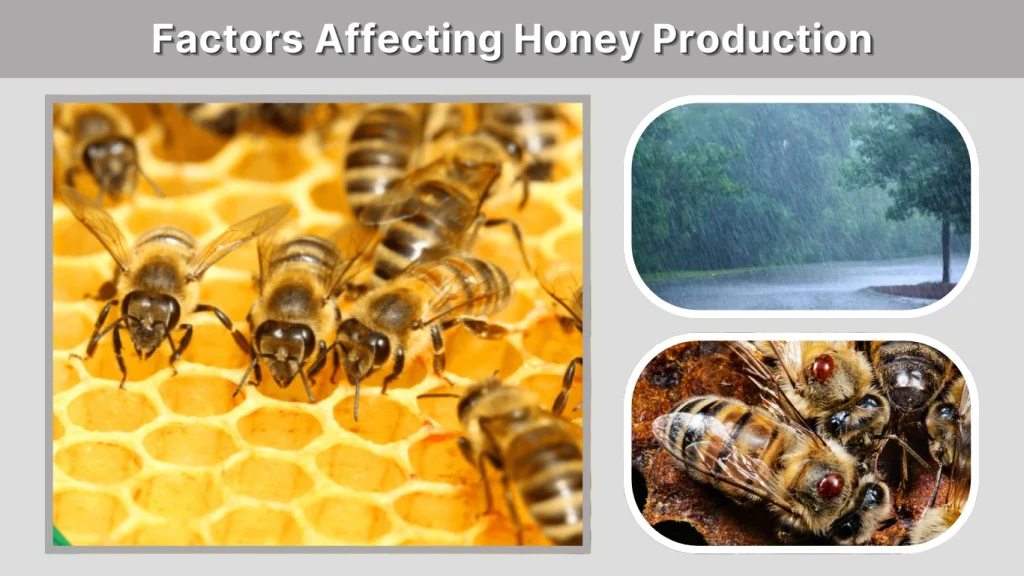
Weather has a major influence on honey output. Bees thrive in warm, sunny conditions with plenty of blooming plants. Heavy rainfall, drought, or extreme temperatures reduce the availability of nectar. Seasonal cycles also matter—spring typically offers the richest nectar flow.
Colony Strength
A strong colony with a healthy queen and plenty of workers produces significantly more honey. Colonies affected by pests, viruses, or parasites like Varroa mites struggle with both foraging and honey storage. The age distribution of the bees also matters, as younger bees produce wax more efficiently.
Human Influence
Beekeeping practices can increase or reduce honey yields. Providing bees with space to store honey, offering supplemental feeding in poor seasons, and avoiding harmful pesticides helps colonies thrive. On the other hand, habitat loss limits access to diverse nectar sources, affecting both honey quality and quantity.
Types of Honey Based on Nectar Source
Bees produce different types of honey depending on the flowers they visit.
- Monofloral honey comes mainly from a single plant species, such as clover, acacia, or manuka. These honeys often have distinctive flavors and colors.
- Polyfloral honey, often called wildflower honey, comes from a variety of plants, giving it a rich, blended taste.
- Soil type, climate, and season can cause honey’s color to vary from pale gold to deep amber or even reddish-brown.
Honey-Making Timeline
| Stage | Duration | Description |
| Nectar Collection | Minutes to hours | Bees gather nectar from surrounding flowers. |
| Enzymatic Conversion | Hours | Nectar passed among bees and enriched with enzymes. |
| Moisture Evaporation | Hours to days | Bees fan their wings to thicken the nectar. |
| Capping | Final step | Bees seal the honey in wax cells for storage. |
FAQ
How long does it take a bee to make honey?
A single bee produces only about 1/12 of a teaspoon of honey in its lifetime. However, thousands of bees working together can produce pounds of honey each season. The entire process—from nectar collection to capped honey—can take anywhere from a few days to a couple of weeks.
How many bees are needed to make one tablespoon of honey?
It takes the lifetime work of roughly 12 bees to make just one teaspoon of honey, so about 36 bees are needed for a tablespoon. This small yield highlights how valuable honey is and how much effort bees invest to create it.
Is honey really bee vomit?
No. Although bees regurgitate nectar from their honey stomach during processing, this organ is separate from their digestive stomach. The nectar never enters the part used for digestion, so honey is not considered vomit—it is a specially processed food made through a natural, hygienic system.
Why don’t bees eat all the honey they make?
Bees produce more honey than they immediately need as a survival strategy. A strong colony must store enough to survive winter and support larvae year-round. Only a portion of this excess is harvested by beekeepers, ensuring bees still have enough food.
Does harvesting honey harm bees?
When done responsibly, honey harvesting does not harm bees. Ethical beekeepers leave plenty of honey for the colony and only take the surplus. They also avoid disturbing the hive during stressful seasons and ensure the bees remain healthy, warm, and well-fed.
