
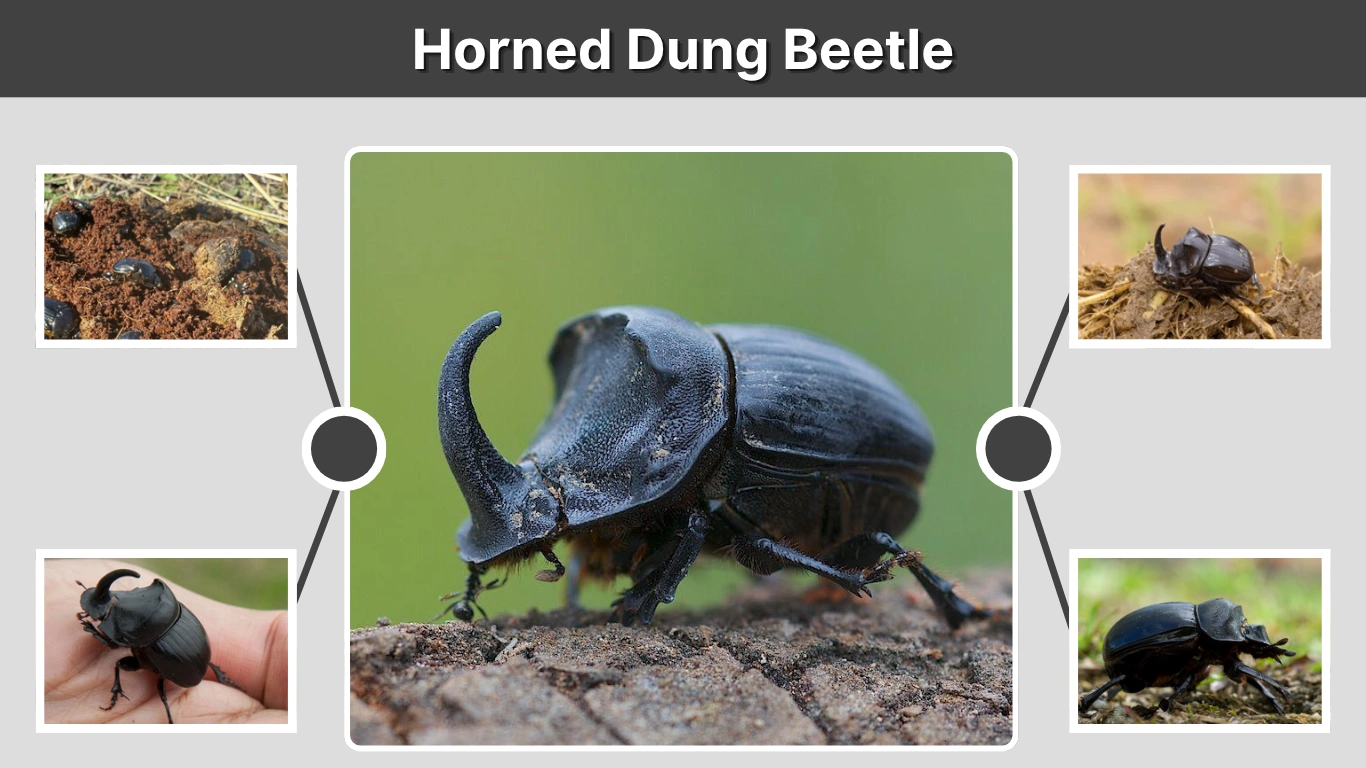
The horned dung beetle is one of nature’s most fascinating insects, celebrated not just for its unusual lifestyle but also for its extraordinary strength. Among the insect kingdom, it holds a near-mythical status, being considered the strongest insect relative to body weight. Beyond sheer power, these beetles are vital to ecosystems, helping recycle waste, fertilize soil, and maintain ecological balance. To understand their unique role in nature, we need to explore their biology, strength, and behavior in detail.
Overview of Horned Dung Beetle
Dung beetles belong to the family Scarabaeidae and are found worldwide in diverse habitats, from grasslands to forests. The horned dung beetle stands out due to the prominent horn-like structure males develop, which they use in combat over mates and territory.
Despite their small size, dung beetles are crucial in ecosystems. By collecting and burying animal droppings, they clean the environment, recycle nutrients, and protect animals from harmful parasites. This seemingly simple behavior makes them one of the most beneficial insects to both nature and agriculture.
Scientific Classification and Names
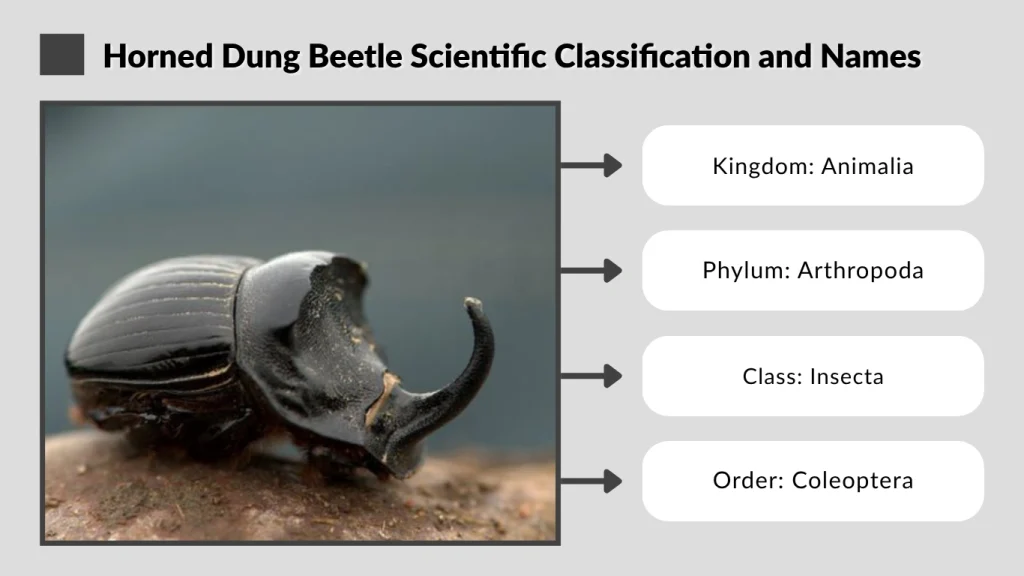
Horned dung beetles fall under the Coleoptera order, which includes all beetles. Their scientific name varies depending on the species, but the most famous representative is Onthophagus taurus.
Key Classification:
- Kingdom: Animalia
- Phylum: Arthropoda
- Class: Insecta
- Order: Coleoptera
- Family: Scarabaeidae
- Genus: Onthophagus
The name Onthophagus refers to their habit of feeding on dung, while the term “taurus” signifies the horned or bull-like appearance of males.
Physical Characteristics
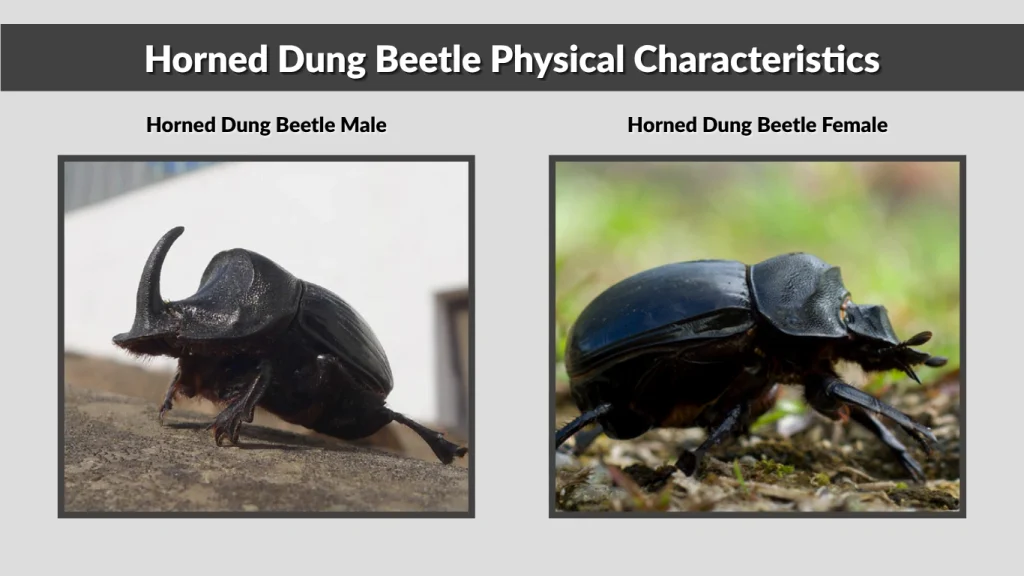
Horned dung beetles are relatively small compared to other beetle giants like the rhinoceros beetle, but their features are striking. They typically range from 0.5 to 1 inch in length, with males being slightly larger than females.
Horn Structure and Purpose
- Males develop long, curved horns on their heads.
- These horns are used in combat with rival males for access to tunnels and mates.
- Females usually lack horns or have much smaller ones.
Their body is usually dark brown or black, though some species have metallic shades of green or bronze. This strong exoskeleton not only protects them but also provides leverage when digging and rolling dung.
Strength and Abilities
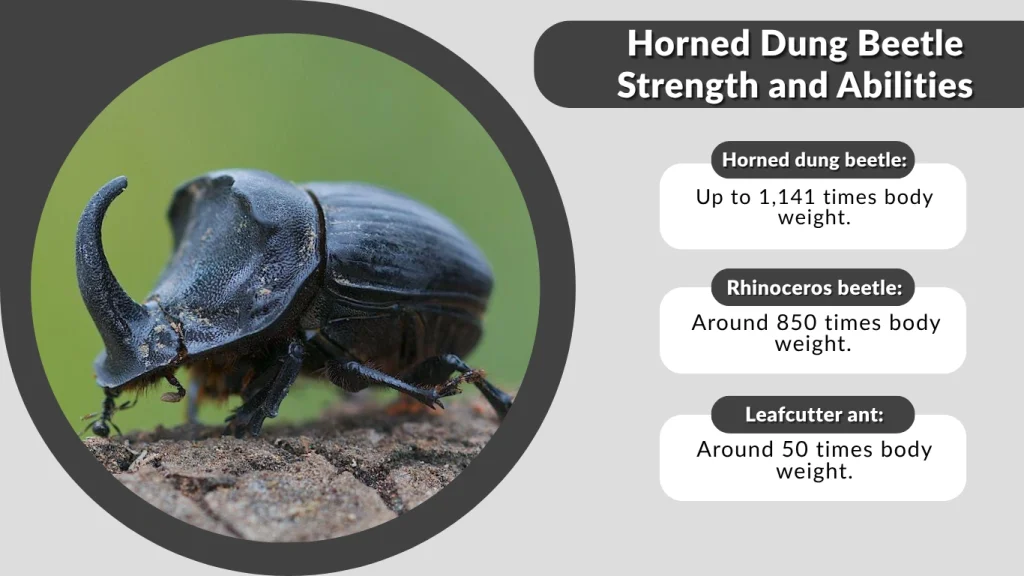
If there is one feature that makes the horned dung beetle world-famous, it is strength. Studies show that Onthophagus taurus can pull over 1,100 times its body weight. To put that in perspective, it would be like a human dragging six fully loaded double-decker buses.
Strength Comparisons
- Horned dung beetle: Up to 1,141 times body weight.
- Rhinoceros beetle: Around 850 times body weight.
- Leafcutter ant: Around 50 times body weight.
This remarkable strength has earned the horned dung beetle a Guinness World Record as the strongest insect on Earth. Such power is essential in their daily life, particularly when rolling heavy dung balls or defending their underground tunnels.
Behavior and Lifestyle
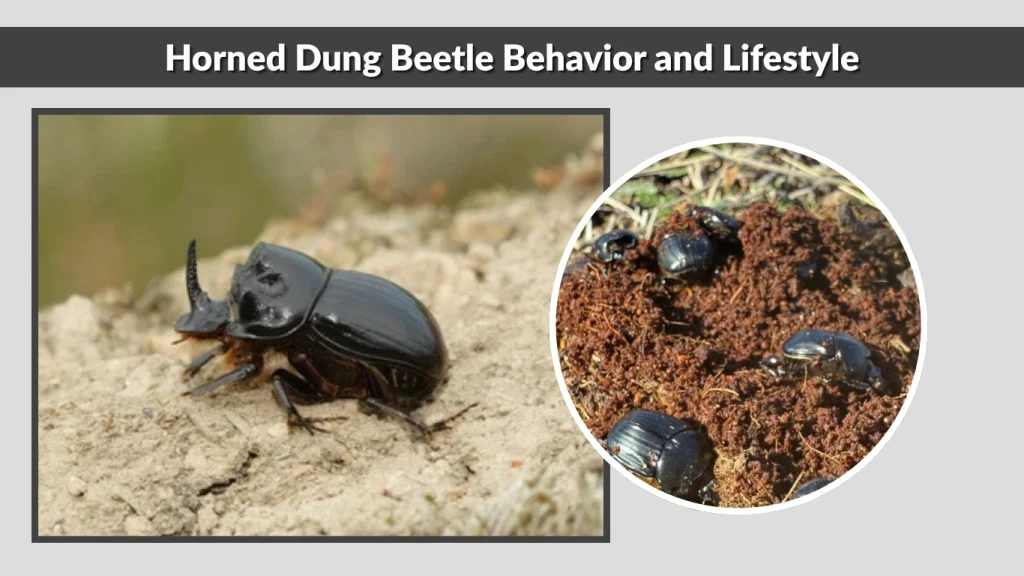
Horned dung beetles are known for their unusual yet highly efficient lifestyle centered around animal droppings. Their activities may seem unappealing to humans, but they play an essential role in nature.
Feeding Habits
Dung beetles feed primarily on the liquid nutrients found in animal waste. Adults collect dung, roll it into balls, and either consume it directly or bury it underground for later use.
Nesting and Reproduction
The reproductive cycle of horned dung beetles is tied to dung collection. Males and females dig burrows beneath dung piles, where females lay eggs in dung balls. The larvae hatch inside these balls and feed on the dung, growing safely underground.
Territorial Behavior
Males fiercely defend their tunnels from rivals. Their horns are used like weapons, locking with opponents in battles to secure access to females. These contests highlight why strength is such a vital evolutionary trait for survival and reproduction.
Ecological Importance
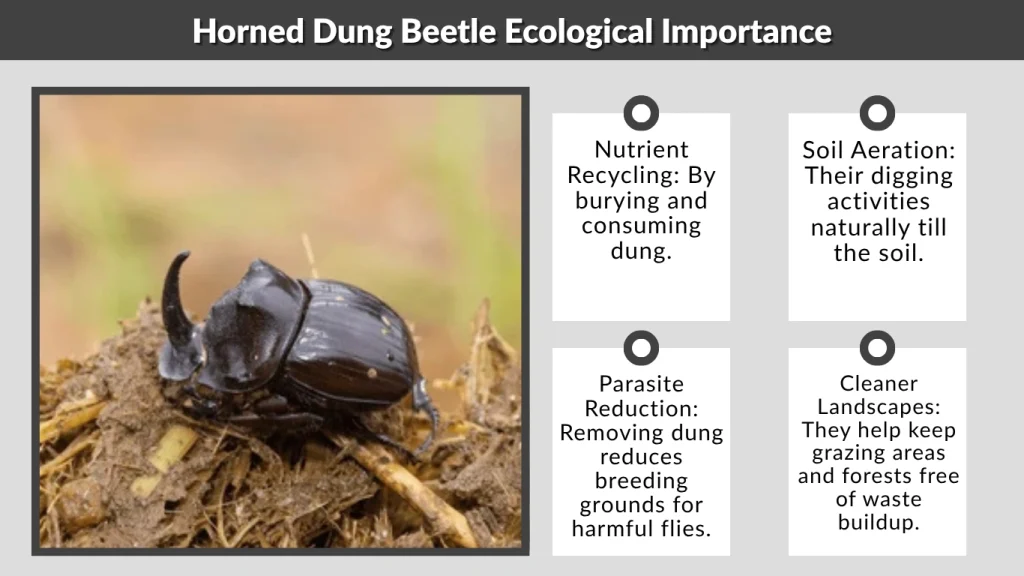
Dung beetles, including horned species, are unsung heroes of the ecosystem. Their actions have a direct impact on soil quality, animal health, and even agriculture.
Key Ecological Roles:
- Nutrient Recycling: By burying and consuming dung, they return essential nutrients to the soil, promoting plant growth.
- Soil Aeration: Their digging activities naturally till the soil, increasing its fertility and water absorption.
- Parasite Reduction: Removing dung reduces breeding grounds for harmful flies and parasites that affect livestock.
- Cleaner Landscapes: They help keep grazing areas and forests free of waste buildup.
Farmers especially benefit from dung beetle activity, as these insects enhance pasture health and reduce the need for chemical fertilizers.
Horned Dung Beetle vs Other Insects
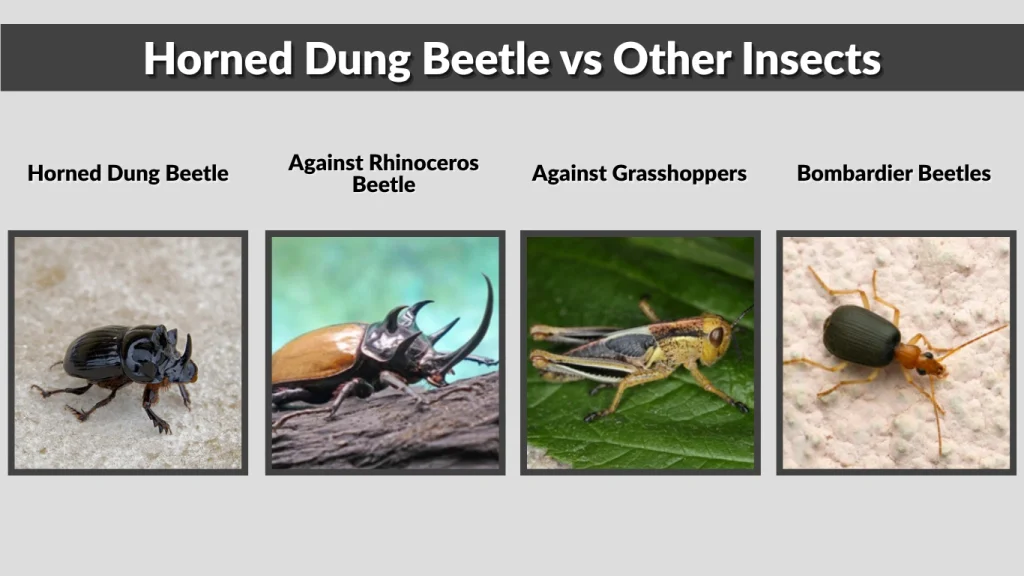
When compared with other strong insects, the horned dung beetle often comes out on top in strength-to-weight ratio.
Against Rhinoceros Beetle
Rhinoceros beetles are larger and more intimidating in appearance, but horned dung beetles surpass them in relative strength. While the rhinoceros beetle can lift about 850 times its body weight, the horned dung beetle exceeds 1,000 times.
Against Grasshoppers and Bombardier Beetles
Grasshoppers are known for their incredible jumping ability rather than strength, while bombardier beetles are famous for their chemical defense mechanism. These comparisons show that insects have evolved diverse strategies for survival, but in terms of raw pulling power, the horned dung beetle remains unmatched.
Human Connection and Cultural Significance
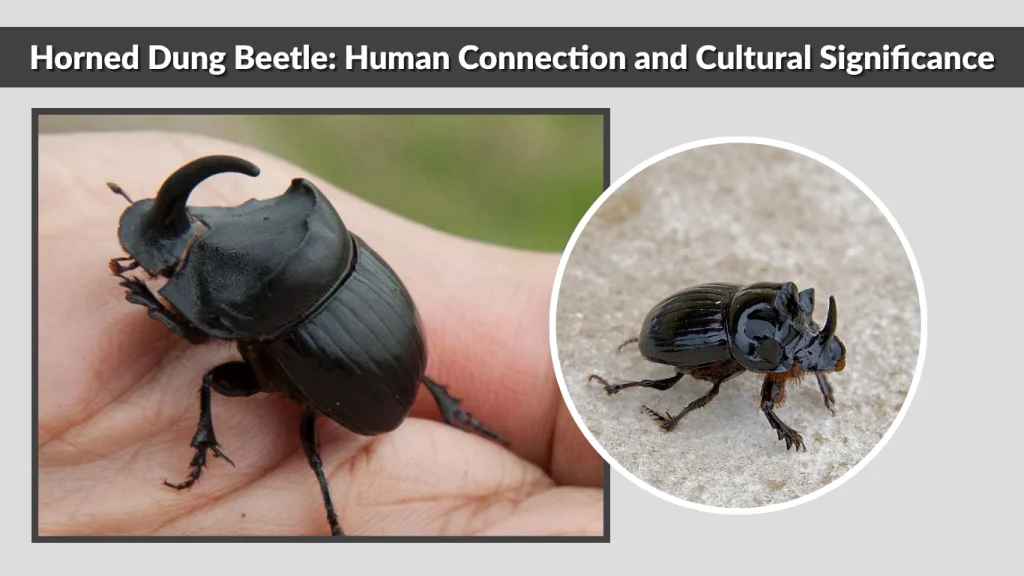
Humans have long noticed the unusual habits of dung beetles. In ancient Egypt, the scarab beetle—a close relative of the horned dung beetle—was considered a sacred symbol of rebirth and transformation. Egyptians believed that the beetle’s habit of rolling dung balls mirrored the sun god Ra rolling the sun across the sky. Scarab amulets, inspired by these beetles, were worn for protection and good fortune.
In modern times, scientists view horned dung beetles as models of evolutionary biology and biomechanics. Their extraordinary strength, horn size, and mating strategies provide insight into how natural selection shapes body structures. For insect collectors, horned dung beetles are prized specimens, and their rarity or size sometimes influences their price on the market.
Interesting Facts about Horned Dung Beetles
Horned dung beetles are full of surprising details that make them stand out in the insect world.
Fascinating Insights:
- Mating Strategy: Smaller males without horns often use “sneaky tactics,” digging side tunnels to reach females while horned males battle above ground.
- Astronomical Navigation: Some dung beetles can navigate using the Milky Way galaxy, rolling their dung balls in remarkably straight lines.
- Survival Efficiency: They can bury dung within minutes of its deposit, outcompeting flies and other insects.
- Speed vs Strength: Despite their small size, they can move balls many times larger than themselves over long distances.
These quirky behaviors show that horned dung beetles are not just strong but also intelligent navigators and resourceful survivors.
Conservation Status and Threats
Although horned dung beetles are resilient, they are not immune to environmental challenges. Habitat destruction, pesticide use, and intensive farming can threaten their populations. In regions where natural grasslands are replaced by urban development, dung beetle numbers decline, affecting soil quality and livestock health.
Major Threats:
- Pesticides: Chemicals kill beetles directly or contaminate dung, making it toxic.
- Habitat Loss: Clearing forests and grasslands reduces food and nesting sites.
- Climate Change: Shifts in temperature and rainfall affect their breeding cycles.
Conservation efforts often focus on sustainable farming practices. By reducing pesticide use and encouraging biodiversity in grazing areas, farmers can help protect these vital insects. Preserving dung beetles isn’t just about saving one insect—it’s about maintaining an entire ecological balance.
Conclusion
The horned dung beetle may be small, but its impact is enormous. From carrying weights hundreds of times its size to shaping ecosystems through nutrient recycling, it represents strength, persistence, and balance in nature. Ancient civilizations revered it, and modern science confirms its remarkable abilities. Protecting these beetles ensures healthier soil, cleaner landscapes, and stronger ecosystems. Truly, the horned dung beetle is a reminder that even the tiniest creatures can carry the heaviest loads.
FAQs
What makes the horned dung beetle the strongest insect?
Horned dung beetles are capable of pulling more than 1,000 times their own body weight, far surpassing most other insects. Their horn structure, muscle arrangement, and determination to roll dung balls for feeding and reproduction give them unparalleled strength-to-weight ratios in the animal kingdom.
How much weight can a horned dung beetle carry?
A single horned dung beetle can move up to 1,141 times its body weight. This is equivalent to a human dragging six double-decker buses loaded with passengers. This remarkable ability not only amazes scientists but also highlights the beetle’s efficiency in securing dung resources.
What role do horned dung beetles play in the environment?
They are essential recyclers in ecosystems. By burying dung, they return nutrients to the soil, improve fertility, and enhance plant growth. Their work also reduces the spread of parasites and flies that breed in animal waste, making them highly beneficial to livestock and agriculture.
How are horned dung beetles different from rhinoceros beetles?
While both species are strong and horned, their differences are clear. Rhinoceros beetles are larger and lift around 850 times their body weight, while horned dung beetles are smaller but stronger in proportion, managing over 1,100 times their body weight. Their lifestyles also differ—dung beetles focus on waste recycling, while rhinoceros beetles feed on plant sap.
Are horned dung beetles endangered?
Most horned dung beetles are not officially endangered, but some populations face risks due to habitat loss, pesticide use, and climate change. Protecting their habitats and adopting eco-friendly farming practices are key steps in ensuring their survival and maintaining the vital roles they play in ecosystems.
