
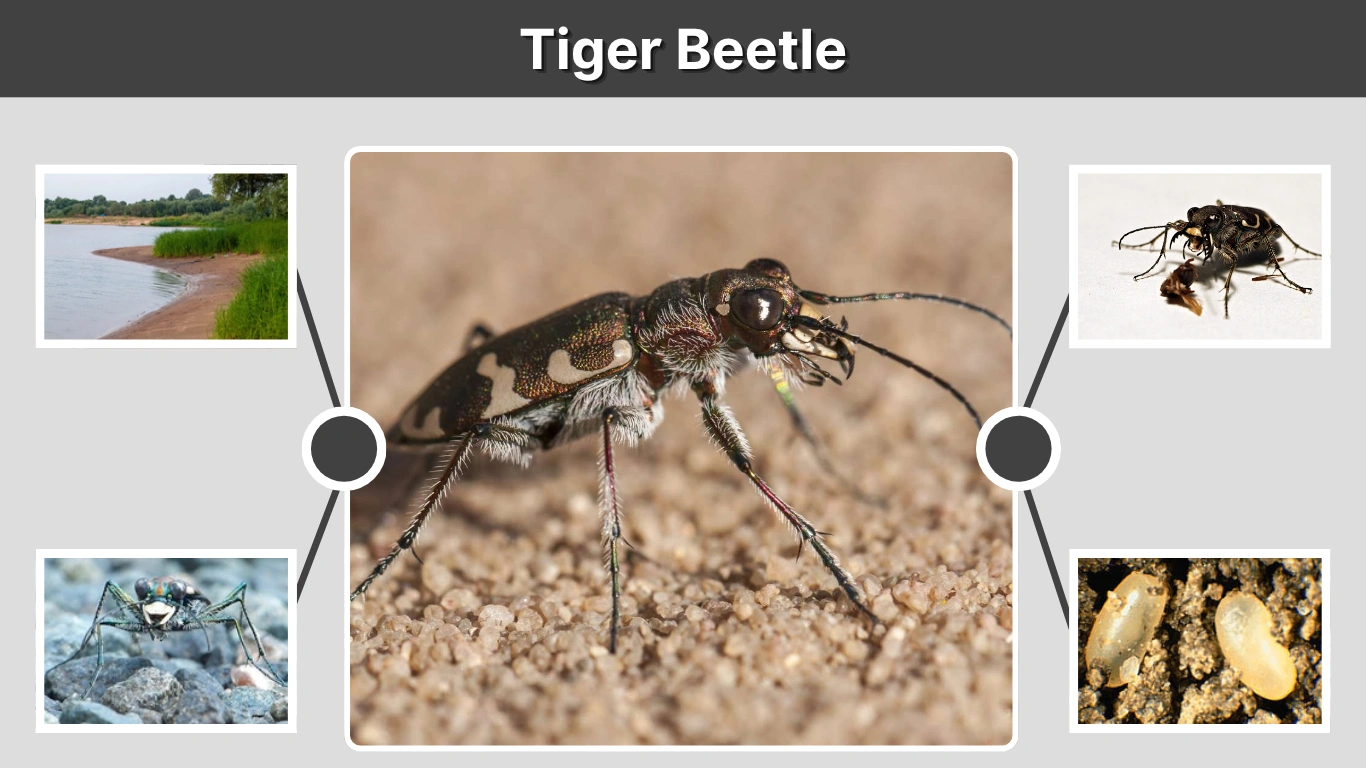
Tiger beetles are among the most striking and fascinating insects in the beetle family. Known for their dazzling metallic colors, long legs, and lightning-fast speed, these beetles have intrigued scientists and nature enthusiasts alike. They are fierce hunters, capable of chasing down prey with unmatched precision, making them one of the most effective insect predators. In this article, we will explore everything about tiger beetles, including their size, color, habitat, identification, behaviors, diet, and ecological importance.
Overview of Tiger Beetles
Tiger beetles belong to the subfamily Cicindelinae within the family Carabidae, the same family that includes ground beetles. With more than 2,600 recognized species worldwide, they are distributed across nearly every continent. They are especially abundant in warm, sandy, and open habitats where their speed and hunting tactics are most effective.
Their name comes from their predatory lifestyle, as they actively chase and overpower prey with their large sickle-shaped mandibles—similar to how tigers dominate their hunting grounds. They are considered one of the fastest running insects, often covering long stretches of ground in rapid bursts to catch smaller insects.
Size of Tiger Beetles

Tiger beetles vary in size depending on the species, but most range between 10 and 20 millimeters in length. Some larger species, such as those found in tropical regions, can grow up to 25 millimeters (1 inch). Their slender, elongated bodies are built for agility, featuring:
- Long, thin legs that provide excellent running speed
- Large compound eyes for detecting movement from a distance
- Oversized jaws (mandibles) used to seize and crush prey
The combination of speed, vision, and weapon-like jaws makes them superb predators in their environments.
Color and Appearance

One of the most attractive features of tiger beetles is their brilliant coloration. Many species have metallic hues of green, blue, copper, bronze, or even iridescent violet. In bright sunlight, their bodies glisten with a jewel-like sheen, making them easy to spot in open habitats.
Key color features include:
- Metallic sheen that reflects light, creating dazzling effects
- Species-specific markings, such as white spots or stripes on darker backgrounds
- Camouflage colors in some species, which blend into sandy or earthy environments
These colors serve multiple purposes: camouflage from predators, warning signals to rivals, and even attraction during mating. The vibrant green and blue species are particularly popular among photographers and insect collectors.
Habitat of Tiger Beetles

Tiger beetles prefer sunny, open, and sandy habitats where they can run freely and hunt. They are commonly found in:
- Sandy riverbanks and beaches
- Open fields and meadows
- Woodland paths with sunlit clearings
- Agricultural fields and grasslands
They are active mainly during warm seasons, especially in spring and summer. Some species thrive in deserts, while others prefer tropical rainforests. Their adaptability allows them to exist across North America, Europe, Asia, and the tropics.
In many regions, they are considered indicator species, meaning their presence reflects the health of an ecosystem. Areas with thriving tiger beetle populations usually indicate clean soil, balanced insect communities, and stable habitats.
Identification Features

Tiger beetles are fairly easy to identify once you know their main features. Unlike other beetles that move slowly, tiger beetles are highly active and often dart quickly across sandy soil.
Key Identification Traits:
- Bulging compound eyes: Provide sharp vision for spotting prey and threats
- Long, slender legs: Adapted for rapid bursts of speed, sometimes up to 9 km/h (5.6 mph) relative to their body size
- Large mandibles: Shaped like hooks or sickles, used for gripping and tearing prey
- Shiny, metallic colors: Often with distinct patterns of spots or stripes
A distinct behavioral trait is their start-and-stop running style. They run quickly in short bursts, pause to visually locate their prey, then dash again. This jerky movement is a signature behavior that helps differentiate them from ground beetles and other insects.
Behaviors of Tiger Beetles
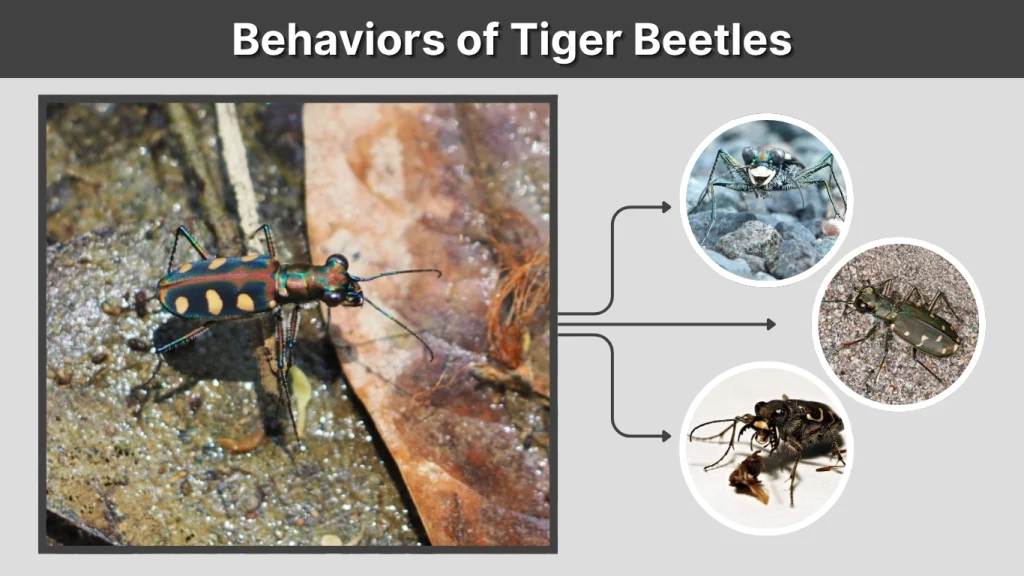
Tiger beetles are celebrated for their extraordinary hunting skills. Unlike many beetles that rely on scavenging or slow pursuit, tiger beetles are active hunters that chase down their prey with remarkable speed.
Hunting Behavior
- Use rapid bursts of running to chase insects
- Stop frequently to re-orient using their vision
- Rely on quick reflexes and strong jaws to overpower prey
Their prey includes ants, spiders, flies, caterpillars, and other small insects. Because of their speed, prey rarely escapes once targeted.
Defensive Tactics
When threatened by predators, tiger beetles often take flight in short, quick bursts. They do not travel far but move just enough to evade capture before landing again to resume hunting.
Larval Behavior
Tiger beetle larvae are equally fascinating. Unlike adults, they live in burrows dug into sandy soil, where they wait with their large heads blocking the entrance. When unsuspecting prey passes by, the larva strikes with lightning speed, dragging the victim into its burrow. This ambush style of hunting makes the larval stage just as predatory as adulthood.
Territoriality
Many species display territorial behavior. Males in particular may chase away rivals to secure hunting grounds or mating opportunities. Their aggressive hunting and defensive displays have earned them the reputation of being “miniature tigers” of the insect world.
Diet of Tiger Beetles

Tiger beetles are strictly carnivorous predators, both in their larval and adult stages. Their diet plays a crucial role in controlling insect populations in their ecosystems.
What Adults Eat
Adult tiger beetles primarily feed on:
- Ants – a common and abundant prey source
- Spiders – including small ground-dwelling species
- Flies and gnats – captured mid-run or while resting
- Caterpillars and larvae – soft-bodied prey ideal for their strong jaws
- Beetles and grasshoppers – smaller or juvenile forms often fall victim
They use their speed to chase prey across open ground, relying on excellent eyesight to detect movement from several feet away. Once caught, their sharp mandibles crush and consume the prey rapidly.
What Larvae Eat
Larvae are ambush predators. Living in burrows, they feed on insects that pass by, including:
- Small beetles
- Ants and termites
- Worms and larvae
- Occasionally, very small amphibians or soft-bodied invertebrates
This hunting strategy ensures the larvae are well-fed while staying protected underground.
Life Cycle and Reproduction

Like most beetles, tiger beetles undergo complete metamorphosis, which includes four stages: egg, larva, pupa, and adult.
- Eggs – Laid in sandy or loose soil where larvae can dig burrows.
- Larvae – Remain in burrows for months or even years, depending on the species. They undergo several molts as they grow.
- Pupae – After reaching full size, larvae pupate in chambers within their burrows.
- Adults – Emerge from the soil, fully formed, ready to hunt and reproduce.
The life cycle length varies: some species complete it within one year, while others may remain in the larval stage for two to three years. Adults are typically most active during the warmer months, often seen running along paths or sandy areas.
Predators and Threats
Although tiger beetles are fierce hunters, they are not at the top of the food chain.
Natural Predators
- Birds – including sparrows, robins, and insectivorous species
- Lizards and frogs – opportunistically feed on them
- Spiders and mantises – occasionally capture slower individuals
- Larger beetles – such as ground beetles, may prey on larvae
Human and Environmental Threats
- Habitat destruction – due to urbanization, farming, and deforestation
- Pollution – affecting soil and water quality in their habitats
- Climate change – altering distribution and survival rates
- Over-collection – some brightly colored species are collected by insect enthusiasts, reducing local populations
Several rare species are now under conservation programs, particularly in North America, where tiger beetle diversity is high.
Importance in Ecosystems
Tiger beetles are more than just fascinating insects; they play a vital role in maintaining balance in ecosystems.
- Pest control – By feeding on caterpillars, flies, and larvae, they help reduce populations of agricultural pests.
- Food chain link – They serve as prey for birds, reptiles, and amphibians, ensuring energy flow through ecosystems.
- Bioindicators – Scientists use them to assess environmental health. Their presence or absence can reveal the condition of habitats, soil quality, and biodiversity.
Their dual role as predators and prey highlights their ecological importance.
Key Takeaways
- Tiger beetles are small, fast-running predators with bright metallic colors.
- They range in size from 10–25 mm and thrive in sunny, sandy habitats.
- Identification is easy due to their bulging eyes, long legs, and large jaws.
- Both adults and larvae are carnivorous, feeding on insects like ants, flies, and caterpillars.
- They undergo complete metamorphosis, with larvae living in burrows before becoming adults.
- Despite being skilled hunters, they face threats from birds, reptiles, habitat loss, and human activities.
- Their ecological role makes them essential for pest control and ecosystem health.
FAQs
How big do tiger beetles get?
Tiger beetles typically measure between 10 and 20 millimeters in length, although some tropical species can grow up to 25 millimeters. Their slender legs and elongated bodies make them perfectly adapted for speed and hunting in open habitats.
What colors are common in tiger beetles?
Most tiger beetles display metallic green, blue, copper, or bronze shades. Many species also feature spots, stripes, or iridescent patterns. This striking coloration not only aids in camouflage but also makes them one of the most visually attractive beetles.
Where can tiger beetles usually be found?
Tiger beetles are commonly found in sunny, sandy areas such as riverbanks, woodland paths, meadows, and beaches. They thrive in warm regions across North America, Europe, Asia, and tropical zones. Their presence often indicates a healthy ecosystem.
What do tiger beetles eat?
Tiger beetles are carnivores. Adults chase and capture ants, flies, caterpillars, and other small insects. Larvae live in burrows and ambush passing prey such as beetles and worms. Both stages are highly effective predators, making them important natural pest controllers.
Are tiger beetles dangerous to humans?
No, tiger beetles are not dangerous to humans. While they possess strong jaws and may give a defensive nip if handled, they do not sting, carry venom, or spread disease. Their impressive hunting behavior is directed only at smaller insects, not people.
