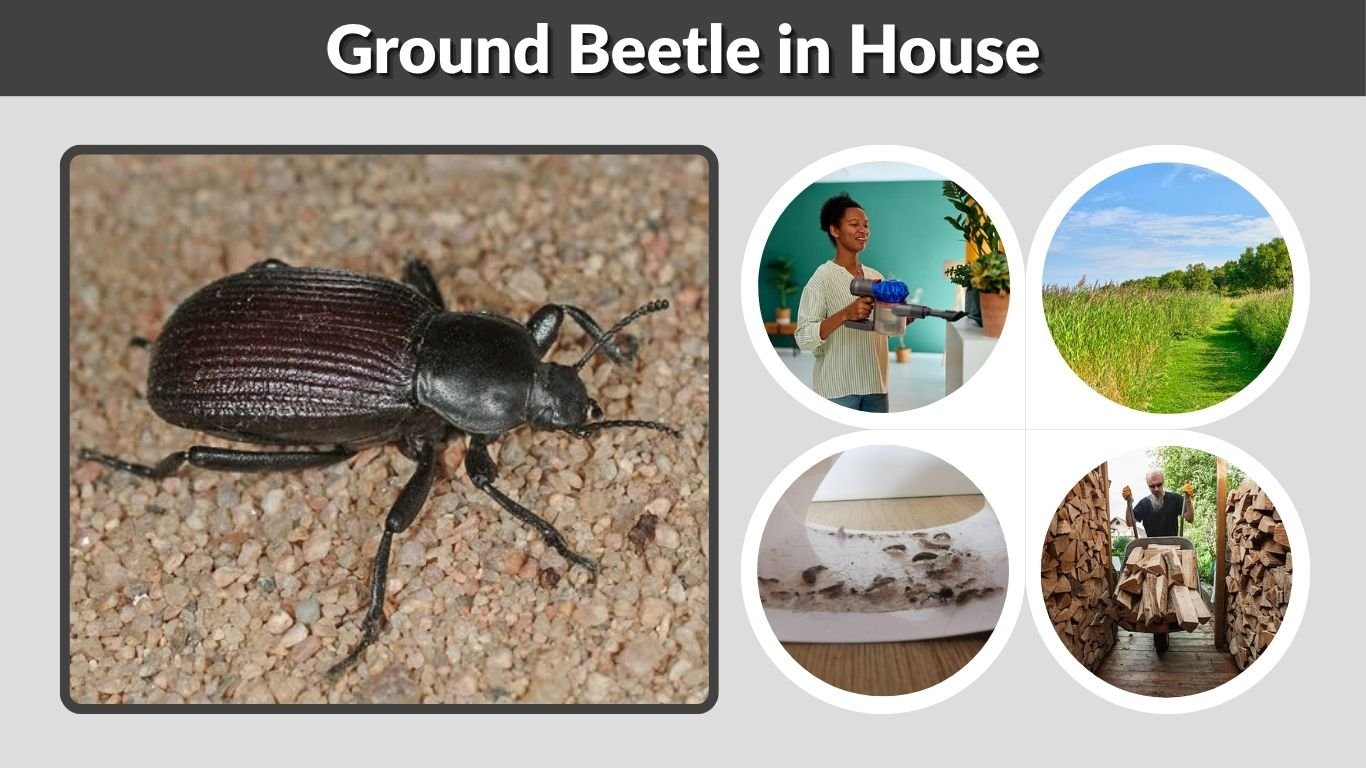
Finding a ground beetle in your house can be alarming, especially when a large black or brown beetle suddenly appears in a basement, hallway, or kitchen. Fortunately, ground beetles are mainly outdoor insects and usually enter homes accidentally while searching for shelter. They do not normally infest food, clothing, or structural wood. Most are beneficial predators outdoors because they eat other insects. This guide explains why ground beetles come indoors, how to identify them, whether they are dangerous, and how to get rid of them effectively.
How to Identify a Ground Beetle in the House
Ground beetles belong to a large group of mostly fast-moving insects that spend much of their lives at ground level. Their appearance varies considerably between species, so a black ground beetle in a house may look different from a violet, brown, or metallic species. Looking at body shape, legs, antennae, and behavior can help distinguish them from cockroaches and other beetles.
Common Ground Beetle Identification Features
Typical signs include:
- Usually black, dark brown, or metallic in color
- Generally about 1/8 to 1/2 inch long, although some reach about 1 inch
- Flattened or elongated body
- Hard wing covers
- Long, slender legs adapted for running
- Thread-like antennae
- Noticeable jaws or mandibles
- Fast movement when disturbed
- Often active at night
- May have blue, green, or violet metallic coloration
Pennsylvania ground beetles and Scarites ground beetles are among the types that can occasionally wander indoors.
Black and Brown Ground Beetles
A common black ground beetle in the house often has a shiny, elongated body and moves quickly across floors. Brown ground beetles may look similar but have lighter coloration. Unlike many cockroaches, ground beetles usually remain close to floor level, run for shelter when disturbed, and do not establish typical indoor breeding populations.
Why Are Ground Beetles in My House?
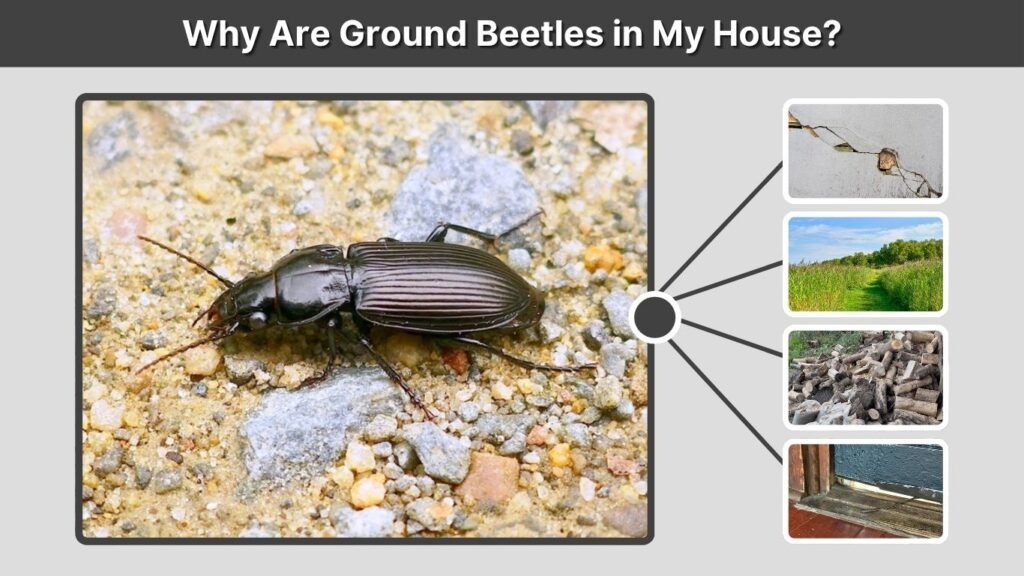
Ground beetles normally live outdoors under leaves, stones, logs, bark, mulch, and vegetation. They become indoor nuisance pests when they accidentally find openings into buildings. Indoor sightings are especially common during warmer months and can increase in mid to late summer. Outdoor lights, nearby shelter, and easy access through structural gaps can all contribute to their presence.
Common Reasons Ground Beetles Come Inside
Ground beetles may enter because of:
- Cracks around the foundation
- Gaps underneath exterior doors
- Openings around ground-level windows
- Outdoor lights attracting nocturnal beetles
- Mulch positioned directly against the foundation
- Leaves, boards, stones, or wood near the house
- Tall grass and weeds beside exterior walls
- Firewood stacked close to the building
- Small openings around pipes or utilities
Where They Hide Indoors
Once inside, ground beetles often seek dark, sheltered locations rather than open living spaces. Basements are particularly common because they provide cool, hidden conditions. Beetles may also appear beneath cardboard boxes, stored objects, appliances, furniture, or along basement walls.
Seeing one crawling indoors does not necessarily mean you have a ground beetle infestation.
Are Ground Beetles in the House Dangerous?
Despite their intimidating appearance, ground beetles are primarily nuisance invaders rather than dangerous household pests. They are not known for attacking people, destroying houses, or contaminating stored foods. In fact, they are generally considered beneficial outdoors because many species prey on insects and other small invertebrates that may otherwise become garden pests.
Do Ground Beetles Bite?
Ground beetles do not normally seek people out or feed on human blood. However, a beetle that is grabbed or handled roughly may use its jaws defensively and pinch the skin. Leaving the beetle alone or moving it using a container avoids this problem.
Can Ground Beetles Damage Your Home?
Ground beetles do not normally damage structural wood, clothing, furniture, or household food. Their presence indoors is therefore much different from wood-boring beetles, carpet beetles, or pantry pests.
Outdoor ground beetles can actually be helpful predators, consuming various insects and other organisms found around soil and garden areas.
How to Get Rid of Ground Beetles in the House
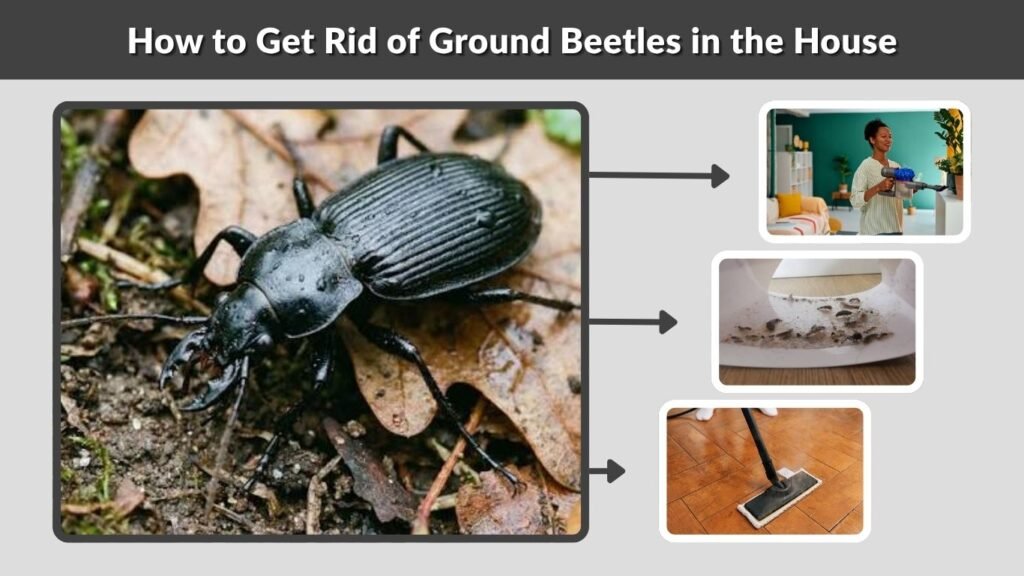
Finding a few ground beetles usually does not require aggressive chemical treatment. Because they normally originate outdoors and survive only briefly inside, physical removal and exclusion are often enough. The most effective approach is to remove the beetles already inside while identifying and correcting the openings that allowed them to enter in the first place.
Simple Ways to Remove Ground Beetles
Try these methods:
- Vacuum visible beetles from floors and corners
- Capture individual beetles in a container and release them outdoors
- Place sticky traps along walls where beetles frequently appear
- Check basement floors and storage spaces regularly
- Remove indoor clutter that provides hiding areas
- Inspect nearby doors and windows for entry gaps
Sticky monitoring traps can be particularly useful if beetles repeatedly appear in the same part of a basement or ground-level room.
What if There Are Many Ground Beetles?
Large numbers usually indicate that many insects are entering from outside rather than reproducing indoors. Ground beetles are generally short-lived inside buildings and do not normally reproduce there. Therefore, stopping exterior entry is usually more important than repeatedly treating interior rooms.
If activity remains unusually heavy despite exclusion efforts, a pest-management professional can help identify entry points and determine whether exterior treatment is appropriate.
How to Keep Ground Beetles Out of Your House

Prevention focuses on making the area around your home less attractive and physically blocking access. Since ground beetles live around soil, vegetation, mulch, stones, and organic debris, conditions directly beside the foundation can influence how frequently they encounter your home. Small exterior changes can significantly reduce repeated indoor sightings.
Ground Beetle Prevention Checklist
For long-term prevention:
- Seal foundation cracks and exterior gaps
- Install or repair door sweeps
- Seal spaces around windows and utility lines
- Repair damaged window screens
- Keep mulch slightly away from the foundation
- Move firewood farther from exterior walls
- Remove leaves, boards, stones, and debris
- Trim tall grass and weeds near the house
- Reduce unnecessary outdoor lighting
- Consider less-attractive yellow exterior lighting
Manage Lighting and Outdoor Shelter
Many ground beetles are active at night and can be attracted to lights. Bright exterior lights positioned immediately beside doors or windows may increase the chance of beetles gathering near entry points. Reducing unnecessary lighting or changing its placement can therefore help.
Cleaning up dense vegetation, debris, and excess mulch near exterior walls removes additional daytime hiding places.
Ground Beetle Larvae and Indoor Infestations
Finding what appears to be a ground beetle larva indoors can raise concerns about an active nest. However, ground beetles normally develop outdoors in soil and similar habitats. Adults that enter houses are generally accidental invaders rather than members of a colony living permanently inside. Correct identification becomes particularly important when larvae are involved because several household beetles have very different habits.
Do Ground Beetles Reproduce Inside Houses?
Ground beetles normally do not reproduce indoors, according to University of Minnesota Extension. Adults seen inside are usually temporary visitors that entered through openings from the surrounding outdoor habitat.
If you repeatedly find larvae rather than adult beetles, consider having specimens identified. Carpet beetles, larder beetles, and other indoor species can be mistaken for ground beetles but may require different control methods.
FAQs
Ground beetles can appear suddenly, making homeowners wonder whether they indicate structural damage, moisture problems, or an established infestation. In most situations, they are temporary outdoor visitors. Understanding their behavior makes it easier to decide whether simple removal is sufficient or whether you should investigate exterior gaps and conditions around the foundation more carefully.
1. What does finding a ground beetle in the house mean?
Usually, it simply means an outdoor beetle accidentally entered through a door, window, foundation crack, or another opening. A single ground beetle does not normally indicate an indoor infestation.
2. Why do I keep finding black ground beetles in my house?
Repeated sightings often mean there is an accessible entry point or favorable ground beetle habitat close to the foundation. Check doors, windows, cracks, mulch, outdoor lighting, vegetation, and stored materials near exterior walls.
3. Are ground beetles harmful to humans?
Ground beetles are generally harmless to people. They do not seek humans as hosts and do not damage household belongings. A beetle may defensively pinch if handled roughly, but this is uncommon.
4. Can ground beetles infest a house?
Ground beetles normally do not establish reproducing indoor populations. Even several beetles appearing indoors may represent repeated entry from outside rather than a true indoor infestation.
5. Should I kill ground beetles outside?
Usually, no. Ground beetles are beneficial outdoor predators that consume numerous insects and other small invertebrates. It is generally better to keep them outside by sealing the house and modifying conditions around the foundation rather than eliminating them from the yard.