
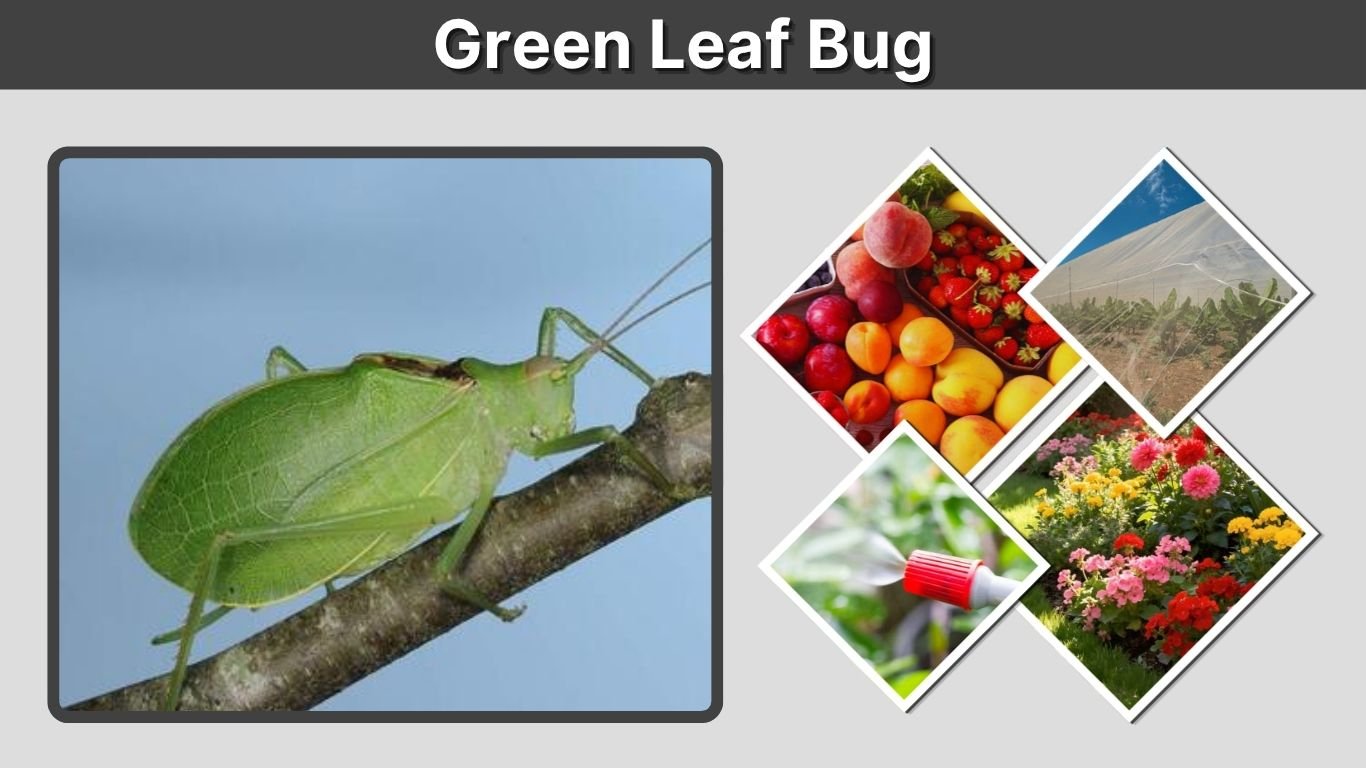
A green bug that looks like a leaf is usually a katydid, but several unrelated insects share this remarkable appearance. True leaf insects, green shield bugs, planthoppers, leafhoppers, and some leaf-footed bugs can also be mistaken for leaves. Most use green coloring and leaf-like wings to hide from predators. This guide explains how to identify the green insect on your plant, whether it bites, what it eats, and when it may damage a garden.
What Is a Green Leaf Bug?
“Green leaf bug” is an informal description rather than the official name of one insect. People commonly use it for any green insect with a flat body, leaf-shaped wings, or visible vein-like markings.
In North America, a large green bug that looks like a leaf is most commonly a katydid. In tropical Asia and Australia, it could be a katydid or a true leaf insect. Tiny green insects found beneath garden leaves are more likely to be leafhoppers, planthoppers, or shield bug nymphs.
How to Identify a Green Bug That Looks Like a Leaf
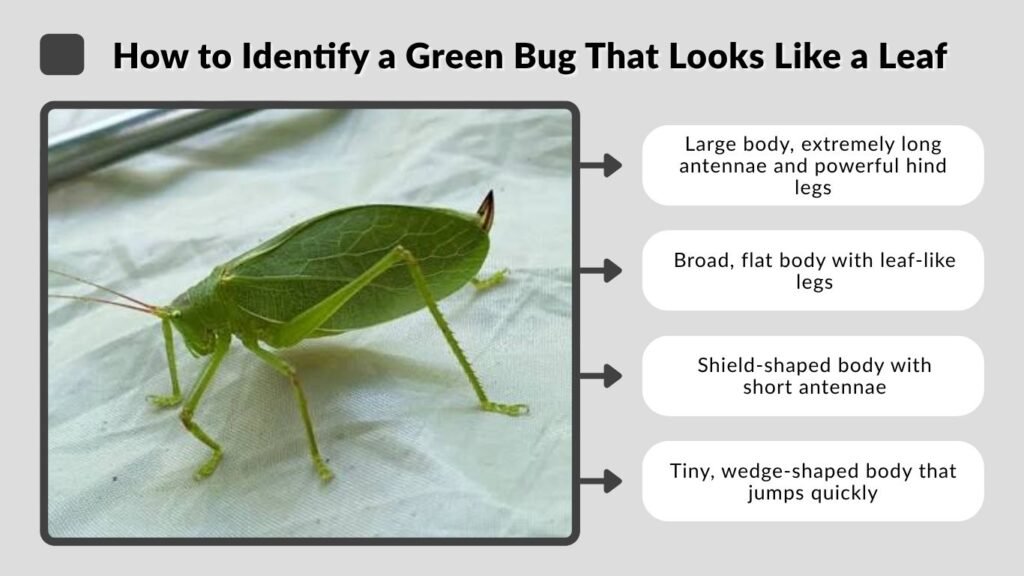
Body size, antenna length, leg shape, and movement provide the best identification clues.
| Appearance | Most likely insect |
| Large body, extremely long antennae and powerful hind legs | Katydid |
| Broad, flat body with leaf-like legs | True leaf insect |
| Shield-shaped body with short antennae | Green stink bug |
| Tiny, wedge-shaped body that jumps quickly | Leafhopper |
| Small insect with tent-like wings | Planthopper |
| Long body with expanded hind legs | Leaf-footed bug |
| Delicate body with transparent, net-veined wings | Green lacewing |
Large Green Bugs
A big green bug with wings resembling a leaf is probably a katydid. Katydids have powerful jumping legs and antennae that may extend beyond the body. Their wings often include markings resembling leaf veins, spots, or damaged edges.
Small Green Bugs
A small or tiny green bug on a plant is more likely to be a leafhopper, planthopper, aphid, or young shield bug. Leafhoppers are wedge-shaped and jump immediately when disturbed. Aphids have soft, pear-shaped bodies and commonly gather in groups.
Common Green Insects That Look Like Leaves
Several insect groups have independently developed leaf-like camouflage.
Katydids
Katydids are closely related to crickets and are sometimes called long-horned grasshoppers. They have long antennae, strong hind legs, and broad green wings. Many species remain motionless among leaves during the day and become active after sunset.
Male katydids produce songs by rubbing parts of their wings together. Some calls sound like repeated clicks, rattles, or the words “katy-did.” Most species eat foliage, flowers, pollen, fruit, or seeds, although a few also consume smaller insects.
Katydids are common in Florida, Texas, California, Colorado, Ohio, Michigan, and many other regions. Large individuals are especially noticeable in warm southern states.
True Leaf Insects
True leaf insects belong to the family Phylliidae. Their broad, flattened bodies, vein-like markings, and leaf-shaped legs make them some of nature’s most convincing plant mimics.
They occur mainly in Southeast Asia, Australia, and nearby Pacific islands. True leaf insects are not native to the continental United States. Therefore, a large green leaf-shaped bug found outdoors in Florida or Texas is more likely to be a katydid.
True leaf insects are herbivores. They move slowly, feed at night, and may sway to imitate a leaf moving in the wind.
Green Stink Bugs
Green stink bugs have smooth, shield-shaped bodies rather than realistic leaf-shaped wings. One common North American example is the green stink bug (Chinavia hilaris).
They use piercing mouthparts to extract fluids from fruits, seeds, stems, and developing plant tissue. Large populations can damage beans, tomatoes, peaches, corn, soybeans, and other crops. When threatened, they release a strong defensive odor.
Leafhoppers and Planthoppers
Leafhoppers are tiny, wedge-shaped insects that quickly jump or fly when approached. Many are green because this color allows them to disappear against plant tissue.
Planthoppers are related sap-feeding insects whose wings may form a broad, triangular, leaf-like shape. Both groups can gather beneath leaves and extract plant fluids. Some species cause stippling, yellowing, curling, reduced growth, or disease transmission.
Leaf-Footed Bugs
Leaf-footed bugs are named for the flattened expansions found on the hind legs of many species. Adults are generally brown, but some species or young nymphs contain bright green coloring.
They have long bodies and piercing mouthparts used to feed on fruits, vegetables, seeds, and stems. Leaf-footed bugs should not be confused with true leaf insects, whose entire bodies resemble foliage.
Green Lacewings
Green lacewings have slender bodies, golden or copper-colored eyes, and four transparent wings covered with delicate veins. They are attracted to outdoor lights and may enter houses accidentally.
Adult lacewings and their larvae are generally beneficial. Lacewing larvae consume aphids, mites, insect eggs, and other small garden pests. Finding one on a plant is normally a positive sign.
What Do Green Leaf Bugs Eat?
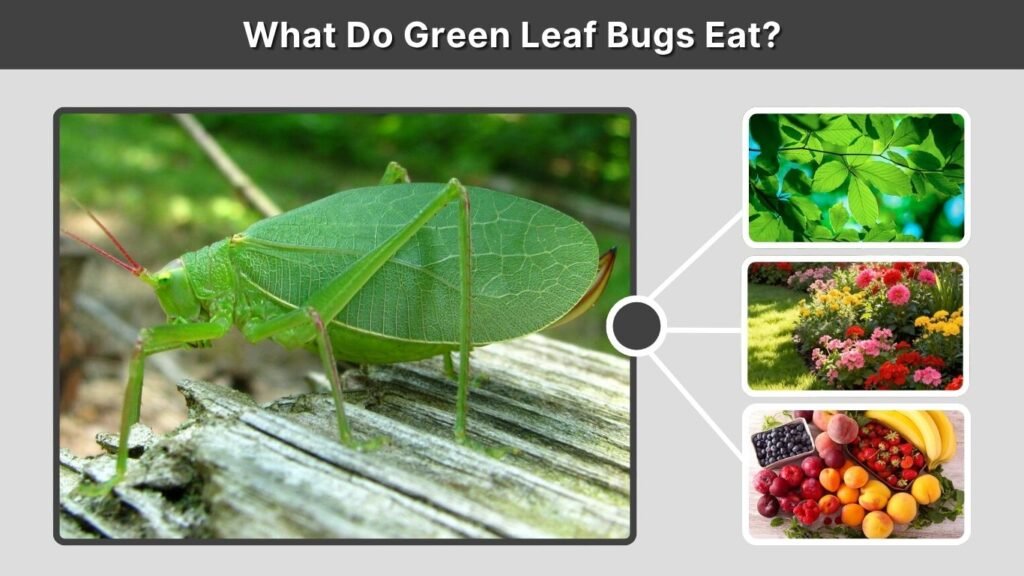
Different green insects feed in different ways.
| Insect | Typical diet |
| Katydid | Leaves, flowers, seeds, fruit and occasional insects |
| True leaf insect | Fresh tree and shrub leaves |
| Green stink bug | Plant juices, fruit, seeds and stems |
| Leafhopper | Sap extracted from leaves and shoots |
| Planthopper | Plant sap |
| Leaf-footed bug | Fruit, seeds and developing plant tissue |
| Green lacewing | Nectar or small insects, depending on life stage |
A few chewed leaves do not necessarily indicate a serious infestation. Katydids and leaf insects remove sections from leaf edges, while sap-feeding insects produce spots, discoloration, wilting, curling, or malformed fruit.
Are Green Leaf Bugs Harmful?
Most large green leaf-like insects are harmless to people. They are not venomous and do not transmit diseases to humans.
Katydids can give a mild defensive nip when grabbed, but they do not actively attack people. True leaf insects are gentle and rarely attempt to bite. Stink bugs may produce an unpleasant odor but are not poisonous.
The greatest concern is possible plant damage. A single katydid usually causes limited harm, while numerous stink bugs, leaf-footed bugs, leafhoppers, or planthoppers may damage vegetables, fruit trees, and ornamental plants.
How to Control Green Leaf-Eating Bugs
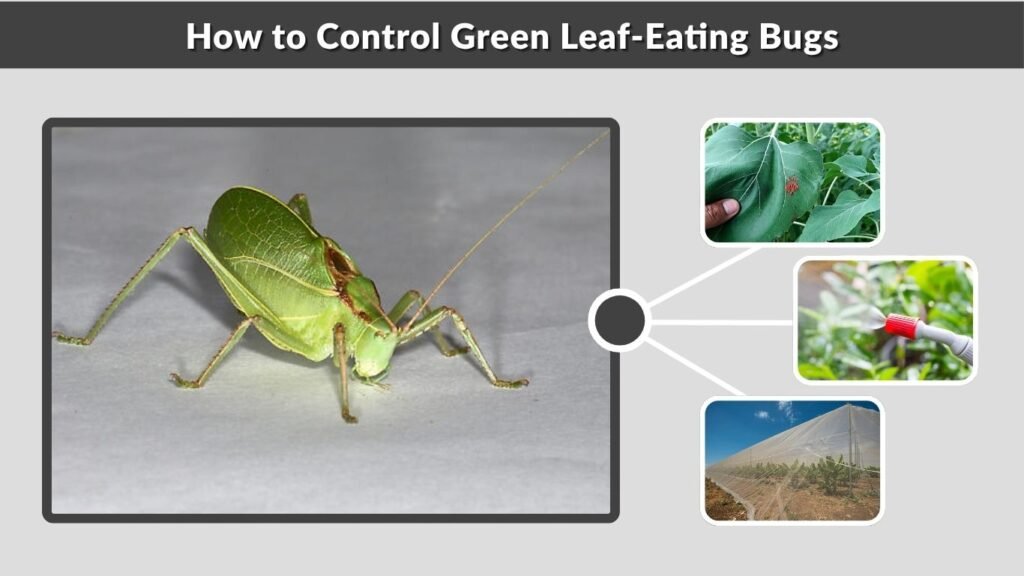
Correct identification should come before treatment because green lacewings and other beneficial insects should remain in the garden.
- Inspect both sides of affected leaves.
- Look for eggs, nymphs, droppings and feeding marks.
- Remove large katydids or leaf-footed bugs by hand.
- Spray small insects from plants with water.
- Remove badly infested leaves when practical.
- Control weeds that provide alternative host plants.
- Protect valuable crops with fine insect netting.
- Use insecticidal soap for appropriate soft-bodied pests.
- Avoid broad-spectrum pesticides when only one insect is present.
Treatment may not be necessary if the plant remains healthy and damage is minor. Large infestations or unexplained plant decline may require identification by a local agricultural extension service.
FAQs
Are green leaf bugs poisonous?
Most green insects that resemble leaves are not poisonous or venomous. Katydids, true leaf insects, leafhoppers, and green shield bugs present little danger to humans. Some release odors or can deliver a mild defensive nip, but they do not normally cause serious injuries.
Can a green leaf bug fly?
Many green leaf-like insects can fly. Adult katydids, green stink bugs, leafhoppers, planthoppers, and male leaf insects commonly have functional wings. Female true leaf insects may have reduced wings and are often unable to fly because of their heavy bodies.
What is a large green leaf-shaped bug in Florida?
A large green insect with leaf-shaped wings found in Florida is usually a katydid. Long antennae and enlarged jumping legs confirm the identification. Green stink bugs are smaller and shield-shaped, while true leaf insects do not naturally occur in Florida.
What is a tiny green bug on a leaf?
A tiny green insect underneath a leaf may be a leafhopper, planthopper, aphid, or young stink bug. Leafhoppers jump quickly, aphids gather in groups, and planthoppers have wings held like a small tent. Close photographs can help separate them.
What does seeing a green leaf bug mean?
A green leaf bug has no scientifically established spiritual meaning. In folklore and personal symbolism, green leaf-like insects may represent growth, renewal, patience, adaptability, or blending into one’s surroundings. These meanings are cultural interpretations rather than biological facts.
