
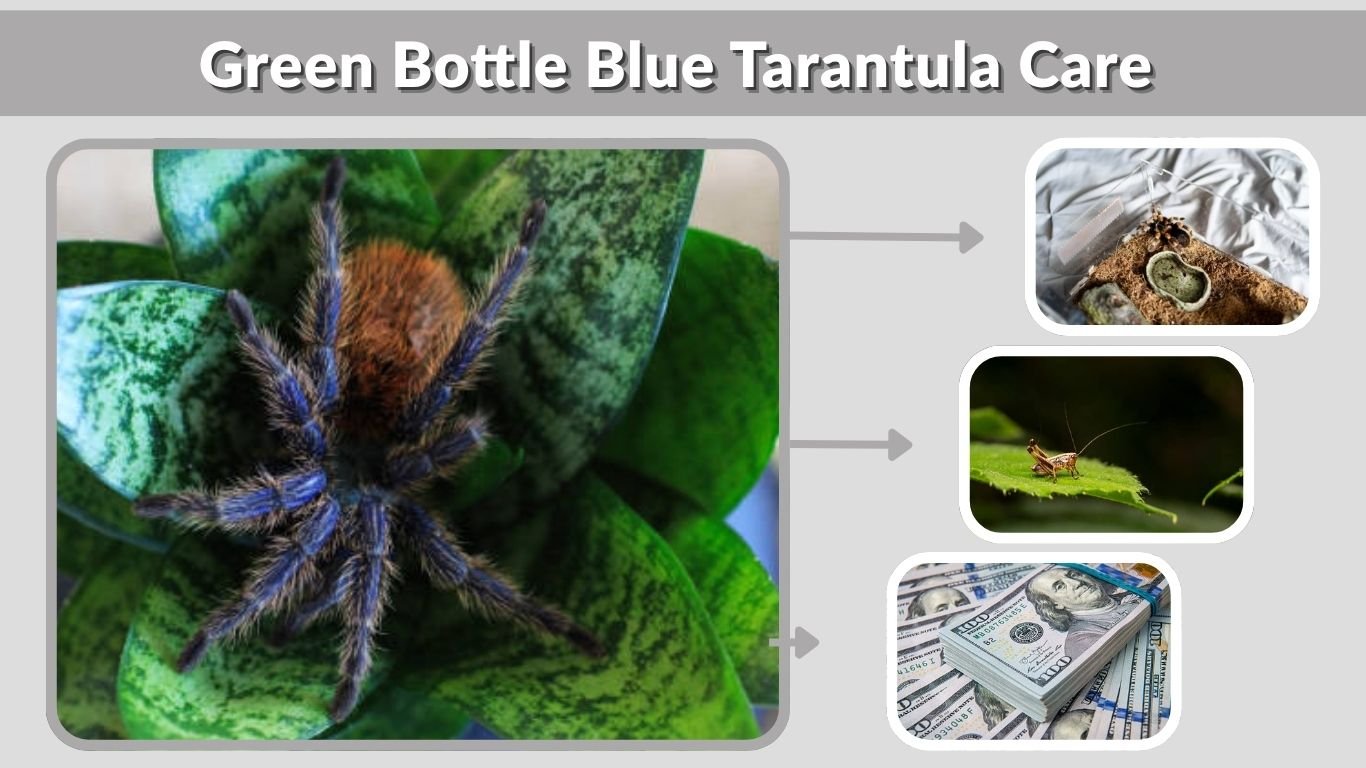
The Green Bottle Blue tarantula (Chromatopelma cyaneopubescens) is one of the most colorful and popular pet tarantulas in the world. Known for its bright blue legs, green carapace, and orange abdomen, this species is not only visually stunning but also relatively easy to care for.
Unlike many other tarantulas, the Green Bottle Blue (often called GBB) is considered beginner-friendly, thanks to its hardy nature and simple care requirements. It is also famous for its heavy webbing behavior, making it an excellent display pet.
What Is a Green Bottle Blue Tarantula?
The Green Bottle Blue tarantula is a New World species native to Venezuela. It belongs to the species Chromatopelma cyaneopubescens and is the only species in its genus.
Key identification features:
- Scientific name: Chromatopelma cyaneopubescens
- Native to dry regions of Venezuela
- Bright blue legs and green body
- Orange or reddish abdomen
This tarantula is widely admired for its vibrant colors, which become more intense as it matures.
Green Bottle Blue Tarantula Facts & Characteristics
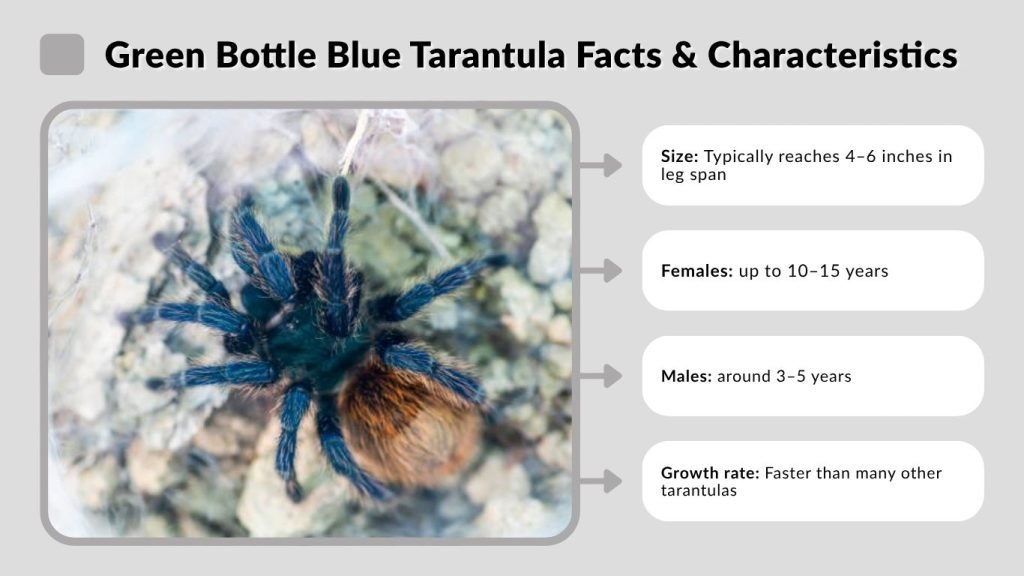
The Green Bottle Blue tarantula is unique not only for its appearance but also for its behavior and growth patterns.
Important facts:
- Size: Typically reaches 4–6 inches in leg span
- Lifespan:
- Females: up to 10–15 years
- Males: around 3–5 years
- Growth rate: Faster than many other tarantulas
- Behavior: Active and visible compared to burrowing species
One interesting feature is its color transformation. Juveniles often look different from adults, gradually developing their bright blue and green coloration as they mature.
Are Green Bottle Blue Tarantulas Arboreal or Terrestrial?
This is one of the most common questions about this species. The answer is: they are semi-arboreal.
Green Bottle Blue tarantulas do not behave like typical burrowers. Instead, they prefer to build extensive web structures above the ground.
Key behavior traits:
- Rarely dig deep burrows
- Create thick webbing across their enclosure
- Use web tunnels for hiding and hunting
Because of this, they need an enclosure that allows for both ground space and vertical structures for webbing.
Temperament: Are They Aggressive or Docile?
The Green Bottle Blue tarantula is known for having a manageable temperament, making it suitable for beginners.
Behavior traits:
- Generally docile but skittish
- More likely to run than bite
- Rarely shows strong defensive behavior
They are not aggressive, but they are fast movers, which means handling should still be done carefully.
Compared to Old World tarantulas, GBBs are much easier to manage and far less likely to bite.
Are Green Bottle Blue Tarantulas Good for Beginners?
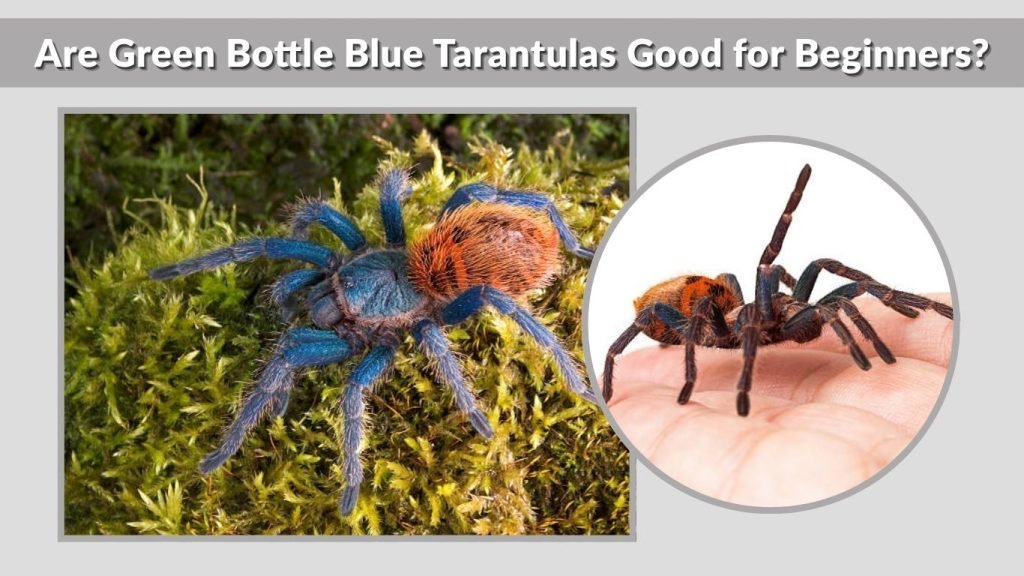
Yes, the Green Bottle Blue tarantula is widely considered one of the best beginner tarantulas.
Reasons why they are beginner-friendly:
- Hardy and adaptable to different conditions
- Require low humidity, making care easier
- Active and visible, unlike shy species
- Rarely aggressive
Their combination of beauty, ease of care, and interesting behavior makes them a top choice for first-time tarantula keepers.
Green Bottle Blue Tarantula Venom & Bite
Like all tarantulas, the Green Bottle Blue is venomous, but its venom is mild and not dangerous to humans.
What happens if it bites?
- Mild pain similar to a bee sting
- Slight swelling and redness
- Symptoms usually fade quickly
Bites are rare, as this species prefers to escape rather than defend itself.
For most people, the risk is very low, making it a safer option compared to more defensive species.
Are Green Bottle Blue Tarantulas Poisonous?
The Green Bottle Blue tarantula is not poisonous, but it is venomous.
- Venomous: injects venom through a bite
- Poisonous: harmful when touched or eaten
This means:
- Touching the tarantula will not poison you
- Only bites pose a risk (and even then, mild)
Understanding this distinction helps reduce unnecessary fear and confusion.
Green Bottle Blue Tarantula Care Guide
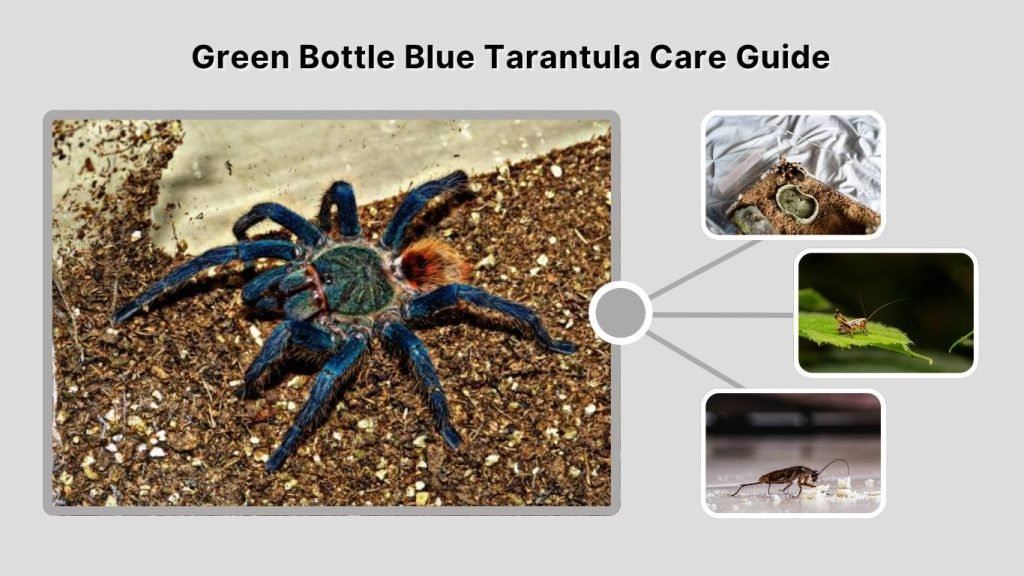
Proper care is essential to keep your tarantula healthy and active. Fortunately, the Green Bottle Blue is relatively easy to care for compared to many other species.
Enclosure Setup
A well-designed enclosure is key to keeping your tarantula comfortable.
- Use a well-ventilated tank
- Provide anchor points like branches or decorations for webbing
- Keep substrate mostly dry
Unlike burrowing species, GBB tarantulas need space to build their web structures rather than dig tunnels.
Tank Size
Choosing the right enclosure size depends on the tarantula’s age.
- Spiderlings: small containers
- Juveniles: medium enclosure
- Adults: 5–10 gallon tank
Make sure the enclosure is secure, as tarantulas are capable of escaping if not properly contained.
Temperature & Humidity
Green Bottle Blue tarantulas thrive in warm and dry conditions.
- Temperature: 24–28°C (75–82°F)
- Humidity: low to moderate
- Avoid overly damp substrate
Too much humidity can lead to stress or health issues, so good ventilation is important.
Feeding & Diet
These tarantulas are active hunters and have a healthy appetite.
- Feed insects like crickets, roaches, and mealworms
- Adults: feed once or twice per week
- Spiderlings: smaller prey, more frequent feeding
Always remove uneaten food to prevent stress or harm, especially during molting periods.
Green Bottle Blue Tarantula Spiderling Care
Caring for a Green Bottle Blue tarantula from a young stage requires slightly different conditions than adults. Spiderlings, or “slings,” are more sensitive but still relatively easy to raise compared to other species.
Key spiderling care tips:
- Keep slightly higher humidity than adults
- Use fine, dry substrate with light moisture
- Provide very small prey like pinhead crickets
- Ensure good ventilation
Spiderlings grow quickly, especially when fed regularly. You may also notice early webbing behavior, which increases as they mature.
Green Bottle Blue Tarantula Price & Where to Buy
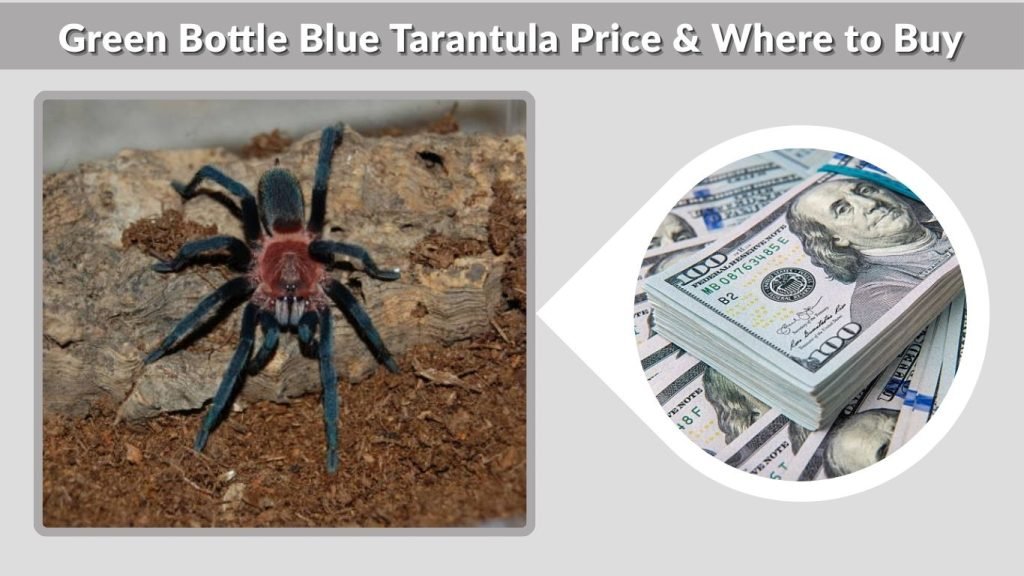
The Green Bottle Blue tarantula is widely available and generally affordable, making it a popular choice for beginners.
Average price range:
- Spiderlings: $30–$60
- Juveniles: $60–$100
- Adult females: $100–$150+
Females cost more due to their longer lifespan and larger size.
Where to buy:
- Online tarantula breeders
- Exotic pet shops
- Reptile expos and conventions
When buying, always check:
- Seller reputation
- Health of the tarantula
- Proper packaging and shipping conditions
Avoid suspiciously low prices, as they may indicate unhealthy or poorly kept specimens.
Green Bottle Blue Tarantula Lifespan
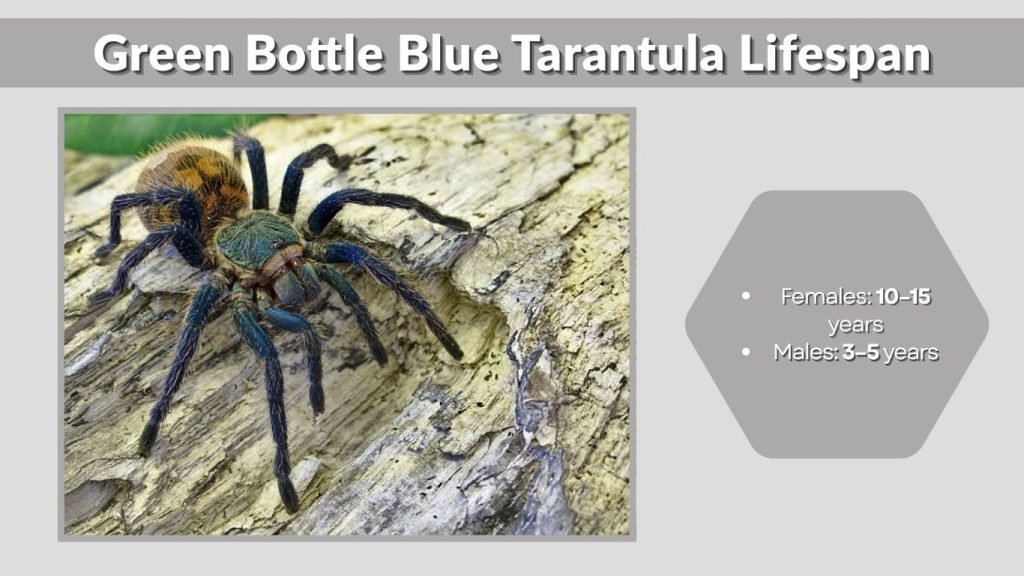
Lifespan is an important factor when choosing a tarantula, and the Green Bottle Blue offers a good balance between longevity and ease of care.
Lifespan details:
- Females: 10–15 years
- Males: 3–5 years
With proper care, including correct feeding and environment, females can live for over a decade, making them a long-term pet.
Habitat: Where Do Green Bottle Blue Tarantulas Live?
In the wild, Green Bottle Blue tarantulas are native to arid regions of northern Venezuela.
Natural habitat features:
- Dry scrublands and desert-like areas
- Warm temperatures
- Low humidity
- Sparse vegetation
Unlike many tropical tarantulas, they thrive in dry conditions, which is why their care requirements are simpler than humidity-dependent species.
Male vs Female Green Bottle Blue Tarantula
Knowing the difference between male and female tarantulas is helpful, especially when purchasing one.
Key differences:
- Lifespan: Females live much longer
- Size: Females are usually larger
- Maturity: Males mature faster
- Behavior: Mature males may wander more
Because of their longer lifespan, female tarantulas are generally more valuable and preferred by keepers.
Molting & Growth
Like all tarantulas, Green Bottle Blue tarantulas grow by shedding their exoskeleton through a process called molting.
Signs of molting:
- Refusing food
- Reduced activity
- Darkening of color
During molting:
- Do not disturb the tarantula
- Avoid feeding
- Maintain stable conditions
After molting, the tarantula is fragile, and its fangs take time to harden. Feeding too early can cause injury, so patience is important.
Common Mistakes to Avoid
Even though Green Bottle Blue tarantulas are beginner-friendly, mistakes can still happen. Avoiding these will ensure a healthy and stress-free pet.
Common mistakes:
- Too much humidity: can lead to health issues
- Poor ventilation: increases risk of mold
- Lack of webbing anchors: reduces natural behavior
- Overhandling: causes stress
Providing the right balance of dryness, airflow, and structure is key to successful care.
FAQs
Are green bottle blue tarantulas good for beginners?
Yes, they are one of the best beginner tarantulas. They are hardy, easy to care for, and require lower humidity than many other species, making them ideal for new keepers.
How big do green bottle blue tarantulas get?
They typically grow to about 4–6 inches in leg span. This medium size makes them manageable while still being large enough to observe easily.
Are green bottle blue tarantulas aggressive?
They are not aggressive but can be fast and skittish. They usually prefer to run away rather than bite, making them safer than many more defensive tarantula species.
What do green bottle blue tarantulas eat?
They feed on insects such as crickets, roaches, and mealworms. Spiderlings require smaller prey, while adults can eat larger insects once or twice per week.
How long do green bottle blue tarantulas live?
Females can live up to 10–15 years, while males typically live around 3–5 years. Proper care and environment can help maximize their lifespan.
Conclusion
The Green Bottle Blue tarantula is one of the most attractive and beginner-friendly tarantulas available today. With its bright colors, active behavior, and simple care needs, it stands out as an excellent choice for both new and experienced keepers.
Its mild venom, low aggression, and easy setup requirements make it a safe and rewarding pet, especially for those just starting in the tarantula hobby.
By providing the right environment, diet, and care, you can enjoy watching this beautiful spider thrive for many years.
