
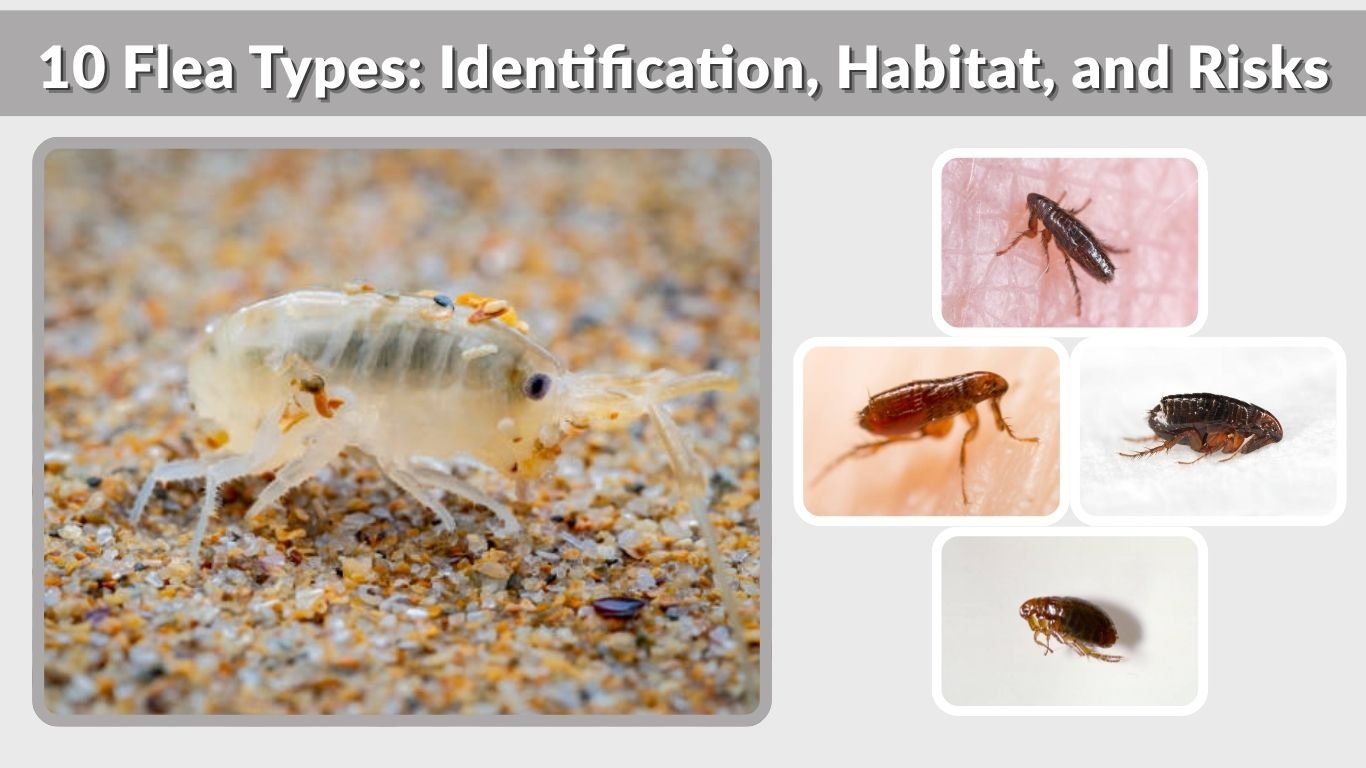
Fleas are small, wingless parasitic insects that feed on the blood of animals and humans. Despite their tiny size, they can cause significant discomfort, spread diseases, and lead to serious health problems for both pets and people. Fleas are highly adaptable and can live in a wide range of environments, from household carpets and pet bedding to outdoor soil and animal nests.
In this guide, we will explore 10 common types of fleas, highlighting their key characteristics, habitats, behaviors, and potential health risks.
1. Dog Flea
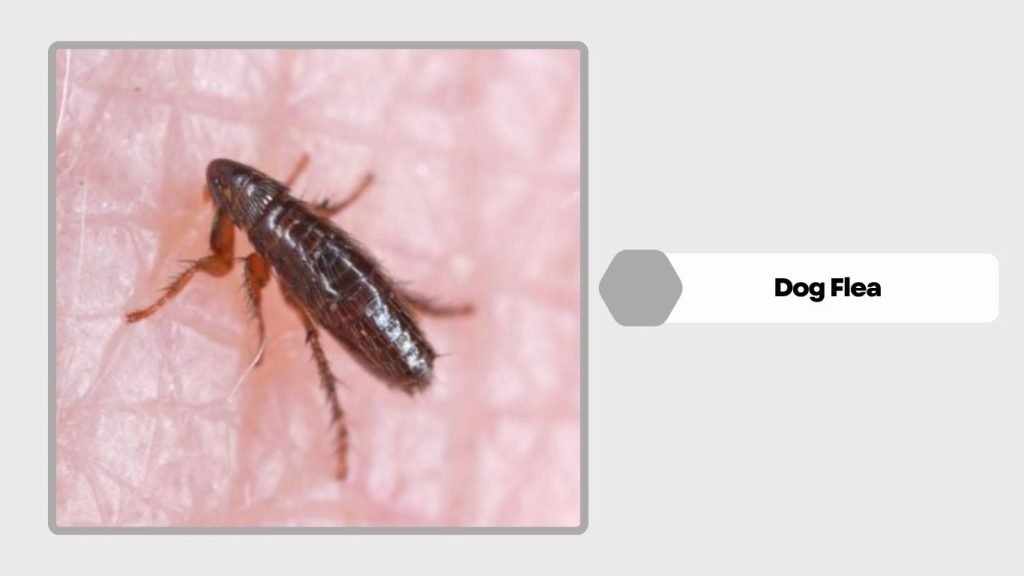
The dog flea is another common external parasite that primarily affects dogs but can also infest other animals, including cats and humans. It is less widespread than the cat flea but still significant in certain regions.
Identification
- Slightly larger than some other flea species (about 2–4 mm long)
- Reddish-brown in color with a flattened body
- Covered with small bristles and spines
- Strong hind legs designed for jumping long distances
Habitat
Dog fleas are typically found on dogs and in their immediate environment. They thrive in warm, humid conditions and are often present in dog bedding, kennels, carpets, and cracks in floors. Outdoors, they may live in shaded areas such as soil, grass
2. Human Flea
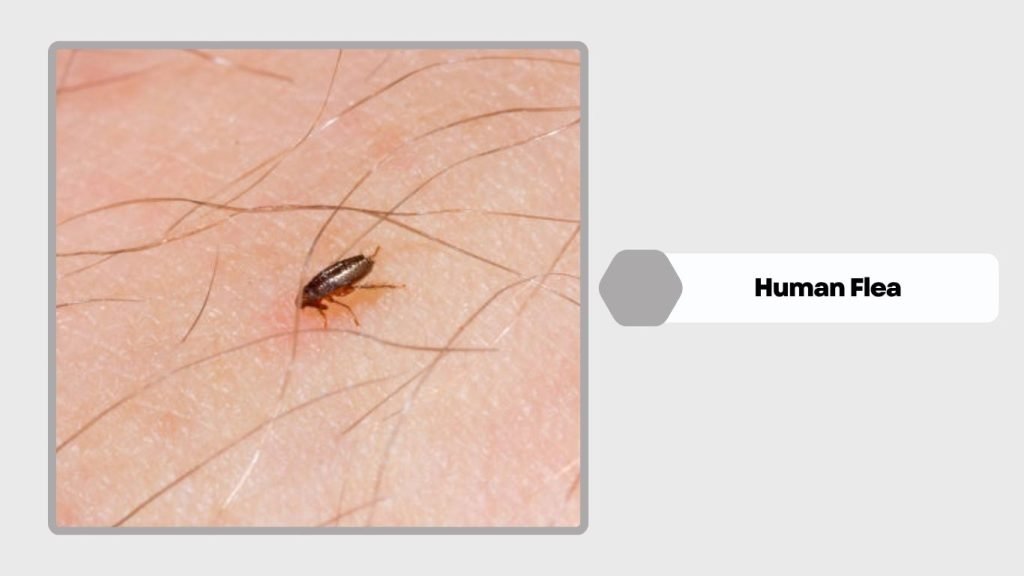
The human flea is a parasitic insect that primarily feeds on human blood but can also infest other animals such as pigs and dogs. It is less common today due to improved hygiene and living conditions but can still be found in certain regions.
Identification
- Small (about 2–4 mm long), brownish in color
- Flattened body adapted for moving through hair or clothing
- Lacks the comb-like spines found in some other flea species
- Strong jumping legs
Habitat
Human fleas are typically found in environments where sanitation is poor or overcrowding occurs. They can live in bedding, clothing, floor cracks, and dusty areas. Unlike many other fleas, they are not strictly dependent on animal hosts and can survive in human living spaces for extended periods.
Behavior
Human fleas feed directly on human blood and are most active at night. They hide in nearby surroundings during the day and come out to feed when a host is available. Their life cycle includes egg, larva, pupa, and adult stages, and they can reproduce quickly in favorable conditions.
Health Risks
Bites from human fleas can cause itching, irritation, and allergic reactions. In some cases, they are known to transmit diseases such as plague and typhus, although this is rare today. Secondary skin infections may also occur due to excessive scratching.
3. Oriental Rat Flea
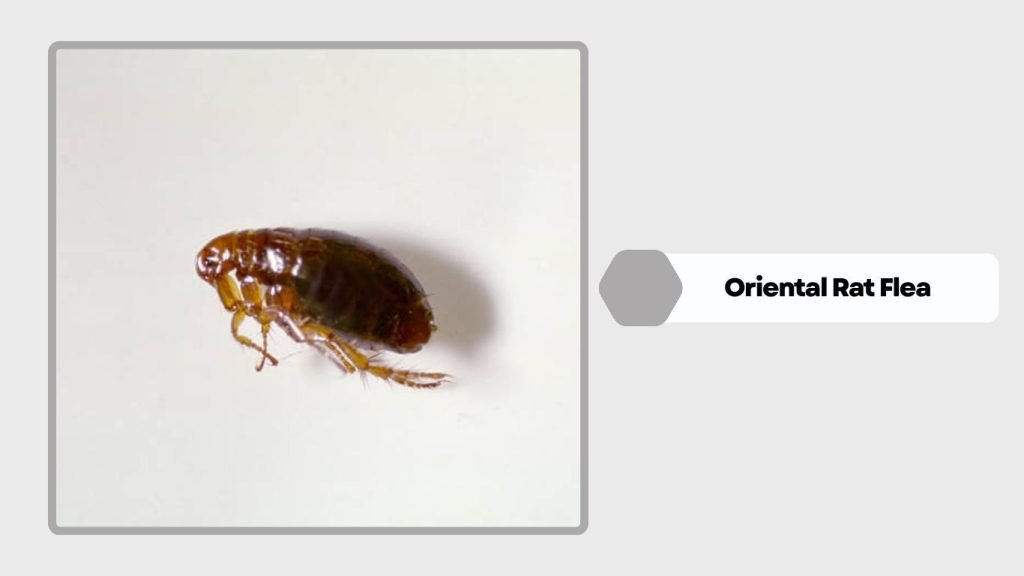
The oriental rat flea is a medically important species known for its role in transmitting serious diseases. It primarily infests rodents but can bite humans when its usual hosts are unavailable.
Identification
- Small (about 1.5–4 mm long), dark brown in color
- Rounded head without prominent combs
- Flattened body with strong legs for jumping
- Appears slightly more compact than some other flea species
Habitat
This flea is commonly found on rats and other rodents, especially in urban and rural areas with poor sanitation. It lives in rodent nests, burrows, and surrounding environments such as garbage piles and storage areas. When rodent populations decline, these fleas may seek alternative hosts, including humans.
Behavior
Oriental rat fleas feed on the blood of rodents and occasionally humans. They are capable of surviving for some time without feeding and can move between hosts easily. Their life cycle is similar to other fleas and can progress rapidly in warm environments.
Health Risks
This species is best known as a primary vector of the plague bacterium (Yersinia pestis). It can also transmit murine typhus. Bites may cause irritation and swelling, but the major concern is disease transmission, making this flea particularly significant in public health.
4. Northern Rat Flea
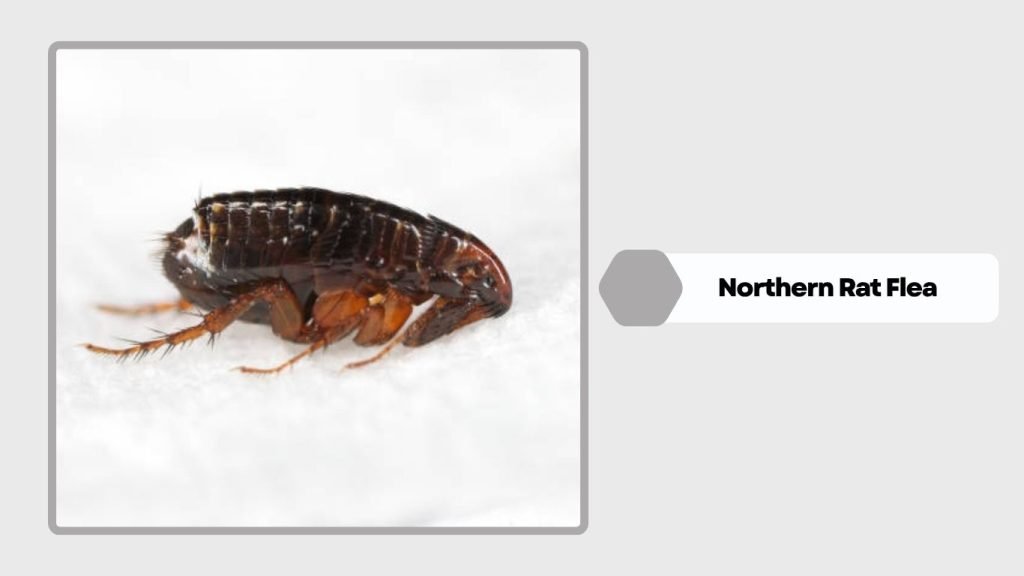
The northern rat flea is a common parasite found mainly on rodents, especially rats and mice. It plays an important role in the transmission of certain diseases and is often found in both urban and rural environments.
Identification
- Small (about 1.5–3.5 mm long)
- Dark brown body color
- Flattened body with a slightly elongated shape
- Lacks prominent combs on the head and thorax
- Strong hind legs for jumping
Habitat
Northern rat fleas are typically found on rodents and in their nesting areas. They thrive in environments such as basements, sewers, barns, and storage spaces where rodents are present. These fleas can also be found in wall voids, floor cracks, and other hidden areas close to rodent activity.
Behavior
These fleas primarily feed on the blood of rodents but will bite humans if their natural hosts are unavailable. They are active and can move quickly between hosts. Their life cycle includes egg, larva, pupa, and adult stages, and they can reproduce rapidly under suitable environmental conditions.
Health Risks
Northern rat fleas are known carriers of diseases such as plague and murine typhus. Their bites can cause itching and irritation, and in some cases, allergic reactions. Due to their association with rodents, they are considered a concern for public health.
5. Sticktight Flea
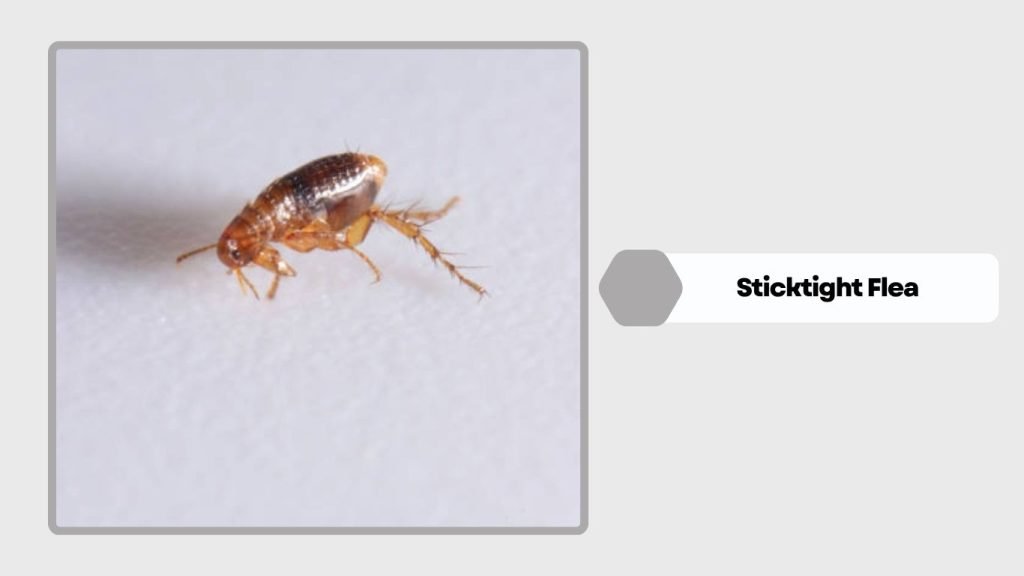
The sticktight flea is a unique species that attaches firmly to its host, often remaining in one place for extended periods. It commonly affects poultry but can also infest pets and other animals.
Identification
- Small (about 1–2 mm long)
- Dark brown to black in color
- Rounded body shape
- Head adapted for attaching to host skin
- Less mobile compared to other fleas
Habitat
Sticktight fleas are commonly found on birds such as chickens, as well as on dogs, cats, and other animals. They prefer warm environments and are often found in poultry houses, nests, and animal resting areas. They tend to stay attached to specific areas like the face, comb, or ears of the host.
Behavior
Unlike many other fleas, sticktight fleas attach themselves to the host’s skin and remain fixed while feeding. They feed continuously on blood and may stay in the same spot for days or weeks. Their eggs fall to the ground, where they continue their development cycle.
Health Risks
Infestations can cause irritation, inflammation, and skin damage at the attachment site. In poultry, heavy infestations may lead to weakness, reduced productivity, or even death in severe cases. Secondary infections can also occur due to open wounds caused by attachment.
6. Sand Flea
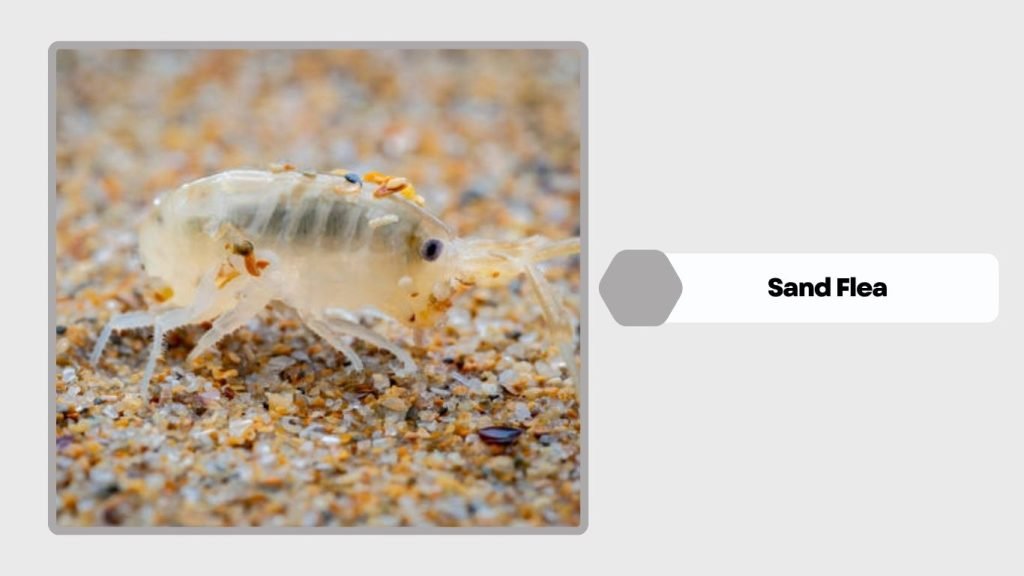
The sand flea, also known as the chigoe flea, is a burrowing parasite that primarily affects humans and animals in tropical and subtropical regions. Unlike most fleas, it embeds itself into the skin of its host.
Identification
- Very small (about 1 mm before embedding)
- Light brown or reddish color
- Body swells significantly after burrowing into skin
- Rounded appearance when embedded
Habitat
Sand fleas are commonly found in sandy soils, beaches, and dry, dusty environments, especially in warm climates. They thrive in areas with poor sanitation, such as rural villages, animal pens, and coastal regions. They are often present in places where people walk barefoot.
Behavior
Female sand fleas burrow into the skin, usually on the feet, toes, or under the nails. Once inside, they feed on blood and enlarge as they develop eggs. After releasing eggs into the environment, the flea dies and is eventually shed from the skin. This behavior makes them very different from surface-dwelling fleas.
Health Risks
Infestation can lead to a condition called tungiasis, causing pain, itching, swelling, and inflammation. If untreated, it may result in secondary infections, ulcers, or even serious complications such as tetanus. Proper hygiene and footwear are key to prevention.
7. Hen Flea
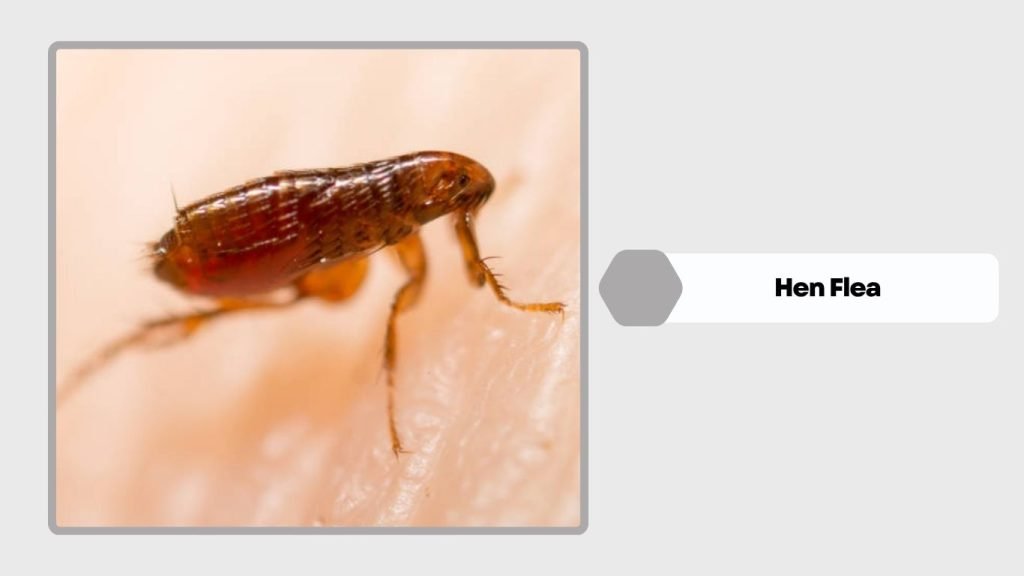
The hen flea is a common parasite of birds, especially domestic poultry. It primarily affects chickens but can also infest other bird species and occasionally mammals.
Identification
- Small (about 2–2.5 mm long)
- Brownish body color
- Flattened body with bristles
- Well-developed jumping legs
Habitat
Hen fleas are usually found in poultry houses, nests, and coops. They spend much of their time in cracks, litter, and nesting materials rather than staying constantly on the host. They prefer warm, sheltered environments where birds are present.
Behavior
These fleas feed on the blood of birds, especially at night. During the day, they hide in the surroundings such as nesting materials and walls. They reproduce in the environment, and their larvae develop in organic debris like feathers and droppings.
Health Risks
Hen flea infestations can cause irritation, restlessness, and reduced egg production in poultry. Severe infestations may lead to anemia and weakness in birds. In rare cases, they may bite humans, causing itching and mild discomfort. Proper cleaning and maintenance of poultry areas help control their spread.
9. Rabbit Flea
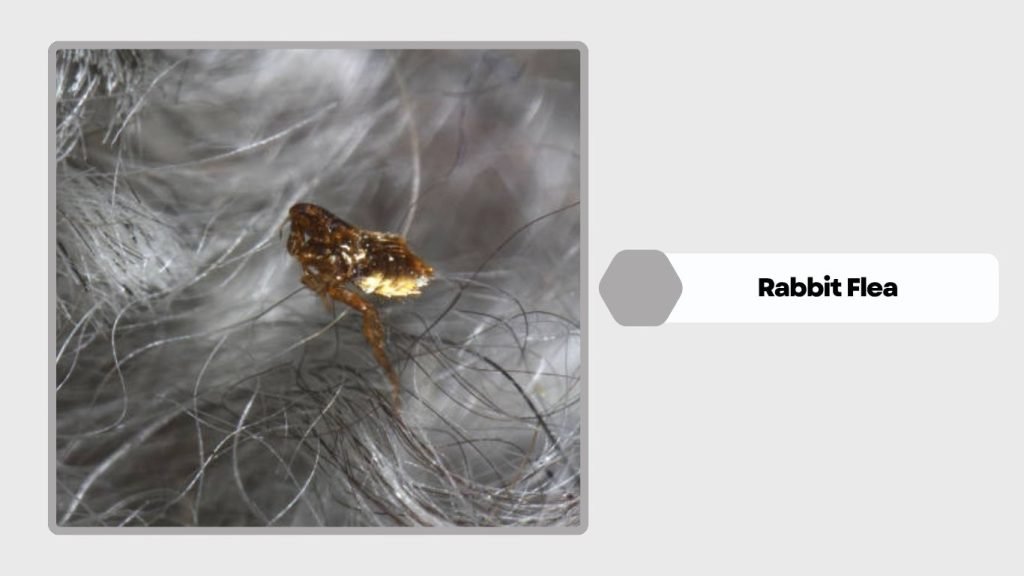
The rabbit flea is a specialized parasite that primarily infests rabbits, particularly wild species. It is known for its role in spreading certain viral diseases among rabbit populations.
Identification
- Small (about 1–2 mm long)
- Brownish body with a flattened shape
- Possesses comb-like structures (ctenidia) on the head and thorax
- Strong hind legs for jumping
Habitat
Rabbit fleas are commonly found on wild rabbits and in their burrows or nests. They thrive in grassy fields, woodland areas, and places where rabbits live and breed. They are less commonly found indoors unless domestic rabbits are infested.
Behavior
These fleas spend most of their life cycle closely associated with their host. They feed on rabbit blood and are particularly active during the host’s breeding season. Eggs are laid in the nesting areas, where larvae develop in organic debris. They are also known to attach to young rabbits in nests.
Health Risks
Rabbit fleas can cause irritation and discomfort to their hosts. More importantly, they are known vectors of diseases such as myxomatosis, which can be deadly to rabbits. In heavy infestations, they may contribute to weakness and poor health in affected animals.
9. Hedgehog Flea
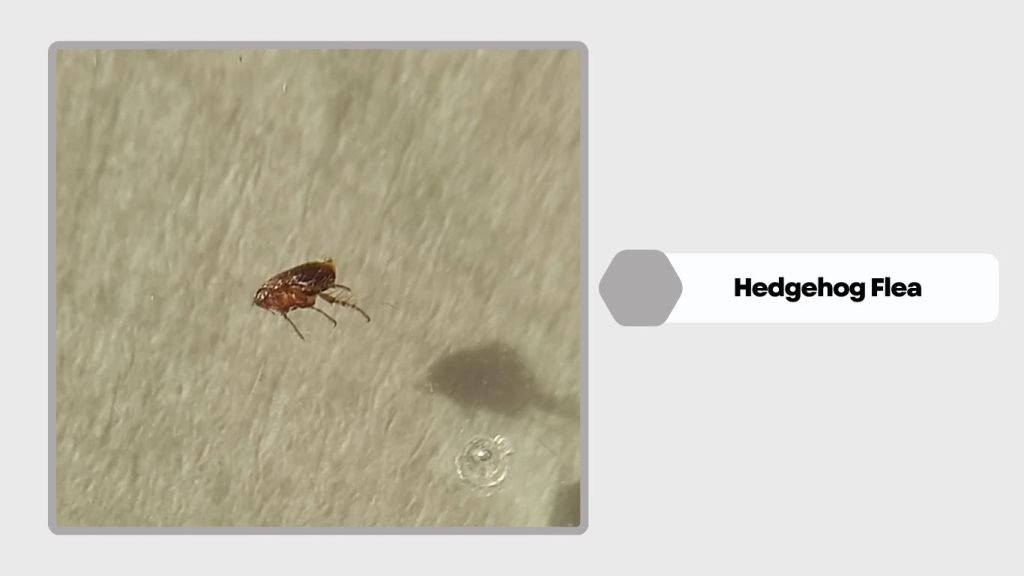
The hedgehog flea is a host-specific parasite that mainly infests hedgehogs but may occasionally be found on other animals. It is not commonly associated with humans.
Identification
- Small (about 2–3 mm long)
- Dark brown color
- Flattened body with bristles
- Adapted for moving through dense spines and fur
Habitat
Hedgehog fleas are typically found on hedgehogs and in their nests or shelters. These environments include leaf litter, burrows, and garden areas where hedgehogs rest. They prefer cool, sheltered habitats with organic material.
Behavior
These fleas feed on the blood of hedgehogs and remain closely associated with their host. They can jump between hosts when animals come into contact. Their life cycle takes place partly on the host and partly in the surrounding environment, such as nesting materials.
Health Risks
Hedgehog fleas generally do not pose a serious threat to humans. However, they can cause irritation and discomfort to hedgehogs, especially in large numbers. In rare cases, they may bite other animals, leading to mild itching or skin irritation.
FAQs
1. What are fleas and why are they a problem?
Fleas are small parasitic insects that feed on the blood of animals and humans. They can cause itching, allergic reactions, and may transmit diseases or parasites.
2. Can fleas live on humans?
Fleas can bite humans, but they do not usually live on them permanently. Humans are not their preferred hosts compared to animals like cats and dogs.
3. How do fleas spread in homes?
Fleas spread through infested pets, other animals, or contaminated environments such as carpets, bedding, and furniture where eggs and larvae develop.
4. Which flea is most common?
The cat flea is the most common type worldwide. It infests both cats and dogs and is responsible for most household flea problems.
5. How can flea infestations be prevented?
Regular pet grooming, cleaning living areas, vacuuming carpets, and using flea control treatments can help prevent infestations effectively.
