
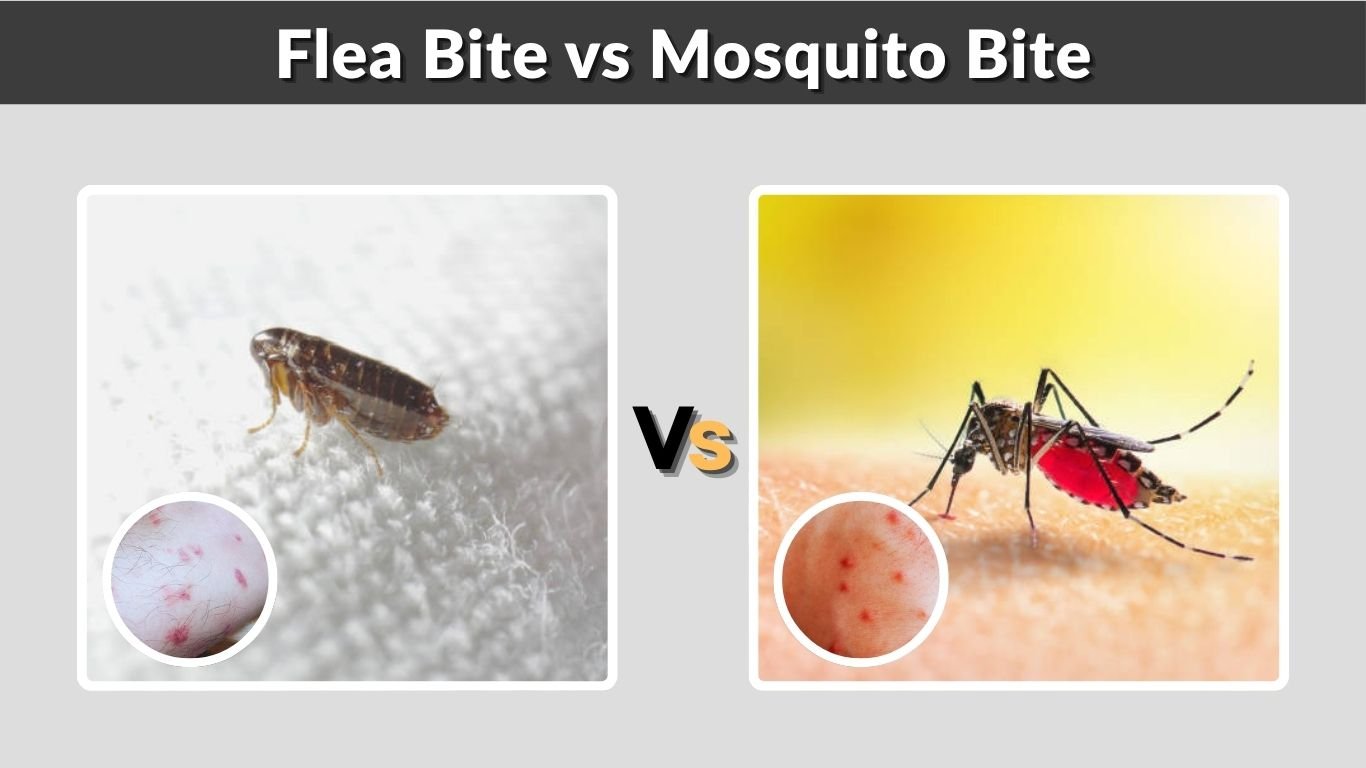
Flea bites and mosquito bites can both cause itchy, red bumps, making them easy to confuse at first glance. However, their appearance, location, pattern, and timing often provide useful clues about what caused the irritation. Flea bites commonly occur in small clusters around the ankles and lower legs, while mosquito bites are usually larger, raised welts on exposed skin. Understanding the differences between flea bite vs mosquito bite reactions can help you manage symptoms and determine whether pest control may be necessary.
Flea Bite vs Mosquito Bite: Quick Comparison
Although both insects feed on blood, flea and mosquito bites often produce noticeably different skin reactions. Fleas tend to bite repeatedly in one area, creating small grouped bumps, while mosquitoes usually leave larger individual welts. The location of the bites, their size, and whether you are finding insects around pets or standing water can provide additional clues.
Main Differences at a Glance
- Flea bites: Usually small, red, and intensely itchy.
- Mosquito bites: Often larger, puffy, and raised.
- Flea pattern: Frequently appears in clusters or short lines.
- Mosquito pattern: More commonly scattered across exposed skin.
- Common flea locations: Ankles, feet, and lower legs.
- Common mosquito locations: Arms, legs, face, neck, and other exposed areas.
- Flea exposure: Often connected with pets, carpets, bedding, or upholstered furniture.
- Mosquito exposure: More likely after spending time outdoors or near mosquito breeding areas.
What Do Flea Bites Look Like?
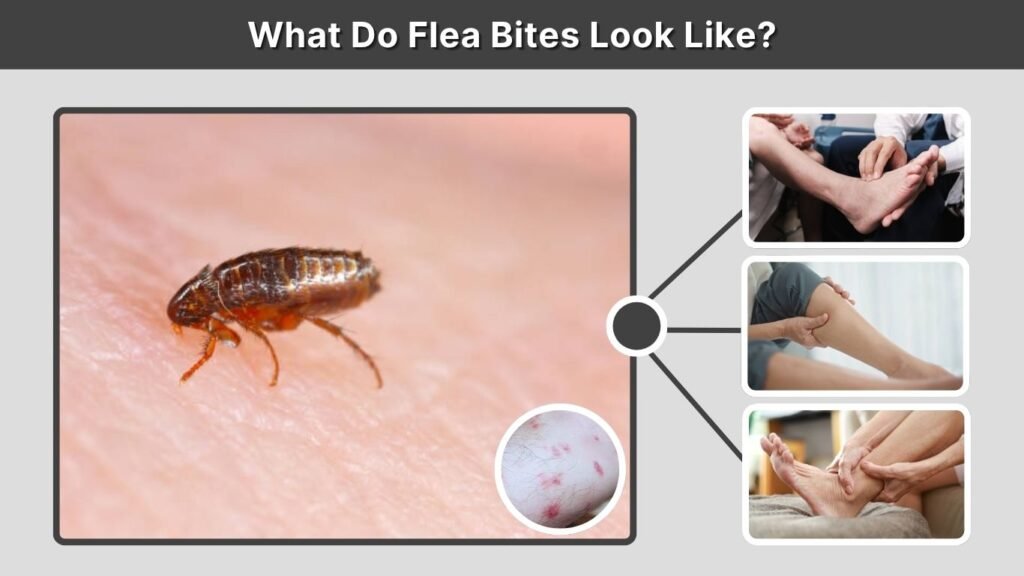
Flea bites generally appear as tiny red bumps with a noticeable point near the center. Because fleas can jump between areas and feed more than once, several bites may develop close together. Reactions vary between people, but itching can be surprisingly intense despite the relatively small size of the bumps. Flea bites are particularly common where clothing fits closely or near the lower legs.
Flea Bite Appearance
A typical flea bite may look like a small red spot surrounded by mild redness. Unlike the broad swelling associated with many mosquito bites, flea bites often remain compact.
They may appear as several bumps grouped together, sometimes described as a line or cluster. Scratching can make the surrounding skin redder and more swollen, which may make identification more difficult.
Where Flea Bites Commonly Appear
Flea bites frequently affect:
- Ankles
- Feet
- Lower legs
- Calves
- Waistline
- Areas beneath tight clothing
People with pets may notice bites after spending time around pet bedding, carpets, couches, or other areas where fleas can hide.
How Flea Bites Feel
Flea bites can become itchy relatively quickly. Some people experience only mild irritation, while others develop stronger redness and swelling.
Repeated scratching can break the skin and increase the possibility of a secondary skin infection. Keeping the affected area clean and avoiding excessive scratching can therefore be important while the bites heal.
What Do Mosquito Bites Look Like?
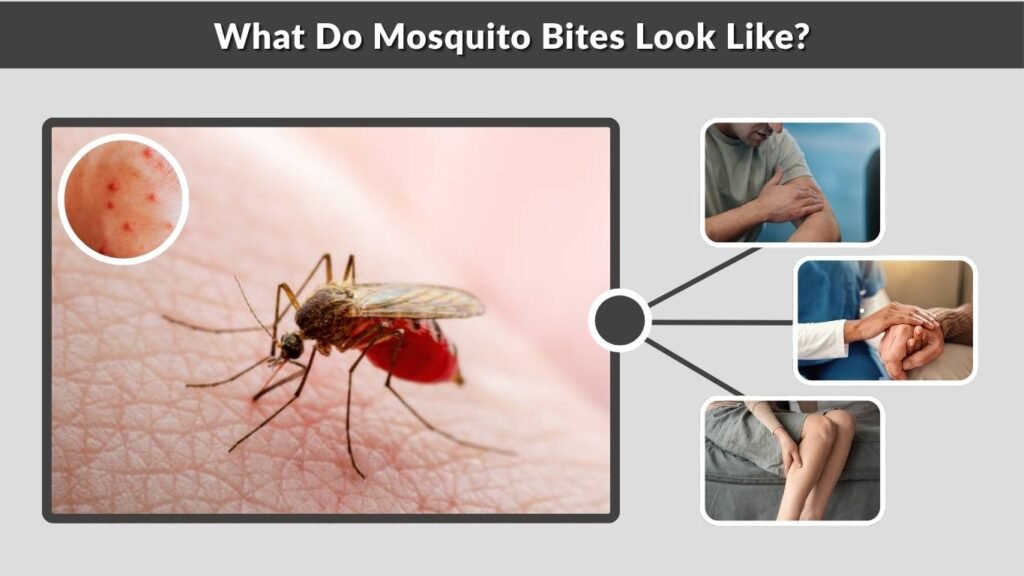
Mosquito bites usually develop after a female mosquito pierces the skin to obtain a blood meal. The body’s reaction to mosquito saliva produces the familiar itchy bump. A mosquito bite is often larger and puffier than a flea bite, although individual reactions vary considerably. Bites are especially common on exposed skin after outdoor activity, particularly during warmer weather.
Mosquito Bite Appearance
Mosquito bites commonly develop as round or oval raised welts. They may initially appear pale or slightly swollen before becoming pink or red.
Some people develop very small bumps, while others experience larger areas of swelling. The center generally does not have the obvious tiny red puncture appearance sometimes associated with flea bites.
Common Mosquito Bite Locations
Mosquitoes can bite almost any exposed area, including:
- Arms
- Hands
- Legs
- Feet
- Face
- Neck
- Shoulders
Bites may appear randomly rather than following a clear line or tightly grouped pattern.
How Mosquito Bites Feel
Mosquito bites are often itchy and may feel warm or mildly irritated. Swelling commonly becomes more noticeable during the hours after the bite.
Most uncomplicated mosquito bites improve gradually within several days. Larger local reactions can take longer to disappear, especially in people who are particularly sensitive to mosquito saliva.
Flea Bite vs Mosquito Bite on Human Skin
When trying to distinguish flea bites from mosquito bites on human skin, avoid relying on only one characteristic. Both can look different depending on a person’s immune response, scratching, and how long ago the bite occurred. Considering the size, distribution, body location, environmental exposure, and presence of additional pest signs provides a more useful overall picture.
Size and Pattern Differences
Flea bites tend to be smaller and are more likely to occur close together. You might notice three or more tiny bumps concentrated around the ankle or lower leg.
Mosquito bites are generally larger and more widely scattered. Someone who spent an evening outdoors might develop individual raised welts across the arms, legs, and neck.
Timing and Exposure Clues
Consider where you were before the bites appeared. If you recently spent time outdoors around dusk or in an area with mosquitoes, mosquito bites become more plausible.
If bites continue appearing indoors—especially around the ankles—and pets are scratching more than usual, fleas may deserve closer investigation.
Other Signs of Fleas
Look for additional evidence rather than depending entirely on skin symptoms. Possible clues include:
- Pets scratching or biting their fur repeatedly
- Tiny dark specks in pet bedding
- Fleas moving through an animal’s fur
- Small jumping insects around carpets or furniture
- New bites repeatedly appearing indoors
Flea Bites vs Mosquito vs Bed Bug Bites
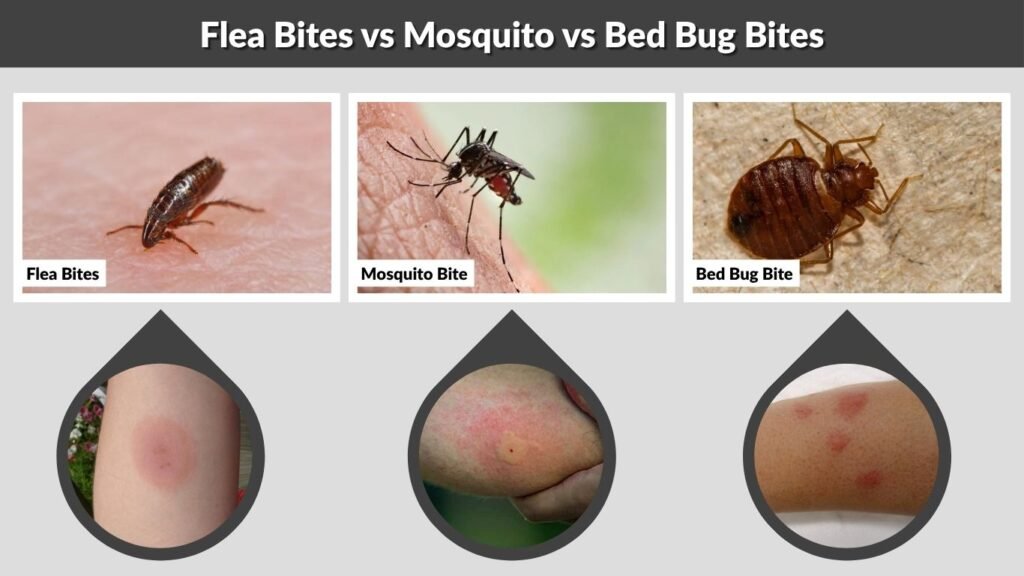
Bed bug bites add another layer of confusion because all three pests can produce red, itchy skin bumps. Bite appearance alone cannot always identify the responsible insect. Where the bites occur, when they develop, and whether other pest signs are present are usually more informative than trying to diagnose the insect solely from a photograph.
How Bed Bug Bites Differ
Bed bug bites commonly appear on skin exposed while sleeping, such as the arms, shoulders, neck, face, and legs. Multiple bites may occur in clusters or lines.
Flea bites are generally smaller and more strongly associated with the feet and ankles. Mosquito bites tend to be larger, more irregularly scattered, and connected with exposed skin.
Finding blood spots, shed skins, dark fecal marks, or live bed bugs around sleeping areas provides stronger evidence of bed bugs than the skin pattern alone.
How to Treat Flea and Mosquito Bites
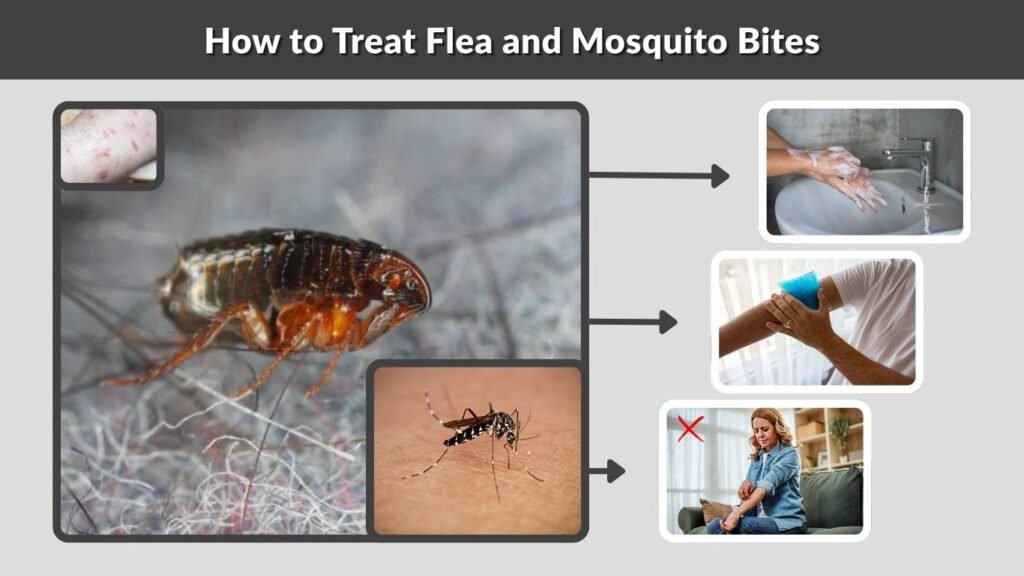
Most uncomplicated flea and mosquito bites can be managed with basic home care. The primary goal is usually reducing itching and preventing scratching-related skin damage. Treatment does not eliminate the underlying pest problem, so recurring flea bites require attention to the home and pets, while repeated mosquito exposure may require better protection from biting insects.
Simple Bite Care
- Wash the affected skin gently with soap and water.
- Apply a cool compress to reduce discomfort and swelling.
- Avoid scratching the bites.
- Keep fingernails short if itching is persistent.
- Consider an appropriate over-the-counter anti-itch treatment according to its directions.
- Watch for increasing redness, warmth, drainage, or worsening pain.
When to Seek Medical Attention
Seek prompt medical help if you develop difficulty breathing, swelling of the lips or throat, dizziness, or another severe allergic reaction.
Medical evaluation may also be appropriate if a bite becomes increasingly painful, produces pus, develops spreading redness, or is accompanied by fever or other concerning symptoms.
How to Prevent Flea and Mosquito Bites
Preventing future bites requires identifying which pest is actually responsible. Flea management generally focuses on pets and indoor environments, while mosquito prevention emphasizes reducing outdoor exposure and eliminating breeding sites. A combination of personal protection and environmental management provides better results than repeatedly treating itchy skin without addressing the source of the bites.
Flea Prevention
For fleas, regularly inspect pets and discuss appropriate flea-control products with a veterinarian. Wash pet bedding, vacuum carpets and furniture thoroughly, and address an established home infestation when necessary.
Mosquito Prevention
Mosquito exposure can be reduced by using an appropriate insect repellent, wearing protective clothing when practical, and reducing standing water around the property. Empty containers, buckets, plant saucers, and other objects that can hold water because they may provide mosquito breeding habitat.
FAQs
1. Are flea bites smaller than mosquito bites?
Generally, flea bites tend to be smaller than mosquito bites. Flea bites often look like tiny red spots or bumps, whereas mosquito bites commonly form larger, raised welts. Individual reactions can vary, so size alone should not be used for identification.
2. Do flea bites appear in clusters?
Yes. Flea bites commonly occur in small groups or clusters because a flea may feed several times in the same general area. The ankles and lower legs are particularly common locations.
3. Can mosquito bites appear in a line?
Mosquito bites can occasionally appear close together simply because several bites occurred in the same area. However, a consistent line or tight cluster is more commonly associated with pests such as fleas or bed bugs than with mosquitoes.
4. How long do flea and mosquito bites last?
Minor flea and mosquito bites often improve within several days, although itching or discoloration can persist longer in sensitive individuals. Scratching may delay healing and increase irritation.
5. How can I know for sure whether I have flea or mosquito bites?
Skin appearance alone cannot always provide a definite answer. Consider bite location, pattern, recent outdoor exposure, pets, signs of fleas inside the home, and mosquito activity around the property. If the reaction is severe, unusual, or persistent, a healthcare professional can evaluate the skin and rule out other causes.
