
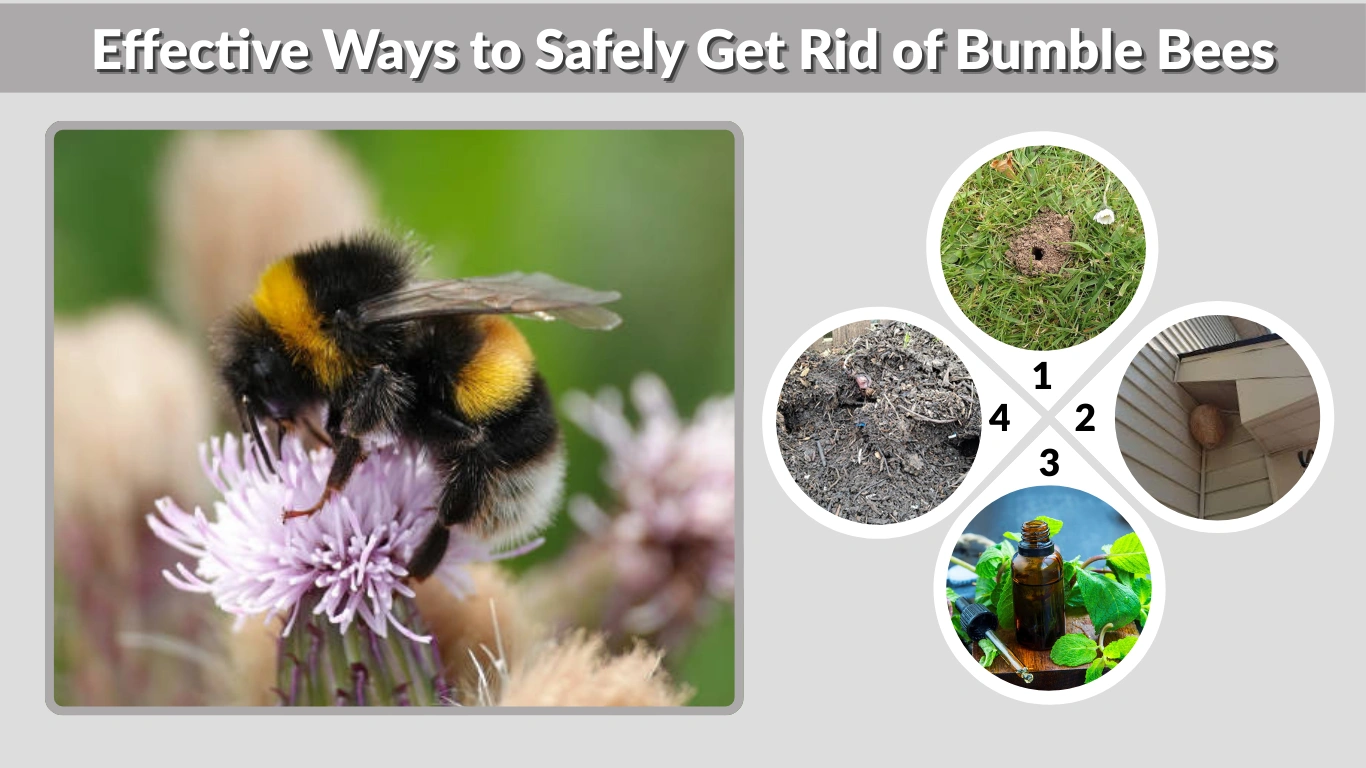
Bumble bees are essential pollinators, but they can become a nuisance when they build nests too close to homes, sheds, or high-traffic areas. Removing them requires caution, respect for their ecological value, and an understanding of safe, humane techniques. This guide explains how to identify bumble bees, why they appear on your property, and the most effective, non-harmful strategies for getting rid of them while preventing future infestations.
Identification
- Rounded, fuzzy body with dense hairs
- Black-and-yellow coloration in distinct bands
- Slow, hovering flight close to flowers
- Nests often located in ground cavities, compost piles, or abandoned burrows
- Produces a soft buzzing sound compared to harsher wasp tones
Understanding Bumble Bees
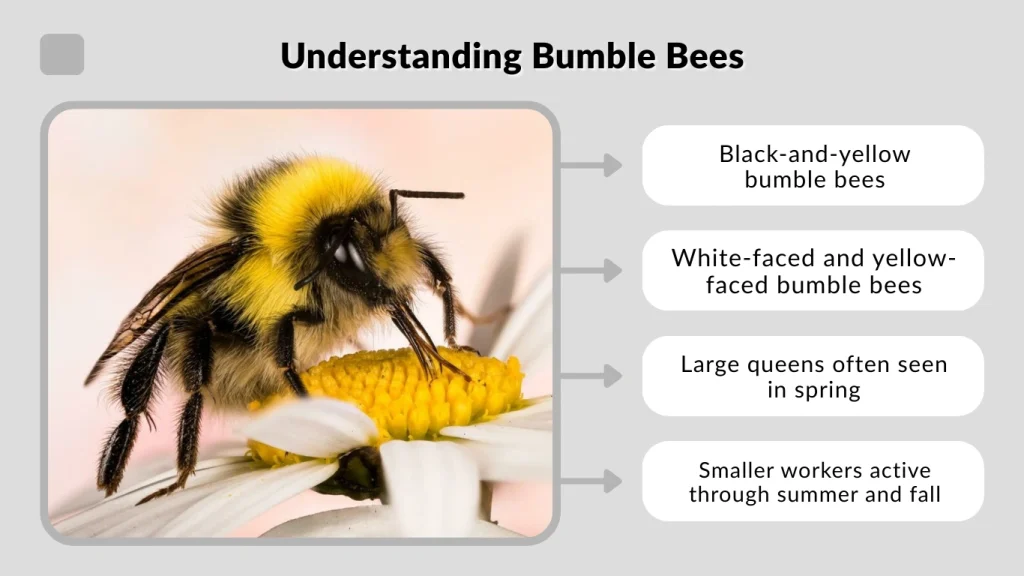
Bumble bees differ from other stinging insects because they are generally gentle and avoid conflict unless they feel threatened. They usually form small colonies led by a single queen, and their nests last only one season. Understanding these traits helps homeowners choose the right removal method.
Most bumble bee infestations occur when queens seek sheltered spaces for new colonies. Ground holes, old rodent tunnels, insulation pockets, and cluttered storage areas make perfect nesting environments. Because they serve a vital ecological function, the goal should always be relocation rather than extermination.
Are Bumble Bees Dangerous?
Bumble bees rarely attack unless their nest is disturbed. Unlike honeybees, they can sting multiple times, but they seldom do. The presence of children, pets, or individuals with allergies increases the need for caution, but for most people, bumble bees pose little direct threat. Their defensive behavior is primarily nest-based, meaning colonies located near walkways, decks, or entrances require attention.
Why They’re Attracted to Your Property
Several environmental factors draw bumble bees to residential spaces.
Common attractants include:
- Flower-rich gardens, especially those with clover, lavender, or berry plants
- Untouched compost piles or dense ground cover
- Small underground cavities, cracks, or burrows
- Moist soil near irrigation systems
- Easily accessible shelter such as overturned pots or unused garden equipment
By understanding these attractants, you can take preventative steps before resorting to full removal.
How to Get Rid of Bumble Bees (Humane + Effective Methods)
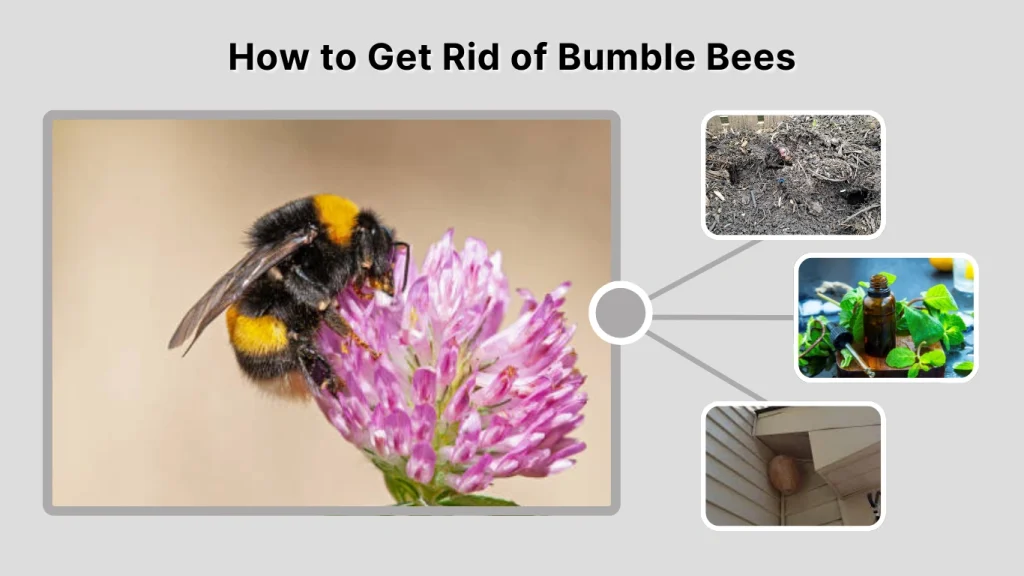
Humane removal should always be the first choice. Bumble bees play a valuable role in plant pollination, and eliminating them harms both gardens and local ecosystems. Below are the safest and most effective strategies for gentle removal or relocation.
Non-Lethal Methods (Preferred)
These approaches encourage bees to leave naturally or allow professionals to relocate the colony safely.
- Remove attractants: Clear compost piles, trim vegetation, and eliminate rodent burrows.
- Use natural repellents: Peppermint oil, citronella, and citrus sprays can discourage nest building.
- Relocate the nest: Professionals can move colonies without harming bees or homeowners.
- Install decoy nests: These work by signaling that the territory is already claimed.
Home Remedies That Help
Several simple, natural remedies can gently encourage bumble bees to move away without harming them. A diluted vinegar spray applied around the nesting area can make the environment unpleasant for bees. Peppermint oil, known for its strong scent, works well when placed on cotton balls near entry points or mixed into a light spray. Another effective option involves simmering citrus peels in water to create a fragrant deterrent bees dislike. These methods should be used consistently for best results.
Smoke can also persuade bees to vacate a nest, but it must be handled carefully. Light, steady smoke signals bees to relocate on their own. However, excessive smoke or fire risks injury and should always be avoided.
When to Use Physical Barriers
Physical barriers help prevent bees from entering structures or reclaiming old nesting sites. Fine mesh screens can be installed around vents, crawl spaces, and foundation cracks. Sealing ground holes or abandoned rodent burrows removes the sheltered spaces bees seek in early spring. Regular yard maintenance—such as trimming vegetation and clearing debris—reduces hiding spots and improves long-term prevention.
Barrier methods work best after confirming no active nest remains inside the structure. Sealing a live colony inside can create aggressive behavior and structural issues.
When to Call a Professional
Professional removal is recommended when the nest is located inside walls, attics, or areas difficult to access safely. Experts have the equipment and experience necessary to relocate nests without harming the bees or damaging property. This option is especially important if anyone in the household has bee-sting allergies or if the colony is unusually large. In some regions, bumble bees are protected, and licensed specialists are required for legal removal.
Bumble Bee Removal Methods to Avoid
Certain methods may seem effective but pose serious risks. Harmful pesticides can devastate local pollinator populations and contaminate soil or water sources. Flooding nests, using boiling water, or applying fire-based solutions often injure bees and damage property. Additionally, many chemical sprays fail to address the root cause and may only disperse bees temporarily, leading them to relocate elsewhere on the property.
Avoiding these methods protects both the environment and your home.
How to Prevent Bumble Bees from Returning
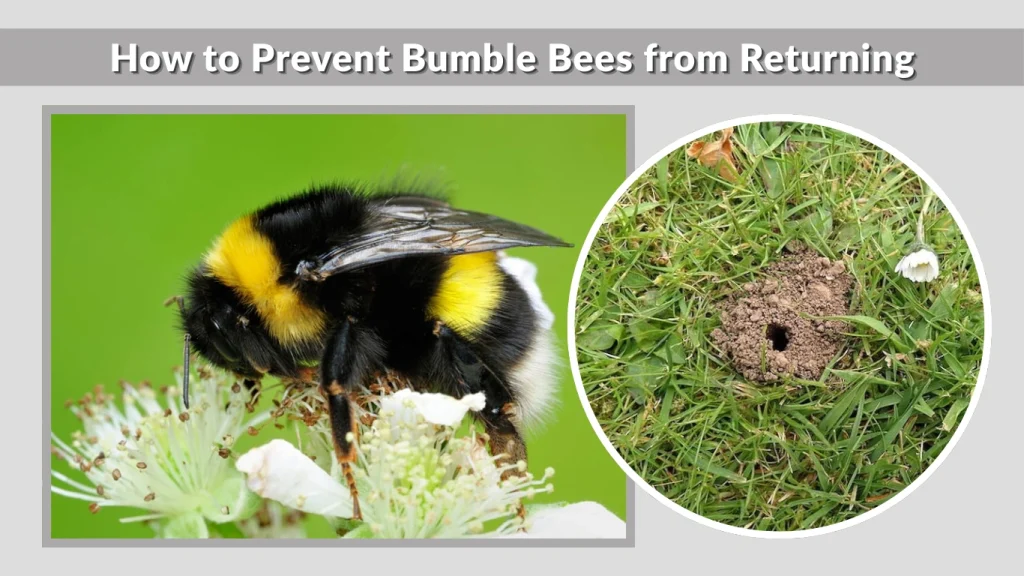
Prevention is essential once the nest has been removed or the bees have dispersed. Regular inspection of your yard helps identify new burrows or sheltered cavities before bees discover them. Filling holes with soil or gravel eliminates attractive nesting spots. Consider using fewer bee-attracting plants near high-traffic areas while maintaining them in garden sections farther from the home.
Keeping outdoor structures sealed and repairing cracks around foundations, decks, and sheds prevents bees from establishing new colonies. Compost bins should be well-secured, and piles of debris or wood should be cleared to reduce hiding places.
Bumble Bee vs. Carpenter Bee (Comparison Table)
| Feature | Bumble Bee | Carpenter Bee |
| Body Shape | Round, fuzzy | Shiny abdomen, less hair |
| Nesting | Ground or cavities | Drills into wood |
| Aggression | Low unless provoked | Males hover aggressively |
| Removal Difficulty | Moderate | Higher due to wood damage |
Behavior & Habitat
Bumble bees typically forage within a few hundred yards of their nest, supporting nearby gardens and wild plant life. Their colonies begin in early spring when queens emerge and seek new nesting sites. By late summer, the colony reaches peak population before naturally declining. Understanding this lifecycle is useful for timing removal efforts and predicting future nesting behavior.
FAQs
What smell do bumble bees hate?
Bumble bees tend to avoid strong scents like peppermint, citronella, and citrus oils. These smells disrupt their navigation and make nesting areas less appealing. Applying these fragrances near entry points or nesting sites can gently encourage bees to relocate without causing harm.
Will bumble bees return to the same nest?
Typically, bumble bees do not reuse old nests. Each spring, a new queen searches for a fresh location. However, if the conditions remain attractive—such as open cavities or abandoned burrows—new queens may settle in the same general area. Proper sealing and maintenance help prevent recurring issues.
How long does a bumble bee nest last?
A bumble bee colony usually lasts one season, from spring to early fall. After the colony dies off, only new queens overwinter and begin fresh nests the following year. This seasonal pattern means active colonies naturally disappear, but preventative work is still needed to avoid future nests.
Can bumble bees damage your home?
Bumble bees seldom cause structural damage. Unlike carpenter bees, they do not drill into wood. The main concerns involve nests in wall voids or crawl spaces, which may cause noise or occasional stings. Clearing entry points and sealing gaps reduces the chance of indoor nesting.
Are bumble bees protected by law?
In many areas, specific bumble bee species are protected due to declining populations. Removal may require humane methods or licensed professionals. Checking local regulations ensures compliance and helps preserve essential pollinators while still addressing safety concerns around your home.
