
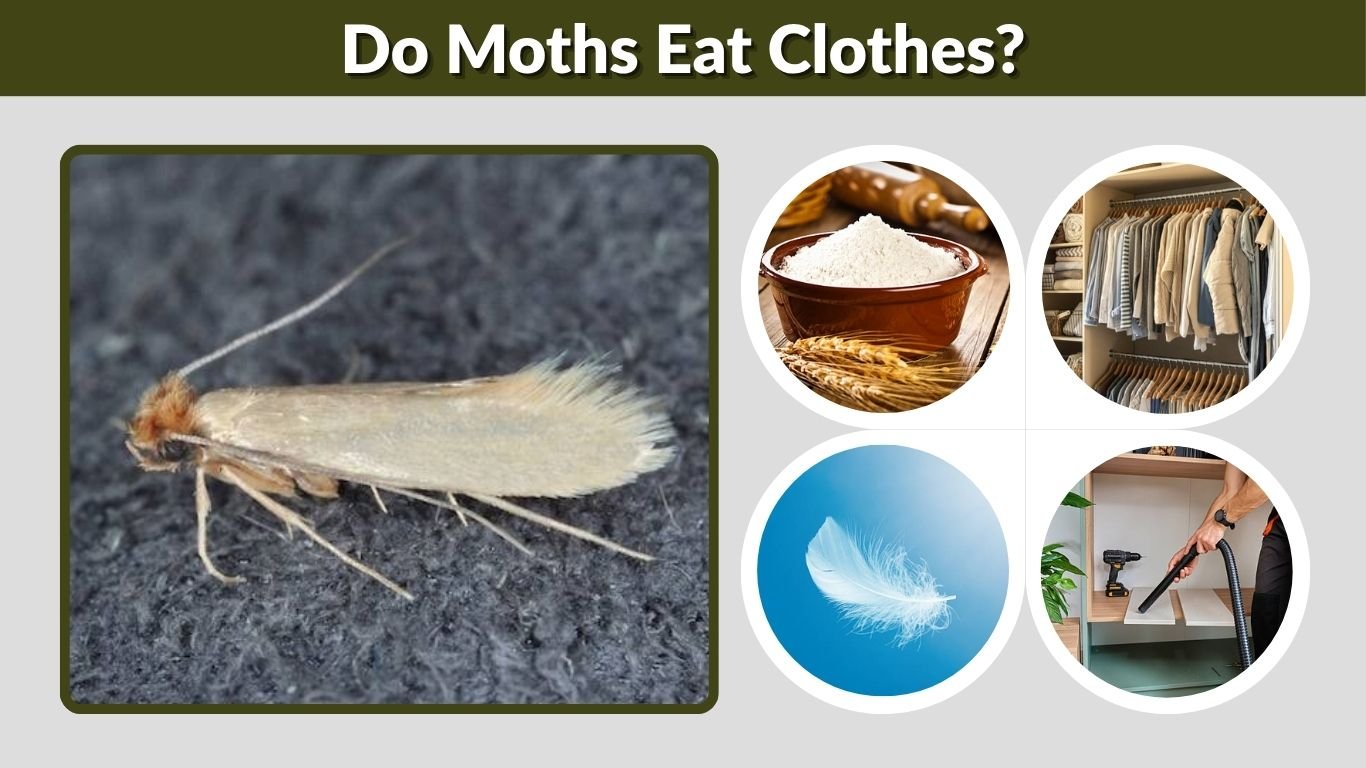
Do moths eat clothes? The answer is slightly more complicated than it seems. Adult clothes moths generally do not eat your clothing—their larvae cause the damage. Clothes moth larvae feed on animal-based fibers containing keratin, including wool, fur, feathers, and some natural textiles. Small holes, thinning fabric, webbing, and larvae hidden in dark wardrobes can all indicate an infestation. Understanding which moths damage clothing, what fabrics attract them, and how to prevent an infestation can help protect sweaters, coats, carpets, and other valuable textiles.
Why Do Moths Eat Clothes?
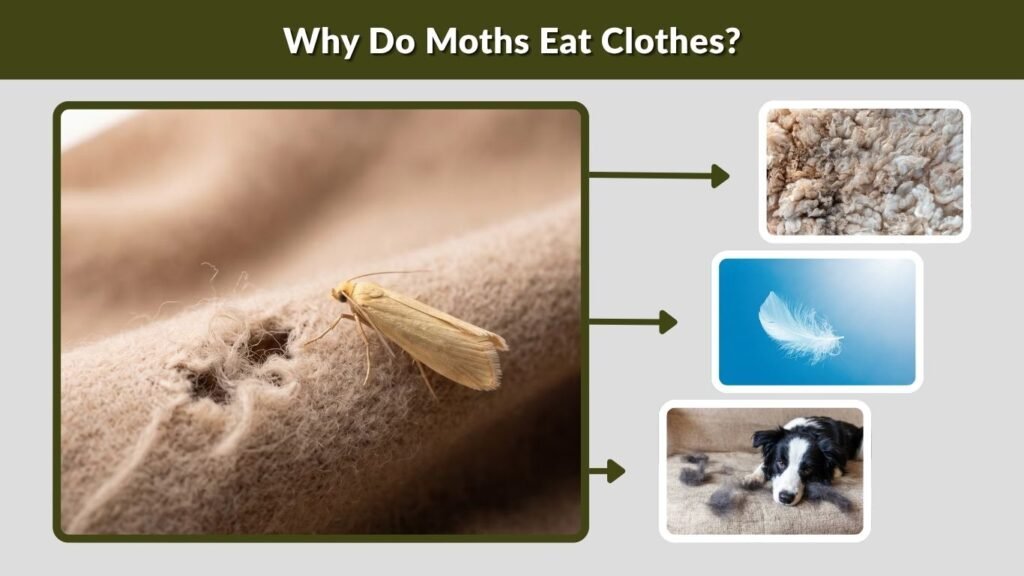
Clothes moth larvae need nutrients to grow before becoming adult moths. Natural animal fibers are especially attractive because they contain proteins the larvae can digest.
What Nutrients Are Moths Looking For?
Clothes moth larvae are particularly attracted to materials containing keratin, a structural protein found in animal-based fibers. Clothing contaminated with sweat, body oils, food stains, or other organic material may be especially attractive.
Common vulnerable materials include:
- Wool
- Cashmere
- Fur
- Feathers
- Mohair
- Angora
- Silk
- Felt
- Animal hair
- Wool-blend fabrics
Items stored undisturbed for long periods provide ideal conditions because larvae prefer dark, protected areas.
What Types of Moths Eat Clothes?
Thousands of moth species exist, but only a small number commonly damage household textiles. Seeing a moth indoors does not automatically mean your wardrobe is at risk.
Common Clothes Moth
The webbing clothes moth (Tineola bisselliella) is one of the best-known textile pests. Adults are small and usually pale golden or straw-colored.
The larvae feed on wool, fur, feathers, and other animal-derived materials. They may create silken webbing while feeding, which can help distinguish their damage from some other household pests.
Case-Bearing Clothes Moth
The case-bearing clothes moth (Tinea pellionella) is another important clothing pest. Its larvae construct small portable cases using silk and fibers from the material on which they are feeding.
Finding tiny fiber-covered cases attached to clothing, carpets, or walls may indicate this species.
Do Adult Moths Eat Clothes?
Adult clothes moths are usually blamed when holes appear in sweaters, but they are not actually responsible for chewing the fabric.
Clothes Moth Larvae Cause the Damage
Female moths lay eggs in places where their offspring will have access to suitable food. After hatching, the larvae begin feeding.
Depending on environmental conditions and food availability, larvae may remain in this feeding stage for an extended period. This means damage can continue even when adult moths are rarely seen.
A flying moth is therefore mainly a warning sign that eggs or larvae could be hidden nearby.
What Does Moth Damage Look Like?
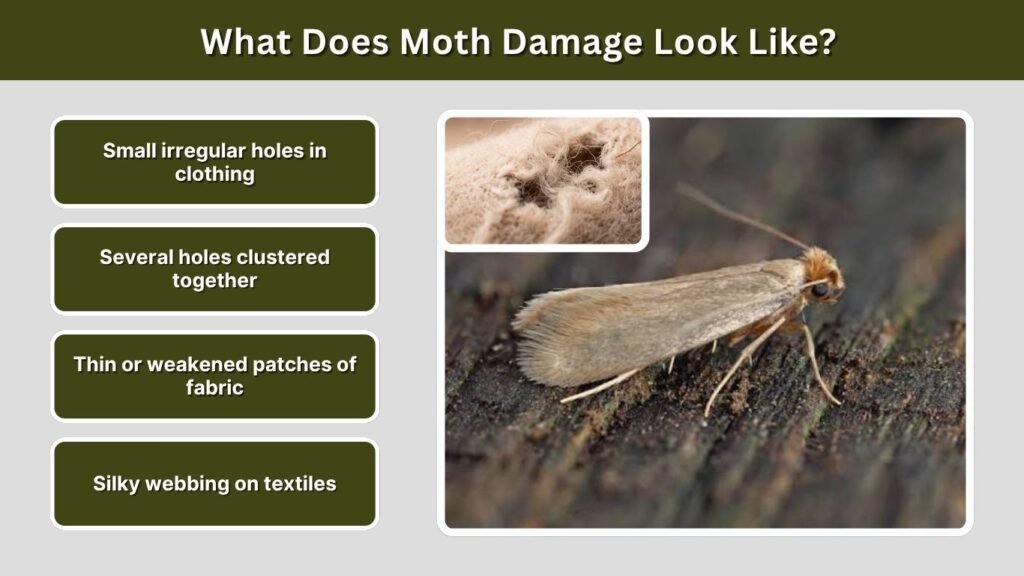
Clothes moth damage is not always obvious at first. Larvae often feed in concealed areas where clothing remains undisturbed.
Signs of Moths Eating Clothes
Look for:
- Small irregular holes in clothing
- Several holes clustered together
- Thin or weakened patches of fabric
- Silky webbing on textiles
- Tiny caterpillar-like larvae
- Fiber-covered larval cases
- Shed larval skins
- Damage along seams, cuffs, collars, or folds
- Bare patches on wool carpets
- Small moths inside closets
Inspect items that have been stored for months, particularly wool sweaters, winter coats, blankets, scarves, and rugs.
Do Clothes Moths Eat Cotton?
Pure cotton is generally much less attractive to clothes moth larvae than wool and other animal fibers because cotton does not contain keratin.
Can Moths Damage Cotton Clothing?
Clothes moth larvae may sometimes damage cotton or other plant-based fabrics when those materials contain food stains, sweat, oils, or animal-fiber blends.
For example, a garment containing both cotton and wool may be vulnerable because the larvae can feed on the wool component.
Synthetic fabrics such as polyester are also less attractive as food, although contaminated or blended materials may still be affected.
Do Pantry Moths Eat Clothes?
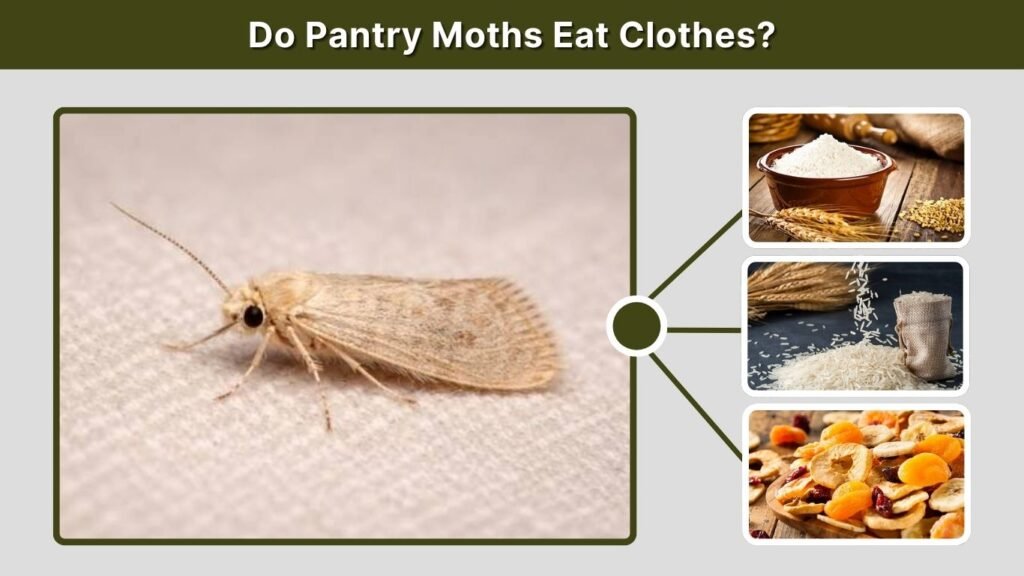
Pantry moths and clothes moths are frequently confused because both can appear inside homes.
Pantry Moths vs Clothes Moths
Pantry moths do not normally eat clothing. Species such as the Indian meal moth infest stored foods rather than wardrobes.
They are commonly associated with:
- Flour
- Cereal
- Rice
- Nuts
- Seeds
- Dried fruit
- Pet food
- Birdseed
If moths are appearing around a kitchen or food-storage area, inspect dry foods. If damage is appearing in wool clothing, carpets, or natural-fiber textiles, clothes moths are more likely.
Do Miller Moths Eat Clothes?
Miller moths that accidentally enter homes are not generally the same insects responsible for damaged sweaters and wool carpets.
Are Big Moths a Threat to Clothing?
Large moths flying around lights often attract attention, but clothes moths are relatively small and prefer dark areas.
Clothing damage is more strongly associated with small clothes moth species and their larvae than with large outdoor moths that occasionally wander indoors.
This is why identifying the pest is important before treating a home.
Where Do Clothes Moths Hide?
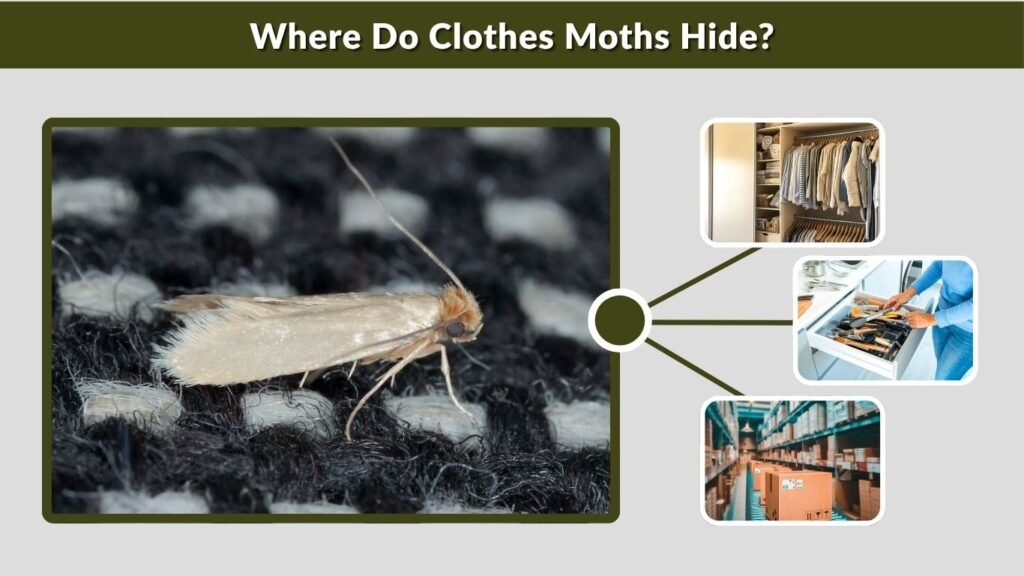
Clothes moths prefer quiet, dark locations where their larvae can feed without disturbance.
Common Infestation Areas
Check:
- Closets
- Drawers
- Storage boxes
- Under furniture
- Carpet edges
- Behind baseboards
- Under rugs
- Attics
- Stored blankets
- Upholstered furniture
- Wool textiles kept in dark rooms
Regular movement, cleaning, and exposure to light make an area less attractive to clothes moths.
How to Stop Moths Eating Clothes
Effective clothes moth control requires more than killing visible adults. Eggs and larvae must also be removed.
Clean Infested Clothing
Wash washable clothing according to its care instructions. Items that require professional cleaning can be dry-cleaned.
Pay particular attention to garments containing wool, fur, feathers, cashmere, or other animal fibers.
Vacuum Storage Areas
Vacuum closet floors, carpet edges, shelves, cracks, baseboards, and underneath furniture.
Dispose of vacuum contents promptly so surviving eggs or larvae do not remain in the home.
Store Clothes Properly
Before long-term storage:
- Wash or dry-clean garments
- Make sure clothing is completely dry
- Use tightly sealed containers
- Keep valuable wool items protected
- Avoid storing stained clothing
- Inspect garments periodically
Clean clothing is generally less attractive because sweat, skin oils, and food residues can increase its appeal to larvae.
Can Clothes Moths Eat Through Plastic Bags?
Clothes moth larvae are not known for chewing through thick, properly sealed storage containers simply to reach clothing.
Use Strong Sealed Storage
Thin bags with openings, tears, or weak closures may still allow insects to enter.
For valuable clothing, tightly sealed containers or sturdy garment-storage systems provide better protection than loosely folded plastic bags.
Always inspect and clean clothing before sealing it away. Otherwise, eggs already present on the garment could continue developing inside the container.
How to Get Rid of Clothes-Eating Moths
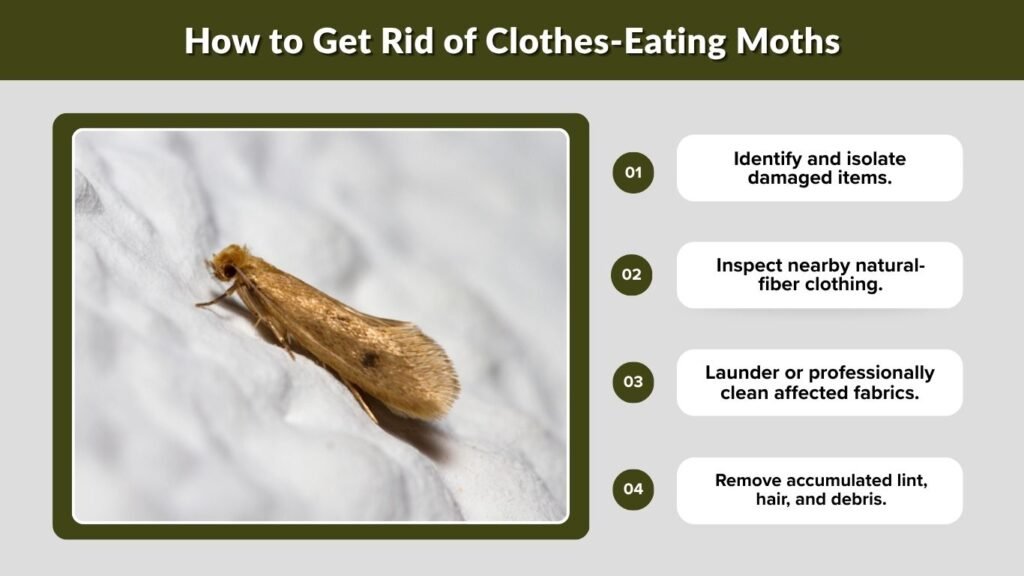
A successful control plan targets the entire life cycle rather than only flying adults.
Steps for Clothes Moth Control
- Identify and isolate damaged items.
- Inspect nearby natural-fiber clothing.
- Launder or professionally clean affected fabrics.
- Vacuum wardrobes and surrounding areas thoroughly.
- Remove accumulated lint, hair, and debris.
- Store clean clothing in sealed containers.
- Continue checking for fresh damage.
- Use clothes-moth monitoring traps when appropriate.
Pheromone traps can help detect certain adult clothes moths, but trapping adults alone may not eliminate larvae already feeding on textiles.
Can Moth-Eaten Clothes Be Repaired?
Moth damage does not always mean a garment must be discarded.
Repairing Small Moth Holes
Small holes in wool sweaters, coats, and other high-quality garments may be repaired through:
- Darning
- Invisible mending
- Felting
- Fabric patches
- Professional textile restoration
Before repairing a garment, treat the underlying infestation. Otherwise, larvae may continue feeding and create additional damage.
How to Prevent Clothes Moths
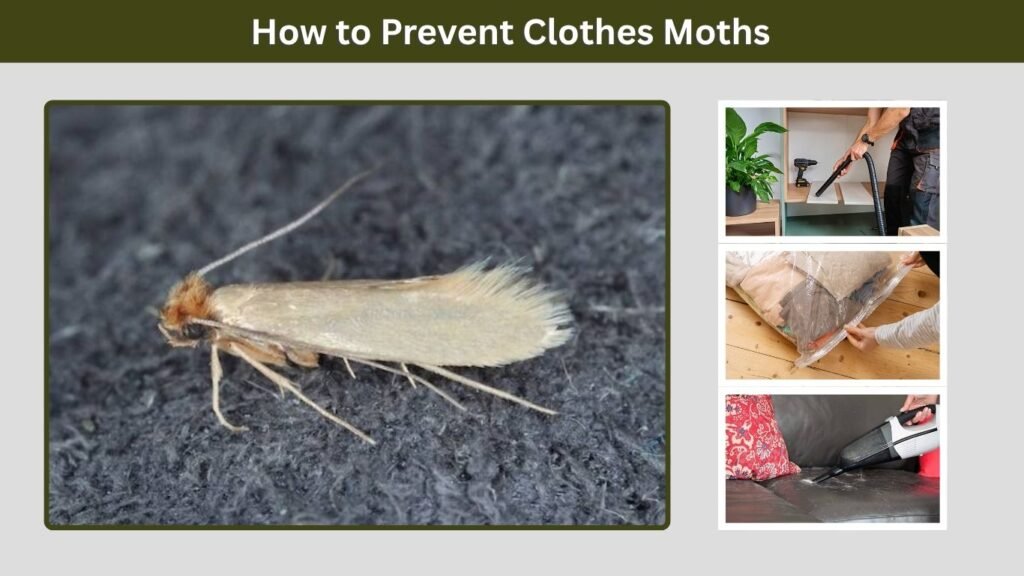
Prevention is easier than dealing with a widespread infestation.
Clothes Moth Prevention Tips
- Clean clothes before storage.
- Vacuum closets regularly.
- Inspect wool garments periodically.
- Keep storage areas clean and dry.
- Use sealed containers for seasonal clothing.
- Avoid leaving wool items undisturbed for years.
- Inspect secondhand textiles before bringing them inside.
- Clean pet hair and lint from hidden areas.
- Check carpets beneath furniture.
Regular inspection is especially important for expensive wool, cashmere, fur, or other animal-fiber items.
FAQs
Do all moths eat clothes?
No. Only a relatively small number of moth species are associated with textile damage. Most moths have nothing to do with clothing.
Why are moths eating my clothes?
The damage is usually caused by clothes moth larvae feeding on keratin-containing animal fibers such as wool, fur, feathers, and cashmere.
How do I know if moths are eating my clothes?
Look for irregular holes, thinning fabric, webbing, larvae, shed skins, or small cases attached to textiles. Repeated damage to stored wool garments is particularly suspicious.
What clothes do moths eat the most?
Wool, cashmere, fur, feathers, mohair, felt, and other animal-derived fibers are generally most vulnerable.
Do clothes moths eat carpets?
Yes. Clothes moth larvae may damage wool carpets and rugs, particularly along edges, underneath furniture, and in other dark areas that are rarely disturbed.
