
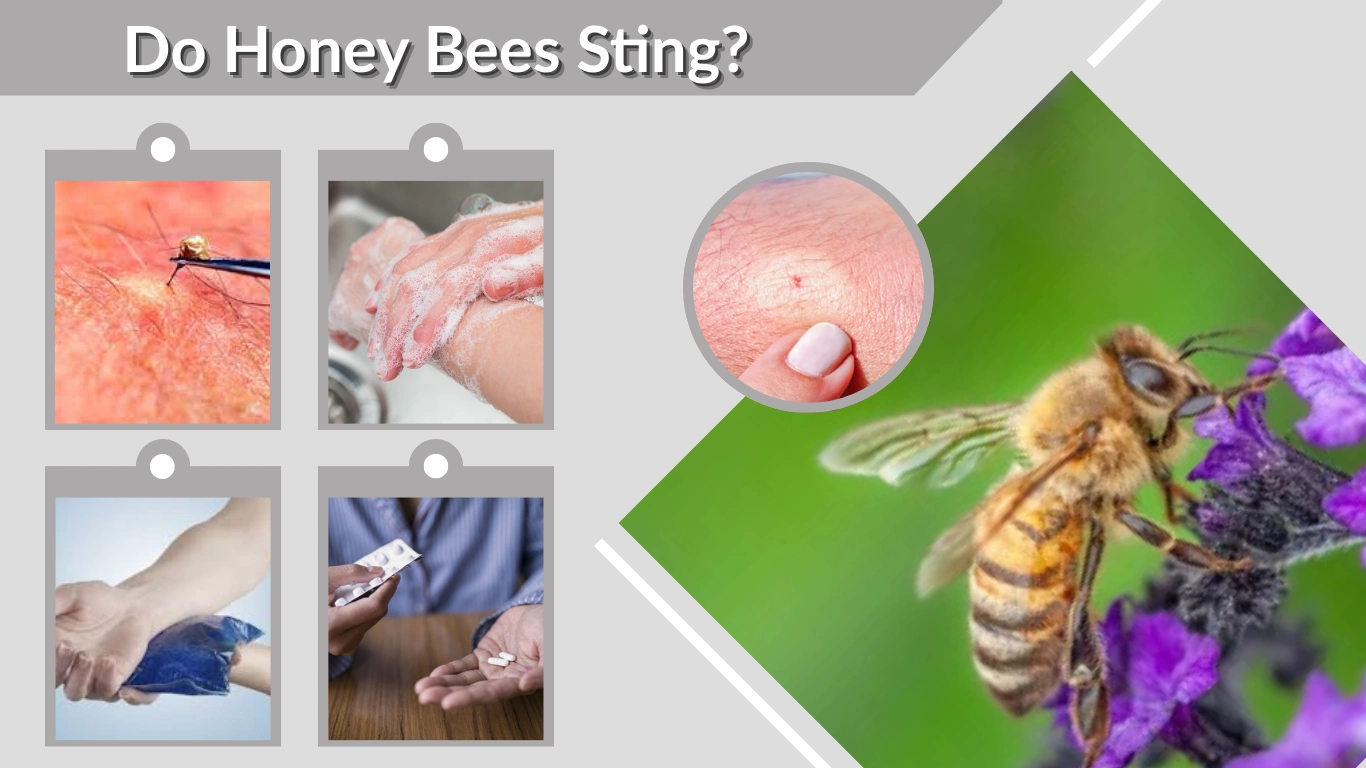
Honey bees are fascinating creatures, but few things spark more curiosity—and fear—than their sting. Many people wonder whether all honey bees sting, why they do it, and whether they always die afterward. Understanding how honey bees behave helps reduce fear, improves safety, and builds appreciation for the important role bees play in our ecosystem. This guide explains which bees sting, why it happens, how the stinger works, and what to do if you’re ever stung.
Do Honey Bees Sting? (Overview)
Yes, honey bees do sting—but not all of them. Only female worker bees, the ones responsible for protecting the hive, are capable of stinging. Their stinger is designed as a defense mechanism, not a weapon for attacking. Male honey bees, called drones, cannot sting at all because they lack a stinger. While honey bees can seem threatening when they fly close or buzz loudly, they generally avoid stinging unless they feel threatened.
Worker honey bees typically sting only when defending their colony. Away from the hive, they’re surprisingly gentle and focused solely on finding nectar and pollen. Stinging is a last-resort act for them because it often results in death.
Which Honey Bees Sting and Which Don’t
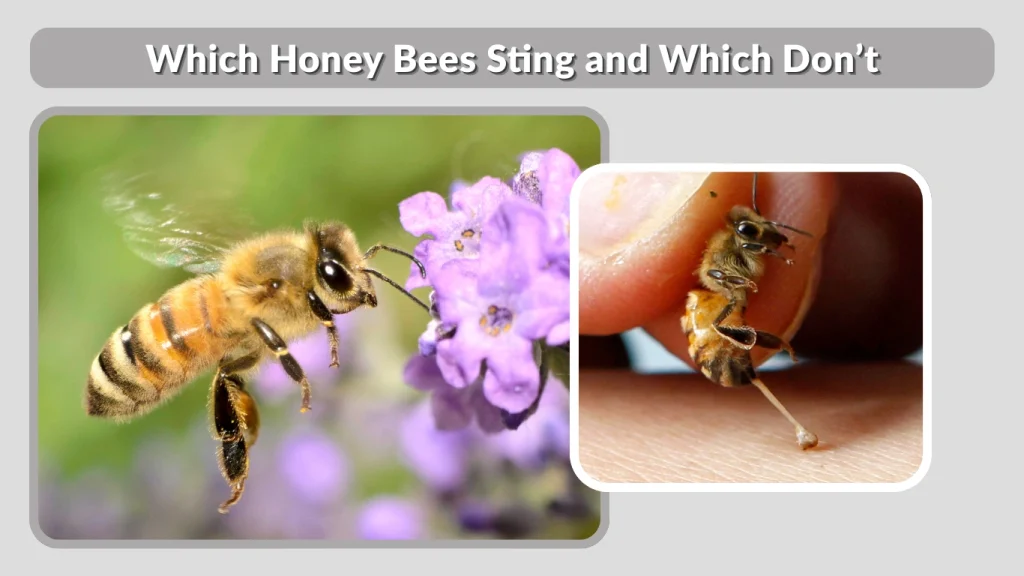
Worker Bees (Main Stingers)
Worker bees are the bees most people encounter. They visit flowers, collect nectar, and protect the hive. These bees have barbed stingers, which latch into mammal skin. Their instinct to defend the colony is strong, especially near the hive entrance. When people think of bee stings, they are almost always thinking of worker bees.
Do Male Honey Bees (Drones) Sting?
Drones are larger-bodied male bees that do not have stingers. Their only purpose is to mate with the queen. Because they cannot sting, drones are completely harmless to humans. You could even pick one up without risk of being stung.
Do Queen Honey Bees Sting?
Queen honey bees do have a stinger, but it is smooth, not barbed. This means they can sting multiple times without dying. However, queens almost never sting humans. Their stinger is primarily used against other queens during fights for colony dominance. Once a queen is established, she rarely leaves the hive and rarely encounters threats that would cause her to sting.
Special Breeds
Different breeds of honey bees show different behaviors:
- Italian honey bees – Known for being gentle and preferred by beekeepers.
- European honey bees – Standard honey-producing bees; moderate temperament.
- Russian honey bees – Hardy and slightly more defensive.
- Africanized honey bees – Highly defensive and more likely to sting when disturbed.
Even among defensive breeds, stinging is still primarily for protection—not aggression.
Why Do Honey Bees Sting?
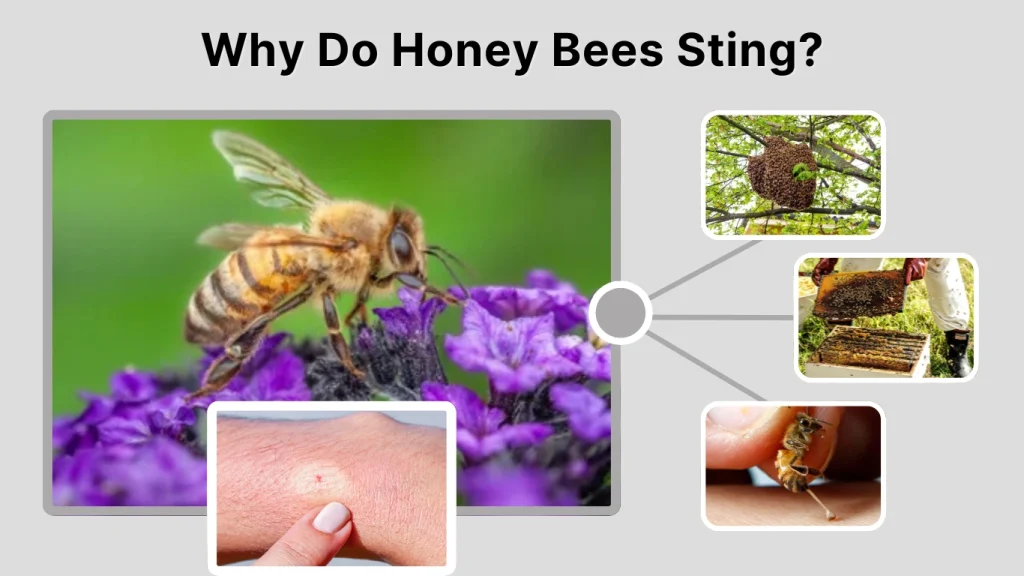
Main Reasons
Honey bees sting for defense, not for offense. Their main reasons include:
- Protecting the hive – The colony is their entire world, and thousands of bees, eggs, and honey stores depend on its safety.
- Feeling threatened – Fast movement, loud noises, or sudden pressure can trigger a sting response.
- Protecting honey – Bees naturally guard resources that predators may want.
- Being stepped on or squeezed – A bee caught accidentally against skin may sting reflexively.
Situational Reasons
Bees may sting in certain sensitive scenarios:
- When people approach too close to the hive entrance
- When dogs or animals disturb the hive area
- When other creatures like hummingbirds get too close (rare but possible defensive reactions)
Despite myths, bees do not sting simply because someone is nearby. There must be a perceived threat.
Misunderstandings
Many people assume bees sting “for no reason,” but this is false. Bees base their actions on instinct and environmental signals. They do not have the intent to harm humans. Bees also don’t typically chase people long distances unless the colony feels severely threatened, which is mostly associated with Africanized honey bees, not domestic varieties.
How Honey Bees Sting (Mechanism)
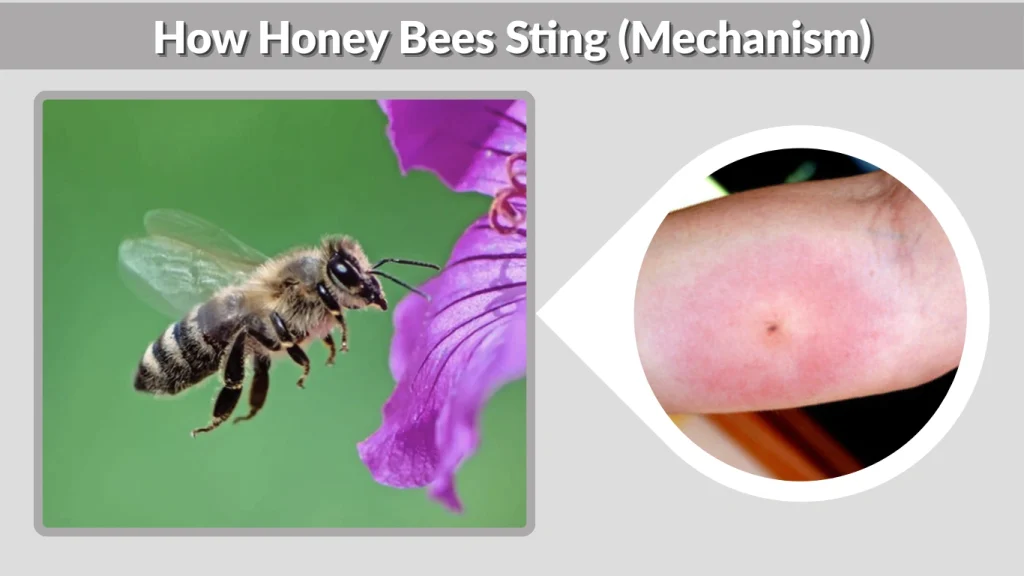
Anatomy of the Stinger
A honey bee’s stinger contains:
- Barbs that lodge into skin
- A venom sac that pumps venom automatically
- A series of muscles that continue working even after the bee flies off
The barbed design is what makes stings particularly painful.
Process of Stinging
When a bee stings, the following occurs:
- The bee curves its abdomen downward.
- The stinger pierces the skin.
- The barbs lock into place.
- The venom sac starts pumping venom automatically.
- The bee attempts to fly away—tearing away the stinger and part of its abdomen.
This injury is fatal, which is why honey bees sting only when absolutely necessary.
Do Honey Bees Sting at Night?
Honey bees rarely sting at night because they remain inside the hive resting. They will only sting after dark if the hive is disturbed, exposed to vibrations, or threatened by predators like raccoons or skunks.
Why Do Honey Bees Die After Stinging?
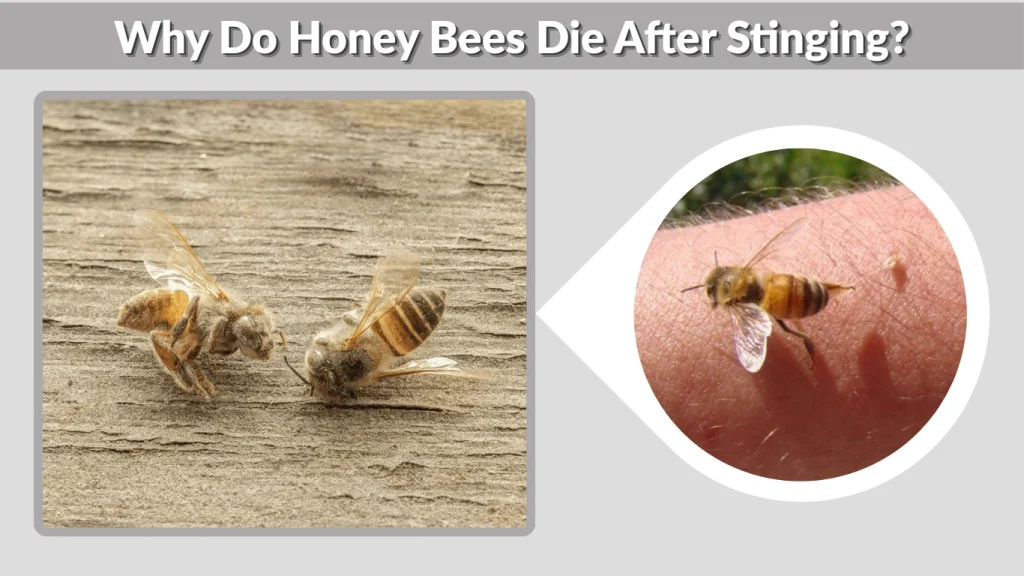
Honey bees are unique among bees and wasps because they usually die after stinging a mammal. This happens due to the structure of their stinger. Worker bees have barbed stingers designed to lodge deeply into thick skin—especially the skin of large predators like bears or skunks. When the bee tries to pull away, the stinger remains embedded, and the bee’s abdomen tears apart.
This internal damage is fatal within minutes. The bee does not intend to die; its actions come purely from instinct. From an evolutionary standpoint, the self-sacrifice of one worker can save thousands of bees inside the colony, making it a survival strategy for the hive as a whole.
Do All Honey Bees Die After Stinging?
Not every honey bee dies after stinging. It depends on the target:
- When stinging mammals (humans, dogs, etc.) → Bee dies
- When stinging other insects → Bee survives
Insects have thin exoskeletons, so the stinger does not get stuck, meaning the worker bee can sting and safely pull back without damaging its abdomen.
Queens also do not die after stinging because their stinger is smooth, allowing them to sting repeatedly if needed.
Honey Bee Stinger Facts
Honey bee stingers are often misunderstood. Here are the key details:
- Honey bees leave their stinger behind after stinging humans.
- Not all bees have the same stinger—queens and workers differ.
- Baby bees do not sting until their body fully matures.
- Bees that make honey are the ones capable of stinging (the female workers).
- Bees don’t “know” they will die when they sting; they act on biological instinct, not conscious decision-making.
These facts help explain why bees try to avoid stinging unless they feel the hive is in danger. A honey bee values colony survival above everything else.
Do Honey Bee Stings Hurt?
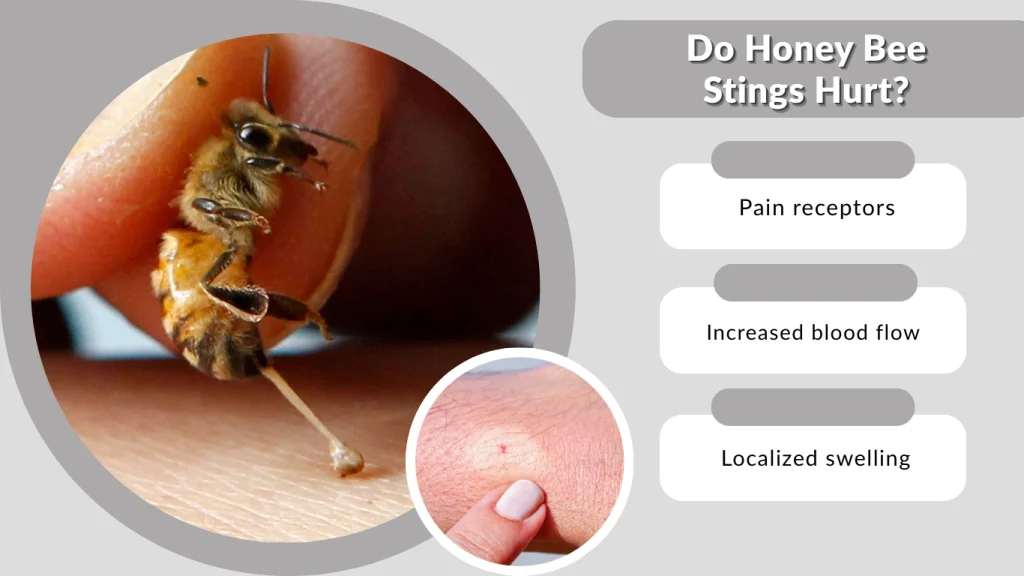
Honey bee stings are painful for a reason: their venom contains melittin, a compound that irritates nerves and causes inflammation. The pain is sharp at first, often followed by burning or throbbing.
Why Stings Hurt So Much
When venom enters the skin, it triggers:
- Pain receptors
- Increased blood flow
- Localized swelling
- Histamine release causing itching
These reactions are part of the body’s immune response to the venom.
How Long Stings Last
The duration varies:
- Pain → Usually lasts 1–3 hours
- Swelling → Usually lasts 1–2 days
- Itching → Can last up to a week
Sensitive individuals may experience stronger reactions, especially children or people with mild allergies.
What Honey Bee Stings Look Like
A typical honey bee sting causes:
- A red, swollen welt
- A raised bump at the sting site
- A visible stinger (in many cases)
- Surrounding redness that may expand slightly
The appearance is different from mosquito bites or spider bites due to the initial puncture point and localized swelling.
What to Do After a Honey Bee Sting
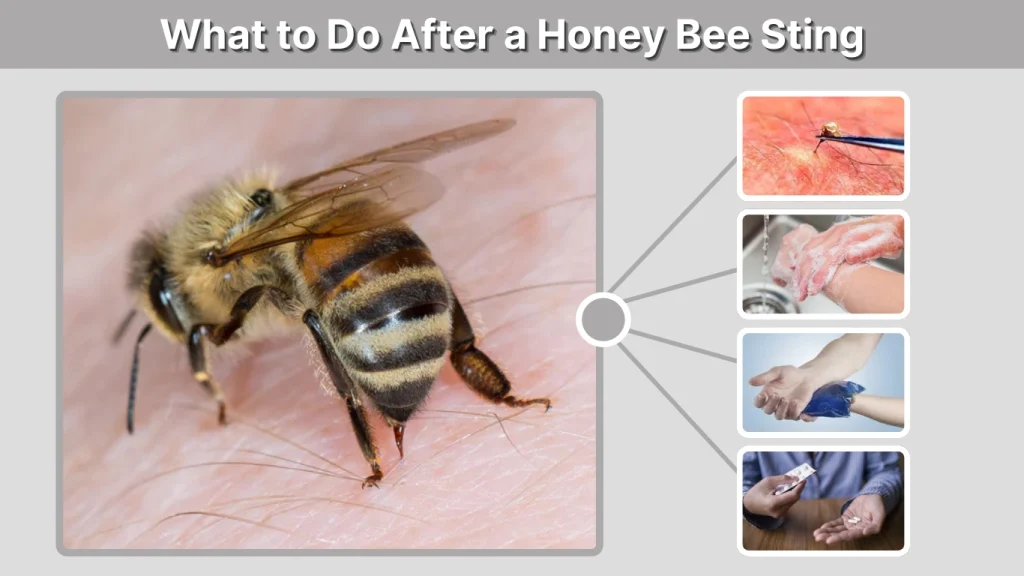
Knowing what to do immediately after a sting helps reduce pain, swelling, and risk.
Immediate Actions
- Remove the stinger right away.
Scrape it with a card or fingernail. Avoid squeezing, which pushes more venom in. - Wash the area with soap and water.
This reduces infection risk. - Apply ice or a cold pack.
Helps reduce swelling and pain. - Take antihistamines or pain relievers if necessary.
Ibuprofen helps with pain; antihistamines reduce itching.
Home Remedies
Some natural treatments can help soothe sting symptoms:
- Honey – Soothes skin and reduces inflammation.
- Baking soda paste – Neutralizes venom acidity.
- Vinegar – Helps ease the burning sensation.
- Cold compresses – Reduce swelling.
These remedies offer comfort but should not replace allergy care when needed.
When to Seek Medical Attention
Seek medical care immediately if you experience:
- Difficulty breathing
- Swelling of the lips, tongue, or throat
- Dizziness or confusion
- Hives spreading far from the sting
- Multiple stings (especially in children)
These symptoms may indicate a serious allergic reaction called anaphylaxis.
Do Honey Bee Stings Have Benefits?
Some people use bee venom for therapeutic purposes, known as apitherapy. Bee venom is sometimes used to treat:
- Arthritis
- Multiple sclerosis
- Certain inflammatory conditions
Are There Risks?
Yes. Bee venom therapy can cause:
- Severe allergic reactions
- Excessive swelling
- Anaphylaxis in sensitive individuals
This treatment should never be attempted without medical supervision, and it is not recommended for the general public.
How to Prevent Honey Bee Stings
Most stings can be avoided by understanding bee behavior and reducing triggers.
Avoid Behaviors That Trigger Stinging
- Don’t swat at bees
- Stay calm; move slowly
- Avoid walking barefoot in grassy areas
- Keep a safe distance from hive entrances
Bees interpret rapid movement as a threat, so slow, steady actions help prevent stings.
Environmental Factors to Consider
Bees are attracted to:
- Bright, floral colors
- Strong perfumes
- Sweet foods and drinks outdoors
Avoiding these attractants reduces the risk of accidental encounters.
Why Beekeepers Don’t Get Stung as Often
Beekeepers manage bees safely due to:
- Smoking the hive, which calms bees
- Protective suits and gloves
- Proper handling techniques
- Understanding bee body language
Their knowledge helps them work closely with bees while minimizing stings.
FAQs
Do honey bees sting or bite?
Honey bees primarily sting. They have jaws used for tasks like building comb and grooming, but they rarely bite as a defensive act. The sting is their main defense.
Do honey bees always die after stinging?
Workers usually die after stinging mammals because their barbed stinger gets stuck. They do not die after stinging insects.
What should you do if a honey bee stings you?
Remove the stinger quickly, wash the area, apply ice, and use antihistamines if needed. Seek help if allergic symptoms appear.
Do honey bees sting people for no reason?
No. Bees sting only when they sense danger to themselves or their hive.
How often do honey bees sting?
Worker bees can sting only once. Queens can sting multiple times but rarely sting humans.
