
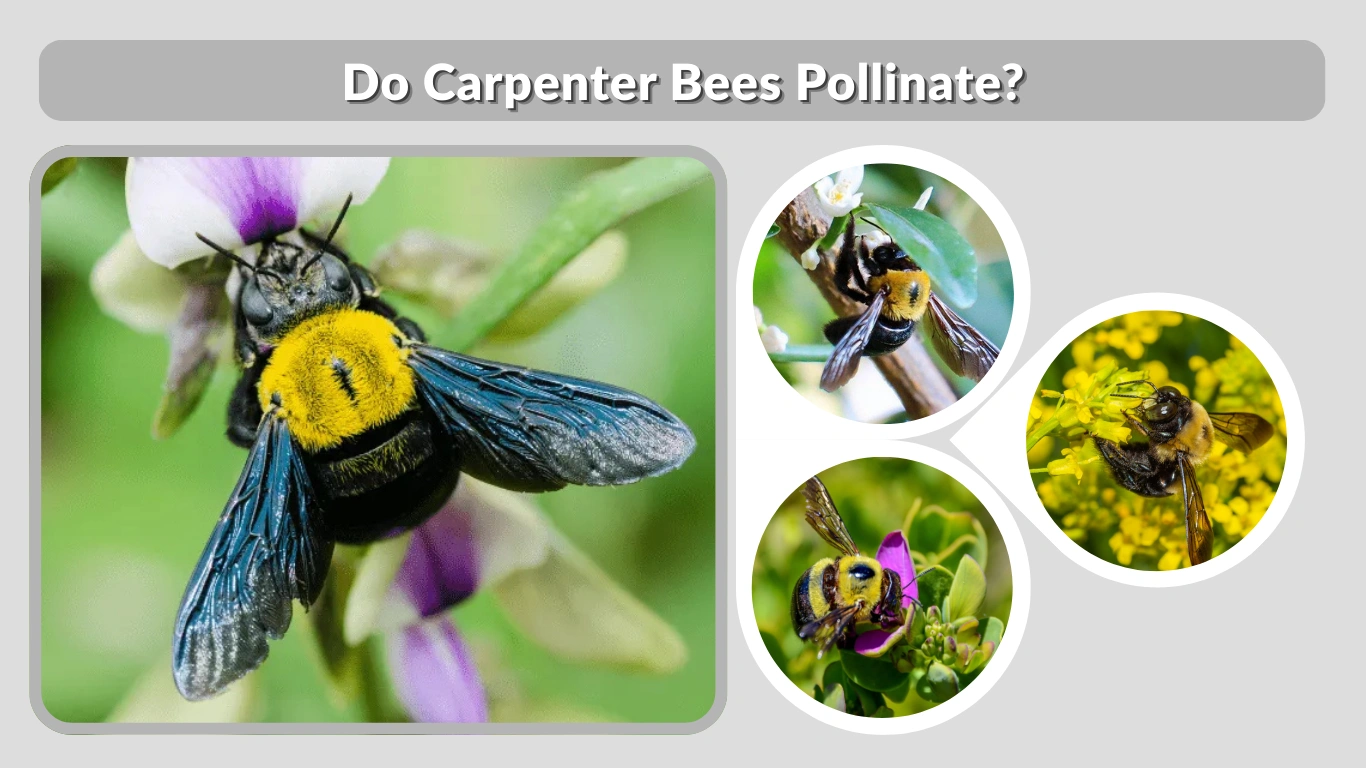
Carpenter bees are often known for drilling into wood, leaving perfectly round entry holes that frustrate homeowners. But beyond this behavior lies an important ecological contribution that many people overlook: pollination. People frequently ask whether carpenter bees pollinate flowers, crops, or fruit trees—and how their work compares to honey bees. This article explores how carpenter bees pollinate, which plants benefit most, whether males help with pollination, and why these bees are essential in gardens and wild ecosystems.
Identification of Carpenter Bees
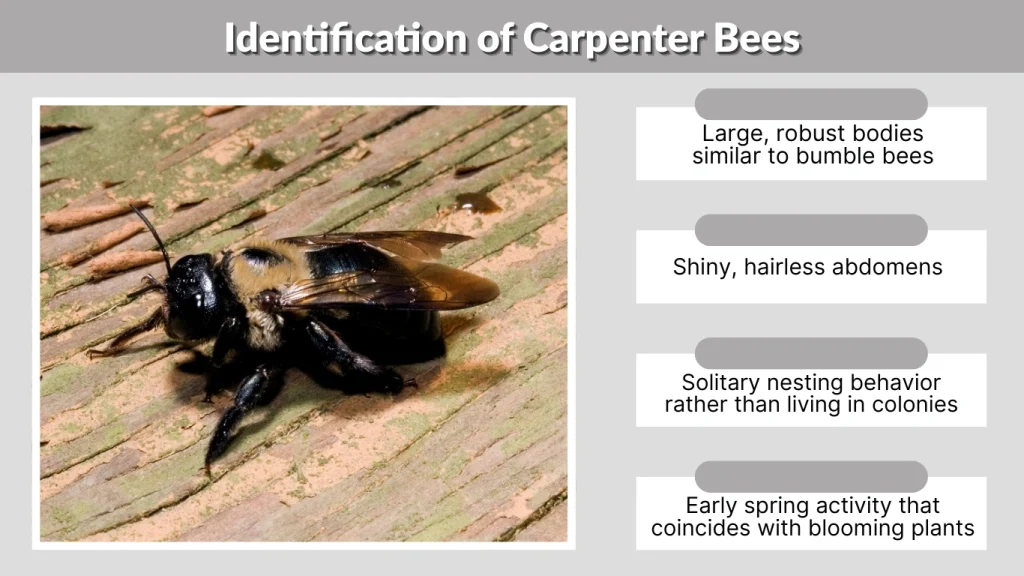
Recognizing Carpenter Bees
Carpenter bees are large, fast-moving bees with a distinct appearance. Unlike bumble bees, whose bodies are covered in dense, fuzzy hairs, carpenter bees have a smooth, shiny black abdomen that reflects sunlight. Males often have a yellow or pale patch on their faces, while females appear entirely black.
Several characteristics help identify them quickly:
- Large, robust bodies similar to bumble bees
- Shiny, hairless abdomens
- Solitary nesting behavior rather than living in colonies
- Strong flight patterns around flowers and wooden structures
- Early spring activity that coincides with blooming plants
They are commonly seen around decks, fences, sheds, and flowering plants—making them one of the most visible bee species in many regions.
Carpenter Bee vs. Bumble Bee
Although many people confuse these two species, their pollination habits and physical traits differ:
| Feature | Carpenter Bee | Bumble Bee |
| Abdomen | Shiny, hairless | Fuzzy |
| Pollination style | Buzz pollination | Buzz pollination |
| Nesting | Wood tunnels | Ground nests |
| Social structure | Solitary | Social colonies |
Bumble bees and carpenter bees both perform buzz pollination, but carpenter bees’ solitary nature leads them to visit more flowers in a short period—often making them more efficient in certain situations.
Do Carpenter Bees Pollinate?
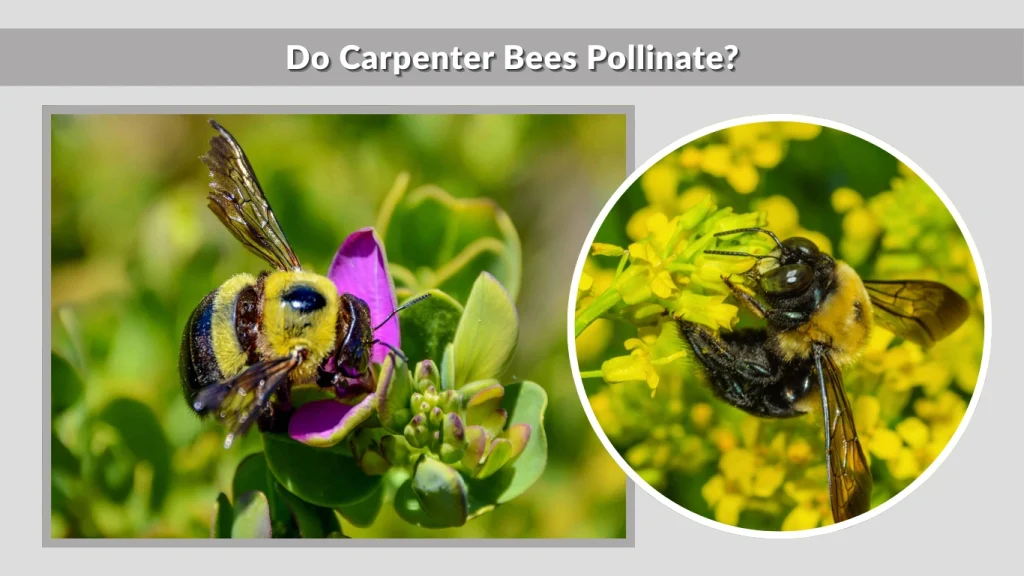
Carpenter bees are excellent pollinators, contributing significantly to gardens, orchards, and wild plant populations. Their large size, flight muscles, and behavior allow them to reach pollen in places that honey bees often cannot. Because they forage actively from early morning until late afternoon, they provide continuous pollination throughout the blooming season.
Despite their reputation for drilling holes in wood, carpenter bees play a far more beneficial role in ecosystems than many realize. They visit hundreds of flowers a day, spreading pollen as they feed, and their pollination technique—buzz pollination—is crucial for many commercial crops.
One common misconception is that carpenter bees damage plants or avoid flowers. In reality, they contribute to plant reproduction across a wide range of species, including vegetables, fruits, and ornamental flowers.
How Carpenter Bees Pollinate
Buzz Pollination
Buzz pollination, also known as sonication, is a specialized technique where carpenter bees vibrate their flight muscles rapidly without moving their wings. This vibration shakes pollen loose from flowers that store it deep inside tubular or poricidal anthers.
Honey bees cannot perform buzz pollination, making carpenter bees essential for plants such as:
- Tomatoes
- Blueberries
- Eggplants
- Peppers
- Certain wildflowers
This method releases large quantities of pollen, dramatically increasing fruit set and improving the quality of produce.
Pollen Transfer & Flower Visits
Carpenter bees have dense hairs on their legs and thorax that easily capture pollen grains. As they fly from one flower to another, pollen is transferred to the stigma of each new bloom, facilitating pollination.
They also visit flowers more rapidly than many other bee species. Their strength and agility allow them to move quickly between blossoms, increasing overall pollination efficiency. Their foraging style is broad—they do not stick to specific plants like honey bees often do—meaning they pollinate a wide variety of species in one day.
What Carpenter Bees Pollinate
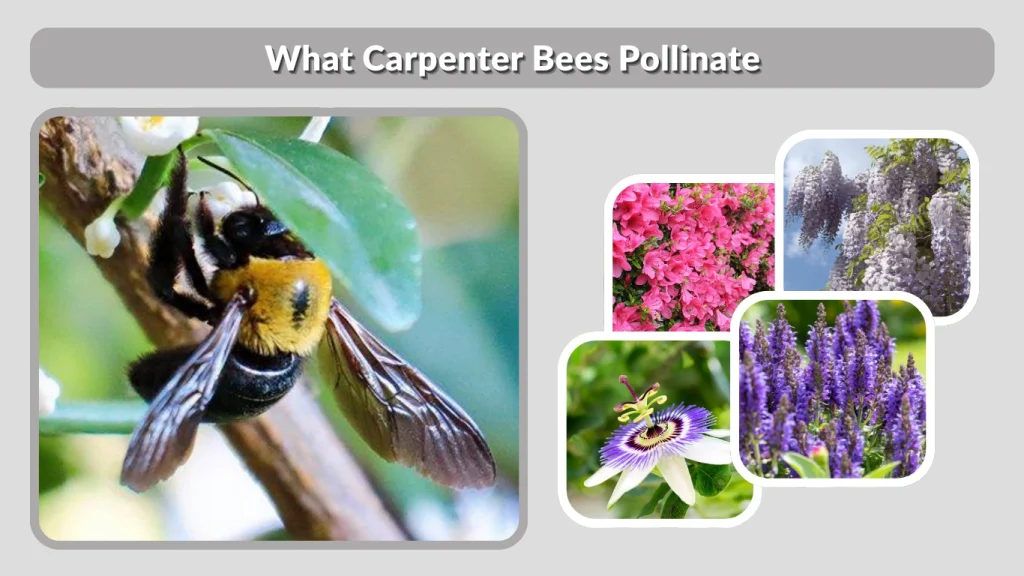
Flowers Carpenter Bees Prefer
Carpenter bees are attracted to nectar-rich flowers, especially those with deep tubes or bright colors. Some of their favorites include:
- Passionflower
- Salvia
- Wisteria
- Azalea
- Trumpet vine
- Bee balm
- Milkweed
Because of their size and strength, they can reach pollen reservoirs that smaller bees cannot access.
Crops & Vegetables They Pollinate
Carpenter bees are vital to both home gardens and commercial agriculture. They pollinate numerous vegetables and crops, including:
- Tomatoes
- Blueberries
- Peppers
- Eggplants
- Tomatillos
- Cucumbers (less frequently)
These plants benefit enormously from buzz pollination, which dramatically increases fruit yield.
Fruit Trees They Pollinate
Carpenter bees also visit and pollinate a range of fruit trees:
- Plum
- Peach
- Apple
- Persimmon
- Pear
Their large bodies allow them to shake pollen loose effectively, resulting in an improved fruit set.
Do Male Carpenter Bees Pollinate?
Male carpenter bees do not collect pollen intentionally, since they do not gather food or build nests. However, they still contribute to pollination. When males visit flowers to drink nectar, pollen sticks to their bodies and transfers as they move around.
Females are the primary pollinators because they actively collect pollen for their larvae. But males, through constant movement and their habit of hovering near flower clusters, still play a small but meaningful role in pollination.
Carpenter Bees vs. Honey Bees in Pollination
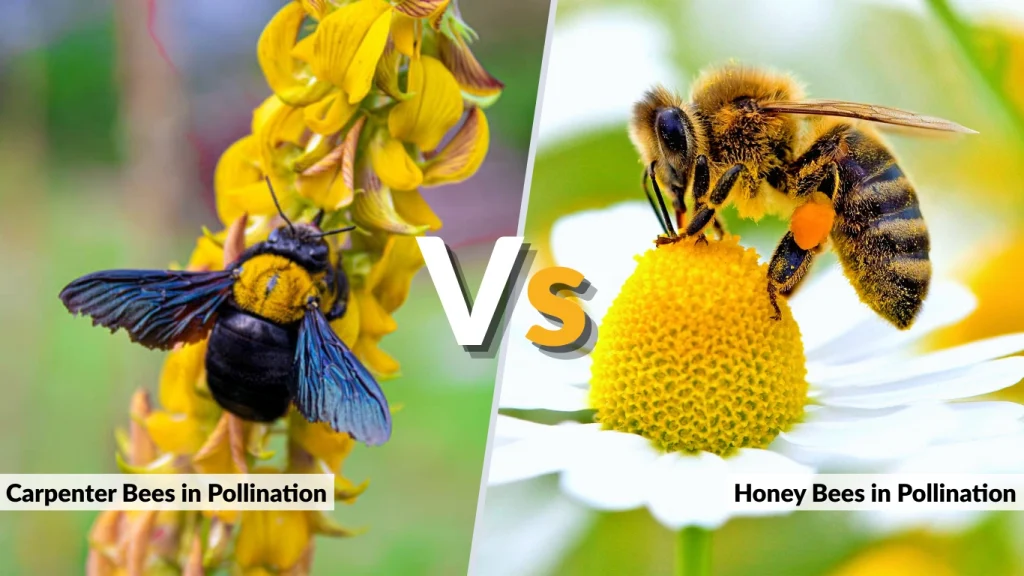
Comparison Table
| Feature | Carpenter Bee | Honey Bee |
| Buzz pollination | ✔️ Yes | ❌ No |
| Efficiency on tomatoes | Very high | Very low |
| Efficiency on blueberries | High | Low |
| Foraging speed | Fast, wide-ranging | Methodical, flower-loyal |
| Nesting style | Solitary | Large colonies |
| Crop pollination range | Wildflowers + specialty crops | Broad agricultural crops |
Analysis
Carpenter bees and honey bees both play critical roles in pollination, but their methods and strengths differ significantly. Honey bees excel in large-scale agriculture where many shallow flowers need consistent pollination. Their loyalty to specific blooms makes them ideal for crops like clover, almonds, and sunflowers.
Carpenter bees, on the other hand, shine where honey bees fall short. Their buzz pollination ability allows them to pollinate tomatoes, blueberries, and peppers far more effectively. Their size and strength make them well suited for deep, tubular flowers, and their solitary foraging style means they’re less likely to abandon a plant type if conditions change. Together, both species help maintain a balanced and productive ecosystem.
Regional & Species-Specific Pollination
Eastern Carpenter Bees
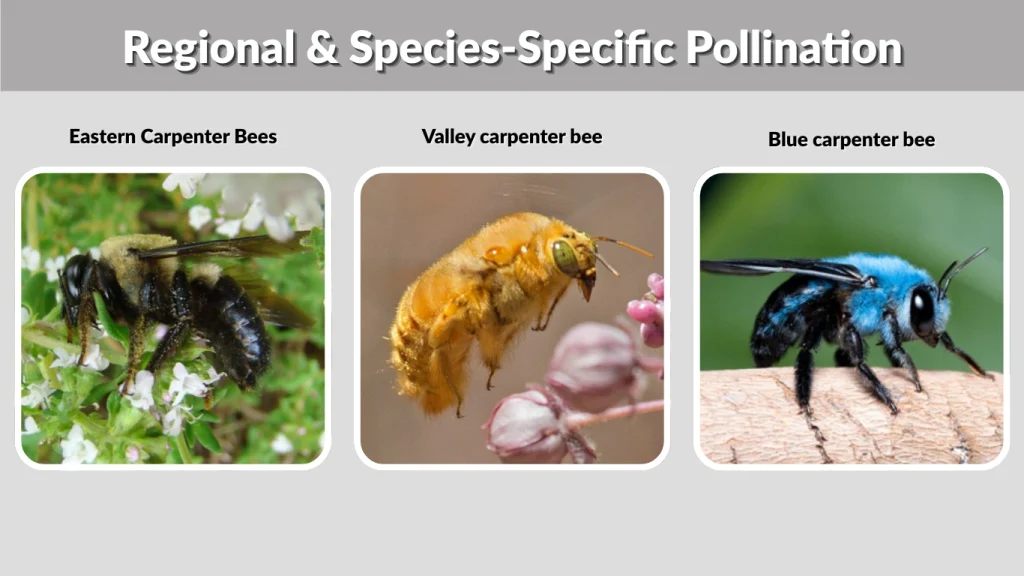
The eastern carpenter bee (Xylocopa virginica) is one of the most common pollinating bees in North America. This species is highly effective on blueberries, tomatoes, and a variety of wildflowers native to the eastern U.S. Their strong buzzing helps release pollen from stubborn anthers, and their early spring activity aligns with the blooming of many fruit trees.
California & Other Carpenter Bees
Several species, such as the Valley carpenter bee (Xylocopa sonorina) and Blue carpenter bee (Xylocopa caerulea), contribute heavily to pollination in western states and tropical regions. These bees have similar habits but vary in coloration and preferred flowers. Regardless of the species, carpenter bees show exceptional effectiveness in pollinating native plants, garden crops, and deep tubular blossoms.
Benefits of Carpenter Bee Pollination
Carpenter bees offer significant ecological advantages, especially in areas where honey bee populations fluctuate seasonally. Their energetic foraging behavior ensures continuous pollination throughout spring and summer.
Key Benefits (list)
- Boosts fruit and vegetable production
- Supports genetic diversity in wild plants
- Increases pollination of crops requiring sonication
- Helps compensate for declines in honey bee populations
- Encourages healthier gardens and ecosystems
Carpenter bees also play a crucial role in wild landscapes where specialized flowers depend on buzz pollination. Without these bees, many plants would produce fewer seeds, weakening local plant diversity over time.
Common Myths About Carpenter Bee Pollination
People often misunderstand carpenter bees because of their nesting behavior, leading to several myths.
Myth 1: “Carpenter bees don’t pollinate anything.”
This is false. Carpenter bees are powerful pollinators, especially for tomatoes, blueberries, eggplants, and deep flowers that honey bees cannot effectively pollinate.
Myth 2: “They only damage wood.”
While they do bore holes for nesting, their ecological benefits far outweigh this minor damage. One or two tunnels cause limited structural impact, and most problems occur only when nests are left unattended for many years.
Myth 3: “Male carpenter bees aren’t useful.”
Males do not collect pollen, but they still help pollinate when they visit flowers for nectar. Their frequent movement among blossoms spreads pollen unintentionally.
Myth 4: “Honey bees are always better pollinators.”
Honey bees are excellent at general pollination, but they cannot perform buzz pollination—making carpenter bees superior for many crops and wildflowers.
How to Attract Carpenter Bees
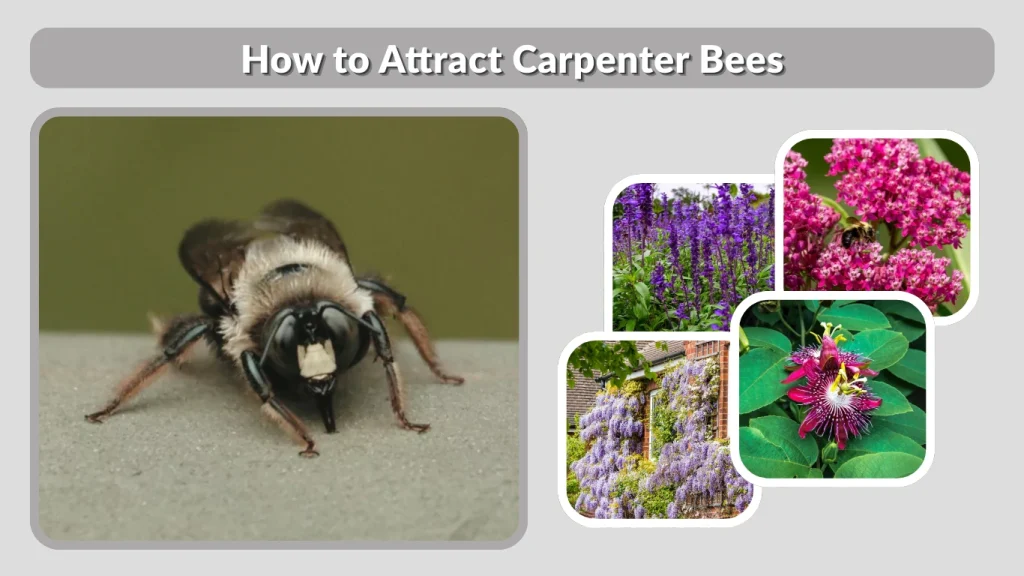
Carpenter bees are beneficial in gardens, and attracting them can increase fruit yields and overall plant health.
Best Plants to Grow
To draw carpenter bees into your garden, plant flowers rich in nectar and pollen, such as:
- Salvia
- Wisteria
- Passionflower
- Bee balm
- Trumpet vine
- Milkweed
- Native wildflowers
These blooms provide both color and food sources that carpenter bees find irresistible.
Garden Tips for Supporting Pollinators
You can make your garden more bee-friendly by:
- Avoiding pesticide use, especially systemic chemicals
- Creating clusters of flowering plants to draw bees in
- Offering untreated wood blocks or bamboo for natural nesting
- Planting flowers that bloom from early spring to late fall
- Providing shallow water sources with stones for landing
A pollinator-friendly garden supports not just carpenter bees but a wide range of beneficial insects.
FAQs
Do carpenter bees really pollinate flowers?
Yes. Carpenter bees are excellent flower pollinators and play an important ecological role. Their large bodies and buzz pollination technique allow them to access pollen in deep or tubular flowers that honey bees often cannot reach.
What plants do carpenter bees pollinate?
They pollinate flowering plants, vegetable crops like tomatoes and peppers, fruit trees like plums and peaches, and wildflowers including milkweed and salvia. Their abilities cover a wide range of garden and native species.
Do male carpenter bees pollinate anything?
Male carpenter bees do not intentionally collect pollen, but they do spread pollen accidentally when visiting flowers for nectar. Females remain the primary pollinators, but males contribute in smaller ways.
How do carpenter bees pollinate compared to honey bees?
Carpenter bees can perform buzz pollination, which honey bees cannot. This makes them more effective on crops like tomatoes and blueberries. Honey bees excel on broad, shallow flowers and large agricultural crops.
Do carpenter bees pollinate tomatoes and blueberries?
Yes—carpenter bees are some of the best pollinators for tomatoes and blueberries. Their buzz pollination technique releases pollen more effectively than honey bees, resulting in improved fruit quality and yield.
