
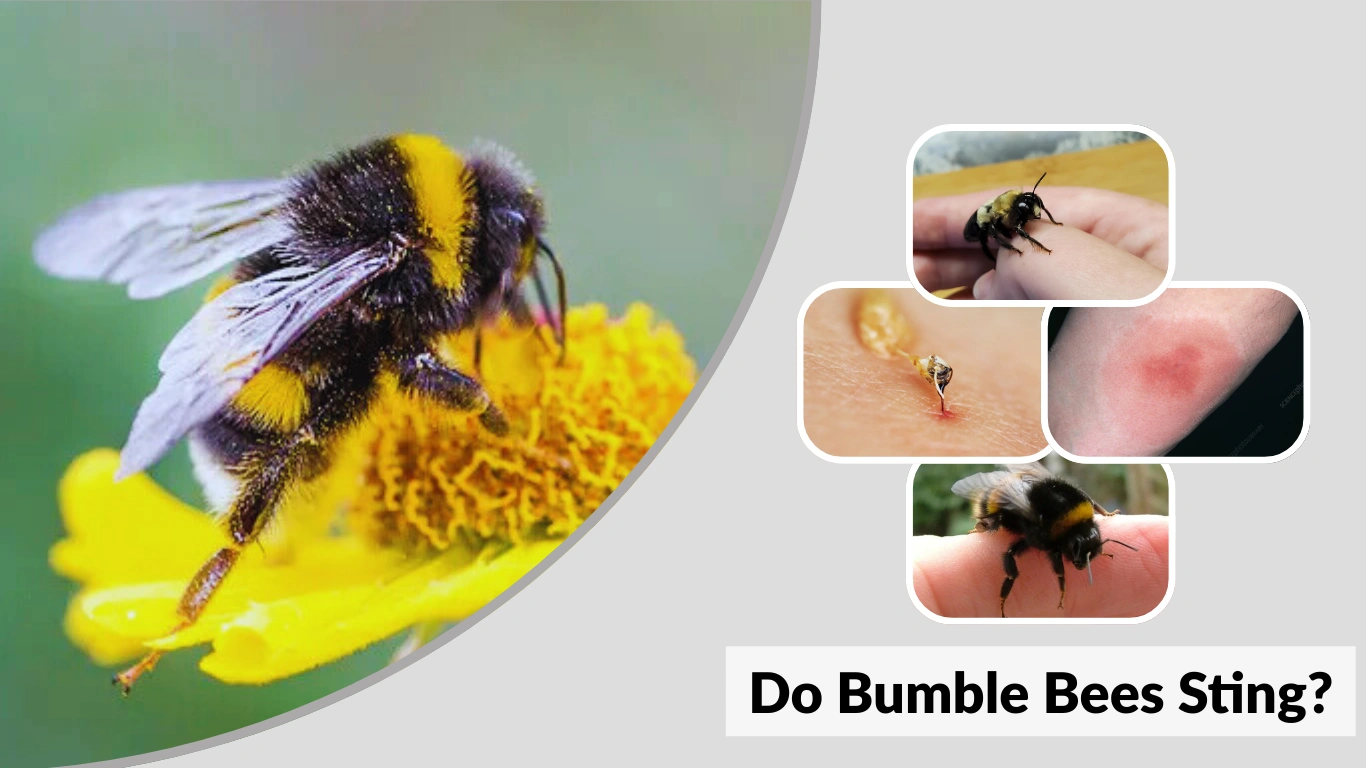
Bumble bees are some of the most recognizable insects thanks to their fuzzy bodies, slow flight, and friendly demeanor. But despite their gentle reputation, many people still wonder whether bumble bees sting, whether they die after stinging, or whether their large size makes them more dangerous. The confusion grows when you see big black bees, white-faced species, or carpenter bees hovering near porches and gardens.
This guide explains how bumble bee stings work, why they rarely sting, what happens when they do, and how to stay safe around them.
Understanding Bumble Bees
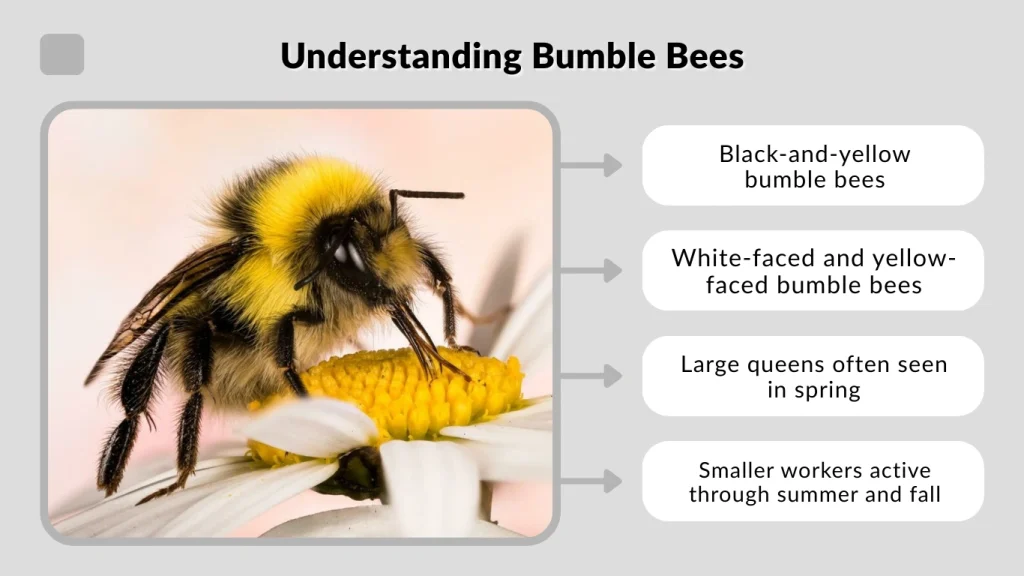
Bumble bees belong to the genus Bombus and are known for their round, fuzzy appearance. They are generally peaceful pollinators that prefer gathering nectar and pollen rather than interacting with humans. Many people confuse them with carpenter bees—another large bee species—but true bumble bees have fuzzier bodies and more varied color patterns.
Common types include:
- Black-and-yellow bumble bees
- White-faced and yellow-faced bumble bees
- Large queens often seen in spring
- Smaller workers active through summer and fall
Bumble bees are typically non-aggressive and only sting when they feel truly threatened.
Do Bumble Bees Sting?
Which Bumble Bees Can Sting
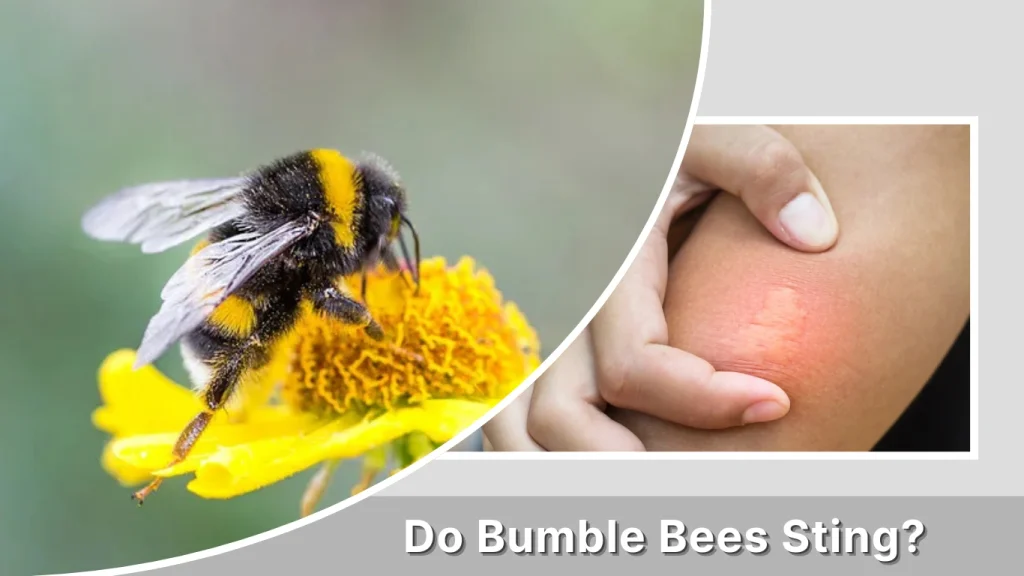
Yes, bumble bees can sting—but only female bumble bees. This includes queens and worker bees. Female bumble bees are equipped with a smooth stinger that injects venom but does not get stuck in the skin. This design means they can sting multiple times if needed.
Male bumble bees, often called drones, cannot sting at all. They lack a stinger entirely. Males tend to hover or investigate people curiously, especially during mating season, which sometimes leads people to assume they are aggressive—but they are harmless.
You can sometimes identify a male bumble bee by:
- Longer, curved antennae
- Slimmer body shape
- More noticeable yellow facial hairs in some species
How a Bumble Bee Sting Works
A bumble bee’s stinger is smooth and flexible. Unlike honey bees, which have barbed stingers that tear away during a sting, bumble bees retract their stingers cleanly from the skin. The venom they inject is used purely for defense, not for hunting or aggression.
Because their stinger is smooth:
- They do not lose their stinger
- They do not die after stinging
- They can sting more than once, though this is rare
Do Bumble Bees Die After They Sting?
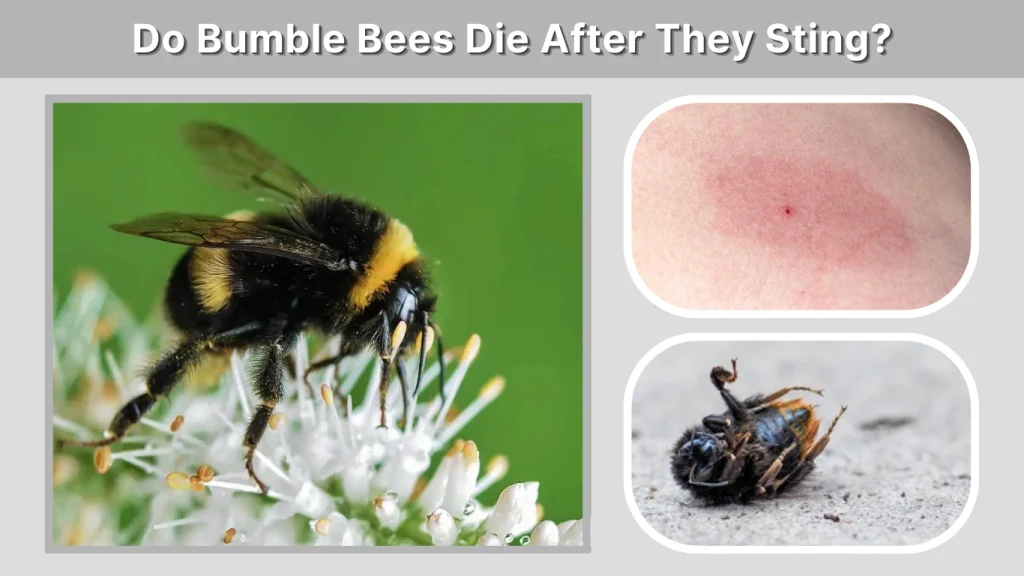
A common misconception is that all bees die after stinging. This is true only for honey bees. Bumble bees survive stinging because of their smooth stinger. Honey bees’ barbed stinger gets stuck in human skin, ripping out parts of their abdomen, which leads to death.
Bumble bees:
- Keep their stinger
- Suffer no fatal injury
- Can sting again if severely provoked
Despite this ability, bumble bees remain surprisingly reluctant to sting. They will attempt to flee or warn intruders before resorting to using their stinger.
Why and When Bumble Bees Sting
Main Reasons for Stinging
Bumble bees sting primarily in self-defense or when their nest is threatened. They are not aggressive during normal foraging and will rarely sting while collecting pollen from flowers.
They may sting when:
- Their nest is disturbed
- They feel trapped between clothing and skin
- They are grabbed or swatted
- Pets (especially dogs) dig near a nest
- A person accidentally steps on or sits on one
Do Bumble Bees Sting for No Reason?
No. Bumble bees do not sting without cause. Before stinging, they often give warning signals such as:
- Lifting a leg
- Tilting their body
- Buzzing loudly
- Flying directly toward an intruder in a threat display
These behaviors indicate the bee feels unsafe and wants to avoid stinging if possible.
Seasonal Sting Patterns
Bumble bee colonies reach their largest and most defensive point in late summer. During this time:
- There are more workers to protect
- Queens are producing new queens and males
- Food competition increases
This can make bumble bees slightly more defensive around nests, but not aggressive in general.
Do Bumble Bees Bite or Sting?
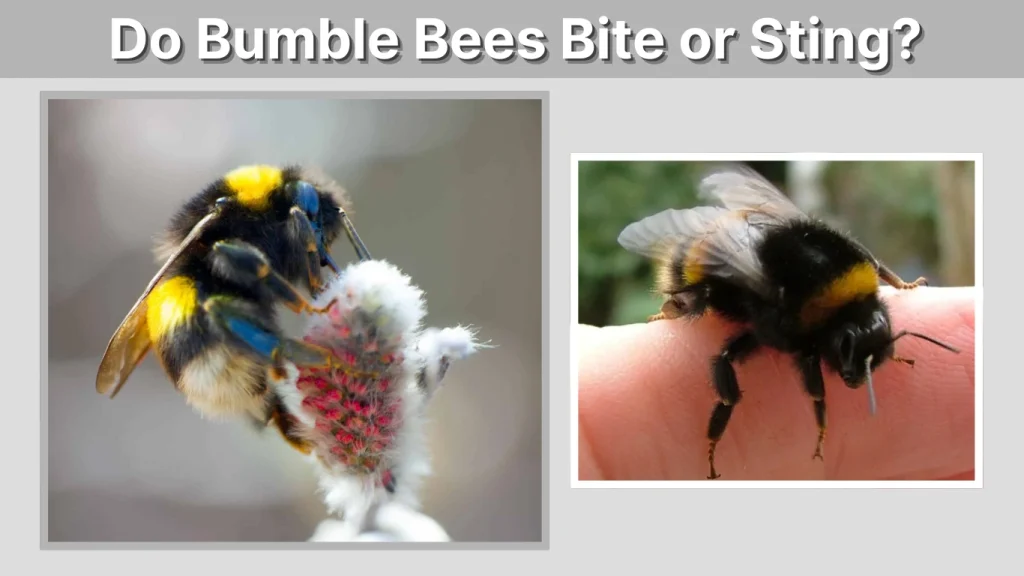
Sting vs Bite Explained
Bumble bees have both a stinger and mandibles (jaws). Their jaws are used to manipulate plant material, enlarge nest cavities, and gather pollen. Biting humans is extremely rare and generally harmless.
In nearly all human–bee interactions, the discomfort is caused by stinging, not biting.
Do Big or Black Bumble Bees Sting?
Large bumble bees—sometimes mistaken for “giant bees”—can sting, but their size does not make them more aggressive. In fact, large queens are usually less defensive because they are busy searching for food or places to nest.
Many “big black bees” are carpenter bees, not bumble bees.
- Male carpenter bees cannot sting.
- Female carpenter bees can sting but almost never do unless handled roughly.
Do Bumble Bees Leave a Stinger?
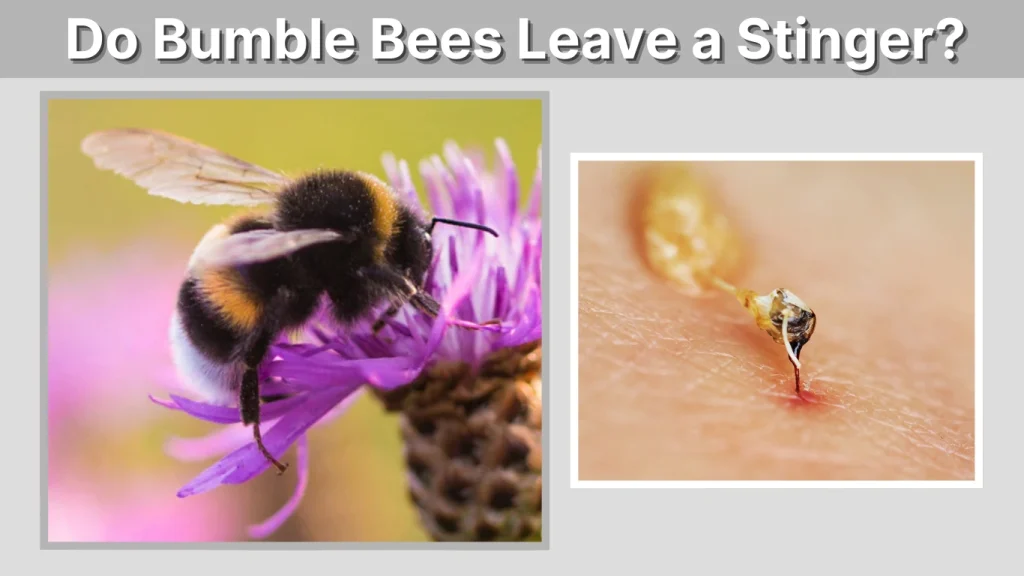
A common question after a sting is whether bumble bees leave their stinger behind. The answer is no. Their stinger is smooth, not barbed, meaning it slides out easily after piercing the skin. Because it doesn’t tear from their body, the bee remains alive and fully capable of flying away.
To make the difference clear, here’s a quick comparison:
| Bee Type | Leaves Stinger? | Dies After Stinging? | Can Sting Multiple Times? |
| Bumble Bee | No | No | Yes |
| Honey Bee | Yes | Yes | No |
| Wasp | No | No | Yes |
This smooth stinger design makes bumble bees far less dangerous than many people assume.
Do Bumble Bees Lose Their Stinger?
Because they don’t leave their stinger behind, bumble bees never lose it. Their stinger is built to flex and retract, allowing them to defend themselves multiple times without harm. The myth that all bees lose their stinger likely comes from confusion with honey bees.
It’s important to note that even though they can sting again, they rarely do unless they feel trapped or severely threatened.
Sting Pain, Swelling, and Venom
How Painful Is a Bumble Bee Sting?
A bumble bee sting can be painful, but it’s usually less intense than a wasp sting. The pain begins with a sharp prick followed by a warm, throbbing sensation. Most people describe it as moderately painful.
On pain indexes used by entomologists, bumble bee stings fall into the moderate category—noticeable but not extreme.
Symptoms You May Notice
After a sting, you might experience:
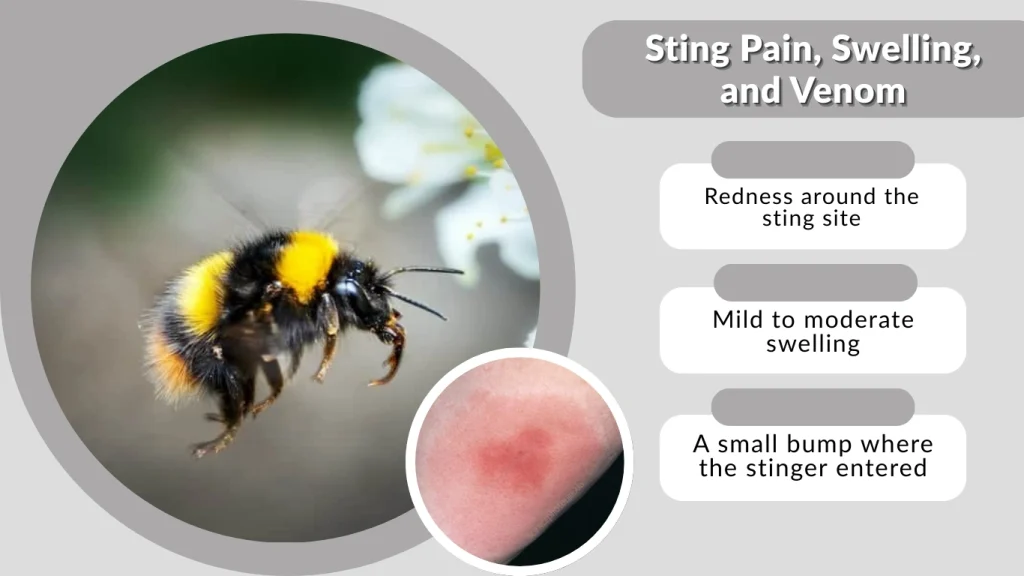
- Redness around the sting site
- Mild to moderate swelling
- A small bump where the stinger entered
- Itching or aching within a few hours
These reactions are normal and typically fade within 12–48 hours.
Are Bumble Bee Stings Dangerous?
For most people, bumble bee stings are not dangerous. However, individuals with bee sting allergies may experience:
- Hives
- Difficulty breathing
- Swelling of the throat or face
- Dizziness or vomiting
In such cases, immediate medical attention is required. People with known allergies should carry epinephrine when outdoors.
Do Bumble Bees Sting Humans?
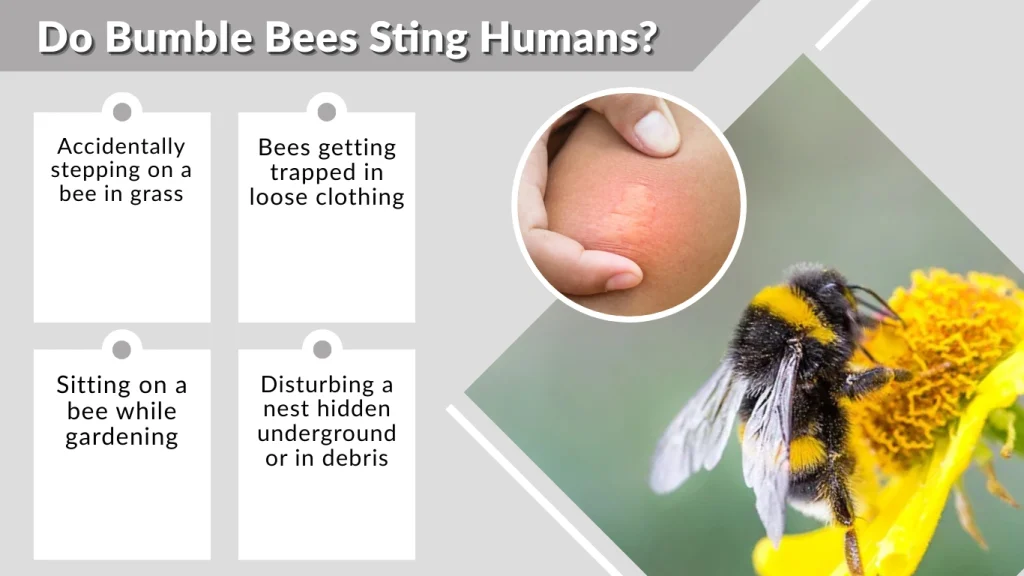
Most Common Sting Situations
Bumble bees rarely sting humans without a direct cause. Most stings occur in scenarios such as:
- Accidentally stepping on a bee in grass
- Bees getting trapped in loose clothing
- Sitting on a bee while gardening
- Disturbing a nest hidden underground or in debris
Unlike wasps, bumble bees do not chase people. They sting only when their safety or nest is threatened.
Do Bumble Bees Sting More Than Once?
Yes—they are physically capable of multiple stings. Still, they typically sting only once during a confrontation because their natural instinct is to escape, not fight. Multiple stings usually occur only when someone grabs or crushes a bee.
Do Bumble Bees Sting Pets?
Dogs
Dogs are the most frequent pet victims of bumble bee stings because they investigate nests by sniffing or digging. Stings usually occur on:
- The nose
- Lips
- Paws
Symptoms can include swelling, drooling, or rubbing at the face. Most reactions are mild, but if your dog has trouble breathing, collapses, or develops widespread swelling, seek emergency vet care immediately.
Cats
Cats tend to be more cautious than dogs, but they can get stung if they swat at bees. Most stings occur on the paws or face. Cats generally tolerate stings well, but any unusual behavior—vomiting, difficulty breathing, or lethargy—merits a vet visit.
Do Different Bumble Bee Species Sting?
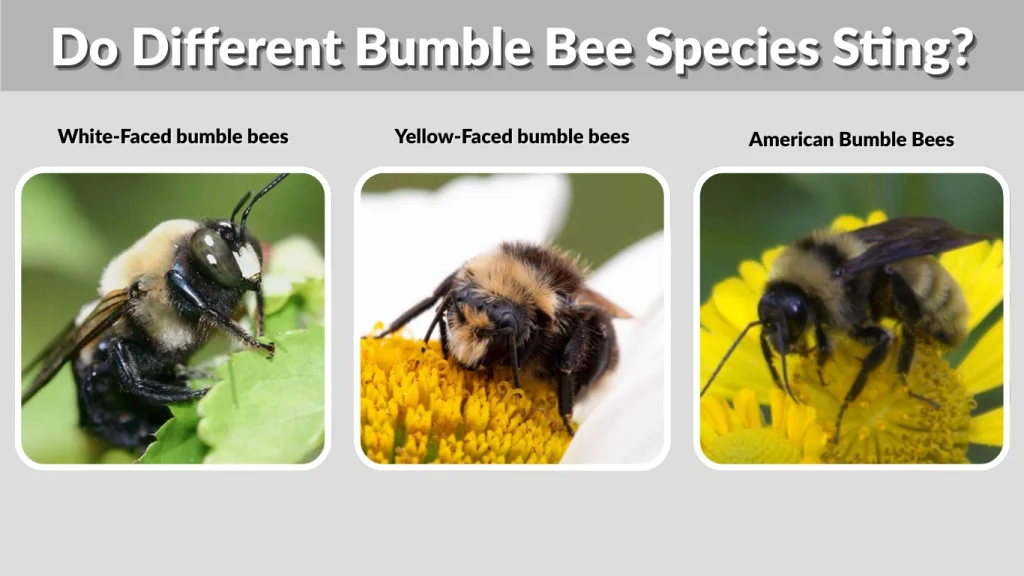
White-Faced, Yellow-Faced & Rare Species
Regardless of color differences, all female bumble bees have stingers. White-faced and yellow-faced species share the same defensive behavior as their common relatives—non-aggressive but capable of defending themselves.
Common Eastern & American Bumble Bees
These species are widespread in gardens, so people often encounter them. They do sting when a nest is threatened but remain gentle during normal foraging.
Carpenter Bees vs Bumble Bees
Carpenter bees are often mistaken for giant bumble bees. They have shiny, hairless black abdomens, unlike the fuzzy bodies of bumble bees.
Important distinctions:
- Male carpenter bees cannot sting (though they hover intimidatingly)
- Female carpenter bees can sting but rarely do
- Carpenter bees nest in wood, not underground
Understanding these differences helps avoid unnecessary fear.
What a Bumble Bee Sting Looks Like
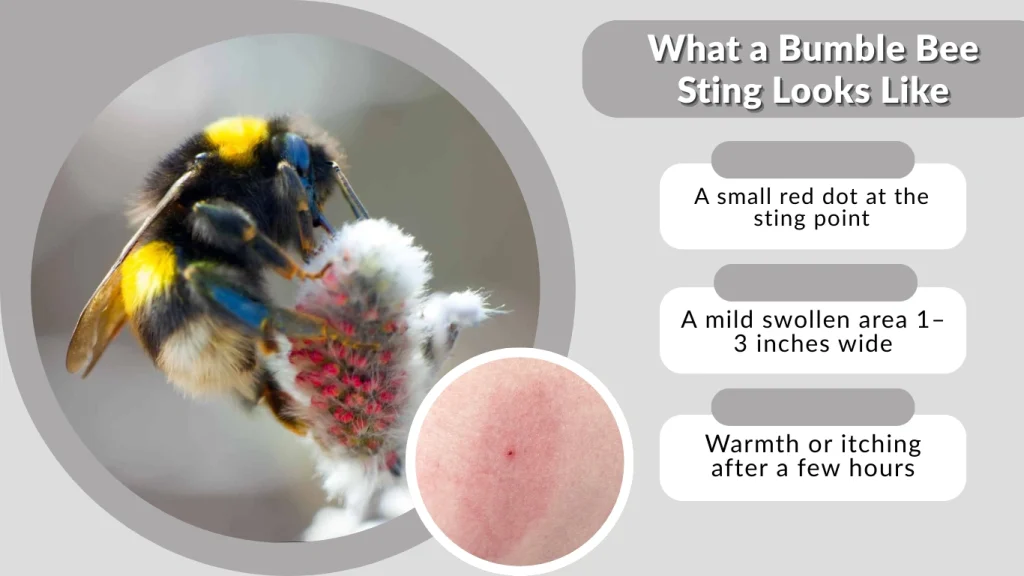
A typical bumble bee sting appears as:
- A small red dot at the sting point
- A mild swollen area 1–3 inches wide
- Warmth or itching after a few hours
Unlike honey bee stings, there is no visible stinger left behind. Most reactions subside within a couple of days.
What to Do After a Bumble Bee Sting
Immediate First Aid
- Clean the area with soap and water
- Apply a cold compress for 10–20 minutes
- Keep the sting site elevated if possible
- Apply hydrocortisone cream or calamine lotion
Reducing Pain & Swelling
- Ice every 20 minutes
- Take antihistamines like cetirizine or diphenhydramine
- Use ibuprofen for pain
- Avoid scratching to prevent worsening swelling
When Medical Help Is Needed
Seek immediate help if you experience:
- Difficulty breathing
- Rapid heartbeat
- Vomiting or dizziness
- Swelling spreading beyond the sting area
These symptoms may indicate an allergic reaction.
How to Avoid Bumble Bee Stings
Preventing Accidental Encounters
- Wear shoes outdoors
- Keep an eye out for ground nests
- Avoid disturbing logs, compost piles, and sheds where bees nest
Understanding Bee Body Language
Bumble bees usually warn before they sting. Watch for:
- Raised middle leg
- Loud buzzing
- Fast, direct flight toward you
These signs mean the bee feels threatened.
Safe Gardening Habits
- Shake out outdoor clothing before wearing
- Wear gloves when lifting rocks or moving debris
- Avoid mowing directly over nest entrances
Behavior Myths & Facts
- Myth: Big bumble bees are more aggressive
Fact: Larger queens are typically gentle and avoid conflict - Myth: Bumble bees chase humans
Fact: They only defend nests and never chase far from them - Myth: Bumble bees sting without reason
Fact: They always sting defensively, not aggressively
FAQs
Do bumble bees sting or bite?
Bumble bees sting when defending themselves, but biting is very rare. Their jaws are used mainly for collecting pollen and nest tasks, not for biting humans.
Do bumble bees die after they sting?
No. Their smooth stinger allows them to sting without injury. Only honey bees die after stinging.
Do big black or giant bumble bees sting?
Yes, they can, but their size doesn’t make them more aggressive. Many “big black bees” are carpenter bees—males cannot sting at all.
Do bumble bee stings hurt?
Yes, but usually only moderately. Pain typically fades within hours and swelling within one to two days.
Do bumble bees leave their stinger?
No. They never leave their stinger in the skin, which is why they do not die after stinging.
