
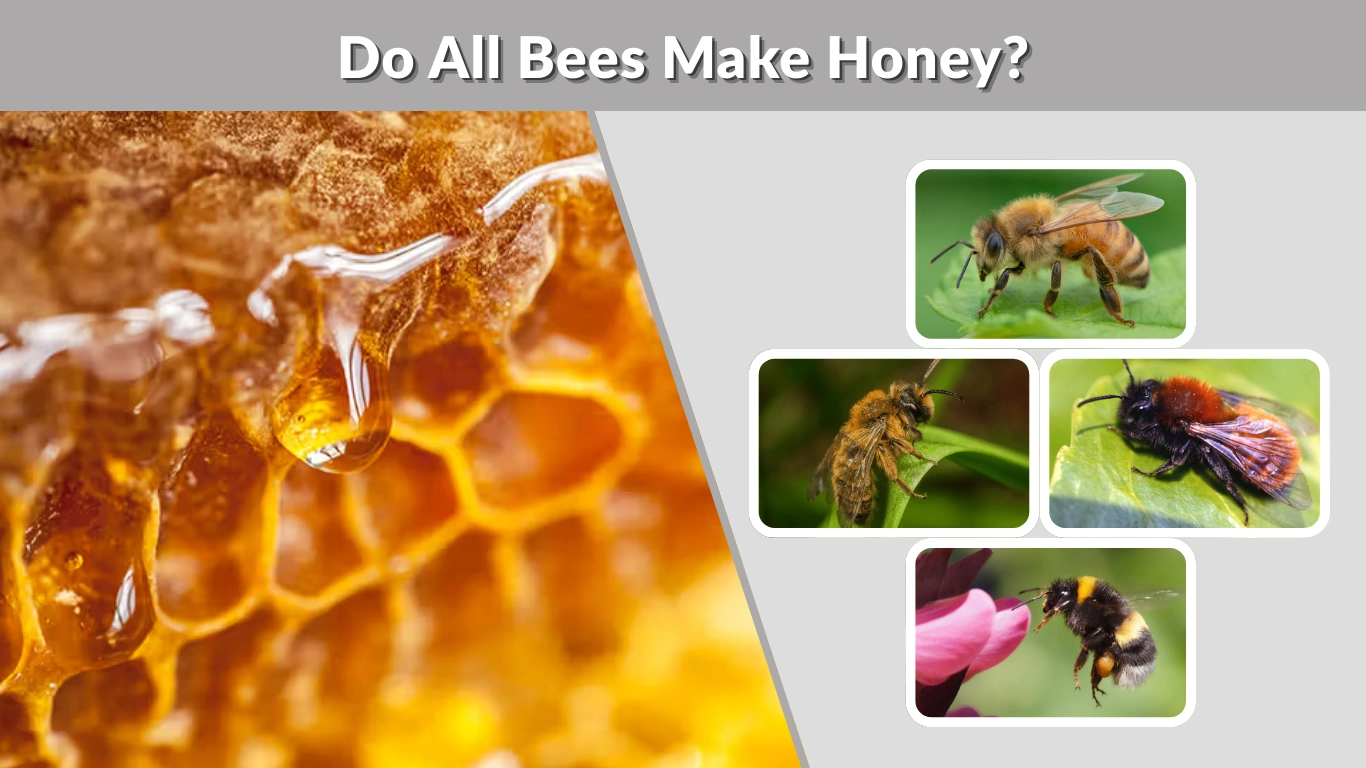
All bees are linked with honey in the public imagination, but in reality only a tiny percentage of the world’s 20,000+ bee species make any honey at all—and an even smaller number produce the edible honey humans harvest. Many bees live solitary lives, some nest in the ground, others form small seasonal colonies, and some don’t build wax combs at all. This guide explores which bees make honey, which don’t, why honey production evolved in only a few species, and why wasps almost never create honey.
What “Honey-Making” Actually Means
Honey production is not simply storing sweet nectar. True honey-making requires a complex set of traits that only a few species possess. For a bee to make honey, it must:
- Live in a large social colony that lasts more than one season
- Have specialized stomachs for processing nectar into honey
- Possess wax glands to build honeycomb for storage
- Need long-term food stores to survive winter or long dry seasons
Most bees evolved without these needs, so honey never developed in their behavior.
Identification of Bee Types Often Confused With Honey Makers
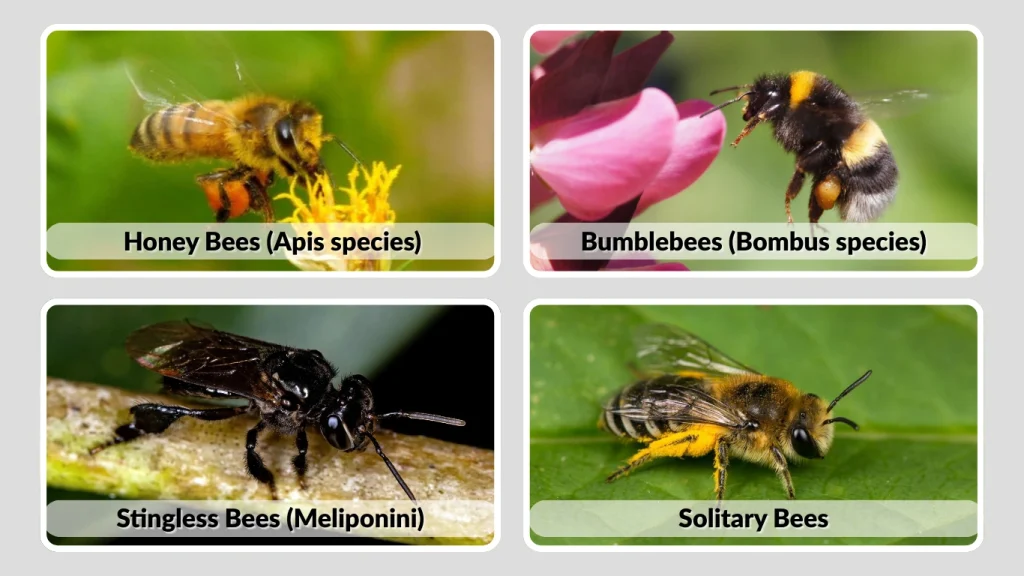
Many people assume that all bees make honey simply because they look similar. In reality, the major bee groups differ dramatically in their biology and colony structures.
Honey Bees (Apis species)
These are the bees that produce almost all honey found in stores worldwide. Honey bees are highly social, living in colonies of 20,000–60,000 individuals. They build intricate hexagonal wax combs, regulate hive temperature, and collect large amounts of nectar to convert into honey. Their colonies survive year-round, which is why they need substantial food reserves.
Bumblebees (Bombus species)
Bumblebees are also social, but their colonies are small—usually a few hundred individuals at most. They store only small amounts of nectar in wax “honey pots.” While this nectar can technically be called honey, it is never produced in large quantities and is not harvested. Bumblebees focus on short-term food needs rather than long-term storage.
Stingless Bees (Meliponini)
Stingless bees live in tropical regions and do produce edible honey, though in much smaller amounts than honey bees. Instead of building combs, they store honey in small wax or resin “pots.” Their honey has a thinner, tangier flavor and is prized in some cultures, but production is limited and climate-dependent.
Solitary Bees (Mason, Leafcutter & Miner Bees)
Most bees on Earth are solitary. Each female constructs her own nest, lays eggs, and provides pollen for her larvae. They do not form colonies, do not need long-term food storage, and therefore do not produce honey. This includes the majority of UK native bees, ground-nesting bees, and garden-friendly mason bees.
Wasps
Wasps are often mistaken for bees, but their diets and behaviors differ. They do not produce honey because they do not need long-term food stores. A few extremely rare tropical wasp species make a honey-like substance, but this is exceptional and not comparable to true bee honey.
Do All Bees Make Honey?
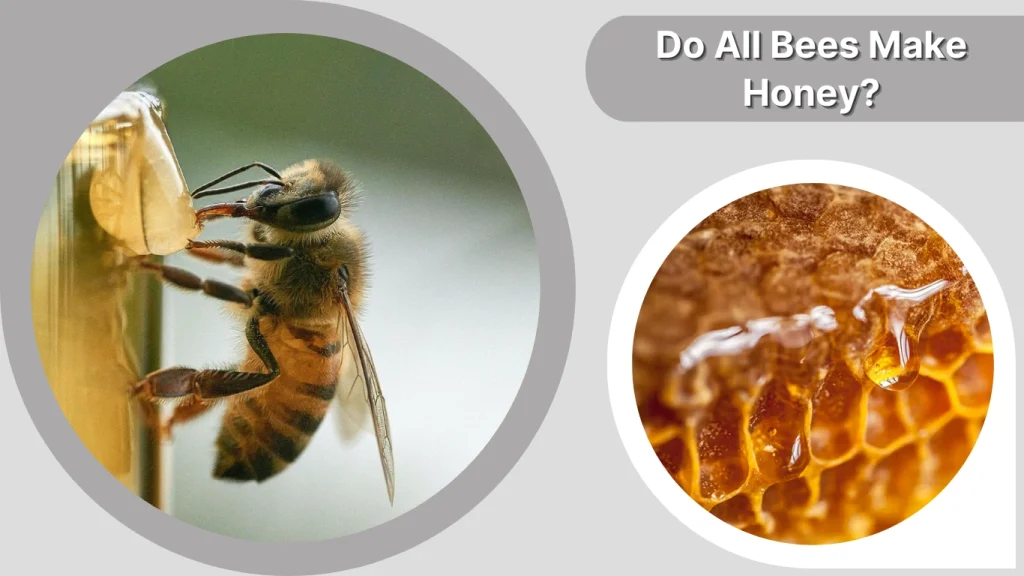
The simple answer is no—far fewer than 5% of bee species make any honey at all. Most bees neither have the anatomy nor the colony structure necessary for honey production. The assumption that all bees make honey comes from the fact that honey bees are the most commonly managed and widely recognized species.
Why Most Bees Do Not Produce Honey
Most bees do not need to store food long-term. Their life cycles are short, seasonal, and often solitary. Here’s why honey-making is extremely rare:
- Solitary lifestyle: Without large social colonies, there’s no need for communal food storage.
- Short life cycles: Many bees do not survive winter; only queens overwinter, reducing the need for surplus food.
- Anatomy limitations: Bees without wax glands or specialized honey stomachs cannot manufacture honey.
- Small nests: Tiny nests cannot support large food reserves.
Honey-making evolved as a survival strategy for specific climates and colony types—not as a universal bee trait.
Which Bees Actually Make Honey?
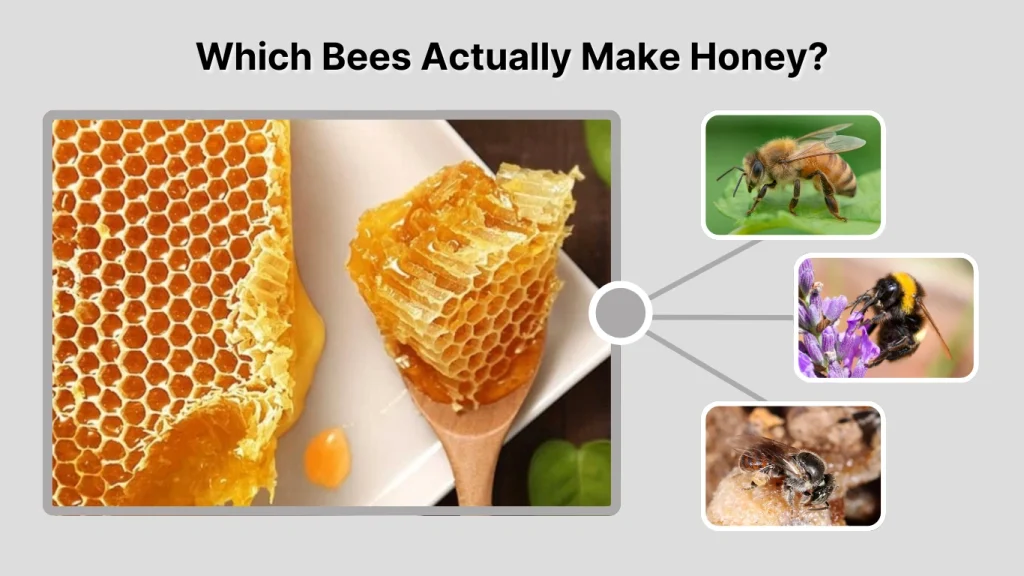
Only three main groups produce honey in noticeable amounts.
Honey Bees (Primary Honey Producers)
Honey bees (genus Apis) are responsible for nearly all commercial honey. They convert nectar into honey by adding enzymes, evaporating moisture, and sealing it in comb cells. Their large colonies depend on stored honey to survive winter. Because they build comb and maintain permanent homes, they continuously produce and store surplus honey—often far more than they need.
Bumblebees (Small Amounts Only)
Bumblebees do make a form of honey, but only in tiny quantities. It’s stored in small wax pots and is meant for immediate consumption by the colony. Their annual life cycle—where only new queens hibernate and the colony dies—means there is no need for long-term honey reserves. Thus, they cannot produce edible or harvestable amounts.
Stingless Bees (Tropical Honey Producers)
Stingless bees, found mainly in tropical regions such as South America, Africa, and Southeast Asia, are the only other bees besides honey bees that consistently produce edible honey. Their honey is thinner, slightly fermented, and known for a tangy, fruity flavor. These bees store honey in small resin or wax pots rather than combs, and their colonies are much smaller than those of honey bees. Because production is limited, stingless bee honey is rare and often expensive.
Bees That Do NOT Make Honey
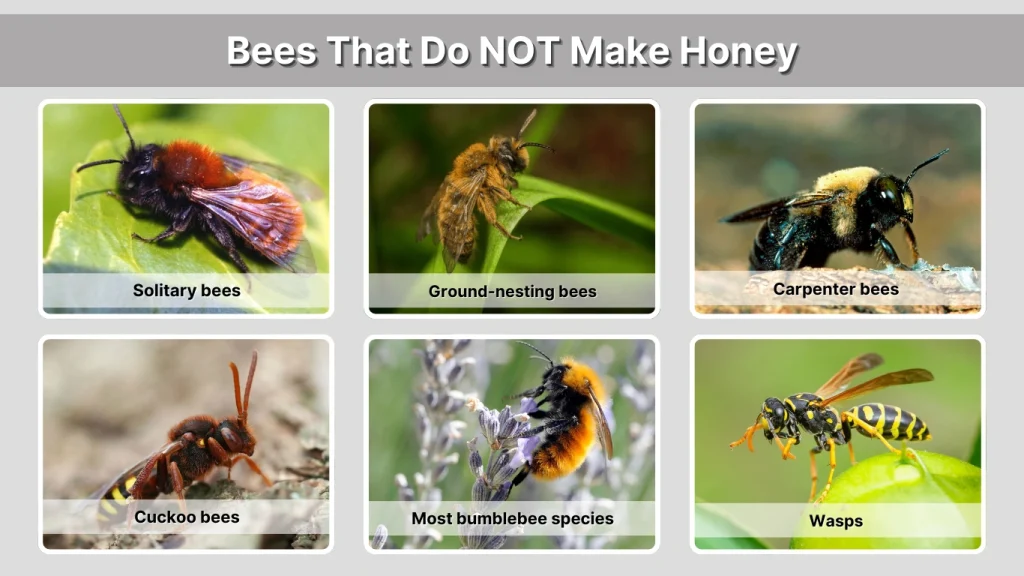
While honey bees, stingless bees, and a few bumblebees create some form of honey, the majority of bees do not produce honey at all. These include:
- Solitary bees such as mason, leafcutter, and mining bees
- Ground-nesting bees, which make up a large percentage of global species
- Carpenter bees, which tunnel into wood
- Cuckoo bees, which lay eggs in the nests of other bees
- Most bumblebee species, which produce only tiny nectar stores
- Wasps, which are not bees and do not require honey for survival
These bees rely on pollen and nectar as direct food, not on processed honey. Their lifestyles simply do not demand large, preserved food supplies.
Do Bees Make Honey All Year Round?
Many people assume honey bees work nonstop all year, but honey-making is highly seasonal. This section also covers the keyword variations: do bees make honey all year round and do bees make honey all year.
Nectar Flow Is Seasonal
Flowers bloom only during certain months. When nectar is abundant (spring and summer), honey bees gather and store it vigorously. During autumn and winter, nectar becomes scarce or disappears entirely, causing honey production to decline or stop.
Honey Bees Slow Down in Cold Weather
When temperatures drop, honey bees cluster inside the hive to stay warm and conserve energy. They do not fly, forage, or make new honey. Instead, they consume the honey stored earlier in the year.
Bumblebees Do Not Make Winter Honey
Most bumblebee colonies die before winter. Only new queens survive by hibernating. Because colonies do not overwinter, they never need large food stores, which is why bumblebees don’t make harvestable honey.
Solitary Bees Never Make Seasonal Honey
Solitary bees hatch, reproduce, pollinate, and die within a single season. They do not have colonies or winter survival strategies that encourage honey-making. Their entire life cycle eliminates the need for stored honey.
Do All Bees Make Edible Honey?
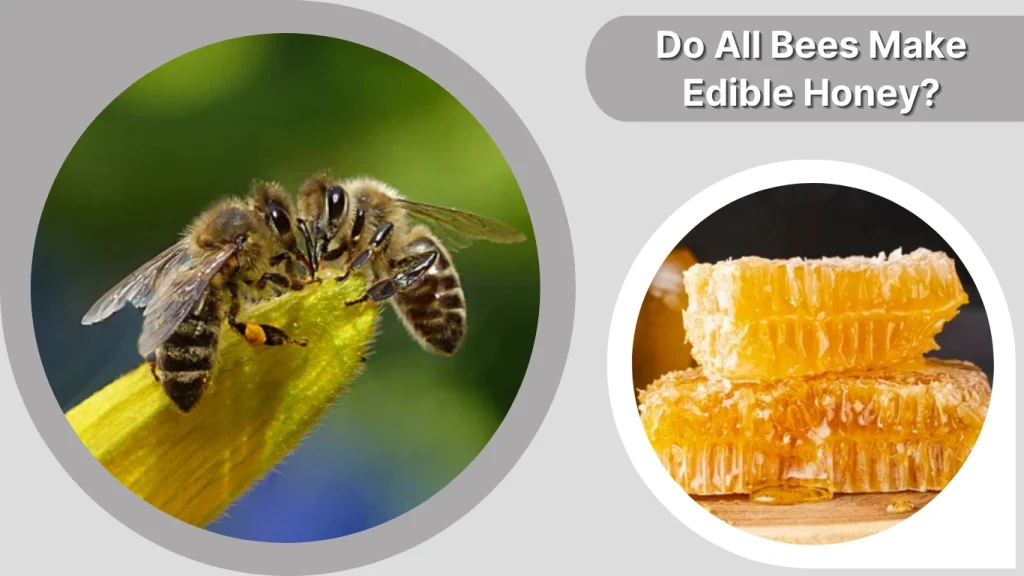
Not all honey is edible, and most bees make none at all. Here’s how different species compare:
Honey Bees Produce Edible, Harvestable Honey
This is the honey people consume. It is made from nectar, processed with enzymes, dried, and sealed in a comb.
Stingless Bees Produce Edible but Uncommon Honey
Their honey is edible but less common. It has a higher moisture content, giving it a slightly fermented taste. Some cultures consider it medicinal.
Bumblebee Honey Is Not Harvestable or Edible
Bumblebees make tiny nectar pots that are fragile and prone to contamination. These stores are not processed into true honey and are never harvested for food.
Most Bees Produce No Honey at All
Solitary bees, carpenter bees, ground bees, and wasps produce no honey, edible or otherwise.
Do All Bees Make Honeycombs?
Honeycombs are strongly associated with bees, but only a few species actually build them.
Honey Bees: True Honeycomb Builders
Honey bees are the only species that construct the familiar hexagonal wax comb. They use wax glands on their abdomen to build perfect geometric structures that store honey, pollen, and brood.
Stingless Bees: Wax Pots Instead of Combs
These bees build irregular resin or wax pots. They do not make organized comb for honey storage.
Bumblebees: Small Wax Cups
Bumblebees create little wax cups—far from the structured comb of honey bees. These are used for immediate nectar storage and brood rearing.
Solitary Bees: No Wax Structures
Most solitary bees use wood tunnels, plant stems, soil chambers, or shells—not wax—to create nests. They produce no comb or honey stores.
Regional Focus – Do All Bees Make Honey in the UK?
This section answers:
do all bees make honey UK
do all British bees make honey
do all UK bees make honey
The UK has roughly 270 species of bees, but:
- Only one species, the European honey bee (Apis mellifera), produces edible honey in significant quantities.
- Bumblebees make only small nectar pots that are not harvestable.
- The vast majority—over 250 species—are solitary bees that store pollen, not honey.
Thus, nearly all bees in the UK do NOT make honey.
Honey Bees vs Bumblebees vs Other Bees (Comparison Table)
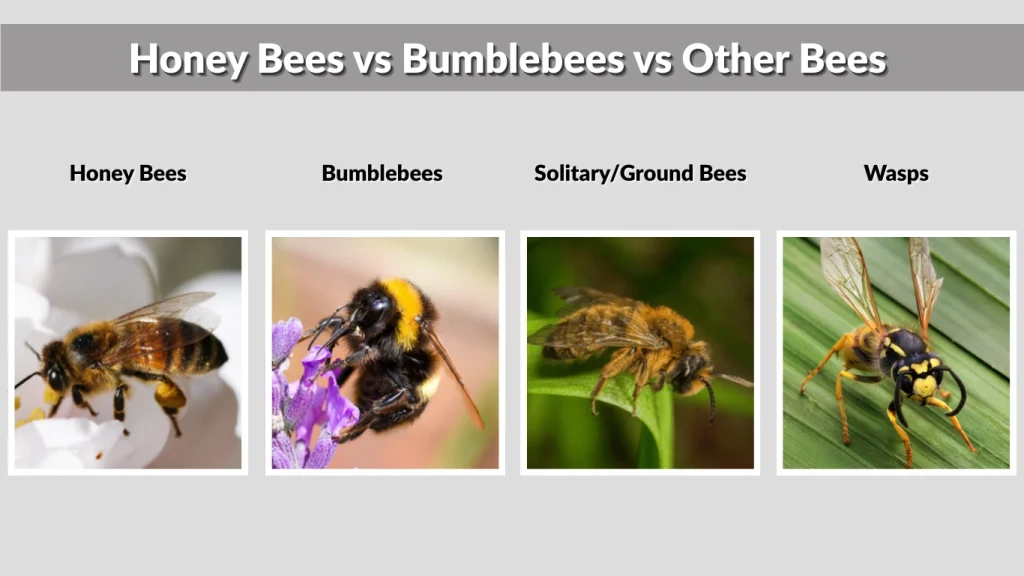
| Feature | Honey Bees | Bumblebees | Solitary/Ground Bees | Wasps |
| Make honey? | Yes | Tiny amounts | No | No |
| Edible honey? | Yes | No | No | No |
| Colony size | Large | Small | None | Varies |
| Build comb? | Yes | No | No | No |
| Honey all year? | No, seasonal | No | No | No |
Why Don’t All Bees and Wasps Make Honey?
Why do not all bees and wasps make honey?
The short answer is evolution.
Different Survival Strategies
Only a few species survive winter as a whole colony. These species need long-term food reserves—so they evolved honey-making.
Anatomical Differences
Most bees lack the honey stomach and wax glands required to produce and store honey.
Dietary Differences in Wasps
Wasps are not nectar-reliant. Many are predators or scavengers. Their digestive systems and colony life cycles never favored the evolution of honey storage.
Colony Size Matters
Small or temporary nests do not support surplus food storage. Large, perennial colonies—like those of honey bees—require it.
