

Beetles are among the most common household insects, and while some are harmless, others can damage fabrics, food, or even wooden structures. From carpet beetles that infest clothes and furniture to pantry beetles that invade stored foods, homeowners across the US, UK, and worldwide often encounter these pests indoors.
In this guide, we’ll cover 15 of the most common beetles found in homes, explaining their key traits, habitats, diets, and behaviors—helping you recognize which species may be sharing your living space.
1. Carpet Beetle (Varied Carpet Beetle – Anthrenus verbasci)
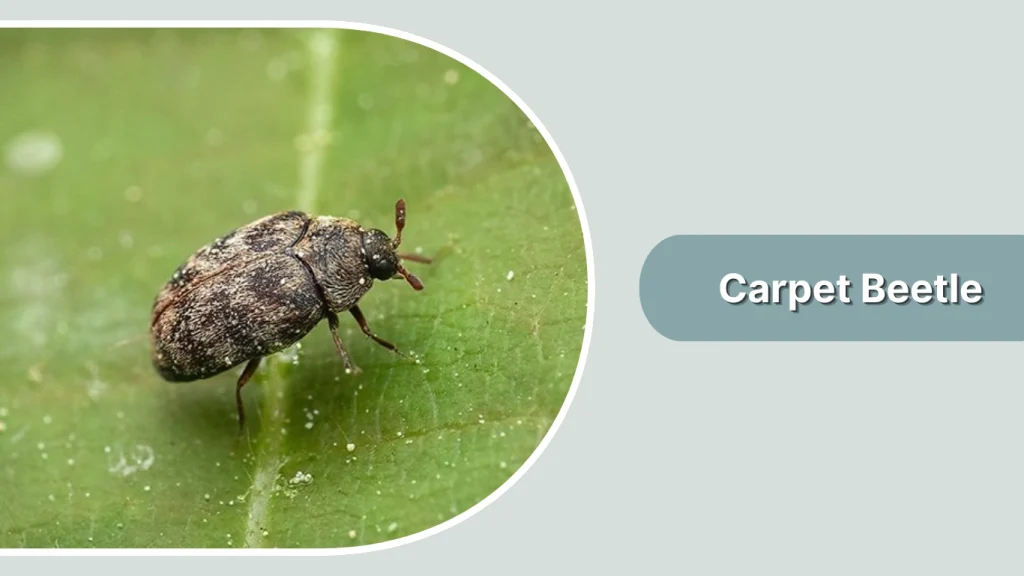
The Carpet Beetle, especially the Varied Carpet Beetle (Anthrenus verbasci), is one of the most common beetles found in homes. These small pests are notorious for damaging fabrics, carpets, and stored items. They are often mistaken for harmless insects until their destructive larvae cause visible damage indoors.
Identification
- Size: 2–4 mm long
- Color: Black with mottled white, yellow, and brown scales on the back
- Shape: Small, oval, and compact body
- Larvae: Furry, brownish, with bristles—responsible for most fabric damage
- Distinctive Feature: Adults are often found near windows, while larvae hide in fabrics
Habitat
Carpet beetles thrive in homes, attics, closets, and storage areas. They prefer dark, undisturbed places such as under carpets, furniture, or inside wardrobes. Adults may also be found near windows and light sources.
Diet and Nesting
- Diet: Adults mainly feed on pollen and nectar outdoors, but larvae feed on wool, silk, feathers, leather, hair, and natural fibers, causing damage to carpets, clothing, and upholstery.
- Nesting: Eggs are laid in dark corners, cracks, or directly in fabric folds. Larvae hatch and feed for several months before pupating.
Behavior
Carpet beetles are common household pests and often enter homes through open windows, doors, or on flowers. While adults are harmless indoors, their larvae are highly destructive to natural materials. They are considered one of the most common beetles in homes in the UK, US, and worldwide.
2. Black Carpet Beetle (Attagenus unicolor)
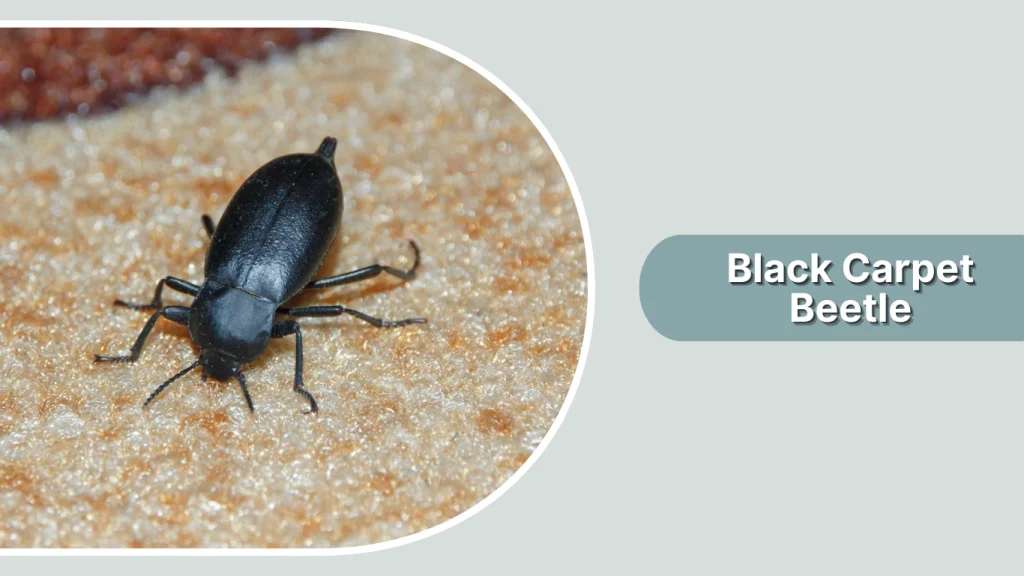
The Black Carpet Beetle is another of the most common beetles found in homes. It is especially destructive because its larvae feed on a wide variety of household materials, often causing more severe damage than the Varied Carpet Beetle.
Identification
- Size: 3–5 mm long
- Color: Adults are shiny black to dark brown
- Shape: Oval with smooth, hard wing covers
- Larvae: Golden-brown, carrot-shaped with long bristles at the end
- Distinctive Feature: Larger and darker than other carpet beetles
Habitat
This beetle is commonly found in closets, carpets, attics, and storage rooms, especially in places where fabrics or stored food are present. Adults may also appear near windows as they are attracted to light.
Diet and Nesting
- Diet: Adults feed on pollen and nectar outdoors, but larvae consume wool, silk, feathers, leather, stored grain, and even pet food.
- Nesting: Eggs are deposited in cracks, crevices, and fabric folds. Larvae may live for several months indoors before pupating.
Behavior
Black Carpet Beetles are common in homes across the US, UK, and worldwide. They are more damaging than many related species because of their broad diet and longer larval stage.
3. Common Furniture Beetle (Anobium punctatum)
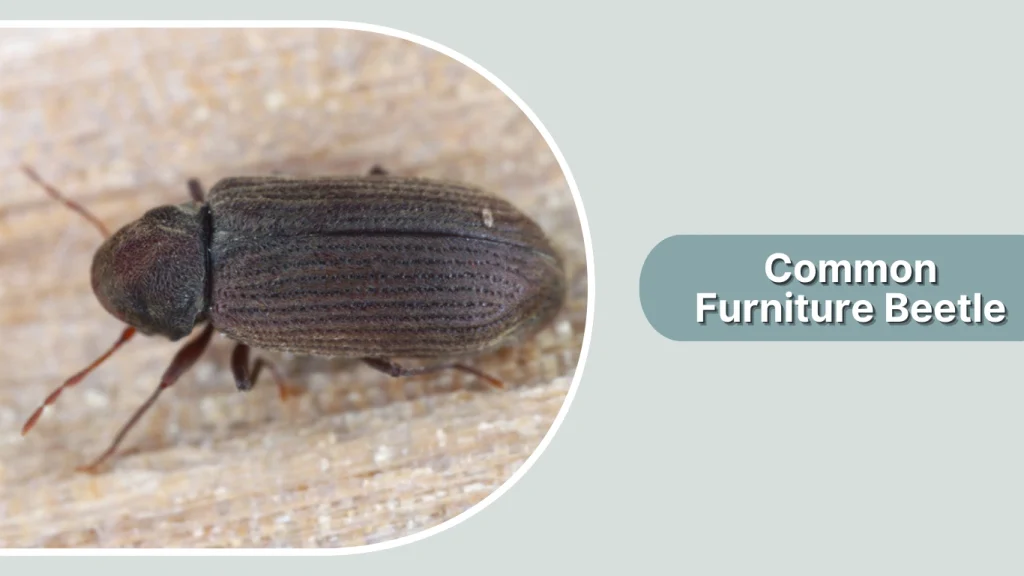
The Common Furniture Beetle, often referred to as a woodworm beetle, is one of the most common beetles in homes, particularly in older houses. Its larvae bore into wood, causing structural damage to furniture, flooring, and wooden beams.
Identification
- Size: 2.5–5 mm long
- Color: Reddish-brown to dark brown
- Shape: Cylindrical with a hood-like thorax that hides the head
- Larvae: Cream-colored, curved, and wood-boring
- Distinctive Feature: Tiny round exit holes (1–2 mm) in wood
Habitat
This beetle is found in wooden furniture, flooring, beams, and paneling. Infestations are most common in damp or poorly ventilated areas like basements, attics, and old houses.
Diet and Nesting
- Diet: Larvae bore into hardwood and softwood, feeding on cellulose and leaving powdery frass (wood dust). Adults do not feed indoors.
- Nesting: Eggs are laid in wood cracks and crevices. Larvae develop inside wood for 2–4 years before emerging as adults.
Behavior
The Common Furniture Beetle is a serious household pest, especially in the UK and Europe. Infestations often go unnoticed until exit holes and fine sawdust appear, signaling structural damage.
4. Drugstore Beetle (Stegobium paniceum)
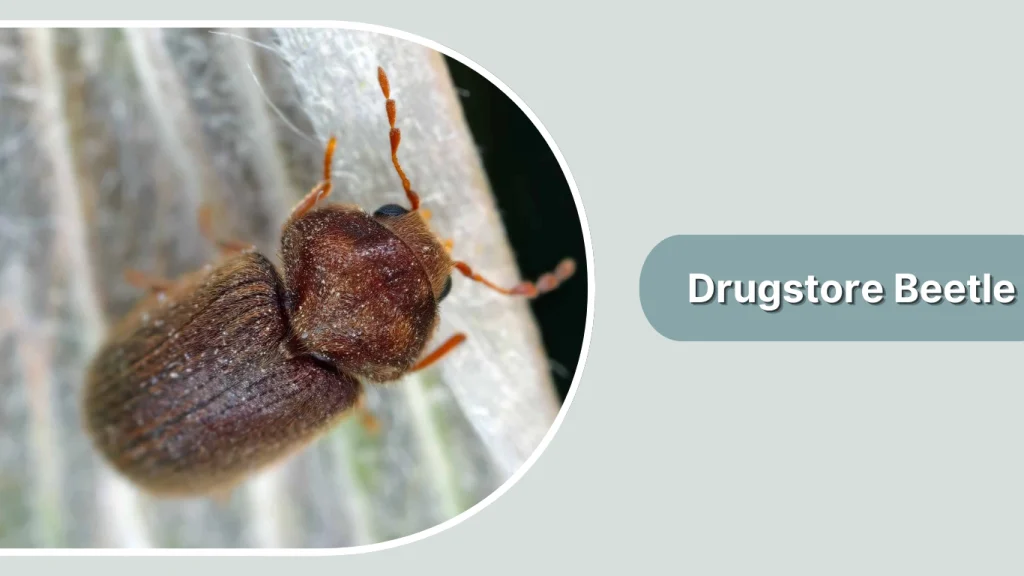
The Drugstore Beetle is one of the most common beetles found in homes, particularly in kitchens and pantries. It gets its name from its habit of infesting dried herbs and medicines, though it will feed on a wide range of stored products.
Identification
- Size: 2–3.5 mm long
- Color: Reddish-brown
- Shape: Oval with a humped back and fine grooves on wing covers
- Larvae: White, C-shaped, soft-bodied
- Distinctive Feature: Often confused with the cigarette beetle but has distinct wing striations
Habitat
This beetle thrives in kitchens, pantries, and storage areas, where it hides in cracks, cupboards, and food containers. Adults may also be seen flying indoors.
Diet and Nesting
- Diet: Feeds on dried foods, grains, flour, cereals, spices, dry pet food, and even books and leather.
- Nesting: Eggs are laid directly in food sources. Larvae tunnel and feed within the material until pupation.
Behavior
The Drugstore Beetle is a common household pantry pest worldwide. Infestations often spread quickly, contaminating food products and requiring thorough cleaning.
5. Cigarette Beetle (Lasioderma serricorne)
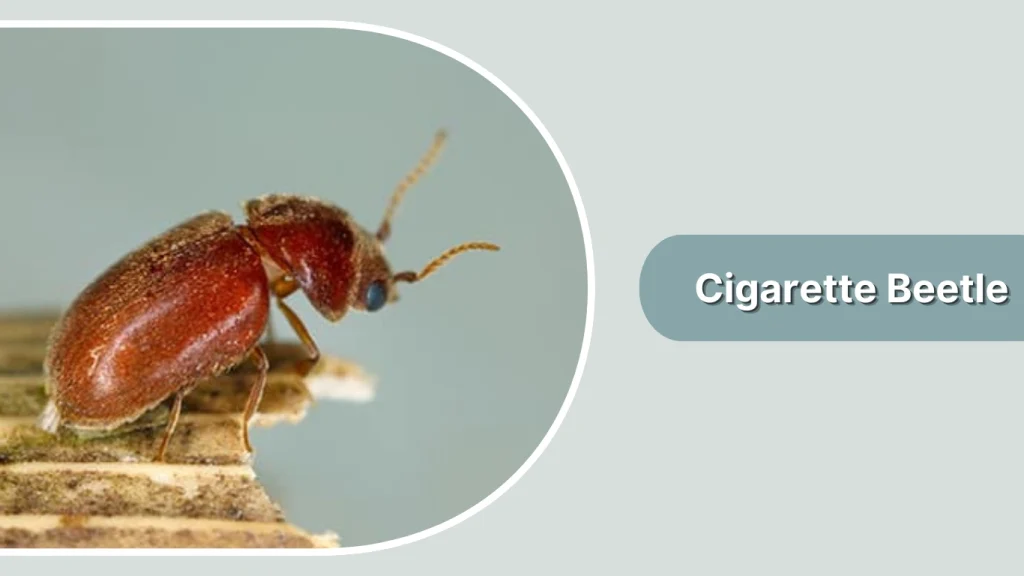
The Cigarette Beetle is another common beetle found in homes, especially in pantries and food storage areas. It is a notorious pest of tobacco products but also attacks stored foods and household items.
Identification
- Size: 2–3 mm long
- Color: Light brown to reddish-brown
- Shape: Oval with a smooth, rounded body and downward-bent head
- Larvae: White, C-shaped with tiny hairs
- Distinctive Feature: Lacks the distinct grooves on wing covers seen in the drugstore beetle
Habitat
This beetle inhabits pantries, cupboards, food storage, and tobacco storage areas. It often appears in dried goods and packaged foods.
Diet and Nesting
- Diet: Feeds on tobacco, dried foods, spices, cereals, pet food, leather, books, and upholstery stuffing.
- Nesting: Eggs are laid in food products or organic materials. Larvae burrow inside food particles or packaging during development.
Behavior
Cigarette Beetles are strong fliers and often seen buzzing around infested areas. They are one of the most common pantry pests worldwide, including in homes in the US and UK.
6. Larder Beetle (Dermestes lardarius)
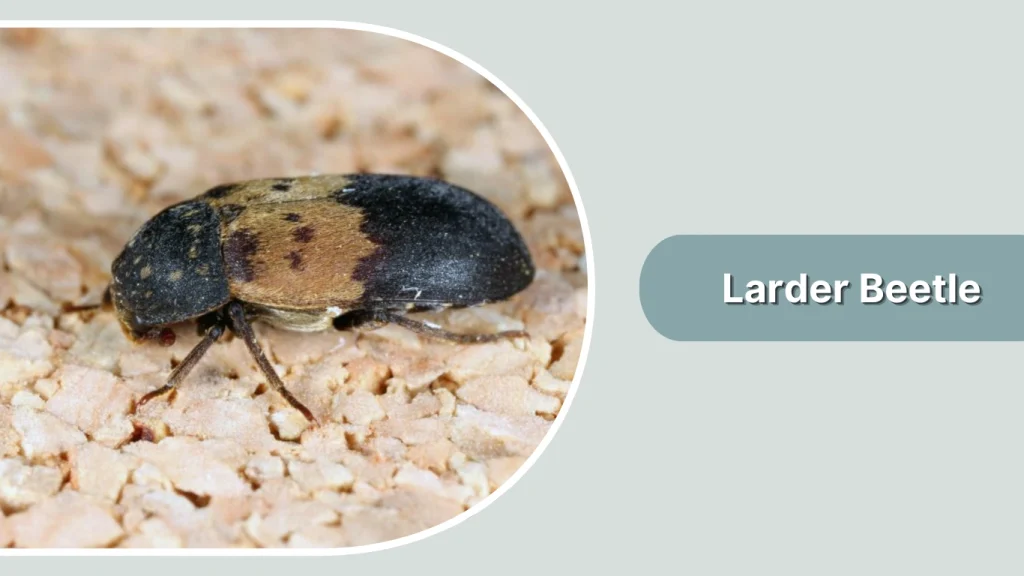
The Larder Beetle is a well-known household pest and one of the most common beetles found in homes. It gets its name from its historical association with larders and pantries, where it infested stored meats and animal products.
Identification
- Size: 7–9 mm long
- Color: Dark brown to black with a yellow band across the wings marked with six black spots
- Shape: Oval, slightly flattened
- Larvae: Dark brown, hairy, and tapered at the end
- Distinctive Feature: Yellow band with spots makes it easy to identify
Habitat
This beetle is commonly found in kitchens, pantries, basements, and storage areas. It hides in cracks, cupboards, or near dried animal products. Infestations are often noticed near food storage.
Diet and Nesting
- Diet: Larvae feed on meat, dried fish, pet food, cheese, feathers, leather, and dead insects/animals. Adults also consume animal-based products.
- Nesting: Eggs are laid in food sources or crevices nearby. Larvae often tunnel into wood or insulation to pupate.
Behavior
Larder Beetles are common in homes worldwide, especially where dried food and pet products are stored. They are considered a nuisance pest but can also cause structural damage by boring into materials to pupate.
7. Khapra Beetle (Trogoderma granarium)
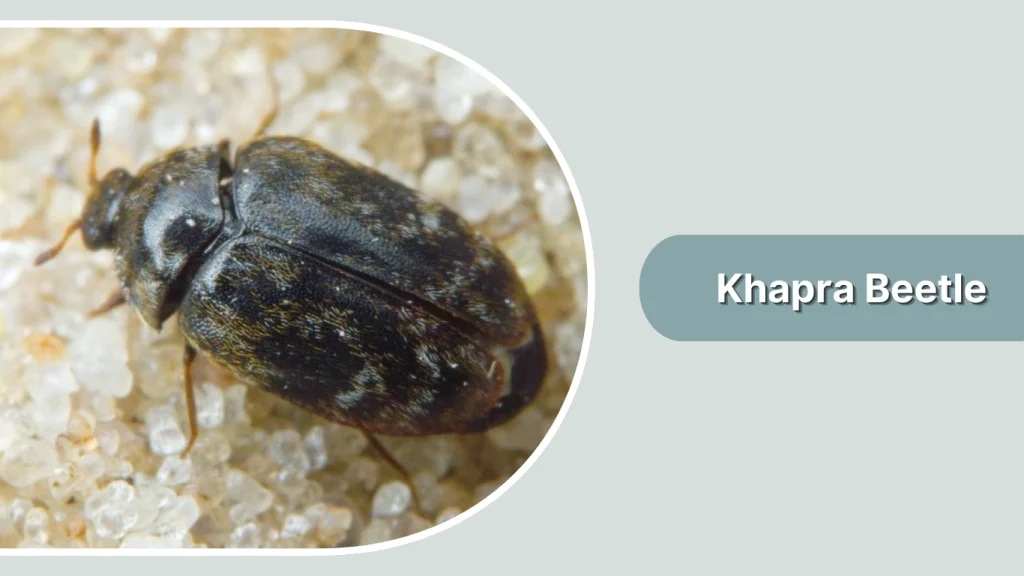
The Khapra Beetle is considered one of the most destructive stored product pests and a regulated quarantine species in many countries. Though less frequent than carpet or larder beetles, infestations in homes are serious and difficult to eliminate.
Identification
- Size: 1.6–3 mm long
- Color: Brown to reddish-brown with fine hairs on the body
- Shape: Oval, compact, and very small
- Larvae: Golden to reddish-brown, covered in dense hairs with tufts at the end
- Distinctive Feature: Extremely tiny size and hairy larvae
Habitat
This beetle is found in pantries, food storage areas, and warehouses. It thrives in dry, warm conditions and infests packaged or bulk foods.
Diet and Nesting
- Diet: Feeds on grains, rice, cereals, dried pulses, nuts, and pet food. It causes serious contamination of food stocks.
- Nesting: Females lay eggs in cracks, crevices, or directly inside stored food. Larvae remain in the food until pupation.
Behavior
The Khapra Beetle is highly resilient, surviving months without food. Infestations spread quickly and are very difficult to control, making it one of the most feared beetles in homes and warehouses.
8. Ground Beetle (Common Black Ground Beetle – Pterostichus melanarius)
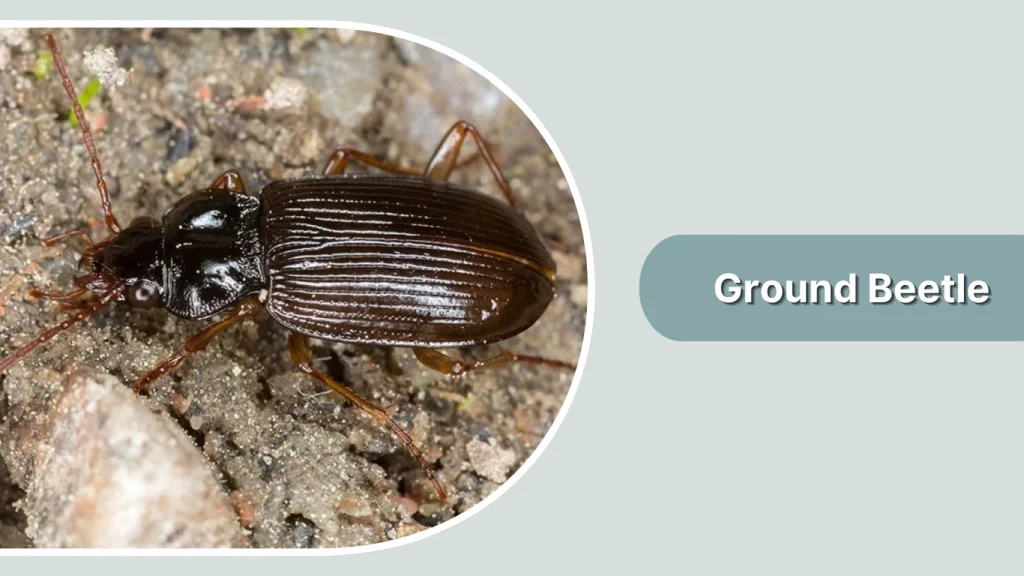
The Common Black Ground Beetle is one of the most common beetles in homes, often wandering indoors by accident. Unlike fabric or pantry pests, this beetle is not harmful to property but can alarm homeowners due to its size and appearance.
Identification
- Size: 12–18 mm long
- Color: Shiny black body
- Body: Elongated oval with finely ridged wing covers
- Legs: Long, dark brown to black, built for running
- Antennae: Long, slender, black
- Distinctive Feature: Smooth shiny body with uniform coloration
Habitat
This beetle normally lives outdoors in gardens, fields, woodlands, and under stones or logs, but it frequently enters homes in search of food or shelter. Indoors, it is often found in basements, kitchens, or near doorways.
Diet and Nesting
- Diet: Feeds on slugs, worms, caterpillars, and other insects, making it beneficial for pest control.
- Nesting: Lays eggs in moist soil. Larvae are also predatory and remain underground until they pupate.
Behavior
Ground beetles are nocturnal hunters and may wander indoors at night. They do not infest food or fabrics but are commonly found in homes by mistake, especially in damp areas.
9. Biscuit Beetle (Stegobium paniceum)
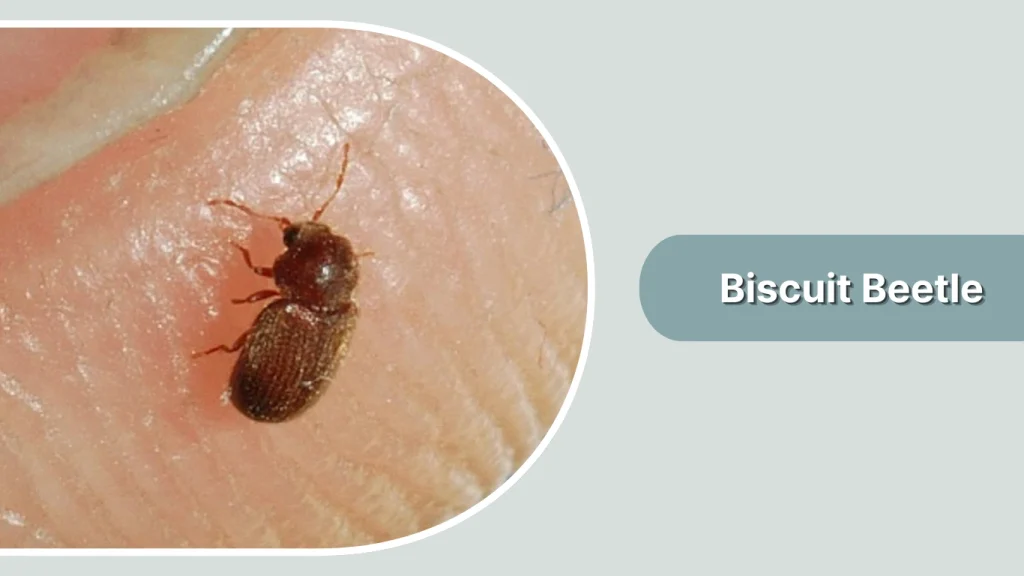
The Biscuit Beetle, sometimes grouped with the drugstore beetle, is a frequent pantry pest commonly found in homes. It attacks dried foods and stored goods, especially flour and baked products.
Identification
- Size: 2–3.5 mm long
- Color: Reddish-brown with fine grooves on wing covers
- Body: Oval, hump-backed, and compact
- Larvae: White, C-shaped grubs inside food products
- Distinctive Feature: Tiny beetle often seen crawling near stored foods
Habitat
The Biscuit Beetle is found in kitchens, pantries, and cupboards, where it infests stored grains and dry foods. It is also common in bakeries and food storage facilities.
Diet and Nesting
- Diet: Feeds on biscuits, cereals, flour, pasta, spices, dried fruit, and pet food.
- Nesting: Eggs are laid in food materials. Larvae burrow and feed inside until pupation.
Behavior
This beetle is one of the most common household pantry beetles, often confused with the drugstore beetle. Infestations are usually detected when adults are spotted crawling or dead beetles are found near food containers.
10. Grain Beetle (Saw-Toothed Grain Beetle – Oryzaephilus surinamensis)
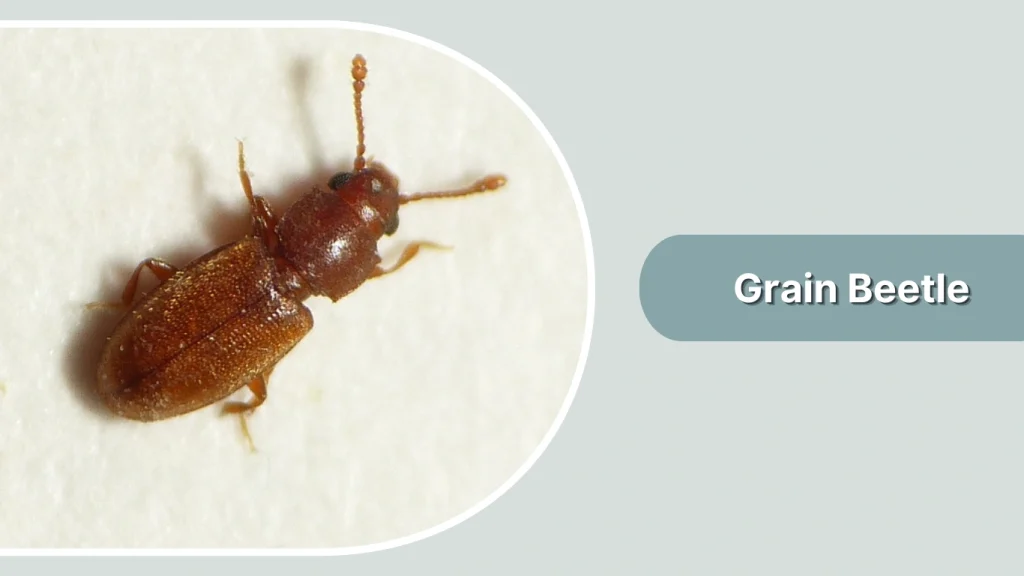
The Saw-Toothed Grain Beetle is one of the most common beetles found in homes, particularly in kitchens and food storage areas. It is a serious pest of stored grains and packaged foods.
Identification
- Size: 2.5–3.5 mm long
- Color: Brown to reddish-brown
- Body: Narrow, flattened with distinct saw-like teeth on each side of the thorax
- Legs: Yellowish-brown, short and quick-moving
- Antennae: Slender, ending in a three-segmented club
- Distinctive Feature: Six saw-like tooth projections on thorax edges
Habitat
This beetle thrives in pantries, cupboards, warehouses, and food storage facilities. Its small body allows it to crawl into sealed packaging.
Diet and Nesting
- Diet: Feeds on cereal grains, flour, rice, pasta, dried fruit, nuts, and pet food.
- Nesting: Eggs are laid inside food products, and larvae remain inside until pupation.
Behavior
Grain beetles are one of the most common pantry pests in homes. They spread quickly and contaminate large amounts of stored food.
11. Flour Beetle (Red Flour Beetle – Tribolium castaneum)
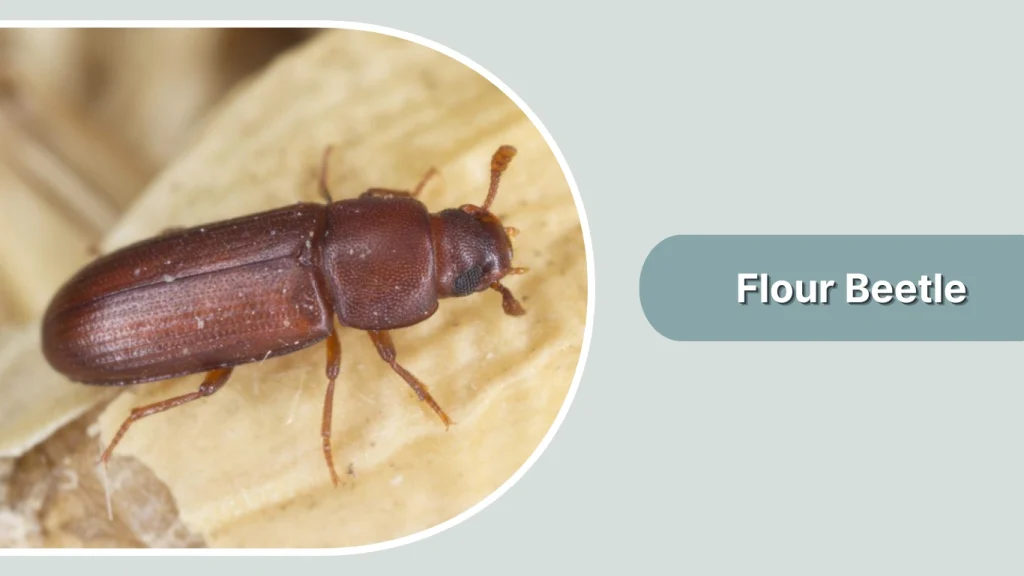
The Red Flour Beetle is another common household beetle that infests stored products. It is widespread in homes, grocery stores, and food warehouses worldwide.
Identification
- Size: 3–4 mm long
- Color: Reddish-brown, shiny body
- Body: Elongated, flattened, with smooth wing covers
- Legs: Reddish-brown and slender
- Antennae: Clubbed at the tips
- Distinctive Feature: Bright reddish color compared to other pantry beetles
Habitat
This beetle is mostly found in pantries, kitchens, and flour storage areas. It hides inside packaged food containers and in cracks near stored grains.
Diet and Nesting
- Diet: Feeds on flour, cereals, pasta, dried fruit, and processed foods.
- Nesting: Females lay eggs in food products, and larvae tunnel inside until pupation.
Behavior
The Red Flour Beetle is a major pantry pest, often coexisting with the confused flour beetle (Tribolium confusum). They are among the most common beetles in homes and food facilities worldwide.
12. Spider Beetle (Ptinus tectus)
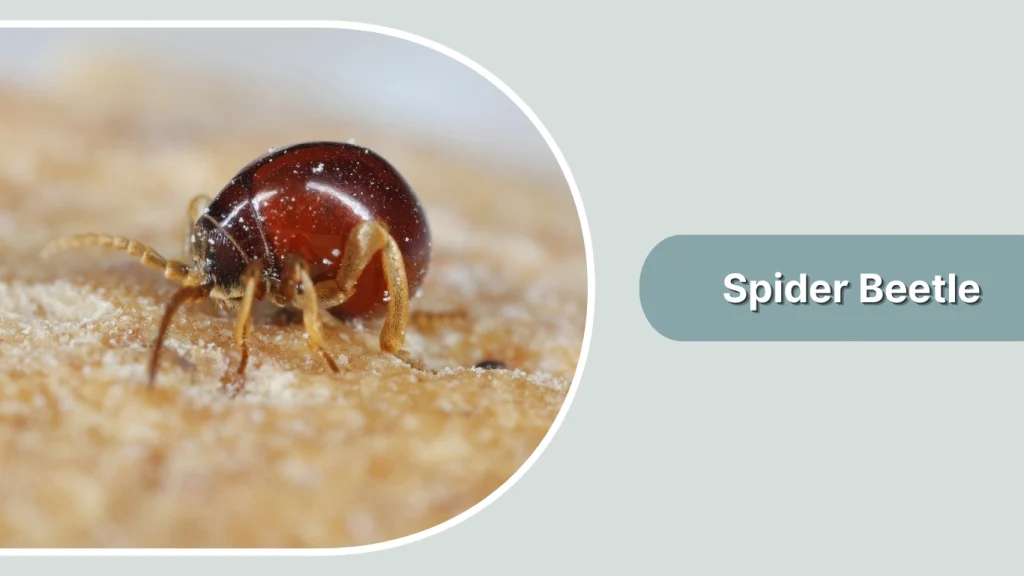
The Spider Beetle is a small household pest and one of the common beetles found in homes. Its spider-like appearance—due to its long legs and rounded body—often causes confusion with actual spiders.
Identification
- Size: 2–4 mm long
- Color: Reddish-brown to black, shiny body
- Body: Round abdomen resembling a spider’s body
- Legs: Long, pale to reddish-brown
- Antennae: Long, thin, projecting forward
- Distinctive Feature: Strong resemblance to a spider when viewed at a glance
Habitat
Spider beetles are found in pantries, attics, basements, and storage areas, especially in old or damp buildings. They hide in cracks, wall voids, and dark storage containers.
Diet and Nesting
- Diet: Feed on flour, grains, dried fruits, spices, wool, feathers, and even dead insects.
- Nesting: Females lay eggs in food sources or hidden cracks. Larvae develop within stored products until pupation.
Behavior
Spider beetles are nocturnal and often found wandering at night. They are tolerant of poor conditions and can survive long periods without food, making them persistent pests.
13. Deathwatch Beetle (Xestobium rufovillosum)
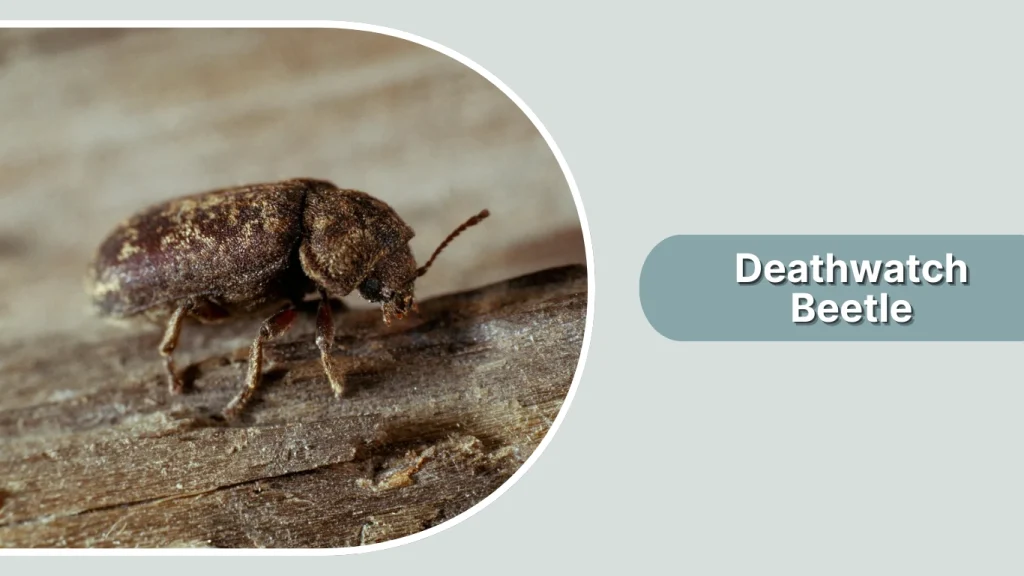
The Deathwatch Beetle is one of the most common wood-boring beetles found in homes, especially in older buildings. Its name comes from the ticking sound adults make, historically linked with superstition.
Identification
- Size: 5–7 mm long
- Color: Dark brown with mottled yellowish hairs
- Body: Oval and compact with rough-textured elytra
- Larvae: Creamy-white, wood-boring grubs
- Distinctive Feature: Audible ticking or tapping sound made by adults
Habitat
This beetle infests old wooden beams, furniture, and structural timbers, particularly in damp, poorly ventilated areas such as basements and attics.
Diet and Nesting
- Diet: Larvae bore into and feed on hardwoods like oak and chestnut, often weakening timber structures.
- Nesting: Eggs are laid in cracks of old wood. Larvae may live inside wood for several years before emerging.
Behavior
Deathwatch beetles are mostly active at night. The adults produce a tapping sound by hitting their heads against wood, a behavior used in mating. They are a serious pest in historic homes and buildings in the UK.
14. Brown Carpet Beetle (Attagenus smirnovi)
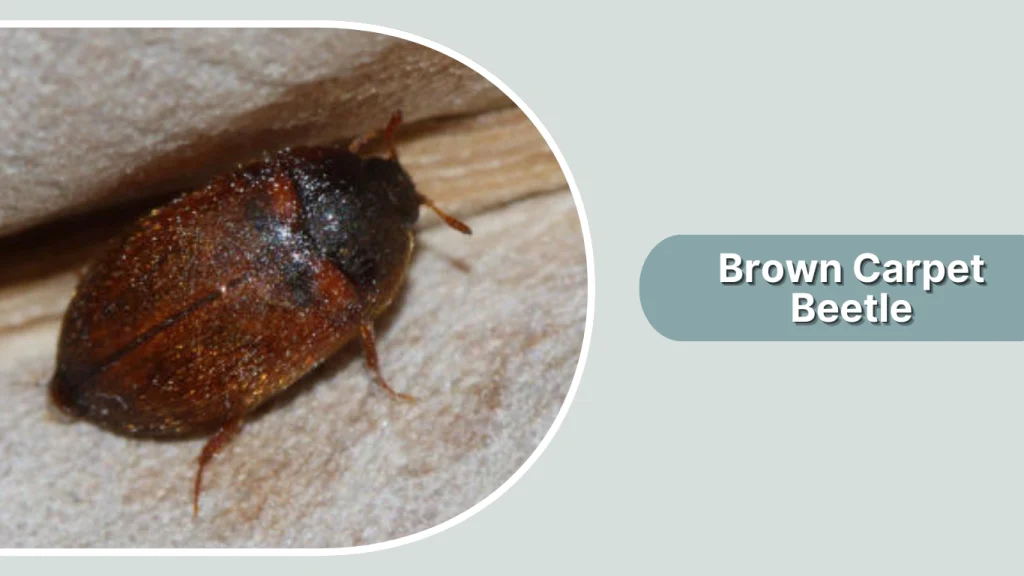
The Brown Carpet Beetle is one of the most common carpet beetles in homes, particularly in the UK and US. It is closely related to the varied and black carpet beetles and is notorious for damaging natural fibers.
Identification
- Size: 3–5 mm long
- Color: Uniform light to dark brown
- Body: Oval, compact, smooth wing covers
- Larvae: Elongated, covered with bristles, golden-brown in color
- Distinctive Feature: Smaller and plainer than the varied carpet beetle, with a solid brown appearance
Habitat
Brown carpet beetles live in closets, carpets, upholstered furniture, attics, and storage areas. They prefer dark, undisturbed locations inside homes.
Diet and Nesting
- Diet: Larvae feed on wool, silk, feathers, hair, leather, and stored fabrics, while adults feed on pollen outdoors.
- Nesting: Females lay eggs in fabric folds or cracks near organic materials. Larvae hide deep in carpets or furniture stuffing.
Behavior
This beetle is very common in homes, often causing unnoticed damage until fabrics show bare patches or holes. Its adaptability makes it a widespread pest in households.
15. Common Click Beetle (Athous haemorrhoidalis)
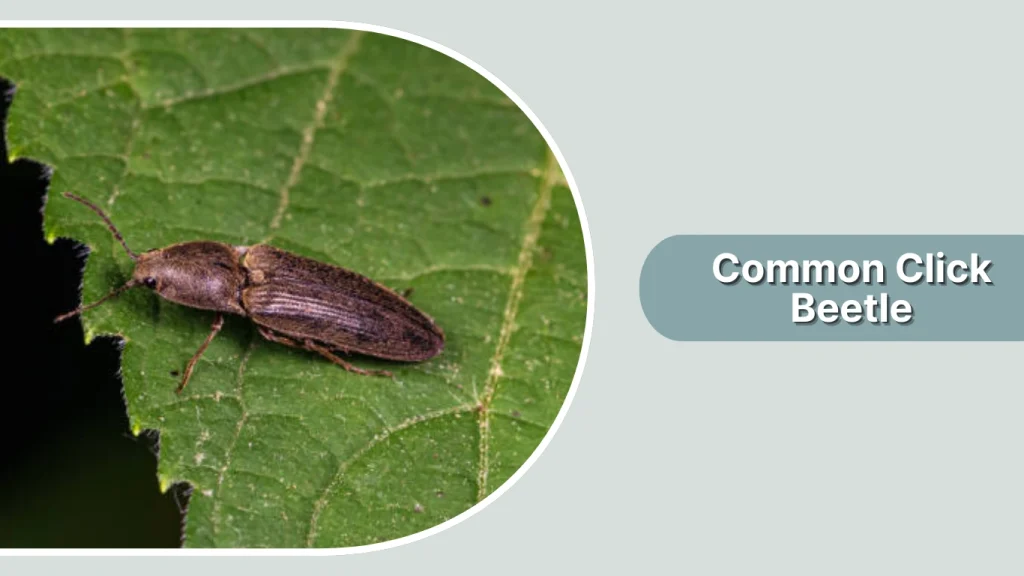
The Common Click Beetle is occasionally found in homes and is recognized for the clicking sound it makes when flipped onto its back. While not as destructive as carpet or pantry beetles, it is one of the small beetles commonly found indoors.
Identification
- Size: 8–12 mm long
- Color: Dark brown to black, covered with fine hairs
- Body: Elongated and narrow with pointed tips on thorax
- Legs: Brownish, moderately long
- Antennae: Segmented and saw-like
- Distinctive Feature: Produces a loud “click” by snapping its body when overturned
Habitat
Click beetles are usually outdoor insects but may wander into homes, basements, or attics. They are often attracted to lights at night and can enter through windows and cracks.
Diet and Nesting
- Diet: Adults feed on plant material, while larvae (wireworms) feed on roots, seeds, and decaying organic matter. Indoors, they are not major pests.
- Nesting: Eggs are laid in soil outdoors. Larvae live underground for several years before emerging as adults.
Behavior
The Common Click Beetle is mostly active at night and may startle homeowners with its clicking defense mechanism. It is a common small beetle occasionally found in homes but does not cause fabric or food damage.
