
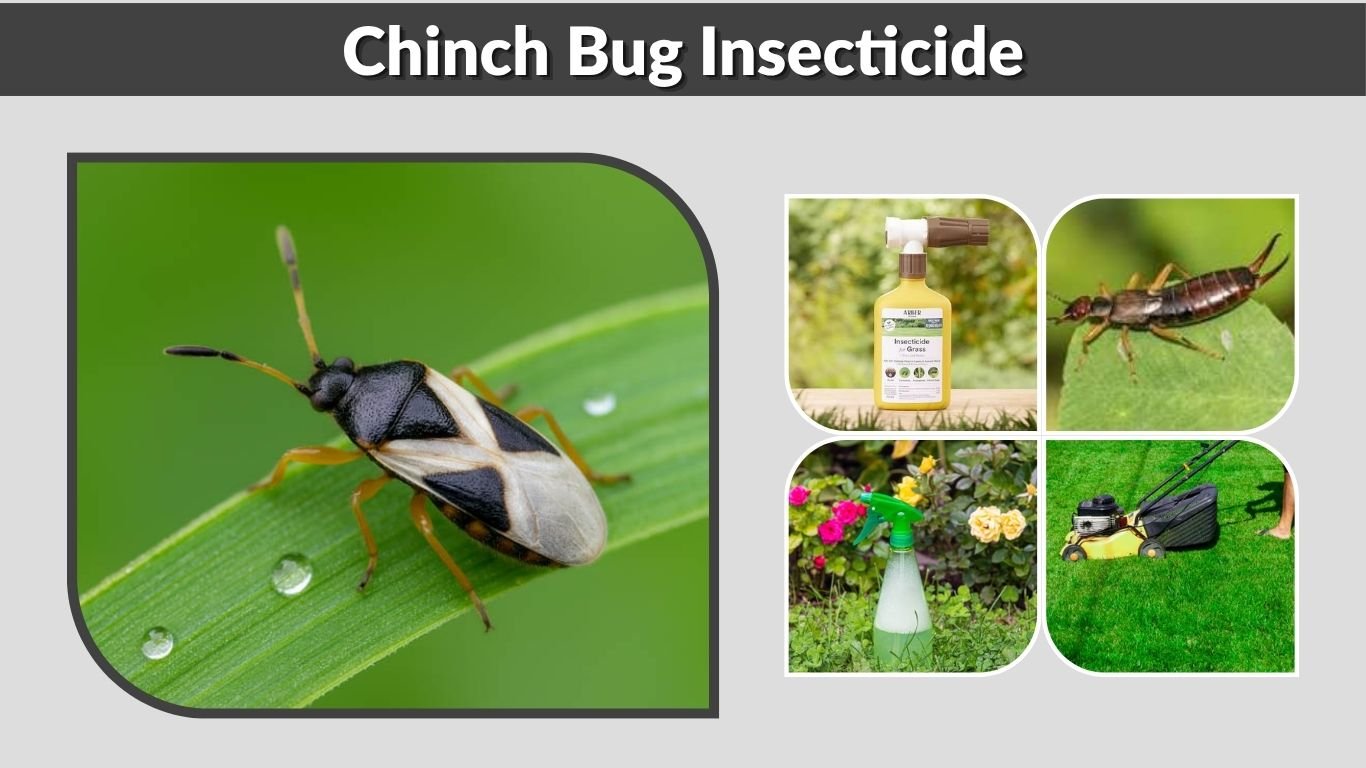
A chinch bug insecticide can stop active lawn damage, but treatment works best only after confirming that chinch bugs—not drought, disease, or another pest—are causing the brown patches. Effective products commonly contain contact insecticides such as bifenthrin, cyfluthrin, deltamethrin, or lambda-cyhalothrin. However, resistance is common in some chinch bug populations, so no single active ingredient is always the best choice. Correct timing, complete coverage, and proper lawn care are equally important.
What Is the Best Insecticide for Chinch Bugs?
The best insecticide is a product specifically labeled for chinch bugs and approved for use on your type of turfgrass. Liquid products containing a labeled pyrethroid active ingredient are frequently used because they provide fast contact control of exposed adults and nymphs.
Common active ingredients found in lawn products include:
- Bifenthrin
- Cyfluthrin
- Deltamethrin
- Lambda-cyhalothrin
- Permethrin
- Cypermethrin
Some professional or combination products may contain clothianidin, imidacloprid, or another systemic ingredient. Product availability and legal uses vary by country, state, and province, so the label—not the brand name—should determine whether a product is suitable.
Research has documented resistance to several commonly used insecticides, including bifenthrin, lambda-cyhalothrin, deltamethrin, and imidacloprid. Repeatedly applying the same active ingredient can therefore produce disappointing results.
Liquid vs. Granular Chinch Bug Insecticide
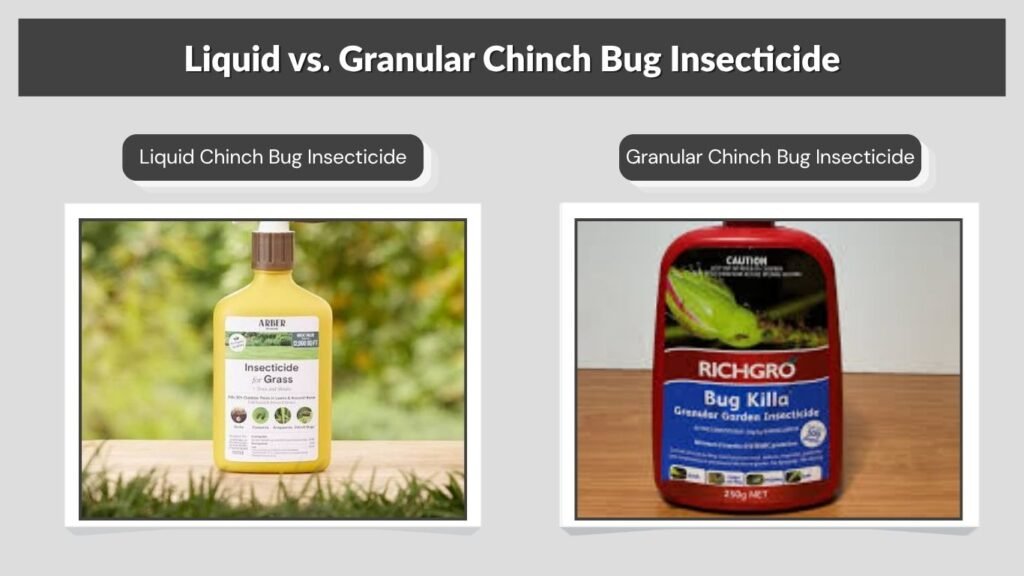
Both liquid and granular formulations may be sold for lawn insects, but they behave differently. The right choice depends on the infestation, product label, equipment, and required application method.
| Formulation | Main advantage | Possible limitation |
| Liquid concentrate | Provides direct and even coverage | Requires mixing and spraying equipment |
| Ready-to-spray liquid | Convenient for smaller lawns | May cost more per treated area |
| Granular insecticide | Easy to spread across large lawns | Usually requires watering according to its label |
| Insecticidal soap | Lower residual contact treatment | Must directly contact bugs |
| Systemic insecticide | Absorbed by growing grass | Effectiveness and labels vary |
Liquid Insecticide
Liquid insecticide is often preferred for an active chinch bug infestation because the spray can penetrate grass and reach the thatch layer where many bugs hide.
Apply the solution evenly over the damaged area and the surrounding healthy grass. Chinch bugs are often concentrated along the expanding edge of a brown patch rather than in its dead center.
University of Georgia guidance recommends coarse sprays with enough water to obtain good turf coverage. Irrigating dry turf before treatment may also improve control, provided the product label permits it.
Granular Insecticide
Granular products can be convenient when treating broad lawn areas with a spreader. However, the granules must be distributed evenly, and many products need irrigation afterward to release the active ingredient.
Do not automatically water every granular or liquid treatment. Some labels instruct users to water immediately, while others require the product to remain on the foliage. Always follow the directions for that specific formulation.
Does Insecticidal Soap Kill Chinch Bugs?
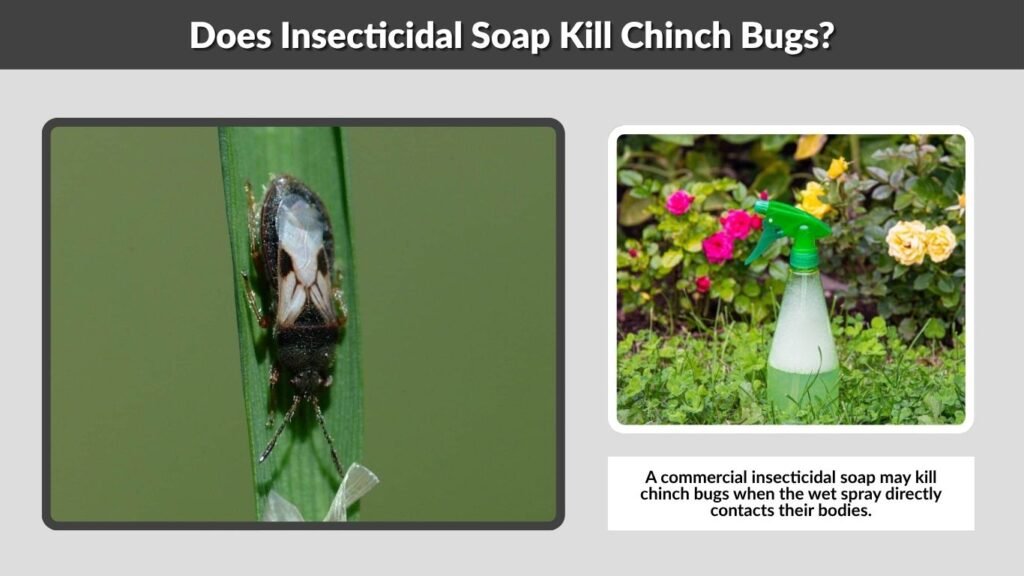
A commercial insecticidal soap may kill chinch bugs when the wet spray directly contacts their bodies. It has little residual effect once dry, so it may be more useful for a small, localized population than for a severe lawn-wide infestation.
Thorough coverage is necessary because soap does not move systemically through the grass. Repeated applications may be needed, but only when the product is labeled for turfgrass and the interval is permitted.
Avoid Homemade Dish-Soap Sprays
Household dish detergent is not the same as registered insecticidal soap. Dishwashing products may contain degreasers, fragrances, or other additives that can burn or discolor grass, particularly during hot weather.
A soap-and-water flush may be used to force certain lawn insects to the surface for inspection, but that does not make the mixture a dependable lawn treatment. Use a commercially formulated product labeled for chinch bugs and turfgrass rather than experimenting with a strong homemade solution.
How to Confirm Chinch Bugs Before Spraying
Chinch bug damage appears as expanding yellow or brown patches, especially in sunny lawn areas during hot, dry weather. Because drought stress and turf diseases can look similar, inspect the lawn before applying insecticide.
Identification
Adult chinch bugs are approximately 1/5 inch long. They have dark bodies and pale folded wings with black triangular markings. Young nymphs are reddish or orange with a pale band before gradually becoming darker.
Look for them at the border between damaged and healthy grass.
Flotation Test
Remove the top and bottom of a metal can and push it approximately two or three inches into the soil at the edge of a damaged patch. Fill the can with water and keep it full for five to seven minutes.
Chinch bugs living in the grass and thatch should float to the surface. Repeat the test in several locations because populations may be unevenly distributed.
Treatment thresholds vary by chinch bug species, turf type, sampling method, and regional recommendations. UGA guidance notes that populations around 20–25 bugs per square foot can damage turf, while its smaller flotation device method recommends treatment when more than three bugs appear in the sample.
How to Apply Chinch Bug Insecticide
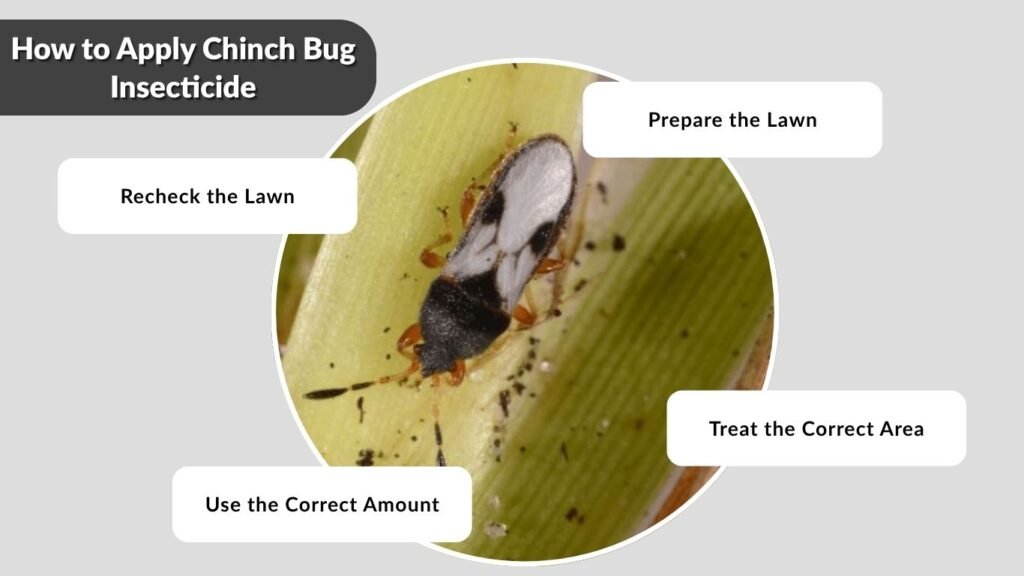
Successful treatment requires more than spraying the visibly brown grass. Most chinch bugs occupy the thatch and living grass near the advancing edge of damage.
Prepare the Lawn
Mow only if the product label recommends it, and avoid scalping the grass. Remove toys, pet bowls, furniture, and other objects from the treatment area.
If the soil is extremely dry, irrigate several hours to a day before treatment when allowed. Applying insecticide to severely dry turf may reduce performance or increase the risk of grass injury.
Treat the Correct Area
Start with the border of the damaged patch and extend treatment into nearby green turf. Spraying only the completely dead center may miss the largest number of actively feeding bugs.
Spot treatment may be sufficient when the infestation is localized. Avoid treating the entire property unless inspection shows that the pests are widely distributed or the label directs a broadcast application.
Use the Correct Amount
Measure the lawn area before mixing or spreading a product. Applying more than the labeled amount does not guarantee better control and may harm turf, beneficial insects, pets, people, or nearby water.
EPA guidance states that users should select products labeled for the target pest and site, apply only the directed amount, and follow every precaution and restriction on the label.
Recheck the Lawn
Inspect the treated border after the period stated on the product label. Do not immediately repeat the application simply because the existing grass remains brown.
Insecticide can kill bugs, but it cannot instantly restore damaged turf. Look for living chinch bugs and continued expansion of the affected patch when evaluating treatment success.
Why Chinch Bug Insecticide May Not Work
Several problems can cause treatment failure.
Incorrect Pest Identification
Brown grass may result from drought, fungal disease, root damage, fertilizer burn, or other insects. Applying chinch bug insecticide will not correct these problems.
Poor Coverage
A light spray on the upper grass blades may not reach bugs hiding near the base of the plants and within thatch. Follow the label’s instructions regarding spray volume and irrigation.
Insecticide Resistance
Some chinch bug populations are resistant to frequently used active ingredients. If correctly applied treatment fails and live bugs remain, consult a local Extension office or licensed lawn professional rather than repeatedly using the same chemical.
Rotate between different insecticide mode-of-action groups, not merely different brand names. Two brands may contain the same active ingredient or chemicals from the same group. Current UGA guidance specifically recommends rotation where infestations recur.
Treatment Was Applied Too Late
Completely dead grass cannot recover even after the bugs are controlled. Early treatment protects the remaining healthy turf and limits expansion, but badly damaged sections may require repair or replacement.
Natural and Nonchemical Chinch Bug Control
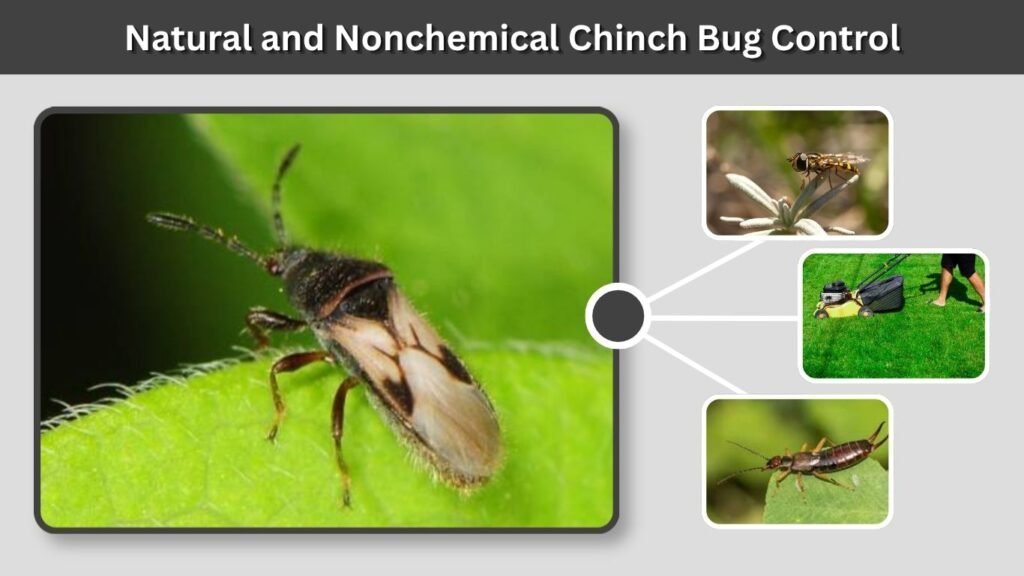
A small chinch bug population may sometimes be managed by improving lawn conditions and protecting natural predators.
Improve Lawn Health
Maintain the recommended mowing height for your grass, irrigate deeply rather than constantly, and avoid excessive nitrogen fertilizer. Thick thatch and stressed turf can encourage chinch bug problems.
Do not overwater merely because the damage resembles drought. Confirm the pest first and correct irrigation according to the grass species and soil.
Preserve Beneficial Insects
Big-eyed bugs, pirate bugs, predatory earwigs, and other natural enemies feed on chinch bugs. Broad-spectrum insecticides can kill these predators along with the pests.
Microbial products containing Beauveria bassiana may be labeled for chinch bugs in some locations, although they generally require suitable moisture and may work more slowly than conventional contact insecticides.
Insecticide Safety Around People, Pets, and Pollinators
Keep people and pets away during application and for the label-specified reentry period. Wear the required protective clothing and avoid treatment before heavy rain or near drains and surface water.
Do not spray blooming clover or flowering weeds while bees are visiting. Mowing off blooms before treatment can reduce pollinator exposure when the pesticide label permits mowing.
Store pesticides in their original labeled containers and never transfer them to food or beverage bottles.
FAQs
What insecticide kills chinch bugs quickly?
A turf product containing a labeled contact insecticide such as bifenthrin, cyfluthrin, deltamethrin, or lambda-cyhalothrin may kill exposed chinch bugs quickly. Results depend on local resistance, correct application, coverage, and whether the product is approved for chinch bugs on your grass species.
Is liquid or granular insecticide better for chinch bugs?
Liquid products often provide better immediate coverage during an active infestation, especially when sprayed into the thatch and patch borders. Granular products are convenient for broad areas but require precise spreading and may need watering. Follow the formulation-specific label.
Can insecticidal soap control chinch bugs?
Commercial insecticidal soap can kill bugs it directly contacts, but it provides little protection after drying. It is generally better suited to small, localized populations. Confirm that the product label allows application to turfgrass and lists the target pest.
How often should chinch bug insecticide be applied?
Apply it only at the interval and maximum frequency shown on the product label. Do not repeat treatment automatically. Reinspect the lawn for living bugs first, and rotate mode-of-action groups when another application is justified.
Should the lawn be watered after insecticide application?
It depends on the product. Some granular and systemic treatments must be watered in, while certain contact sprays need to remain on the grass. Dry turf may require irrigation before application. Follow the exact watering directions printed on the label.
