
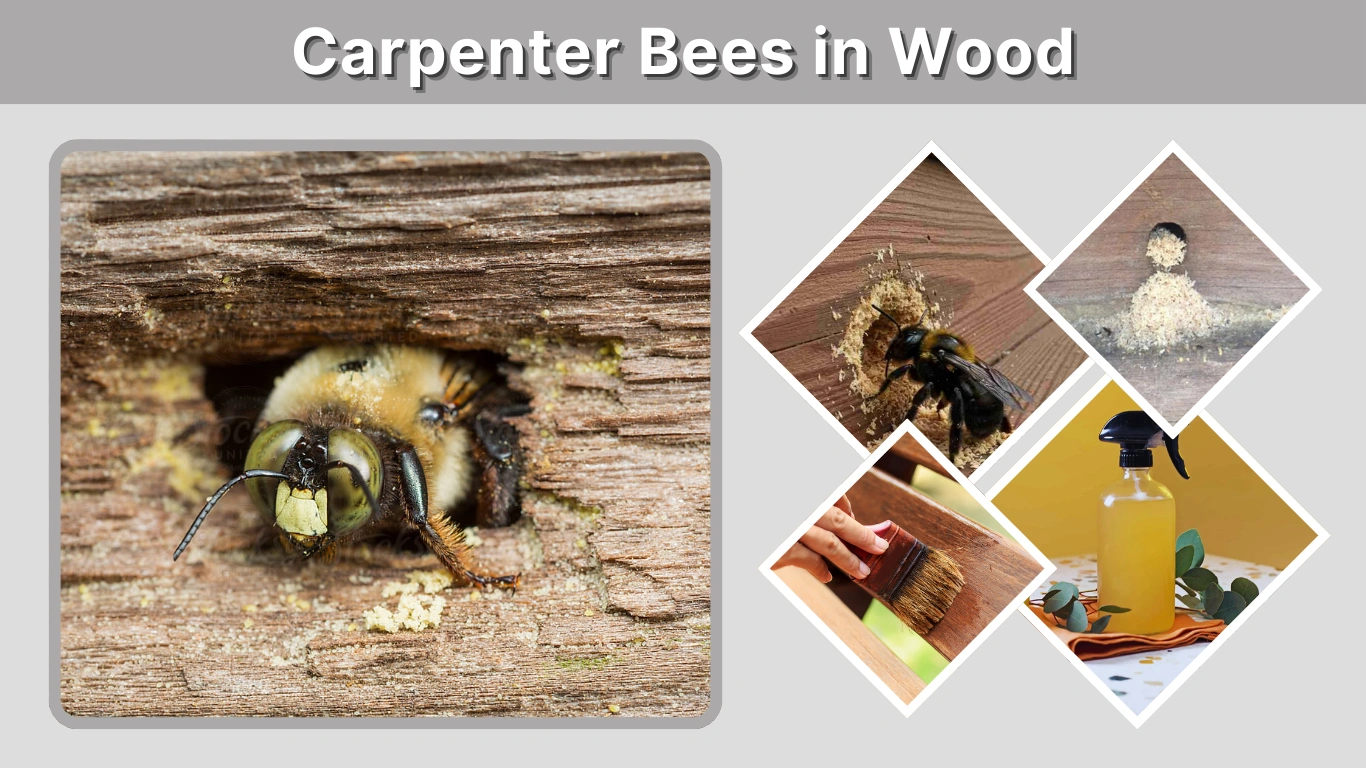
Carpenter bees are a common concern for homeowners because of their ability to drill neat, round holes in wood. While they don’t actually eat wood, they excavate tunnels to lay eggs and shelter their young. Over time, this behavior can weaken untreated structures like decks, fascia boards, siding, sheds, and wooden furniture. Understanding why carpenter bees target wood—and how to prevent or stop them—is key to protecting your property.
Identification
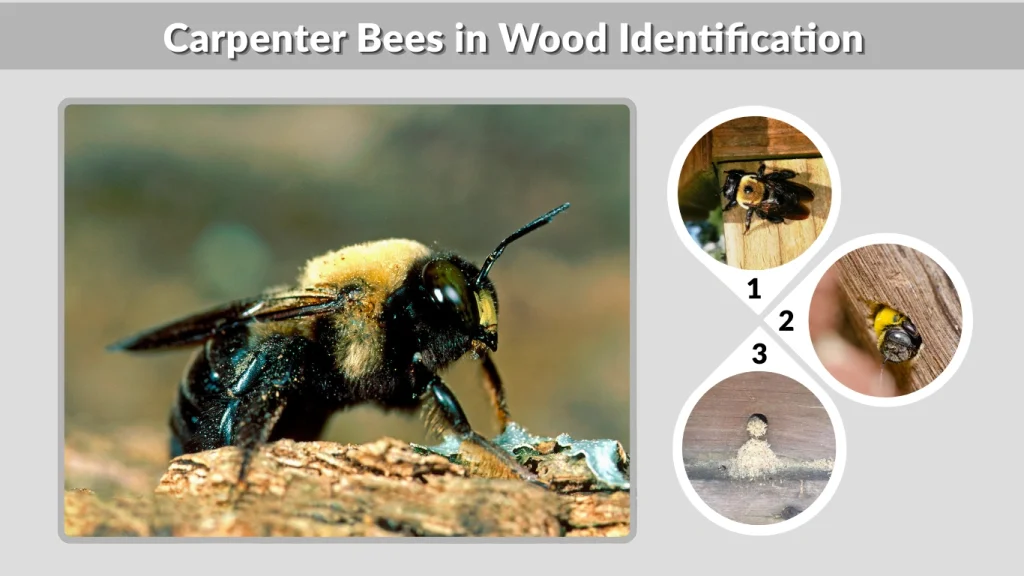
- Large, shiny black abdomen compared to fuzzy bumblebees
- Hovering behavior around wooden eaves, rafters, decks, and fences
- Perfectly round ½-inch entry holes drilled into wood
- Wood shavings or sawdust (frass) beneath holes
- Buzzing or faint chewing sounds when bees are actively tunneling
- Yellow, orange, or black pollen stains around entry points
- Solitary nests rather than large colonies
These signs help distinguish carpenter bees from “wood bees,” a common nickname for them, and from bumblebees, which nest in the ground rather than in wood.
Do Carpenter Bees Eat Wood?
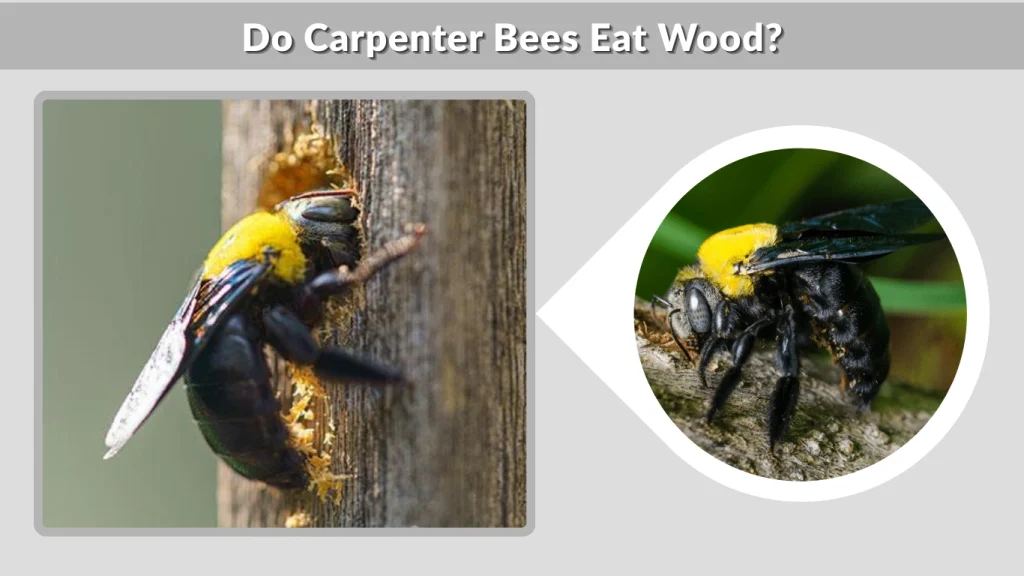
Carpenter bees do not eat wood. Instead, they chew through it using powerful mandibles to create smooth tunnels for nesting. The wood serves as a structural material, not a food source. Their diet consists entirely of pollen and nectar, which makes them important pollinators despite their sometimes-destructive nesting behavior.
Many homeowners assume carpenter bees eat wood because of the noise they make and the sawdust that appears below drilling sites. In reality, the bee is simply excavating the wood to construct brood chambers where it stores pollen and lays eggs.
Common misconceptions answered:
- Do carpenter bees eat pressure-treated wood? Rarely, but they can chew it if the wood is weathered.
- Do carpenter bees like cedar wood? Yes—cedar is not bee-proof.
- Do carpenter bees avoid treated wood? They prefer untreated, unpainted, or weathered wood, but treated wood isn’t completely safe.
Carpenter Bees & Wood Damage
Carpenter bees cause cosmetic and structural damage over time. Damage begins with a single round entry hole, but inside the wood, the tunnel can extend 6–12 inches or more, often branching into several chambers.
Typical types of damage include:
- Weakened boards from internal tunneling
- Splintering or cracking around old entry holes
- Repeated use of old tunnels year after year
- Wood rot as water enters abandoned tunnels
- Attraction of woodpeckers, which dig larger holes to reach larvae
Common places where carpenter bees damage wood:
- Deck rails and posts
- Soffits and eaves
- Fascia boards
- Porches and pergolas
- Wood siding
- Fences and gates
- Outdoor furniture
- Garden structures
Left untreated, the damage can expand as new bees return to the same area and enlarge or extend tunnels.
Why Carpenter Bees Drill Holes in Wood
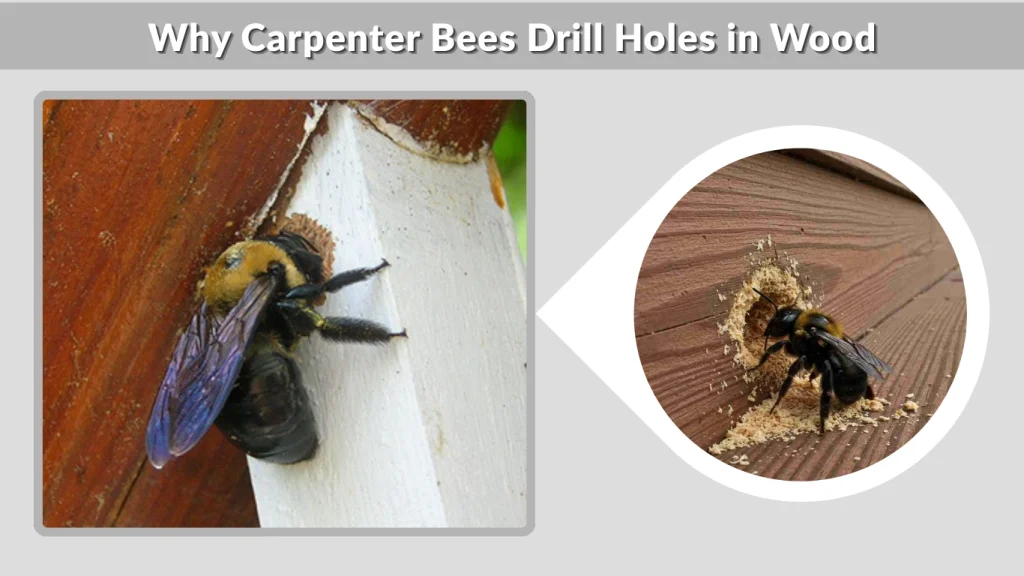
Carpenter bees drill holes for nesting and reproduction, not to feed. A female bee selects soft, weathered, or untreated wood to create a brood chamber where she will lay eggs and leave behind pollen for her offspring.
Reasons they target specific wood:
- Softwoods like pine, cedar, redwood, and fir are easier to excavate
- Untreated, unpainted, or stained wood is more penetrable
- Weathered wood provides an ideal texture
- Protected, overhead surfaces mimic natural shelters
- Old nesting sites attract new carpenter bees yearly
This explains why structures like decks and eaves become hotspots for infestations.
Carpenter Bee Holes in Wood
Carpenter bee holes are one of the easiest ways to identify an active or past infestation.
Features of carpenter bee holes include:
- Perfectly round with smooth edges
- ½ inch in diameter—slightly larger than a pencil
- Tunnels that turn at a right angle after the entrance
- Wood shavings directly beneath the hole
- Pollen staining around active nesting holes
- Multiple holes in a row, often spaced a few inches apart
Fresh holes look clean and sharp. Older holes appear darkened or worn, and may be reused year after year.
How Carpenter Bees Drill or Burrow Into Wood
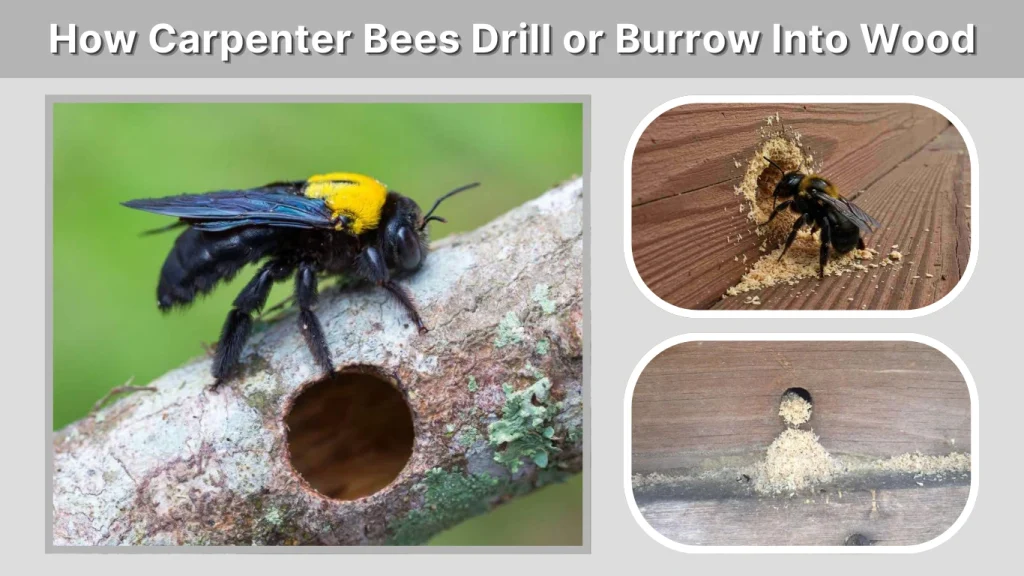
Carpenter bees drill using their mandibles, which work like miniature chisels. The bee vibrates its body while chewing, creating both a grinding sound and a visible trail of sawdust.
Inside the wood, the female constructs:
- One main tunnel
- Side chambers for eggs
- Pollen deposits for each brood cell
Because their tunnels run parallel to the grain, the bee can create long, clean-lined chambers deep within the board.
Many homeowners wonder: Can you hear carpenter bees eating wood?
Yes—during quiet moments, the chewing or vibrating buzz can be heard inside decks, railings, or hollow wood.
Carpenter Bees in Pressure-Treated & Treated Wood
Pressure-treated wood is less appealing to carpenter bees because chemicals like preservatives make drilling more difficult. However, bees may still attack:
- Aged or weathered treated lumber
- Areas where the surface sealant has worn off
- Places with exposed end grains
- Boards softened by moisture, sun, or age
Freshly treated lumber resists attacks best, but no wood is fully carpenter-bee-proof unless it is sealed, painted, or regularly maintained.
Carpenter Bees & Specific Wood Types
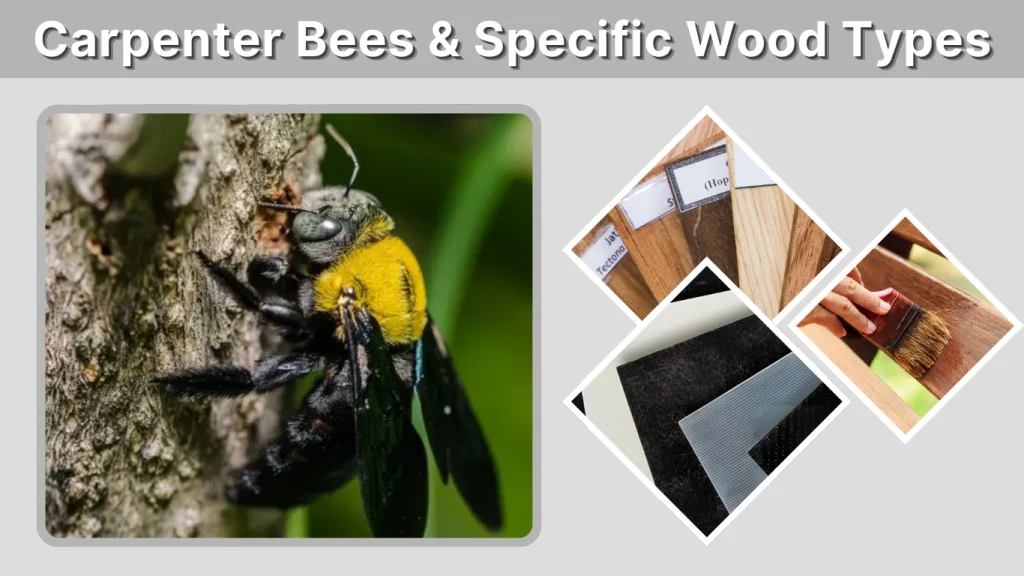
Wood Carpenter Bees Prefer
Carpenter bees often target soft, easy-to-chew species:
- Pine
- Redwood
- Cedar
- Douglas fir
- Spruce
These woods allow the bee to burrow quickly and form chambers without excessive effort.
Woods Carpenter Bees Avoid
Carpenter bees generally avoid:
- Hardwoods like oak, maple, walnut, or hickory
- Painted or fully sealed surfaces
- Plastics and composite materials
While these surfaces deter drilling, worn or unsealed areas can still become targets.
Carpenter Bees vs Wood Bees (Comparison Table)
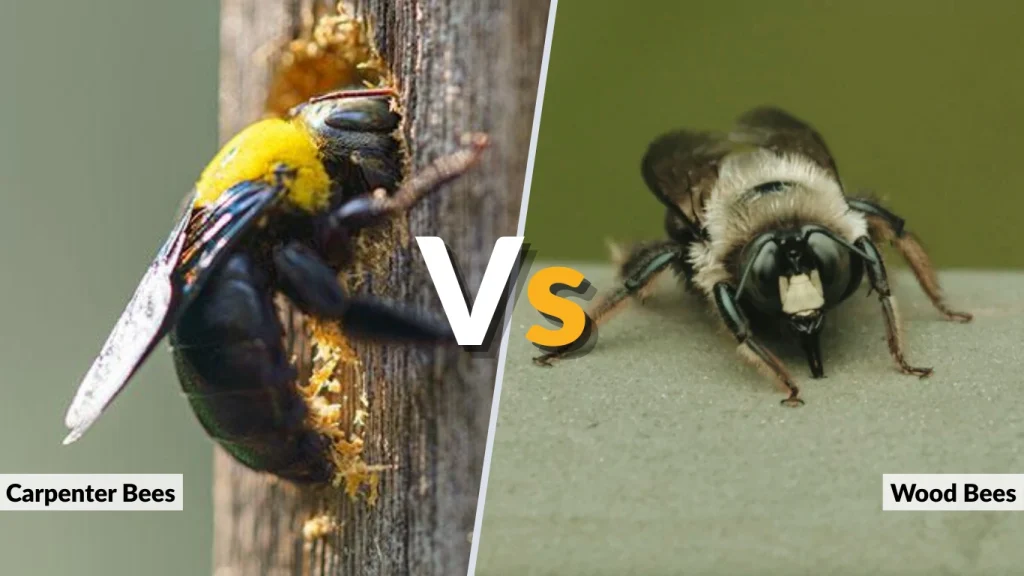
| Feature | Carpenter Bees | Wood Bees (Nickname) |
| Scientific name | Xylocopa species | Same insect; informal term |
| Appearance | Shiny black abdomen | Same |
| Behavior | Drills round holes in wood | Same |
| Nesting | Solitary tunnels | Same |
| Risk to wood | Moderate damage | Same |
| Ground nesting? | No | No |
“Wood bees” and “carpenter bees” are the same insect, but many people use different terms interchangeably.
How to Stop Carpenter Bees From Boring Into Wood
To reduce or prevent carpenter bee damage, use a multi-layered approach:
- Seal and caulk all exposed wood surfaces
- Fill existing holes to prevent reuse
- Paint or stain exterior wood
- Use wood hardeners on vulnerable surfaces
- Install vinyl or composite trim in high-risk spots
- Repair weathered boards before spring bee activity
- Use traps around decks and eaves
Act early in the season for best results.
How to Protect Wood From Carpenter Bees
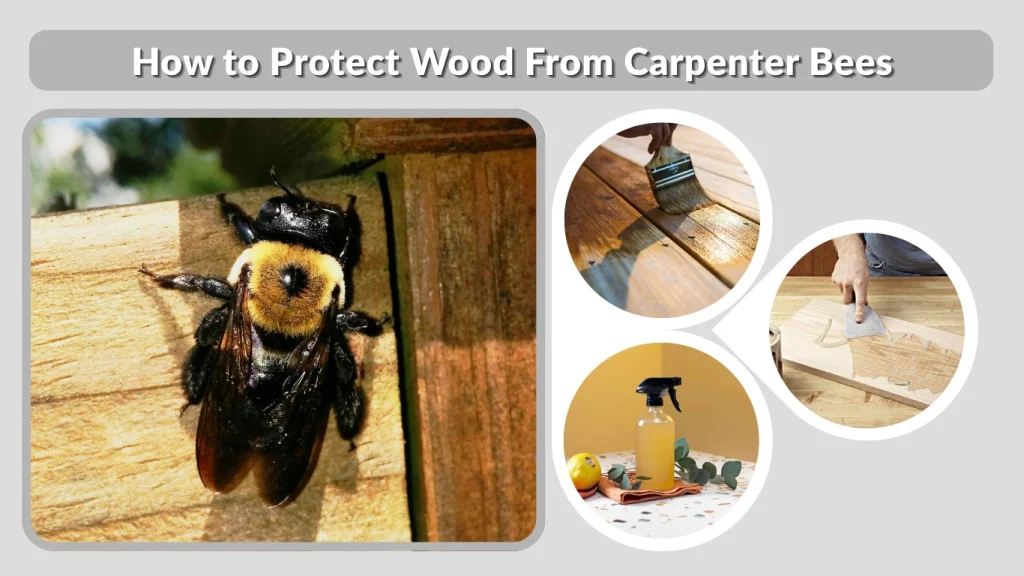
Wood Treatments
Staining and sealing are the most effective long-term barriers. Options include:
- Exterior stains
- Polyurethane
- Varnish
- Lacquer
- Wood sealant oils
Regular maintenance every 1–3 years will significantly reduce carpenter bee activity. Painted wood offers the best protection, especially when applied to eaves and fascia boards.
Sprays & Repellents for Wood
Effective carpenter bee repellents include:
- Citrus oil spray
- Almond oil
- Peppermint oil solutions
- Commercial carpenter bee repellents
- Residual insecticidal sprays (applied carefully)
Many homeowners ask: What to spray on wood to keep carpenter bees away?
Natural oils and citrus-based sprays work well as deterrents, especially when reapplied weekly during bee season.
How to Get Rid of Carpenter Bees in Wood
The most effective removal method uses a combination of timing, treatments, and repair:
- Identify active holes (fresh sawdust, buzzing).
- Apply dust treatments inside tunnels at night.
- Wait 24–48 hours for bees to contact the treatment.
- Use a residual spray on the exterior surfaces.
- Insert wood plugs or dowels into the openings.
- Seal the hole with wood filler or putty.
- Stain or paint the repaired area to prevent return activity.
Avoid plugging holes before bees exit—this traps them inside and may cause them to chew new tunnels.
Repairing Carpenter Bee Holes in Wood
Best Wood Fillers
Strong exterior fillers include:
- Epoxy wood filler
- Exterior-grade wood putty
- Paintable latex filler
- Two-part epoxy resin
After filling, sand the surface smooth and stain or paint it. This prevents future drilling because carpenter bees rarely attack painted surfaces.
Wood Plugs
For deeper tunnels, use:
- Wooden dowels
- Prefabricated plugs
- Tapered hole plugs
Glue the plug fully inside the tunnel, cover with filler, then finish the surface.
Carpenter Bee Traps & Best Wood for Traps
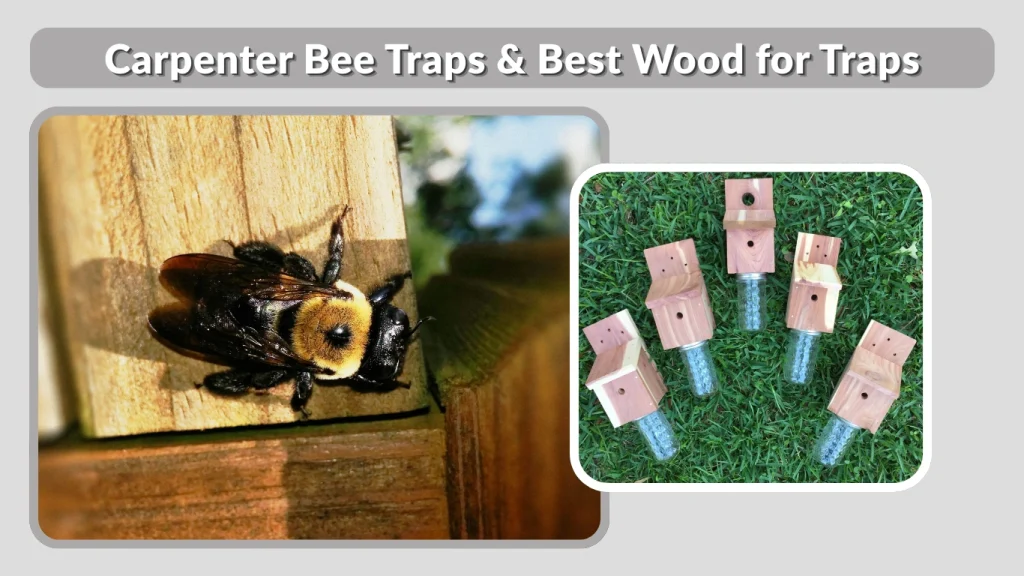
Carpenter bee traps mimic the structure of natural tunnels:
- A block of softwood (pine is best)
- Angled drilled holes leading upward
- A clear catch container at the bottom
Softwoods make the most effective trap bodies because bees recognize the material’s texture.
Traps should be placed near:
- Eaves
- Deck rails
- Overhangs
- Sheds
- Fascia boards
- Old infestation sites
Carpenter Bee Prevention Guide
A strong prevention strategy includes:
- Annual inspection of eaves, decks, and untreated wood
- Prompt sealing of any exposed surfaces
- Repainting painted wood every 2–4 years
- Reapplying natural oils during bee season
- Removing or repairing old tunnels
- Installing composite trim in problem areas
Long-term prevention comes from maintenance + repellents + monitoring.
FAQ
Do carpenter bees eat wood?
No. Carpenter bees chew wood only to create nesting tunnels. They do not consume wood as food; they survive on nectar and pollen. The sawdust around holes is simply the debris from excavation.
Why do carpenter bees make holes in wood?
They drill holes to create tunnels where they lay eggs and store pollen for their larvae. The wood provides a protected, insulated environment that keeps young bees safe from predators and weather.
How do you keep carpenter bees off wood?
Paint, stain, and seal your wood surfaces regularly, use natural repellents like citrus or almond oil, and place traps around high-risk areas. Maintaining exterior wood is the most reliable long-term deterrent.
Can carpenter bees damage pressure-treated wood?
Yes, but not as easily. Newer pressure-treated wood is more resistant, but once it weathers or cracks, carpenter bees may still drill into softer sections or exposed end grains.
What wood do carpenter bees dislike most?
Carpenter bees prefer softwoods. They typically avoid hardwoods like oak or maple and painted or fully sealed surfaces. Hardwood trim and well-painted boards offer strong resistance to future attacks.
