
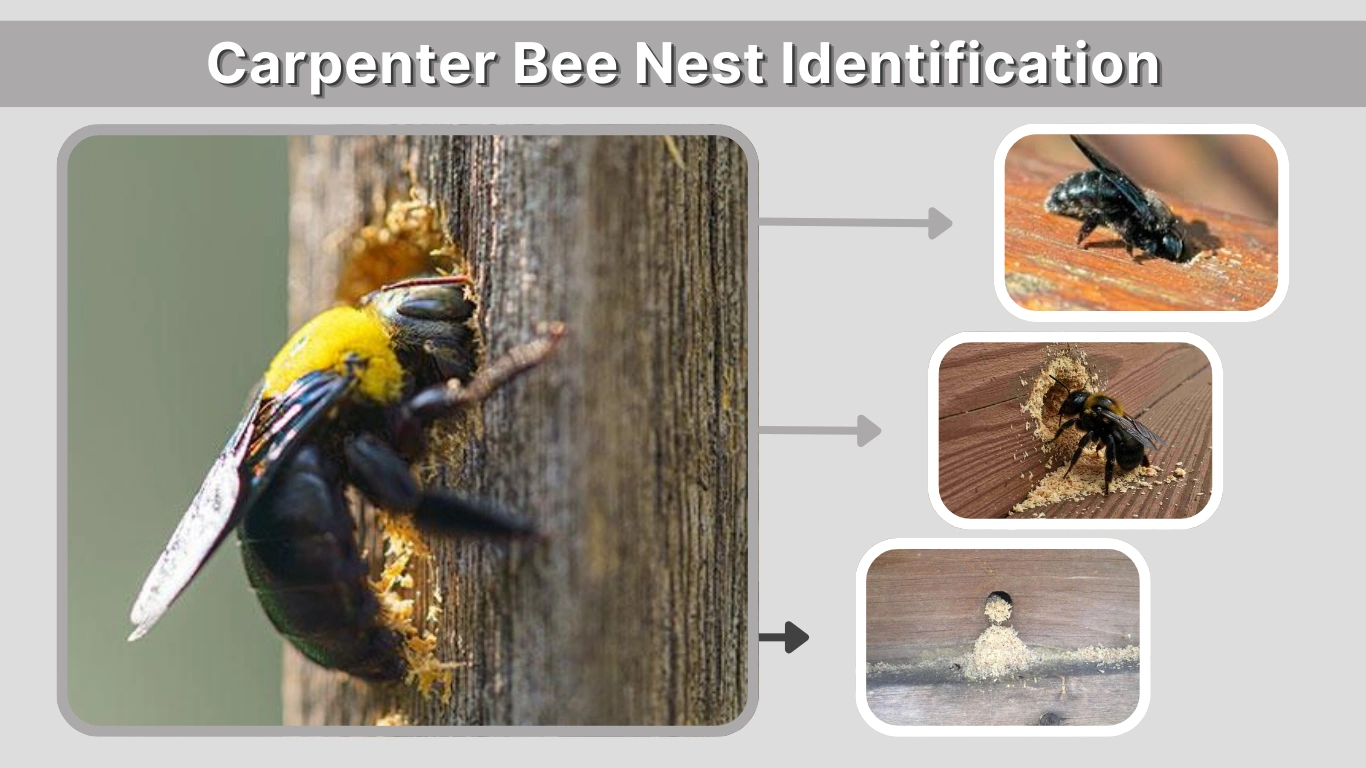
Carpenter bees are solitary nest-building insects known for drilling round holes into wood to create long internal tunnels. These bees do not eat the wood they excavate; instead, they chew through lumber to make a secure nesting place for their offspring. Because they return to the same areas each year, nests can expand and multiply, leading to significant cosmetic and structural damage. Identifying nest activity early helps prevent long-term problems and reduces the need for difficult or invasive repairs.
Identification
- Round, smooth entrance holes about ½ inch wide
- Piles of coarse sawdust (frass) under beams or rails
- Yellow staining near holes from pollen and activity
- Buzzing or faint chewing sounds inside wood
- Males hovering aggressively outside openings
- Repeated holes in the same wood from generational reuse
What Does a Carpenter Bee Nest Look Like?
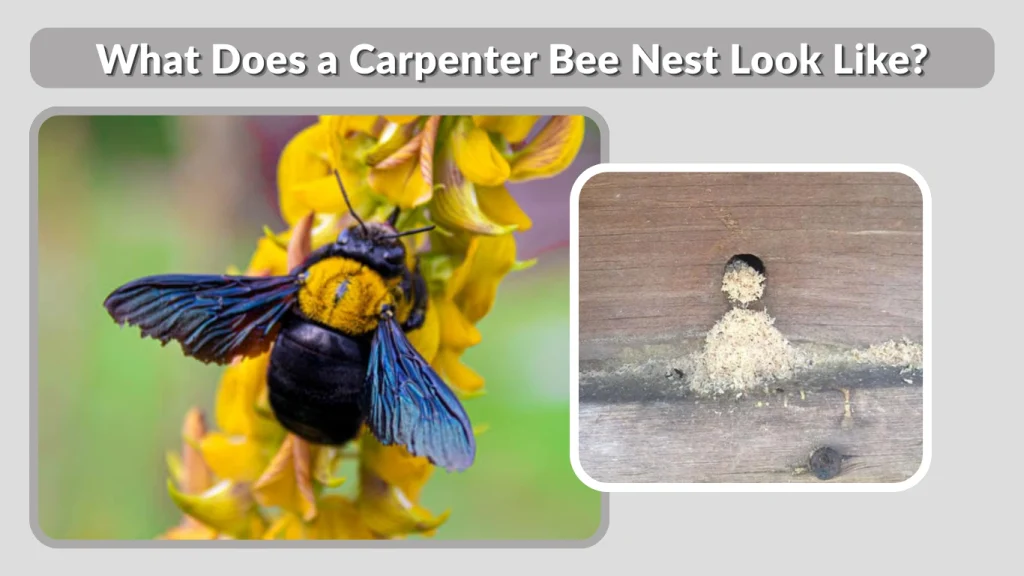
Entrance Hole
The first sign of a carpenter bee nest is a perfectly round opening. It appears drilled and clean-cut, with no splintering. The size is typically uniform among nests.
Tunnel Structure
Behind the entrance lies an internal gallery. The tunnel begins straight and then takes a sharp right-angle turn to follow the wood grain. This design protects the nest from predators.
Brood Cells
The female creates several chambers inside the tunnel. Each chamber contains a pollen ball and a developing egg, separated by partitions made from chewed wood paste.
Exterior Clues
Sawdust piles, buzzing adults, and yellow streaks around openings are reliable indicators of an active and occupied nest.
Where Do Carpenter Bees Nest?
Carpenter bees primarily nest in softwoods such as pine, cedar, and fir because these materials offer the least resistance. Homes with untreated, weathered, or sun-damaged lumber provide ideal nesting conditions. Beams, fascia boards, fences, decks, and porch railings are especially vulnerable because they mimic natural dead wood found in forests.
In some areas, carpenter bees also nest in dead trees or fallen logs. These locations offer a natural habitat and are usually preferred when available. However, when natural wood is limited, man-made structures become the next best option.
Although carpenter bees are strongly associated with wood nests, ground nests are usually caused by other species. True carpenter bees rarely nest in soil, but they may occasionally occupy rotting, buried wood beneath the surface. This leads many people to confuse them with miner bees or other ground-nesting insects.
Most carpenter bee nests remain hidden until damage accumulates. Because they reuse old galleries for several years, a nest that starts small can expand far deeper into the wood over time, creating extensive tunnels not visible from the outside.
Carpenter Bee Nest in Wood
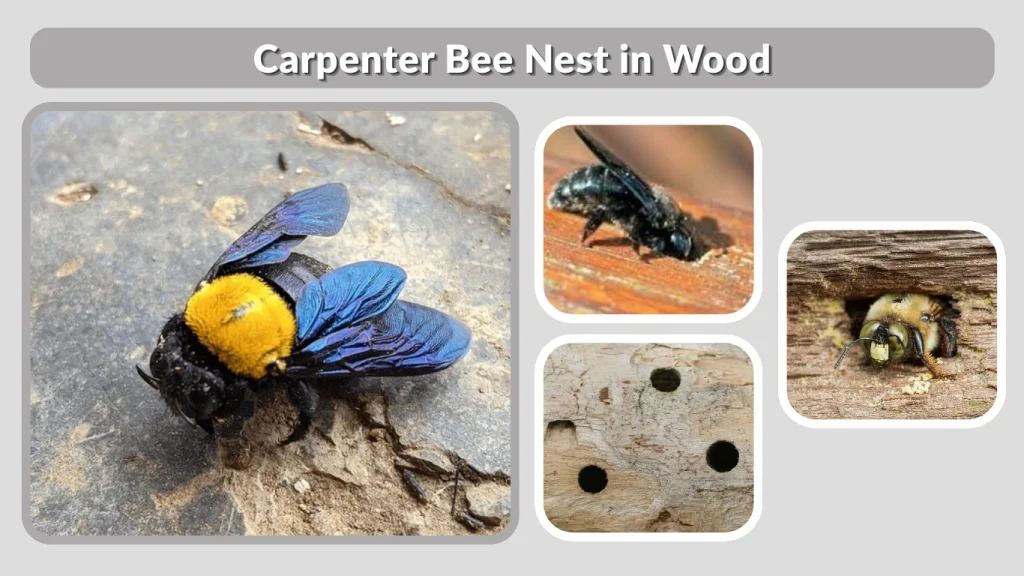
- Softwoods are easier for bees to excavate than hardwoods
- A single entrance hole often leads to 6–12 inches of tunnel
- Females create multiple brood chambers inside the wood
- Old nests may contain branches from years of reuse
- Woodpeckers may break boards while hunting larvae
- Untreated lumber is far more likely to be attacked
Do Carpenter Bees Nest in the Ground?
Ground Nest Confusion
Many homeowners believe carpenter bees nest in soil, but most ground burrows belong to other bee species. Carpenter bees require wood for tunneling.
Rare Exceptions
Some carpenter bees may use decayed or buried wood near the surface, giving the appearance of a ground nest even though the tunnel is still in wood.
Differentiating Species
Ground-nesting bees create small dirt mounds. Carpenter bees create round wooden holes, never soil piles.
Why Confusion Happens
Hovering male carpenter bees patrol wide areas, leading people to assume the bees own nearby ground burrows made by other insects.
Carpenter Bee Nest Size
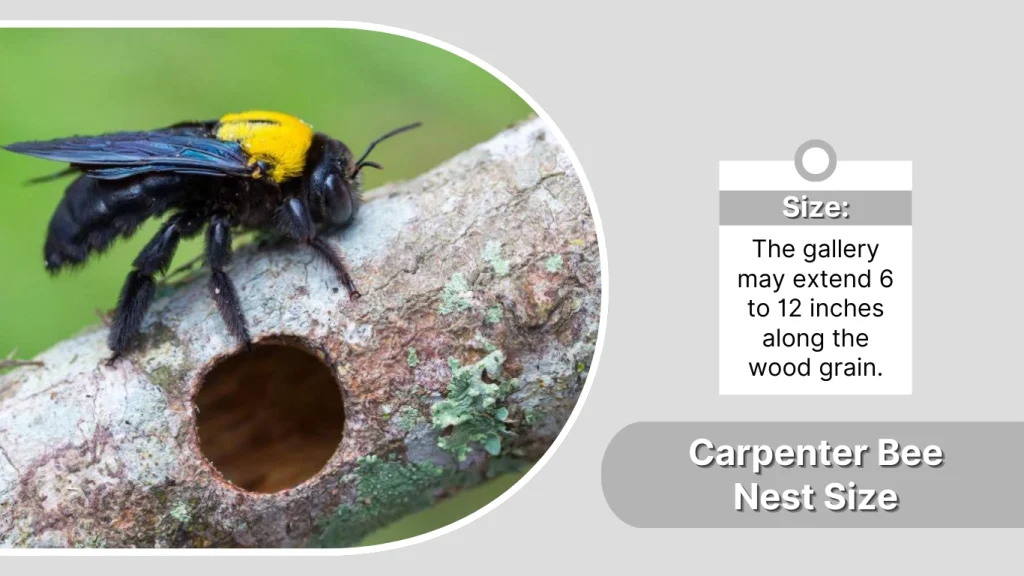
Carpenter bee nests vary depending on wood quality, age, and how many generations reuse the same tunnel. A new nest typically contains a straight entrance tunnel about an inch deep before making its L-shaped turn. From there, the gallery may extend 6 to 12 inches along the wood grain. Older nests extend further as new females expand the tunnel each spring.
Inside the tunnel are multiple brood chambers. Each chamber contains an egg on top of a pollen mass that the larvae consume after hatching. Over time, the series of chambers grows longer, creating a segmented internal layout that resembles a narrow hallway.
Long-term nests can become quite extensive. If a beam or railing is reused year after year, galleries may branch into several interconnected tunnels. This is why leaving nests untreated for multiple seasons results in increasingly severe wood damage.
How Many Carpenter Bees Are in a Nest
- A single female usually builds and maintains the nest
- Each gallery contains 6–10 brood cells
- Males hover outside but do not live in the tunnel
- Multiple females may reuse and expand old nests
- Heavy reuse can lead to dozens of bees emerging yearly
How to Find a Carpenter Bee Nest
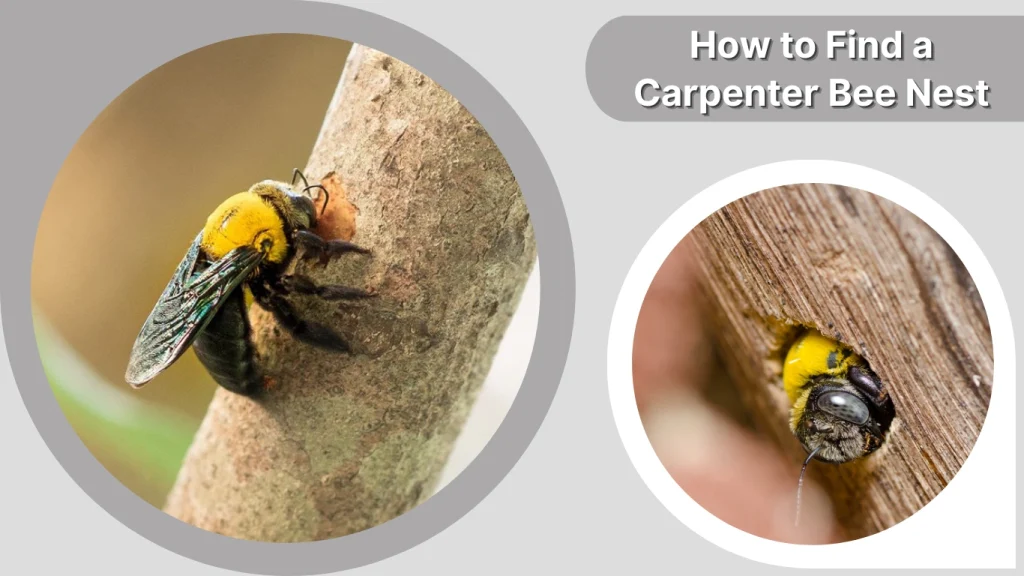
Visual Indicators
Look for clean round holes on fascia boards, decks, siding, or wooden furniture.
Sound Cues
Light chewing or buzzing inside hollow boards indicates active excavation.
Behavioral Signs
Male carpenter bees hover in front of nest entrances, guarding the area aggressively.
Wood Condition
Sawdust piles or yellow stains beneath holes help confirm nest activity.
Inside a Carpenter Bee Nest
A carpenter bee nest contains a precisely carved interior composed of smooth, polished tunnels. Inside, the female bee shapes brood chambers from chewed wood pulp, sealing each one after placing a pollen ball and an egg inside. These sealed chambers protect the larvae from predators and environmental changes, allowing them to develop safely throughout the summer.
The female carpenters the walls so neatly that the interior resembles sanded wood. Over time, these galleries expand as new generations reuse the same tunnel, creating a system of connected chambers. Inside an older nest, you may find several branching galleries, each representing a different reproductive season.
Because carpenter bees are solitary but persistent, the nest interior is far more complex than it appears from the small entrance hole. This hidden structure is what makes carpenter bee damage progressively worse each year if left untreated.
Carpenter Bee Nest Removal
- Apply insecticidal dust into the nest opening at night
- Wait 24–48 hours until activity ceases
- Insert wooden dowels or exterior wood filler into the hole
- Seal and sand the area to prevent reuse
- Paint or stain treated wood to deter future nesting
- Install deterrents in spring before bees begin excavating
Fake Wasp or Hornet Nests for Carpenter Bees
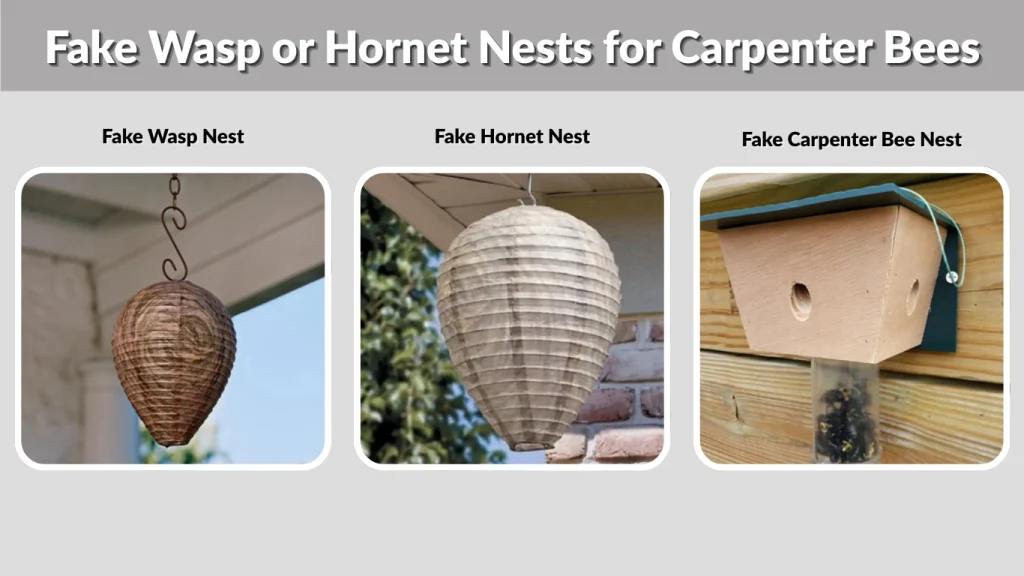
Effectiveness
Fake wasp or hornet nests offer mixed results. Some homeowners report fewer male carpenter bees hovering near treated areas, while females appear largely unaffected.
Why Bees Avoid Them
Carpenter bees may avoid areas that appear occupied by larger, territorial insects. However, this instinct is weak and inconsistent.
When They Don’t Work
Visual decoys rarely stop a female carpenter bee from excavating a nesting site she has chosen, especially if the wood is ideal.
Better Options
Wood treatments, oils, sealants, and physical barriers provide far more reliable protection than decoy nests alone.
Carpenter Bee Nest Prevention
Preventing carpenter bee nests begins with making wood surfaces less attractive. Painted, stained, or sealed lumber is significantly more resistant than untreated boards. Annual maintenance, especially on sun-exposed areas, reduces the chance that a female bee will choose the wood for nesting. Fresh coatings also help repair small cracks and vulnerabilities.
Surface treatments such as citrus oils, almond oil, and specialized repellents discourage female carpenter bees from exploring or chewing the surface. These scents create a temporary barrier that needs reapplication during peak nesting season. Combining repellents with regular painting provides the strongest long-term results.
Old nests must be sealed completely. Even if bees have already left, leaving tunnels open encourages new females to colonize the same spot. Plugging, repairing, and refinishing old galleries ensures bees cannot reuse them and prevents future expansion.
Because carpenter bees return to the same locations annually, consistent upkeep is essential. Homes that receive regular inspections and preventive treatment experience far fewer infestations and suffer much less structural damage over time.
FAQs
How do I remove a carpenter bee nest safely?
The safest method involves applying insecticidal dust at night when bees are inactive, waiting a day or two, and then sealing the hole with dowels or filler. Avoid spraying liquids, as they can trap bees inside and cause them to chew new escape tunnels.
Do fake hornet nests really stop carpenter bees?
Fake hornet or wasp nests may deter some males from hovering near an area, but females—the ones who drill—often ignore them. They are unreliable as a standalone solution and work best when combined with wood treatments or repellents.
Do carpenter bees return to old nests each year?
Yes. Carpenter bees commonly reuse and expand old tunnels year after year. A nest that begins small can grow into a complex network of galleries. This is why sealing old holes is critical to stopping long-term damage.
How big can a carpenter bee nest get?
A new nest may be only 6–12 inches long, but older nests reused for many seasons can expand into multiple branching tunnels several feet long. These large galleries can cause significant structural weakening if left untreated.
What wood do carpenter bees prefer for nesting?
Carpenter bees prefer softwoods such as pine, cedar, fir, and redwood. Untreated and weathered boards are the most vulnerable. Hardwood and painted or sealed surfaces are far less attractive and offer natural protection against excavation.
