
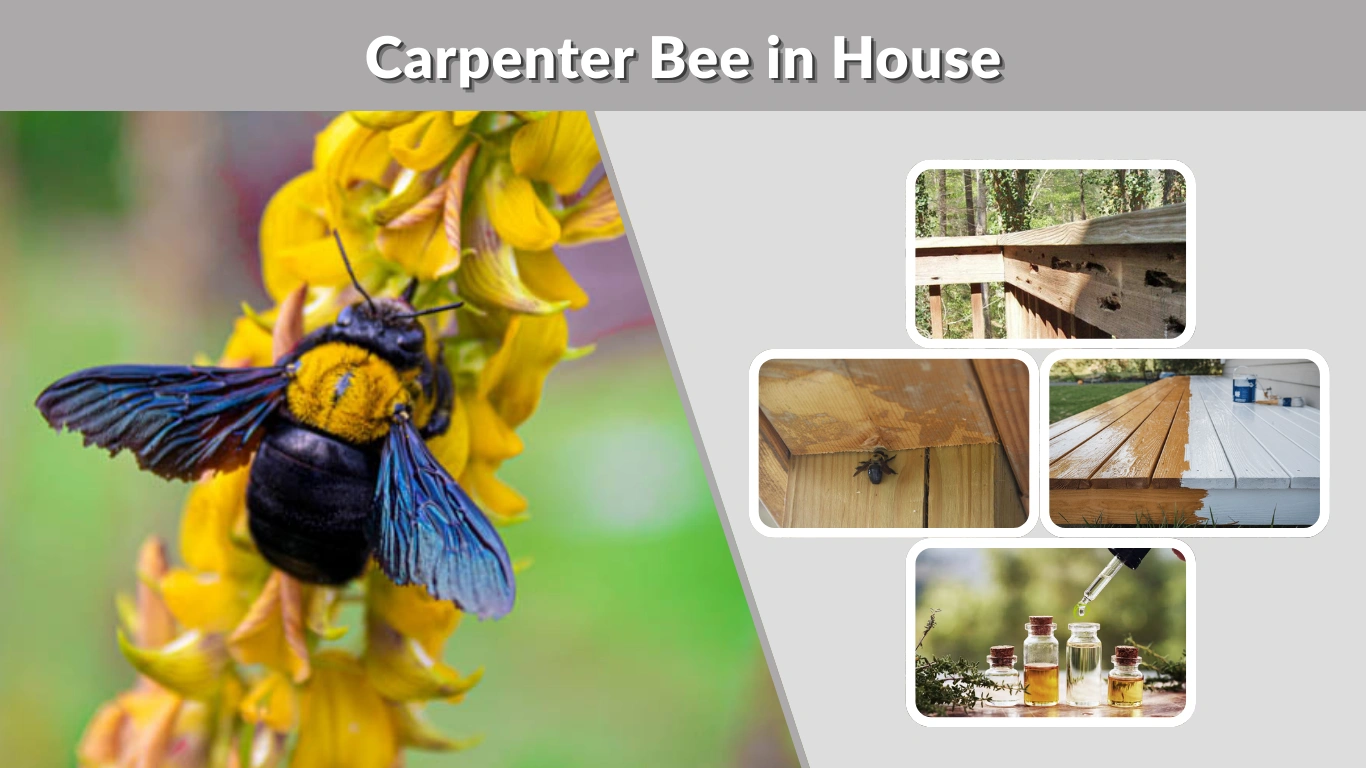
Carpenter bees are frequent visitors around homes, especially where softwoods and weathered lumber are exposed. Their presence often raises concerns about wood damage, buzzing behavior, and the risk of nests forming on or inside a house. While they rarely cause instant destruction, the long-term tunneling of carpenter bees can weaken structures if ignored. This guide explains how carpenter bees interact with homes, why they may prefer your house, how to identify early signs, and how bee houses and preventive measures can help protect your property.
Identification
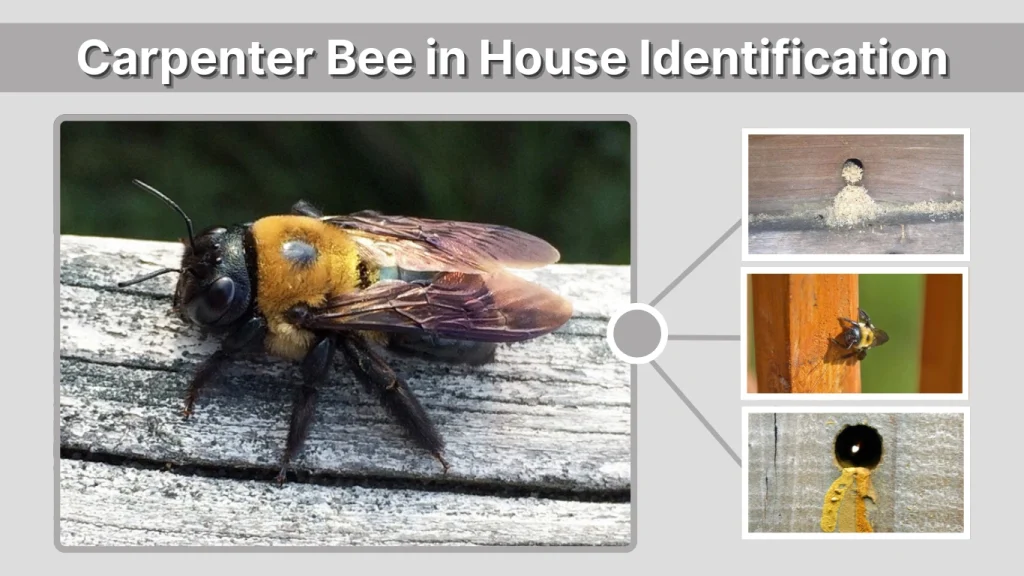
- Round ½-inch entrance holes around siding or eaves
- Sawdust-like frass scattered beneath decks or beams
- Hovering males patrolling doorways, porches, or rooflines
- Yellow pollen staining near holes or wooden trim
- Chewing or buzzing noises inside hollow wood
- Repeated holes in the same board, indicating multi-year nesting
Are Carpenter Bees Harmful to a House?
Wood Damage
Carpenter bees tunnel into softwood surfaces, weakening them over time. While a single hole may seem small, the internal galleries extend deeper and branch wider each year.
Structural Impact
If nesting continues unchecked, repeated tunnels can compromise fascia boards, deck rails, or siding segments. The real danger lies in compounded, multi-season excavation.
Secondary Problems
Woodpeckers often attack the same areas to feed on larvae. Moisture intrusion may follow as tunnels open into vulnerable boards, accelerating rot and decay.
Where Carpenter Bees Nest on a House
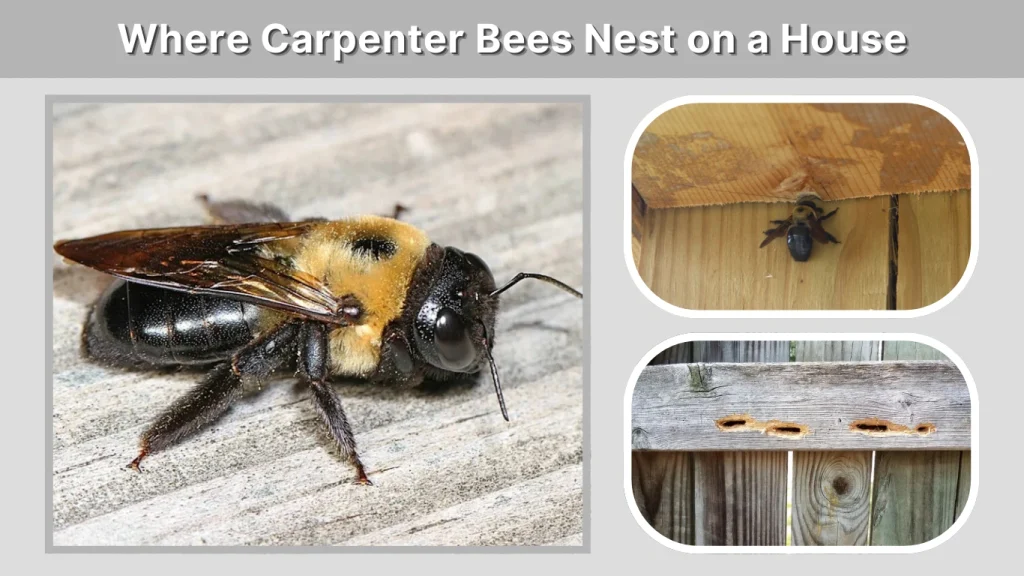
Carpenter bees favor softwoods such as pine, cedar, and fir, which are commonly used in exterior home construction. Eaves, trim boards, deck rails, fences, and pergolas are the most common nesting sites. These areas offer the protection and elevation carpenter bees naturally seek in the wild.
Weathered, sun-damaged, or cracked wood becomes even more vulnerable because the weakened fibers are easier to drill. Homes with older, unsealed wood are especially likely to attract nesting females during spring and early summer.
Carpenter bees may also enter through attic gaps, soffit openings, or unsealed vents. Once inside, they may tunnel into exposed lumber or wall voids. Although indoor nests are less common, they often cause more concern because sounds become more noticeable inside living spaces.
In multi-year infestations, tunnels can expand deeply. What begins as a single entrance hole may develop into a long gallery spanning much of a trim board or fascia section.
Signs of Carpenter Bees Inside or Outside a House
- Smooth, drilled holes in wood siding or trim
- Buzzing or scraping noises behind walls or soffits
- Fresh sawdust piles on porches, windowsills, or steps
- Yellow or brown staining around wood holes
- Woodpecker activity where larvae are present
- Bees flying near windows when tunnels breach indoors
How Carpenter Bees Get Inside Your House
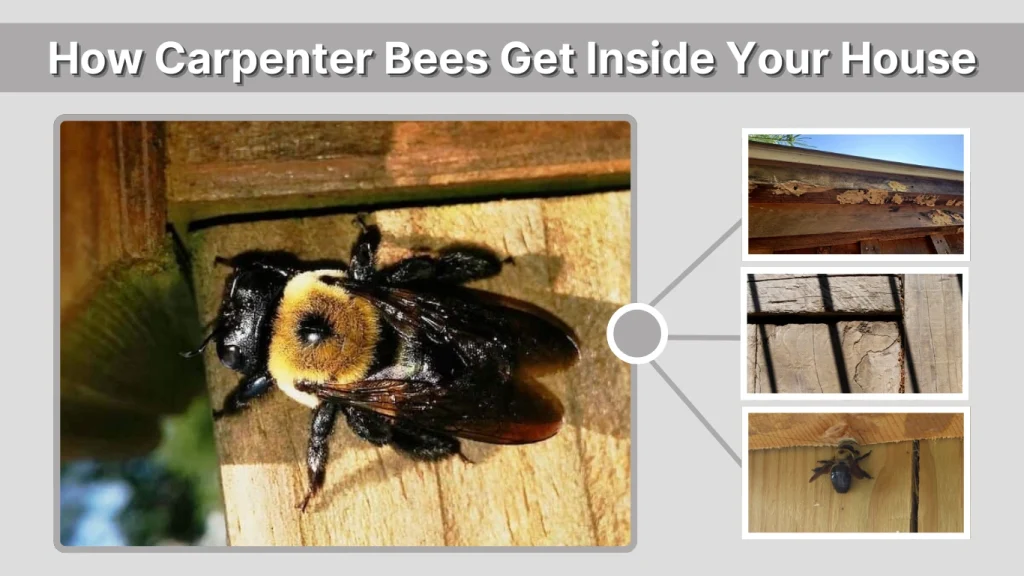
Entry Points
Carpenter bees slip through gaps in soffits, attic vents, fascia cracks, or poorly sealed trim joints. Even small openings provide access to wooden structures inside walls.
Weak Wood Vulnerabilities
Sun-weathered or cracked boards allow bees to chew more easily. Once they penetrate the outer layer, the interior tunnel expands rapidly.
Indoor Appearance
Bees sometimes wander indoors accidentally when tunnels intersect living spaces. They may also emerge into rooms during spring emergence.
Misidentification
Some homeowners assume an indoor bee indicates a nest inside the house, but sometimes the bee is simply exploring or entering through an open door or window.
What Attracts Carpenter Bees to a Home
Carpenter bees are naturally drawn to softwoods, especially pine, cedar, redwood, and fir. These woods mimic the dead trees carpenter bees historically used for nesting. If your home’s exterior includes untreated or unpainted wood, it becomes a prime target during early spring when females begin searching for nest sites.
Weathering plays another major role. Sun exposure softens the grain over time, making it easier for bees to chew through. Any peeling paint, cracked boards, or unsealed ends invite inspection and potential excavation.
Outdoor features can also attract carpenter bees. Fences, pergolas, sheds, and play structures built from untreated lumber create additional nesting opportunities close to the main house. Once carpenter bees establish themselves, they release pheromone cues that attract returning generations.
Finally, old unfilled holes act like magnets. A previously used carpenter bee tunnel sends a powerful signal to females searching for a ready-to-use nest. Without proper sealing and refinishing, the cycle repeats each spring.
Carpenter Bee House vs Your Actual House (Comparison Table)
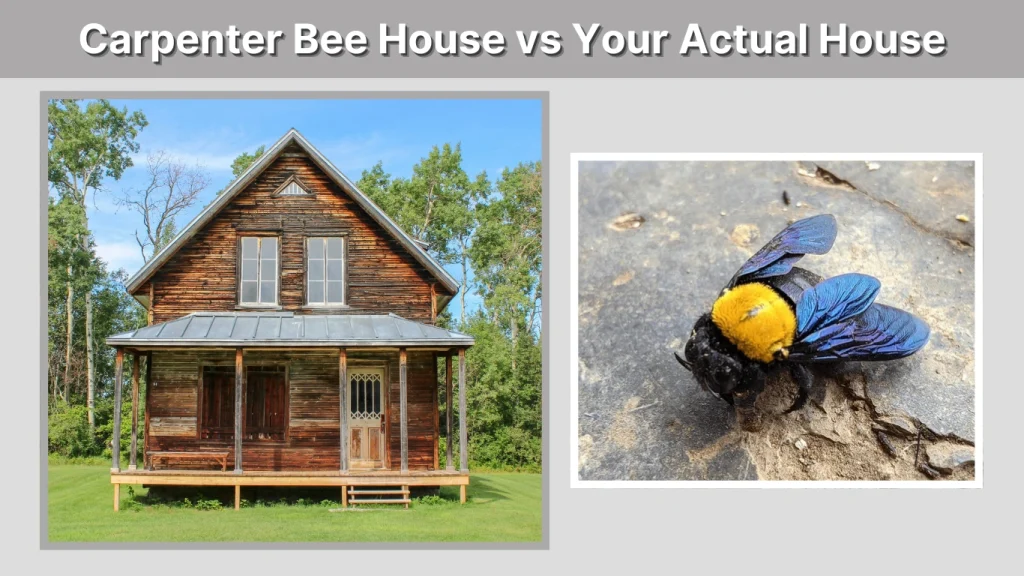
| Feature | Carpenter Bee House | Your Home’s Wood |
| Purpose | Provide nesting site | Provide structural support |
| Attractiveness | Optional habitat | Naturally appealing to bees |
| Damage Risk | None | High if softwood is exposed |
| Interaction | Redirects bees | Must be protected |
Carpenter Bee House Overview
- Redirects bees away from vulnerable wooden structures
- Provides controlled nesting cavities for solitary bees
- Requires correct hole size (⅜–½ inch) for bee acceptance
- Should be mounted in sunny, sheltered positions
- Needs annual maintenance or replacement
- Works best when combined with home protection steps
Do Carpenter Bee Houses Work?
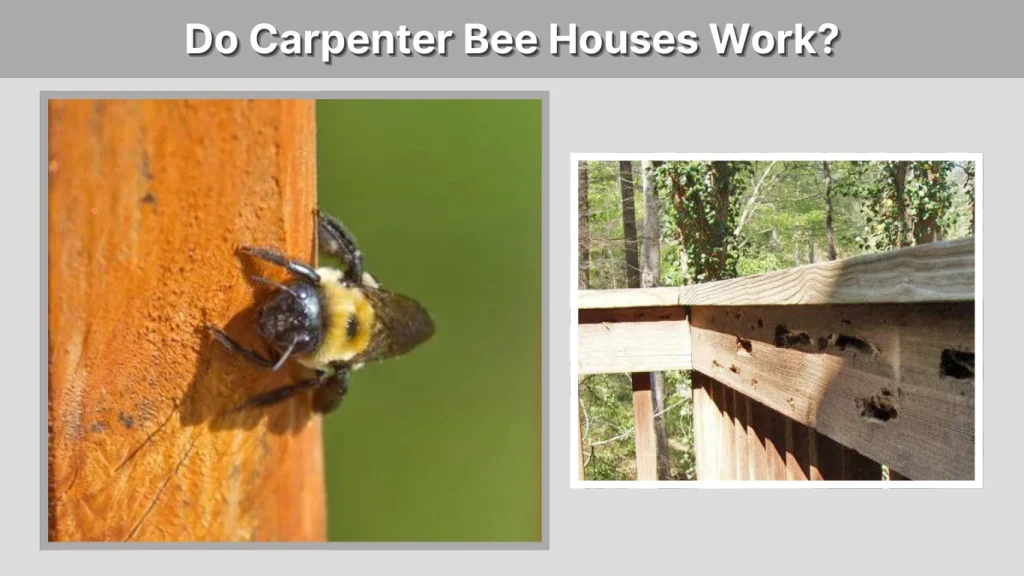
Effectiveness
Carpenter bee houses can work, but effectiveness varies. They may attract some females while others continue choosing nearby home surfaces.
Common Mistakes
Improper hole size, poor placement, or using hardwood instead of softwood often causes bees to ignore the house entirely.
Success Rates
Bee houses perform best when the surrounding home is sealed, painted, and treated with repellents, making the house a more appealing option.
Better Alternatives
In areas with heavy infestations, pairing bee houses with traps, oils, sealants, and proactive repairs gives significantly better results.
DIY Carpenter Bee House Building
A DIY carpenter bee house begins with selecting the right wood. Soft pine blocks or logs work best because they mimic natural nesting sites. Drilling multiple holes at the proper diameter ensures the house is attractive to females seeking brood chambers.
Placement is key to success. The house should be mounted in a sunny, protected area where bees naturally explore, such as near garden edges or tree lines. Elevation helps mimic tree trunks and reduces moisture issues.
Each year the house must be checked for wear or damage. Over time, occupied tunnels become filled or used up, requiring the homeowner to replace or refurbish the structure so it remains usable and safe for overwintering bees.
How to Keep Carpenter Bees Away from Your House
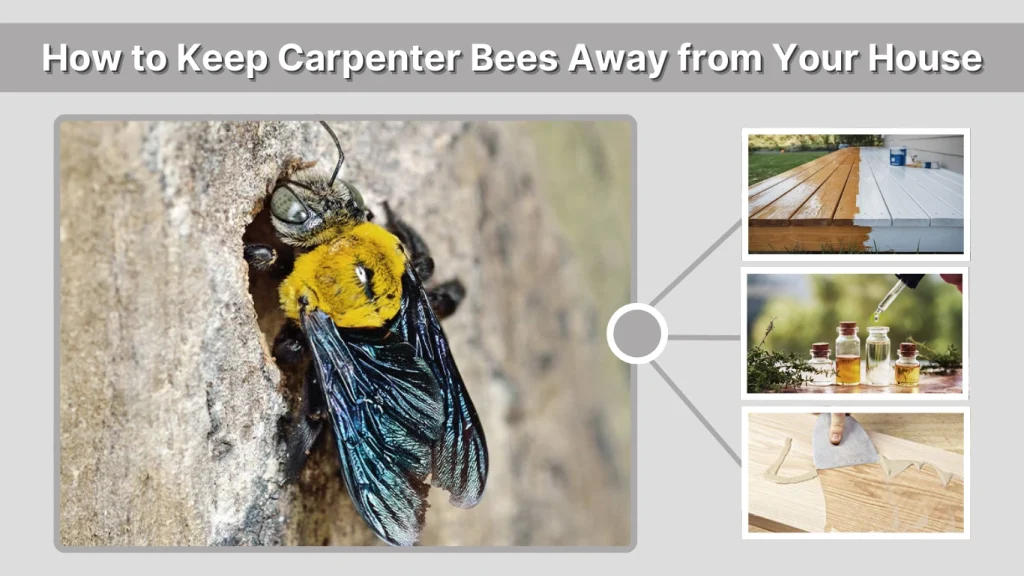
- Repaint or reseal exposed wood every one to two years
- Apply citrus, almond, or tea tree oil to vulnerable areas
- Seal cracks and openings in siding, trim, and soffits
- Fill old holes with dowels or wood filler to stop reuse
- Install carpenter bee traps during early spring
- Mount carpenter bee houses away from your home to redirect activity
How to Get Rid of Carpenter Bees Around Your House
Dust Treatments
Applying insecticidal dust to nest holes at night is the most effective removal method. This ensures bees are inside and avoids daytime aggression from territorial males.
Traps
Wooden carpenter bee traps catch active bees using funnel-style entrances. They work especially well when placed near areas where bees hover or inspect wood.
Professional Options
Severe or structural damage may require a pest control professional. Professionals use dust applicators and long-reach tools to reach deep tunnels safely.
Aftercare
Once bees vacate, filling, sanding, and repainting holes prevents future generations from reentering old galleries.
Removing Carpenter Bees From Inside a House
If a carpenter bee enters your home, it is often confused rather than aggressive. Opening windows or sliding doors helps the bee navigate toward natural light. Because carpenter bees are solitary and non-aggressive indoors, removing them typically involves gentle redirection rather than force.
If bees are appearing indoors repeatedly, this indicates tunnels that extend into wall voids. Locating the hole from the exterior, applying dust, and sealing openings prevents further intrusion. Indoor bees should never be sprayed directly, as pesticides can drift to people or pets inside the home.
When bees breach interior walls, they can become distressed. Keeping calm and guiding them toward an exit quickly resolves the issue. Once removed, sealing the tunnel externally fixes the underlying cause.
Indoor carpenter bee problems nearly always reflect an outdoor nest that needs immediate attention. Addressing the source prevents ongoing indoor appearances.
How to Get Carpenter Bees Out of Your House
- Open windows to provide a clear exit path
- Turn off indoor lights and brighten exterior spaces
- Avoid swatting, which may provoke defensive behavior
- Use a cup-and-card method to carry the bee outside
- Locate and seal the entrance point once the bee is removed
- Inspect exterior walls for nearby nest holes
Carpenter Bee Infestations Around a House
Early-Stage Activity
A few holes and hovering bees may indicate a developing infestation. Early awareness allows fast action before structural damage begins.
Moderate Infestation
Multiple holes across eaves, decks, or siding show yearly reuse. Woodpeckers may appear at this stage, increasing the damage significantly.
Severe Infestation
Deep, multi-year tunnels represent the worst-case scenario. Boards may weaken or crack, and entire sections of trim may require replacement.
Hidden Infestation
Tunnels hidden inside soffits, walls, or fascia boards require careful inspection. These infestations often go unnoticed until damage becomes visible.
Where to Hang a Carpenter Bee House
Choosing the right location determines whether a bee house successfully attracts carpenter bees. The ideal placement is in a sunny spot that receives morning light, such as near garden edges or tree trunks. The house should be positioned at least 6–8 feet above the ground to mimic natural wood height.
Distance from the home is critical. A carpenter bee house should be hung away from siding and structures you want to protect. By offering a more appealing nesting option, you encourage bees to establish their brood chambers in the house rather than in your home’s wood.
Avoid areas prone to moisture, as damp wood is less attractive to carpenter bees. Proper spacing, sunlight, and placement near natural foraging areas help increase acceptance rates.
Mounting multiple houses can increase success, especially on large properties. Over time, bees may return to these houses annually, reducing tunneling on your home’s exterior.
How to Attract Carpenter Bees to a Bee House
- Use untreated soft pine or cedar blocks
- Drill hole diameters between ⅜ and ½ inch
- Ensure hole depths reach 5–6 inches or more
- Mount houses in warm, sunny areas that bees naturally explore
- Add a light beeswax rub near the openings
- Place near early-season pollen sources like flowering shrubs
What Carpenter Bees Do to Your House
Tunneling
Female carpenter bees excavate tunnels that run several inches along the grain. These tunnels expand every year they are reused.
Structural Weakening
Repeated nesting weakens boards, trim, and support beams. Damaged areas may break under pressure or develop cracks.
Noise and Indoor Entry
As tunnels deepen into walls or fascia, bees may emerge indoors or create audible noises behind surfaces.
Secondary Damage
Woodpeckers targeting larvae create larger holes and break exterior boards, often causing more destruction than the bees themselves.
Carpenter Bees in Siding, Walls, and Eaves
Carpenter bees commonly enter homes through siding edges, attic vents, eaves, or soffit cracks. These areas provide softwood access and weather protection, making them ideal for nesting. Once inside siding or walls, tunnels lengthen and follow the wood grain.
When bees tunnel into fascia or trim boards, the damage may spread across sections of the home. Because these areas are elevated, homeowners often miss early warning signs. Regular inspection in spring and summer helps catch entry points before bees establish deeper nests.
Tunneling in wall voids may cause indoor buzzing or visible holes near ceilings. Any sign of internal tunneling requires immediate sealing and treatment to prevent continued expansion.
FAQs
Do carpenter bee houses actually work?
Carpenter bee houses can be effective when built correctly and placed in the right location. They help redirect bees away from vulnerable wood, but they work best when paired with sealing, painting, and routine wood maintenance.
How do I keep carpenter bees from damaging my house?
Painting, sealing, and treating exposed wood is the most reliable strategy. Filling old holes, applying natural repellents, and installing traps reduces activity significantly. Prevention works best when done every spring before bees begin nesting.
Why are carpenter bees hovering around my siding?
Hovering bees are typically males defending territory. They don’t sting but indicate a female is nearby nesting. Their presence often signals active or emerging tunnels in siding or eaves.
Can carpenter bees get into my walls?
Yes. If carpenter bees enter through soffits, vents, or gaps, they may tunnel into wall voids. Once inside, they can create deeper galleries and sometimes emerge indoors during spring.
What wood attracts carpenter bees the most?
Softwoods such as pine, cedar, fir, and redwood attract carpenter bees. Weathered, sun-damaged, or unpainted wood is especially vulnerable. Hardwoods and well-painted surfaces provide better protection.
